Ventolin nebuli
Ukraine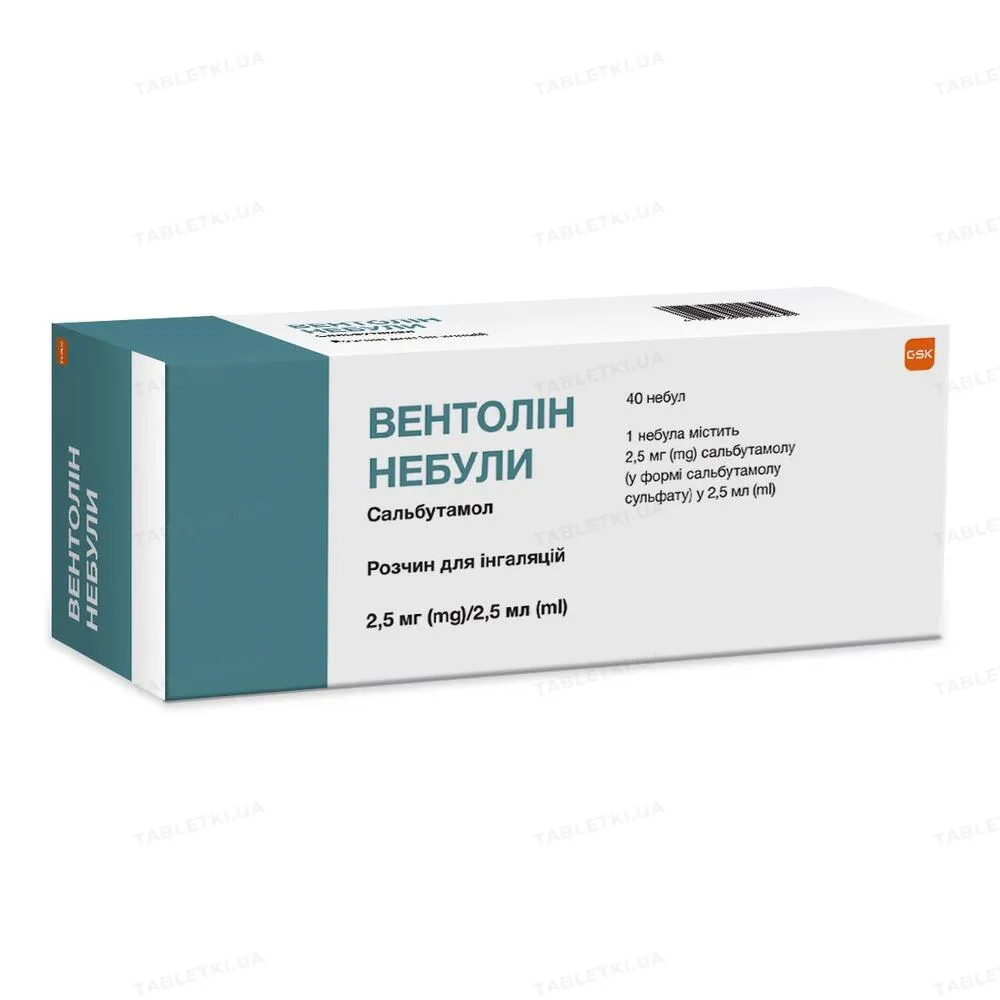
Table of Contents
INSTRUCTIONS FOR MEDICAL USE OF THE MEDICINAL PRODUCT VENTOLIN NEBULES
Composition:
Active substance: salbutamol;
One dose (2.5 mL) of the preparation contains 2.5 mg of salbutamol (as salbutamol sulfate);
Excipients: sodium chloride, diluted sulfuric acid, water for injections.
Pharmaceutical form. Solution for inhalation.
Main physicochemical characteristics: clear liquid ranging from colorless to pale yellow.
Pharmacotherapeutic group. Drugs for treatment of obstructive respiratory diseases. Adrenergic agents for inhalation use. Selective beta2-adrenoceptor agonists. Salbutamol. ATC code R03AC02.
Pharmacological properties.
Pharmacodynamics.
Salbutamol is a selective beta2-adrenergic receptor agonist. At therapeutic doses, it acts on beta2-adrenergic receptors of bronchial smooth muscle.
Pharmacokinetics.
After inhaled administration, 10 to 20% of the administered dose reaches the lower respiratory tract. The remainder remains in the delivery system or in the oropharynx, from where it is swallowed. Part of the dose that reaches the airways is absorbed into lung tissue and enters the systemic circulation but is not metabolized in the lungs.
The bronchodilator effect of the drug begins within 5 minutes after inhalation, and the duration of action lasts 4–6 hours.
After entering the systemic circulation, the drug is metabolized in the liver and is excreted primarily by the kidneys, both unchanged and as a phenolsulfate metabolite.
The portion of the dose that enters the gastrointestinal tract from the oropharynx is absorbed from the gastrointestinal tract, undergoes first-pass metabolism in the liver to form a phenolsulfate compound, and is then excreted by the kidneys.
Clinical characteristics.
Indications.
The drug is indicated for adults and children aged 4 years and older for the rapid relief of acute asthma attacks, as well as for the treatment of chronic obstructive bronchitis when there is no response to conventional therapy.
Contraindications.
Hypersensitivity in medical history to any component of the drug.
Do not use salbutamol dosage forms not intended for intravenous administration to suppress uncomplicated premature labor or threatened miscarriage.
Interaction with other medicinal products and other forms of interaction.
Salbutamol should not be administered concomitantly with non-selective beta-adrenoblockers such as propranolol.
Salbutamol is not contraindicated in patients receiving MAO inhibitors.
Special precautions for use.
Ventolin Nebules should only be used by inhalation via the mouth and must not be administered by injection or orally.
Treatment of bronchial asthma should be conducted according to a stepwise management plan, and the patient's condition should be assessed clinically and by pulmonary function tests.
Patients who are receiving regular anti-inflammatory therapy (e.g., inhaled corticosteroids) should be advised to continue taking their anti-inflammatory medications even when symptoms subside and they do not require Ventolin Nebules.
An increasing frequency of use of short-acting inhaled beta2-agonists indicates worsening control of bronchial asthma. Patients should be warned to seek medical advice as soon as possible. In such cases, the patient's treatment regimen should be reviewed.
Excessive use of short-acting beta-agonists may mask the progression of the underlying disease and contribute to worsening asthma control, increasing the risk of severe asthma exacerbations and mortality.
Patients using salbutamol more than twice a week on an "as needed" basis (excluding prophylactic use before exercise) should be evaluated for daytime symptoms, nocturnal awakenings, and activity limitations due to asthma, to ensure appropriate treatment adjustment, as these patients are at risk of excessive salbutamol use.
Sudden and progressive deterioration in bronchial asthma is a life-threatening condition requiring initiation or intensification of corticosteroid therapy. Patients at risk are advised to perform daily peak expiratory flow monitoring.
Patients treated with Ventolin Nebules at home should be warned that if the usual effective dose fails to provide relief or the duration of relief is reduced, they should consult a physician rather than increasing the dose or frequency of administration on their own.
Ventolin Nebules should be used with caution in patients receiving high doses of other sympathomimetic agents.
Sympathomimetic agents, including salbutamol, may affect the cardiovascular system. Post-marketing and published literature data report rare cases of myocardial ischemia associated with salbutamol use. Patients with severe cardiovascular disorders (e.g., ischemic heart disease, arrhythmia, or severe heart failure) receiving salbutamol should seek medical attention if they experience chest pain or other symptoms suggestive of cardiac disease exacerbation. Symptoms such as dyspnea and chest pain should be carefully evaluated, as they may result from either cardiac or respiratory disorders.
Salbutamol should be used with caution in patients with thyrotoxicosis.
Cases of acute angle-closure glaucoma have been occasionally observed during treatment with a combination of nebulized salbutam0ol and ipratropium bromide. Therefore, the combination of nebulized salbutamol with anticholinergic agents administered via nebulization should be used cautiously. Patients should receive appropriate instructions on correct drug use and be warned to avoid contact of the aerosol spray with the eyes.
Treatment with beta2-agonists may result in severe hypokalemia, particularly with parenteral or nebulizer administration. Particular attention should be paid to patients with acute severe asthma, as hypokalemia may be potentiated by concomitant use of xanthine derivatives, steroids, diuretics, and hypoxia. In such cases, serum potassium levels should be monitored.
As with other inhaled medications, paradoxical bronchospasm with increased wheezing may occur. In such cases, an alternative formulation or other fast-acting inhaled bronchodilators should be initiated immediately. Ventolin Nebules should be discontinued immediately, and if necessary, other fast-acting bronchodilators should be prescribed on a regular basis.
Like other beta-adrenergic agonists, Ventolin Nebules may cause reversible metabolic changes, such as increased blood glucose levels.
Compensation for these changes in diabetic patients is not always possible, and there have been isolated reports of ketoacidosis in such patients. Concomitant use of corticosteroids may exacerbate this condition.
Very rarely, in patients with acute exacerbation of bronchial asthma treated with high doses of intravenous and nebulized salbutamol, cases of lactic acidosis have been reported (see section "Adverse reactions"). Increased blood lactate levels may cause dyspnea and compensatory pulmonary hyperventilation, which may be mistakenly interpreted as inadequate efficacy of anti-asthma therapy and, in turn, lead to inappropriate intensification of treatment with short-acting beta2-agonists. Therefore, monitoring of serum lactate levels and the presence of metabolic acidosis in such patients is recommended.
Use during pregnancy or breastfeeding.
Salbutamol should be used during pregnancy only if the expected benefit to the mother outweighs the potential risk to the fetus. Post-marketing surveillance data include isolated reports of various congenital anomalies, including cleft palate and limb defects, in children whose mothers used salbutamol during pregnancy. Some of these women also used other medications during pregnancy. A definitive causal relationship between salbutamol use and these anomalies has not been established.
Since salbutamol may pass into breast milk, its use during breastfeeding is not recommended, except when the expected benefit to the mother outweighs the potential risk to the infant. It is unknown whether the presence of salbutamol in breast milk has harmful effects on the infant.
Ability to affect reaction speed when driving or operating machinery.
No data are available. If adverse reactions affecting the nervous system (e.g., tremor) occur, driving or operating machinery should be avoided.
Method of Administration and Dosage
The Ventolin Nebules preparation is intended only for inhalation via the mouth using a nebulizer and must be administered under medical supervision.
The solution must not be injected or swallowed.
An increased need for beta2-agonists may indicate worsening asthma control. In such cases, the patient's treatment regimen should be reviewed and the need for concomitant glucocorticosteroid therapy should be considered.
Adults (including elderly patients)
The usual initial inhaled dose of salbutamol is 2.5 mg. This dose may be increased to 5 mg. Inhalation may be repeated up to 4 times daily.
For treatment of adult patients with severe airway obstruction, doses may be increased up to 40 mg per day; however, such treatment should be conducted in a hospital setting under close medical supervision.
Children aged 12 years and older
Dosage is the same as for adults.
Children aged 4 to 11 years
The usual initial inhaled dose of salbutamol is 2.5 mg. This dose may be increased to 5 mg. Inhalation may be repeated up to 4 times daily.
For children under 4 years of age, other dosage forms of the drug should be used.
The clinical efficacy of nebulized salbutamol in infants under 18 months of age has not been established.
Since transient hypoxemia may occur, the need for supplemental oxygen therapy should be considered.
Ventolin Nebules are generally used undiluted. However, if inhalations are to be performed for a prolonged period (more than 10 minutes), the contents of the nebule may be diluted with sterile saline solution.
Aerosol inhalation can be performed using a special face mask, a T-piece adapter, or through an endotracheal tube. The room where inhalation is performed should be periodically ventilated. In case of risk of developing hypoxia due to hypoventilation of inhaled air, the air should be enriched with oxygen.
Dosage and frequency of administration should be increased only by a physician, due to the potential for adverse effects with overdose.
Instructions for Use of Ventolin Nebules
- Open the aluminum pouch containing the nebules only when necessary.
- Remove the nebules from the opened aluminum pouch.
- Hold the strip of nebules in one hand and grasp the end nebule with the other hand.
- Bend the end nebule downward and away from you to detach it from the rest.
- Return the remaining nebules to the aluminum pouch, close it, and place it back into the outer packaging.
- Holding the nebule at its top, twist the other end to open it.
- Tilt the opened end of the nebule over the nebulizer chamber and gently squeeze it. Ensure that all the contents of the nebule are transferred into the nebulizer chamber.
- Prepare the nebulizer for use according to its user instructions.
For each administration, use a new nebule, which should be opened immediately before use. Any remaining liquid after inhalation must not be stored for future use. Leftover medication should be discarded.
Children
Ventolin Nebules are indicated for children aged 4 years and older.
Overdose
The most common signs of salbutamol overdose are transient pharmacologically induced beta-agonist effects, such as tachycardia, tremor, hyperactivity, and metabolic disturbances, including hypokalemia and lactic acidosis (see sections "Special Warnings" and "Adverse Reactions").
Salbutamol overdose may result in hypokalemia; therefore, serum potassium levels should be monitored. Cases of lactic acidosis have been reported following administration of high therapeutic doses or overdose of short-acting beta2-agonists, so serum lactate levels should be checked. Accordingly, metabolic acidosis should be monitored, especially in the presence of persistent or worsening tachypnea despite improvement in bronchospasm symptoms (e.g., reduction in wheezing).
Adverse Reactions.
The adverse reactions listed below are classified by organs and systems and according to the frequency of occurrence. Frequency of occurrence is defined as very common (≥1/10), common (≥1/100 and <1/10), uncommon (≥1/1,000 and <1/100), rare (≥1/10,000 and <1/1,000), very rare (<1/10,000), including isolated cases. Generally, very common and common adverse effects are determined from clinical trial data, whereas rare, very rare, and those with unknown frequency are derived from spontaneous reports.
Immune system
Very rare: hypersensitivity reactions, including angioedema, urticaria, bronchospasm, hypotension, and collapse.
Metabolism and nutritional disorders
Rare: hypokalaemia. Potentially severe hypokalaemia may occur during treatment with beta2-agonists.
Frequency not known: lactic acidosis (see section "Special precautions").
Nervous system disorders
Common: tremor, headache.
Very rare: hyperactivity.
Cardiac disorders
Common: tachycardia.
Uncommon: palpitations.
Very rare: cardiac arrhythmias, including atrial fibrillation, supraventricular tachycardia, and extrasystoles.
Frequency not known: myocardial ischaemia (see section "Special precautions").
As these reports are spontaneous, derived from post-marketing surveillance, their frequency cannot be reliably estimated.
Vascular disorders
Rare: peripheral vasodilation.
Respiratory, thoracic and mediastinal disorders
Very rare: paradoxical bronchospasm.
Gastrointestinal disorders
Uncommon: irritation of the mucous membranes of the mouth and throat.
Musculoskeletal and connective tissue disorders
Uncommon: muscle cramps.
Shelf life.
3 years. After opening the aluminium foil sachet – 3 months.
Storage conditions. Keep out of the reach of children. Store below 30 °C. The opened aluminium foil sachet should be stored in a place protected from light at a temperature below 30 °C.
Packaging. 2.5 ml in a nebule; 5 nebules in an aluminium foil sachet; 8 sachets in a cardboard package.
Prescription category. Prescription only.
Manufacturer.
Aspen Bad Oldesloe GmbH, Germany.
Manufacturer's address and place of business.
Industriestrasse 32-36, Bad Oldesloe, Schleswig-Holstein, 23843, Germany.