Ventolin evohalier
Ukraine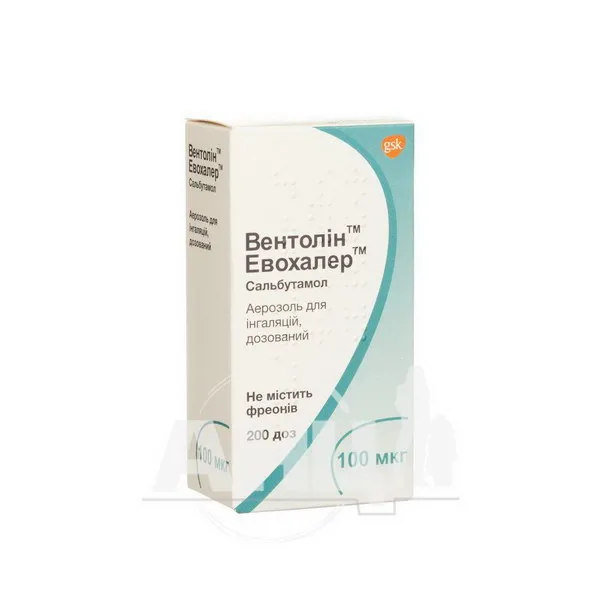
Table of Contents
- INSTRUCTIONS FOR MEDICAL USE OF THE MEDICINAL PRODUCT VENTOLIN EVOHALER
- Composition:
- Pharmacological Properties
- Clinical characteristics.
- Special precautions for use.
- Method of Administration and Dosage
- Adverse reactions.
- Composition:
- Pharmacological Properties
- Clinical characteristics.
- Special precautions for use.
- Method of Administration and Dosage
- Adverse Reactions
INSTRUCTIONS FOR MEDICAL USE OF THE MEDICINAL PRODUCT VENTOLIN EVOHALER
Composition:
Active substance: salbutamol;
One dose contains salbutamol 100 mcg (as salbutamol sulfate);
Excipient: propellant HFA 134a.
Pharmaceutical form. Pressurized metered-dose inhalation aerosol.
Main physicochemical properties: white or almost white suspension.
Pharmacotherapeutic group. Medicinal products for obstructive respiratory diseases. Adrenergic agents for inhalation. Selective beta2-adrenoreceptor agonists. Salbutamol. ATC code R03AC02.
Pharmacological Properties
Pharmacodynamics
Salbutamol is a selective beta2-adrenergic receptor agonist. At therapeutic doses, it acts on beta2-adrenergic receptors in bronchial smooth muscle, providing rapid (within 5 minutes) and short-acting (4–6 hours) bronchodilation in patients with reversible airway obstruction.
Pharmacokinetics
After inhaled administration, 10 to 20% of the administered dose reaches the lower airways. The remainder remains in the inhalation device or in the oropharynx, from where it is swallowed. The portion of the dose that reaches the respiratory tract is absorbed into lung tissue and enters the systemic circulation without undergoing metabolism in the lungs.
Once in the systemic circulation, the drug is metabolized in the liver and is primarily excreted by the kidneys either unchanged or as a phenolsulfate metabolite.
The portion of the dose that is swallowed from the oropharynx is absorbed from the gastrointestinal tract, undergoes first-pass metabolism in the liver to form a phenolsulfate compound, and is then excreted by the kidneys. Most of the drug is eliminated from the body within 72 hours. Plasma protein binding is approximately 10%.
Clinical characteristics.
Indications.
Short-term (from 4 to 6 hours) bronchodilation with rapid onset (within approximately 5 minutes) in airway obstruction.
Relief of asthma attacks in diseases associated with airway obstruction, such as bronchial asthma.
Prevention of bronchospasm attacks caused by allergens or physical exertion.
As part of combination therapy in patients with bronchial asthma.
Contraindications.
Hypersensitivity to any component of the drug. Do not use salbutamol formulations not intended for intravenous administration to suppress uncomplicated premature labor or threatened miscarriage.
Interaction with other medicinal products and other forms of interaction.
Salbutamol must not be used concomitantly with non-selective beta-adrenergic blockers (e.g., propranolol).
Concomitant use of salbutamol with monoamine oxidase inhibitors (MAO inhibitors) is not contraindicated.
Special precautions for use.
To ensure optimal delivery of the medicinal product into the patient's lungs, the patient's inhalation technique should be checked. Patients should be warned that they may experience a different taste compared to that when using their previous inhaler.
Patients who are on regular anti-inflammatory therapy (e.g., inhaled corticosteroids) should be advised to continue taking anti-inflammatory medications even when symptoms subside and Ventolin Evohaler is not required.
An increased need for bronchodilators, particularly short-acting inhaled beta2-agonists, to control symptoms of bronchial asthma indicates worsening of the disease. Patients should be advised to seek medical help as soon as possible. In such cases, the treatment plan should be reviewed and consideration should be given to increasing the dose of inhaled corticosteroids or initiating a course of oral corticosteroids.
Excessive use of short-acting beta-agonists may mask the progression of the underlying disease and lead to worsening asthma control, increasing the risk of severe asthma exacerbations and mortality.
Patients using salbutamol more than twice a week on an as-needed basis (excluding prophylactic use before physical exertion) should be assessed for daytime symptoms, nocturnal awakenings, and activity limitations due to asthma, to allow appropriate adjustment of therapy, as these patients belong to a high-risk group for excessive salbutamol use.
Sudden and progressive worsening of bronchial asthma is a life-threatening condition requiring initiation or intensification of corticosteroid therapy. Patients at risk are recommended to perform daily peak expiratory flow monitoring.
Bronchodilator agents should not be the sole or primary treatment in patients with severe or unstable bronchial asthma. The condition of such patients should be monitored regularly, including pulmonary function testing, as severe asthma is a life-threatening condition. For the treatment of such patients, consideration should be given to prescribing the maximum recommended doses of inhaled and/or oral glucocorticosteroids.
If the usual dose of Ventolin Evohaler becomes less effective or its duration of action decreases (less than 3 hours), the patient should consult a physician. Dose increase or more frequent administration should only be performed under medical supervision.
Severe asthma exacerbations should be treated according to standard procedures.
Sympathomimetics, including salbutamol, affect the cardiovascular system. Post-marketing and published data provide evidence of rare cases of myocardial ischemia associated with salbutamol use. Patients with heart conditions (e.g., ischemic heart disease, arrhythmia, or severe heart failure) who are treated with salbutamol should seek medical help if they experience chest pain or other symptoms suggestive of worsening cardiac disease. Symptoms such as dyspnea and chest pain, which may result from either cardiac or respiratory disorders, should be carefully evaluated.
Salbutamol should be used with caution in patients with thyrotoxicosis.
Treatment with beta2-agonists may result in severe hypokalemia, particularly with parenteral administration or nebulization. Particular attention should be paid to patients with acute severe asthma, as hypokalemia may be potentiated by concomitant use of xanthine derivatives, corticosteroids, diuretics, and hypoxia. In such cases, serum potassium levels should be monitored.
Salbutamol should be used cautiously in patients receiving high doses of other sympathomimetic agents. Like other beta-adrenergic agonists, salbutamol may cause reversible metabolic changes, such as increased blood glucose levels. Compensation for these changes in diabetic patients is not always possible, and there have been isolated reports of ketoacidosis in such patients. Concomitant use of corticosteroids may exacerbate this condition.
As with other inhaled medications, paradoxical bronchospasm with immediate worsening of dyspnea may occur after drug administration. In such cases, alternative formulations or other fast-acting inhaled bronchodilators should be prescribed immediately. Salbutamol should be discontinued promptly, the patient's condition assessed, and if necessary, another fast-acting bronchodilator prescribed for ongoing use.
Use during pregnancy or breastfeeding.
Animal studies have shown reproductive toxicity of salbutamol. The safety of salbutamol use during pregnancy has not been established. Controlled clinical studies on the use of salbutamol in pregnant women have not been conducted. There have been isolated reports of various congenital malformations during intrauterine development, including cleft palate, limb defects, and cardiac abnormalities. Some women received multiple other medications during pregnancy. Ventolin Evohaler may be used during pregnancy only if clearly needed.
Salbutamol is likely to pass into breast milk; therefore, it should be administered to breastfeeding women with caution. It is unknown whether salbutamol in breast milk has harmful effects on the newborn/infant. Therefore, its use in breastfeeding women should be limited to cases where the benefit to the mother outweighs the potential risk to the infant.
Ability to affect reaction speed when driving or operating machinery.
No data are available on this effect. If nervous system side effects (e.g., tremor) occur, driving or operating machinery should be avoided.
Method of Administration and Dosage
Ventolin Evohaler is an aerosol intended for oral inhalation only. For patients who have difficulty coordinating breathing with the use of the inhaler, it is recommended to use a spacer device to facilitate inhalation of the medication.
Adults (including elderly patients)
To relieve acute asthma symptoms, including acute bronchospasm, the minimum starting dose is 1 inhalation (100 mcg). If necessary, the dose may be increased to 200 mcg (2 inhalations).
For prophylaxis 10–15 minutes before physical exertion or anticipated exposure to allergens, 200 mcg (2 inhalations) should be administered.
For long-term maintenance therapy, the recommended dose is 200 mcg (2 inhalations) four times daily. The total daily dose of salbutamol should not exceed 800 mcg (8 inhalations).
Children aged over 12 years should receive the same doses as adults.
Children aged 4 to 12 years
To relieve acute bronchospasm, administer 1 inhalation (100 mcg). If necessary, the dose may be increased to 200 mcg (2 inhalations).
For prophylaxis 10–15 minutes before physical exertion or anticipated exposure to allergens, 100 mcg (1 inhalation) should be administered; the dose may be increased to 200 mcg (2 inhalations) if needed.
For long-term maintenance therapy, the recommended dose is 200 mcg (2 inhalations) four times daily. The total daily dose of salbutamol should not exceed 800 mcg (8 inhalations).
An increased need for beta2-agonists may indicate worsening asthma control. Under such circumstances, the patient's treatment regimen should be reviewed and the need for initiating glucocorticosteroid therapy should be considered.
Instructions for Using the Inhaler
Checking the Inhaler
Before first use or after a break in use of 5 days or more, remove the mouthpiece cap by gently pressing the sides, shake the inhaler well, and release two sprays into the air to ensure proper functioning.
Using the Inhaler
- Remove the mouthpiece cap by gently pressing the sides.
- Ensure that the inside and outside of the inhaler, including the mouthpiece, are free of foreign objects.
- Shake the inhaler thoroughly to dislodge any foreign object and to mix the contents evenly.
- Hold the inhaler vertically in your hand between the thumb and other fingers, with the thumb placed on the body of the inhaler below the mouthpiece.
- Breathe out fully, then place the mouthpiece between your teeth and close your lips around it without biting.
- While inhaling slowly and deeply through your mouth, press down on the top of the inhaler to release a spray of salbutamol, continuing to inhale slowly and deeply. One press of the inhaler delivers one dose.
- Hold your breath, remove the inhaler from your mouth, and remove your finger from the top of the inhaler. Continue to hold your breath as long as possible.
- If additional sprays are needed, wait approximately 30 seconds, keeping the inhaler upright, then repeat steps 3–7.
- Replace the mouthpiece cap by pressing it into place until it clicks.
IMPORTANT:
Perform steps 5, 6, and 7 without rushing. Inhale as slowly as possible just before actuating the spray. Practice the first few times in front of a mirror. If a "mist" appears around the top of the inhaler or around the sides of the mouth, restart the procedure from step 2.
If your doctor has given different instructions for using the inhaler, follow those instead, and seek advice if you experience any difficulties.
Children. Young children may require assistance; it may be necessary for an adult to administer the inhalation. Ask the child to breathe out and actuate the spray immediately after they begin to inhale. It is recommended to practice the technique together. Older children or weakened adults may hold the inhaler with both hands, placing both index fingers on the top of the inhaler and both thumbs on the base below the mouthpiece.
Cleaning
The inhaler should be cleaned at least once a week.
- Remove the metal canister from the plastic inhaler holder and remove the mouthpiece cap.
- Wash the plastic holder and mouthpiece cap with warm water.
- Dry them thoroughly inside and out.
- Reinsert the metal canister and replace the mouthpiece cap.
DO NOT PUT THE METAL CANISTER IN WATER.
Children.
The medication is indicated for the treatment of children aged 4 years and older.
Overdose.
The most common symptoms of salbutamol overdose are transient, pharmacologically induced beta-agonist effects such as tachycardia, tremor, hyperactivity, and metabolic disturbances, including hypokalemia (see sections "Special Warnings and Precautions for Use" and "Adverse Reactions").
Salbutamol overdose may lead to hypokalemia; therefore, serum potassium levels should be monitored. Cases of lactic acidosis have been reported following administration of high therapeutic doses or overdose of short-acting beta2-agonists. Serum lactate levels should therefore be checked and metabolic acidosis monitored accordingly, especially in the presence of persistent or worsening tachypnea, despite improvement in bronchospasm symptoms such as stridor.
Adverse reactions.
The adverse reactions listed below are classified by system organ class and frequency of occurrence: very common (≥ 1/10), common (≥ 1/100 to < 1/10), uncommon (≥ 1/1,000 to < 1/100), rare (≥ 1/10,000 to < 1/1,000), very rare (< 1/10,000), including isolated cases, frequency not known. In general, very common and common adverse effects are determined from clinical trial data, whereas rare, very rare and those with unknown frequency are derived from spontaneous reports.
Immune system disorders
Very rare: hypersensitivity reactions, including angioedema, urticaria, bronchospasm, hypotension and collapse.
Metabolism and nutritional disorders
Rare: hypokalaemia. Potentially, the use of beta2-agonists may cause pronounced hypokalaemia.
Nervous system disorders
Common: tremor, headache.
Very rare: hyperactivity.
Cardiac disorders
Common: tachycardia.
Uncommon: palpitations.
Very rare: cardiac arrhythmias, including atrial fibrillation, supraventricular tachycardia and extrasystoles.
Frequency not known: myocardial ischaemia (see section "Special precautions for use").
Vascular disorders
Rare: peripheral vasodilatation.
Respiratory, thoracic and mediastinal disorders
Very rare: paradoxical bronchospasm.
Gastrointestinal disorders
Uncommon: irritation of the mucous membranes of the mouth and throat.
Musculoskeletal and connective tissue disorders
Uncommon: muscle cramps.
Shelf life.
2 years.
Storage conditions.
Keep out of the reach of children. Store below 30 °C. Do not freeze. Avoid exposure to direct sunlight. Do not disassemble, puncture or incinerate the canister, even after complete use. The canister is under pressure. Do not expose to temperatures above 50 °C.
Packaging.
Aluminium canister with metering valve. The canister is equipped with a plastic actuator with a metered mouthpiece and a dust cap. The canister contains not less than 200 doses of the medicinal product. 1 canister in a cardboard box.
Prescription category. Prescription only.
Manufacturer.
Glaxo Wellcome Production, France.
Glaxo Wellcome Production, France.
Manufacturer's address and place of business.
Glaxo Wellcome Production, Zone Industrielle №2, 23, rue Lavoisier, 27000 Evreux, France.
Glaxo Wellcome Production, Zone Industrielle №2, 23, rue Lavoisier, 27000 Evreux, France.
INSTRUCTIONS
for medical use of the medicinal product
VENTOLIN EVOHALER
(VENTOLIN EVOHALER)
Composition:
Active substance: salbutamol;
1 dose contains salbutamol 100 mcg (as salbutamol sulfate);
Excipient: propellant HFA 134a.
Pharmaceutical form. Pressurized metered-dose inhalation aerosol.
Main physicochemical characteristics: white or almost white suspension.
Pharmacotherapeutic group. Drugs for obstructive airway diseases. Adrenergic drugs for inhalation use. Selective beta2-adrenoreceptor agonists. Salbutamol. ATC code R03AC02.
Pharmacological Properties
Pharmacodynamics
Salbutamol is a selective beta2-adrenergic receptor agonist. At therapeutic doses, it acts on beta2-adrenergic receptors of bronchial smooth muscle, providing rapid (within 5 minutes) and short-term (4–6 hours) bronchodilation in patients with reversible airway obstruction.
Pharmacokinetics
After inhaled administration, 10 to 20% of the administered dose reaches the lower airways. The remainder remains in the inhalation device or in the oropharynx, from where it is swallowed. Part of the dose that reaches the airways is absorbed into lung tissue and enters systemic circulation, but is not metabolized in the lungs.
Once in systemic circulation, the drug is metabolized in the liver and is primarily excreted by the kidneys, both unchanged and as a phenolic sulfate metabolite.
The portion of the drug that is swallowed from the oropharynx is absorbed from the gastrointestinal tract, undergoes first-pass metabolism in the liver to form a phenolic sulfate compound, and is then excreted by the kidneys. Most of the drug is eliminated from the body within 72 hours. Plasma protein binding is 10%.
Clinical characteristics.
Indications.
Short-term (4 to 6 hours) bronchodilation with rapid onset (within approximately 5 minutes) in airway obstruction.
Relief of asthma attacks in diseases associated with airway obstruction, such as bronchial asthma.
Prevention of bronchospasm attacks induced by allergens or physical exertion.
As part of combination therapy in patients with bronchial asthma.
Contraindications.
History of hypersensitivity to any component of the drug. Do not use salbutamol dosage forms not intended for intravenous administration to suppress uncomplicated preterm labor or threatened abortion.
Interaction with other medicinal products and other forms of interaction.
Salbutamol must not be used concomitantly with non-selective beta-adrenergic blockers (e.g., propranolol).
Concomitant use of salbutamol with monoamine oxidase inhibitors (MAO inhibitors) is not contraindicated.
Special precautions for use.
To ensure optimal delivery of the medicinal product into the patient's lungs, the patient's inhalation technique should be checked. Patients should be warned that they may experience a different taste compared to that with their previous inhaler.
Patients who are prescribed regular anti-inflammatory therapy (e.g., inhaled corticosteroids) should be advised to continue taking anti-inflammatory medications even when symptoms subside and Ventolin Evohaler is not required.
An increased need for bronchodilators, particularly short-acting inhaled beta2-agonists, to control symptoms of bronchial asthma indicates worsening of the disease. Patients should be advised to seek medical help as soon as possible. In such cases, the treatment plan should be reassessed, and consideration should be given to increasing the dose of inhaled corticosteroids or initiating a course of oral corticosteroids.
Excessive use of short-acting beta-agonists may mask the progression of the underlying disease and lead to worsening asthma control, increasing the risk of severe asthma exacerbations and mortality.
Patients using salbutamol more than twice a week on an as-needed basis (excluding prophylactic use before physical exertion) should be evaluated for daytime symptoms, nocturnal awakenings, and activity limitations due to asthma, to allow appropriate adjustment of therapy, as these patients belong to a high-risk group for excessive salbutamol use.
Sudden and progressive worsening of bronchial asthma is a life-threatening condition requiring initiation or intensification of corticosteroid therapy. Patients at risk are recommended to perform daily peak expiratory flow monitoring.
Bronchodilators should not be the sole or primary treatment for patients with severe or unstable bronchial asthma. The condition of such patients should be regularly monitored, including pulmonary function testing, as severe asthma is life-threatening. Treatment of such patients may require consideration of prescribing the maximum recommended doses of inhaled and/or oral glucocorticosteroids.
If the usual dose of Ventolin Evohaler becomes less effective or the duration of action decreases (less than 3 hours), the patient should consult a physician. Dose or frequency increases should only be made under medical supervision.
Severe asthma exacerbations should be treated according to standard protocols.
Sympathomimetics, including salbutamol, affect the cardiovascular system. Post-marketing and published data indicate rare cases of myocardial ischemia associated with salbutamol use. Patients with cardiac conditions (e.g., ischemic heart disease, arrhythmia, or severe heart failure) treated with salbutamol should seek medical attention if they experience chest pain or other symptoms suggestive of cardiac disease exacerbation. Symptoms such as dyspnea and chest pain should be carefully evaluated, as they may result from either cardiac or respiratory disorders.
Salbutamol should be used with caution in patients with thyrotoxicosis.
Treatment with beta2-agonists may result in severe hypokalemia, particularly with parenteral or nebulizer administration. Particular attention should be paid to patients with acute severe asthma, as hypokalemia may be potentiated by concomitant use of xanthine derivatives, steroids, diuretics, and hypoxia. In such cases, serum potassium levels should be monitored.
Salbutamol should be used cautiously in patients receiving high doses of other sympathomimetics. Like other beta-adrenergic agonists, salbutamol may cause reversible metabolic changes, such as increased blood glucose levels. Compensation for these changes in diabetic patients is not always possible, and there have been isolated reports of ketoacidosis in such patients. Concomitant use of corticosteroids may exacerbate this condition.
As with other inhaled medications, paradoxical bronchospasm with immediate worsening of dyspnea after administration may occur. In such cases, alternative formulations or other fast-acting inhaled bronchodilators should be promptly initiated. Salbutamol should be discontinued immediately, the patient's condition assessed, and if necessary, another fast-acting bronchodilator prescribed for regular use.
Use during pregnancy or breastfeeding.
Animal studies have shown reproductive toxicity of salbutamol. The safety of salbutamol use during pregnancy has not been established. Controlled clinical studies on the use of salbutamol in pregnant women have not been conducted. There have been isolated reports of various congenital malformations during intrauterine development, including cleft palate, limb defects, and cardiac abnormalities. Some women received multiple other medications during pregnancy. Ventolin Evohaler should be used during pregnancy only if clearly needed.
Salbutamol is likely excreted in breast milk; therefore, it should be administered to breastfeeding women with caution. It is unknown whether salbutamol in breast milk has harmful effects on the newborn/infant. Therefore, its use in breastfeeding women should be restricted to cases where the benefit to the mother outweighs the potential risk to the infant.
Ability to influence reaction rate while driving or operating machinery.
There are no data on the effect of this medicinal product. If adverse reactions affecting the nervous system (e.g., tremor) occur, driving or operating machinery should be avoided.
Method of Administration and Dosage
Ventolin Evohaler is an aerosol intended for inhalation use only via the oral route. For patients who have difficulty coordinating breathing with the use of the inhaler, it is recommended to use a spacer device to facilitate inhalation of the medication.
Adults (including elderly patients)
To relieve acute symptoms of asthma, including acute bronchospasm, a dose of 1 inhalation (100 mcg) may be used as the minimum initial dose. If necessary, the dose may be increased to 200 mcg (2 inhalations).
For prophylaxis 10–15 minutes before physical exertion or anticipated exposure to allergens, 200 mcg (2 inhalations) should be administered.
For long-term maintenance therapy, 200 mcg (2 inhalations) 4 times daily is recommended. The total daily dose of salbutamol should not exceed 800 mcg (8 inhalations).
Children over 12 years of age should receive the same doses as adults.
Children aged 4 to 12 years
To relieve acute bronchospasm, administer 1 inhalation (100 mcg). If necessary, the dose may be increased to 200 mcg (2 inhalations).
For prophylaxis 10–15 minutes before physical exertion or anticipated exposure to allergens, administer 100 mcg (1 inhalation); if necessary, the dose may be increased to 200 mcg (2 inhalations).
For long-term maintenance therapy, 200 mcg (2 inhalations) 4 times daily is recommended. The total daily dose of salbutamol should not exceed 800 mcg (8 inhalations).
An increased need for beta2-agonists may indicate worsening asthma control. In such cases, the patient's treatment regimen should be reviewed and the need for initiating glucocorticosteroid therapy should be considered.
Instructions for Using the Inhaler
Checking the Inhaler
Before first use or after a break in use of 5 days or more, remove the mouthpiece cap by gently pressing the sides, shake the inhaler well, and release two sprays into the air to ensure proper functioning.
Using the Inhaler
- Remove the mouthpiece cap by gently pressing the sides.
- Ensure that there are no foreign objects inside or outside the inhaler, including in the mouthpiece.
- Shake the inhaler thoroughly to dislodge any foreign objects and to evenly mix the contents.
- Hold the inhaler vertically between the thumb and other fingers, with the thumb positioned on the body of the inhaler below the mouthpiece.
- Breathe out fully, then place the mouthpiece between the teeth and seal lips around it without biting.
- While inhaling slowly and deeply through the mouth, press down on the top of the inhaler to release a spray of salbutamol, continuing to inhale slowly and deeply. One press of the inhaler delivers one dose.
- Hold your breath, remove the inhaler from the mouth, and remove your finger from the top of the inhaler. Continue holding your breath as long as possible.
- If additional sprays are needed, wait approximately 30 seconds, keeping the inhaler upright, then repeat steps 3–7.
- Replace the mouthpiece cap by pressing it into place until it clicks.
IMPORTANT:
Perform steps 5, 6, and 7 without rushing. Inhale as slowly as possible just before actuating the spray. Practice the first few times in front of a mirror. If a "mist" appears around the top of the inhaler or at the corners of the mouth, restart the procedure from step 2.
If your doctor has provided different instructions for using the inhaler, follow those and seek advice if any difficulties arise.
Children. Young children may require assistance; it may be necessary for adults to administer the inhalation. Ask the child to breathe out and actuate the spray immediately after they begin to inhale. It is recommended to practice the technique together. Older children or weakened adults may hold the inhaler with both hands. Place both index fingers on top of the inhaler and both thumbs on the base below the mouthpiece.
Cleaning
The inhaler should be cleaned at least once a week.
- Remove the metal canister from the plastic inhaler holder and remove the mouthpiece cap.
- Wash the plastic holder and mouthpiece cap with warm water.
- Dry them thoroughly inside and out.
- Reinsert the metal canister and replace the mouthpiece cap.
DO NOT PUT THE METAL CANISTER IN WATER.
Children.
The medication is indicated for the treatment of children aged 4 years and older.
Overdose.
The most common symptoms of salbutamol overdose are transient, pharmacologically induced effects mediated by beta-agonists, such as tachycardia, tremor, hyperactivity, and metabolic disturbances, including hypokalemia (see sections "Special Warnings and Precautions for Use" and "Undesirable Effects").
Hypokalemia may occur following salbutamol overdose; therefore, serum potassium levels should be monitored. Cases of lactic acidosis have been reported with high therapeutic doses or overdose of short-acting beta2-agonists. Therefore, serum lactate levels should be checked and metabolic acidosis monitored accordingly, especially in cases of persistent or worsening tachypnea, despite improvement in bronchospasm symptoms such as stridorous breathing.
Adverse Reactions
The adverse reactions listed below are classified by organ systems and frequency of occurrence: very common (≥ 1/10), common (≥ 1/100 to < 1/10), uncommon (≥ 1/1,000 to < 1/100), rare (≥ 1/10,000 to < 1/1,000), very rare (< 1/10,000), including isolated cases, frequency not known. In general, very common and common adverse effects are determined from clinical trial data, whereas rare, very rare, and those with unknown frequency are derived from spontaneous reports.
Immune system disorders
Very rare: hypersensitivity reactions, including angioedema, urticaria, bronchospasm, arterial hypotension, and collapse.
Metabolism and nutritional disorders
Rare: hypokalemia. Beta2-agonists may potentially cause pronounced hypokalemia.
Nervous system disorders
Common: tremor, headache.
Very rare: hyperactivity.
Cardiac disorders
Common: tachycardia.
Uncommon: palpitations.
Very rare: cardiac arrhythmias, including atrial fibrillation, supraventricular tachycardia, and extrasystoles.
Frequency not known: myocardial ischemia (see section "Special precautions for use").
Vascular disorders
Rare: peripheral vasodilation.
Respiratory, thoracic and mediastinal disorders
Very rare: paradoxical bronchospasm.
Gastrointestinal disorders
Uncommon: irritation of the mucous membranes of the mouth and throat.
Musculoskeletal and connective tissue disorders
Uncommon: muscle cramps.
Shelf life.
2 years.
Storage conditions.
Keep out of the reach of children. Store below 30 °C. Do not freeze. Avoid exposure to direct sunlight. Do not disassemble, puncture, or burn the canister, even after complete use. The canister is under pressure. Do not expose to temperatures above 50 °C.
Packaging.
Aluminum canister with a metering valve. The canister is equipped with a plastic spray actuator with a metered nozzle and a dust cap. The canister contains no less than 200 doses of the drug. 1 canister in a cardboard box.
Prescription category. Prescription only.
Manufacturer.
Glaxo Wellcome S.A., Spain.
Glaxo Wellcome S.A., Spain.
Manufacturer's address and place of business.
Glaxo Wellcome S.A., Avenida de Extremadura 3, Pol. Ind. Allendeduero, 09400 Aranda de Duero, Burgos, Spain.
Glaxo Wellcome S.A., Avenida de Extremadura 3, Pol. Ind. Allendeduero, 09400 Aranda de Duero, Burgos, Spain.