Venoplant
Ukraine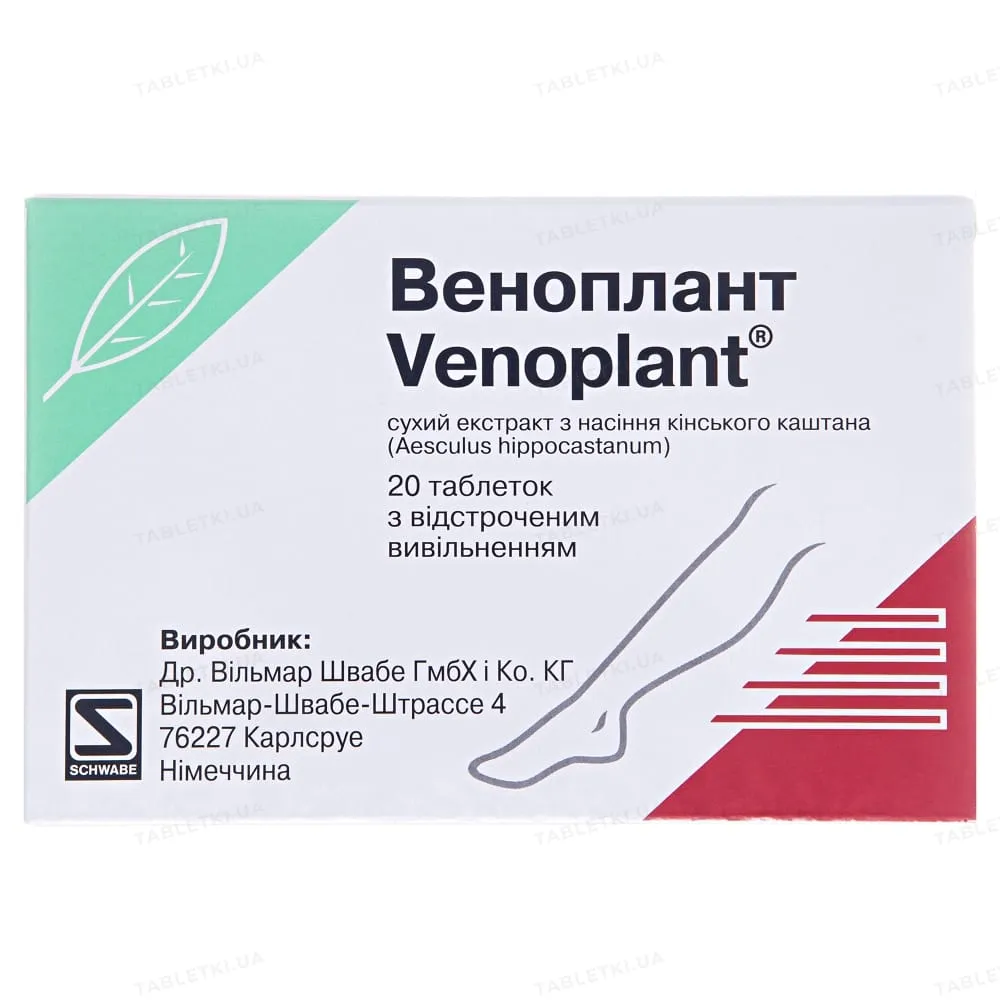
Table of Contents
INSTRUCTIONS FOR MEDICAL USE OF THE MEDICINAL PRODUCT VENOPRAN
Composition:
Active substance: Dry extract of horse chestnut seed (Aesculus hippocastanum) (4.5−5.5:1) (extraction solvent: ethanol 50% m/m);
One prolonged-release tablet contains: 178.5 – 263.2 mg of dry extract of horse chestnut seed (Aesculus hippocastanum) (4.5−5.5:1), equivalent to 21 mg of triterpene glycosides calculated as escin (extraction solvent: ethanol 50% m/m);
Excipients: Calcium hydrogen phosphate anhydrous, colloidal anhydrous silicon dioxide, ammonio methacrylate copolymer (type A), ammonio methacrylate copolymer (type B), triethyl citrate, polysorbate 80, povidone (K 25), crospovidone, magnesium stearate, hypromellose, macrogol 4000, iron oxide red (E 172), iron oxide yellow (E 172), titanium dioxide (E 171), anti-adherent emulsion SE 2, talc, sodium saccharin, vanillin.
Pharmaceutical form. Prolonged-release tablets.
Main physicochemical properties: Round orange-brown tablets.
Pharmacotherapeutic group. Capillary stabilizing agents.
ATC code C05CX03.
Pharmacological properties.
Aescin, the main active component of horse chestnut seed extract, exerts anti-exudative and vessel-strengthening effects.
Pharmacodynamics.
The extract from horse chestnut seeds reduces the activity of lysosomal enzymes, which is increased in chronic venous disorders, thereby inhibiting degradation of the glycocalyx (mucopolysaccharides) on the surface of capillary walls. By reducing vascular permeability, it prevents filtration of low-molecular-weight proteins, electrolytes, and water into the extravascular space.
The medicinal product relieves symptoms of chronic venous insufficiency (tiredness, sensation of heaviness and tension, itching, pain, and leg edema).
Pharmacokinetics.
Data are lacking.
Clinical characteristics.
Indications.
Chronic venous insufficiency:
- edema;
- nocturnal cramps of calf muscles;
- itching, as well as pain and sensation of heaviness in the legs;
- varicose vein enlargement.
Contraindications.
Hypersensitivity to the active ingredient or to any of the excipients. Renal insufficiency.
Interaction with other medicinal products and other forms of interaction.
The medicinal product may enhance the effect of antithrombotic agents. Cephalosporin antibiotics increase the concentration of free escin in the blood and the risk of adverse effects. Concomitant use of the drug with aminoglycoside antibiotics should be avoided due to increased nephrotoxic potential of aminoglycosides.
Special precautions for use.
If unusual symptoms such as swelling, skin discoloration, a sensation of tightness or warmth, and pain occur in one leg, immediate medical advice should be sought, as these symptoms may indicate serious complications (venous thrombosis in the legs, i.e., blockage of leg veins by a blood clot). It is essential to use other non-invasive treatment methods prescribed by a physician, such as applying compresses to the legs, wearing supportive elastic stockings, or cold water dousing.
Consult a physician in case of skin inflammation, thrombophlebitis, subcutaneous induration, severe pain, ulcers, sudden swelling of one or both legs, or in cases of cardiac or renal insufficiency.
In the event of dyspeptic symptoms, it is recommended to take the medicinal product with food.
Renal function should be monitored during treatment with this medicinal product.
Use during pregnancy or breastfeeding.
Data on the use of Venoplant in pregnant women are lacking or limited. Animal studies on reproductive toxicity are insufficient. The medicinal product is not recommended during pregnancy or breastfeeding due to insufficient safety data in these patient populations.
Safety during breastfeeding has not been studied. It is unknown whether components of horse chestnut seed extract or their metabolites are excreted in breast milk. Therefore, Venoplant should not be used by breastfeeding women.
Fertility studies have not been conducted.
Ability to influence reaction rate while driving or operating machinery.
Unknown.
Dosage and Administration.
For adults, take 1 tablet with prolonged release twice daily, in the morning and evening, before meals, without chewing, with a small amount of water.
The duration of treatment is determined individually by a physician depending on the severity of the disease and the clinical efficacy of the drug. The average duration of treatment is 2–3 months.
Children.
The drug is not used in children.
Overdose.
An increase in adverse reactions is possible. In case of overdose, arterial hypotension, nephrotoxic reactions, and thrombosis may occur. Symptoms of poisoning observed after ingestion of horse chestnut fruits: feeling of anxiety, severe diarrhea accompanied by vomiting; mydriasis, drowsiness, delirium, and potentially fatal outcome due to respiratory paralysis within 24–48 hours.
Treatment: if vomiting has not occurred and a large amount of the drug has been ingested, gastric lavage (e.g., with 0.02% potassium permanganate solution) is recommended, along with administration of activated charcoal; symptomatic treatment.
Side effects.
Nervous system disorders: headache, dizziness.
Skin, subcutaneous tissue/immune system disorders: hypersensitivity reactions, including rash, itching, sensation of warmth, angioneurotic edema.
Cardiovascular system disorders: tachycardia, rapid heartbeat, arterial hypotension.
Gastrointestinal disorders: dyspeptic symptoms, epigastric pain, nausea, diarrhea, vomiting.
If other adverse reactions occur, consult a physician.
Reporting of adverse reactions following drug registration is of great importance. It enables ongoing monitoring of the benefit-risk balance of the medicinal product. Healthcare and pharmaceutical professionals, as well as patients or their legal representatives, should report all suspected adverse reactions and lack of efficacy via the Automated Pharmacovigilance Information System at: https://aisf.dec.gov.ua.
Shelf life. 3 years.
Do not use the medicinal product after the expiry date stated on the packaging.
Storage conditions. Store at a temperature not exceeding 25 °C in a place inaccessible to children.
Packaging.
20 tablets in a blister; 1 blister per cardboard box. 25 tablets in a blister; 2 blisters per cardboard box.
Availability category. Over-the-counter.
Manufacturer.
Dr. Willmar Schwabe GmbH & Co. KG.
Manufacturer's address and location of business activity:
Willmar-Schwabe-Strasse 4, 76227 Karlsruhe, Germany.