Venclixto
Ukraine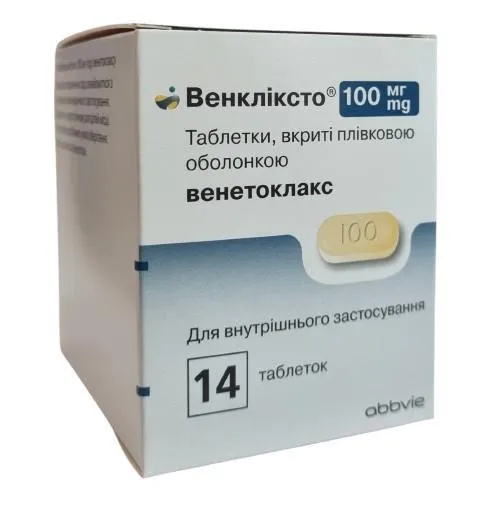
Table of Contents
INSTRUCTIONS FOR MEDICAL USE OF THE MEDICINAL PRODUCT VENKLYXTO®
Composition:
Active substance: venetoclax;
1 tablet contains 10 mg, 50 mg or 100 mg of venetoclax;
Excipients:
Venkluxto®, film-coated tablets, 10 mg:
copovidone K, polysorbate, colloidal silicon dioxide anhydrous (E 551), calcium phosphate dibasic anhydrous, sodium stearyl fumarate, polyvinyl alcohol, titanium dioxide (E171), macrogol 3350, talc, iron oxide yellow (E172);
Venkluxto®, film-coated tablets, 50 mg:
copovidone K, polysorbate, colloidal silicon dioxide anhydrous (E 551), calcium phosphate dibasic anhydrous, sodium stearyl fumarate, polyvinyl alcohol, titanium dioxide (E171), macrogol 3350, talc, iron oxide yellow (E172), iron oxide red (E172), iron oxide black (E172);
Venkluxto®, film-coated tablets, 100 mg:
copovidone K, polysorbate, colloidal silicon dioxide anhydrous (E 551), calcium phosphate dibasic anhydrous, sodium stearyl fumarate, polyvinyl alcohol, titanium dioxide (E171), macrogol 3350, talc, iron oxide yellow (E172).
Pharmaceutical form.
Film-coated tablets.
Main physicochemical properties:
Venkluxto®, film-coated tablets, 10 mg:
round, biconvex tablets of pale yellow color, with embossing «V» on one side and «10» on the other;
Venkluxto®, film-coated tablets, 50 mg:
elongated, biconvex tablets of beige color, with embossing «V» on one side and «50» on the other;
Venkluxto®, film-coated tablets, 100 mg:
elongated, biconvex tablets of pale yellow color, with embossing «V» on one side and «100» on the other.
Pharmacotherapeutic group.
Other antineoplastic agents. ATC code L01X X52.
Pharmacological Properties.
Pharmacodynamics.
Mechanism of Action.
Venetoclax is a potent, selective inhibitor of B-cell lymphoma (BCL)-2, an anti-apoptotic protein. Overexpression of the BCL-2 protein has been observed in leukemic cells of patients with chronic lymphocytic (lymphoid) leukemia (CLL) and acute myeloid leukemia (AML), where it mediates tumor cell survival and is associated with resistance to chemotherapy.
Venetoclax directly binds to the BH3-binding groove of BCL-2 proteins, displacing pro-apoptotic proteins (such as BIM) containing a BH3 motif, thereby triggering mitochondrial outer membrane permeabilization (MOMP), caspase activation, and programmed cell death. Preclinical studies have demonstrated that venetoclax exerts cytotoxic effects on tumor cells that overexpress the BCL-2 protein.
Pharmacodynamic Effects.
Cardiac Electrophysiology.
In an open-label, uncontrolled study involving 176 patients, the effect of various doses of Venclexta®—not exceeding 1200 mg once daily—on the QTc interval was evaluated. Venclexta® had no effect on the QTc interval, and no relationship between venetoclax exposure and changes in QTc interval was observed.
Elderly Patients.
Among 194 patients with previously treated CLL who received venetoclax in combination with rituximab, 50% were aged 65 years or older.
Of 107 patients whose efficacy was assessed in study M13-982, 57% were aged 65 years or older.
Among 127 patients whose efficacy was evaluated in study M14-032, 58% were aged 65 years or older.
Of 352 patients whose safety was assessed across three open-label monotherapy studies, 57% were aged 65 years or older.
Overall, no clinically meaningful differences in safety or efficacy were observed between older and younger patients receiving venetoclax either in combination or as monotherapy.
Pediatric Population.
No data are available for patients under 18 years of age.
Pharmacokinetics.
Absorption.
After multiple oral doses, peak plasma concentrations of venetoclax were reached within 5–8 hours following administration of Venclexta®. The area under the pharmacokinetic curve (AUC) of venetoclax at steady state increased proportionally with dose over the range of 150–800 mg. When venetoclax was administered at 400 mg once daily with a low-fat meal, the mean (± standard deviation) steady-state maximum concentration (Cmax) was 2.1 ± 1.1 µg/mL, and the AUC24 was 32.8 ± 16.9 µg•h/mL.
Effect of Food.
Administration with a low-fat meal increased venetoclax exposure by approximately 3.4-fold, while administration with a high-fat meal increased exposure by 5.1–5.3-fold compared to administration under fasting conditions. Venetoclax should be taken with food (see section "Dosage and Administration").
Distribution.
Venetoclax is highly bound to human plasma proteins, with an unbound fraction in plasma < 0.01 across the concentration range of 1–30 µM (0.87–26 µg/mL). The mean blood-to-plasma concentration ratio of venetoclax was 0.57. The population estimate of apparent volume of distribution (Vdss/F) ranged from 256 to 321 L in patients.
Biotransformation.
In vitro studies have shown that venetoclax is primarily metabolized by cytochrome P450 CYP3A4. M27 was identified as the major metabolite in plasma, exhibiting BCL-2 inhibitory activity that is at least 58-fold weaker than that of venetoclax in vitro.
In vitro Interaction Studies.
Concomitant administration with CYP and UGT substrates. In vitro studies showed that venetoclax is not an inhibitor or inducer of CYP1A2, CYP2B6, CYP2C19, CYP2D6, or CYP3A4 at clinically relevant concentrations. Venetoclax is a weak inhibitor of CYP2C8, CYP2C9, and UGT1A1 in vitro, but clinically significant inhibition is not expected. Venetoclax is not an inhibitor of UGT1A4, UGT1A6, UGT1A9, or UGT2B7.
Concomitant use with transporter substrates/inhibitors. Venetoclax is a substrate of P-glycoprotein and BCRP (breast cancer resistance protein), as well as an inhibitor of P-glycoprotein and BCRP, and a weak inhibitor of OATP1B1 in vitro. At clinically relevant concentrations, venetoclax is not expected to inhibit the activity of OATP1B3, OCT1, OCT2, OAT1, OAT3, MATE1, or MATE2K.
Elimination.
The population estimate of the terminal half-life of venetoclax was approximately 26 hours. Venetoclax shows minimal accumulation (accumulation ratio 1.30–1.44). After a single oral dose of radiolabeled [14C] venetoclax 200 mg administered to healthy subjects, >99.9% of the dose was recovered in feces and <0.1% of the dose was excreted in urine over 9 days. Unchanged venetoclax accounted for 20.8% of the administered radioactive dose excreted in feces. The pharmacokinetics of venetoclax do not change over time.
Special Patient Populations.
Renal Impairment.
Pharmacokinetic analysis of data from 321 patients with mild renal impairment (creatinine clearance ≥60 and <90 mL/min), 219 patients with moderate renal impairment (creatinine clearance ≥30 and <60 mL/min), 5 patients with severe renal impairment (creatinine clearance ≥15 and <30 mL/min), and 224 patients with normal renal function (creatinine clearance ≥90 mL/min) showed that venetoclax exposure in patients with mild, moderate, or severe renal impairment was similar to that in patients with normal renal function. Pharmacokinetics of venetoclax have not been studied in patients with creatinine clearance <15 mL/min or in patients undergoing dialysis.
Hepatic Impairment.
Pharmacokinetic analysis of data from 74 patients with mild hepatic impairment, 7 patients with moderate hepatic impairment, and 442 patients with normal hepatic function showed that venetoclax exposure in patients with mild or moderate hepatic impairment was similar to that in patients with normal hepatic function. Mild hepatic impairment was defined as normal total bilirubin levels with aspartate aminotransferase (AST) levels above the upper limit of normal (ULN), or total bilirubin levels 1–1.5 times ULN; moderate hepatic impairment was defined as total bilirubin levels 1.5–3 times ULN; and severe hepatic impairment as total bilirubin levels >3 times ULN.
Cmax and AUC values of venetoclax in patients with mild (Child-Pugh class A; n = 6) or moderate (Child-Pugh class B; n = 6) hepatic impairment did not differ from those in patients with normal hepatic function after a single 50 mg dose of venetoclax. In patients with severe hepatic impairment (Child-Pugh class C; n = 5), the mean Cmax of venetoclax was similar to that in patients with normal hepatic function, but AUC was on average 2.7 times higher (range: unchanged to <5 times higher) than in patients with normal hepatic function.
Effects of Age, Sex, Body Weight, and Race.
Based on population pharmacokinetic analysis, age, sex, and body weight do not influence the clearance of venetoclax. Exposure to venetoclax was 67% higher in patients of Asian origin compared to other racial groups. This difference is not statistically significant.
Carcinogenicity/Genotoxicity.
Venetoclax and its major human metabolite M27 did not show carcinogenic potential in a 6-month carcinogenicity study in transgenic (Tg.rasH2) mice receiving oral doses up to 400 mg/kg/day of venetoclax and M27 exposure equivalent to a single dose of 250 mg/kg/day. Exposure margins (AUC) corresponding to clinical AUC at a dose of 400 mg/day were approximately 2 times higher for venetoclax and 5.8 times higher for M27.
Venetoclax was not genotoxic in bacterial mutagenicity assays, in vitro chromosomal aberration assays, or in vivo mouse micronucleus tests. The metabolite M27 was not genotoxic in bacterial mutagenicity or chromosomal aberration assays.
Toxic Effects on Reproductive Function.
No effects on fertility were observed in fertility and early embryonic development studies in male and female mice. Testicular toxicity (loss of germ cells) was observed in general toxicity studies in dogs at doses where AUC was 0.5–18 times higher than the AUC of the 400 mg dose recommended in humans. Reversibility of this finding was not demonstrated.
In embryofetal development studies in mice, a relationship was observed between venetoclax administration and increased post-implantation fetal loss and reduced fetal body weight at doses where AUC was 1.1 times higher than the AUC of the 400 mg dose. The major human metabolite M27 was associated with post-implantation loss and fetal resorption at exposures 9 times higher than human M27 (AUC) exposure at the 400 mg venetoclax dose. In rabbits, venetoclax caused maternal toxicity but had no adverse effects on the fetus at doses where AUC was 0.1 times the AUC of the 400 mg dose.
Clinical characteristics.
Indications.
The medicinal product VENCLYSTO® in combination with obinutuzumab is indicated for the treatment of adult patients with previously untreated chronic lymphocytic (lymphoid) leukemia (CLL).
The medicinal product VENCLYSTO® in combination with rituximab is indicated for the treatment of adult patients with CLL who have received at least one prior line of therapy.
The medicinal product VENCLYSTO® is indicated as monotherapy for CLL:
- in patients with 17p deletion or TP53 gene mutation who are not suitable for treatment with a B-cell receptor inhibitor or for whom such treatment has proven ineffective;
- in patients without 17p deletion or TP53 gene mutation when chemotherapy and treatment with a B-cell receptor inhibitor have proven ineffective.
The medicinal product VENCLYSTO® in combination with a hypomethylating agent is indicated for the treatment of adult patients with newly diagnosed acute myeloid leukemia (AML) who are not eligible for intensive chemotherapy.
Contraindications.
Hypersensitivity to any active or inactive component of the medicinal product.
For patients with CLL — concomitant use with strong CYP3A inhibitors at the beginning of treatment and during the dose titration phase.
For all patients — concomitant use with medicinal products containing St. John’s wort.
Interaction with other medicinal products and other types of interactions.
Venetoclax is metabolized predominantly by the CYP3A enzyme.
Agents that may increase venetoclax plasma concentration.
CYP3A inhibitors.
Concomitant administration of ketoconazole (400 mg once daily), a strong inhibitor of CYP3A, P-gp, and BCRP, for 7 days to 11 patients resulted in a 2.3-fold increase in Cmax and a 6.4-fold increase in AUC∞ of venetoclax. Concomitant administration of ritonavir, a strong inhibitor of CYP3A and P-gp, at a dose of 50 mg once daily for 14 days in 6 healthy volunteers led to a 2.4-fold increase in Cmax and a 7.9-fold increase in AUC of venetoclax. Compared to administration of venetoclax alone at 400 mg, co-administration of 300 mg posaconazole, a strong inhibitor of CYP3A and P-gp, with venetoclax at doses of 50 mg and 100 mg for 7 days in 12 patients led to a 1.6- and 1.9-fold increase in Cmax and a 1.9- and 2.4-fold increase in AUC of venetoclax, respectively. Concomitant use of venetoclax with other strong CYP3A4 inhibitors is expected to increase AUC of venetoclax by 5.8–7.8 times on average.
For patients requiring concomitant use of venetoclax with strong CYP3A inhibitors (e.g., itraconazole, ketoconazole, posaconazole, voriconazole, clarithromycin, ritonavir) or moderate CYP3A inhibitors (e.g., ciprofloxacin, diltiazem, erythromycin, fluconazole, verapamil), venetoclax should be administered at the dose specified in Table 7. Patients should be closely monitored for signs of toxicity, and further dose adjustments may be necessary. The dose of venetoclax used prior to initiation of the CYP3A inhibitor should be resumed 2–3 days after discontinuation of the inhibitor (see section "Dosage and administration").
During treatment with venetoclax, consumption of grapefruit, grapefruit-containing products, Seville oranges, and starfruit should be avoided, as they may contain CYP3A inhibitors.
P-gp and BCRP inhibitors.
Venetoclax is a substrate of P-gp and BCRP. In 11 healthy volunteers, concomitant administration of 600 mg rifampicin, a P-gp inhibitor, led to a 106% increase in Cmax and a 78% increase in AUC∞ of venetoclax. Concomitant use of venetoclax with P-gp and BCRP inhibitors should be avoided at the beginning and during the dose titration phase. If use of a P-gp and BCRP inhibitor is necessary, patients should be closely monitored for signs of toxicity.
CYP3A inducers.
In 11 healthy volunteers, concomitant administration of 600 mg rifampicin, a strong CYP3A inducer, once daily for 13 days resulted in a 42% decrease in Cmax and a 71% decrease in AUC∞ of venetoclax. Concomitant use of VENCLYSTO® with strong CYP3A inducers (e.g., carbamazepine, phenytoin, rifampicin) or moderate CYP3A inducers (e.g., bosentan, efavirenz, etravirine, modafinil, nafcillin) should be avoided. Alternative medicinal products with lower CYP3A induction potential should be considered. During treatment with venetoclax, concomitant use of medicinal products containing St. John’s wort is contraindicated, as they may reduce treatment efficacy (see section "Contraindications").
Azithromycin.
In a drug interaction study involving 12 healthy volunteers who received azithromycin 500 mg on day 1 followed by 250 mg once daily for 4 days together with venetoclax, concomitant administration of azithromycin with venetoclax reduced Cmax and AUC∞ of venetoclax by 25% and 35%, respectively. Dose adjustment is not required when azithromycin is used short-term concomitantly with venetoclax.
Agents reducing gastric acidity.
According to population pharmacokinetic analysis, agents that reduce gastric acidity (proton pump inhibitors, H2-receptor antagonists, antacids) do not affect the bioavailability of venetoclax.
Bile acid sequestrants.
Concomitant use of bile acid sequestrants and venetoclax is not recommended, as this may reduce venetoclax absorption. If concomitant use of a bile acid sequestrant with venetoclax is necessary, the instructions for medical use of the bile acid sequestrant should be followed to minimize the risk of drug interaction, and venetoclax should be taken at least 4–6 hours after administration of the sequestrant.
Agents whose plasma concentration may be altered by venetoclax administration.
Warfarin.
In a drug interaction study involving three healthy volunteers, administration of a single 400 mg dose of venetoclax together with 5 mg warfarin increased Cmax and AUC∞ of R-warfarin and S-warfarin by 18–28%. Since the venetoclax dose did not achieve steady-state conditions, careful monitoring of international normalized ratio (INR) is recommended in patients taking warfarin.
P-gp, BCRP, and OATP1B1 substrates.
Venetoclax is an inhibitor of P-gp, BCRP, and OATP1B1 in vitro. After single-dose administration of 100 mg venetoclax together with 0.5 mg digoxin, a P-gp substrate, Cmax and AUC∞ of digoxin increased by 35% and 9%, respectively. Concomitant use of P-gp or BCRP substrates with a narrow therapeutic index (e.g., digoxin, dabigatran, everolimus, sirolimus) with VENCLYSTO® should be avoided.
If use of a P-gp or BCRP substrate with a narrow therapeutic index is necessary, it should be administered with caution. For oral P-gp or BCRP substrates sensitive to inhibition in the gastrointestinal tract (e.g., dabigatran etexilate), administration should be maximally separated from venetoclax to minimize potential interaction.
When a statin (an OATP [organic anion transporting polypeptide] substrate) is used concomitantly with venetoclax, careful monitoring for statin-related toxicities is recommended.
Special precautions for use.
Tumor lysis syndrome (TLS).
TLS, including fatal cases and renal failure requiring dialysis, has been observed in patients treated with venetoclax (see section "Adverse reactions"). Venetoclax can cause rapid tumor reduction and thus may lead to TLS at the beginning of treatment and during the dose titration phase. Electrolyte abnormalities associated with TLS requiring immediate correction may occur as early as 6–8 hours after the first dose of venetoclax and with each subsequent dose increase. Post-marketing surveillance has reported cases of TLS, including fatalities, following a single 20 mg dose of venetoclax. Refer to the information provided in the section "Dosage and administration," including risk assessment, preventive measures, dose titration schedule, laboratory monitoring, and drug interactions, to prevent and minimize the risk of TLS.
The risk of TLS dynamically changes due to multiple factors, including concomitant conditions (especially impaired renal function), tumor burden, and splenomegaly in patients with CLL. All patients should undergo risk assessment for TLS development and receive appropriate prophylaxis, including hydration and hypouricemic agents. Biochemical blood parameters should be monitored, and any abnormalities should be promptly corrected. In cases of increased overall risk, intensive management measures (e.g., intravenous hydration, close monitoring, hospitalization) should be implemented. If necessary, treatment should be interrupted; upon resumption, dose modification guidelines must be followed (see Table 4, Table 5). Follow the instructions in the subsection "Prevention of tumor lysis syndrome (TLS)" in the section "Dosage and administration."
Concomitant use of Venclexta® with strong or moderate CYP3A inhibitors enhances the effect of venetoclax and increases the risk of TLS at the beginning and during the dose titration phase. The effect of venetoclax may also be enhanced by P-glycoprotein or breast cancer resistance protein (BCRP).
Neutropenia and infections.
In clinical trials of patients with CLL receiving venetoclax as combination therapy with rituximab or obinutuzumab or as monotherapy, cases of grade 3 or 4 neutropenia were observed (see section "Adverse reactions").
In patients with AML, grade 3 or 4 neutropenia is frequently present before the start of therapy. During treatment with venetoclax in combination with hypomethylating agents, neutrophil counts may worsen. Neutropenia may recur in subsequent treatment cycles.
Complete blood counts should be monitored throughout the treatment period. In case of severe neutropenia, treatment interruption or dose reduction is recommended (see section "Dosage and administration").
Cases of severe infections, including fatal sepsis, have been reported in patients receiving venetoclax (see section "Adverse reactions"). Monitoring for signs and symptoms of infection is required during treatment. In case of suspected infection, prompt treatment including antimicrobial agents should be initiated, and dose reduction or interruption of venetoclax should be considered, along with administration of growth factors (e.g., granulocyte colony-stimulating factor [G-CSF]) (see section "Dosage and administration").
Vaccination.
The safety and efficacy of live attenuated vaccines during or after treatment with venetoclax have not been studied. Live vaccines should not be administered during or after treatment until B-cell recovery has occurred.
CYP3A inducers.
Concomitant use of CYP3A4 inducers may reduce the efficacy of venetoclax and thus lead to ineffective therapy. Concomitant use of venetoclax with strong or moderate CYP3A4 inhibitors should be avoided.
Women of reproductive potential.
Women of reproductive potential must use highly effective contraception during treatment with venetoclax (see section "Pregnancy and breastfeeding").
Use during pregnancy or breastfeeding.
Women of reproductive potential / contraception in women.
Women of reproductive potential must avoid pregnancy during treatment with Venclexta® and for at least 30 days after the end of treatment. Therefore, women of reproductive potential must use highly effective contraceptive methods during treatment with venetoclax and for 30 days after discontinuation of treatment. It is currently unknown whether venetoclax may reduce the efficacy of hormonal contraceptives; therefore, women using hormonal contraceptives should additionally use a barrier method of contraception.
Pregnancy.
Based on findings from embryofetal toxicity studies in animals, venetoclax may have adverse effects on the fetus when administered during pregnancy.
There are insufficient and well-controlled data on the use of venetoclax in pregnant women. Animal toxicity studies have shown that venetoclax has toxic effects on reproductive function. Venetoclax is not recommended for use in pregnant women or in women of reproductive potential who are not using highly effective contraceptive methods.
Breastfeeding.
It is unknown whether venetoclax or its metabolites are excreted in human breast milk.
A risk to the breastfed infant cannot be excluded.
Breastfeeding must be discontinued during treatment with Venclexta®.
Fertility.
There are no data on the effect of venetoclax on human fertility. Based on findings of testicular toxicity in dogs following administration of clinically relevant doses, reproductive function may be impaired during treatment with Venclexta®. Prior to initiating treatment, consideration should be given to counseling male patients on sperm preservation.
Ability to affect reaction speed when driving or operating machinery.
Venclexta® has no or negligible influence on the ability to concentrate when driving vehicles or operating machinery. Fatigue and dizziness have been reported in some patients during treatment with Venclexta®, and this should be taken into account when assessing a patient's ability to drive or operate machinery.
Method of administration and dosage.
Treatment with venetoclax should be initiated and supervised by a physician experienced in the use of antineoplastic medicinal products. Tumour lysis syndrome (TLS) may occur in patients receiving venetoclax. The information provided in this section, including risk assessment, preventive measures, dose titration schedule, laboratory monitoring, and drug interactions, should be considered to prevent and minimize the risk of TLS.
Dosage.
Chronic lymphocytic leukemia
Treatment initiation (titration).
The initial dose of venetoclax is 20 mg once daily for 7 days. The dose should be gradually increased over 5 weeks to a daily dose of 400 mg, as shown in Table 1.
Table 1
Dose titration schedule for patients with CLL
| Week |
Daily dose of VENCLYSTO® |
| 1 |
20 mg |
| 2 |
50 mg |
| 3 |
100 mg |
| 4 |
200 mg |
| 5 |
400 mg |
5-week ramp-up dosing schedule has been designed to gradually reduce tumor burden (tumor volume) and reduce the risk of developing (TLS).
Venetoclax in combination with obinutuzumab
The treatment course with venetoclax consists of 12 cycles, each cycle lasting 28 days: the first 6 cycles are administered in combination with obinutuzumab, followed by 6 cycles of venetoclax monotherapy. Obinutuzumab is administered according to the following schedule: 100 mg on day 1 of cycle 1, 900 mg on day 1 or 2 of cycle 1; thereafter, 1000 mg on days 8 and 15 of cycle 1, and on day 1 of each subsequent 28-day cycle (for a total of 6 cycles). The 5-week dose ramp-up phase of venetoclax (see Table 1) begins on day 22 of cycle 1 and continues until day 28 of cycle 2. After completion of the ramp-up phase, the recommended dose of venetoclax is 400 mg once daily, starting on day 1 of cycle 3 in combination with obinutuzumab and continuing until the last day of cycle 12.
Dosing of Venclexta® in combination with rituximab following the ramp-up phase.
The recommended dose of venetoclax in combination with rituximab is 400 mg once daily.
Rituximab is administered after completion of the 5-week dose ramp-up phase of Venclexta® and after achieving a daily dose of venetoclax of 400 mg for 7 days.
Venetoclax is administered for 24 months, starting on day 1 of cycle 1 of rituximab treatment.
Dosing of Venclexta® for monotherapy following the ramp-up phase.
The recommended dose of venetoclax is 400 mg once daily. Treatment should continue until disease progression or until the patient experiences treatment intolerance.
Acute myeloid leukemia (AML)
The recommended dosing regimen for venetoclax (including dose ramp-up) is provided in Table 2.
Table 2
Dose ramp-up schedule for patients with AML
| Day |
Daily dose of venetoclax |
| 1 |
100 mg |
| 2 |
200 mg |
| 3 and onwards |
400 mg |
Azacitidine should be administered at a dose of 75 mg/m² of body surface area (BSA) intravenously or subcutaneously on days 1–7 of each 28-day cycle, starting on day 1 of cycle 1.
Decitabine should be administered at a dose of 20 mg/m² of BSA intravenously on days 1–5 of each 28-day cycle, starting on day 1 of cycle 1.
If necessary, venetoclax may be temporarily interrupted to manage hematological toxicities and allow for recovery of blood counts (see Table 6).
Treatment with venetoclax in combination with a hypomethylating agent should be continued until disease progression or the occurrence of unacceptable toxicities.
Tumor Lysis Syndrome (TLS) Prevention
Tumor lysis syndrome (TLS) may occur in patients receiving venetoclax. Detailed management recommendations based on the indication are provided in the relevant sections below.
Chronic Lymphocytic Leukemia
Treatment with Venclyxto® may cause rapid tumor reduction and therefore poses a risk of TLS during the initial 5-week dose-titration phase in all patients with CLL, regardless of tumor burden or other patient characteristics. Electrolyte abnormalities consistent with TLS requiring prompt management may occur as early as 6–8 hours after the first dose of venetoclax and with each dose escalation. Prior to administering the first dose of venetoclax, patient-specific risk factors for TLS should be assessed, and prophylactic hydration and anti-hyperuricemic therapy should be initiated to reduce the risk of TLS.
The risk of TLS dynamically changes due to multiple factors, including comorbidities such as renal impairment (creatinine clearance < 80 mL/min) and tumor burden. Splenomegaly may influence the risk of TLS. The risk may decrease as tumor burden is reduced during treatment with venetoclax (see section "Special Warnings and Precautions for Use").
Prior to initiating venetoclax therapy, all patients should undergo assessment of tumor burden, including radiological evaluation (e.g., CT scan). Baseline serum chemistry tests (potassium, uric acid, phosphate, calcium, and creatinine) should be performed, and any abnormalities should be corrected.
Table 3 outlines recommended measures for TLS prophylaxis and monitoring based on tumor burden assessment from clinical trials in patients with CLL (see section "Special Warnings and Precautions for Use"). Additional patient comorbidities should also be considered when implementing TLS prophylaxis and monitoring for both inpatients and outpatients.
Table 3
Recommended TLS prophylaxis measures based on tumor burden assessment in patients with CLL
| Tumor burden level |
Prevention |
Biochemical blood monitoring c,d |
||
| Hydrationa |
Urate-lowering therapyb |
Where and how often to perform assessment |
||
| Low |
All LAD < 5 cm and ALC < 25 × 10⁹/L |
Oral (1.5–2 L) |
Allopurinol |
Outpatient
|
| Moderate |
Any LAD from 5 cm to <10 cm or ALC ≥ 25 × 10⁹/L |
Oral (1.5–2 L); consider additional intravenous hydration |
Allopurinol |
Outpatient
|
| High |
Any LAD ≥ 10 cm or ALC ≥ 25 × 10⁹/L and any LAD ≥ 5 cm |
Oral (1.5–2 L) and intravenous (150–200 mL/hour, if tolerated by patient) |
Allopurinol; consider use of rasburicase in patients with elevated baseline uric acid levels |
Inpatient
Outpatient
|
| ALC — absolute lymphocyte count; CrCl — creatinine clearance; LAD — largest lymph node diameter. a Patients should be advised to maintain adequate hydration starting 2 days prior to initiation of therapy and throughout the dose titration phase, especially before and during the first dose and before each dose increase. Intravenous hydration should be administered if the patient is unable to take sufficient fluids orally. b Allopurinol or another xanthine oxidase inhibitor should be initiated 2–3 days prior to starting venetoclax. c Monitoring of biochemical blood parameters (potassium, uric acid, phosphate, calcium, and creatinine) should be performed in real time. d If a patient remains at increased risk for TLS prior to the next dose escalation, monitoring should also be performed at 6–8 hours and 24 hours after the first dose of the new dose level. |
||||
Dose modifications due to tumor lysis syndrome and other toxicity manifestations.
Chronic lymphocytic leukemia
If signs of toxicity occur, interruption of treatment and/or dose reduction may be necessary. Table 4 and Table 5 provide recommendations for dose modification of venetoclax in the event of toxicity manifestations.
Table 4
Recommendations for venetoclax dose modification in the event of toxicity manifestationsa during CLL treatment
| Event |
Case |
Actions |
| Tumor Lysis Syndrome |
||
| Biochemical abnormalities or symptoms indicating TLS |
Any |
Withhold venetoclax dose the following day. If abnormalities resolve within 24–48 hours of the last dose, resume treatment at the same dose. If more than 48 hours are required to normalize biochemical abnormalities, resume treatment at a reduced dose (see Table 5). If clinical TLS develops, resume treatment at a reduced dose after resolution (see Table 5). |
| Non-hematologic Toxicity |
||
| Grade 3 or 4 non-hematologic toxicities |
First occurrence |
Interrupt venetoclax. After toxicity resolves to Grade 1 or baseline, resume venetoclax at the same dose. Dose modification is not required. |
| Second and subsequent occurrences |
Interrupt venetoclax. After resolution of toxicity, resume venetoclax at a reduced dose according to recommendations in Table 5. The dose may be further reduced at the physician’s discretion. |
|
| Hematologic Toxicity |
||
| Grade 3 neutropenia with infection or fever; Grade 4 hematologic toxicities (excluding lymphopenia) |
First occurrence |
Interrupt venetoclax. To reduce the risk of neutropenia-associated infections and if clinically indicated, granulocyte colony-stimulating factor (G-CSF) may be administered concomitantly with venetoclax. After toxicity resolves to Grade 1 or baseline, resume venetoclax at the same dose. |
| Second and subsequent occurrences |
Interrupt venetoclax. Consider G-CSF use if clinically indicated. After resolution of toxicity, resume venetoclax at a reduced dose according to recommendations in Table 5. The dose may be further reduced at the physician’s discretion. |
|
| For patients requiring dose reduction below 100 mg for more than 2 weeks, consider discontinuation of venetoclax. a Toxicity grading is based on NCI CTCAE version 4.0. b Clinical TLS is defined as laboratory TLS with clinical manifestations such as acute renal failure, cardiac arrhythmias, seizures, and/or sudden death (see section “Adverse Reactions”). |
||
Table 5
Dose reduction due to SAEs or other toxicities for patients with CLL
| Dose at interruption (mg) |
Dose at resumption (mga) |
| 400 |
300 |
| 300 |
200 |
| 200 |
100 |
| 100 |
50 |
| 50 |
20 |
| 20 |
10 |
| a The modified dose should be administered for 1 week prior to dose escalation. |
|
If it is necessary to resume treatment with a reduced dose in patients who have had therapy interrupted or dose reduced for more than 1 week during the first 5 weeks of dose titration or for more than 2 weeks after completion of the dose titration phase (e.g., at all or some dose levels, see Table 5), the risk of tumor lysis syndrome (TLS) should be re-evaluated.
Acute myeloid leukemia
When venetoclax is used in combination with azacitidine or decitabine, the venetoclax dose is titrated over 3 consecutive days (see Table 2).
The preventive measures listed below should be implemented.
In all patients, white blood cell count should be < 25 × 109/L prior to initiation of venetoclax therapy; cytoreduction may be required before administration of venetoclax.
All patients should be adequately hydrated and should receive anti-hyperuricemic agents prior to the first dose of venetoclax and during the dose titration phase.
Prior to initiating venetoclax therapy, serum biochemistry parameters (potassium, uric acid, phosphate, calcium, and creatinine) should be assessed and any abnormalities should be corrected.
Serum biochemistry parameters should be monitored for potential signs of TLS prior to, and 6–8 hours after, each new dose during the titration phase, and 24 hours after reaching the maximum dose.
For patients with risk factors for TLS (such as presence of circulating blasts, high degree of bone marrow leukemic infiltration, elevated lactate dehydrogenase [LDH] levels prior to treatment initiation, or impaired renal function), additional measures such as intensified laboratory monitoring or reduction of the initial venetoclax dose should be considered.
Complete blood counts should be monitored frequently until cytopenias resolve. Dose modifications and temporary treatment interruptions due to cytopenias depend on whether remission has been achieved. Dose modification recommendations for venetoclax due to adverse reactions are provided in Table 6.
Table 6
Dose modification recommendations for venetoclax in patients with AML
due to adverse reactions
| Adverse reaction |
Timing of occurrence |
Dose modification |
| Hematologic adverse reactions |
||
| Grade 4 neutropenia (absolute neutrophil count [ANC] < 500/μL) with or without fever or infection; or grade 4 thrombocytopenia (platelet count < 25 × 10³/μL) |
Occurs prior to achieving remissiona |
In most cases, if cytopenia occurs prior to remission, do not interrupt venetoclax in combination with azacitidine or decitabine. |
| First occurrence after achieving remission, lasting at least 7 days |
The next cycle of venetoclax in combination with azacitidine or decitabine should be delayed and blood counts monitored. If clinically indicated due to neutropenia, administer granulocyte colony-stimulating factor (G-CSF). After symptoms resolve to grade 1 or 2, resume venetoclax therapy at the same dose in combination with azacitidine or decitabine. |
|
| Recurrent episodes during cycles after achieving remission, lasting 7 days or longer |
The next cycle of venetoclax in combination with azacitidine or decitabine should be delayed and blood counts monitored. If clinically indicated due to neutropenia, administer G-CSF. After symptoms resolve to grade 1 or 2, resume venetoclax therapy at the same dose in combination with azacitidine or decitabine, and reduce the duration of venetoclax treatment by 7 days in each subsequent cycle; i.e., each subsequent cycle should be 21 days instead of 28 days. See also the prescribing information for azacitidine. |
|
| Non-hematologic adverse reactions |
||
| Grade 3 or 4 non-hematologic toxicity |
Any time of occurrence |
Withhold venetoclax if the reaction does not improve with supportive care. |
| a Consider the need for bone marrow assessment. |
||
Dose modification for use with CYP3A inhibitors.
Concomitant use of Venclyxto® with strong or moderate CYP3A inhibitors increases venetoclax exposure (i.e., Cmax and AUC) and may increase the risk of tumor lysis syndrome (TLS) at the initiation and during the dose titration phase, as well as the risk of other toxicities (see section "Interaction with other medicinal products and other forms of interaction").
Concomitant use of venetoclax with strong CYP3A inhibitors is contraindicated in patients with chronic lymphocytic leukemia (CLL) at treatment initiation and during the dose titration phase (see sections "Contraindications", "Special precautions" and "Interaction with other medicinal products and other forms of interaction").
If concomitant use of a CYP3A inhibitor is required, recommendations regarding drug interactions presented in Table 7 should be followed.
Patients should be monitored more closely for signs of toxicity, as dose adjustments may subsequently be necessary. The venetoclax dose used prior to initiation of the CYP3A inhibitor should be resumed 2–3 days after discontinuation of the inhibitor (see sections "Contraindications", "Special precautions" and "Interaction with other medicinal products and other forms of interaction").
Table 7
Recommendations for use of venetoclax with CYP3A inhibitors
| Inhibitors |
Phase |
CLL |
CML |
| Strong CYP3A inhibitors |
Initiation of therapy and dose titration phase |
Contraindicated |
Day 1 — 10 mg Day 2 — 20 mg Day 3 — 50 mg Day 4 — 100 mg or less |
| Stable daily dose |
Reduce venetoclax dose to 100 mg or less (or by at least 75%, if the dose was already modified for other reasons) |
||
| Moderate CYP3A inhibitorsa |
All |
Reduce venetoclax dose by at least 50%. |
|
| a Concomitant use of venetoclax with moderate CYP3A inhibitors should be avoided during initiation of therapy and the dose titration phase in patients with CLL. Consideration should be given to using alternative medications or reducing the venetoclax dose as described in this table. |
|||
Missed dose.
If less than 8 hours have passed since the missed dose of venetoclax, the patient should take the missed dose as soon as possible on the same day. If more than 8 hours have passed since the missed dose, the patient should not take the missed dose and should resume the regular dosing schedule the following day.
If a patient vomits after taking a dose, they should not take an additional dose on that day. The next prescribed dose should be taken at the usual time on the following day.
Special patient populations.
Elderly patients.
No special dose adjustment is required for elderly patients (aged ≥ 65 years) (see section "Pharmacodynamic properties").
Renal impairment.
Patients with impaired renal function (creatinine clearance <80 mL/min) may require more intensive prophylaxis and closer monitoring to reduce the risk of tumor lysis syndrome (TLS) during initiation and dose titration (see "Prevention of tumor lysis syndrome (TLS)"). Venetoclax should be used in patients with severe renal impairment (CrCl ≥ 15 mL/min and < 30 mL/min) only if the benefit outweighs the risk. Due to the increased risk of TLS, careful monitoring for signs of toxicity is required (see section "Special precautions").
Dose adjustment is not required in patients with mild, moderate, or severe renal impairment (CrCl ≥ 15 mL/min and < 90 mL/min) (see section "Pharmacokinetics").
Hepatic impairment.
Dose adjustment is not recommended in patients with mild or moderate hepatic impairment. Close monitoring for signs of toxicity should be performed in patients with moderate hepatic impairment during initiation and dose titration (see section "Adverse reactions").
In patients with severe hepatic impairment, a 50% dose reduction is recommended throughout the entire treatment period. These patients should be closely monitored for signs of toxicity (see section "Adverse reactions").
Administration.
Venetoclax tablets (film-coated) are intended for oral administration. Tablets should be taken at approximately the same time each day and swallowed whole with water. Tablets should be taken with food to avoid the risk of reduced therapeutic efficacy (see section "Pharmacokinetics"). Tablets must not be chewed, crushed, or split before swallowing.
During the dose titration phase, venetoclax should be taken in the morning to facilitate laboratory monitoring.
Concomitant intake of grapefruit, grapefruit-containing products, starfruit, and Seville oranges should be avoided with venetoclax (see section "Interaction with other medicinal products and other forms of interaction").
Pediatric population.
Safety and efficacy data for the use of venetoclax in pediatric patients (under 18 years of age) are not available.
Overdose.
There is no specific antidote for venetoclax. In case of overdose, patients should be closely monitored and appropriate supportive treatment should be administered. During the dose titration phase, treatment should be interrupted and patients should be carefully monitored for signs of TLS (fever, chills, nausea, vomiting, confusion, shortness of breath, seizures, irregular heartbeat, dark and cloudy urine, increased fatigue, muscle and joint pain, abdominal pain, and bloating), along with other signs of toxicity (see section "Dosage and administration"). Due to the large volume of distribution and extensive protein binding of venetoclax, dialysis is unlikely to result in significant removal of the drug.
Adverse Reactions
Short description of safety profile
Chronic Lymphocytic Leukemia (CLL)
The overall safety profile of VENCLYSTO® is based on data from clinical trials involving 758 patients with CLL who received venetoclax in combination with obinutuzumab or rituximab, or as monotherapy. The safety analysis included patients from two Phase III trials (CLL14 and MURANO), two Phase II trials (M13-982 and M14-032), and one Phase I trial (M12-175). CLL14 was a randomized controlled trial involving 212 treatment-naïve patients with CLL and comorbidities who received venetoclax in combination with obinutuzumab. A randomized controlled Phase III trial involving 194 patients with previously treated CLL evaluated the use of venetoclax in combination with rituximab. Phase II and Phase I trials involving 352 patients with previously treated CLL, including 212 patients with chromosome 17p deletion and 146 patients who had failed prior B-cell receptor inhibitor therapy, evaluated venetoclax as monotherapy.
The most frequently reported adverse reactions (≥ 20%) in patients receiving VENCLYSTO® in combination with obinutuzumab or rituximab were: neutropenia, diarrhea, and upper respiratory tract infections. In monotherapy trials, the most commonly observed adverse reactions were neutropenia, decreased neutrophil count, diarrhea, nausea, anemia, fatigue, and upper respiratory tract infections. The most frequently reported serious adverse reactions (≥ 2%) in patients receiving VENCLYSTO® in combination with obinutuzumab or rituximab were pneumonia, sepsis, febrile neutropenia, and tumor lysis syndrome (TLS). In monotherapy trials with VENCLYSTO®, the most common serious adverse reactions (≥ 2%) were pneumonia and febrile neutropenia.
Acute Myeloid Leukemia (AML)
The overall safety profile of VENCLYSTO® is described based on data from 314 patients with newly diagnosed acute myeloid leukemia (AML) who received venetoclax in combination with hypomethylating agents (azacitidine or decitabine) in clinical trials (randomized Phase III trial VIALE-A and non-randomized Phase I trial M14-358).
In the VIALE-A trial, the most common adverse reactions (≥ 20%) of any grade in patients receiving venetoclax in combination with azacitidine were thrombocytopenia, neutropenia, febrile neutropenia, nausea, diarrhea, vomiting, anemia, increased fatigue, pneumonia, hypokalemia, and decreased appetite.
The most common serious adverse reactions (≥ 5%) in patients receiving venetoclax in combination with azacitidine were febrile neutropenia, pneumonia, sepsis, and hemorrhagic complications.
In trial M14-358, the most common adverse reactions (≥ 20%) of any grade in patients receiving venetoclax in combination with decitabine were thrombocytopenia, febrile neutropenia, nausea, hemorrhagic complications, pneumonia, diarrhea, increased fatigue, dizziness/syncope, vomiting, neutropenia, arterial hypotension, hypokalemia, decreased appetite, headache, abdominal pain, and anemia. The most common serious adverse reactions (≥ 5%) were febrile neutropenia, pneumonia, bacteremia, and sepsis.
The 30-day mortality rate in the VIALE-A trial was 7.4% (21/283) in the venetoclax plus azacitidine group and 6.3% (9/144) in the placebo plus azacitidine group.
The 30-day mortality rate in trial M14-358 with venetoclax in combination with decitabine was 6.5% (2/31).
List of Adverse Reactions
Adverse reactions are listed below by organ systems according to MedDRA (Medical Dictionary for Regulatory Activities) and frequency categories. Frequencies are defined as follows: very common (≥ 1/10), common (≥ 1/100 to < 1/10), uncommon (≥ 1/1,000 to < 1/100), rare (≥ 1/10,000 to < 1/1,000), very rare (< 1/10,000), and not known (cannot be estimated from available data). Within each frequency category, adverse reactions are listed in order of decreasing severity.
Chronic Lymphocytic Leukemia (CLL)
Adverse reactions reported during treatment with VENCLYSTO® as monotherapy or in combination with obinutuzumab or rituximab in patients with CLL are listed in Table 8.
Table 8
Adverse Reactions Observed in CLL Patients Treated with Venetoclax
| Organ systems |
Frequency |
Adverse reactions(all grades of severity)а |
Adverse reactions with severity grade ≥ 3а |
| Infections and infestations |
Very common |
Pneumonia, upper respiratory tract infections |
|
| Common |
Sepsis, urinary tract infection |
Sepsis, pneumonia, urinary tract infection, upper respiratory tract infections |
|
| Blood and lymphatic system disorders |
Very common |
Neutropenia, anemia, lymphopenia |
Neutropenia, anemia |
| Common |
Febrile neutropenia |
Febrile neutropenia, lymphopenia |
|
| Metabolism and nutrition disorders |
Very common |
Hyperkalemia, hyperphosphatemia, hypocalcemia |
|
| Common |
Tumor lysis syndrome, hyperuricemia |
Tumor lysis syndrome, hyperkalemia, hyperphosphatemia, hypocalcemia, hyperuricemia |
|
| Gastrointestinal disorders |
Very common |
Diarrhea, vomiting, nausea, constipation |
|
| Common |
Diarrhea, vomiting, nausea |
||
| Uncommon |
Constipation |
||
| General disorders and administration site conditions |
Very common |
Fatigue |
|
| Common |
Fatigue |
||
| Investigations |
Common |
Increased blood creatinine |
|
| Uncommon |
Increased blood creatinine |
||
| а Adverse events most commonly observed in clinical trials (CLL14, MURANO, M13-982, M14-032, and M12-175 studies). |
|||
Acute myeloid leukemia
The frequency of adverse reactions reported when Venclyxto® was used in combination with hypomethylating agents in patients with AML is summarized in Table 9.
Table 9
Adverse reactions observed in patients with AML during treatment with venetoclax
| Organ systems |
Frequency |
Adverse reactions(all grades of severity)a |
Adverse reactions with severity grade ≥ 3a |
| Infections and infestations |
Very common |
Pneumoniab Sepsisb Urinary tract infection |
Pneumoniab Sepsisb |
| Common |
Urinary tract infection |
||
| Blood and lymphatic system disorders |
Very common |
Neutropeniab Febrile neutropenia Anemiab Thrombocytopeniab |
Neutropeniab Febrile neutropenia Anemiab Thrombocytopeniab |
| Metabolism and nutrition disorders |
Very common |
Hypokalemia Decreased appetite |
Hypokalemia |
| Common |
Tumor lysis syndrome |
Decreased appetite |
|
| Uncommon |
Tumor lysis syndrome |
||
| Nervous system disorders |
Very common |
Dizziness/syncopeb Headache |
|
| Common |
Dizziness/syncopeb |
||
| Uncommon |
Headache |
||
| Vascular disorders |
Very common |
Arterial hypotension Hemorrhagic complicationsb |
Hemorrhagic complicationsb |
| Common |
Arterial hypotension |
||
| Respiratory, thoracic and mediastinal disorders |
Very common |
Dyspnea |
|
| Common |
Dyspnea |
||
| Gastrointestinal disorders |
Very common |
Nausea Diarrhea Vomiting Stomatitis Abdominal pain |
|
| Common |
Nausea Diarrhea Vomiting |
||
| Uncommon |
Stomatitis |
||
| Hepatobiliary disorders |
Common |
Cholecystitis / cholelithiasisb |
Cholecystitis / cholelithiasisb |
| Musculoskeletal and connective tissue disorders |
Very common |
Arthralgia |
|
| Uncommon |
Arthralgia |
||
| General disorders and administration site conditions |
Very common |
Increased fatigue General weakness |
|
| Common |
Increased fatigue General weakness |
||
| Investigations |
Very common |
Weight decreased Increased blood bilirubin |
|
| Common |
Weight decreased Increased blood bilirubin |
||
| a Only the highest frequency observed in the studies is reported (based on data from VIALE-A and M14-358 studies). b Includes various preferred terms under which this adverse reaction was documented. |
|||
Discontinuation of treatment and dose reduction due to adverse drug reactions.
Chronic lymphocytic leukemia
Treatment was discontinued due to adverse reactions in 16% of patients receiving combination therapy with venetoclax plus obinutuzumab or rituximab in the CLL14 and MURANO clinical trials. In monotherapy studies with venetoclax, treatment was discontinued due to adverse reactions in 11% of patients.
Dose reduction due to adverse reactions occurred in 21% of patients receiving combination therapy with venetoclax and obinutuzumab in the CLL14 study, in 15% of patients receiving combination therapy with venetoclax and rituximab in the MURANO study, and in 14% of patients receiving venetoclax in monotherapy studies.
Temporary interruption of treatment due to adverse effects occurred in 74% of patients receiving combination therapy with venetoclax and obinutuzumab in the CLL14 study, and in 71% of patients receiving combination therapy with venetoclax and rituximab in the MURANO study. The most common adverse reaction leading to interruption of venetoclax was neutropenia (41% and 43% in the CLL14 and MURANO studies, respectively). In monotherapy studies with Venclexta®, temporary discontinuation of treatment due to adverse events occurred in 40% of patients, with neutropenia being the most common adverse reaction (5%).
Acute myeloid leukemia
In the VIALE-A study, 24% of patients receiving the combination of venetoclax and azacitidine discontinued venetoclax treatment due to adverse reactions. Dose reductions of venetoclax due to adverse reactions occurred in 2% of patients, and 72% of patients had a temporary interruption of venetoclax. 53% of patients who achieved bone marrow blast clearance had therapy temporarily interrupted due to ANC < 500/µL. The most common adverse reactions leading to interruption of venetoclax (> 10%) were febrile neutropenia, neutropenia, pneumonia, and thrombocytopenia.
In the M14-358 study, 26% of patients receiving the combination of venetoclax and decitabine discontinued venetoclax treatment due to adverse reactions. Dose reductions of venetoclax occurred in 6% of patients, and 65% of patients had a temporary interruption of venetoclax. The most common adverse reactions leading to interruption of venetoclax (≥ 5%) were febrile neutropenia, neutropenia / decreased neutrophil count, pneumonia, decreased platelet count, and decreased white blood cell count.
Description of selected adverse reactions.
Tumor lysis syndrome.
Tumor lysis syndrome (TLS) is an important identified risk at the initiation of Venclexta® treatment.
Chronic lymphocytic leukemia
In initial phase 1 dose-finding studies, where the titration phase was shorter (2–3 weeks) and the starting dose was higher, the incidence of TLS was 13% (10 out of 77 patients; 5 laboratory-confirmed TLS cases; 5 clinical TLS cases), including 2 fatal cases and 3 cases of acute renal failure, with dialysis required in one case.
The risk of TLS decreased after revision of the dosing regimen and changes in prophylactic and monitoring measures. In clinical studies with venetoclax, patients with lymph nodes ≥ 10 cm or patients with absolute lymphocyte count (ALC) ≥ 25 × 10⁹/L and lymph nodes ≥ 5 cm were hospitalized for intensive hydration and monitoring on the first day of administration of 20 mg and 50 mg doses during the titration phase.
In clinical studies involving 168 CLL patients initiating treatment with a daily dose of 20 mg, escalated over 5 weeks to a daily dose of 400 mg, in studies M13-982 and M14-032, the incidence of TLS was 2%. All TLS cases were laboratory-only (abnormalities within 24 hours meeting ≥ 2 of the following criteria: potassium > 6 mmol/L, uric acid > 476 µmol/L, calcium < 1.75 mmol/L, or phosphate > 1.5 mmol/L; or reported as TLS events) and occurred in patients with lymph nodes ≥ 5 cm or ALC ≥ 25 × 10⁹/L. No cases of TLS with clinical consequences such as acute renal failure, cardiac arrhythmias, sudden death, and/or stroke were observed in these patients. All patients had creatinine clearance ≥ 50 mL/min.
In an open-label randomized Phase III study, the incidence of TLS in patients receiving venetoclax in combination with rituximab was 3% (6/194). After enrollment of 77 out of 389 patients, the protocol was amended to include TLS prophylaxis and monitoring measures as described in the section "Dosage and administration". TLS events, resolving within two days, occurred during the venetoclax dose titration phase. All 6 patients completed the dose titration phase and reached the recommended daily dose of venetoclax 400 mg. No clinical TLS events were observed in patients treated according to the established 5-week dose titration schedule and TLS prophylaxis and monitoring measures (see section "Dosage and administration"). The frequency of laboratory abnormalities (≥ grade 3 severity) related to TLS was 1% for hyperkalemia, 1% for hyperphosphatemia, and 1% for hyperuricemia.
In the open-label randomized Phase III study (CLL14), the incidence of TLS was 1.4% (3/212) in patients receiving venetoclax + obinutuzumab. All three TLS cases were managed and did not lead to study discontinuation. In two cases, obinutuzumab administration was delayed.
During post-marketing surveillance, cases of TLS, including fatal cases, have been reported after a single 20 mg dose of venetoclax.
Acute myeloid leukemia
In the randomized Phase III study (VIALE-A), the incidence of TLS in patients receiving venetoclax in combination with azacitidine was 1.1% (3/283, 1 case of clinical TLS). The study required leukocyte count reduction to < 25 × 10⁹/L prior to initiation of venetoclax therapy and included a dose titration schedule in addition to standard prophylactic and monitoring measures (see section "Dosage and administration"). All TLS cases occurred during the dose titration phase.
In study M14-358, no cases of laboratory or clinical TLS were reported with venetoclax in combination with decitabine.
Neutropenia and infections.
Neutropenia may develop during treatment with Venclexta®.
Chronic lymphocytic leukemia
In the CLL14 study, neutropenia (any grade) was observed in 58% of patients in the venetoclax + obinutuzumab group; 41% of patients receiving venetoclax + obinutuzumab had a temporary interruption of venetoclax, and 2% discontinued venetoclax treatment due to neutropenia. Grade 3 neutropenia occurred in 25% of patients and grade 4 in 28%. The median duration of grade 3 or 4 neutropenia was 22 days (range 2 to 363 days). Febrile neutropenia was reported in 6% of patients, infections of grade ≥ 3 in 19%, and serious infections in 19%. Death due to infection occurred in 1.9% of patients during treatment and in 1.9% after treatment discontinuation.
In the MURANO clinical study, the incidence of neutropenia of any grade in patients receiving venetoclax + rituximab was 61%. Among patients receiving venetoclax + rituximab, 43% had a temporary interruption and 3% discontinued venetoclax treatment due to neutropenia.
The incidence of grade 3 neutropenia was 32%, and grade 4 neutropenia was 26%. The median duration of grade 3 or 4 neutropenia was 8 days (range 1 to 712 days). Clinical complications of neutropenia, including febrile neutropenia, infections of grade ≥ 3, and serious infections, occurred less frequently in patients receiving venetoclax + rituximab compared to those receiving bendamustine + rituximab: febrile neutropenia 4% vs. 10%, infections of grade ≥ 3 18% vs. 23%, serious infections 21% vs. 24%.
Acute myeloid leukemia
In the VIALE-A study, grade ≥ 3 neutropenia was recorded in 45% of patients. Other adverse reactions reported in the venetoclax + azacitidine group compared to placebo + azacitidine group, respectively, were: febrile neutropenia — 42% vs. 19%, infections of grade ≥ 3 — 64% vs. 51%, and serious infections — 57% vs. 44%.
In the M14-358 study, neutropenia occurred in 35% (all grades) and in 35% (grades 3 or 4) of patients in the venetoclax + decitabine group.
Reporting of adverse reactions after drug registration is highly important. It enables continuous monitoring of the benefit-risk balance of this medicinal product. Healthcare and pharmaceutical professionals, as well as patients or their legal representatives, should report all suspected adverse reactions and lack of efficacy through the automated pharmacovigilance information system at: https://aisf.dec.gov.ua/.
In case of adverse effects during use of the medicinal product, please contact the representative office of "AbbVie Biopharmaceuticals GmbH" in Ukraine: 01032, Kyiv, Zhilyanska St., 110, 8th floor, tel.: +380 (44) 498 0800, email: [email protected].
Shelf life.
Venclexta®, film-coated tablets, 10 mg: 2 years.
Venclexta®, film-coated tablets, 50 mg: 2 years.
Venclexta®, film-coated tablets, 100 mg: 3 years.
Storage conditions.
No special storage conditions required. Store out of reach of children.
Packaging.
Venclexta®, film-coated tablets, 10 mg:
2 tablets per blister, 7 blisters per cardboard box;
Venclexta®, film-coated tablets, 50 mg:
1 tablet per blister, 7 blisters per cardboard box;
Venclexta®, film-coated tablets, 100 mg:
1 or 2 tablets per blister, 7 blisters per cardboard box;
4 tablets per blister, 7 blisters per cardboard box; 4 cardboard boxes per outer carton.
Prescription status.
Prescription only.
Manufacturer.
Manufacturer (batch release):
AbbVie Deutschland GmbH & Co. KG, Germany.
Manufacturer's location and address of place of business.
Knollstrasse, 67061 Ludwigshafen, Germany / Knollstrasse, 67061 Ludwigshafen, Germany.