Warfarex
Ukraine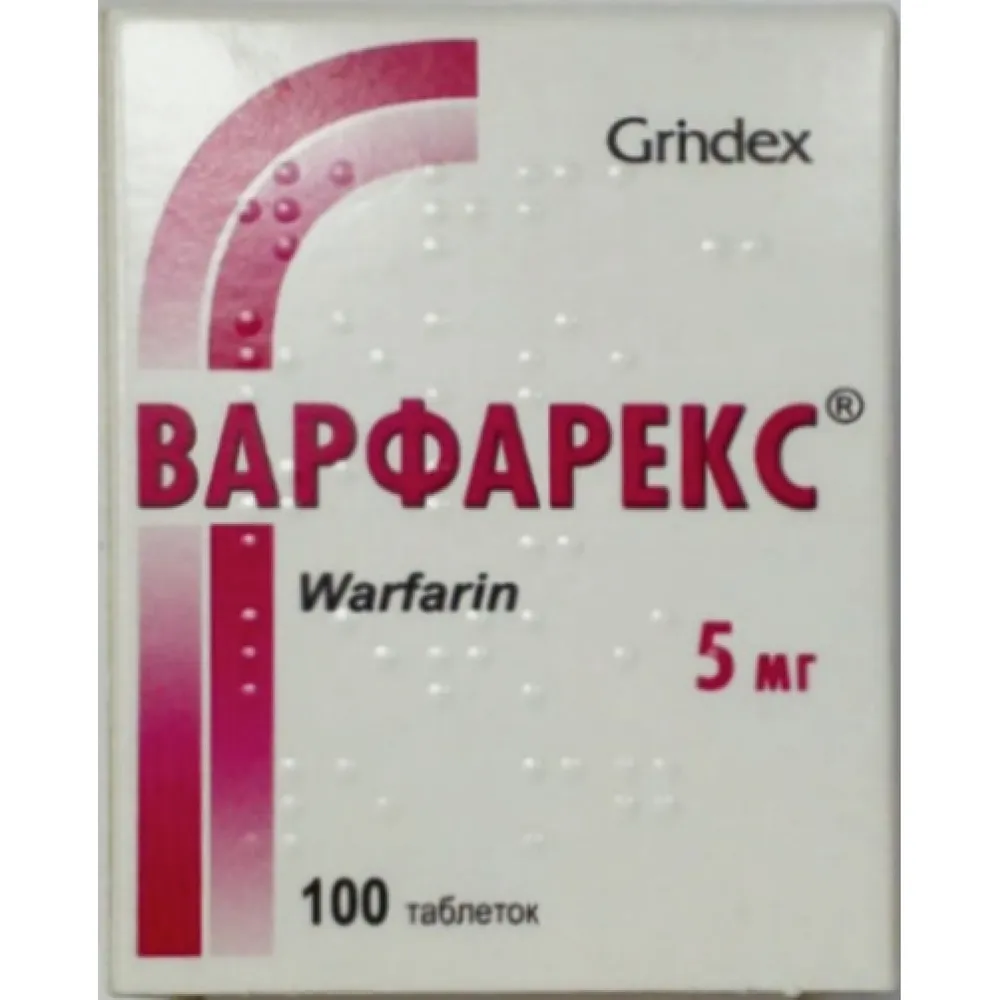
Table of Contents
INSTRUCTIONS FOR MEDICAL USE OF THE MEDICINAL PRODUCT VAREX® (VARFAREX)
Composition:
Active substance: warfarin;
1 tablet contains 3 mg or 5 mg of sodium warfarinate (as sodium warfarinate clathrate);
Excipients: lactose monohydrate; microcrystalline cellulose; crospovidone; magnesium stearate; indigocarmine (E 132) (for 3 mg tablets) and Ponceau 4R (E 124) (for 5 mg tablets).
Pharmaceutical form. Tablets.
Main physico-chemical properties:
3 mg tablets – round, flat-cylindrical tablets of blue color with darker specks, with bevel and score line on one side;
5 mg tablets – round, flat-cylindrical tablets of pink color with darker specks, with bevel and quadrisecting score line on one side.
Pharmacotherapeutic group. Antithrombotic agents. Vitamin K antagonists.
ATC code B01A A03.
Pharmacological properties.
Pharmacodynamics.
Warfarin belongs to the group of anticoagulants – derivatives of coumarin. Drugs of this group inhibit the formation in the liver of the reduced form of vitamin K, which is necessary for the final stage of synthesis of several factors involved in the regulation of blood coagulation: prothrombin (factor II), proconvertin (factor VII), antihemophilic globulin B (factor IX), Stuart-Prower factor (factor X), as well as proteins C and S, resulting in prolonged blood clotting time. Warfarin does not exert direct effects on already formed coagulation factors in systemic circulation; therefore, 8–12 hours elapse from the moment of drug intake to the onset of effect. Maximum efficacy of the drug occurs on days 2–7 (during this period, coagulation factors already circulating in the blood are eliminated from the body). After a single dose, the duration of action lasts up to 5 days. Among warfarin isomers, S-warfarin is approximately 5 times more potent than R-warfarin.
Pharmacokinetics.
The bioavailability of orally administered warfarin is at least 90%, with maximum plasma levels reached within 1.2 hours. Concomitant food intake slows absorption but does not reduce it due to the presence of enterohepatic circulation. Enterohepatic recirculation occurs. Warfarin is highly bound to plasma proteins, with its free fraction ranging from 0.5% to 3%. The volume of distribution is approximately 0.14 L/kg. Warfarin crosses the placental barrier and is excreted in milk in trace amounts. Warfarin is metabolized in the liver. Enzymes CYP2C9 (for S-warfarin) and CYP1A2 and CYP3A (for R-warfarin) convert it into inactive metabolites, which are excreted in urine. The elimination half-life of S-warfarin is 18–35 hours, and that of R-warfarin is 20–70 hours.
Clinical characteristics.
Indications.
- Prophylaxis and treatment of deep vein thrombosis and pulmonary artery embolism;
- secondary prevention of myocardial infarction and prophylaxis of thromboembolic complications (stroke or systemic embolism) following myocardial infarction;
- prophylaxis of thromboembolic complications in patients with atrial fibrillation, heart valve disease, or prosthetic heart valves;
- prophylaxis of transient ischemic attacks and stroke.
Contraindications.
- Hypersensitivity to warfarin and/or any excipient of the medicinal product;
- clinically evident bleeding;
- tendency to bleeding (von Willebrand disease, hemophilia, thrombocytopenia, and platelet function disorders);
- to avoid the risk of severe bleeding within 72 hours after major surgical procedures, within 48 hours in the postpartum period;
- severe renal or hepatic insufficiency or hepatic cirrhosis;
- untreated or uncontrolled arterial hypertension;
- recent intracranial hemorrhage; conditions predisposing to intracranial hemorrhage, such as cerebral artery aneurysm, aortic aneurysm;
- predisposition to syncope (falls);
- surgery on the central nervous system or eyes;
- gastrointestinal or renal bleeding and their complications;
- diverticulosis;
- malignant tumors;
- esophageal varices;
- infectious endocarditis, pericarditis, or exudative pericarditis;
- conditions where therapy cannot be conducted safely enough (e.g., dementia, psychoses, alcoholism);
- lumbar puncture.
Interaction with other medicinal products and other types of interactions.
Warfarin interacts with many other drugs.
Fibrinolytics such as streptokinase and alteplase are contraindicated in patients receiving warfarin.
Concomitant use of warfarin should be avoided or used with caution under close clinical and laboratory monitoring when administered with thrombin inhibitors, unfractionated heparins and their derivatives, low-molecular-weight heparins, fondaparinux, rivaroxaban, glycoprotein IIb/IIIa receptor antagonists, prostacyclin, and serotonin reuptake inhibitors.
Some drugs, for example cholestyramine, may affect the absorption or enterohepatic recirculation of warfarin. The metabolism of warfarin in the liver may be increased (e.g., antiepileptic and antituberculosis agents) or decreased (e.g., amiodarone or metronidazole). The free fraction of warfarin in blood may increase, and in the absence of hepatic insufficiency, metabolism and elimination of warfarin may be enhanced, leading to reduced effect. Drugs affecting platelets and primary hemostasis (acetylsalicylic acid, clopidogrel, ticlopidine, dipyridamole, and most nonsteroidal anti-inflammatory drugs, but not coxibs) may cause pharmacodynamic interactions and increase the patient's susceptibility to severe bleeding. High-dose penicillins may have a similar effect on primary hemostasis.
Anabolic steroids, azapropazone, erythromycin, and other cephalosporins reduce vitamin K-dependent synthesis of clotting factors and potentiate the effect of warfarin. Excessive dietary intake of vitamin K reduces the effect of warfarin. Impaired absorption of vitamin K, for example during diarrhea, may enhance the effect of warfarin. Patients whose diet is low in vitamin K depend on vitamin K2 produced by intestinal bacteria. In such patients, various antibiotics may reduce vitamin K2 synthesis, leading to an increased effect of warfarin.
Excessive alcohol consumption in the presence of hepatic insufficiency potentiates the effect of warfarin. Quinine, present in tonic water, may also increase the effect of warfarin.
For pain relief during warfarin therapy, paracetamol or opioids are recommended.
Warfarin may enhance the effect of oral antidiabetic agents that are sulfonylurea derivatives.
During warfarin therapy, the use of erlotinib, methylphenidate, and oral contraceptives should be avoided.
Drugs that enhance the anticoagulant effect of warfarin: acetylsalicylic acid, allopurinol, amiodarone, amoxicillin, argatroban, azapropazone, azithromycin, bezafibrate, bicalutamide, cephalexin, cefamandole, cefmenoxime, cefmetazole, cefoperazone, cefuroxime, celecoxib, cyclophosphamide, cimetidine, ciprofloxacin, danazol, dextropropoxyphene, (dextro)thyroxine, diflunisal, digoxin, disulfiram, diclofenac (risk of bleeding is increased, also when diclofenac is administered intravenously), doxycycline, entacapone, erythromycin, esomeprazole, etodolac, etoposide, etoricoxib, phenylbutazone, fenofibrate, feprazone, fluconazole, fluorouracil, flurbiprofen, flutamide, fluvastatin, fluvoxamine, gatifloxacin, gemfibrozil, grepafloxacin, anti-rabies vaccine, quinidine, quinine, chloramphenicol, chloral hydrate, ibuprofen, ifosfamide, indomethacin, alpha- and beta-interferons, itraconazole, isoniazid, carboxyuridine, ketoconazole, ketoprofen, ketorolac, clarithromycin, clofibrate, codeine, latamoxef, leflunomide, lepirudin, levofloxacin, lovastatin, mefenamic acid, meloxicam, methylphenidate, metolazone, methotrexate, metronidazole, miconazole (including oral cavity gel), mirtazapine, moxifloxacin, nalidixic acid, naproxen, neomycin, norfloxacin, ofloxacin, omeprazole, oxyphenbutazone, paracetamol (effect appears after 1–2 weeks of continuous use), parecoxib, piroxicam, proguanil, propafenone, propranolol, ritonavir, rofecoxib, roxithromycin, rosuvastatin, selective serotonin reuptake inhibitors, simvastatin, sulfaphenazole, sulfafurazole, sulfamethizole, sulfamethoxazole-trimethoprim, sulfinpyrazone, sulfophenur, sulindac, (anabolic and androgenic) steroid hormones, tamoxifen, tegafur, tetracycline, thiophenylacetic acid, tolmetin, toremifene, tramadol, trastuzumab, troglitazone, valdecoxib, valproic acid, venlafaxine, vitamin A, vitamin E, zafirlukast. Lactulose may potentiate the effect of warfarin with prolonged use.
Drugs that reduce the anticoagulant effect of warfarin: acitretin, aminoglutethimide, azathioprine, barbiturates, cyclosporine, dicloxacillin, disopyramide, phenobarbital, phenytoin, griseofulvin, chlordiazepoxide, chlorthalidone, carbamazepine, cloxacillin, mercaptopurine, mesalazine, mitotane, nafcillin, primidone, rifampicin, spironolactone, sucralfate, trazodone, vitamin C.
Drugs that may either enhance or reduce the anticoagulant effect of warfarin: atazanavir, estrogens, fosamprenavir, cholestyramine, corticosteroids (high doses of corticosteroids increase the anticoagulant effect), nevirapine, progesterone, tricyclic antidepressants, sulfonilurea agents (coumarins may enhance their hypoglycemic effect).
Herbal products may either enhance the effect of warfarin, for example ginkgo (Ginkgo biloba), garlic (Allium sativum), dong quai (Angelica sinensis, contains coumarins), papaya (Carica papaya, mechanism unknown), and sage (Salvia miltiorrhiza, slows warfarin elimination), or reduce its effect, for example ginseng (Panax ginseng). The effect of warfarin may be reduced when used concomitantly with St. John's wort (Hypericum perforatum). This effect is due to enzymes contained in St. John's wort that degrade warfarin. Therefore, St. John's wort-containing products must not be combined with warfarin. The weakening effect may persist for 2 weeks after discontinuation of St. John's wort. If a patient is taking St. John's wort-containing products, INR should be determined and their use discontinued. INR must be carefully monitored, as it may increase after stopping St. John's wort. Warfarin dose adjustment may be required.
During warfarin therapy, dietary vitamin K intake should be as consistent as possible. Foods and plants rich in vitamin K (e.g., green vegetables) reduce the effect of warfarin.
Concomitant use of warfarin and cranberry juice should be avoided, as the anticoagulant effect is enhanced.
During warfarin therapy, facial bruising may occur after application of chamomile lotion.
Since the effect of warfarin may be altered by a large number of medicinal products, additional laboratory monitoring of the patient's coagulation system is required with any change in concomitant therapy.
Special precautions for use.
A mandatory condition for therapy with Warfarex® is strict adherence to the prescribed dose of the drug.
To achieve a rapid antithrombotic effect, treatment must begin with administration of heparin. Heparin should then be combined with warfarin for 5–7 days until the target level of the International Normalized Ratio (INR) is reached, and for 2 days thereafter.
Particular caution and careful monitoring of INR levels are required when prescribing to patients who are at risk of serious bleeding (e.g., when using nonsteroidal anti-inflammatory drugs [NSAIDs] concomitantly, after recent ischemic stroke, bacterial endocarditis, or gastrointestinal bleeding).
The most likely risk factors for bleeding include high anticoagulation level (INR > 4.0), age over 65 years, unstable INR, recent gastrointestinal bleeding, uncontrolled arterial hypertension, cerebrovascular diseases, serious heart conditions, tendency to fall, anemia, malignancy, trauma, renal insufficiency, and concomitant use of other medications. All patients taking warfarin should have regular INR measurements. Patients at increased risk of bleeding require more frequent INR monitoring, more careful dose adjustment to achieve the desired INR, and shorter duration of therapy. Patients should be warned about measures to minimize the risk of bleeding and should immediately inform their physician if signs or symptoms of bleeding occur.
Measuring INR, consulting a physician, and reducing the dose or discontinuing the drug are extremely important. If INR is elevated, reduce or discontinue warfarin therapy. Sometimes anticoagulant therapy must be continued. INR should be measured over 2–3 days to ensure that it has decreased.
Other antiplatelet drugs should be used with special caution due to the increased risk of bleeding.
Anticoagulation after ischemic stroke increases the risk of secondary intracerebral hemorrhage. In patients with atrial fibrillation, long-term warfarin therapy is indicated, but the risk of early recurrent embolism is low, so a treatment interruption after ischemic stroke is justified. Warfarin therapy should be restarted 2–14 days after ischemic stroke, depending on the size of the infarct and arterial blood pressure. In patients with embolic stroke or uncontrolled arterial hypertension, warfarin therapy should be discontinued for 14 days.
Before surgical procedures, if there is no risk of serious bleeding, surgery may be performed with INR < 2.5. Before surgical procedures with a risk of serious bleeding, warfarin should be discontinued 3 days prior to surgery.
If continuation of anticoagulant therapy is necessary, e.g., in life-threatening thromboembolism, INR should be reduced to < 2.5 and heparin therapy initiated.
If surgery is required and warfarin cannot be discontinued 3 days prior, reversal of anticoagulation should be achieved using low doses of vitamin K.
Resumption of warfarin therapy depends on the risk of postoperative bleeding.
Warfarin should not be discontinued before routine dental procedures such as tooth extraction.
Treatment of patients with peptic ulcer disease should be conducted with special caution due to the high risk of bleeding. Such patients should be regularly examined and informed about how to recognize bleeding and what measures to take if bleeding occurs.
Patients suffering from alcoholism or dementia may be unable to adhere to the required warfarin regimen. Heavy alcohol consumption increases the risk of hypoprothrombinemia and bleeding.
Resistance to warfarin is a very rare phenomenon. Resistant patients require warfarin doses 5–20 times higher to achieve a therapeutic effect. In cases of poor patient response to warfarin, other more likely causes should be ruled out: noncompliance, drug or food interactions, and laboratory errors.
To prevent coumarin-induced necrosis, patients with congenital deficiency of antithrombin protein C or S should initially be treated with heparin. The initial loading dose of warfarin should not exceed 5 mg per day. Heparin therapy should be continued for 5–7 days as described above.
Patients with a mutation in the gene encoding the CYP2C9 enzyme have a prolonged warfarin half-life. These patients require lower doses of the drug, as standard therapeutic doses increase the risk of bleeding.
Factors such as weight loss, acute illness, or smoking cessation may enhance the effect of warfarin, possibly requiring dose reduction. Conversely, weight gain, diarrhea, and vomiting may reduce warfarin's effect, possibly requiring dose increase.
Anticoagulant-related nephropathy
Acute kidney injury may occur in patients with altered glomerular integrity or a history of kidney disease, possibly related to episodes of excessive anticoagulation and hematuria. Several cases have been reported in patients without prior kidney disease. Patients with supratherapeutic International Normalized Ratio (INR) and hematuria (including microscopic) should be closely monitored, including assessment of kidney function.
Elderly patients: treatment should be initiated with particular caution. Patient compliance and ability to follow strict physician instructions must be ensured. Hepatic metabolism of warfarin and synthesis of blood clotting factors are slowed in elderly patients, which may easily lead to excessive warfarin effect.
Concomitant use of other drugs: potential harmful interactions should be considered.
Hyperthyroidism, fever, and uncompensated heart failure may enhance the effect of warfarin. Hypothyroidism may reduce warfarin's effect. Hyperthyroidism may reduce warfarin's effect.
Hepatic insufficiency: moderate liver dysfunction enhances the effect of warfarin.
Renal insufficiency and nephrotic syndrome increase the concentration of free warfarin fraction in plasma, which may either increase or decrease warfarin's effect depending on the patient's comorbidities.
In all cases, careful monitoring of the patient's clinical condition and INR values is required.
Bleeding is the main adverse effect of warfarin therapy; therefore, a continuous assessment of the risk of bleeding versus potential benefit is essential.
Warfarex® 3 mg and 5 mg tablets contain lactose and therefore should not be used in patients with rare hereditary conditions of galactose intolerance, Lapp lactase deficiency, or glucose-galactose malabsorption.
Warfarex® 5 mg tablets contain the dye Ponceau 4R (E 124), which may cause allergic reactions.
Use during pregnancy or breastfeeding.
The drug is contraindicated during pregnancy due to its teratogenic effects, risk of fetal bleeding, and potential fetal death. The risk of warfarin use to the fetus must be carefully weighed against the risk to the mother if warfarin is not used. Antithrombotic therapy during pregnancy should be individualized and closely supervised by appropriate specialists.
Warfarin passes into breast milk in small amounts and has almost no effect on blood coagulation in the infant; therefore, the drug may be used during breastfeeding.
Ability to affect reaction speed when driving or operating machinery.
Warfarex® 3 mg and 5 mg tablets do not affect the ability to drive or operate machinery.
Dosage and Administration
Warfarex® should be taken at the same time each day.
The dosage of Warfarex® is determined individually by a physician based on the patient's prothrombin time expressed as the International Normalized Ratio (INR).
Target INR ranges for oral anticoagulant therapy:
- Prevention of thromboembolic complications in patients with prosthetic heart valves: INR 2.5–3.5
- Other indications: INR 2.0–3.0
Adults. Patients with normal body weight and an initial INR below 1.2 should receive 10 mg/day of warfarin (2 tablets of 5 mg) for 3 days. Subsequent doses, based on the INR level on day 4, are shown in Table 1.
The recommended initial dose for outpatients and patients with congenital protein C or S deficiency is 5 mg/day of warfarin (*) for 3 days. Subsequent doses, based on the INR level on day 4, are shown in Table 1.
Elderly patients, patients with low body weight.
The recommended initial dose is 5 mg/day of warfarin (*) for 2 days. Subsequent doses, based on the INR level on day 3, are shown in Table 1.
Patients with an initial INR above 1.2, patients with diseases or taking medications affecting anticoagulant therapy efficacy.
The recommended initial dose is 5 mg/day of warfarin (*) for 2 days. Subsequent doses, based on the INR level on day 3, are shown in Table 1.
Table 1
| Day |
INR |
Warfarin dose, mg/day |
| 1 |
|
10 (5.0*) |
| 2 |
|
10 (5.0*) |
| 3 |
< 2.0 2.0–2.4 2.5–2.9 3.0–3.4 3.5–4.0 > 4.0 |
10 (5.0*) 5 3 2.5 1.5 omit one day |
| 4–6 |
< 1.4 1.4–1.9 2.0–2.4 2.5–2.9 3.0–3.9 4.0–4.5 > 4.5 |
10 7.5 5 4.5 3 omit one day, then 1.5 omit 2 days, then 1.5 |
| 7 |
1.1–1.4 1.5–1.9 2.0–3.0 3.1–4.5 > 4.5 |
Weekly warfarin dose Increase by 20% Increase by 10% No dose change Decrease by 10% Omit until INR <4.5, then resume with 20% lower dose |
The duration of treatment is determined individually (from 6 weeks to lifelong use). In case of developing tolerance to the effect of Warfarinex®, the dose may be increased 2–10 times. Strict adherence to the physician's recommendations regarding drug use and careful laboratory monitoring of blood coagulation parameters are absolutely essential.
INR should be measured daily until a stable target INR level is achieved, which usually occurs within 5–6 days after initiation of treatment. Thereafter, the interval between INR measurements may be gradually extended by one week at a time until reaching a 4-week interval. The interval between measurements should be less than 4 weeks if INR results vary significantly or in patients with liver disease or any other condition affecting vitamin K absorption. Starting new medications or discontinuing previous ones requires more frequent INR monitoring. During long-term treatment, adjust the weekly warfarin dose (the total warfarin dose the patient receives over one week) according to Table 1. If a dose adjustment is needed, perform the next INR measurement after 1 or 2 weeks. Afterwards, the interval may again be gradually extended up to 4 weeks.
If a rapid antithrombotic effect is required, treatment should be initiated with heparin administration. Heparin administration should then be continued concurrently with warfarin for 5–7 days until INR remains within the target range for at least 2 consecutive days.
Planned surgeries. Perioperative anticoagulant therapy should be managed as follows:
Measure INR one week before the scheduled surgery.
Discontinue warfarin 1–5 days before surgery. If the patient has a high risk of thrombosis, administer prophylactic subcutaneous low-molecular-weight heparin. The timing of warfarin discontinuation depends on the INR value:
- Discontinue warfarin 5 days before surgery if INR >4.0;
- Discontinue warfarin 3 days before surgery if INR is 3.0–4.0;
- Discontinue warfarin 2 days before surgery if INR is 2.0–3.0.
Measure INR on the evening before surgery. If INR >1.8, administer 0.5–1.0 mg of vitamin K1 orally or intravenously. On the day of surgery, consider infusion of unfractionated heparin or prophylactic administration of low-molecular-weight heparin.
For 5–7 days after surgery, continue subcutaneous administration of low-molecular-weight heparin concurrently with resumption of warfarin therapy.
After minor surgeries, resume warfarin at the usual maintenance dose on the evening of the surgical day; after major surgeries – on the day when enteral feeding is resumed.
Children. Anticoagulant therapy in children should be conducted under the prescription and supervision of pediatricians. The dose can be selected according to Table 2.
Table 2
| Day 1 |
If the baseline INR value is between 1.0 and 1.3, the initial dose is 0.2 mg/kg body weight; in case of liver function impairment – 0.1 mg/kg body weight |
| Days 2 to 4, if INR values are: 1.1 to 1.3 1.4 to 1.9 2.0 to 3.0 3.1 to 3.5 >3.5 |
Maintenance dose: repeat loading dose 50% of initial dose 50% of initial dose 25% of initial dose wait until INR <3.5 is achieved, then resume treatment with a dose equal to 50% of the previous dose |
| Maintenance therapy, if INR values are: 1.1 to 1.4 1.5 to 1.9 2.0 to 3.0 3.1 to 3.5 >3.5 |
Action (weekly dose): increase by 20% increase by 10% do not change dose decrease by 10% wait until INR <3.5 is achieved, then resume treatment with a dose 20% lower than the previous dose |
Overdose.
Symptoms: bleeding, hemorrhage.
Treatment: in mild cases of gradual overdose, reducing the dose or discontinuing warfarin therapy is usually sufficient until the INR returns to the target range. Gastric emptying is not recommended in acute overdose due to the risk of bleeding. Activated charcoal should be administered repeatedly to prevent absorption and enterohepatic recirculation of warfarin. When activated charcoal is administered parenterally (IV), vitamin K should be given. If bleeding occurs, warfarin should be discontinued and vitamin K administered (intravenously at a dose of 5–10 mg), along with clotting factor concentrate or fresh frozen plasma. If further anticoagulation is required, vitamin K should be avoided in doses exceeding 10 mg. Otherwise, the patient may become resistant to warfarin therapy for up to 2 weeks.
Recommendations for the management of overdose are presented in Table 3.
Table 3
| INR level |
Recommendations |
| In the absence of clinically significant bleeding |
|
| < 5.0 |
Skip the next dose of warfarin and resume therapy at a lower dose after INR normalization |
| 5.0–9.0 |
Skip the next 1–2 doses of warfarin and resume therapy at a lower dose after INR normalization, or skip the next dose and administer 2.5 mg vitamin K orally |
| > 9.0 |
Discontinue warfarin and administer 3.0–5.0 mg vitamin K orally |
| When rapid reversal of warfarin effect is needed (e.g., prior to surgery) |
|
| 5.0–9.0 and surgery scheduled |
Discontinue warfarin and administer 2.0–4.0 mg vitamin K orally approximately 24 hours before the procedure; additionally, 1.0–2.0 mg vitamin K orally may be given later if needed |
| When very rapid reversal of warfarin effect is required |
|
| Severe overdose (INR >20.0) or major bleeding |
Slow intravenous infusion of 10 mg vitamin K. Depending on urgency, fresh frozen plasma or prothrombin complex concentrate may be used. Vitamin K may be repeated every 12 hours if necessary. |
Adverse Reactions
The following are adverse reactions that have been reported.
Nervous system disorders: subdural hematoma, fever.
Blood and lymphatic system disorders: hemorrhage, warfarin necrosis, purple discoloration of toes, purpura, eosinophilia, vasculitis, anemia, decreased hematocrit.
Respiratory, thoracic and mediastinal disorders: tracheal calcification, hemothorax.
Gastrointestinal disorders: nausea, vomiting, vomiting of blood, diarrhea, abdominal pain, gastrointestinal bleeding, rectal bleeding, melena.
Hepatobiliary disorders: reversible increase in liver enzyme activity, cholestatic hepatitis, jaundice.
Skin and subcutaneous tissue disorders: reversible alopecia, rash, urticaria, pruritus, eczema, erythematous skin swelling leading to ecchymosis, infarction and skin necrosis.
Renal and urinary disorders: hematuria, priapism, anticoagulant nephropathy (see section "Special warnings and precautions for use").
General disorders: allergic reactions (usually manifesting as skin rash), nephritis, urolithiasis, tubular necrosis.
The most common adverse effects of warfarin are bleeding and hemorrhages, including: minor nosebleeds and bleeding from gums, subcutaneous hemorrhages; rarely – intracranial and gastrointestinal bleeding. The most significant risk factor for intracranial hemorrhage is untreated or uncontrolled hypertension. The risk of bleeding increases when the INR is significantly above the target range. If bleeding occurs while the INR is within the desired therapeutic range, an underlying condition or disease is usually present and should be investigated. Even minor bleeding should be reported to a physician.
Warfarin necrosis is a rare complication of warfarin therapy. Necrosis typically begins with swelling of the skin on the lower limbs or buttocks, which becomes darkened, as well as in other areas. The lesions then become necrotic. In 90% of cases, necrosis occurs in women; lesions appear between the 3rd and 10th day of treatment. The etiology is believed to involve protein C or S deficiency. Congenital deficiency of these proteins may predispose to complications; therefore, warfarin therapy should be initiated concomitantly with heparin and with low initial doses. If this complication occurs, warfarin should be discontinued and heparin continued until lesions heal and scar.
Purple discoloration of the toes is an even rarer complication of warfarin therapy. Affected patients are usually men with atherosclerosis. Warfarin causes hemorrhage into atheromatous plaques, leading to microembolism. Symmetrical purpuric skin lesions of the toes and soles develop, accompanied by burning pain. These symptoms gradually resolve upon discontinuation of warfarin. Rarely, the following adverse effects have been reported: systemic cholesterol microembolization, abdominal pain, pancreatitis, taste disturbances, lethargy, weakness, headache, dizziness, paresthesia, pruritus, edema, fever, leukopenia.
Adverse effects in children are similar to those in adults. Moderate bleeding is a significant adverse effect. Skin rash, alopecia, and skin necrosis occur rarely. Osteopenia may develop with long-term use.
Shelf life. 5 years.
Do not use after the expiry date stated on the packaging.
Storage conditions.
Store in a light-protected place at a temperature not exceeding 25 °C.
Keep out of reach of children.
Packaging.
30 or 100 tablets in a container; 1 container in a cardboard box.
Prescription status. Prescription only.
Manufacturer.
JSC "Grindeks".
Manufacturer's address and place of business.
53 Krustpils Street, Riga, LV-1057, Latvia.
Tel./fax: +371 67083205 / +371 67083505.
E-mail: [email protected]
Date of last review.