Vanstaf
Ukraine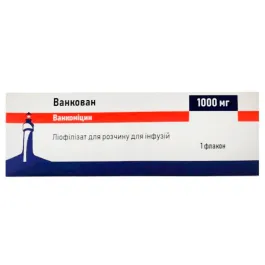
Table of Contents
INSTRUCTIONS FOR MEDICAL USE OF THE MEDICINAL PRODUCT VANSTAPH (VANSTAPH)
Composition:
Active substance: vancomycin hydrochloride;
1 vial contains vancomycin hydrochloride equivalent to vancomycin 1000 mg;
Excipients: none.
Pharmaceutical form. Lyophilisate for solution for infusion.
Main physicochemical properties: white or from almost white to light yellowish-brown lyophilized powder or mass in a transparent glass vial, stoppered with a grey rubber stopper for lyophilization with two flanges, crimped with an aluminum cap with a dark blue polypropylene disc.
Pharmacotherapeutic group.
Antimicrobials for systemic use. Glycopeptide antibiotics.
ATC code J01X A01.
Pharmacological properties.
Pharmacodynamics.
Vancomycin is a tricyclic glycopeptide antibiotic derived from Amycolatopsis orientalis (formerly known as Nocardia orientalis).
The bactericidal action of vancomycin is primarily due to inhibition of cell wall biosynthesis. In addition, vancomycin affects the permeability of bacterial cell membranes and RNA synthesis. There is no cross-resistance between vancomycin and other antibiotics. Vancomycin is not active in vitro against Gram-negative bacilli, mycobacteria, or fungi.
Synergy
The combination of vancomycin and an aminoglycoside acts synergistically in vitro against many strains of Staphylococcus aureus, Streptococcus bovis, enterococci, and the viridans group of streptococci.
Vancomycin has been shown to be active against most strains of the microorganisms listed below, both in vitro and in clinical infections (see section "Administration and dosage").
Aerobic Gram-positive microorganisms
Corynebacteria.
Enterococci (e.g., Enterococcus faecalis).
Staphylococci, including Staphylococcus aureus and Staphylococcus epidermidis (including heterogeneous methicillin-resistant strains).
Streptococcus bovis.
Viridans group streptococci.
Despite the in vitro data listed below, their clinical significance is unknown.
Vancomycin demonstrates in vitro minimum inhibitory concentrations (MIC) of ≤1 µg/mL against most (≥90%) strains of the streptococci listed below, and MICs of ≤4 µg/mL against most (≥90%) strains of the other specified microorganisms. However, the safety and efficacy of vancomycin in treating clinical infections caused by these microorganisms have not been established by adequate and well-controlled clinical trials.
Aerobic Gram-positive microorganisms
Listeria monocytogenes.
Streptococcus pyogenes.
Streptococcus pneumoniae (including penicillin-resistant strains).
Streptococcus agalactiae.
Anaerobic Gram-positive microorganisms
Actinomyces species.
Lactobacillus species.
Methods of susceptibility testing
Whenever possible, clinical microbiology laboratories should provide physicians with summary reports of in vitro susceptibility testing results for antimicrobial agents used in local hospitals and other healthcare facilities, such as periodic reports describing the susceptibility profiles of hospital-acquired and community-acquired pathogens. These results should assist physicians in selecting the most effective antimicrobial agents.
Broth dilution methods
Quantitative methods are used to determine the antimicrobial MIC. These MICs indicate the susceptibility of bacteria to the antimicrobial agent. MICs should be determined using standardized methodology (broth, agar, or microdilution). MIC values should be interpreted according to the criteria provided in Table 1.
Diffusion methods
Qualitative methods involving measurement of zone diameters can also provide indicators of bacterial susceptibility to antimicrobial agents; the zone size should be determined using a standardized method. For this procedure, paper disks impregnated with 30 µg of vancomycin are used to determine microbial susceptibility to vancomycin. The control diffusion points for disks are presented in Table 1.
Table 1
Interpretive criteria for vancomycin susceptibility testing
| Organism |
MIC (µg/ml) |
Disk diffusion diameter (mm) |
||||
| Susceptible (S) |
Intermediate (I) |
Resistant (R) |
Susceptible (S) |
Intermediate (I) |
Resistant (R) |
|
| Enterococci |
≤ 4 |
8-16a |
≥ 32 |
≥ 17b |
15-16b |
≤ 14b |
| Staphylococcus aureus c,d |
≤ 2 |
4-8 |
≥ 16 |
- |
- |
- |
| Coagulase-negative staphylococci d,e |
≤ 4 |
8-16 |
≥ 32 |
- |
- |
- |
| Streptococci strains, except S. pneumoniae |
≤ 1f,g |
- |
- |
≥ 17f,h |
- |
- |
a Isolates with vancomycin MICs of 8 to 16 µg/mL should be further tested for vancomycin resistance using standardized procedures.
b Plates should be incubated for a full 24 hours and examined using transmitted light. Measure the diameter of the complete inhibition zones (including the disk diameter) with the naked eye. The edge of the zone is defined as the area with no visible growth detectable by the naked eye. Ignore faint growth of tiny colonies visible only with a magnifying lens at the edges of the inhibition zone. Any noticeable growth within the inhibition zone indicates vancomycin resistance. Microorganisms showing intermediate zones should be tested by a standardized dilution method.
c Dilution tests should be performed to determine susceptibility of all staphylococcal cultures. Disk diffusion tests are not reliable for testing vancomycin because they do not allow differentiation between vancomycin-susceptible and vancomycin-intermediate S. aureus isolates, nor do they distinguish between vancomycin-susceptible, intermediate, and resistant isolates of coagulase-negative staphylococci.
d Any S. aureus isolate with a vancomycin MIC of ≥ 8 µg/mL should be sent to a reference laboratory.
e Any coagulase-negative Staphylococcus isolate with a vancomycin MIC of ≥ 32 µg/mL should be sent to a reference laboratory.
f Rare resistant isolates do not allow determination of categories other than "Susceptible." If test results meet the criteria for the nonsusceptible category, confirm the microorganism's identification and the vancomycin susceptibility test results. After confirmation, the isolates should be sent to a reference laboratory.
g Interpretive criteria apply only to tests performed by the broth microdilution method using Mueller-Hinton broth with adjusted cation content supplemented with 2–5% lysed horse blood.
h Interpretive criteria apply only to disk diffusion tests performed using Mueller-Hinton agar supplemented with 5% defibrinated sheep blood and incubated in 5% CO₂.
Quality Control
Standardized susceptibility testing procedures require the use of laboratory control microorganisms to monitor and ensure the accuracy and consistency of materials, reagents, and technical performance used in the test. When testing is performed using appropriate quality control strains, standard vancomycin powder should yield MIC values as listed in Table 2. For diffusion testing using quality control strains, a 30 µg vancomycin disk should yield zone diameters as specified in Table 2.
Table 2
Quality control testing ranges for in vitro susceptibility determination
| Microorganism (ATCC No. (American Type Culture Collection)) |
MIC range (mcg/ml) |
Disc diffusion range (mm) |
| Enterococcus faecalis (29212) |
1-4 |
Not applicable |
| Staphylococcus aureus (29213) |
0.5-2 |
Not applicable |
| Staphylococcus aureus (25923)a |
Not applicable |
17-21 |
| Streptococcus pneumoniae (49619)b,c |
0.12-0.5 |
20-27 |
a Quality control strain and interpretation criteria for vancomycin susceptibility testing of Enterococcus strains.
b Interpretation criteria apply only to tests performed using cation-adjusted Mueller-Hinton broth supplemented with 2–5 % lysed horse blood. Interpretation criteria apply only to tests performed using Mueller-Hinton agar supplemented with 5 % defibrinated sheep blood and incubated in 5 % CO2.
c Quality control strain and interpretation criteria for vancomycin susceptibility testing of Streptococci, excluding S. pneumoniae.
Pharmacokinetics.
Vancomycin is poorly absorbed after oral administration.
In patients with normal renal function, multiple intravenous infusions of 1 g vancomycin (15 mg/kg) administered over 60 minutes result in a mean plasma concentration of approximately 63 µg/mL immediately after the end of infusion, a mean plasma concentration of approximately 23 µg/mL at 2 hours after infusion, and a mean plasma concentration of approximately 8 µg/mL at 11 hours after the end of infusion. Multiple infusions of 500 mg administered over 30 minutes result in a mean plasma concentration of approximately 49 µg/mL immediately after the end of infusion, a mean plasma concentration of approximately 19 µg/mL at 2 hours after infusion, and a mean plasma concentration of approximately 10 µg/mL at 6 hours after the end of infusion. Plasma concentrations during multiple dosing are approximately equal to those after single-dose administration.
The mean elimination half-life of vancomycin in plasma in individuals with normal renal function ranges from 4 to 6 hours. Within the first 24 hours, approximately 75 % of the administered dose of vancomycin is excreted in urine by glomerular filtration. Mean plasma clearance is approximately 0.058 L/kg/hour, and mean renal clearance is approximately 0.048 L/kg/hour. Impaired renal function leads to a slower elimination of vancomycin. In anephric patients, the mean elimination half-life of the drug is 7.5 days. The volume of distribution is 0.3–0.43 L/kg. There is no apparent metabolism of the drug. Approximately 60 % of the dose of vancomycin administered intraperitoneally during a peritoneal dialysis session is systemically absorbed within 6 hours. A serum concentration of approximately 10 µg/mL is achieved following intraperitoneal administration of 30 mg/kg vancomycin. However, the safety and efficacy of intraperitoneal administration of vancomycin have not been established by adequate and well-controlled studies (see section "Special precautions").
In elderly individuals, total systemic and renal clearance of vancomycin may be reduced. Vancomycin is approximately 55 % bound to serum proteins, as determined by ultrafiltration at serum concentrations ranging from 10 to 100 µg/mL. Following intravenous administration of vancomycin, inhibitory concentrations of the drug are present in pleural, pericardial, ascitic, and synovial fluids, in urine, in fluid obtained from peritoneal dialysis, and in atrial appendage tissue. Vancomycin poorly diffuses through intact meninges into cerebrospinal fluid; however, in the presence of meningeal inflammation, the drug penetrates into cerebrospinal fluid.
Clinical characteristics.
Indications.
- Treatment of serious or severe infections caused by methicillin-resistant (β-lactam-resistant) staphylococcal strains.
- Treatment of patients with penicillin allergy, including cases where other agents, including penicillins or cephalosporins, have not been effective.
- Treatment of infections caused by vancomycin-susceptible microorganisms resistant to other antimicrobial agents.
- Treatment of staphylococcal endocarditis caused by S. viridans or S. bovis. Vancomycin is effective in enterococcal endocarditis (e.g., E. faecalis) only when used in combination with aminoglycosides.
- Treatment of diphtheroid endocarditis.
- Treatment of early prosthetic valve endocarditis caused by S. epidermidis or diphtheroids, in combination with rifampin, an aminoglycoside, or both.
- Treatment of other staphylococcal infections, including septicemia, bone infections, lower respiratory tract infections, and skin and skin structure infections.
- Treatment of localized purulent staphylococcal infections as an adjunct to appropriate surgical interventions.
- Treatment of antibiotic-associated pseudomembranous colitis caused by Clostridioides difficile (oral administration).
Contraindications.
Vancomycin hydrochloride for injection is contraindicated in patients with known hypersensitivity to this antibiotic.
Interaction with other medicinal products and other forms of interaction.
Concomitant administration of vancomycin and anesthetics has been associated with erythema and histamine-like flushing (see section "Special precautions for use") and anaphylactoid reactions (see section "Adverse reactions").
Renal function monitoring is recommended in patients receiving vancomycin concomitantly and/or sequentially with other potentially neurotoxic and/or nephrotoxic medicinal products administered systemically or locally, such as piperacillin/tazobactam, amphotericin B, aminoglycosides, bacitracin, polymyxin B, colistin, viomycin, or cisplatin (see section "Special precautions for use").
Special precautions for use.
Warnings
Infusion reactions
Rapid intravenous administration of vancomycin hydrochloride for injection may also be associated with "vancomycin infusion reaction," characterized by flushing, erythema, and pruritus involving the face, neck, and upper torso.
Vancomycin hydrochloride for injection should be administered as a diluted solution over not less than 60 minutes to avoid infusion-related reactions. Adverse reactions associated with infusion are related to both the concentration and rate of vancomycin administration. However, infusion-related adverse reactions may occur at any rate and any concentration.
Discontinuation of the infusion usually results in rapid resolution of these reactions.
Severe skin adverse reactions
Severe skin adverse reactions, including Stevens-Johnson syndrome, toxic epidermal necrolysis, drug reaction with eosinophilia and systemic symptoms (DRESS), which may be life-threatening or fatal, have been reported in patients during vancomycin treatment (see section "Adverse reactions"). Most of these reactions occurred from several days to 8 weeks after initiation of vancomycin therapy.
During vancomycin prescription, patients should be informed about symptoms of skin reactions and closely monitored for their development. If suspicion or symptoms of such reactions occur, vancomycin should be discontinued immediately and alternative therapy considered. Vancomycin therapy should never be prescribed in patients with a history of serious skin adverse reactions to vancomycin.
Nephrotoxicity
Vancomycin should be used with caution in patients with renal impairment, including anuria, as the risk of developing toxic effects is much higher when high drug concentrations are maintained in the blood for prolonged periods. The risk of toxicity increases with high serum concentrations or prolonged therapy.
Regular monitoring of vancomycin serum concentrations is recommended when high doses are used, during prolonged therapy, particularly in patients with impaired renal function or hearing loss, and in those receiving concomitant nephrotoxic agents (e.g., piperacillin/tazobactam) (see sections "Dosage and administration" and "Interaction with other medicinal products").
Systemic exposure to vancomycin may lead to the development of acute kidney injury (AKI). The risk of AKI increases with higher systemic exposure/serum drug concentrations. Monitoring of renal function should be ensured in all patients, especially in those with pre-existing renal impairment, comorbid conditions predisposing to renal failure, and in patients receiving concomitant nephrotoxic drugs.
Ototoxicity
Ototoxicity has been observed in patients receiving vancomycin hydrochloride for injection. Ototoxicity may be transient or permanent. Ototoxicity has been observed mostly in patients who received excessive doses, already had hearing impairment, or were receiving other ototoxic drugs (e.g., aminoglycosides). Vancomycin should be used with caution in patients with renal impairment due to the significantly increased risk of toxicity at high blood concentrations over prolonged periods.
Dosage of vancomycin hydrochloride for injection must be adjusted in patients with renal dysfunction (see below "Precautions" and section "Dosage and administration").
Clostridioides difficile-associated diarrhea
Cases of Clostridioides difficile-associated diarrhea (CDAD) have been reported following the use of nearly all antibacterial agents, including vancomycin hydrochloride for injection, with severity ranging from mild diarrhea to fatal colitis. Antibacterial therapy alters the normal flora of the colon, leading to overgrowth of Clostridioides difficile.
Clostridioides difficile produces toxins A and B, which contribute to the development of CDAD. Hyper-toxin-producing strains of Clostridioides difficile are associated with increased morbidity and mortality, as these infections may be refractory to antimicrobial therapy and may require colectomy. CDAD should be suspected in all patients who develop diarrhea following antibiotic use. A careful medical history is necessary, as CDAD has been reported to occur up to two months after antibiotic treatment.
If CDAD is suspected or confirmed, ongoing antibiotic therapy not directed against Clostridioides difficile may need to be discontinued. Appropriate fluid and electrolyte management, protein supplementation, antibiotic treatment directed against Clostridioides difficile, and surgical evaluation should be initiated as clinically indicated.
Ocular disorders
Vancomycin is not intended for intracameral or intravitreal administration.
Hemorrhagic occlusive retinal vasculitis (HORV)
Hemorrhagic occlusive retinal vasculitis, including permanent vision loss, has occurred in patients following intracameral or intravitreal administration of vancomycin during or after cataract surgery. Vancomycin is not indicated for the prevention of endophthalmitis.
Precautions
Clinically significant serum concentrations after multiple oral doses of vancomycin have been observed in some patients treated for Clostridioides difficile-induced pseudomembranous colitis.
Prolonged use of vancomycin hydrochloride for injection may result in overgrowth of non-susceptible microorganisms. Careful patient monitoring is essential. If superinfection occurs during therapy, appropriate measures should be taken. Rare cases of Clostridioides difficile-induced pseudomembranous colitis have been reported in patients receiving vancomycin hydrochloride for intravenous injection.
To minimize the risk of ototoxicity, periodic monitoring of auditory function may be beneficial.
Cases of reversible neutropenia have been reported in patients receiving vancomycin hydrochloride for injection (see section "Adverse reactions"). Periodic monitoring of white blood cell counts should be performed in patients receiving prolonged vancomycin hydrochloride therapy or those receiving concomitant medications that may cause neutropenia.
Vancomycin hydrochloride for injection is irritating to tissues and should be administered via a secure intravenous route. Pain, tenderness, and necrosis may occur at the site of intramuscular (i.m.) injection or following inadvertent extravasation. Thrombophlebitis may occur; its frequency and severity can be minimized by slow infusion of a diluted solution (2.5–5 g/L) and by rotating venous access sites.
The incidence of infusion-related adverse events (including arterial hypotension, flushing, erythema, urticaria, and pruritus) increases with concomitant administration of anesthetics. Infusion-related adverse events can be minimized by administering vancomycin as a 60-minute infusion prior to the initiation of anesthetic administration. The safety and efficacy of intrathecal (intralumbar or intraventricular) or intraperitoneal administration of vancomycin have not been established by adequate and well-controlled studies.
Reports indicate that intraperitoneal administration of sterile vancomycin during continuous ambulatory peritoneal dialysis (CAPD) has led to the development of chemical peritonitis syndrome. The severity of this syndrome ranges from cloudy dialysate alone to cloudy dialysate accompanied by abdominal pain of varying intensity and fever. This syndrome appears to resolve rapidly after discontinuation of intraperitoneal vancomycin administration.
Prescribing vancomycin hydrochloride for injection in the absence of confirmed or strongly suspected bacterial infection or for prophylactic use is unlikely to provide benefit to the patient and increases the risk of development of drug-resistant bacteria.
Use in elderly patients
The natural decline in glomerular filtration rate with age may lead to elevated serum vancomycin concentrations if dosage adjustments are not made. Dosage regimens of vancomycin should be adjusted for elderly patients (see section "Dosage and administration").
Patient information
Patients should be informed that antibacterial agents, including vancomycin hydrochloride for injection, are indicated only for the treatment of bacterial infections. These agents do not treat viral infections (e.g., the common cold). If Vanstaf is prescribed for the treatment of a bacterial infection, patients should be informed that although they may feel better early in the course of therapy, the medication should be taken exactly as directed. Skipping doses or not completing the full course of therapy may reduce the effectiveness of treatment and increase the likelihood of developing bacterial resistance, rendering vancomycin hydrochloride for injection or other antibacterial agents ineffective for future infections.
Antibiotic-associated diarrhea usually resolves after discontinuation of the antibiotic. However, in some patients, watery stools with blood (accompanied by abdominal cramps with or without fever) may develop during or even more than two months after the last dose of antibiotic. If this occurs, patients should contact their physician immediately.
Use during pregnancy or breastfeeding
Pregnancy
Pregnancy Category C
Reproductive studies of vancomycin in animals have not been conducted. It is not known whether vancomycin can affect reproductive capacity. In a controlled clinical study, potential ototoxic and nephrotoxic effects of vancomycin on neonates were evaluated following administration to pregnant women for treatment of serious staphylococcal infections complicating intravenous drug abuse. Vancomycin was detected in umbilical cord blood. No vancomycin-induced sensorineural hearing loss or nephrotoxicity was observed. In one infant whose mother received vancomycin during the third trimester of pregnancy, conductive hearing loss developed, which was not related to vancomycin use. Because the number of patients who received vancomycin in this study was limited and vancomycin was administered only during the second and third trimesters of pregnancy, it is not known whether vancomycin causes harm to the fetus. Vancomycin should be administered to pregnant women only if clearly needed.
* - Animal reproductive studies have shown adverse fetal effects. Adequate and well-controlled studies in humans are lacking. Use only if potential benefit justifies the potential risk to the fetus (FDA Pregnancy Categories).
Lactation
Vancomycin hydrochloride for injection is excreted in breast milk. Caution should be exercised when administering vancomycin hydrochloride for injection to nursing women. Due to the potential for adverse reactions in the infant, the decision whether to discontinue breastfeeding or discontinue the drug should consider the importance of the drug to the mother.
Fertility
Although long-term animal studies to evaluate carcinogenic potential have not been conducted, results of standard laboratory tests indicate the absence of mutagenic potential of vancomycin hydrochloride for injection. Specific studies on fertility effects have not been conducted.
Ability to influence reaction speed when driving or operating machinery
Data are lacking.
Method of Administration and Dosage
Infusion-related adverse events are associated with both the concentration and the rate of vancomycin administration. For adults, the recommended concentration is not more than 5 mg/mL and the infusion rate should not exceed 10 mg/minute (see also age-dependent recommendations below). In patients requiring fluid restriction, concentrations up to 10 mg/mL may be used; however, the use of such higher concentrations may increase the risk of infusion-related adverse events. An infusion rate of 10 mg/minute or less is associated with a lower incidence of infusion-related adverse events (see section "Adverse Reactions"). Nevertheless, infusion-related adverse reactions may occur at any infusion rate or concentration.
Patients with Normal Renal Function
Adults
The usual daily dose for intravenous administration is 2 g, given as 500 mg every 6 hours or 1 g every 12 hours. Each dose should be administered at a rate not exceeding 10 mg/minute or over a period of at least 60 minutes, whichever is longer. Other patient-specific factors such as age or obesity may require modification of the usual intravenous daily dose.
Children
The usual intravenous dose of vancomycin is 10 mg/kg per dose administered every 6 hours. Each dose should be infused over at least 60 minutes. In these patients, careful monitoring of serum vancomycin concentrations may be necessary.
Neonates
In infants up to 1 month of age, the total daily dose for intravenous administration may be lower. In neonates, an initial dose of 15 mg/kg is recommended, followed by 10 mg/kg every 12 hours during the first week of life and every 8 hours thereafter until the age of 1 month is reached. Each dose should be administered over 60 minutes. In preterm neonates, vancomycin clearance is lower the earlier the postconceptional age. Therefore, longer dosing intervals may be required in preterm neonates. Careful monitoring of serum vancomycin concentrations is recommended in these patients.
Patients with Impaired Renal Function and Elderly Patients
Dosage adjustment is required for patients with impaired renal function. Preterm neonates and elderly patients may require a greater dosage reduction than expected due to reduced renal function. Monitoring of serum vancomycin concentrations helps optimize therapy, especially in critically ill patients with altered renal function. Serum vancomycin concentrations can be determined by microbiological assay, radioimmunoassay, fluorescence polarization immunoassay, fluorescence immunoassay, or high-pressure liquid chromatography. If creatinine clearance can be accurately measured or estimated, dosing for most patients with impaired renal function can be calculated using the table below. The daily dosage of vancomycin hydrochloride for injection in milligrams is approximately equal to fifteen times the glomerular filtration rate expressed in mL/minute (see Table 3).
Table 3
Vancomycin Dosing in Patients with Impaired Renal Function
| Creatinine clearance, ml/min |
Vancomycin dose, mg/24 hours |
| 100 |
1545 |
| 90 |
1390 |
| 80 |
1235 |
| 70 |
1080 |
| 60 |
925 |
| 50 |
770 |
| 40 |
620 |
| 30 |
465 |
| 20 |
310 |
| 10 |
155 |
The initial dose should be no less than 15 mg/kg, even for patients with mild or moderate renal impairment. Table 3 is not applicable to patients with non-functioning kidneys. For such patients, an initial dose of 15 mg/kg body weight should be used to achieve a therapeutic serum concentration rapidly. The dose required to maintain a steady-state concentration is 1.9 mg/kg/24 hours. In patients with severe renal impairment, it may be more convenient to administer maintenance doses of 250 to 1000 mg once every few days rather than daily administration. In anuria, a dose of 1000 mg every 7–10 days is recommended. If only the serum creatinine level is known, the formula provided below (taking into account the patient's gender, body weight, and age) can be used to calculate creatinine clearance. The calculated creatinine clearance (mL/min) is only an approximate value. Creatinine clearance should be measured accurately.
| Men: |
[Body weight (kg) x (140 – age in years)] 72 x serum creatinine concentration (mg/dL) |
| Women: |
0.85 x value calculated by the formula above |
Serum creatinine levels should reflect a steady-state kidney function. Otherwise, the calculated creatinine clearance value is invalid. This calculated creatinine clearance may be higher than the actual clearance in patients with the following conditions: states characterized by reduced kidney function, such as shock, severe heart failure, or oliguria; conditions in which the normal relationship between muscle mass and total body weight is altered, for example in patients with obesity or liver disease, edema, or ascites; and conditions associated with cachexia, malnutrition, or inactivity. The safety and efficacy of intrathecal (intralumbar or intraventricular) administration of vancomycin have not been established. Intermittent infusions are the recommended method of administration.
Compatibility with other medicinal products and intravenous fluids
The following diluents are physically and chemically compatible (with 4 g/L vancomycin hydrochloride):
5% injection solution of dextrose
5% injection solution of dextrose and 0.9% injection solution of sodium chloride
Sodium lactate compound injection (Ringer's lactate)
5% dextrose and sodium lactate compound injection
0.9% injection solution of sodium chloride
Appropriate professional practice requires that prepared mixtures be administered as soon as possible after preparation.
Vancomycin solution has a low pH and may cause physical instability of other compounds.
Preparation of solution and stability
When used, the contents of the vancomycin hydrochloride for injection vial should be reconstituted with sterile water for injection to a concentration of 50 mg vancomycin/mL (see Table 4 for the volume of diluent required).
Table 4
| Concentration/vial |
Volume of diluent |
| 1 g |
20 mL |
After reconstitution, the vial may be stored in the refrigerator for 14 days without significant loss of potency.
The reconstituted vancomycin solution (1 g/20 mL) must be further diluted in not less than 200 mL of an appropriate infusion solution. The required dose, so diluted, should be administered by intermittent intravenous infusion over not less than 60 minutes.
Compatibility with intravenous fluids
Solutions diluted with 5% dextrose injection or 0.9% sodium chloride injection may be stored in the refrigerator for 14 days without significant loss of potency. Solutions diluted with the following infusion fluids may be stored in the refrigerator for 96 hours:
5% dextrose injection and 0.9% sodium chloride injection
Lactated Ringer’s injection
Lactated Ringer’s and 5% dextrose injection
Ringer’s acetate injection.
Vancomycin solution has a low pH and may cause chemical or physical instability of other compounds when mixed.
Vancomycin and beta-lactam antibiotics have been shown to be physically incompatible. The probability of precipitation increases with increasing vancomycin concentration. It is recommended to adequately flush intravenous lines between administration of these antibiotics. It is also recommended to dilute vancomycin solutions to a concentration of 5 mg/mL or less.
Although intravitreal injection is not an approved route of administration for vancomycin, cases of precipitation have been reported after intravitreal administration of vancomycin and ceftazidime for the treatment of endophthalmitis using separate syringes and needles. The precipitates gradually dissolved with complete clearance of the vitreous cavity within two months and improvement in visual acuity.
Parenteral drug products should be inspected visually for particulate matter and discoloration prior to administration, whenever solution and container permit.
Oral solution
Vancomycin for oral administration is used for the treatment of antibiotic-associated pseudomembranous colitis caused by Clostridioides difficile. Oral vancomycin is not effective for other types of infections. The usual adult daily dose is 500 mg to 2 g divided into 3 or 4 doses over 7–10 days. The total daily dose for children is 40 mg/kg body weight divided into 3 or 4 doses over 7–10 days. The total daily dose should not exceed 2 g. The appropriate dose may be diluted in 1 ounce of water and administered orally. To improve taste for oral administration, flavored syrups may be added to the solution. The diluted solution may be administered through a nasogastric tube.
Children.
The usual intravenous dose of vancomycin is 10 mg/kg per dose administered every 6 hours. Each dose should be infused over not less than 60 minutes. Serum vancomycin concentrations may require careful monitoring in these patients.
The total daily dose for children for oral administration is 40 mg/kg body weight divided into 3 or 4 doses over 7–10 days.
Neonates
In infants under 1 month of age, the total daily dose for intravenous administration may be lower. In neonates, an initial dose of 15 mg/kg is recommended, followed by 10 mg/kg every 12 hours during the first week of life and every 8 hours thereafter until the age of 1 month is reached. Each dose should be administered over 60 minutes. In premature neonates, vancomycin clearance is lower the lower the postmenstrual age. Therefore, longer dosing intervals may be required in premature neonates. Careful monitoring of serum vancomycin concentrations is recommended in these patients.
Overdose.
Supportive treatment is recommended, including support of glomerular filtration. Vancomycin is poorly removed by dialysis. Hemofiltration and hemoperfusion using polysulfone resin have been reported to enhance vancomycin clearance. The median lethal dose following intravenous administration is 319 mg/kg in rats and 400 mg/kg in mice.
When treating overdose, consider the possibility of multiple drug overdoses, interactions among drugs, and unusual pharmacokinetics in the individual patient.
Side effects.
Infusion-related reactions
During or shortly after rapid infusion of vancomycin hydrochloride for injection, anaphylactoid reactions may occur in patients, including arterial hypotension, wheezing, dyspnea, urticaria, or pruritus. Rapid infusion may also cause upper body flushing ("vancomycin infusion reaction", see section "Special precautions") or chest pain and muscle spasms in the chest and back. These reactions usually resolve within 20 minutes but may last several hours. Such events are uncommon when vancomycin hydrochloride for injection is administered by slow infusion over 60 minutes. In studies involving healthy volunteers, infusion-related adverse events were not observed when vancomycin hydrochloride for injection was administered at a rate of 10 mg/minute or less.
Nephrotoxicity
Systemic exposure to vancomycin may lead to the development of acute kidney injury (AKI). The risk of AKI increases with higher systemic exposure/serum concentration of the drug. Additional risk factors for AKI in patients receiving vancomycin therapy include concomitant use of known nephrotoxic drugs, pre-existing renal impairment, and comorbid conditions predisposing to renal dysfunction. Cases of interstitial nephritis have also been reported in patients treated with vancomycin.
Gastrointestinal tract
Symptoms of pseudomembranous colitis may occur during or after antibiotic therapy (see section "Special precautions").
Ototoxicity
A significant number of cases of hearing loss associated with vancomycin use have been reported. Most of these patients had pre-existing renal impairment or hearing problems, or were concurrently receiving treatment with ototoxic agents. Vertigo, dizziness, and tinnitus are observed rarely.
Hematopoietic system
Reversible neutropenia has been observed in many patients, typically developing about one week or more after initiation of vancomycin therapy, or after receiving a total dose exceeding 25 g of the drug. Neutropenia usually resolves rapidly after discontinuation of vancomycin. Thrombocytopenia has been reported rarely. Although a causal relationship has not been established, reversible agranulocytosis (granulocyte count <500/mm³) has been observed rarely.
Phlebitis
Inflammation at the injection site has been reported.
Other
Anaphylaxis, drug fever, nausea, chills, eosinophilia, rash (including exfoliative dermatitis), linear IgA bullous dermatosis, Stevens-Johnson syndrome, toxic epidermal necrolysis, and vasculitis have been observed infrequently in patients treated with vancomycin.
Cases of chemical peritonitis have been reported following intraperitoneal administration of the drug (see section "Special precautions").
Post-marketing surveillance reports
The following adverse reactions have been identified during post-marketing use of vancomycin. The frequency of these reactions cannot be reliably estimated, and a causal relationship to vancomycin use cannot be established.
Skin and subcutaneous tissue disorders
Serious skin reactions, including Stevens-Johnson syndrome, toxic epidermal necrolysis (frequency: very rare), drug reaction with eosinophilia and systemic symptoms (DRESS), which may be life-threatening or fatal, have been reported in patients during vancomycin therapy (see section "Special precautions").
Shelf life.
2 years.
Reconstituted solution should be stored at 2–8°C for up to 96 hours.
Storage conditions.
Store at a temperature not exceeding 25°C. Keep out of reach of children.
Incompatibilities.
This medicinal product should not be mixed with other medicinal products except those specified in the section "Administration and dosage".
Packaging.
Lyophilisate for infusion solution in a vial. One vial with powder per carton.
Prescription status.
Prescription only.
Manufacturer.
Eugia Pharma Specialities Limited, Unit-III /
Eugia Pharma Specialities Limited, Unit-III.
Manufacturer's address and site of operation.
Plot Nos: 4, 34 to 48, EPZP, TSIIC, IDA, Pashamylaram Village, Patancheru Mandal, Sanga Reddy District, Telangana state, 502307, India / Plot Nos: 4, 34 to 48, EPZP, TSIIC, IDA, Pashamylaram Village, Patancheru Mandal, Sanga Reddy District, Telangana state, 502307, India.