Vabismuo
Ukraine
Table of Contents
INSTRUCTIONS for medical use of the medicinal product Vabysmo (Vabysmo®)
Composition:
Active substance: faricimab;
1 vial contains 28.8 mg of faricimab in 0.24 ml of solution, corresponding to a concentration of 120 mg/ml;
single dose – 6 mg/0.05 ml;
Excipients: L-histidine, acetic acid 30%, L-methionine, sodium chloride, D-sucrose, polysorbate 20, water for injections.
Pharmaceutical form. Solution for injection.
Main physicochemical properties: clear or opalescent liquid, colorless or brownish-yellow.
Pharmacotherapeutic group. Agents acting on sensory organs. Agents used in ophthalmology. Agents for vascular eye disorders. Anti-neovascular agents. Faricimab.
ATC code S01L A09.
Pharmacological Properties.
Pharmacodynamics.
Mechanism of Action
Faricimab is a humanized bispecific IgG1 antibody that acts by inhibiting two distinct signaling pathways through neutralization of both Ang-2 (angiopoietin-2) and vascular endothelial growth factor A (VEGF-A). Ang-2 promotes vascular instability by stimulating endothelial destabilization, pericyte loss, and pathological angiogenesis, thereby potentiating fluid leakage across vessels and inflammation. Ang-2 also sensitizes blood vessels to the effects of VEGF-A, leading to further vascular destabilization. Ang-2 and VEGF-A synergistically increase vascular permeability and promote neovascularization. By dual inhibition of Ang-2 and VEGF-A, faricimab reduces vascular permeability and inflammation, inhibits pathological angiogenesis, and restores vascular stability.
In the six Phase III clinical studies described below, suppression of mean free ANG-2 and free VEGF-A concentrations in ocular tissues was observed starting from Day 7 compared to baseline levels.
Neovascular (exudative) age-related macular degeneration (nAMD)
A reduction in mean central subfield thickness (CST) similar to that observed with aflibercept was seen from baseline through Week 48 with treatment using the drug Vabysmo. The mean reduction in CST from baseline to the primary endpoint assessment visits (averaged at Weeks 40, 44, and 48) was -137 µm and -137 µm for Vabysmo administered at 8-week (every 8 weeks), 12-week (every 12 weeks), or 16-week (every 16 weeks) intervals, compared to -129 µm and -131 µm with aflibercept in the TENAYA and LUCERNE studies, respectively. This mean reduction in CST was maintained through Year 2. Comparable effects of Vabysmo and aflibercept were observed regarding reduction in intraretinal fluid (IRF), subretinal fluid (SRF), and pigment epithelial detachment (PED). At the primary endpoint assessment visits in the TENAYA and LUCERNE studies, the proportion of patients with absence of IRF was 76–82% and 78–85% with Vabysmo treatment compared to 74–85% and 78–84% with aflibercept treatment, respectively. The proportion of patients with absence of SRF in the two studies was 70–79% and 66–78% with Vabysmo compared to 66–78% and 62–76% with aflibercept. The proportion of patients with absence of PED in the two studies was 3–8% and 3–6% with Vabysmo compared to 8–10% and 7–9% with aflibercept. This reduction in IRF, SRF, and PED was maintained through Year 2 (Weeks 104–108).
At Week 48, comparable changes from baseline in total lesion area due to choroidal neovascularization (CNV), and comparable reduction in CNV leakage area with exudation of blood and fluid, were observed in both studies among patients receiving treatment with Vabysmo and aflibercept.
Diabetic macular edema (DME)
The reduction in mean CST from baseline observed in the YOSEMITE and RHINE studies was numerically greater in patients receiving Vabysmo treatment every 8 weeks and at individualized dosing intervals up to every 16 weeks, compared to those receiving aflibercept every 8 weeks during the period from Week 4 to Week 100. In both studies, a greater proportion of patients in the Vabysmo groups achieved absence of IRF and absence of DME (defined as achieving a CST <325 µm on optical coherence tomography [OCT]) over time compared to the aflibercept group. Comparable reduction in SRF over time was observed in the Vabysmo and aflibercept treatment groups in both studies. The mean reduction in CST from baseline to the primary endpoint assessment visits (averaged at Weeks 48, 52, and 56) in the YOSEMITE study was 207 µm and 197 µm in patients receiving Vabysmo every 8 weeks and at individualized dosing intervals up to every 16 weeks, respectively, compared to 170 µm in patients receiving aflibercept every 8 weeks; in the RHINE study, results were 196 µm, 188 µm, and 170 µm, respectively. This reduction in mean CST was maintained through Year 2. The proportion of patients with absence of DME at the primary endpoint assessment visits (minimum/maximum values) in the YOSEMITE study was 77–87% and 80–82% in the Vabysmo groups receiving treatment every 8 weeks and at individualized dosing intervals up to every 16 weeks, respectively, compared to 64–71% in the aflibercept group receiving treatment every 8 weeks; in the RHINE study, results were 85–90%, 83–87%, and 71–77%, respectively. These results were maintained through Year 2.
In the YOSEMITE study, the proportion of patients with absence of IRF at the primary endpoint assessment visits (averaged at Weeks 48, 52, and 56) was 42–48% and 34–43% in the Vabysmo groups receiving treatment every 8 weeks and at individualized dosing intervals up to every 16 weeks, respectively, compared to 22–25% in the aflibercept group receiving treatment every 8 weeks; in the RHINE study, results were 39–43%, 33–41%, and 23–29%, respectively. These results were maintained through Year 2.
Branch retinal vein occlusion (BRVO) and central retinal vein occlusion (CRVO)
In Phase III studies of patients with branch retinal vein occlusion (BRVO; BALATON) and central/hemi-retinal vein occlusion (C/H-RVO; COMINO), a reduction in mean CST from baseline to Week 24 was observed with Vabysmo administered every 4 weeks and was comparable to that with aflibercept administered every 4 weeks. The mean reduction in CST from baseline to Week 24 was 311.4 µm with Vabysmo compared to 304.4 µm with aflibercept, and 461.6 µm with Vabysmo every 4 weeks compared to 448.8 µm with aflibercept every 4 weeks in the BALATON and COMINO studies, respectively. The reduction in CST was maintained through Week 72, when patients transitioned to an individualized dosing regimen of Vabysmo every 16 weeks.
A comparable proportion of patients in the Vabysmo and aflibercept groups achieved absence of IRF, absence of SRF, and absence of macular edema (defined as achieving a CST <325 µm) during the period up to Week 24 in both studies. These results were maintained through Week 72, when patients transitioned to an individualized dosing regimen of Vabysmo every 16 weeks.
In the BALATON study at Week 24, the proportion of patients with absence of macular edema was 95.3% in the Vabysmo group every 4 weeks compared to 93.9% in the aflibercept group every 4 weeks; the proportion of patients with absence of IRF was 72.5% in the Vabysmo group every 4 weeks compared to 66% in the aflibercept group every 4 weeks. The proportion of patients with absence of SRF was 91.3% in the Vabysmo group every 4 weeks compared to 90.3% in the aflibercept group every 4 weeks.
In the COMINO study at Week 24, the proportion of patients with absence of macular edema was 93.7% in the Vabysmo group every 4 weeks compared to 92% in the aflibercept group every 4 weeks. The proportion of patients with absence of IRF was 76.2% in the Vabysmo group every 4 weeks compared to 70.8% in the aflibercept group every 4 weeks; the proportion of patients with absence of SRF was 96.4% in the Vabysmo group every 4 weeks compared to 93.4% in the aflibercept group every 4 weeks.
Clinical Efficacy and Safety
Treatment of nAMD
The efficacy and safety of faricimab compared to anti-VEGF therapy were evaluated in two randomized (1:1), multicenter, double-masked, two-arm studies (TENAYA and LUCERNE) involving patients with nAMD. Treatment (faricimab, 6 mg, or aflibercept, 2 mg) was administered via intravitreal injection initially with 4-week intervals. In the aflibercept group, after 3 initial injections, the dosing interval was every 8 weeks to the end of the study (every 8 weeks). In the faricimab group, the dosing interval was individually adjusted after 4 initial doses. The final (fixed) dosing interval was every 8 weeks, every 12 weeks, or up to every 16 weeks, depending on protocol-defined changes in CST as assessed by spectral-domain optical coherence tomography and/or changes in BCVA measured in number of letters using the Early Treatment Diabetic Retinopathy Study (ETDRS) chart, as well as the clinician's assessment of presence/absence of subretinal hemorrhage at Weeks 20 and 24. Starting at Week 60 and beyond, patients in the Vabysmo treatment group were transitioned to a flexible dosing regimen, under which the dosing interval could be extended in 4-week increments (up to every 16 weeks) or shortened in 8-week decrements (down to every 8 weeks) based on automated, objective assessment of predefined criteria for visual and anatomical disease activity. Patients in the aflibercept group continued to receive dosing every 8 weeks throughout the study period. Both studies lasted 112 weeks.
The studies included a total of 1329 treatment-naïve patients, of whom 1135 (85%) completed the study through Week 112. Overall, 1326 patients received at least one dose (including 664 patients in the faricimab group). The mean age [age range] of the study population was 75.9 years [range from 50 to 99 years]. The primary efficacy endpoint was mean change in BCVA from baseline (based on the average value at Weeks 40, 44, and 48), measured using the ETDRS letter chart at 4 meters. In both studies, the primary hypothesis (non-inferior efficacy) was confirmed: patients receiving Vabysmo treatment at intervals up to every 16 weeks and patients receiving aflibercept treatment every 8 weeks demonstrated comparable mean change in BCVA from their respective baseline values at 1 year. Significant visual improvement from baseline was observed up to Week 112 in both treatment groups. Detailed results from both studies are presented in Tables 1 and 2 and Figure 1.
The proportion of patients in the personalized dosing interval groups at Week 48 in the TENAYA and LUCERNE studies was: every 16 weeks – 46%, 45%; every 12 weeks – 34%, 33%; every 8 weeks – 20%, 22%.
The proportion of patients in the personalized dosing interval groups at Week 112 in the TENAYA and LUCERNE studies was: every 16 weeks – 59%, 67%; every 12 weeks – 15%, 14%; every 8 weeks – 26%, 19%.
Table 1
Efficacy results at the primary endpoint assessment visits after 2 years in the TENAYA study
| Results on efficacy |
TENAYA |
|||
| Year 1 |
Year 2 |
|||
| Faricimab, dosing interval up to every 16 weeks, N = 334 |
Aflibercept every 8 weeks, N = 337 |
Faricimab, dosing interval up to every 16 weeks, N = 334 |
Aflibercept every 8 weeks, N = 337 |
|
| Mean change in BCVA from baseline measured in number of letters by ETDRS (95 % CI) |
5.8 (4.6, 7.1) |
5.1 (3.9, 6.4) |
3.7 (2.1, 5.4) |
3.3 (1.7, 4.9) |
| Proportion of patients gaining ≥ 15 letters in visual acuity from baseline (CMH-weighted proportion, 95 % CI) |
20 % (15.6 %, 24.4 %) |
15.7 % (11.9 %, 19.6 %) |
22.5 % (17.8 %, 27.2 %) |
16.9 % (12.7 %, 21.1 %) |
| Proportion of patients avoiding loss of ≥ 15 letters in visual acuity from baseline (CMH-weighted proportion, 95 % CI) |
95.4 % (93 %, 97.7 %) |
94.1 % (91.5 %, 96.7 %) |
92.1 % (89.1 %, 95.1 %) |
88.6 % (85.1 %, 92.2 %) |
a Mean of weeks 40, 44, and 48.
b Mean of weeks 104, 108, 112.
BCVA – best-corrected visual acuity; ETDRS – Early Treatment Diabetic Retinopathy Study; CI – confidence interval; CMH – Cochran–Mantel–Haenszel, a statistical test that produces an estimate of association with a binary outcome and is used to assess categorical variables.
Table 2
Efficacy results at visits assessing the primary endpointa at 2 yearsb in the LUCERNE study
| Efficacy Results |
LUCERNE |
|||
| Year 1 |
Year 2 |
|||
| Faricimab, dosing interval up to every 16 weeks, N = 331 |
Aflibercept every 8 weeks, N = 327 |
Faricimab, dosing interval up to every 16 weeks, N = 331 |
Aflibercept every 8 weeks, N = 327 |
|
| Mean change in BCVA from baseline measured in ETDRS letters (95% CI) |
6.6 (5.3, 7.1) |
6.6 (5.3, 7.8) |
5.0 (3.4, 6.6) |
5.2 (3.6, 6.8) |
| Proportion of patients gaining ≥ 15 letters in visual acuity from baseline (CMH weighted proportion, 95% CI) |
20.2% (15.9%, 24.6%) |
22.2% (17.7%, 26.8%) |
22.4% (17.8%, 27.1%) |
21.3% (16.8%, 25.9%) |
| Proportion of patients avoiding loss of ≥ 15 letters in visual acuity from baseline (CMH weighted proportion, 95% CI) |
95.8% (93.6%, 98.0%) |
97.3% (95.5%, 99.1%) |
92.9% (90.1%, 95.8%) |
93.2% (90.2%, 96.2%) |
a Mean of weeks 40, 44, and 48.
b Mean of weeks 104, 108, and 112.
BCVA – best-corrected visual acuity; ETDRS – Early Treatment Diabetic Retinopathy Study; CI – confidence interval; CMH – Cochran-Mantel-Haenszel method, a statistical test that produces an estimate of association for binary outcomes and is used to assess categorical variables.
| Adjusted mean change from baseline |
|
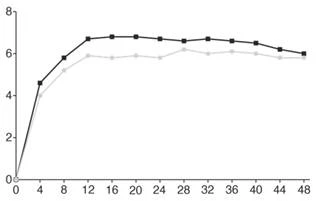
Weeks

Faricimab, 6 mg, every 16 weeks (N = 665)

Aflibercept, 2 mg, every 8 weeks (N = 664)
Fig. 1. Phase III nAMD studies (TENAYA and LUCERNE): BCVA change from baseline to Week 112 (MMRM method – primary analysis) (ITT population)
In both TENAYA and LUCERNE studies, improvement in BCVA and CST from baseline at Week 60 was comparable between the two treatment groups and consistent with that observed at Week 48.
Efficacy results across all evaluated patient subgroups (e.g., by age, sex, ethnicity, baseline visual acuity, lesion type, lesion size) in each study and in the pooled analysis were consistent with results in the overall population.
In both studies, Vabysmo administered every 16 weeks demonstrated clinically meaningful improvement from baseline in the National Eye Institute Visual Function Questionnaire (NEI VFQ-25) composite score at Week 48, which was comparable to that with aflibercept every 8 weeks. Patients in the Vabysmo treatment groups in the TENAYA and LUCERNE studies achieved an improvement in NEI VFQ-25 composite score of ≥ 4 points from baseline at Week 48.
Treatment of DME
The safety and efficacy of faricimab compared with anti-VEGF treatment were evaluated in two randomized (1:1:1), multicenter, double-masked studies with three arms (YOSEMITE and RHINE), lasting 2 years, involving patients with DME. Patients in the three study groups received intravitreal injections of faricimab 6 mg every 8 weeks (after 6 monthly loading doses), faricimab 6 mg with a personalized dosing interval extended up to every 16 weeks (after 4 monthly loading doses), or aflibercept 2 mg every 8 weeks (after 5 monthly loading doses).
In the faricimab extended-interval group (up to every 16 weeks), dosing followed a standardized treat-and-extend regimen. Depending on changes in CST on OCT and/or changes in BCVA measured in ETDRS letter score, the personalized injection interval in the faricimab group could be extended by 4 weeks or shortened by 4 or 8 weeks at each drug administration visit (see section "Posology and method of administration").
A total of 1891 patients were enrolled in the studies (approximately 94% had type 2 diabetes), of whom 1622 (85.8%) completed the study through Week 100. Overall, 1887 patients received at least one dose by Week 56 (1262 patients received Vabysmo). The mean age [age range] of the study population was 62.2 years [range 24 to 91 years]. The study population included patients who had not previously received anti-VEGF treatment (78%) and those who had prior anti-VEGF therapy (22%).
The primary efficacy endpoint was the mean change in BCVA from baseline to the end of the first year (mean of Weeks 48, 52, and 56), assessed using the ETDRS letter chart at 4 meters. In both studies, the primary hypothesis (non-inferiority) was met for both treatment groups: patients receiving Vabysmo every 8 weeks and those receiving Vabysmo with extended dosing intervals up to every 16 weeks showed comparable mean changes in BCVA from baseline to those receiving aflibercept every 8 weeks at 1 year, and this visual improvement was maintained through 2 years.
After the initial 4 monthly doses, patients in the Vabysmo adjustable-dosing group (up to every 16 weeks) could receive between a minimum of 6 and a maximum of 21 injections by Week 96. At Week 52, in the YOSEMITE and RHINE studies, respectively, 74% and 71% of patients in the corresponding Vabysmo adjustable-dosing groups achieved dosing intervals of every 16 or 12 weeks (53% and 51% every 16 weeks, 21% and 20% every 12 weeks). Correspondingly, 75% and 84% of these patients in the YOSEMITE and RHINE studies maintained dosing intervals of ≥12 weeks without shortening below 12 weeks through Week 96; at Week 52, 70% and 82% of patients receiving Vabysmo every 16 weeks continued to receive the drug every 16 weeks without shortening the interval through Week 96. At Week 96, in both studies, 78% of patients in the respective Vabysmo adjustable-dosing group achieved dosing intervals of every 16 or every 12 weeks (60% and 65% every 16 weeks, 18% and 14% every 12 weeks). In 4% and 6% of patients in the YOSEMITE and RHINE studies, respectively, the interval was extended to 8 weeks, and patients continued receiving the drug every ≤8 weeks through Week 96; 3% and 5% received the drug every 4 weeks through Week 96.
Table 3
Efficacy results at visits for assessment of the primary endpoint in Year 1a and Year 2b in the YOSEMITE study
| Efficacy results |
YOSEMITE |
|||||
| 1 year |
2 years |
|||||
| Vabysmo every 8 weeks, N = 315 |
Vabysmo with adjustable dosing regimen up to every 16 weeks, N = 313 |
Aflibercept every 8 weeks, N = 312 |
Vabysmo every 8 weeks, N = 315 |
Vabysmo with adjustable dosing regimen up to every 16 weeks, N = 313 |
Aflibercept every 8 weeks, N = 312 |
|
| Mean change from baseline in BCVA letter score by ETDRS (97.5% CI at 1 year and 95% CI at 2 years) |
10.7 (9.4, 12.0) |
11.6 (10.3, 12.9) |
10.9 (9.6, 12.2) |
10.7 (9.4, 12.1) |
10.7 (9.4, 12.1) |
11.4 (10.0, 12.7) |
| Proportion of patients gaining at least 15 letters in BCVA from baseline (CMH weighted proportion, 95% CI at 1 and 2 years) |
29.2% (23.9%, 34.5%) |
35.5% (30.1%, 40.9%) |
31.8% (26.6%, 37.0%) |
37.2% (31.4%, 42.9%) |
38.2% (32.8%, 43.7%) |
37.4% (31.7%, 43.0%) |
| Proportion of patients avoiding loss of at least 15 letters in BCVA from baseline (CMH weighted proportion, 95% CI at 1 and 2 years) |
98.1% (96.5%, 99.7%) |
98.6% (97.2%, 100.0%) |
98.9% (97.6%, 100.0%) |
97.6% (95.7%, 99.5%) |
97.8% (96.1%, 99.5%) |
98.0% (96.2%, 99.7%) |
a Mean of weeks 48, 52, 56.
b Mean of weeks 92, 96, 100.
BCVA – best-corrected visual acuity; ETDRS – Early Treatment Diabetic Retinopathy Study; CI – confidence interval; CMH – Cochran–Mantel–Haenszel method, a statistical test that produces an estimate of association with a binary outcome and is used to assess categorical variables.
Note: CMH-weighted % data shown for the aflibercept group are intended for comparison between the 8-weekly dosing of Vabysmo and aflibercept; however, the corresponding CMH-weighted % for comparison of the adjustable dosing regimen of Vabysmo with aflibercept is similar to that stated above.
ETDRS-DRSS: Early Treatment Diabetic Retinopathy Study–Diabetic Retinopathy Severity Scale (Diabetic Retinopathy Severity Scale from the Early Treatment Diabetic Retinopathy Study).
Table 4
Proportion of patients with an improvement in ETDRS-DRSS of ≥ 2 steps from baseline at weeks 52 and 96 in the YOSEMITE study (diabetic retinopathy evaluable population)
| Results regarding efficacy |
YOSEMITE |
|||||
| 52 weeks |
96 weeks |
|||||
| Faricimab every 8 weeks, N = 237 |
Faricimab with adjustable dosing regimen up to every 16 weeks, N = 242 |
Aflibercept every 8 weeks, N = 229 |
Faricimab every 8 weeks, N = 220 |
Faricimab with adjustable dosing regimen up to every 16 weeks, N = 234 |
Aflibercept every 8 weeks, N = 221 |
|
| Proportion of patients with improvement of ≥ 2 steps from baseline on the ETDRS-DRSS scale (CMH weighted proportion) |
46.0% |
42.5% |
35.8% |
51.4% |
42.8% |
42.2% |
ETDRS-DRSS – Early Treatment Diabetic Retinopathy Study-Diabetic Retinopathy Severity Scale.
CI – confidence interval; CMH – Cochran-Mantel-Haenszel method, a statistical test that produces an estimate of association with a binary outcome and is used to assess categorical variables.
Note: CMH-weighted % data shown for the aflibercept group are provided for comparison between every 8-week dosing of the drug Vabysmo and aflibercept; however, the corresponding CMH-weighted % for comparison of the adjusted regimen of the drug Vabysmo with aflibercept is similar to that stated above.
Table 5
Efficacy results at visits assessing the primary endpoint at Year 1a and Year 2b in the RHINE study
| Efficacy results |
RHINE |
|||||
| 1 year |
2 years |
|||||
| Byooviz every 8 weeks, N = 317 |
Byooviz with individualized dosing interval up to every 16 weeks, N = 319 |
Aflibercept every 8 weeks, N = 315 |
Byooviz every 8 weeks, N = 317 |
Byooviz with individualized dosing interval up to every 16 weeks, N = 319 |
Aflibercept every 8 weeks, N = 315 |
|
| Mean change from baseline in BCVA score measured in ETDRS letters (97.5% CI at 1 year and 95% CI at 2 years) |
11.8 (10.6, 13.0) |
10.8 (9.6, 11.9) |
10.3 (9.1, 11.4) |
10.9 (9.5, 12.3) |
10.1 (8.7, 11.5) |
9.4 (7.9, 10.8) |
| Proportion of patients gaining at least 15 ETDRS letters from baseline (CMH weighted proportion, 95% CI at 1 and 2 years) |
33.8% (28.4%, 39.2%) |
28.5% (23.6%, 33.3%) |
30.3% (25.0%, 35.5%) |
39.8% (34.0%, 45.6%) |
31.1% (26.1%, 36.1%) |
39.0% (33.2%, 44.8%) |
| Proportion of patients avoiding loss of at least 15 ETDRS letters from baseline (CMH weighted proportion, 95% CI at 1 and 2 years) |
98.9% (97.6%, 100.0%) |
98.7% (97.4%, 100.0%) |
98.6% (97.2%, 99.9%) |
96.6% (94.4%, 98.8%) |
96.8% (94.8%, 98.9%) |
97.6% (95.7%, 99.5%) |
a Mean of weeks 48, 52, 56.
b Mean of weeks 92, 96, 100.
BCVA – best-corrected visual acuity; ETDRS – Early Treatment Diabetic Retinopathy Study; CI – confidence interval; CMH – Cochran-Mantel-Haenszel method, a statistical test that produces an estimate of association with a binary outcome and is used to assess categorical variables.
Note: CMH-weighted % data shown for the aflibercept group are intended for comparison between the 8-weekly dosing of Eylea and aflibercept; however, the corresponding CMH-weighted % for comparison of the treat-and-extend regimen of Eylea with aflibercept is similar to that stated above.
ETDRS-DRSS – Early Treatment Diabetic Retinopathy Study–Diabetic Retinopathy Severity Scale (Diabetic Retinopathy Severity Scale from the Early Treatment Diabetic Retinopathy Study).
Table 6
Proportion of patients with improvement in ETDRS-DRSS by ≥2 steps from baseline at weeks 52 and 96 in the RHINE study (diabetic retinopathy efficacy population)
| Results regarding efficacy |
RHINE |
|||||
| 52 weeks |
96 weeks |
|||||
| Byooviz every 8 weeks, N = 231 |
Byooviz with adjustable dosing regimen up to every 16 weeks, N = 251 |
Aflibercept every 8 weeks, N = 238 |
Byooviz every 8 weeks, N = 214 |
Byooviz with adjustable dosing regimen up to every 16 weeks, N = 228 |
Aflibercept every 8 weeks, N = 203 |
|
| Proportion of patients with improvement of ≥ 2 steps on the ETDRS-DRSS scale from baseline (CMH weighted proportion) |
44.2% |
43.7% |
46.8% |
53.5% |
44.3% |
43.8% |
ETDRS – Early Treatment Diabetic Retinopathy Study.
CI – confidence interval; CMH – Cochran-Mantel-Haenszel method, a statistical test that produces an estimate of association with a binary outcome and is used to assess categorical variables.
Note: CMH-weighted % data shown for the aflibercept group are for comparison between dosing of Eylea every 8 weeks and aflibercept; however, the corresponding CMH-weighted % for comparison of the treat-and-extend regimen of Eylea with aflibercept is similar to that stated above.
| Adjusted mean change from baseline |
|
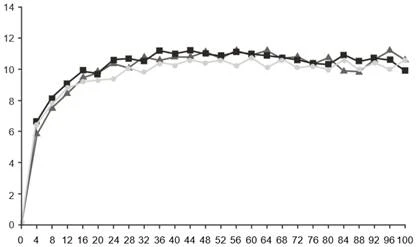
Weeks

Faricimab, 6 mg, every 16 weeks adjusted dosing (N = 632)
Faricimab, 6 mg, every 8 weeks (N = 632)
Aflibercept, 2 mg, every 8 weeks (N = 627)
Fig. 2. Phase III DME studies (YOSEMITE and RHINE): Change from baseline in BCVA in the study eye up to Week 100: MMRM method (primary analysis) (ITT population)
Efficacy results in patients who had not received prior anti-VEGF treatment before enrollment in the study, as well as in all other evaluated patient subgroups (including by age, sex, ethnicity, baseline HbA1c level, baseline visual acuity), were consistent with the results in the overall population in each study.
The treatment effect was independent of glycemic control, and comparable outcomes were achieved with faricimab treatment in patients whose HbA1c levels improved or worsened over time by > 0.5% or remained within 0.5% of baseline.
Treatment of macular edema due to BRVO and CRVO
The safety and efficacy of faricimab were evaluated in two multicenter studies involving patients with macular edema due to BRVO (BALATON) or CRVO (COMINO). Both studies included an initial 24-week randomized (1:1), active-controlled (aflibercept) treatment phase. After this period, all patients (including those initially treated with aflibercept) received faricimab on an individualized dosing regimen up to Week 68 (last visit at Week 72). The dosing interval could be extended by 4 weeks up to a maximum of every 16 weeks, and then shortened again by 4, 8, or 12 weeks if needed (worsening of CST and/or visual acuity), depending on disease activity (assessed using predefined automated objective evaluations of visual and anatomical criteria). The treatment interval was not extended again after disease activity stabilization in patients who required interval shortening. Patients with a minimal (4-week) interval between injections were excluded from the study.
Overall, 1282 patients (553 in BALATON and 729 in COMINO) were enrolled in the two studies, of whom 1276 patients received at least one dose by Week 24 (641 patients received faricimab).
Both studies demonstrated efficacy on the primary endpoint, defined as change from baseline in BCVA at Week 24, measured as the number of letters on the ETDRS chart. In both studies, patients receiving faricimab every four weeks showed non-inferior mean change from baseline in BCVA at Week 24 compared to patients receiving aflibercept every four weeks, and these visual improvements were maintained up to Week 72, when patients transitioned to an adjustable dosing regimen of faricimab with intervals extended up to every 16 weeks.
Between Weeks 24 and 68, 81.5% and 74.0% of patients receiving faricimab 6 mg on an adjustable dosing regimen with intervals extended up to every 16 weeks achieved dosing intervals of every 16 weeks or every 12 weeks in BALATON and COMINO, respectively. Of these patients, 72.1% and 61.6% completed at least one cycle every 12 weeks and maintained a dosing interval of every 16 weeks or every 12 weeks without shortening the interval below every 12 weeks by Week 68 in BALATON and COMINO, respectively; 1.2% and 2.5% of patients received dosing only every 4 weeks up to Week 68 in BALATON and COMINO, respectively.
Detailed results from both studies are presented in Tables 7 and 8 and Figures 3 and 4 below.
Table 7
Efficacy results at visits assessing the primary endpoint at Week 24 and at the end of the BALATON study
| Results on efficacy |
BALATON |
|||
| 24 weeks |
72 weeksa |
|||
| Faricimab N = 276 |
Aflibercept N = 277 |
Switch from faricimab every 4 weeks to corrected-dose faricimab N = 276 |
Switch from aflibercept every 4 weeks to corrected-dose faricimab N = 277 |
|
| Mean change from baseline in BCVA score measured as number of letters read on ETDRS (95 % CI) |
16.9 (15.7; 18.1) |
17.5 (16.3; 18.6) |
18.1 (16.9; 19.4) |
18.8 (17.5; 20.0) |
| Proportion of patients gaining ≥ 15 letters compared to baseline (CMH weighted proportion, 95 % CI) |
56.1 % (50.4 %; 61.9 %) |
60.4 % (54.7 %; 66.0 %) |
61.5 % (56.0 %; 67.0 %) |
65.8 % (60.3 %; 71.2 %) |
a Mean value at weeks 64, 68, and 72.
BCVA – best-corrected visual acuity.
ETDRS – Early Treatment Diabetic Retinopathy Study.
CI – confidence interval.
CMH – Cochran-Mantel-Haenszel method, a statistical test that produces an estimate of association with a binary outcome and is used to assess categorical variables.
Table 8
Efficacy results at visits for assessment of the primary endpoint at 24 weeks and at the end of the COMINO study
| Efficacy results |
COMINO |
|||
| 24 weeks |
72 weeksa |
|||
| Faricimab N = 366 |
Aflibercept N = 363 |
Switch from faricimab every 4 weeks to corrected-dose faricimab N = 366 |
Switch from aflibercept every 4 weeks to corrected-dose faricimab N = 363 |
|
| Mean change from baseline in BCVA score (ETDRS letters) (95 % CI) |
16.9 (15.4; 18.3) |
17.3 (15.9; 18.8) |
16.9 (15.2; 18.6) |
17.1 (15.4; 18.8) |
| Proportion of patients gaining ≥ 15 letters from baseline (CMH weighted proportion, 95 % CI) |
56.6 % (51.7 %; 61.5 %) |
58.1 % (53.3 %; 62.9 %) |
57.6 % (52.8 %; 62.5 %) |
59.5 % (54.7 %; 64.3 %) |
a Mean values at weeks 64, 68, 72.
BCVA – best-corrected visual acuity.
ETDRS – Early Treatment Diabetic Retinopathy Study.
CI – confidence interval.
CMH – Cochran–Mantel–Haenszel method, a statistical test that generates an estimate of association with a binary outcome and is used to assess categorical variables.
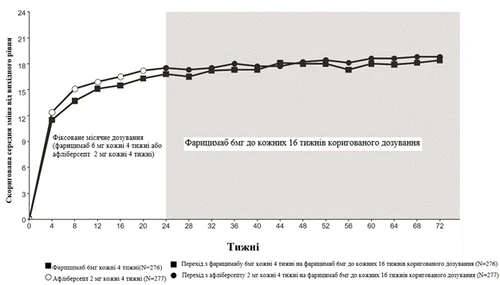
Fig. 3. Phase III BALATON study: graph of change from baseline in BCVA score through week 72: MMRM method (primary endpoint) (ITT population)
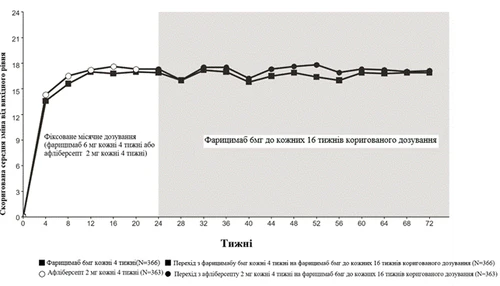
Fig. 4. Phase III COMINO study: graph of change from baseline in BCVA score through week 72: MMRM method (primary endpoint) (ITT population)
Elderly patients
In six phase III clinical studies, approximately 58% (1496/2571) of patients randomized to receive Vabysmo were aged ≥65 years. Population pharmacokinetic analysis showed an effect of age on ocular pharmacokinetics of faricimab, which was considered clinically insignificant (see sections "Method of administration and dosage", "Pharmacokinetics").
Immunogenicity
There is potential for immune response development in patients receiving Vabysmo (see section "Special precautions").
Following administration of Vabysmo for up to 112 (nAMD), 100 (DME), and 72 (BRVO and CRVO) weeks, treatment-emergent anti-faricimab antibodies were detected in approximately 13.8%, 9.6%, and 14.4% of randomized patients with nAMD, DME, and BRVO/CRVO, respectively. The clinical significance of anti-faricimab antibodies regarding safety is currently unknown. Patients with anti-faricimab antibodies showed a higher incidence of intraocular inflammation adverse reactions. However, the overall incidence of anti-faricimab antibodies and intraocular inflammation in the entire study population is approximately 1%. Anti-faricimab antibodies were not associated with any impact on clinical efficacy or systemic pharmacokinetics.
Pharmacokinetics
Absorption
Vabysmo is administered intravitreally to achieve local ocular effect. Clinical studies with other routes of administration have not been conducted.
According to population pharmacokinetic analysis (including nAMD and DME, N = 2246), maximum plasma concentration (Cmax) of free (unbound to VEGF-A and Ang-2) faricimab is reached approximately 2 days after administration. The mean (± standard deviation) Cmax of free form in plasma was calculated at 0.23 (0.07) µg/mL and 0.22 (0.07) µg/mL in patients with nAMD and DME, respectively. After repeated dosing, the predicted mean trough concentration of free faricimab in plasma is 0.002–0.003 µg/mL with dosing every 8 weeks.
Faricimab demonstrated dose-proportional pharmacokinetics (based on Cmax and AUC) in the dose range of 0.5–6 mg. No accumulation of faricimab in the vitreous or plasma was observed after monthly administration based on exposure parameters obtained from the population pharmacokinetic model.
Pharmacokinetic analysis in patients with nAMD, DME, BRVO, and CRVO (N = 2977) showed that faricimab pharmacokinetics are comparable across these patient groups.
Distribution
No data available.
Metabolism
The metabolism of faricimab has not been directly studied. Faricimab is presumed to be catabolized into small peptides and amino acids in lysosomes, similar to endogenous IgG molecules.
Elimination
The plasma concentration-time profile of faricimab decreased in parallel with the concentration-time profile in the vitreous and intraocular fluid. The calculated mean half-life from the eye and apparent systemic half-life of faricimab is approximately 7.5 days.
Special patient groups
Hepatic impairment
Formal pharmacokinetic studies in patients with hepatic impairment have not been conducted.
Renal impairment
Formal pharmacokinetic studies in patients with renal impairment have not been conducted.
Pharmacokinetic analysis of data from all clinical studies, including 1115 patients with mild, 669 with moderate, and 54 with severe renal impairment, showed no differences in systemic pharmacokinetics of faricimab after intravitreal administration of Vabysmo.
Elderly patients
In six phase III clinical studies, approximately 58% (1496/2571) of patients randomized to receive Vabysmo were aged ≥65 years. Population pharmacokinetic analysis showed an effect of age on ocular pharmacokinetics of faricimab, which, however, was considered clinically insignificant.
Other demographic factors
Population pharmacokinetic analysis showed an effect of body weight on ocular and systemic pharmacokinetics of faricimab. This effect was considered clinically insignificant; therefore, dose adjustment is not required.
Population pharmacokinetic analysis indicates no effect of patient's ethnicity or sex on the systemic pharmacokinetics of Vabysmo.
Clinical characteristics.
Indications.
Treatment of neovascular (exudative) age-related macular degeneration (nAMD).
Treatment of diabetic macular edema (DME).
Treatment of macular edema secondary to retinal vein occlusion (branch retinal vein occlusion (BRVO) and central retinal vein occlusion (CRVO)).
Contraindications.
Eye infections or periocular infections.
Active intraocular inflammation.
Known hypersensitivity to faricimab or to any excipient of the medicinal product. Hypersensitivity reactions may manifest as rash, pruritus, urticaria, erythema, or severe intraocular inflammation.
Interaction with other medicinal products and other forms of interaction.
Interactions of other medicinal products with Vabysmo have not been studied.
Special precautions for use.
Reactions related to intravitreal injection
Intravitreal injections, including those with the medicinal product Vabysmo, have been associated with endophthalmitis, intraocular inflammation, rhegmatogenous retinal detachment, retinal tear, and iatrogenic traumatic cataract. Proper aseptic injection technique must always be followed when administering Vabysmo. Patients should be instructed to immediately report any symptoms such as eye pain, vision loss, photophobia, blurred vision, floaters, or redness, which may indicate endophthalmitis or any of the aforementioned events, to ensure timely and appropriate treatment.
Transient elevation of intraocular pressure (IOP) has been observed within 60 minutes following intravitreal injection, including administration of Vabysmo. Special precautions are required for patients with poorly controlled glaucoma (Vabysmo should not be administered if IOP ≥ 30 mmHg). In all cases, IOP, optic nerve head perfusion, and/or visual acuity should be appropriately monitored and treated if necessary.
Systemic effects
Systemic adverse events, including arterial thromboembolic events, have been reported. There is a theoretical risk that these events may be related to inhibition of vascular endothelial growth factor (VEGF). A low incidence of arterial thromboembolic events was observed in clinical trials of faricimab in patients with nAMD, DME, BRVO, and CRVO.
Immunogenicity
The active substance of Vabysmo is a therapeutic protein. Therefore, an immunological reaction to Vabysmo may occur. Patients should be instructed to report any signs or symptoms of intraocular inflammation, such as vision loss, eye pain, increased light sensitivity, floaters, or worsening eye redness, which may be clinical manifestations associated with hypersensitivity.
Bilateral treatment
The safety and efficacy of Vabysmo administered in both eyes have not been studied.
Concomitant use of other anti-VEGF medicinal products
There are no data on concomitant use of Vabysmo with other anti-VEGF medicinal products in the same eye.
Discontinuation of treatment
Treatment should initially be discontinued in patients with:
- Rhegmatogenous retinal detachment, retinal perforation of grade 3 or 4 severity, or retinal tear; treatment should not be resumed until adequate healing has occurred;
- Treatment-related decrease in best-corrected visual acuity (BCVA) of ≥ 30 letters compared to the last visual acuity assessment; treatment should not be resumed earlier than the next scheduled administration;
- Planned or performed intraocular surgery within the preceding or next 28 days; treatment should not be resumed earlier than the next scheduled administration.
Retinal pigment epithelium tears
Risk factors associated with the development of retinal pigment epithelium tears following anti-VEGF therapy for nAMD include extensive and/or high retinal pigment epithelium detachment. Therefore, caution should be exercised when initiating Vabysmo therapy in patients with these risk factors.
Populations with limited data
Limited experience exists in treating patients with DME and HbA1c levels greater than 10%, patients with proliferative diabetic retinopathy at high risk, or patients with nAMD, DME, BRVO, and CRVO who have active systemic infections. There is also no experience with Vabysmo in patients with diabetes, BRVO, or CRVO who have uncontrolled arterial hypertension. Physicians should consider the lack of this information when treating such patients.
Abuse and dependence
There are no data on the potential for abuse or dependence with the use of Vabysmo.
Other information
Vabysmo, solution for injection for intravitreal use, contains less than 1 mmol (23 mg)/dose of sodium, i.e., essentially "sodium-free."
Use during pregnancy or breastfeeding.
Women of reproductive potential
Women of reproductive potential should use effective contraception during treatment with Vabysmo and for at least 3 months after the last dose.
Pregnancy
There are no data on the use of Vabysmo in pregnant women.
No adverse effects were observed in studies conducted in pregnant cynomolgus monkeys.
Inhibition of VEGF has been shown to cause developmental abnormalities, embryo/fetal resorption, and reduced fetal body weight. Inhibition of VEGF has also been shown to affect follicular development, corpus luteum function, and fertility. There are no specific studies on the effects of Ang-2 inhibition during pregnancy. Based on preclinical data, Ang-2 inhibition may lead to effects comparable to those seen with VEGF inhibition. Systemic exposure after intravitreal administration of Vabysmo is very low.
It is unknown whether faricimab crosses the placenta or may cause harm to the fetus when administered to pregnant women. Given the mechanism of action of VEGF and Ang-2 inhibitors, there is a potential risk to female reproductive potential and embryofetal development. Although systemic exposure after ocular administration is very low, Vabysmo should not be used during pregnancy unless the clinical condition of the woman justifies its use.
Labour and delivery
The safety of Vabysmo during labour and delivery has not been established.
Breastfeeding
It is unknown whether Vabysmo is excreted in human breast milk. Studies on the effect of Vabysmo on milk production or the presence of the drug in breast milk have not been conducted. Since many medicinal products are excreted in human breast milk with potential for absorption and harm to the infant's growth and development, caution should be exercised when administering Vabysmo to breastfeeding women. The benefits of breastfeeding for the infant's development and health should be weighed against the mother's clinical need for Vabysmo treatment and any potential adverse effects of Vabysmo on the breastfed infant.
Fertility
No studies on the effect on reproductive function or fertility have been conducted. No effects on reproductive organs were observed in a 6-month study in cynomolgus monkeys receiving faricimab at doses up to 3 mg/eye (exposure 8–10 times higher than clinical exposure based on AUC). Inhibition of VEGF has been shown not to affect follicular development, corpus luteum function, or fertility. Given the mechanism of action of VEGF and Ang-2 inhibitors, there is a potential risk to female reproductive potential and embryofetal development; however, this risk is considered low due to the low systemic exposure following intravitreal administration.
Ability to influence the speed of reactions when driving vehicles or operating machinery.
Vabysmo has negligible influence on the ability to drive vehicles or operate machinery, due to possible transient visual disturbances following intravitreal injection and associated eye examination. Patients should not drive or operate machinery until visual function has sufficiently recovered.
Method of Administration and Dosage
General Information
For intravitreal injection only. Vabysmo must be administered by a qualified physician experienced in performing intravitreal injections. The contents of one vial should be used for the treatment of one eye only.
The single-dose glass vial of Vabysmo contains 28.8 mg of faricimab in 0.24 mL of solution. This provides sufficient volume for a 0.05 mL injection containing 6 mg of faricimab as a single dose.
Neovascular (exudative) age-related macular degeneration (nAMD)
The recommended dose of Vabysmo is 6 mg (0.05 mL) administered by intravitreal injection every 4 weeks (approximately every 28 ± 7 days or once a month) for the first 4 injections. Subsequently, the treatment regimen may be individualized with extended dosing intervals. Based on the physician's assessment of the patient's central subfield thickness (CST) and/or visual acuity, the dosing interval may be extended up to every 16 weeks (4 months). The dosing interval should be appropriately shortened if CST and/or visual acuity worsens (see section "Pharmacodynamics").
Some patients may require dosing every 4 weeks (approximately every 28 ± 7 days or once a month).
Monitoring between injection visits should be planned according to the patient's condition and at the physician’s discretion.
Diabetic macular edema (DME)
The recommended dose of Vabysmo is 6 mg (0.05 mL) administered by intravitreal injection every 4 weeks (approximately every 28 ± 7 days or once a month) for the first 4 injections. Subsequently, the treatment regimen may be individualized using a treat-and-extend approach. Based on the physician's assessment of the patient's CST and/or visual acuity, the dosing interval may be extended up to every 16 weeks (4 months). The dosing interval should be appropriately shortened if CST and/or visual acuity worsens (see section "Pharmacodynamics").
Monitoring between injection visits should be planned according to the patient's condition and at the physician’s discretion; however, monthly monitoring between injections is not required.
Macular edema due to retinal vein occlusion (BRVO and CRVO)
The recommended dose of Vabysmo is 6 mg (0.05 mL), administered by intravitreal injection every 4 weeks (approximately every 28 ± 7 days, or once a month). Three or more consecutive monthly injections may be required until maximum visual acuity is achieved and/or signs of disease activity are no longer present. After this, treatment may continue based on an individualized approach. Depending on the physician's assessment of the patient's central subfield thickness (CST) and/or visual acuity, the dosing interval may be extended. The treatment interval should be shortened if CST and/or visual acuity worsens, and any new extension of the treatment interval after stabilization should be carefully considered (see section "Pharmacological Properties"). Treatment intervals longer than 4 months between injections have not been studied.
Monitoring between dosing visits should be based on the patient's condition and physician assessment, but there is no requirement for mandatory monthly monitoring between injections.
To ensure traceability of biological medicinal products, it is recommended to document the brand name and batch number with each administration of the medicinal product.
Duration of Treatment
Vabysmo is intended for long-term treatment.
Dose Adjustment for Adverse Effects/Interactions
Dose adjustment of Vabysmo is not recommended.
Delayed Administration
If an injection is delayed or missed, the patient should return for evaluation at the next available appointment, and treatment should continue based on the physician’s decision.
If visual and/or anatomical evaluations indicate that the patient is not benefiting from continued treatment, Vabysmo therapy should be discontinued.
Special Patient Populations
Hepatic Impairment
Specific studies of Vabysmo in patients with hepatic impairment have not been conducted (see section "Pharmacokinetics").
However, dose adjustment is not required in patients with hepatic impairment.
Renal Impairment
Specific studies of Vabysmo in patients with renal impairment have not been conducted (see section "Pharmacokinetics").
However, dose adjustment is not required in patients with renal disease.
Elderly Patients
In six Phase III studies, approximately 58% (1496/2571) of patients randomized to receive Vabysmo treatment were aged ≥65 years. Population pharmacokinetic analysis demonstrated an effect of age on ocular faricimab pharmacokinetics. However, this effect was considered clinically insignificant. No notable differences in efficacy or safety of faricimab were observed with increasing patient age in these studies. Dose adjustment is not required for patients aged ≥65 years (see section "Pharmacokinetics").
Children
The safety and efficacy of Vabysmo in children have not been established.
Special Patient Populations
No special dose adjustment is required for any of the studied patient populations (including by age [elderly patients], sex, or race).
Instructions for Use
Before administration, Vabysmo should be visually inspected for the presence of particulate matter and discoloration.
Immediately following intravitreal injection, patients should be monitored for elevated intraocular pressure. Appropriate monitoring may include assessment of optic nerve head perfusion or tonometry. Sterile equipment for paracentesis should be available if needed.
After intravitreal injection, patients should be instructed to immediately report any symptoms suggestive of endophthalmitis (e.g., vision loss, eye pain, eye redness, photophobia, blurred vision).
Preparation of the Medicinal Product for Administration
Vabysmo is a sterile, clear or opalescent, colorless or pale yellow solution, free of preservatives.
Vabysmo should be visually inspected after removal from the refrigerator and before administration.
Do not use the vial if particulate matter, cloudiness, or discoloration is observed.
The vial contents and the transfer filter needle are sterile and intended for single use only. Do not use the medicinal product if the packaging, vial, and/or transfer filter needle are damaged or if the expiry date has passed.
Aseptic techniques must be followed during preparation for intravitreal injection.
Instructions for Use of the Medicinal Product
The information below is intended for healthcare professionals only.
Prior to Initiation:
- Read all instructions carefully before using Vabysmo.
- The Vabysmo packaging includes a glass vial containing the medicinal product and a transfer filter needle. The glass vial contains a single dose only. The transfer filter needle is for single use only.
- Vabysmo should be stored in the refrigerator at 2 to 8 °C. Do not freeze. Do not shake.
- Allow Vabysmo to reach room temperature (20 to 25 °C) before administration. Keep the vial in its original carton to protect from light.
- The Vabysmo vial may be stored at room temperature for up to 24 hours.
- Before administration, visually inspect the Vabysmo vial. Vabysmo is a clear or opalescent, colorless or pale yellow solution.
Do not use the product if particulate matter, cloudiness, or discoloration is visible.
Do not use the product if the packaging, vial, and/or transfer filter needle are open, damaged, or past the expiry date (see Figure A).
- Aseptic techniques must be followed during preparation for intravitreal injection.
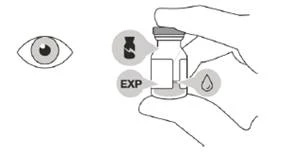
Figure A
Instructions for Using the Vial:
- Gather the following items:
- One vial of Vabysmo (in carton box).
- One sterile blunt-ended transfer filter needle, 5 micron, 18G × 1 1/2 inch or approximately 1.2 mm × 40 mm (in carton box).
- One sterile 1 mL Luer-lock syringe with 0.05 mL dose markings (not included).
- One sterile 30G × 1/2 inch injection needle (not included).
- Note: A 30G injection needle is recommended to avoid increased injection force that may be required with smaller diameter needles.
- An alcohol swab (not included).
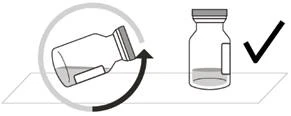
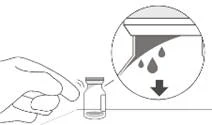
- After removing from packaging, place the vial upright on a flat surface (for approximately 1 minute) to allow all liquid to settle at the bottom of the vial (see Figure B). Gently tap the vial with a finger (see Figure C) as liquid may adhere to the top of the vial.
|
|
|
| Figure B |
Figure C |
- Remove the cap from the vial (see Figure D) and wipe the vial septum with an alcohol swab (see Figure E).
|
|
|
| Figure D |
Figure E |
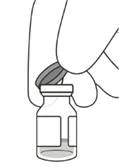
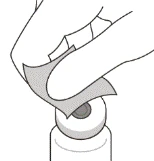
- Following aseptic technique, securely attach the provided 18G × 1 1/2 inch transfer filter needle to a 1 mL Luer Lock syringe (see Figure F).
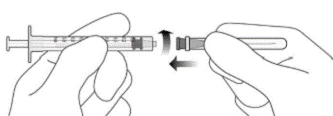
Figure F
- Following aseptic technique, insert the transfer filter needle into the center of the vial’s stopper (see Figure G), push it fully into the vial, then slightly tilt the vial so that the needle touches the bottom edge of the vial (see Figure H).
|
|
|
| Figure G |
Figure H |
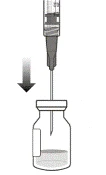
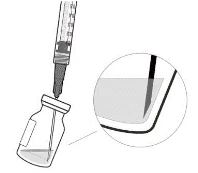
- Hold the vial slightly tilted and slowly withdraw all the liquid from the vial (see Figure I). Keep the tip of the transfer filter needle immersed in the liquid to avoid drawing air into the syringe.
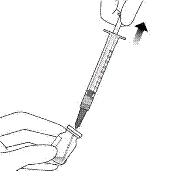
Figure I
- Ensure the plunger rod is sufficiently pulled back during vial emptying to completely empty the transfer filter needle (see Figure I).
- Disconnect the transfer filter needle from the syringe and dispose of it according to local requirements.
Do not use the transfer filter needle for intravitreal injection.
- Following aseptic technique, firmly attach the 30G × 1\1/2 inch injection needle to the Luer Lock syringe (see Figure J).
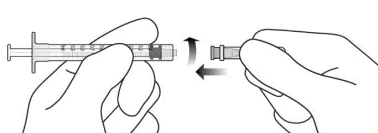
Figure J
- Carefully remove the plastic needle cap by pulling it off.
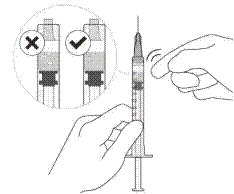
- To check for air bubbles, hold the syringe with the needle pointing upward. If air bubbles are present, gently tap the syringe with your finger until the bubbles rise to the top (see Figure K).
- Carefully expel air from the syringe and needle, and slowly depress the plunger until the top edge of the rubber plunger seal aligns with the 0.05 mL dose mark. The syringe is now ready for injection (see Figure L). Ensure that the injection is administered immediately after dose preparation.
|
|
|
| Figure K |
Figure L |
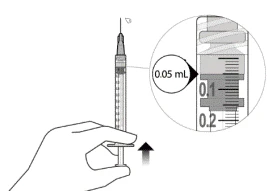
- Inject slowly until the rubber plunger stopper reaches the front of the syringe to deliver a volume of 0.05 ml. Confirm administration of the full dose by verifying that the rubber plunger stopper has reached the front of the syringe after injection.
Any unused medicinal product or waste material must be disposed of in accordance with local requirements.
Children.
The safety and efficacy of Vabysmo in pediatric patients have not been established.
Overdose.
Doses exceeding the recommended dose have not been studied. Overdose due to injection of a volume exceeding the recommended amount may lead to increased intraocular pressure.
In case of overdose, intraocular pressure (IOP) should be monitored, and if deemed necessary by the physician, appropriate treatment should be initiated.
Adverse Reactions
Summary of safety profile based on clinical trial results
The safety data listed below were obtained from Phase III active-controlled trials (aflibercept).
Overall, 4489 patients were included in the safety population across six Phase III clinical trials (2567 patients receiving treatment with Vabysmo: 664 patients with nAMD, 1262 patients with DME, and 641 patients with BRVO and CRVO). The most serious adverse reactions were cataract (0.8%), uveitis (0.5%), endophthalmitis (0.4%), vitreous hemorrhage (0.4%), retinal tears (0.2%), rhegmatogenous retinal detachment (0.1%), and traumatic cataract (< 0.1%).
The most common adverse reactions observed in patients receiving treatment with Vabysmo were cataract (10%), conjunctival hemorrhage (7%), retinal detachment (4%), increased intraocular pressure (4%), floaters (4%), eye pain (3%), and retinal pigment epithelial tear (in nAMD patients only) (3%).
The safety data described below include a listing of all adverse reactions observed in the six Phase III clinical trials conducted in patients with nAMD, DME, BRVO, and CRVO, as well as post-marketing surveillance data, with consideration of a possible causal relationship to either the injection procedure or the medicinal product. Adverse reactions are listed by MedDRA organ system class and categorized according to the following frequency categories: very common (≥ 1/10), common (≥ 1/100 to < 1/10), uncommon (≥ 1/1,000 to < 1/100), rare (≥ 1/10,000 to < 1/1,000), and frequency not known (frequency cannot be calculated from available data).
Table 9
Summary of adverse reactions
Adverse reactions |
Vabysmo, N = 2,567 |
Frequency category |
| Eye disorders |
||
| Cataract |
9.7% |
Common |
| Conjunctival haemorrhage |
6.7% |
Common |
| Retinal detachment |
4.2% |
Common |
| Intraocular pressure increased |
3.5% |
Common |
| Floaters |
3.5% |
Common |
| Retinal pigment epithelial tear (nAMD only) |
2.9% |
Common |
| Eye pain |
2.5% |
Common |
| Corneal erosion |
0.9% |
Uncommon |
| Lacrimation increased |
0.8% |
Uncommon |
| Eye irritation |
0.8% |
Uncommon |
| Eye discomfort |
0.7% |
Uncommon |
| Eye pruritus |
0.7% |
Uncommon |
| Eye hyperaemia |
0.7% |
Uncommon |
| Blurred vision |
0.7% |
Uncommon |
| Visual acuity reduced |
0.6% |
Uncommon |
| Iritis |
0.6% |
Uncommon |
| Uveitis |
0.5% |
Uncommon |
| Endophthalmitis |
0.4% |
Uncommon |
| Foreign body sensation |
0.4% |
Uncommon |
| Vitreous haemorrhage |
0.4% |
Uncommon |
| Vitritis |
0.4% |
Uncommon |
| Iridocyclitis |
0.3% |
Uncommon |
| Conjunctival hyperaemia |
0.2% |
Uncommon |
| Pain during procedure |
0.2% |
Uncommon |
| Retinal tear |
0.2% |
Uncommon |
| Rhegmatogenous retinal detachment |
0.1% |
Uncommon |
| Transient visual acuity reduction |
< 0.1% |
Rare |
| Traumatic cataract |
< 0.1% |
Rare |
| Retinal vasculitis* |
- |
Frequency unknown |
| Retinal occlusive vasculitis* |
- |
Frequency unknown |
* Adverse reactions identified from spontaneous post-marketing reports. Because these reactions are reported voluntarily from a population of uncertain size, it is not possible to reliably estimate their frequency.
Description of selected adverse reactions and additional information
There is a theoretical risk of arterial thromboembolism, including stroke and myocardial infarction, following intravitreal administration of VEGF inhibitors. A low incidence of arterial thromboembolic events was observed in clinical trials of the drug Vabysmo in patients with nAMD, DME, DFOV, and OCVS. No notable difference was observed between the groups receiving Vabysmo and the comparator drug across the various indications.
Post-marketing experience
During post-marketing use, rare cases of retinal vasculitis and/or occlusive retinal vasculitis have been reported. Retinal vasculitis and occlusive retinal vasculitis have also been reported in patients receiving other intravitreal therapies.
Reporting of suspected adverse reactions after drug authorization is important. It allows continued monitoring of the benefit-risk balance of the medicinal product. Medical and pharmaceutical professionals, as well as patients or their legal representatives, should report all suspected adverse reactions and lack of efficacy through the national reporting system (https://aisf.dec.gov.ua).
Shelf life.
30 months.
Storage conditions.
Store at 2 to 8 °C in the original packaging to protect from light.
Do not freeze. Do not shake. Keep out of reach of children.
Prior to use, the unopened vial of Vabysmo may be stored at room temperature (20 to 25 °C) for up to 24 hours.
An injection must be administered immediately after dose preparation.
Incompatibilities.
In the absence of compatibility studies, this medicinal product must not be mixed with other medicinal products.
Packaging.
Vial
A 2 ml vial made of colorless borosilicate glass of class I, stoppered with a grey butyl rubber stopper (13 mm in diameter) laminated with fluoropolymer, and sealed with an aluminum cap (13 mm in diameter) with a plastic "flip-off" disk.
Filter needle
An 18 G stainless steel needle with a 5 µm filter made of acrylic copolymer and a polypropylene cap.
One vial supplied with one filter needle, packaged in a blister, within a cardboard box.
Prescription status.
Prescription only.
Manufacturer.
F. Hoffmann-La Roche Ltd
Manufacturer's address and place of business.
Wurmisweg, 4303 Kaiseraugst, Switzerland