B 12 ankermaan
Ukraine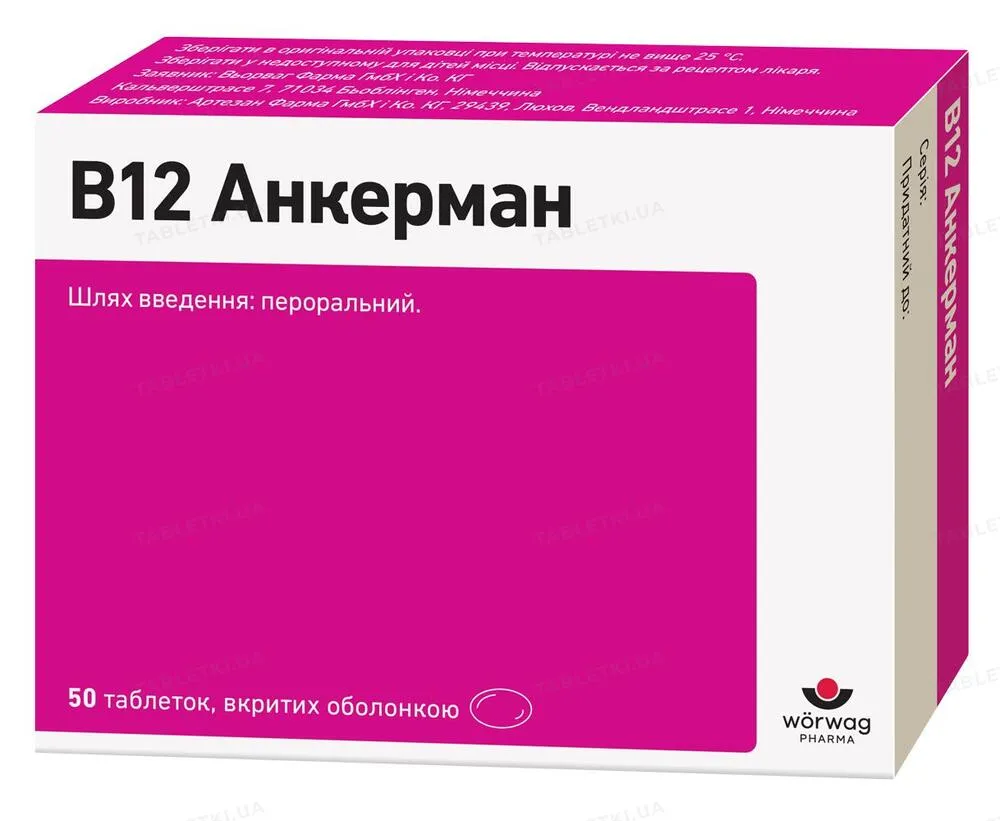
Table of Contents
INSTRUCTION FOR MEDICAL USE OF THE MEDICINAL PRODUCT B12 ANKERMAN
Composition:
Active substance: cyanocobalamin;
1 tablet contains 1 mg (1000 mcg) of cyanocobalamin;
Excipients: lactose monohydrate, povidone K 30, stearic acid, sodium croscarmellose, gum arabic, calcium carbonate, polyethylene glycol (macrogol) glyceryl monostearate, macrogol 6000, sucrose, talc, titanium dioxide (E171), kaolin, sodium lauryl sulfate, aquapolish white, montan glycol wax.
Pharmaceutical form. Coated tablets.
Main physicochemical characteristics: round, biconvex tablets of white to slightly pinkish color.
Pharmacotherapeutic group.
Antianemic agents. Cyanocobalamin. ATC code B03B A01.
Pharmacological properties.
Pharmacodynamics.
Vitamin B12 is necessary for the conversion of propionic acid into succinic acid. In addition, like folic acid, vitamin B12 participates in the formation of labile methyl groups, which are transferred to other methyl acceptors through transmethylation processes. Vitamin B12 also influences the synthesis of nucleic acids, particularly during hematopoiesis and other cell maturation processes. Vitamin B12 (cyanocobalamin) is essential for cellular metabolic processes. It affects hematopoietic function.
In the body (mainly in the liver), it is converted into its coenzyme form—adenosylcobalamin, or cobamamide, which is the active form of vitamin B12. Cobamamide is a component of numerous enzymes, including reductase that reduces folic acid to tetrahydrofolic acid.
Signs of vitamin B12 deficiency. Impaired or absent absorption of vitamin B12 will eventually lead to clinical symptoms if plasma levels fall below 200 pg/mL. Consequences include megaloblastic anemia and neurological deficits in the peripheral and central nervous systems. Early signs of deficiency may include fatigue and pallor, tingling in the hands and feet, unsteady gait, and decreased physical strength.
Symptoms caused by vitamin B12 deficiency can only be resolved by administration of vitamin B12.
Pharmacokinetics.
Vitamin B12 is absorbed via two different pathways. Active absorption in the small intestine with the involvement of intrinsic factor. Transport of vitamin B12 to tissues involves binding to transcobalamin.
Independent of intrinsic factor, vitamin B12 can also enter the bloodstream via passive diffusion through the gastrointestinal tract or mucous membranes. Approximately 1–3% is absorbed into the blood following oral administration, depending on the dose. Thus, when high oral doses are administered (~1000 mcg/day), absorption is ensured even in patients lacking intrinsic factor.
Up to 90% of the body's vitamin B12 stores are located in the liver, where the vitamin is stored in the form of active coenzyme, with a daily loss rate of 0.5 to 0.8 mcg. In healthy adults, the total body content of vitamin B12 ranges from 3 to 5 mg. Typically, it takes 3–5 years for clinical signs of vitamin B12 deficiency to appear.
Vitamin B12 is primarily excreted via the biliary system, with up to 1 mcg reabsorbed through enterohepatic circulation. If body stores are saturated due to high doses, particularly after parenteral administration, a portion is excreted in the urine.
Clinical characteristics.
Indications.
Vitamin B12 deficiency, which may manifest as impaired maturation of erythrocytes (hematopoietic disorders such as hyperchromic macrocytic megaloblastic anemia, pernicious anemia, and other macrocytic anemias) and/or neurological disorders such as funicular myelosis (spinal cord disease).
Vitamin B12 deficiency that may arise due to:
- prolonged nutritional deficiency (e.g., strict vegetarian diet);
- impaired food absorption (malabsorption due to insufficient intrinsic factor production), ileal diseases (e.g., celiac disease);
- inherited disorders of vitamin B12 transport.
Contraindications.
Hypersensitivity to the components of the medicinal product. Erythremias, erythrocytosis. Neoplasms, except in cases associated with megaloblastic anemia and vitamin B12 deficiency. Acute thromboembolic diseases. Angina pectoris of high functional class.
Increased susceptibility to tobacco amblyopia or retrobulbar neuritis in pernicious anemia, or to any other condition requiring cyanide detoxification.
Interaction with other medicinal products and other types of interactions.
Aminoglycosides, salicylates, antiepileptic drugs, colchicine, potassium preparations reduce absorption of the drug and affect its kinetics.
When used concomitantly with kanamycin, neomycin, polymyxins, tetracyclines, proton pump inhibitors, or H2-histamine receptor blockers, absorption of cyanocobalamin is reduced.
Nitrous oxide causes functional vitamin B12 deficiency.
Metformin may reduce vitamin B12 levels in blood.
Oral contraceptives reduce cyanocobalamin concentration in blood.
Steroid medicinal products, such as prednisolone, enhance vitamin B12 absorption in patients with pernicious anemia.
Pharmaceutically incompatible with ascorbic acid, heavy metal salts (inactivation of cyanocobalamin), and thiamine bromide.
Chloramphenicol reduces the hematopoietic response to the drug.
Special precautions for use.
Patients with rare hereditary galactose intolerance, lactase deficiency, or glucose-galactose malabsorption should not take this medication.
Contains 0.259 g of lactose per tablet. Should be used with caution in patients with diabetes mellitus.
If you have been diagnosed with intolerance to certain sugars, consult your doctor before taking this medicinal product. Contains 0.059 g of sucrose per tablet. Should be used with caution in patients with diabetes mellitus.
This medicinal product contains approximately 2 mmol (or approximately 273.0 mg)/tablet of sodium. Caution is advised when administering to patients on a sodium-controlled diet.
In cases of hematopoietic disorders and/or neurological disorders, treatment should be monitored. Seven days after initiation of therapy, it is recommended to check reticulocyte count, complete blood count parameters (including hemoglobin [Hb] and hematocrit [Hk] levels), as well as mean corpuscular volume (MCV). Subsequently, monitoring should be performed every 4 weeks during the first three months of treatment, and thereafter every six months or annually.
If you have folate deficiency, treatment may be ineffective. In such cases, cyanocobalamin administration is not indicated.
Patients with moderate renal impairment may take vitamin B12 at usual doses. In cases of severe renal impairment, dose reduction is advisable, with monitoring of serum vitamin B12 levels.
In tobacco-alcohol amblyopia, retrobulbar optic neuritis, pernicious anemia, or any other condition requiring detoxification of cyanides, as well as in patients with predisposition to Leber's optic atrophy, other cobalamin derivatives should be used.
Patients with hepatic impairment. There are no pharmacokinetic data or clinical experience regarding use in patients with hepatic insufficiency. Safety and efficacy in patients with hepatic disorders have not been established.
The medicinal product does not contain gluten.
Use during pregnancy or breastfeeding.
Use during pregnancy is not recommended.
Use during breastfeeding is not recommended. Vitamin B12 passes into breast milk.
B12 Ankerman is not used during pregnancy for the treatment of megaloblastic anemia caused by folate deficiency.
Ability to influence reaction speed when driving or operating machinery. There are no restrictions regarding the use of this medicinal product in drivers or individuals operating machinery.
Method of administration and dosage.
Dosage depends on the patient's condition.
| Vitamin B12 deficient patients |
Initial therapy |
Maintenance therapy |
| Patients with hematological and additional severe neurological disorders |
Parenterally |
1–2 tablets daily |
| Patients with isolated severe neurological disorders |
Parenterally |
1–2 tablets daily |
| Patients with hematological and/or neurological disorders |
2 x 2 tablets daily |
1–2 tablets daily |
| Patients without hematological and neurological disorders |
2 x 1–2 tablets daily |
1–2 tablets daily |
| Patients after postgastrectomy or other malabsorption conditions |
1–2 tablets daily |
1–2 tablets daily |
| Patients on dietary restrictions (e.g., vegetarianism) |
1–2 tablets daily |
1–2 tablets daily |
Tablets should be swallowed whole, without chewing, with sufficient amount of water; it is recommended to take them in the morning on an empty stomach.
For patients with pernicious anemia, the physician independently decides on the duration and method of treatment.
The duration of treatment course depends on the nature and course of the disease and is determined individually.
Children. The use of the drug is contraindicated in children (under 18 years of age).
Overdose.
Symptoms: nausea, vomiting, dizziness, excitement, tachycardia.
Treatment: symptomatic and supportive therapy.
Adverse Reactions
When assessing adverse effects, the following frequency classification is used: very common (≥ 1/10), common (≥ 1/100 to <1/10), uncommon (≥ 1/1000 to <1/100), rare (≥ 1/10,000 to <1/1000), very rare (<1/10,000), not known (cannot be estimated from available data).
Immune system disorders: uncommon: allergic reactions including skin manifestations and Quincke's edema; anaphylactic shock, anaphylactoid reactions, fever.
Skin and subcutaneous tissue disorders: hyperemia, urticaria, exanthema, exanthematous rash, pruritus, dermatitis; not known: acne, bullous eruptions; edema.
Blood and lymphatic system disorders: hypercoagulation.
General disorders: nausea, sweating, purine metabolism disorder; not known: malaise, fever.
Reporting of suspected adverse reactions.
Reporting of suspected adverse reactions after marketing authorization of the medicinal product is important. It allows continued monitoring of the benefit-risk balance of the medicinal product. Healthcare professionals are requested to report any suspected adverse reactions via the national reporting system.
Shelf life. 3 years.
Storage conditions. Store in the original packaging at a temperature not exceeding 25 °C. Keep out of reach and sight of children.
Packaging. 25 film-coated tablets in a blister; 2 blisters per cardboard box.
Prescription status. Prescription only.
Manufacturer. Artesan Pharma GmbH & Co. KG.
Manufacturer's address.
29439, Luechow, Wendlandstrasse 1, Germany