Urolesan®
Ukraine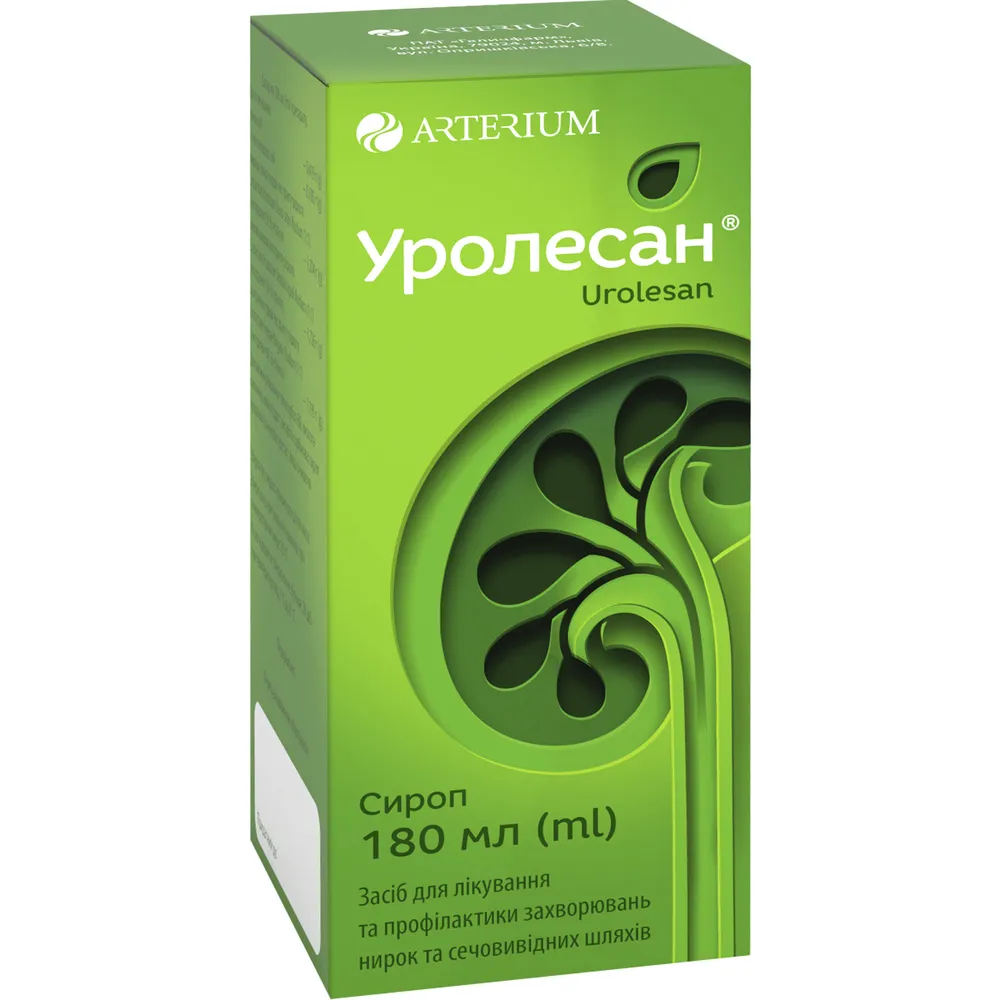
Table of Contents
INSTRUCTION FOR MEDICAL USE OF THE MEDICINAL PRODUCT UROLESAN® (UROLESAN)
Composition:
Active substances: 100 ml of syrup contain fir oil – 0.419 g, peppermint oil – 0.105 g, liquid extract of wild carrot fruits Extractum fructuum Dauci sativi fluidum (1:1) (extraction solvent: 96% ethanol) – 1.204 g, liquid extract of hop cones Strobili lupuli fluidum (1:1) (extraction solvent: 96% ethanol) – 1.726 g, liquid extract of oregano herb Extractum herbae Origani fluidum (1:1) (extraction solvent: 96% ethanol) – 1.195 g;
Excipients: polysorbate-80; citric acid monohydrate; sorbic acid; sugar syrup; disodium edetate; purified water.
Pharmaceutical form. Syrup.
Main physicochemical properties: a light yellow liquid with a greenish tint and a characteristic odor. Opalescence may occur.
Pharmacotherapeutic group. Agents used in urology. ATC code G04BX.
Pharmacological properties.
Pharmacodynamics. A combined medicinal product of plant origin. The components of Urolesan® reduce inflammatory processes in the urinary tract and kidneys, promote enhanced blood circulation in the kidneys and liver, and have diuretic, antibacterial, and choleretic effects. They form a protective colloid in urine and normalize the tone of smooth muscles of the upper urinary tract and gallbladder. Urolesan® increases the excretion of urea and chlorides and promotes the elimination of small calculi and sand from the urinary bladder and kidneys.
Pharmacokinetics. The drug is well absorbed; its action begins within 20–30 minutes and lasts for 4–5 hours. The maximum effect occurs within 1–2 hours. It is excreted through the gastrointestinal tract and kidneys.
Clinical characteristics.
Indications.
Acute and chronic urinary tract and kidney infections (cystitis and pyelonephritis); urolithiasis and uric acid diathesis (prevention of concrement formation after their removal); chronic cholecystitis (including calculous), biliary tract dyskinesia, cholelithiasis.
Contraindications.
- Hypersensitivity to the components of the medicinal product;
- gastritis, gastric and duodenal peptic ulcer;
- contraindicated in children with a history of seizures (febrile or otherwise).
Interaction with other medicinal products and other forms of interactions.
Not studied.
Special precautions for use.
Do not use the medicinal product if the diameter of concrements exceeds 3 mm.
Patients with diabetes mellitus, as well as patients with elevated blood glucose levels, should use Urolesan® with caution (since glucose syrup is an ingredient of the medicinal product).
Use with caution in patients with bronchial asthma due to the risk of bronchospasm.
Use during pregnancy or breastfeeding.
The use of the medicinal product during pregnancy or breastfeeding has not been studied.
Ability to influence reaction rate while driving or operating machinery.
Not studied.
Dosage and Administration.
Take the medicinal product orally before meals.
Recommended doses for adults and children aged 14 years and older: 5 ml of syrup (1 sachet) three times daily. In acute conditions (including renal and hepatic colic), the treatment course lasts from 5 to 7 days; in chronic conditions, from 7 days to 1 month. In cases of renal or hepatic colic, the single dose may be increased once to 10 ml (2 sachets); thereafter, resume the usual single dose (5 ml) at the next administration.
Recommended doses for children aged 2 to 7 years: 2–4 ml of syrup three times daily;
for children aged 7 to 14 years: 4–5 ml of syrup three times daily.
Dosing should be performed using the provided dosing syringe.
Children.
The medicinal product must not be used in children under 2 years of age.
Overdose.
Symptoms of overdose may include: nausea, dizziness.
Treatment: intensive warm fluid intake, rest, activated charcoal, atropine sulfate (0.0005–0.001 g).
Adverse reactions.
Urolesan® is generally well tolerated. The following adverse reactions may occur during use of the medicinal product:
Gastrointestinal disorders: dyspeptic symptoms (including nausea, vomiting);
Immune system disorders: allergic reactions, including pruritus, facial flushing, skin rashes, urticaria, angioneurotic edema (burning sensation in the mouth, breathing difficulty, facial and tongue swelling), anaphylactic shock;
Nervous system disorders: dizziness, general weakness, headache, ataxia, muscle tremor;
Cardiovascular system disorders: arterial hypotension, hypertension, bradycardia.
Reporting of adverse reactions after medicinal product registration is highly important. It enables continuous monitoring of the benefit-risk balance of the medicinal product. Healthcare and pharmaceutical professionals, as well as patients or their legal representatives, are encouraged to report all suspected adverse reactions and lack of efficacy via the Automated Pharmacovigilance Information System at: https://aisf.dec.gov.ua.
Shelf life.
2 years.
Storage conditions.
Store in the original packaging at a temperature not exceeding 25 °C.
After opening, store for no more than 28 days at a temperature between 2 °C and 8 °C.
Shake well before use. Keep out of reach of children.
Packaging.
90 ml in a bottle or jar; 180 ml in a bottle. One bottle or jar in a carton with instructions and a dosing syringe.
5 ml in sachets; 15 or 16 sachets in a carton.
Supply classification.
Over-the-counter (without prescription).
Manufacturer.
JSC "Halychpharm".
Manufacturer's location and address of manufacturing site.
6/8 Opryshkivska St., Lviv, 79024, Ukraine.