Timolol-darnitsa
Ukraine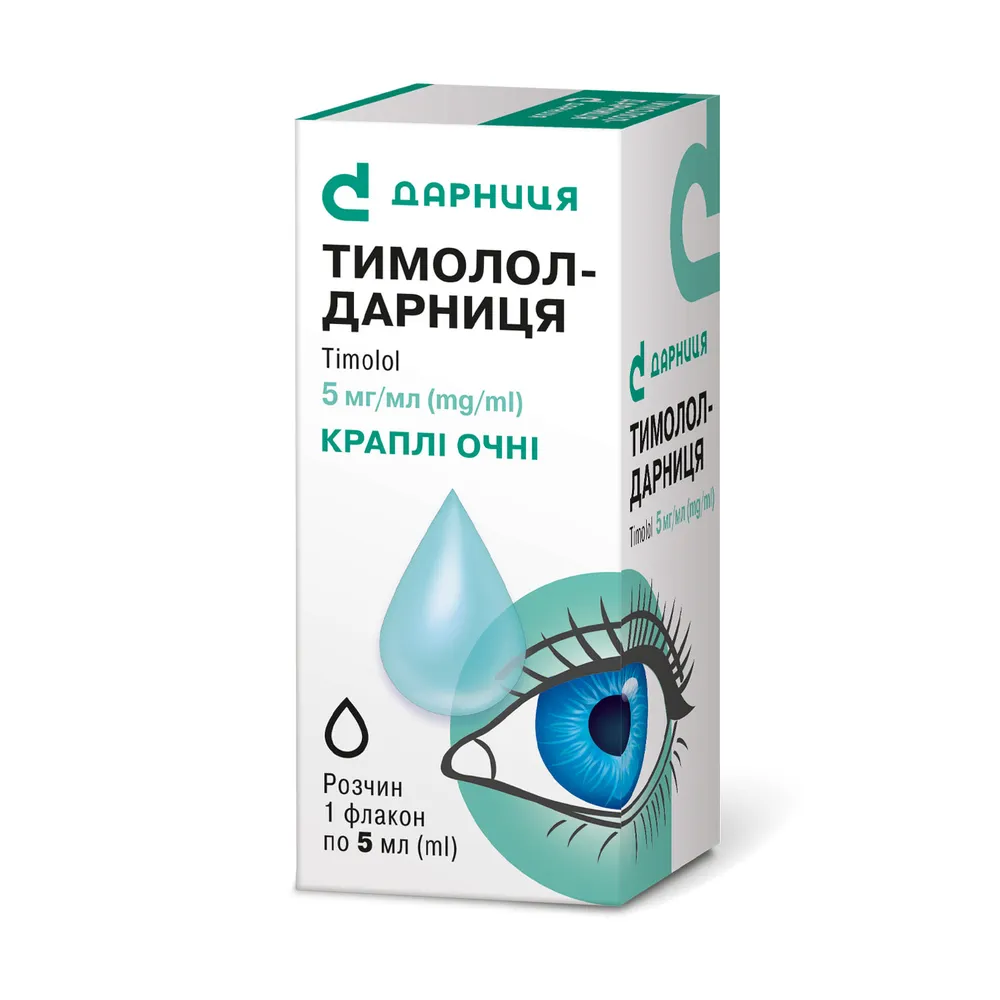
Table of Contents
INSTRUCTIONS FOR MEDICAL USE OF THE MEDICINAL PRODUCT TIMOLOL-DARNITSA (TIMOLOL-DARNITSA)
Composition:
Active substance: timolol;
1 ml of the preparation contains timolol maleate equivalent to 2.5 mg and 5 mg of timolol, respectively;
Excipients: benzalkonium chloride, sodium chloride, sodium dihydrogen phosphate dihydrate, disodium phosphate dodecahydrate, disodium edetate, water for injections.
Pharmaceutical form. Eye drops, solution.
Main physicochemical properties: clear, colorless liquid.
Pharmacotherapeutic group. Agents used in ophthalmology. Anti-glaucoma preparations and miotics. Beta-adrenoreceptor blockers.
ATC code S01ED01.
Pharmacological properties.
Pharmacodynamics.
Timolol is a β1 and β2-adrenoceptor blocker. When instilled into the eye, it reduces intraocular pressure primarily by decreasing the production of aqueous humor. This effect is associated with inhibition of the adenylate cyclase system in the ciliary tissue, which mediates active sodium transport from blood into the intraocular fluid, thereby reducing the rate of aqueous humor formation. It does not affect accommodation, refraction, or pupil size. When administered into the eye, it reduces both elevated and normal intraocular pressure. The pressure reduction occurs without significant impact on accommodation, which is an advantage compared to miotic anti-glaucoma agents.
Pharmacokinetics.
The effect of the drug appears within 20 minutes after instillation. Maximum effect is reached within 1–2 hours and lasts from 8 to 24 hours. After topical application of recommended doses, the drug is practically not detectable in plasma (less than 2 ng/mL).
Timolol maleate and its metabolites are excreted predominantly by the kidneys.
Clinical characteristics.
Indications.
The medicinal product is indicated for use in ocular hypertension, chronic open-angle glaucoma, and certain cases of secondary glaucoma.
Contraindications.
Hypersensitivity to the components of the medicinal product.
Decompensated or acute heart failure, certain types of cardiac arrhythmias (sinus bradycardia, sick sinus syndrome, sinoatrial block, second- or third-degree atrioventricular (AV) block not controlled by a pacemaker), cardiogenic shock.
Reactive respiratory diseases, including bronchial asthma and chronic obstructive pulmonary disease.
Interaction with other medicinal products and other forms of interaction.
When β-blockers in the form of eye drops are used concomitantly with oral calcium channel blockers, β-blockers, antiarrhythmic medicinal products (including amiodarone), cardiac glycosides, rauwolfia alkaloids, parasympathomimetics, or guanethidine, an additive effect may occur, manifesting as hypotension and/or bradycardia.
Eye drops containing pilocarpine and adrenaline, when used simultaneously with Timolol-Darnitsia, enhance the reduction of intraocular pressure.
Cholinomimetics (pilocarpine), adrenomimetics (epinephrine), carbonic anhydrase inhibitors, and taurine: may be combined with Timolol-Darnitsia to achieve a more pronounced and prolonged reduction of intraocular pressure.
Eye drops containing β-blockers should not be prescribed together with Timolol-Darnitsia.
Concomitant use of epinephrine with timolol may cause mydriasis.
Cardiac glycosides may lead to prolonged atrioventricular conduction time, bradycardia, and AV block.
Insulin and oral antidiabetic agents may promote hypoglycemia.
Calcium antagonists, reserpine, and β-blockers. Reports exist of potentiation of β-blocker effects (reduced heart rate, depression) when used concomitantly with CYP2D6 inhibitors (quinidine, fluoxetine, paroxetine).
Oral β-blockers may exacerbate hypertension caused by clonidine withdrawal.
Patients receiving β-blockers together with medicinal products that release catecholamines (e.g., reserpine) require careful monitoring due to the potential for enhanced effects such as hypotension and/or marked bradycardia, which may manifest as dizziness, syncope, or postural hypotension.
Combined oral use of calcium antagonists and β-blockers is acceptable in patients with adequate cardiac function; however, this combination should be avoided in patients with impaired cardiac function.
Hypotension, atrioventricular conduction disturbances, and left ventricular dysfunction may occur in patients receiving β-blockers when calcium channel blockers are added to the treatment regimen. The nature of cardiac adverse effects depends on the type of calcium channel blocker used.
The action of muscle relaxants may be enhanced; therefore, the medicinal product should be discontinued 48 hours before planned surgical intervention involving general anesthesia. Neuromuscular blockade induced by tubocurarine may be potentiated by β-blockers.
The effect of β2-sympathomimetics may be reduced, with an increased risk of bronchospasm.
Quinidine enhances the β-blocking action of the medicinal product by reducing the activity of P450 enzymes, specifically CYP2D6, which are responsible for timolol metabolism.
Clonidine. If used concomitantly, clonidine should be discontinued gradually and only several days after stopping Timolol-Darnitsia. Reinitiating the medicinal product is possible only several days after clonidine has been fully withdrawn.
Nicardipine, diltiazem. No enhancement of the effects of Timolol-Darnitsia instillations was observed when nicardipine and diltiazem were administered orally concomitantly.
Cimetidine may cause enhanced action of Timolol-Darnitsia.
Special precautions for use.
Timolol does not cause or affect mydriasis when used as monotherapy. Regular measurement of intraocular pressure and corneal examination are required.
When switching patients to timolol therapy, a refractive correction may be needed after the effects of previously used miotic agents have worn off.
Tear production and corneal status should be monitored every 6 months.
Topically applied beta-blockers may be systemically absorbed, potentially leading to adverse effects on the respiratory, cardiovascular, and other systems. Therefore, when used locally (ophthalmologically), the same side effects as with systemic beta-blockers may occur, although their frequency is significantly lower.
Cardiac disorders. Serious cardiovascular reactions, including fatal cases associated with heart failure, have been reported following the use of timolol maleate.
The appropriateness of concomitant antihypertensive beta-blocker therapy should be critically evaluated in patients with cardiovascular disease (e.g., ischemic heart disease, Prinzmetal's angina, heart failure), and alternative medications should be considered. Patients with cardiovascular disorders should be carefully monitored for signs of worsening condition or adverse reactions during treatment.
Due to the negative effect on impulse conduction, beta-blockers should be used cautiously in patients with first-degree AV block.
Adequate control of heart failure is required when using timolol in such patients. Patients with severe heart disease should be under medical supervision, particularly regarding progression of heart failure, and pulse should be monitored.
Vascular disorders. The drug should be used cautiously in patients with severe peripheral vascular disorders (e.g., Raynaud's syndrome or Raynaud's disease).
Due to the potential effects of beta-blockers on blood pressure and pulse, these drugs should be used cautiously in patients with cerebral insufficiency. If symptoms of reduced cerebral perfusion develop after initiating timolol therapy, alternative treatment should be considered.
Respiratory disorders. Respiratory reactions, including fatal cases due to bronchospasm in asthmatic patients, have been reported following ophthalmic use of some beta-blockers. Timolol-Darnitsia may be prescribed (with caution) to patients with mild to moderate chronic obstructive pulmonary disease (COPD) if the therapeutic benefit outweighs the potential risk.
Corneal disorders. Beta-blockers may cause dry eyes. This medication should be used cautiously in patients with corneal disorders.
Muscle weakness.
There are reports that beta-blockers may cause muscle weakness. This is associated with certain symptoms of myasthenia (e.g., diplopia, ptosis, and generalized weakness); timolol may induce muscle weakness in some patients with myasthenia gravis or myasthenic symptoms.
Thyroid disorders. Beta-blockers may mask symptoms of hyperthyroidism.
Discontinuation of the drug should be done cautiously if thyroid dysfunction is suspected (e.g., hyperthyroidism, thyrotoxicosis) to reduce the risk of exacerbating such conditions.
Hypoglycemia/diabetes. Beta-blockers should be used cautiously in patients with spontaneous hypoglycemia or labile diabetes, as they may mask symptoms of acute hypoglycemia. Blood glucose levels should be monitored (especially in diabetic patients).
Myasthenia gravis. Worsening of general condition has been reported in some patients with myasthenia gravis during treatment with timolol eye drops.
Treatment of angle-closure glaucoma.
The main challenge in treating patients with angle-closure glaucoma is the need to open the angle. This requires pupillary constriction using miotic agents. Timolol has virtually no effect on the pupil. If timolol is used to reduce elevated intraocular pressure in angle-closure glaucoma, it should be administered together with a miotic agent. As with other anti-glaucoma medications, reduced drug sensitivity has been observed in some patients after prolonged therapy. However, no significant difference in mean intraocular pressure values has been noted after initial stabilization.
General anesthesia. Ophthalmic beta-blockers may reduce the heart's ability to respond to β-adrenergic stimulation and block the effects of systemic β-agonists such as epinephrine. Therefore, beta-blockers should be gradually discontinued prior to general anesthesia.
The anesthesiologist must be informed that the patient is taking timolol maleate.
If surgery under general anesthesia is planned, the drug should be discontinued at least 48 hours beforehand.
Anaphylactic reactions.
Risk of anaphylactic reactions: Patients with atopy or a history of severe allergic reactions to multiple allergens may experience more intense reactions to accidental, diagnostic, or therapeutic re-exposure to these allergens while receiving beta-blockers. Such patients may not respond to the usual dose of epinephrine used in anaphylactic reactions.
Retinal detachment.
Cases of choroidal detachment have been observed following surgical treatment of glaucoma and with medications that reduce aqueous humor secretion (after trabeculotomy). Such cases have been reported with the use of timolol and acetazolamide.
Use of other beta-blockers.
Systemic (oral) use of beta-blockers may reduce intraocular pressure. In such cases, the need for local application of timolol eye drops should be carefully considered. If beta-blockers are already administered systemically, the additional effect from topically applied agents is usually lower. Patients receiving additional systemic beta-blockers or those for whom limited use of beta-blockers is indicated should be closely monitored.
Benzalkonium chloride.
Two topical ophthalmic beta-blockers should not be used simultaneously.
Timolol should not be used while wearing contact lenses, as the preservative benzalkonium chloride may be absorbed by soft contact lenses, causing discoloration or eye irritation. Patients should be advised to remove contact lenses before instilling the medication and to wait 15 minutes before reinserting them.
If other ophthalmic agents are used concomitantly, a 15-minute interval should be maintained between administrations.
In patients with heavily pigmented irises, pressure reduction may be delayed and less pronounced.
After discontinuation of treatment, the drug's effect may persist for several days. If timolol treatment is stopped after long-term use, its intraocular pressure-lowering effect may last 2–4 weeks.
When instilled in only one eye, beta-blockers may also reduce intraocular pressure in the fellow eye.
The use of this medication may result in a positive doping test.
It should be noted that during intraocular pressure stabilization, the initial reduction may reach up to 50%, after which drug efficacy may decrease (tachyphylaxis). Between the 3rd and 12th month, pressure reduction stabilizes. Therefore, regular monitoring of intraocular pressure during the first 5 days of timolol eye drop use is essential.
Use during pregnancy or breastfeeding.
Pregnancy.
Due to insufficient experience with use, the drug should be prescribed only if the expected therapeutic benefit to the mother clearly outweighs the potential risk to the fetus/infant.
Epidemiological studies have not shown teratogenic effects but have demonstrated intrauterine growth retardation with beta-blocker use. Effects of beta-blockers (bradycardia, hypotension, respiratory depression, and hypoglycemia) have been observed in newborns whose mothers received beta-blockers before delivery. Newborns whose mothers took timolol before delivery should be closely monitored during the first days of life.
Breastfeeding.
Beta-blockers pass into breast milk and may cause serious adverse effects in breastfed infants.
After careful assessment of the benefit-risk ratio, either breastfeeding should be discontinued or the drug should be withdrawn, considering the benefits of breastfeeding for the infant and the benefits of therapy for the mother.
Ability to affect reaction speed when driving or operating machinery.
Transient blurred vision or other visual disturbances, including refractive changes, diplopia, ptosis, frequent episodes of mild transient visual blurring, and rarely dizziness or increased fatigue during treatment, may impair the ability to drive or operate machinery. Patients should wait until vision clears before driving or operating machinery.
Administration and Dosage
The bottle is protected by a tamper-evident seal. At first use, the cap must be twisted to separate it from the safety ring.
The bottle has a special design that ensures precise dosing of the solution according to the principle "one squeeze – one drop" when pressure is applied to the bottom. The firmness of the bottle walls significantly reduces the risk of stream-like release of the medication—the most common cause of overdose with eye drops.
Timolol-Darnitsya should be administered into the conjunctival sac of the affected eye by gently squeezing the bottom of the bottle. Immediately after instillation, the eyes should be closed and gentle pressure applied with a finger to the inner corner of the eye (near the nose) for 1–2 minutes to prevent the solution from entering the tear ducts and to reduce the potential for systemic side effects.
At the beginning of therapy, 1 drop of the 0.25% solution should be administered twice daily. If the response is inadequate, 1 drop of the 0.5% solution twice daily may be used. After intraocular pressure has been normalized, the maintenance dose is 1 drop of the 0.25% solution once daily.
The duration of treatment is determined individually by the physician.
If intraocular pressure is not adequately controlled, concomitant therapy with miotics, epinephrine, or systemic carbonic anhydrase inhibitors may be initiated.
Caution! Contact lenses must be removed before using Timolol-Darnitsya. They may be reinserted no sooner than 15 minutes after administration.
Children
The efficacy and safety of this medication in children have not been established.
Overdose
The special design of the bottle makes accidental overdose unlikely. Overdose may occur if the recommended single doses and frequency of administration are not followed.
There have been reports of accidental timolol overdose resulting in effects similar to those observed with systemic use of β-blockers.
Symptoms: dizziness, headache, arrhythmia, decreased blood pressure, development of heart failure, cardiogenic shock, bradycardia, cardiac arrest, bronchospasm, nausea, vomiting, confusion, and seizures; in cases of accidental oral ingestion (depending on the amount): cardiac rhythm disturbances, dyspnea, cyanosis of the nails, dizziness, weakness, nausea, vomiting, diarrhea.
Treatment: immediate eye irrigation with water or physiological saline.
In cases of severe overdose symptoms, antidotes should be administered: intravenous atropine 0.5–2 mg; glucagon initially 1–10 mg intravenously, followed by 2–2.5 mg/hour as an infusion.
In cases of accidental oral ingestion, if less than 1 hour has passed since ingestion, gastric lavage should be performed or activated charcoal administered (50 g for adults, 1 g/kg for children).
For bradycardia, administer intravenous atropine 0.25–2 mg. If bradycardia persists, use isoprenaline. If no response, a cardiac pacemaker should be implanted.
For hypotension, administer dopamine, dobutamine, or noradrenaline. If ineffective, administer glucagon.
In case of bronchospasm: isoprenaline, additional aminophylline therapy.
Acute heart failure: manage according to emergency protocol (oxygen, diuretics, cardiac glycosides). If ineffective, intravenous aminophylline and glucagon may be administered.
Heart block: isoprenaline, implantation of a cardiac pacemaker.
Hemodialysis is poorly effective.
Adverse reactions.
Ocular disorders: Eye discomfort, mild or moderate pain, burning, stinging and itching of the eyes, eyelid itching, uveitis, asthenopia, eyelid eczema, eyelid erythema, ocular pruritus, dry eyes, redness, hypotony, decreased corneal sensitivity, mild keratopathy, superficial punctate keratitis, eye pain, iritis, blurred vision, foreign body sensation, increased light sensitivity, corneal erosion, conjunctivitis, allergic conjunctivitis and blepharoconjunctivitis, objective and subjective symptoms of eye irritation, blepharitis, lacrimation, photophobia, eye discharge, scaling at the eyelid margins, anterior chamber inflammation, eyelid edema, conjunctival edema, epithelial edema and corneal hyperemia, conjunctival metaplasia, conjunctival hyperemia, disc hemorrhages, decreased visual acuity and blurred vision, ocular pemphigoid, choroidal detachment, contact dermatitis of the eyelids, retinal hemorrhage, keratitis, blepharoptosis, visual disturbances including refractive disorders (related to discontinuation of miotic agents), diplopia, ptosis.
Ear and labyrinth disorders: Tinnitus (ringing or buzzing in the ears).
Respiratory, thoracic and mediastinal disorders: Dyspnea, wheezing, asthmatic attacks, bronchospasm (especially in patients with pre-existing lung disease), bronchitis, chronic obstructive pulmonary disease (COPD), stridor, respiratory disturbance/arrest, respiratory distress syndrome (respiratory failure), decreased vital lung capacity, severe cough, increased bronchial secretions, cyanosis, interstitial pneumopathy, dyspnea, nasal congestion.
Gastrointestinal disorders: Nausea, diarrhea, abdominal pain, vomiting, abdominal discomfort, dyspepsia, dysgeusia, dryness of the oral mucosa (xerostomia).
Endocrine disorders: Marked decrease in high-density lipoprotein (HDL) levels or cholesterol/HDL ratio, masking of hypoglycemia symptoms in patients with insulin-dependent diabetes mellitus, weight gain, severe hyperglycemia.
Nervous system disorders: Headache, migraine, dizziness, weakness, sensory disturbances, fear sensations, hallucinations, neuromuscular disorders, asthenia, fatigue, decreased libido, malaise, cerebral circulation insufficiency (including cerebrovascular disorders, sudden drop in arterial pressure), apathy, worsening of objective and subjective symptoms of myasthenia gravis, paresthesia.
Psychiatric disorders: Depression (including melancholic), somnolence, nightmares, psychiatric disorders, psychosis.
Cardiac disorders: Heart failure, bradycardia, marked decrease in pulse rate, arrhythmia, arterial hypotension, congestive heart failure, edema, myocardial infarction, angina pectoris, arterial hypertension, tachycardia, cardiac disturbances, cerebral infarction (transient ischemic attacks), syncope, palpitations, chest pain (including cardiac area pain), asystole, atrioventricular or sinoatrial block (complete or incomplete), bradyarrhythmia, collapse, cardiac arrest, stroke, cerebral vascular ischemia.
Vascular disorders: Hypotension, intermittent claudication, Raynaud's phenomenon, cold extremities, peripheral edema.
Immune system disorders: Hypersensitivity, urticaria, anaphylactic reactions, angioneurotic edema, anaphylactic shock.
Skin and subcutaneous tissue disorders: Itching, eczema, generalized and localized rashes, skin rash, sweating, erythema, exfoliative dermatitis, hypopigmentation, alopecia, worsening of nail condition, stomatitis, psoriasiform rash or exacerbation of psoriasis, systemic lupus erythematosus, lichen planus, allergic contact dermatitis, erythroderma, facial edema, Lyell's syndrome (toxic epidermal necrolysis).
Reproductive system disorders: Sexual dysfunction (impotence), decreased libido.
In some patients with significantly damaged cornea, very rare cases of corneal calcification due to phosphate present in eye drops have been observed.
Adverse reactions for which a causal relationship with timolol use has not been established.
General disorders: Fatigue.
Cardiovascular disorders: Arterial hypertension, pulmonary edema, angina pectoris.
Gastrointestinal disorders: Dyspepsia, anorexia, dry mouth.
Psychiatric disorders: Behavioral disturbances, including confusion, hallucinations, anxiety, disorientation, excitement, somnolence, and other psychiatric disorders.
Ocular disorders: Cystoid macular edema of the cornea.
Renal and urinary disorders: Retroperitoneal fibrosis, impotence.
Adverse reactions reported during clinical practice with oral administration of timolol maleate, which may occur with ophthalmic use of timolol maleate.
General disorders: Pain in extremities, decreased physical endurance, weight loss.
Cardiovascular disorders: Edema, worsening of arterial insufficiency, Raynaud's disease, vasodilation.
Gastrointestinal disorders: Stomach or intestinal pain, hepatomegaly, vomiting.
Blood and lymphatic system disorders: Simple purpura.
Endocrine disorders: Hyperglycemia, hypoglycemia.
Skin and subcutaneous tissue disorders: Itching, skin irritation, increased skin pigmentation, increased sweating, cold sensation in extremities.
Musculoskeletal and connective tissue disorders: Arthralgia, myalgia, arthropathy, limping.
Nervous system disorders: Dizziness, weakness, decreased libido, nightmares, insomnia, impaired concentration.
Respiratory, thoracic and mediastinal disorders: Wheezing, bronchial obstruction.
Ear and labyrinth disorders: Tinnitus.
Ocular disorders: Dry eyes.
Renal and urinary disorders: Difficulty in urination.
Adverse reactions reported with use of other β-blockers, which may occur with ophthalmic use of timolol maleate.
Gastrointestinal disorders: Mesenteric arterial thrombosis, ischemic colitis.
Blood and lymphatic system disorders: Agranulocytosis, thrombocytopenic purpura.
Nervous system disorders: Reversible depression progressing to catatonia; acute reversible syndrome characterized by disorientation in time and space; short-term memory loss, emotional lability, mild confusion, decreased neuropsychometric test scores.
Immune system disorders: Erythematous rashes; urticaria associated with pain and throat inflammation; laryngospasm with respiratory insufficiency.
Renal and urinary disorders: Peyronie's disease.
Cases of a syndrome including psoriasis-like skin rashes, dry conjunctivitis, otitis, and sclerosing serositis associated with use of β-blockers, particularly practolol, have been reported. This syndrome has not been reported with timolol maleate.
After discontinuation of treatment, the effect of the drug may persist for several days. If treatment with timolol eye drops is stopped after prolonged use, its intraocular pressure-lowering effect may last for 2–4 weeks. When administered in only one eye, β-blockers may also reduce intraocular pressure in the fellow eye.
Shelf life.
Eye drops, solution 2.5 mg/mL – 2 years.
Eye drops, solution 5 mg/mL – 3 years.
After opening the bottle, the product should not be stored for more than 28 days.
Storage conditions.
Store in the original packaging at a temperature not exceeding 25 °C. Keep out of reach of children.
Packaging.
5 mL or 10 mL in a bottle; 1 bottle per carton.
Prescription category. Prescription only.
Manufacturer. JSC "Pharmaceutical Company "Darnytsia".
Manufacturer's address and location of business activity.
13, Boryspilska Street, Kyiv, 02093, Ukraine.