Cytosar
Ukraine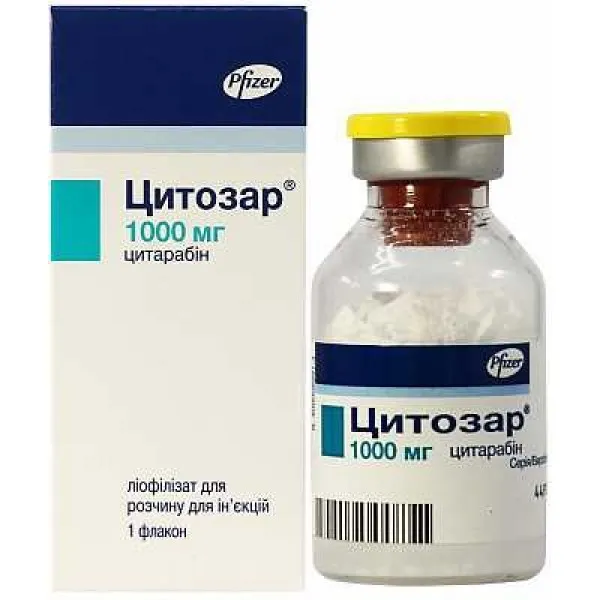
Table of Contents
INSTRUCTIONS FOR MEDICAL USE OF THE MEDICINAL PRODUCT Cytosar® (Cytosar®)
Composition:
Active substance: cytarabine;
1 vial contains 100 mg of cytarabine;
Excipients: concentrated hydrochloric acid, sodium hydroxide.
1 ampoule of solvent contains benzyl alcohol 9 mg/mL, water for injections.
1 vial contains 1000 mg of cytarabine;
Excipients: concentrated hydrochloric acid, sodium hydroxide.
Pharmaceutical form. Lyophilisate for solution for injection.
Main physicochemical properties: white or almost white lyophilisate; solvent: clear, colorless solution.
Pharmacotherapeutic group. Antineoplastic and immunomodulating agents. Antineoplastic agents. Pyrimidine analogues. Cytarabine.
ATC code L01B C01.
Pharmacological Properties
Pharmacodynamics
As an analogue of pyrimidine nucleoside (differing from the usual cytidine or deoxycytidine of DNA or RNA in the sugar portion of the molecule, where it contains arabinose instead of ribose or deoxyribose), cytarabine is an antineoplastic agent that inhibits DNA synthesis. It also possesses antiviral and immunosuppressive properties. Detailed in vitro studies of the mechanism of cytotoxicity indicate that the primary action of cytarabine is the inhibition of deoxycytidine synthesis (as a cell cycle-dependent antimetabolite, it inhibits DNA synthesis during the S-phase of mitosis), although inhibition of cytidylate kinases and incorporation of the compound into nucleic acids may also contribute to the cytostatic and cytotoxic effects of the drug. Due to its cytotoxic action, cytarabine causes dose-dependent destruction of cells in proliferating tissues.
Pharmacokinetics
General pharmacokinetic properties
Cytarabine is ineffective when administered orally (only about 20% of the dose is absorbed from the gastrointestinal tract). Elimination from the blood follows a biphasic pattern: an initial distribution phase (approximately 10 minutes) and a second elimination phase (1–3 hours).
Distribution
A relatively uniform serum concentration is achieved through continuous intravenous infusion.
After intravenous injection, cytarabine concentrations in cerebrospinal fluid remain significantly lower than plasma levels. However, after 2 hours of continuous infusion, drug concentrations in cerebrospinal fluid may reach up to 40% of plasma levels.
Biotransformation
After parenteral administration, the drug is rapidly metabolized, primarily in the liver and possibly in the kidneys. Cytarabine is deaminated to arabinofuranosyluracil. After intravenous administration of a single high dose, cytarabine levels in blood fall to practically undetectable levels within 15 minutes in most patients. In some patients, circulating drug levels become undetectable as early as 5 minutes after injection. At the end of the elimination phase, plasma levels of the inactive metabolite (1-beta-D-arabinofuranosyluracil) account for 80%. Following intrathecal administration, the half-life of cytarabine in cerebrospinal fluid is approximately 2 hours. Drug metabolism is minimal at this site due to low concentrations of deaminase enzymes.
Excretion
After intravenous administration in humans, only 5.8% of the administered dose is excreted unchanged in urine within 12–24 hours; 90% of the dose is excreted as the deaminated metabolite.
Clinical characteristics.
Indications.
Achievement and maintenance of remission in acute non-lymphoblastic leukemias in adults and children.
Treatment of other types of leukemia, such as acute lymphoblastic leukemia and chronic myelogenous leukemia (blast crisis).
Prophylaxis or treatment of leukemic meningitis by intrathecal administration, either as monotherapy or in combination with other agents (methotrexate, hydrocortisone).
Cytosar® may be used as monotherapy or in combination with other antineoplastic agents; better results are generally achieved with combination therapy. Remissions induced by Cytosar® are short-lived without further maintenance therapy.
Treatment of high-risk leukemia, refractory leukemia, and relapsed acute leukemia, regardless of concomitant use of high-dose cytotoxic chemotherapy.
As part of combination therapy (LSA2L2) for treatment of non-Hodgkin's lymphomas in children.
Cytosar® has been used experimentally in the treatment of various neoplastic disorders. Overall, a positive response to treatment has been observed in a small number of patients with solid tumors.
Contraindications.
- Hypersensitivity to the active substance or to any of the excipients listed in the section "Composition".
- Medication-induced bone marrow suppression (only after assessment of risk versus expected benefit).
- During pregnancy, the drug should be administered only after careful evaluation of risks and expected benefits (see section "Use in pregnancy or breast-feeding").
- Lactation: breast-feeding must be discontinued during drug administration (see section "Use in pregnancy or breast-feeding").
- The solvent containing benzyl alcohol as a preservative must not be used for reconstitution of the lyophilisate in the following cases: high-dose intravenous therapy and intrathecal administration (see section "Special precautions for use").
Special safety precautions.
Any unused medicinal product or waste material must be disposed of in accordance with local requirements.
Since Cytosar® has toxic properties, the following recommendations must be observed when handling the drug:
- Personnel must be trained in proper handling procedures;
- Pregnant women must not handle the drug;
- Personnel must wear protective clothing (goggles, gowns, disposable gloves, and masks);
- A designated area (preferably with laminar airflow) should be used for solution reconstitution;
- Work surfaces must be protected with absorbent paper backed with plastic, for single use;
- All materials used during handling must be placed in hazardous waste bags and incinerated at high temperatures;
- In case of accidental contact with skin or eyes, the affected area must be immediately rinsed thoroughly with large amounts of water, soapy water, or sodium bicarbonate solution, and medical advice must be sought;
- Spilled solution must be decontaminated with sodium hypochlorite solution (containing 1% chlorine), then rinsed with water;
- Cleaning materials must be disposed of as described above.
Interaction with other medicinal products and other forms of interaction.
Combining cytarabine with other antineoplastic agents, myelosuppressive substances, or radiation therapy may enhance cytotoxic and immunosuppressive effects.
Digoxin. In patients receiving beta-acetyldigoxin and chemotherapy regimens including cyclophosphamide, vincristine, and prednisone, reversible decreases in plasma digoxin levels and renal excretion of the glycoside have been observed, regardless of whether cytarabine or procarbazine was administered. No changes in digoxigenin plasma levels have been reported. Therefore, plasma digoxin concentrations should be monitored in patients receiving such combination chemotherapy regimens. Digoxigenin may be considered as an alternative treatment option in these patients.
Gentamicin. In vitro studies of the interaction between gentamicin and cytarabine revealed antagonism against sensitive strains of Klebsiella pneumoniae. This finding suggests that in patients receiving cytarabine and gentamicin for infections caused by Klebsiella pneumoniae, lack of rapid therapeutic response may indicate the need for reassessment of antibacterial therapy.
Flucytosine. Clinical data suggest a potential reduction in flucytosine efficacy when administered concurrently with cytarabine. This may be due to potential competitive inhibition of its cellular uptake.
Methotrexate. Intravenous administration of cytarabine in combination with intrathecal methotrexate may increase the risk of severe neurological adverse reactions, such as headache, paralysis, coma, and stroke-like episodes (see section "Special precautions for use").
Special precautions for use.
During the induction phase of remission, patients should be hospitalized in facilities equipped with appropriate laboratory and resuscitation equipment sufficient to monitor drug tolerance, protect and support the patient's condition during the drug's toxic effects. The main toxic effect of Cytosar® is suppression of bone marrow activity leading to leukopenia, thrombocytopenia, and anemia. Less severe toxic manifestations include nausea, vomiting, diarrhea, abdominal pain, oral ulceration, and liver function impairment.
Before prescribing Cytosar®, the benefit/risk ratio must be assessed. Prior to evaluation or initiation of therapy, the physician should review the recommendations provided below.
Anaphylactic reactions
Anaphylactic reactions have been observed during cytarabine treatment; see section "Adverse reactions". An anaphylactic reaction occurred immediately after intravenous administration of the drug, resulting in circulatory and respiratory disturbances requiring resuscitation measures.
Disorders of the blood and lymphatic system
Cytosar® is potentially harmful to the bone marrow. The extent of this effect depends on dosage and administration regimen. When drug-induced bone marrow suppression is expected, treatment should be initiated cautiously after evaluating potential risks and anticipated benefits. Therapy must be conducted under close medical supervision. Daily monitoring of leukocyte and platelet counts in blood is required at the beginning of treatment. After disappearance of blast cells from peripheral blood, continuous monitoring of bone marrow is recommended, as suppression of its activity may lead to severe, sometimes fatal consequences (infectious complications due to granulocytopenia and other immune system disorders, secondary hemorrhages due to thrombocytopenia).
Patients receiving Cytosar® require careful monitoring. Frequent determination of leukocyte and platelet counts is recommended. If drug-induced bone marrow suppression leads to a decrease in blood leukocyte count below 50,000/mm³ or polymorphonuclear granulocytes below 1,000/mm³, treatment interruption or modification should be considered. After discontinuation of therapy, blood cell counts may continue to decline for 5–7 days, reaching the lowest level on days 12–24 after stopping the drug. Treatment may be resumed only after clear signs of bone marrow recovery are observed (confirmed by repeated bone marrow examinations). The medical facility must have equipment available for managing potentially fatal complications of bone marrow suppression.
Hepatic and/or renal function
The liver appears to neutralize a significant portion of the administered cytarabine dose. Neurological adverse reactions following high-dose cytarabine therapy are more likely in patients with renal or hepatic impairment. Patients with renal or hepatic insufficiency should receive the drug with caution and possibly at reduced doses.
Neurological adverse reactions
Severe neurological adverse reactions, ranging from headache to paralysis, coma, and stroke-like episodes, have been observed in young individuals and adolescents after intravenous cytarabine administration in combination with intrathecal methotrexate.
Tumor lysis syndrome (TLS)
As with other cytotoxic agents, Cytosar® may induce tumor lysis syndrome caused by rapid destruction of tumor cells. Secondary hyperuricemia associated with this syndrome may lead to acute renal failure. In addition to other investigations and clinical tests, serum uric acid levels should be monitored regularly. Appropriate supportive treatment should be provided when necessary.
High-dose Cytosar® treatment
Severe toxic reactions, sometimes fatal, involving the central nervous system (CNS), gastrointestinal tract, and lungs—distinct from those observed with standard-dose Cytosar®—have been reported after high-dose cytarabine therapy (2–3 g/m²). These include reversible corneal damage and hemorrhagic conjunctivitis, which can be prevented or minimized by prophylactic corticosteroid eye drops; mostly reversible disturbances of cerebral and cerebellar function, including personality changes, somnolence, and coma; severe gastrointestinal tract ulceration, including intestinal pneumatosis leading to peritonitis; sepsis and liver abscess; pulmonary edema, hepatic injury with hyperbilirubinemia; intestinal necrosis, and necrotic colitis. Peripheral motor and sensory neuropathy developed in adult patients with acute non-lymphocytic leukemia after high-dose Cytosar®, daunorubicin, and asparaginase therapy. Patients receiving high-dose Cytosar® should be examined for neuropathy symptoms, as dose regimen adjustments may be required to avoid irreversible neurological damage.
Immunosuppression/Vaccination/Increased susceptibility to infections
Administration of live or attenuated live vaccines to patients whose immunity is suppressed by chemotherapeutic agents, including cytarabine, may result in severe or fatal infections. Patients receiving cytarabine should avoid live vaccines. Inactivated or killed vaccines may be administered, but the immune response may be diminished.
Viral, bacterial, fungal, parasitic, or saprophytic infections at any site may occur with Cytosar® monotherapy or in combination with other immunosuppressive agents at doses that suppress cellular or humoral immunity. These infections may be mild but can also be severe and even fatal.
Nausea, vomiting
Nausea or vomiting may occur after rapid intravenous administration of the drug over several hours. These reactions can be avoided by administering the drug via infusion.
Pancreatitis
Acute pancreatitis has been observed in patients treated with Cytosar® in combination with other medicinal products.
Carcinogenesis
Carcinogenicity of Cytosar® has been demonstrated in animal studies. A similar effect cannot be excluded with long-term use of cytarabine in humans.
Information on excipients
Benzyl alcohol
The solvent contains benzyl alcohol (see section "Composition"). Benzyl alcohol as a preservative may cause hypersensitivity reactions. Intravenous administration of benzyl alcohol has been associated with serious adverse reactions and death in pediatric patients, including neonates (gasping syndrome). Although standard therapeutic doses of this drug usually contain significantly lower amounts of benzyl alcohol compared to the amount causing gasping syndrome, the minimal amount of benzyl alcohol that may cause toxic effects is unknown. Medicinal products containing benzyl alcohol should be administered to neonates only when absolutely necessary or when no alternative treatment is available. Premature infants and low-birth-weight neonates have an increased risk of developing toxic effects. Medicinal products containing benzyl alcohol should not be used for more than one week in children under 3 years of age without urgent need due to increased risk of accumulation. If use of benzyl alcohol-containing medicinal products is absolutely necessary, the combined daily metabolic load of benzyl alcohol from all sources should be carefully evaluated, especially in patients with hepatic or renal dysfunction, and in pregnant women due to the risk of accumulation and toxicity (metabolic acidosis).
If cytarabine is administered at high doses or for intrathecal use, a solvent containing benzyl alcohol should not be used. For dilution, 0.9% sodium chloride solution without preservatives may be used (see sections "Method of administration and dosage" and "Contraindications").
Sodium
This medicinal product contains less than 1 mmol sodium (23 mg) per vial, i.e., essentially "sodium-free".
Use during pregnancy or breastfeeding.
Women of reproductive potential/Contraception in men and women
Due to the potential genotoxicity, women of reproductive potential should be advised to use highly effective contraception during treatment and for 6 months after the last dose of cytarabine. Men with female partners of reproductive potential should be informed to use effective contraception during treatment and for at least 3 months after the last dose of cytarabine.
Pregnancy
Studies on the use of the drug in pregnant women have not been conducted. Cytarabine is teratogenic in some animal species. This drug should be prescribed to pregnant women or women who may be pregnant only when the potential benefit to the woman outweighs the potential risk to the fetus.
Healthy babies have been born to women who received cytarabine during pregnancy (as monotherapy or in combination with other drugs). Some infants were premature or had low birth weight. Some children were followed up from 6 weeks to 7 years after drug exposure, with no abnormalities detected. One infant died at 80 days from gastroenteritis.
Congenital abnormalities have been reported, particularly when the fetus was exposed to systemic cytarabine therapy during the first trimester. Two cases of congenital abnormalities were reported: one involving defects of distal parts of upper and lower limbs, and the other involving limb and ear deformities.
Pancytopenia, leukopenia, anemia, thrombocytopenia, electrolyte imbalances, transient eosinophilia, elevated IgM levels, hyperpyrexia, sepsis, and fatal outcomes have been reported in neonates exposed to cytarabine in utero. Some of these infants were premature.
Therapeutic abortions were performed in five women undergoing cytarabine therapy. Four fetuses were generally normal, but one had an enlarged spleen, and another had X-chromosome trisomy detected in chorionic tissue.
Due to the potential risk of fetal abnormalities during cytotoxic therapy, particularly during the first trimester, the potential fetal risk and the advisability of continuing pregnancy should be evaluated in patients who are pregnant or may become pregnant during cytarabine treatment. The risk is certain but considerably lower if therapy is initiated during the second or third trimester. Although there are cases of healthy children born to women treated with cytarabine throughout all three trimesters, these children require ongoing medical follow-up.
The solvent for preparation of the medicinal product contains benzyl alcohol as a preservative. Benzyl alcohol can cross the placenta (see section "Special precautions for use").
Breastfeeding
It is unknown whether the drug is excreted in breast milk. Since many drugs are excreted in breast milk and due to the potential for serious adverse reactions with Cytosar®, breastfeeding should be discontinued during treatment and for at least 1 week after the last dose.
Fertility
Men should be informed before starting treatment about the possibility of sperm preservation, as there is a risk of irreversible infertility following Cytosar® therapy.
Ability to affect reaction speed when driving vehicles or operating machinery.
Cytosar® does not affect the ability to drive or operate machinery. However, discomfort, dizziness, or nausea may occur during cytarabine treatment (see section "Adverse reactions"). In such cases, driving vehicles or operating machinery is not recommended.
Method of Administration and Dosage
Cytosar® should be prescribed only by a physician experienced in anticancer therapy.
The drug should be used in combination with other cytotoxic agents, applying various dosage regimens. It can be administered by intravenous infusion or injection, subcutaneously, or intrathecally.
Solvents containing benzyl alcohol should not be used for reconstitution of cytarabine solution intended for high-dose intravenous or intrathecal administration (see sections "Contraindications" and "Special Warnings and Precautions for Use"). For dilution, 0.9% sodium chloride solution without preservatives may be used.
Subcutaneous administration is permitted only with the 20 mg/mL injection solution. The standard subcutaneous dose is 20–100 mg/m² body surface area, depending on the indication and dosage regimen.
Dosage for Adults
- Induction of Remission
a. Prolonged Administration
The recommended dose for bolus injection is 2 mg/kg body weight per day for 10 days. Blood counts should be monitored daily. If there is no therapeutic effect and no signs of toxicity, the dose may be increased to 4 mg/kg body weight per day. This dose may be continued until a therapeutic response or signs of toxicity appear. When using this dosage, toxic symptoms occur in nearly all patients.
A dose of 0.5–1.0 mg/kg body weight per day may be administered by infusion over no more than 24 hours. A satisfactory response is usually observed within the first hour of infusion in most patients. After 10 days, the dose may be increased up to a maximum of 2 mg/kg body weight per day and continued until signs of toxicity appear or remission is achieved.
b. Intermittent Therapy
Cytosar® is administered intravenously for 5 consecutive days at doses of 3–5 mg/kg body weight per day. Treatment is repeated after an interval of 2 to 9 days. This regimen should be continued until signs of toxicity appear or remission is achieved.
Bone marrow recovery may be expected within 7–64 days (average 28 days). The standard dose may be gradually increased if there are no signs of toxicity and remission is not achieved under the standard regimen.
- Maintenance Dosing
Remission achieved with cytarabine and/or other agents may be maintained by administering 1–2 weekly intravenous or subcutaneous doses of Cytosar® at 1 mg/kg body weight.
- High-Dose Therapy
In high-dose chemotherapy, Cytosar® is administered at 2–3 g/m² body surface area by intravenous infusion over 1–3 hours every 12 hours for 1–6 days.
High-dose chemotherapy must be performed with extreme caution and only by medical personnel experienced in such treatment.
The total tolerable dose may be higher if patients receive the drug via rapid intravenous injections rather than slow infusions. This phenomenon is related to the rapid inactivation of the drug and the short duration of exposure of sensitive normal and tumor cells to high concentrations after rapid administration. Normal and tumor cells respond similarly to these different administration methods; therefore, no clear clinical advantage of either method has been demonstrated.
- Intrathecal Administration in Leukemic Meningitis
(Focal involvement of the central nervous system in leukemia may not respond to intrathecal therapy with Cytosar®; therefore, radiation therapy may be more appropriate.)
Cytarabine doses used in monotherapy with intrathecal administration range from 5 to 75 mg/m² body surface area and typically amount to 30 mg/m² body surface area every 4 days until cerebrospinal fluid parameters normalize (with additional treatment thereafter). Dosing depends on the type and severity of neurological symptoms and the effectiveness of prior therapy.
According to scientific literature (case reports), Cytosar® has been administered intrathecally in combination with methotrexate and hydrocortisone succinate.
Thrombophlebitis at the injection or infusion site has been reported in some patients. Some patients reported pain and inflammation at subcutaneous injection sites. However, the drug is generally well tolerated.
Patients with Renal Impairment
Cytosar® should be used with caution in patients with renal impairment. Dose reduction is recommended depending on renal function status. Central nervous system (CNS) toxic reactions after high-dose Cytosar® therapy are more likely in patients with renal impairment.
Patients with Hepatic Impairment
Cytosar® should be used with caution and at reduced doses in patients with hepatic impairment. A significant portion of the administered drug is eliminated via the liver. CNS toxic reactions after high-dose Cytosar® therapy are more likely in patients with hepatic impairment.
Elderly Patients
Elderly patients tolerate toxic side effects less well; therefore, enhanced monitoring is required due to the potential development of leukopenia, thrombocytopenia, and anemia. Supportive therapy should be administered if necessary. High-dose therapy in patients aged 60 years and older should be performed only after careful assessment of the risk-benefit ratio.
Preparation of Solution
100 mg powder in vial and 5 mL solvent in ampoule:
Solvents suitable for reconstituting the powder in the vial:
- 5 mL of 0.9% benzyl alcohol solution (solvent supplied with the vial);
- Water for injection;
- 0.9% sodium chloride solution;
- 5% glucose solution.
Using the solvent ampoule supplied with the powder vial, a solution with a concentration of 20 mg/mL is obtained (100 mg cytarabine dissolved in 5 mL solvent). The prepared solution should be administered immediately.
The prepared solution may be further diluted with 0.9% sodium chloride solution or 5% glucose solution. The solution may be diluted to a cytarabine concentration of 0.5 mg/mL. From a microbiological standpoint, the solution should be administered immediately.
The solution for intrathecal administration must not contain benzyl alcohol (the solvent supplied with the vial contains benzyl alcohol); therefore, 5–10 mL of 0.9% sodium chloride solution should be used for reconstitution (or, as recommended, the patient’s cerebrospinal fluid without any added preservatives). Such a solution must be administered immediately after preparation.
1000 mg powder in vial:
Solvents suitable for reconstituting the lyophilisate in the vial:
- Water for injection;
- 0.9% sodium chloride solution;
- 5% glucose solution.
The solution should be diluted to a cytarabine concentration of 0.5 mg/mL. From a microbiological standpoint, the solution should be administered immediately.
The solution for intrathecal administration must not contain benzyl alcohol; therefore, 5–10 mL of 0.9% sodium chloride solution should be used for reconstitution (or, as recommended, the patient’s cerebrospinal fluid without any added preservatives). Such a solution must be administered immediately after preparation.
Before administration, the final solution must be inspected visually to ensure absence of undissolved particles or discoloration.
Cytosar® may be administered concomitantly with methotrexate and other antineoplastic agents, but mixing in the same syringe or infusion system is not recommended.
Studies on chemical and physical stability have shown that the Cytosar® solution at 20 mg/mL (using 0.9% benzyl alcohol solution as solvent) remains stable for 4 days at 2–8 °C and for 24 hours at temperatures not exceeding 30 °C.
If the diluted solution is not used immediately, the duration and conditions of storage are the responsibility of the physician. Generally, the solution should not be stored for longer than 24 hours at 2–8 °C (in a refrigerator), except when dilution is performed under controlled and validated aseptic conditions. The injection solution prepared for intrathecal administration should be used immediately after reconstitution.
Children
There are no clear data on the safety of using the drug in children under 2 years of age. Dosage regimens for children are similar to those for adults. Delayed progressive ascending paralysis leading to fatal outcomes has been reported in children with acute myeloid leukemia after intrathecal and intravenous administration of cytarabine at standard doses in combination with other drugs.
Overdose
There is no antidote available for cytarabine overdose. Unacceptable acceleration of irreversible neurotoxic effects and a fatal case were documented after administration of 12 infusions of 1 hour duration each, given every 12 hours at a dose of 4.5 g/m² body surface area. In case of overdose, treatment with Cytosar® should be discontinued and supportive therapy initiated, aimed at managing bone marrow suppression (complete blood and platelet transfusions, antibiotics).
Adverse Reactions
Blood and Lymphatic System Disorders
Since cytarabine is a myelosuppressive agent, administration of the drug may lead to the development of anemia, leukopenia, thrombocytopenia, megaloblastosis, and decreased reticulocyte count. The severity of these reactions depends on the dose and route of administration. Changes in bone marrow and peripheral blood cells may occur.
Following 5-day continuous infusions or single injections at doses of 50–600 mg/m² body surface area, leukopenia has a biphasic pattern. Regardless of the initial leukocyte count, dose, or treatment regimen, an initial decrease is observed within the first 24 hours, with the lowest levels reached on days 7–9. This is followed by a transient rebound, peaking on day 12. A second, deeper decline then occurs, with the nadir on days 15–24. Over the subsequent 10 days, leukocyte counts rapidly rise above baseline levels. Thrombocytopenia appears from day 5, reaching its maximum severity on days 12–15, followed by a rapid increase in platelet count above baseline over the next 10 days.
Infections and Infestations
Infections: viral, bacterial, fungal, parasitic, or saprophytic infections at any site may occur during treatment with Cytosar® either as monotherapy or in combination with other immunosuppressive agents at doses affecting cellular or humoral immunity. These infections may be mild but can also be severe and even fatal.
Musculoskeletal and Connective Tissue Disorders
Syndrome of Cytarabine
This syndrome is characterized by fever, myalgia, bone pain, and occasionally chest pain, maculopapular rash, conjunctivitis, and general weakness. It usually occurs 6–12 hours after administration of the drug. Corticosteroids have been shown to be effective in both treatment and prevention of this syndrome. If symptoms are responsive to treatment, corticosteroids should be administered and treatment with Cytosar® should not be discontinued.
Adverse reactions reported during therapy, categorized by MedDRA system organ class and frequency, are listed below. Frequency of adverse reactions is defined as: very common (>1/10); common (>1/100 to ≤1/10); uncommon (>1/1000 to ≤1/100); rare (>1/10,000 to ≤1/1000); very rare (≤1/10,000); frequency not known (cannot be estimated from available data).
Infections and Infestations: very common: pneumonia, sepsis, infectiona; frequency not known: cellulitis at injection site.
Blood and Lymphatic System Disorders: very common: leukopenia, thrombocytopenia, anemia, megaloblastosis, reticulocytopenia, bone marrow hypoplasia.
Immune System Disorders: frequency not known: anaphylactic reaction, allergic edema.
Metabolism and Nutrition Disorders: frequency not known: decreased appetite.
Nervous System Disorders: frequency not known: neurotoxicity, neuritis, dizziness, headache.
Eye Disorders: frequency not known: conjunctivitisb.
Cardiac Disorders: frequency not known: pericarditis, sinus bradycardia.
Vascular Disorders: frequency not known: thrombophlebitis.
Respiratory, Thoracic and Mediastinal Disorders: frequency not known: dyspnea, sore throat.
Gastrointestinal Disorders: very common: stomatitis, oral ulceration, anal canal ulceration, anal canal inflammation, diarrhea, vomiting, nausea, abdominal pain; frequency not known: pancreatitis, esophageal ulceration, esophagitis.
Hepatobiliary Disorders: very common: hepatic dysfunction; frequency not known: jaundice.
Skin and Subcutaneous Tissue Disorders: very common: alopecia, rash; common: skin ulceration; frequency not known: hand-foot syndrome, urticaria, pruritus, hyperpigmentation.
Musculoskeletal and Connective Tissue Disorders: very common: cytarabine syndrome.
Renal and Urinary Disorders: frequency not known: renal function impairment, urinary retention.
General Disorders and Administration Site Conditions: very common: fever; frequency not known: chest pain, injection site reactionsc.
Investigations: very common: abnormal bone marrow biopsy findings, abnormal blood test results.
a Usually mild, but may be severe and occasionally fatal.
b May be accompanied by rash and may be hemorrhagic when high doses of the drug are used.
c Pain and inflammation at the site of subcutaneous injection.
Adverse reactions observed during high-dose therapy (see section "Special Warnings and Precautions for Use"):
Infections and Infestations: frequency not known: liver abscess.
Psychiatric Disorders: frequency not known: personality changea.
Nervous System Disorders: very common: central nervous system and cerebellar dysfunction, somnolence; frequency not known: coma, seizures, peripheral motor and sensory neuropathy.
Eye Disorders: very common: corneal damage.
Cardiac Disorders: frequency not known: cardiomyopathyb, sinus bradycardia.
Respiratory, Thoracic and Mediastinal Disorders: very common: acute respiratory distress syndrome (ARDS), pulmonary edema.
Gastrointestinal Disorders: common: necrotic colitis; frequency not known: gastrointestinal tract necrosis, gastrointestinal ulceration, pneumatosis intestinalis, peritonitis.
Hepatobiliary Disorders: frequency not known: liver damage, hyperbilirubinemia.
Skin and Subcutaneous Tissue Disorders: common: skin desquamation.
a Personality change was associated with central nervous system and cerebellar dysfunction.
b With subsequent fatal outcome.
Other Adverse Reactions
In patients who received an experimental treatment regimen including intermediate-dose cytarabine (1 g/m² body surface area), regardless of the use of other chemotherapeutic agents (e.g., meta-AMSA, daunorubicin, VP-16), diffuse interstitial pneumonitis of unclear etiology developed, possibly related to cytarabine therapy.
Following experimental high-dose cytarabine therapy for leukemia relapse, acute respiratory distress syndrome was observed, rapidly progressing to pulmonary edema and cardiomegaly (radiologically confirmed); a fatal case was reported.
Intrathecal Administration
The most commonly reported adverse reactions following intrathecal administration are nausea, vomiting, and fever. These reactions are usually mild and self-limiting. Paraplegia has been reported. Cases of necrotizing leukoencephalopathy, with or without seizures, have been reported; in some cases, patients also received intrathecal methotrexate and/or hydrocortisone, and cranial irradiation. Isolated neurotoxic effects have been reported. Two patients in remission who were treated with combined systemic chemotherapy, prophylactic central nervous system irradiation, and intrathecal cytarabine experienced loss of vision.
Reporting of Suspected Adverse Reactions
Reporting suspected adverse reactions after drug authorization is important. It allows continued monitoring of the benefit-risk balance of the medicinal product. Healthcare professionals, pharmacists, patients, and their legal representatives should report all suspected adverse reactions and lack of efficacy via the Automated Pharmacovigilance Information System at: https://aisf.dec.gov.ua.
Shelf Life
5 years.
Storage Conditions
No special storage conditions required.
Incompatibilities
Due to physicochemical incompatibility, Cytosar® must not be used in combination with heparin, insulin, 5-fluorouracil, nafcillin, oxacillin, penicillin-G, or methylprednisolone sodium succinate.
Cytosar® must not be mixed with other medicinal products except those specified in the section "Dosage and Administration".
Packaging
1000 mg of lyophilisate in a vial; 1 vial per pack.
100 mg of lyophilisate in a vial and 5 mL of solvent in an ampoule; 1 vial and 1 ampoule per pack.
Prescription Status: Prescription only.
Manufacturer:
Latina Farmaceutica S.p.A. / Latina Pharma S.p.A.
Manufacturer's Address and Location of Operations:
Via Murillo, 7, 04013 Sermoneta (LT), Italy / Via Murillo, 7, 04013 Sermoneta (LT), Italy.