Ciprofarm® dex
Ukraine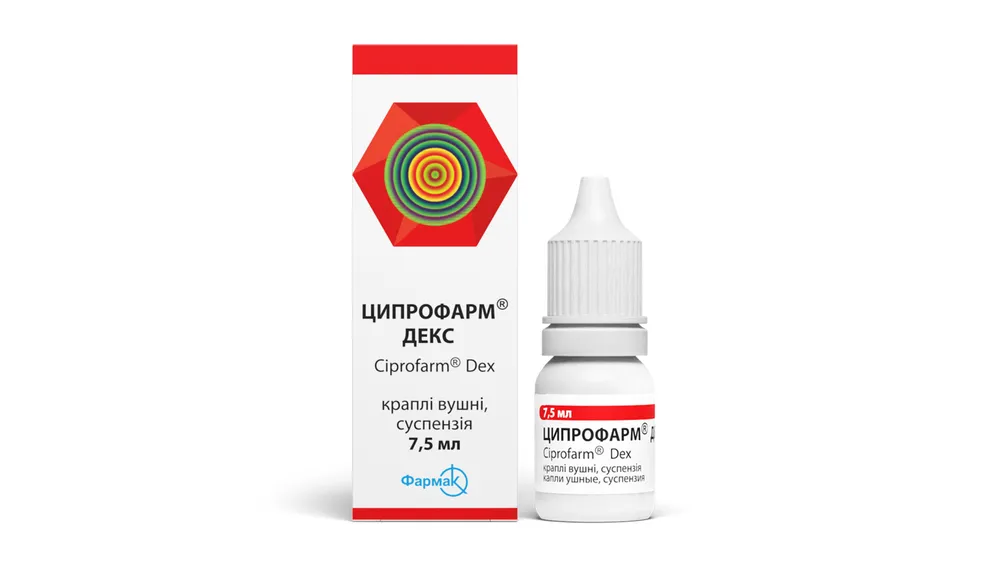
Table of Contents
INSTRUCTIONS for medical use of the medicinal product CIPROFARM® DEX (CIPROFARM® DEX)
Composition:
Active substances: ciprofloxacin; dexamethasone;
1 ml of the preparation contains ciprofloxacin hydrochloride 3.5 mg, equivalent to 3.0 mg of anhydrous ciprofloxacin 100%; dexamethasone equivalent to 100% dry substance 1.0 mg;
Excipients: hydroxyethylcellulose; benzalkonium chloride; sodium acetate, trihydrate; glacial acetic acid; sodium chloride; edetate disodium; tyloxapol; boric acid; water for injections; sodium hydroxide solution and/or diluted hydrochloric acid.
Pharmaceutical form. Ear drops, suspension.
Main physicochemical properties: a liquid containing white or almost white particles which readily suspend upon shaking.
Pharmacotherapeutic group. Combined preparations containing corticosteroids and antimicrobial agents. Dexamethasone and antimicrobial agents. ATC code S02CA06.
Pharmacological Properties
Pharmacodynamics
Mechanism of Action
These ear drops contain a fluoroquinolone-class antimicrobial agent, ciprofloxacin. The antibacterial action of ciprofloxacin is due to its ability to inhibit type II topoisomerase (DNA gyrase) and topoisomerase IV, enzymes essential for various DNA life cycle processes such as replication, transcription, repair, and recombination.
Microorganisms typically susceptible in acute otitis media with tympanostomy tube:
Aerobic gram-positive microorganisms [Staphylococcus aureus (methicillin-susceptible), Streptococcus pneumoniae];
Aerobic gram-negative microorganisms (Haemophilus influenzae, Moraxella catarrhalis, Pseudomonas aeruginosa).
Microorganisms that may develop resistance:
Aerobic gram-positive microorganisms [Staphylococcus aureus (methicillin-resistant)].
Microorganisms typically susceptible in acute external otitis:
Aerobic gram-positive microorganisms [Staphylococcus aureus (methicillin-susceptible)];
Aerobic gram-negative microorganisms (Pseudomonas aeruginosa).
The mechanism of action of the corticosteroid dexamethasone has not been fully established. However, it is known that corticosteroids bind to cytoplasmic receptors, undergo translocation into the nucleus, and subsequently bind to glucocorticoid-responsive elements on glucocorticoid-sensitive genes. Corticosteroids are known to enhance transcription of anti-inflammatory proteins and suppress expression of multiple inflammatory genes. The anti-inflammatory potency of dexamethasone is approximately 25 times greater than that of hydrocortisone.
Pharmacokinetics
Ciprofloxacin
Absorption. Plasma concentrations of ciprofloxacin are very low following topical otic administration of the 3 mg/1 mg combination formulation, otic suspension, in pediatric patients. After instillation of 4 drops into each ear (equivalent to 0.84 mg of ciprofloxacin), peak plasma concentrations (Cmax) were reached within 1 hour and ranged from less than 0.50 ng/mL to 3.45 ng/mL, with a mean Cmax of 1.33 ng/mL. Following Cmax, ciprofloxacin was eliminated from plasma with a half-life of approximately 3 hours, similar to that observed in adults after oral dosing.
Distribution. Animal studies indicate that ciprofloxacin distributes into all major organs and tissues. The highest concentrations are generally found in the liver and kidneys. Low concentrations are observed in the brain, fat, and bone. Increasing the dose results in proportional increases in tissue concentrations. Distribution and elimination of radioactivity are similar after single and repeated doses. Ciprofloxacin does not extensively bind to plasma proteins.
Ciprofloxacin was excreted in milk in lactating animals. The presence of radioactivity in milk was primarily due to unchanged parent drug. Pregnant animals administered 14C-ciprofloxacin showed distribution of radioactivity to the fetus, but at lower levels than those observed in maternal plasma.
Metabolism. Ciprofloxacin metabolism is similar in animals and humans. Ciprofloxacin undergoes limited metabolism and is primarily excreted unchanged in urine. Metabolites formed have significantly lower microbiological activity compared to the parent compound. In vitro studies in animals and in human liver microsomes show that ciprofloxacin inhibits biotransformation mediated by CYP1A and CYP3A cytochrome P450 enzymes. Drug interactions have been demonstrated with several specific agents following concomitant intravenous or oral administration of ciprofloxacin. Some of these interactions are related to ciprofloxacin’s ability to inhibit biotransformation reactions mediated by CYP1A and CYP3A4 isoenzymes.
Elimination. Ciprofloxacin is excreted in urine, feces, and bile. In animals, after intravenous administration, 51% of the dose is recovered in urine and 47% in feces. In both animals and humans, excretion is the primary route of elimination. No significant enterohepatic recirculation was observed in animals.
Pediatric. After a single instillation of 4 drops into each ear (8 drops total) in children, the mean plasma Cmax of ciprofloxacin was 1.33 ± 0.96 ng/mL. Thereafter, ciprofloxacin concentrations declined and were below quantifiable levels (< 0.50 ng/mL) by 6 hours post-dose, indicating low systemic exposure. The mean Cmax of ciprofloxacin (1.33 ng/mL) is approximately 570-fold lower than the mean Cmax of 760 ng/mL reported after a therapeutic oral dose of 250 mg ciprofloxacin in adult subjects. The mean t1/2 of ciprofloxacin was approximately 3 hours, similar to that observed in adults after oral dosing. Systemic exposure to ciprofloxacin observed in clinical studies following topical otic administration was highest in children with acute otitis media with tympanostomy tubes, due to the presence of a tympanostomy tube without otorrhea. Systemic exposure to ciprofloxacin in patients with acute external otitis following topical otic administration is not expected to be higher than in children with tympanostomy tubes, due to the low bioavailability of topical agents through an intact tympanic membrane.
Dexamethasone
Absorption. Plasma concentrations of dexamethasone are very low following topical otic administration of the 3 mg/1 mg combination formulation, otic suspension, in pediatric patients. After instillation of 4 drops into each ear (equivalent to 0.28 mg dexamethasone), peak plasma concentrations (Cmax) were reached within 1 hour, with a mean Cmax of 0.09 ng/mL. Following Cmax, dexamethasone was eliminated from plasma with a half-life of approximately 4 hours, similar to that observed in adults after oral dosing.
Distribution. The mean volume of distribution in humans ranges from 0.576 to 1.15 L/kg. In animals, corticosteroids distribute into muscle, liver, skin, intestine, and kidneys. In rats, dexamethasone crosses the placenta, but fetal plasma levels are lower than maternal levels. Dexamethasone also enters breast milk, but in negligible amounts. Approximately 77–84% of dexamethasone is bound to serum albumin.
Metabolism. The primary route of dexamethasone elimination is hepatic metabolism. Approximately 60% of the dose in humans is excreted in urine as 6β-hydroxydexamethasone, with 6β-hydroxy-20-dihydrodexamethasone also considered an important urinary metabolite. The parent dexamethasone compound was not detected in urine. The main cytochrome P450 isoenzyme responsible for dexamethasone biotransformation is CYP3A4. Dexamethasone clearance in humans ranges from 0.111 to 0.225 L/h/kg, with a terminal half-life of 3–4.7 hours. Dexamethasone metabolism is induced by anticonvulsants and inhibited by isoniazid and the potent CYP3A4 inhibitor itraconazole.
Pediatric. After a single instillation of 4 drops into each ear (8 drops total) in children, the mean plasma Cmax of dexamethasone was 0.90 ± 1.04 ng/mL. Thereafter, dexamethasone concentrations declined and were below quantifiable levels (< 0.05 ng/mL) by 6 hours post-dose, indicating low systemic exposure. The mean Cmax of dexamethasone (0.90 ng/mL) is approximately 8.8-fold lower than the mean Cmax of 7.9 ng/mL reported after an oral dose of 0.5 mg dexamethasone in adult subjects. The mean t1/2 of dexamethasone was approximately 4 hours, similar to that observed in adults after oral dosing. Systemic exposure to dexamethasone observed in clinical studies following topical otic administration is highest in children with acute otitis media with tympanostomy tubes, due to the presence of a tympanostomy tube without otorrhea. Systemic exposure to dexamethasone in patients with acute external otitis following topical otic administration is not expected to be higher than in children with tympanostomy tubes, due to the low bioavailability of topical agents through an intact tympanic membrane.
Clinical characteristics.
Indications.
Acute otitis externa, as well as acute otitis media with drainage through a tympanostomy tube, caused by bacterial strains sensitive to ciprofloxacin.
Contraindications.
Hypersensitivity to ciprofloxacin, other quinolones, dexamethasone, or to any excipients contained in the medicinal product.
Viral (e.g., varicella, herpes simplex) and fungal ear infections.
Interaction with other medicinal products and other forms of interaction.
No studies on drug interactions of the medicinal product have been conducted.
After topical administration of the medicinal product into the ear in children with a tympanostomy shunt, low plasma concentrations of ciprofloxacin (≥ 0.50 ng/mL) and dexamethasone (≥ 0.05 ng/mL) were observed 6 hours after dose administration. It was concluded that clinically significant pharmacokinetic drug interactions of ciprofloxacin or dexamethasone via protein binding or P450 metabolism with concomitant medications are unlikely following topical ear administration.
However, systemic administration of certain quinolones has been shown to potentiate the effect of the oral anticoagulant warfarin and its derivatives, and to cause transient elevations in serum creatinine in patients concurrently receiving cyclosporine.
It has been demonstrated that oral administration of ciprofloxacin inhibits CYP1A2 and CYP3A4 isoenzymes of cytochrome P450 and alters the metabolism of methylxanthines (caffeine, theophylline). After topical ear administration, plasma concentrations of ciprofloxacin are low, and it is unlikely that interactions involving P450 metabolism with concomitant medications would lead to clinically significant changes in plasma levels of methylxanthines.
Special precautions for use.
This medicinal product is intended for otic use only. It is not intended for ophthalmic use, inhalation, or injection.
If otorrhea persists after completion of a full course of therapy, or if two or more episodes of otorrhea occur within 6 months, further evaluation is recommended to exclude underlying disease (cholesteatoma, foreign body, or tumor).
As with other antibiotics, prolonged use of this preparation may result in overgrowth of nonsusceptible organisms, including bacterial strains, yeasts, and fungi. In case of superinfection, the drug should be discontinued and appropriate therapy initiated. If symptoms persist after one week of treatment, further evaluation is recommended to reassess the condition and treatment.
Serious, and sometimes fatal, hypersensitivity reactions (anaphylaxis), some occurring after the first dose, have been reported in patients receiving systemic quinolones. Some of these reactions were accompanied by cardiovascular collapse, loss of consciousness, angioedema (including laryngeal, pharyngeal, or facial edema), airway obstruction, dyspnea, urticaria, and pruritus. Treatment with the drug should be discontinued at the first sign of a skin rash or other signs of hypersensitivity. Serious acute hypersensitivity reactions may require immediate emergency treatment. Oxygen should be administered and airway patency ensured as clinically indicated. Tendon inflammation and rupture may occur with systemic fluorquinolones, including ciprofloxacin, particularly in elderly patients and in those receiving corticosteroids. Treatment with the medicinal product Ciprofarm® Dex should be discontinued at the first signs of tendon inflammation.
Corticosteroids may reduce resistance and promote the occurrence of bacterial, viral, or fungal infections, or may mask clinical signs of infection, thus interfering with the detection of antibiotic inefficacy, or may suppress hypersensitivity reactions to components of the medicinal product.
Visual disturbances may occur with both systemic and topical use of corticosteroids. If a patient develops symptoms such as blurred vision or other visual disturbances, they should be referred to an ophthalmologist for evaluation of possible causes, which may include cataract, glaucoma, or rare conditions such as central serous chorioretinopathy (CSCR), reported after systemic and topical corticosteroid use.
This medicinal product contains benzalkonium chloride, which may cause irritation and can lead to skin reactions.
Use during pregnancy or breastfeeding.
Pregnancy
Since animal studies and well-controlled studies in pregnant women have not been conducted with the combination of ciprofloxacin and dexamethasone, Ciprofarm® Dex should not be used during pregnancy. Administration of these agents should only be considered if the potential benefit to the pregnant woman justifies the potential risk to the fetus.
Lactation
Ciprofloxacin and corticosteroids are excreted into breast milk following oral administration. It is not known whether topical administration of the product could lead to sufficient systemic absorption to result in detectable levels in breast milk. Risk to the nursing infant cannot be excluded. This product should be used with caution in breastfeeding women.
Fertility
There are no data on the effect of Ciprofarm® Dex on human fertility. Animal studies with topical dermal preparations indicate effects on male reproductive organs with prolonged use of high-dose dexamethasone. Reproductive studies in animals at doses six times higher than the usual human daily dose (oral) showed no evidence of impaired fertility.
Ability to influence reaction rate while driving or operating machinery.
Ciprofarm® Dex has no effect or has a negligible effect on the ability to drive or operate machinery (see section "Adverse reactions").
Method of Administration and Dosage
Adults
4 drops into the external auditory canal of the affected ear(s) twice daily for 7 days.
Children
Efficacy and safety of this medicinal product have been demonstrated in children from 6 months of age for the treatment of acute otitis media with tympanostomy tube, and from 1 year of age for the treatment of acute external otitis (see section "Children" for use in children under 6 months of age with acute otitis media with tympanostomy tube and in children under 1 year of age with acute external otitis). Ciprofarm® Dex can be used at the same dosage as in adults.
Geriatric Patients
Overall, no differences in safety or efficacy of the medicinal product have been observed between elderly patients and younger adult patients.
Patients with Renal or Hepatic Impairment
Hepatic or renal insufficiency (mild to moderate) does not alter the pharmacokinetics of ciprofloxacin or dexamethasone after systemic administration.
Following topical administration of Ciprofarm® Dex ear drops into the ear, a slight increase in plasma concentration of ciprofloxacin and dexamethasone is possible in patients with severe renal or hepatic insufficiency. However, since the systemic exposure to ciprofloxacin or dexamethasone is low after topical ear administration, any increase in systemic concentration due to renal or hepatic dysfunction will still remain substantially lower than plasma concentrations well tolerated in children and adults after oral or intravenous administration at recommended doses.
Dose adjustment is not required in patients with renal or hepatic impairment.
Method of Administration
For ear use only.
Patients should be instructed to shake the bottle vigorously before use. The suspension should be warmed by holding the bottle in the hand for several minutes to avoid dizziness that may occur after instillation of cold suspension. The patient should lie with the affected ear upward; the drops should be instilled while pulling the auricle. In patients with acute otitis media with tympanostomy tube, the tragus should be pressed inward 5 times to facilitate penetration of the drops into the middle ear. This position should be maintained for approximately 5 minutes to facilitate entry of the drops into the ear. If necessary, repeat in the opposite ear.
To prevent contamination of the dropper tip and minimize the risk of bacterial contamination, care should be taken not to touch the ear, the external auditory canal, adjacent areas, or any other surfaces with the dropper tip. The bottle should be tightly closed during storage.
Children.
The safety and efficacy of Ciprofarm® Dex have not been established in children under 6 months of age with acute otitis media with tympanostomy tube and in children under 1 year of age with acute external otitis. Under exceptional circumstances, Ciprofarm® Dex may be used in these pediatric groups after careful physician evaluation of benefit and risk, considering that clinical experience is limited.
Overdose.
Overdose following topical administration is unlikely. However, ingestion of Ciprofarm® Dex, which may result in overdose, or prolonged topical ear therapy may lead to suppression of the hypothalamic-pituitary-adrenal (HPA) axis. Although reduced growth velocity in children and/or suppressed plasma cortisol concentration may be more pronounced following significant overdose or prolonged treatment (e.g., several months) with Ciprofarm® Dex, the effect is expected to be transient (lasting from several days to several weeks) and easily reversible without long-term consequences.
In case of accidental ingestion, treatment of acute overdose is generally supportive and symptomatic, and may include, primarily, induction of emesis and gastric lavage.
Adverse reactions
In phase II and III clinical trials of the combination of ciprofloxacin and dexamethasone in the form of ear drops, 937 patients were enrolled. This number included 400 patients with acute otitis media with tympanostomy tubes and 537 patients with acute otitis externa. The adverse reactions identified during these trials are listed below.
Acute otitis media in children with tympanostomy tubes
The adverse reactions listed below occurred in 0.5% or more of patients with perforated tympanic membrane.
| Adverse reaction |
Frequency (N = 400) |
| Ear discomfort |
3.0% |
| Ear pain |
2.3% |
| Ear discharge (residual) |
0.5% |
| Restlessness |
0.5% |
| Taste alteration |
0.5% |
One patient experienced: tympanostomy tube occlusion, ear pruritus, tinnitus, oral candidiasis, crying, dizziness, and erythema.
Acute external otitis
The following adverse reactions occurred in 0.4% or more of patients with a perforated tympanic membrane.
| Adverse reaction |
Frequency (N = 537) |
| Ear pruritus |
1.5% |
| Otorrhea |
0.6% |
| Secondary (opportunistic) ear infection |
0.6% |
| Ear congestion |
0.4% |
| Ear pain |
0.4% |
| Erythema |
0.4% |
One patient experienced: ear discomfort, hearing impairment, and sensation of pricking in the ear.
The following adverse reactions occurred during clinical trials and the post-marketing period. Adverse reactions are classified by system organ class and frequency as follows: very common (≥ 1/10), common (≥ 1/100 to <1/10), uncommon (≥ 1/1000 to <1/100), rare (≥ 1/10,000 to <1/1000), very rare (<1/10,000), or not known (cannot be estimated from available data). Within each group, adverse effects are listed in order of decreasing severity.
Eye disorders: not known – blurred vision.
Infections and infestations: uncommon – candidiasis.
Immune system disorders: not known – hypersensitivity.
Nervous system disorders: uncommon – paraesthesia (tinnitus), crying; rare – dizziness, headache.
Ear and labyrinth disorders: common – ear pain; uncommon – ear discomfort, ear fullness, otorrhoea, ear pruritus, fungal ear infections; rare – hearing loss, tinnitus, residual drug; not known – swelling of the auricle.
Vascular disorders: uncommon – flushing.
Gastrointestinal disorders: uncommon – vomiting, dysgeusia.
Skin and subcutaneous tissue disorders: uncommon – skin exfoliation; rare – erythematous rash.
General disorders and administration site conditions: uncommon – device occlusion (obstruction of the tympanostomy tube), irritability, fatigue.
Description of selected adverse reactions
Serious, and sometimes fatal, hypersensitivity reactions (anaphylaxis), some occurring after the first dose, have been reported in patients receiving systemic quinolones.
Some reactions were accompanied by cardiovascular collapse, loss of consciousness, angioedema (including laryngeal, pharyngeal or facial oedema), airway obstruction, dyspnoea, urticaria, and pruritus.
Secondary infection has been observed following the use of combination corticosteroid and antimicrobial agents.
Tendon ruptures of the shoulder, hand, Achilles tendon, or other tendons have been reported in patients receiving systemic fluoroquinolones, requiring surgical repair or resulting in prolonged disability. Clinical studies and post-marketing experience with systemic fluoroquinolones suggest that the risk of such ruptures may be increased in patients receiving corticosteroids, particularly in elderly patients and in those with high tendon stress, including the Achilles tendon. Clinical trial and post-marketing data have not demonstrated a clear association between otic use of ciprofloxacin and musculoskeletal or connective tissue disorders.
Children. Cipropharm® Dex has been shown to be safe in children aged 6 months and older for the treatment of acute otitis media with tympanostomy tube, and in children aged 1 year and older for the treatment of acute external otitis. The frequency, type, and severity of adverse reactions in children are similar to those in adults.
Shelf life. 2 years.
Shelf life after opening the bottle – 28 days.
Do not use the medicinal product after the expiry date stated on the packaging.
Storage conditions. Store in the original packaging at a temperature not exceeding 25°C.
Do not freeze! Keep out of reach and sight of children.
Packaging. 7.5 ml in a bottle. 1 bottle in a carton.
Prescription status. Prescription only.
Manufacturer. JSC "Farmak".
Manufacturer's name and address of the place of business.
74, Kyrylivska Street, Kyiv, 04080, Ukraine.