Cinnarizine sopharma
Ukraine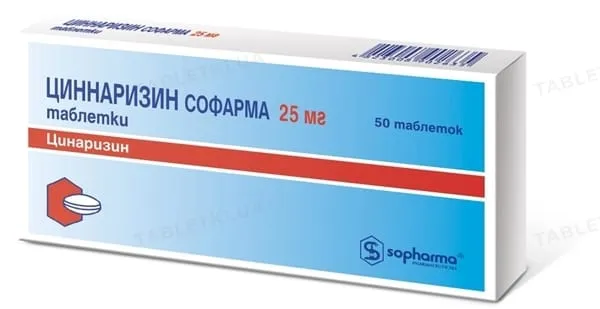
Table of Contents
INSTRUCTIONS FOR MEDICAL USE OF THE MEDICINAL PRODUCT CINNARIZINE SOPHARMA (CINNARIZIN SOPHARMA)
Composition:
Active substance: cinnarizine;
One tablet contains 25 mg of cinnarizine;
Excipients: lactose monohydrate, wheat starch, povidone K25, colloidal anhydrous silicon dioxide, magnesium stearate, microcrystalline cellulose.
Pharmaceutical form. Tablets.
Main physicochemical characteristics: round, biconvex tablets, 7 mm in diameter, white to almost white in color.
Pharmacotherapeutic group.
Agents used in vestibular disorders.
ATC code N07CA02.
Pharmacological Properties
Pharmacodynamics
Cinnarizine improves cerebral and peripheral circulation by inhibiting the action of several vasoconstrictor substances and calcium ion influx into cells through blockade of slow potential-dependent calcium channels. In addition to direct calcium antagonism, cinnarizine reduces the contractile effects of vasoactive substances such as norepinephrine and serotonin by blocking receptor-operated calcium channels. The blockade of calcium entry into cells is tissue-selective and results in reduced vasoconstriction without affecting arterial pressure or heart rate. Cinnarizine may additionally improve impaired microcirculation by enhancing erythrocyte deformability and reducing blood viscosity. Its administration increases cellular resistance to hypoxia.
Cinnarizine suppresses stimulation of the vestibular system, thereby inhibiting nystagmus and other vegetative disturbances. It can prevent or alleviate symptoms of acute vertigo attacks.
It exhibits established antihistaminic activity.
Pharmacokinetics
Absorption: absorbed relatively slowly in the gastrointestinal tract. Maximum plasma concentration is reached within 1–3 hours after oral administration. This parameter shows considerable individual variation among patients.
Distribution: plasma protein binding is 80%, binding to erythrocytes up to 13%. Tissue distribution is extensive; high concentrations are found in the liver, lungs, myocardium, and brain by the 4th hour after administration.
Metabolism: extensively metabolized, primarily via N-dealkylation.
Elimination: elimination half-life is 3–6 hours. Excreted unchanged in feces; in urine, it is excreted in the form of metabolites.
Clinical characteristics.
Indications.
- Supportive treatment of symptoms of labyrinth disorders, including dizziness, nausea, vomiting, tinnitus, and nystagmus.
- Prevention of motion sickness.
- Prevention of migraine.
- Supportive treatment of symptoms of cerebrovascular origin, including dizziness, tinnitus, vascular headache, irritability, memory loss, and inability to concentrate.
- Supportive treatment of symptoms of peripheral vascular disorders, including Raynaud's disease, acrocyanosis, intermittent claudication, trophic disorders and varicose ulcers, paresthesia, nocturnal leg cramps, and sensation of cold in the extremities.
Contraindications.
Hypersensitivity to the active substance or to any of the excipients.
Interaction with other medicinal products and other forms of interaction.
Concomitant use of cinnarizine with alcohol, CNS depressants, or tricyclic antidepressants results in mutual potentiation of their effects and may enhance sedative effects.
Due to its antihistaminic effect, cinnarizine may suppress the positive reaction in intradermal diagnostic tests if administered within 4 days prior to testing.
Cinnarizine may cause false-positive reactions in anti-doping tests in athletes.
Special precautions for use.
Cinnarizine (like other antihistamine medicinal products) may cause "gastric discomfort". Administration of tablets after food reduces gastric mucosa irritation.
Cinnarizine should be prescribed to patients with Parkinson's disease only if the therapeutic benefits outweigh the possible risk of worsening the condition.
Since cinnarizine may cause drowsiness, especially at the beginning of treatment, concomitant use of alcohol, CNS depressants, or tricyclic antidepressants should be avoided.
The drug should be used with caution in patients aged 65 years and older, in children, and in patients with a family history or clinical symptoms of extrapyramidal disorders.
In patients predisposed to hypotension, arterial pressure should be monitored during treatment.
Cinnarizine should be avoided in patients with porphyria.
Cinnarizine should be used with caution in patients with hepatic and/or renal impairment.
The medicinal product contains 63.12 mg of lactose monohydrate per tablet. The product should not be used in patients with rare hereditary galactose intolerance, Lapp lactase deficiency, or glucose-galactose malabsorption.
The medicinal product contains the excipient wheat starch. Wheat starch may contain gluten in trace amounts; its use is considered safe for individuals with celiac disease.
Use during pregnancy or breastfeeding.
Pregnancy.
Cinnarizine showed no teratogenic effects in animal studies.
Due to the lack of well-controlled clinical studies on the safety of the drug in pregnant women, its use is contraindicated during pregnancy.
Breastfeeding.
Due to the absence of data on the excretion of the drug in breast milk, its use during breastfeeding is contraindicated. If treatment with the drug is necessary, breastfeeding should be discontinued.
Ability to affect reaction speed when driving or operating machinery.
Cinnarizine may cause drowsiness, especially at the beginning of treatment. This should be taken into account, and the drug should be prescribed with caution to drivers and machine operators, based on a careful assessment of benefit versus risk.
Method of Administration and Dosage.
Adults and children aged 12 years and older.
Cerebral circulation disorders: 1 tablet of 25 mg 3 times daily (75 mg/day).
Balance disorders: 1 tablet of 25 mg 3 times daily (75 mg/day).
Peripheral circulation disorders: 2–3 tablets of 25 mg 3 times daily (150–225 mg/day). Since the effect in vertigo is dose-dependent, dosage should be gradually increased.
Motion sickness: 1 tablet of 25 mg taken half an hour before travel; the dose may be repeated every 6 hours.
The maximum recommended daily dose should not exceed 225 mg (9 tablets).
Cinnarizine Sopharma should preferably be taken after meals.
Therapeutic efficacy depends on individual dosing regimen and sufficient duration of treatment.
Children.
Not recommended for children under 12 years of age.
Overdose.
Acute overdose of cinnarizine has been reported following doses ranging from 90 to 2250 mg. The main signs and symptoms of overdose are related to its anticholinergic (atropine-like) effects.
Symptoms: altered consciousness ranging from drowsiness to stupor and coma, vomiting, extrapyramidal symptoms, arterial hypotension, tremor, seizures. Seizures have been observed in a small number of children. In most cases, clinical manifestations were not severe, but fatal outcomes have been reported following overdose when cinnarizine was taken concomitantly with other medicinal products.
Treatment: in cases of overdose, administration of the drug should be discontinued and measures taken to ensure rapid elimination (gastric lavage, activated charcoal, symptomatic therapy).
There is no specific antidote.
Adverse Reactions
Somnolence and gastrointestinal disturbances may occur. These symptoms are usually temporary and disappear as the optimal dose is gradually reached.
In elderly patients, prolonged treatment has been associated with exacerbation or onset of extrapyramidal symptoms, sometimes combined with depressive states. In such cases, the use of the medicinal product should be discontinued.
The following adverse reactions have been reported with cinnarizine use, classified by system organ classes:
Immune system disorders: Hypersensitivity, including allergic reactions.
Nervous system disorders: Headache, somnolence, hypersomnia, lethargy, dyskinesia, extrapyramidal disorders, parkinsonism, tremor.
Gastrointestinal disorders: Nausea, gastric discomfort, vomiting, abdominal pain, dyspepsia, dry mouth.
Hepatobiliary disorders: Cholestatic jaundice.
Skin and subcutaneous tissue disorders: Possible development of hypersensitivity reactions, hyperhidrosis (increased sweating), lichenoid keratosis, erythematous lichen, subacute cutaneous lupus erythematosus (lichen planus and lupus-like skin symptoms).
Musculoskeletal and connective tissue disorders: Muscle rigidity.
General disorders: Fatigue.
Laboratory and diagnostic test findings: Weight gain.
Shelf life.
5 years.
Storage conditions.
Keep out of reach of children.
No special storage conditions are required for this medicinal product.
Packaging.
50 tablets in a blister pack made of PVC film and aluminum foil. One blister pack per cardboard box.
Prescription status.
Over-the-counter (without a prescription).
Manufacturers.
JSC "Sofarma".
JSC "VITAMINS".
Manufacturers' addresses and locations of their business activities.
JSC "Sofarma"
16 Iliensko Shose Str., Sofia, 1220, Bulgaria.
JSC "VITAMINS"
31 Uspenska St., Umans, Cherkasy region, 20300, Ukraine.