Cipran st
Ukraine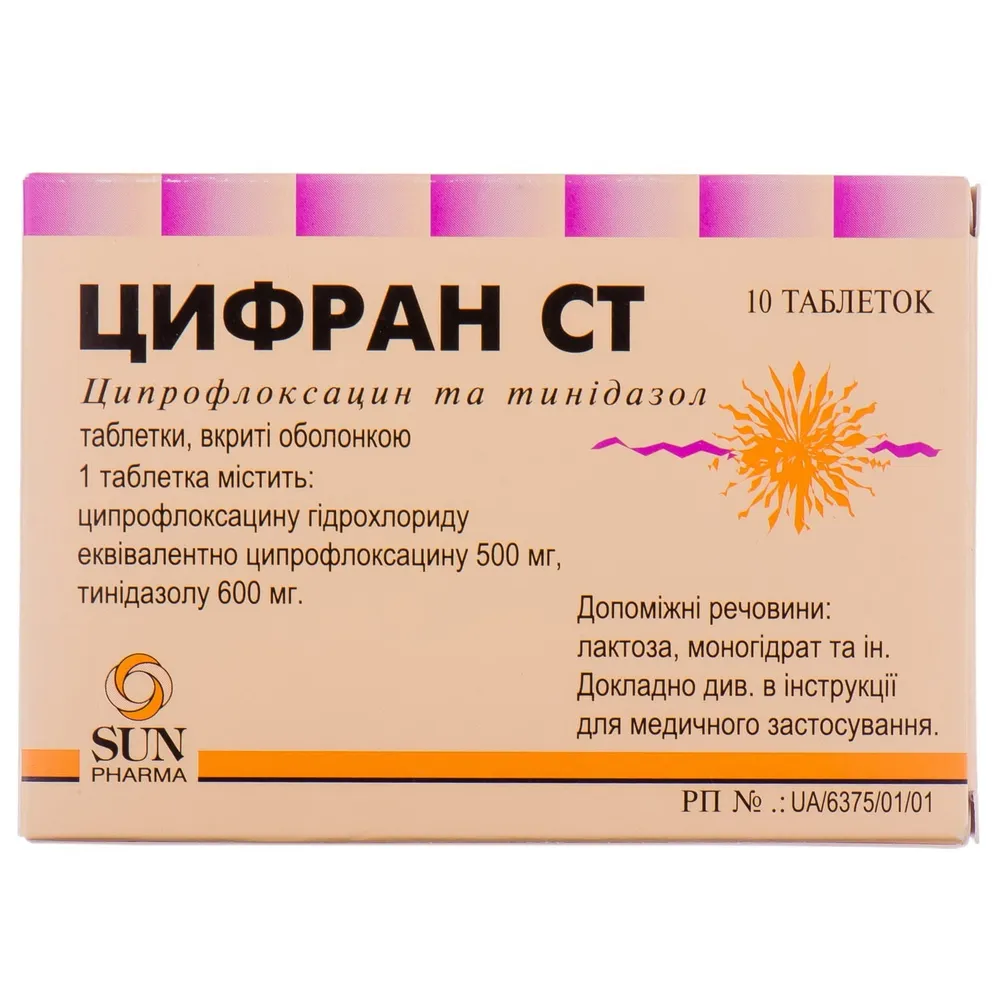
Table of Contents
INSTRUCTIONS FOR MEDICAL USE OF THE MEDICINAL PRODUCT CYFRAN CT (CIFRAN CT)
Composition:
Active substances: ciprofloxacin, tinidazole;
One coated tablet contains hydrochloride of ciprofloxacin equivalent to 500 mg of ciprofloxacin; tinidazole 600 mg;
Excipients: microcrystalline cellulose, colloidal anhydrous silicon dioxide, magnesium stearate, sodium starch glycolate (type A), sodium lauryl sulfate, talc;
Coating: Opadry Yellow 31F 52949 [hypromellose; lactose monohydrate; titanium dioxide (E 171); polyethylene glycol 4000; iron oxide yellow (E 172)].
Pharmaceutical form. Coated tablets.
Main physicochemical properties: yellow-colored, oblong-shaped coated tablets with a break line on one side.
Pharmacotherapeutic group.
Antimicrobial agents for systemic use.
Combined antibacterial agents. Fluoroquinolones in combination with other antibacterial agents. ATC code J01RA04.
Pharmacological properties.
The medicinal product is a combination of two well-known antibacterial agents – ciprofloxacin and tinidazole.
Pharmacodynamics.
Ciprofloxacin inhibits the enzyme DNA gyrase, which plays an important role in the process of segmental despiralization and spiralization of the chromosome during bacterial replication, thereby preventing chromosomal transcription of information necessary for normal bacterial cell metabolism, resulting in inhibition of the pathogen's ability to multiply. The drug exerts a rapid and pronounced bactericidal effect on microorganisms both in the replication phase and in the resting phase. It demonstrates high efficacy against almost all gram-negative and gram-positive pathogens. Microorganisms sensitive to ciprofloxacin include Escherichia coli, Shigella spp., Salmonella spp., Citrobacter spp., Klebsiella spp., Enterobacter spp., Serratia spp., Hafnia spp., Edwardsiella spp., Proteus (both indole-positive and indole-negative strains), Morganella spp., Providencia spp., Yersinia, Vibrio spp., Aeromonas spp., Plesiomonas, Pasteurella, Haemophilus, Campylobacter spp., Pseudomonas spp. (including Pseudomonas aeruginosa), Legionella, Moraxella spp., Branhamella spp., Acinetobacter spp., Brucella spp., Staphylococcus spp., Listeria spp., Corynebacterium, Chlamydia, as well as bacterial plasmid forms.
As shown in in vitro studies and with the use of a surrogate marker, ciprofloxacin is active against Bacillus anthracis.
Variable sensitivity is observed in Neisseria spp., Gardnerella spp., Flavobacterium spp., Alcaligenes spp., Streptococcus agalactiae, Enterococcus faecalis, Streptococcus pyogenes, Streptococcus pneumoniae, Streptococcus viridans, Mycoplasma hominis, Mycobacterium tuberculosis, Mycobacterium fortuitum.
Anaerobic cocci (Peptococcus, Peptostreptococcus) are moderately sensitive to ciprofloxacin, whereas Bacteroides is resistant. Cifran ST is effective against bacteria producing beta-lactamases. The drug also shows activity against microorganisms resistant to almost all antibiotics, sulfonamides, and nitrofuran preparations. In some cases, Cifran ST is active against strains resistant to other fluoroquinolone group agents. However, cross-resistance among different fluoroquinolones should be taken into account. Generally, the following are resistant to the drug: Enterococcus faecium, Ureaplasma urealyticum, Nocardia asteroides, Treponema pallidum. Resistance to ciprofloxacin develops slowly and gradually (a "multi-step" type).
The prevalence of resistant strains may vary depending on the geographical region and may also change over time. Local data on microbial sensitivity to ciprofloxacin should be used, especially when treating severe infections. The provided information allows only approximate estimates of sensitivity and resistance of certain microorganisms to ciprofloxacin.
Tinidazole is a 5-nitroimidazole derivative with a substituted imidazole component, active against anaerobic bacteria and protozoa. The mechanism of action of tinidazole against anaerobic bacteria and protozoa is associated with the penetration of the drug into microbial cells and damage to DNA or inhibition of its synthesis.
Tinidazole is active against both protozoa and obligate anaerobic bacteria.
Protozoan microorganisms sensitive to tinidazole include Trichomonas vaginalis, Entamoeba histolytica, and Giardia lamblia.
Tinidazole is active against Gardnerella vaginalis and most anaerobic bacteria, including Bacteroides fragilis, Bacteroides melaninogenicus, Bacteroides spp., Clostridium spp., Eubacterium spp., Fusobacterium spp., Peptococcus spp., Peptostreptococcus spp., and Veillonella spp.
Pharmacokinetics.
After oral administration, ciprofloxacin is rapidly and well absorbed, primarily from the duodenum and upper part of the small intestine.
Maximum plasma concentrations are achieved within 60–20 minutes. The bioavailability of the drug is approximately 70–80%. The volume of distribution at steady state is 2–3 L/kg. Since protein binding of ciprofloxacin is low (20–30%) and the substance is predominantly in non-ionized form in plasma, nearly the entire amount of the administered drug can freely diffuse into the extravascular space. Consequently, ciprofloxacin concentrations in certain body fluids and tissues may exceed serum levels by many times (particularly high concentrations are observed in bile). Ciprofloxacin is excreted mainly by the kidneys (approximately 45% unchanged, about 11% as metabolites). The remainder of the dose is excreted via the intestine (approximately 20% unchanged, about 5–6% as metabolites). Renal clearance is 3–5 mL/min/kg, total clearance is 8–10 mL/min/kg. The elimination half-life is 3–5 hours. Since the drug is eliminated via multiple pathways, an increase in half-life is observed only with significant renal impairment (this parameter may increase up to 12 hours).
Tinidazole is rapidly and completely absorbed after oral administration.
In studies of healthy volunteers who received a 2 g oral dose of tinidazole, serum concentrations reached peak levels of 40–51 mcg/mL within 2 hours and decreased to 11–19 mcg/mL after 24 hours.
Plasma levels declined slowly; tinidazole was detectable in plasma (at concentrations up to 1 mcg/mL) 72 hours after oral administration. The elimination half-life of tinidazole from plasma is 12–14 hours.
Tinidazole actively distributes throughout all body tissues and penetrates the blood-brain barrier. It achieves therapeutically effective concentrations in all tissues. The apparent volume of distribution is approximately 50 L. Approximately 12% of tinidazole in plasma is protein-bound.
Tinidazole is eliminated by both the liver and kidneys. Studies in healthy volunteers showed that within 5 days, 60–65% of the administered dose was excreted by the kidneys, of which 20–25% was excreted unchanged. Approximately 5% of the dose is excreted in feces.
Studies in patients with renal insufficiency (creatinine clearance below 22 mL/min) indicate that the pharmacokinetics of tinidazole in such patients are not significantly altered.
The combination of ciprofloxacin with tinidazole does not affect the pharmacokinetics of these active substances.
The combination of ciprofloxacin and tinidazole enhances the antibacterial effect of the drug and significantly broadens its spectrum of activity against microorganisms. Cifran ST is effective against aerobic-anaerobic infections as well as mixed protozoal-bacterial infections.
Clinical characteristics.
Indications. Treatment of mixed infections caused by susceptible anaerobic and aerobic microorganisms: chronic sinusitis, lung abscess, empyema, intra-abdominal infections, inflammatory gynecological diseases, postoperative infections when aerobic and anaerobic bacteria may be present, chronic osteomyelitis, skin and soft tissue infections, diabetic foot ulcers, pressure sores, oral infections (including periodontitis and periostitis).
Treatment of diarrhea or amebic or mixed (amebic and bacterial) etiology dysentery.
Contraindications. Hypersensitivity to ciprofloxacin or other fluoroquinolones, hypersensitivity to tinidazole or other 5-nitroimidazole derivatives, or to any component of the drug.
Concomitant use with tizanidine.
Organic neurological disorders, blood disorders (or history thereof), pregnancy or breastfeeding, pediatric age.
Interaction with other medicinal products and other types of interactions.
Caution should be exercised when co-administering Cipran ST with class Ia or III antiarrhythmic agents, macrolides, tricyclic antidepressants, and antipsychotic agents, as ciprofloxacin may enhance QT interval prolongation.
Concomitant administration of ciprofloxacin-containing products with iron preparations, phosphate-binding polymers (e.g., sevelamer), sucralfate, and antacids containing magnesium, aluminum, calcium, or agents with high buffering capacity (e.g., antiretroviral drugs) reduces the extent of ciprofloxacin absorption. Therefore, Cipran ST should be administered 1–2 hours before or 4 hours after taking these agents. This restriction does not apply to H2-receptor blockers.
Calcium in food products has a minor effect on absorption. However, simultaneous intake of ciprofloxacin with dairy products or mineral-enriched foods (such as milk, yogurt, or calcium-fortified orange juice) should be avoided, as ciprofloxacin absorption may be reduced.
When ciprofloxacin is used concomitantly with omeprazole, a slight reduction in maximum plasma concentration and area under the concentration–time curve (AUC) may occur.
Concomitant use of Cipran ST and theophylline-containing drugs may lead to undesirable increases in theophylline plasma concentration, which in turn may cause adverse effects. In isolated cases, such adverse effects may be fatal. If concomitant use of these drugs cannot be avoided, serum theophylline concentration should be monitored and the dose appropriately reduced.
After concomitant administration of Cipran ST and agents containing caffeine or pentoxifylline (oxpentifylline), increased serum concentrations of these xanthines have been reported.
Combined use of very high doses of quinolones (gyrase inhibitors) and certain nonsteroidal anti-inflammatory drugs (excluding acetylsalicylic acid) may provoke seizures.
When Cipran ST and cyclosporine are used concomitantly, increased serum creatinine concentration has been observed in individual cases; therefore, such patients require frequent monitoring of this parameter (twice weekly).
Concomitant use of Cipran ST and vitamin K antagonists may enhance the anticoagulant effect of ciprofloxacin. The risk may vary depending on the infection, age, and general condition of the patient, making it difficult to assess the exact impact of ciprofloxacin on the international normalized ratio (INR). Frequent INR monitoring is required during and immediately after concomitant use of Cipran ST and vitamin K antagonists (e.g., warfarin, acenocoumarol, phenprocoumon, or fluindione).
Due to interaction between ciprofloxacin and glyburide, enhanced hypoglycemic effect may occur.
Concomitant use of Cipran ST and probenecid results in increased plasma concentration of ciprofloxacin.
When ciprofloxacin is administered concomitantly, tubular transport (renal metabolism) of methotrexate may be slowed, potentially increasing methotrexate plasma concentration. This increases the risk of methotrexate-related adverse effects. Concomitant administration of ciprofloxacin and methotrexate is not recommended.
Metoclopramide accelerates ciprofloxacin absorption, thereby shortening the time to reach maximum plasma concentration (without affecting its bioavailability).
In a clinical study involving healthy volunteers, concomitant use of ciprofloxacin and tizanidine resulted in increased tizanidine plasma concentration (increase in Cmax by 7-fold, range: 4–21-fold; increase in AUC by 10-fold, range: 6–24-fold). Elevated serum tizanidine levels were associated with hypotensive and sedative adverse effects. Therefore, concomitant use of ciprofloxacin and tizanidine is contraindicated.
Clinical studies have shown that concomitant use of duloxetine and potent inhibitors of CYP450 1A2 isoenzyme (such as fluvoxamine) may increase duloxetine AUC and Cmax. Despite the lack of clinical data on interaction with ciprofloxacin, potential interaction may be expected when ciprofloxacin and duloxetine are used concomitantly.
Ciprofloxacin may be used in combination with azlocillin and ceftazidime for Pseudomonas-related infections; with mezlocillin, azlocillin, and other effective beta-lactam antibiotics for streptococcal infections; with isoxazolyl penicillins or vancomycin for staphylococcal infections; with metronidazole or clindamycin for anaerobic infections.
Uricosuric agents (allopurinol) may slow ciprofloxacin elimination by 50% and increase its plasma concentration.
Concomitant use of ropinirole with ciprofloxacin, a moderate inhibitor of CYP450 1A2 isoenzyme, increases ropinirole AUC and Cmax by 60% and 84%, respectively.
Monitoring of ropinirole adverse effects and appropriate dose adjustment is recommended during and immediately after concomitant administration with ciprofloxacin.
Concomitant use of lidocaine-containing products and ciprofloxacin hydrochloride, a moderate inhibitor of CYP450 1A2 isoenzyme, reduces intravenous lidocaine clearance by 22%. Although lidocaine treatment was well tolerated, some interaction may occur after concomitant use with ciprofloxacin, potentially leading to adverse reactions.
After concomitant administration of 250 mg ciprofloxacin with clozapine for 7 days, serum concentrations of clozapine and N-desmethylclozapine increased by 29% and 31%, respectively. Clinical monitoring and appropriate dose adjustment of clozapine are recommended during and immediately after concomitant administration with ciprofloxacin (see section "Special precautions").
Studies in healthy volunteers showed approximately a twofold increase in sildenafil Cmax and AUC after oral administration of 50 mg sildenafil with 500 mg ciprofloxacin. Therefore, concomitant use of ciprofloxacin and sildenafil should be prescribed cautiously, with careful consideration of risk versus benefit.
Concomitant use of ciprofloxacin and phenytoin may lead to increased or decreased serum phenytoin concentrations; therefore, therapeutic drug monitoring is recommended.
Concomitant alcohol consumption and use of Cipran ST (due to the presence of tinidazole) may cause a disulfiram-like reaction; therefore, alcohol must be avoided.
Anticoagulants: drugs with similar chemical structure may enhance the effect of oral anticoagulants. Prothrombin time should be monitored regularly, and dose adjustment of the anticoagulant should be considered.
Clinical studies have demonstrated that fluvoxamine, a potent inhibitor of CYP450 1A2 isoenzyme, markedly inhibits agomelatine metabolism, resulting in a 60-fold increase in agomelatine exposure. Despite the lack of clinical data on potential interaction with ciprofloxacin, a moderate inhibitor of CYP450 1A2, similar effects may be expected with concomitant administration.
Concomitant use of zolpidem and ciprofloxacin may increase zolpidem blood levels and is therefore not recommended.
Special precautions for use.
The use of the drug should be avoided in patients who have previously experienced serious adverse reactions to quinolones or fluoroquinolones. Treatment of such patients with ciprofloxacin should be initiated only if no alternative treatment options are available and after careful benefit/risk assessment.
Cifran ST should be prescribed to patients with epilepsy and a history of convulsive seizures, cerebrovascular disorders, or organic brain lesions only under life-threatening conditions due to the risk of central nervous system adverse reactions. In case of severe or prolonged diarrhea occurring during or after treatment, pseudomembranous colitis should be ruled out, which requires immediate discontinuation of the drug and initiation of appropriate therapy.
Prolonged, disabling, and potentially irreversible serious adverse reactions
Very rarely, in patients receiving quinolones and fluoroquinolones, regardless of age and existing risk factors, prolonged (lasting months or years), disabling, and potentially irreversible serious adverse reactions affecting various body systems—sometimes multiple systems simultaneously (musculoskeletal, nervous, psychiatric, and sensory organs)—have been reported. The drug should be discontinued immediately upon the first signs or symptoms of any serious adverse reaction, and medical advice should be sought.
Genital tract infections.
If genital tract infections are suspected or known to be caused by fluoroquinolone-resistant microorganisms, it is especially important to obtain information on resistance levels to ciprofloxacin and tinidazole and to confirm drug susceptibility based on laboratory test results.
Urinary tract infections.
In European Union countries, varying resistance of Escherichia coli, the most common pathogen causing urinary tract infections, to fluoroquinolones has been observed. Physicians are advised to consider local prevalence of Escherichia coli resistance to fluoroquinolones when prescribing therapy.
Glucose-6-phosphate dehydrogenase deficiency.
Hemolytic reactions have been reported in patients with glucose-6-phosphate dehydrogenase deficiency when treated with ciprofloxacin. Ciprofloxacin should be avoided in such patients unless the potential benefit outweighs the potential risk. In such cases, monitoring for possible hemolysis is required.
Resistance.
Resistant bacteria may emerge during or after a course of ciprofloxacin treatment, with or without clinically evident superinfection. There is a certain risk of emergence of ciprofloxacin-resistant bacteria during prolonged treatment courses and in the treatment of hospital-acquired infections and/or infections caused by Staphylococcus and Pseudomonas species.
Metotrexate.
Concomitant use of ciprofloxacin and methotrexate is not recommended (see section "Interaction with other medicinal products and other forms of interaction").
Cardiac disorders.
Fluoroquinolones, including ciprofloxacin, should be used with caution in patients with known risk factors for QT interval prolongation, particularly:
- in patients with congenital long QT syndrome;
- when used concomitantly with drugs that may prolong the QT interval (e.g., class IA and III antiarrhythmics, tricyclic antidepressants, macrolides, neuroleptics);
- in cases of uncorrected electrolyte imbalances (e.g., hypokalemia, hypomagnesemia);
- in patients with underlying heart conditions (e.g., heart failure, myocardial infarction, bradycardia).
Elderly patients and women may exhibit greater sensitivity to drugs that prolong the QTc interval. Therefore, fluoroquinolones, including ciprofloxacin, should be used cautiously in these patient groups (see sections "Dosage and administration", "Interaction with other medicinal products and other forms of interaction", "Adverse reactions", "Overdose").
Aortic aneurysm and dissection
Epidemiological studies indicate an increased risk of aortic aneurysm and dissection following fluoroquinolone use, particularly in elderly patients.
Therefore, fluoroquinolones should be used only after careful benefit/risk assessment and consideration of alternative therapies in patients with a positive family history of aneurysmal disease, or in patients diagnosed with aortic aneurysm and/or aortic dissection, or in those with risk factors or conditions predisposing to aneurysm and aortic dissection (e.g., Marfan syndrome, Ehlers-Danlos vascular type, Takayasu arteritis, giant cell arteritis, Behçet's disease, arterial hypertension, known atherosclerosis).
Patients should be advised to seek immediate medical attention at an emergency department if sudden abdominal, chest, or back pain occurs.
Dysglycemia.
As with other quinolones, disturbances in glucose levels—both hypoglycemia and hyperglycemia—have occurred in diabetic patients receiving oral antidiabetic agents (e.g., glibenclamide) or insulin. Such reactions occur more frequently in elderly patients. Cases of hypoglycemic coma have been reported. Close monitoring of blood glucose levels is recommended in all diabetic patients (see section "Adverse reactions").
Gastrointestinal tract.
The onset of severe and persistent diarrhea during or after treatment may indicate a serious gastrointestinal disorder (e.g., life-threatening pseudomembranous colitis) requiring immediate treatment. In such cases, drug administration should be discontinued and appropriate therapy initiated. Antiperistaltic agents are contraindicated.
Transient increases in transaminase activity, alkaline phosphatase, or cholestatic jaundice may occur, particularly in patients with a history of liver disease.
Kidney and urinary system.
Crystalluria associated with ciprofloxacin use has been reported (see section "Adverse reactions"). Patients taking ciprofloxacin should receive adequate fluid intake. Excessive urine alkalinity should be avoided.
Renal function impairment.
Since ciprofloxacin is primarily excreted unchanged by the kidneys, dosage adjustment is required in patients with impaired renal function, as described in the section "Dosage and administration," to avoid increased frequency of adverse reactions due to ciprofloxacin accumulation.
Hepatobiliary system.
Cases of hepatic necrosis and life-threatening liver failure have been reported with ciprofloxacin use (see section "Adverse reactions"). If any symptoms of liver disease occur (such as anorexia, jaundice, dark urine, pruritus, or abdominal tenderness), treatment should be discontinued.
Nervous system.
The drug may be administered to patients with epilepsy or those with a history of central nervous system disorders (e.g., lowered seizure threshold, seizures, reduced cerebral circulation, brain injury, or stroke) only if the expected benefit outweighs the potential risk. In some cases, central nervous system adverse reactions may occur after the first dose. In isolated cases, depression or psychosis may worsen. In such cases, the drug should be discontinued.
Peripheral neuropathy
Cases of sensory or sensorimotor polyneuropathy leading to paresthesia, hypoesthesia, dysesthesia, or weakness have been reported in patients receiving quinolones and fluoroquinolones. If symptoms of neuropathy such as pain, burning, tingling, numbness, or weakness occur, patients should inform their physician immediately to prevent progression to potentially irreversible conditions.
Tinidazole in Cifran ST has occasionally caused various neurological disturbances such as dizziness, ataxia, peripheral neuropathies, and, rarely, seizures. If any neurological disturbances occur, the drug should be discontinued.
Hypersensitivity to the drug.
In some cases, hypersensitivity and allergic reactions may occur after the first dose. Anaphylactic/anaphylactoid reactions, up to life-threatening shock, have been reported very rarely. In some cases, they occur after the first dose of ciprofloxacin. In such cases, drug administration must be stopped immediately and appropriate medical treatment initiated.
Musculoskeletal system.
Generally, ciprofloxacin should not be used in patients with tendon disorders or disorders associated with prior quinolone use. However, in rare cases, after microbiological testing of the causative agent and benefit/risk assessment, ciprofloxacin may be prescribed to these patients for the treatment of specific severe infections, particularly when standard therapy is ineffective or bacterial resistance is present, and microbiological test results justify ciprofloxacin use.
Tendinitis and tendon rupture
Generally, ciprofloxacin should not be used in patients with tendon disorders or disorders associated with prior quinolone use. Nevertheless, in rare cases, after microbiological testing of the causative agent and benefit/risk assessment, ciprofloxacin may be prescribed to these patients for the treatment of specific severe infections, particularly when standard therapy is ineffective or bacterial resistance is present, and microbiological test results justify ciprofloxacin use. Tendinitis and tendon rupture (not limited to the Achilles tendon), sometimes bilateral, may occur within 48 hours of starting fluoroquinolone or fluoroquinolone therapy and even several months after discontinuation. The risk of tendinitis and tendon rupture is increased in elderly patients, patients with renal impairment, organ transplant recipients, and patients receiving concomitant corticosteroid therapy. Therefore, concomitant use of corticosteroids should be avoided.
Upon first signs of tendinitis (e.g., painful swelling, inflammation), treatment with the drug should be discontinued, and alternative therapy considered. The affected limb(s) should be appropriately managed (e.g., immobilization). Corticosteroids should not be used if signs of tendinopathy occur.
Visual disorders
If visual impairment or any ocular effects occur, medical consultation is required.
Skin.
Ciprofloxacin may cause photosensitivity reactions. Patients taking the drug should avoid intense ultraviolet radiation. If photosensitivity reactions (e.g., sunburn-like) occur, treatment with the drug should be discontinued.
Cytochrome P450.
Ciprofloxacin is known to be a moderate inhibitor of cytochrome P450 1A2 enzymes. Caution should be exercised when ciprofloxacin is used concomitantly with drugs metabolized by these enzymes, such as theophylline, methylxanthine, caffeine, duloxetine, clozapine, and others, as increased serum concentrations of these drugs may cause specific adverse effects. Alcohol consumption should be avoided during treatment and for at least 72 hours after treatment with Cifran ST (due to the presence of tinidazole) because of the potential for disulfiram-like reactions (flushing, colicky abdominal pain, tachycardia).
Effect on laboratory test results
Ciprofloxacin in vitro may affect culture results for Mycobacterium spp. by inhibiting mycobacterial growth, potentially leading to false-negative culture results in patients taking ciprofloxacin.
During treatment, changes in certain laboratory parameters may occur: sediment in urine; transient increases in blood urea, creatinine, bilirubin, and liver transaminases in serum; in isolated cases—hyperglycemia, crystalluria, or hematuria, changes in prothrombin time. In patients with impaired liver and/or kidney function, monitoring of plasma ciprofloxacin concentrations is recommended.
The drug is not recommended for patients with rare hereditary galactose intolerance, Lapp lactase deficiency, or glucose-galactose malabsorption.
Concomitant intake of tablets with dairy or calcium-enriched products (e.g., milk, yogurt, calcium-fortified juices) should be avoided. Other calcium-containing foods do not affect ciprofloxacin absorption.
The drug is not indicated for the treatment of acute tonsillitis (tonsillar angina).
Use during pregnancy or breastfeeding.
Cifran ST should not be prescribed to pregnant women or women who are breastfeeding.
Based on animal studies, it cannot be completely ruled out that joint cartilage damage may occur in newborns, although teratogenic effects (malformations) have not been confirmed.
Tinidazole passes into breast milk, where it can be detected for at least 72 hours after administration. Women should not breastfeed during treatment and for at least 3 days after discontinuation of the drug.
Ability to affect reaction speed when driving or operating machinery.
Patients taking Cifran ST should refrain from activities requiring high attention and rapid psychomotor responses, as well as from operating vehicles or machinery.
Dosage and Administration
Cipran ST should be taken orally with plenty of water. The dosage regimen and duration of treatment are determined individually by a physician depending on the location, severity of the pathological process, and the sensitivity of the causative pathogens.
For adults, the recommended dose is 1 tablet twice daily.
The maximum daily dose is 2 tablets of Cipran ST.
Elderly patients should receive doses based on the severity of infection and creatinine clearance. For patients with creatinine clearance between 31 and 60 mL/min, the maximum daily dose should be 2 tablets. For patients with creatinin clearance of 30 mL/min or less, the dose should be reduced to 1 tablet per day.
The duration of treatment depends on the severity of the disease, clinical course, and bacteriological profile.
The treatment course for acute uncomplicated infections is 1 to 7 days; for complicated and chronic recurrent infections, 10–14 days. In infections caused by Streptococcus, treatment should be continued for at least 10 days to prevent the risk of subsequent complications. In infections caused by Chlamydia, the treatment course should also last at least 10 days. In osteomyelitis, the treatment course may extend up to 2 months. In patients with impaired immunity, treatment should continue throughout the period of neutropenia. Cipran ST should be continued for at least 2 days after the disappearance of disease symptoms.
Children.
Do not use in children.
Overdose.
Following overdose of orally administered ciprofloxacin, reversible nephrotoxic effects have been observed in some cases. Therefore, in case of overdose, in addition to standard measures (gastric lavage, administration of emetics, high fluid intake, acidification of urine), it is recommended to monitor renal function and administer antacids containing magnesium and calcium, which reduce ciprofloxacin absorption. Hemodialysis removes only a small amount of ciprofloxacin (< 10%).
There is no specific antidote.
Non-serious cases of overdose have been reported in patients taking tinidazole, but these do not provide a complete picture of overdose symptoms.
There is no specific antidote for tinidazole overdose. Treatment should be symptomatic and supportive. Gastric lavage may be beneficial. Tinidazole is readily removed during hemodialysis.
Adverse Reactions
Caused by ciprofloxacin.
Infections and infestations:
Candidiasis – uncommon;
antibiotic-associated colitis – rare, very rare – with fatal outcome.
Blood and lymphatic system disorders:
Eosinophilia – uncommon;
leukopenia, anemia, neutropenia, leukocytosis, thrombocytopenia, thrombocytosis – rare;
hemolytic anemia, agranulocytosis, pancytopenia (life-threatening), bone marrow suppression (life-threatening) – very rare.
Immune system disorders:
Allergic reactions, allergic/angioneurotic edema – rare;
anaphylactoid reactions, anaphylactic shock (life-threatening), and serum sickness-like reactions – very rare.
Psychiatric disorders*:
Psychomotor agitation/anxiety – uncommon;
confusion and disorientation, restlessness, drowsiness, depression (which may lead to suicidal thoughts and behavior), hallucinations – rare;
psychoses – very rare.
Mania, including hypomania – frequency not known.
Nervous system disorders*:
Headache, dizziness, sleep disturbances, taste disturbances – uncommon;
paresthesia, dysesthesia, hypesthesia, tremor, convulsions, vertigo – rare;
migraine, coordination disturbances, olfactory disturbances, hyperesthesia, and intracranial hypertension – very rare;
peripheral neuropathy and polyneuropathy – frequency unknown.
Eye disorders*:
Visual disturbances (e.g., diplopia, visual anomalies, chromatopsia) – rare;
color vision disturbances – very rare.
Ear and labyrinth disorders*:
Tinnitus, deafness – rare;
hearing disturbances – very rare.
Cardiac disorders:
Tachycardia – rare;
vasodilation, decreased blood pressure, syncope – rare;
vasculitis – very rare;
QT interval prolongation, ventricular arrhythmia, bidirectional ventricular tachycardia – frequency unknown.
Respiratory system disorders:
Dyspnea (including asthmatic conditions) – rare.
Gastrointestinal disorders:
Anorexia – uncommon;
nausea, diarrhea – common;
vomiting, bitter taste in mouth, epigastric pain, dyspeptic disorders, flatulence, antibiotic-associated colitis (very rare – with fatal outcome) – uncommon;
pancreatitis – very rare.
Endocrine disorders: hyperglycemia, hypoglycemia (cases of hypoglycemic coma);
syndrome of inappropriate antidiuretic hormone secretion.
Hepatobiliary disorders:
Transient increase in transaminase levels, hyperbilirubinemia – uncommon;
liver function abnormalities, jaundice, non-infectious hepatitis – rare;
liver necrosis (very rarely progressing to life-threatening liver failure) – very rare.
Skin and subcutaneous tissue disorders:
Rashes (petechial, maculopapular, urticarial, etc.), pruritus, urticaria – uncommon;
photosensitivity reactions, appearance of nonspecific blisters – rare;
petechiae, erythema multiforme, nodular erythema, Stevens-Johnson syndrome, and toxic epidermal necrolysis – very rare.
Acute generalized exanthematous pustulosis (AGEP), DRESS syndrome with eosinophilia and systemic manifestations – frequency not known.
Musculoskeletal and connective tissue disorders*:
Arthralgia – uncommon;
myalgia, arthritis, increased muscle tone, and convulsions – rare;
muscle weakness, tendinitis, tendon ruptures (predominantly Achilles tendons), exacerbation of myasthenia gravis symptoms – very rare.
Renal and urinary disorders:
Renal function impairment – uncommon;
tubulointerstitial nephritis, renal failure, hematuria, crystalluria – rare.
General disorders and administration site conditions:
Non-specific pain syndrome, malaise, weakness, fever – uncommon;
edema, increased sweating (hyperhidrosis) – rare;
gait disturbances – very rare.
Laboratory abnormalities:
Elevated liver enzymes (alanine aminotransferase, aspartate aminotransferase, alkaline phosphatase), liver function abnormalities, increased serum creatinine and urea levels – uncommon;
prothrombin time abnormalities – rare;
elevated amylase and lipase levels – very rare.
*These reactions were reported during the post-marketing period and occurred predominantly in patients with additional risk factors for QT interval prolongation (see section "Special precautions for use").
Other: pseudotumor cerebri.
Laboratory findings: uncommon – elevated alkaline phosphatase levels; rare – abnormal prothrombin levels, elevated amylase activity; frequency unknown – elevated international normalized ratio (INR) in patients receiving vitamin K antagonists.
*In very rare cases, patients receiving quinolones and fluoroquinolones, regardless of existing risk factors, have reported long-term (lasting months or years), disabling, and potentially irreversible serious adverse reactions affecting various systems, sometimes multiple systems simultaneously, and sensory organs (including reactions such as tendinitis, tendon rupture, arthralgia, limb pain, gait disturbances, neuropathy associated with paresthesia, depression, fatigue, memory impairment, sleep disturbances, hearing, vision, taste, and smell disturbances).
Caused by tinidazole.
Adverse reactions reported were generally infrequent, mild, and self-limiting.
Blood and lymphatic system disorders: transient leukopenia.
Nervous system disorders: ataxia, convulsions (rare), dizziness, headache, hypesthesia, paresthesia, peripheral neuropathy, sensory disturbances, vertigo, metallic taste in mouth, flushing.
Gastrointestinal disorders: abdominal pain, bitter taste in mouth, anorexia, diarrhea, tongue coating, glossitis, nausea, stomatitis, vomiting.
Skin and subcutaneous tissue disorders: hypersensitivity reactions, sometimes severe, occurring rarely, manifesting as skin rashes (petechial, maculopapular, urticarial), pruritus, hyperemia, urticaria, and angioneurotic edema.
Renal and urinary disorders: dark discoloration of urine.
General disorders and administration site conditions: increased body temperature, increased fatigue.
Shelf life.
2 years.
Storage conditions.
Store at temperatures not exceeding 25 °C in a dry place, out of reach of children.
Packaging.
10 tablets in a blister pack; 1 blister pack in a cardboard box.
Prescription category.
Prescription only.
Manufacturer.
Sun Pharmaceutical Industries Limited.
Manufacturer's address and place of business.
Industrial Area 3, Dewas - 455001, India
Industrial Area 3, Dewas, 455001, India