Cefix
Ukraine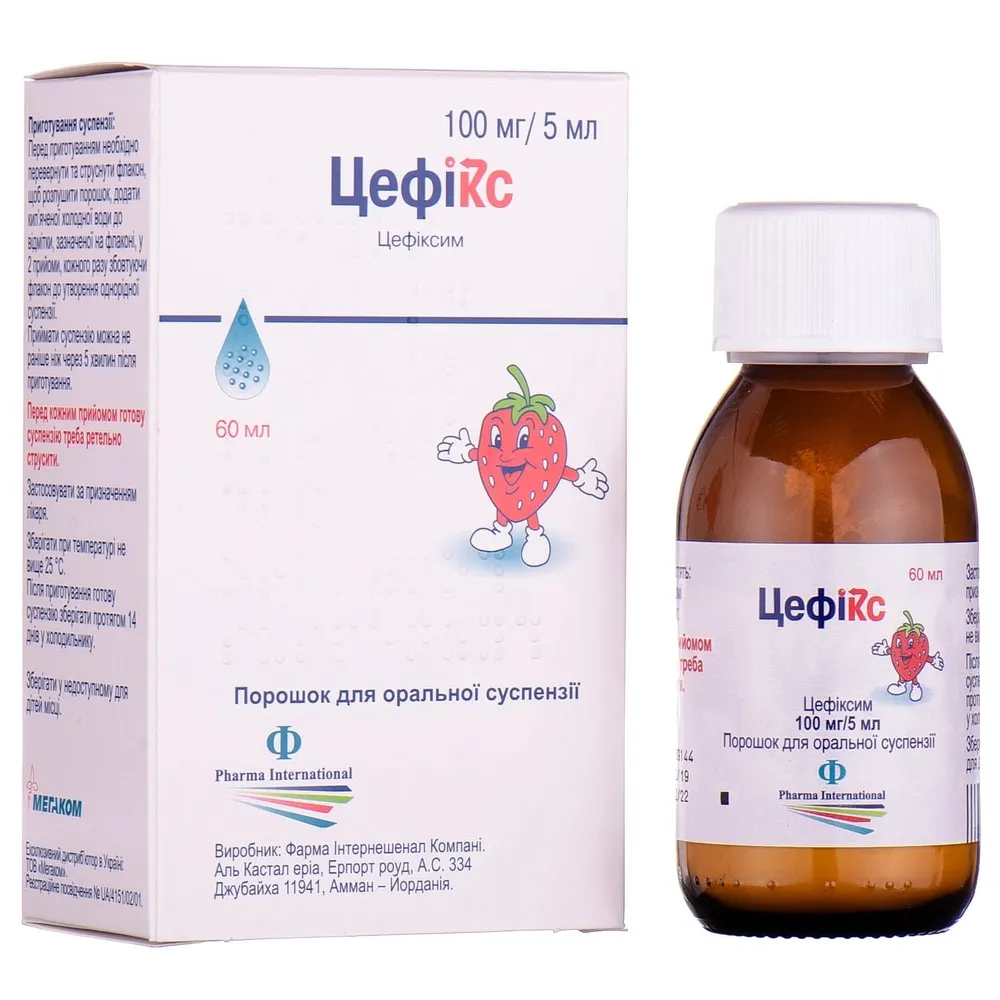
Table of Contents
INSTRUCTIONS FOR MEDICAL USE OF THE MEDICINAL PRODUCT CEFIX (CEFIX)
Composition:
Active substance: cefixime;
5 ml of suspension contain cefixime (as trihydrate) 100 mg;
Excipients: sodium benzoate (E 211); xanthan gum; sodium croscarmellose; sodium carboxymethylcellulose-microcrystalline cellulose; citric acid monohydrate; colloidal anhydrous silicon dioxide; sucrose; strawberry flavor (powder).
Pharmaceutical form. Powder for oral suspension.
Main physicochemical properties: powder ranging from almost white to light yellow in color with a strawberry odor.
Pharmacotherapeutic group.
Antibacterials for systemic use. Other beta-lactam antibiotics. Third-generation cephalosporins. ATC code J01D D08.
Pharmacological Properties.
Pharmacodynamics.
Cefixime is an oral third-generation cephalosporin antibiotic. In vitro, it exhibits significant bactericidal activity against a broad spectrum of gram-positive and gram-negative microorganisms. It is clinically effective in the treatment of infections caused by the most common pathogenic microorganisms, including Streptococcus pneumoniae, Streptococcus pyogenes, E. coli, Proteus mirabilis, Klebsiella species, Haemophilus influenzae (beta-lactamase-positive and -negative strains), Moraxella (Branhamella) catarrhalis (beta-lactamase-positive and -negative strains), and Enterobacter species. It has a high degree of stability in the presence of beta-lactamases.
Most strains of enterococci (Streptococcus faecalis, group D streptococci) and Staphylococci (including coagulase-positive, coagulase-negative, and methicillin-resistant strains) are resistant to cefixime. In addition, most strains of Pseudomonas, Bacteroides fragilis, Listeria monocytogenes, and Clostridia are resistant to cefixime.
Pharmacokinetics.
Absorption. Absolute bioavailability after oral administration of cefixime ranges from 22% to 54%. Since the presence of food does not significantly affect absorption, cefixime can be administered independently of food intake. The maximum serum concentration after administration of recommended doses in adults or children ranges from 1.5 to 3 mcg/mL. With repeated administration, accumulation of cefixime is minimal or absent. Pharmacokinetics of cefixime were compared in healthy elderly patients (aged >64 years) and young volunteers (aged 11–35 years) after administration of 400 mg of cefixime once daily for 5 days. Mean Cmax and AUC values were slightly higher in elderly patients. However, cefixime can be administered to elderly patients at the same dosage as in adults.
Distribution. Cefixime is almost entirely bound to the albumin fraction, with the mean free fraction being approximately 30%.
Metabolism. Metabolites of cefixime have not been identified in human serum or urine.
Elimination. Cefixime is excreted primarily unchanged in urine. The predominant mechanism is glomerular filtration.
There are no data on the penetration of cefixime into breast milk.
Clinical characteristics.
Indications.
Infectious-inflammatory diseases caused by microorganisms sensitive to the drug:
- infections of the upper respiratory tract (including otitis media) and other upper respiratory tract infections (sinusitis, pharyngitis, tonsillitis of bacterial etiology) in cases of known or suspected resistance of the causative agent to other commonly used antibiotics, or in case of risk of ineffective treatment;
- infections of the lower respiratory tract (including acute bronchitis and exacerbations of chronic bronchitis);
- urinary tract infections (including cystitis, cystourethritis, uncomplicated pyelonephritis).
Clinically effective in the treatment of infections caused by the most common pathogenic microorganisms, including Streptococcus pneumoniae, Streptococcus pyogenes, E. coli, Proteus mirabilis, Klebsiella species, Haemophilus influenzae (beta-lactamase-positive and -negative), Moraxella (Branhamella) catarrhalis (beta-lactamase-positive and -negative), and Enterobacter species. Exhibits high stability in the presence of beta-lactamases.
Most strains of enterococci (Streptococcus faecalis, group D Streptococci) and Staphylococci (including coagulase-positive, coagulase-negative, and methicillin-resistant strains) are resistant to cefixime. In addition, most strains of Pseudomonas, Bacteroides fragilis, Listeria monocytogenes, and Clostridia are resistant to cefixime.
Contraindications.
Confirmed hypersensitivity to cephalosporin antibiotics or to any other components of the medicinal product; increased sensitivity to penicillins; porphyria.
Interaction with other medicinal products and other types of interactions.
As with other cephalosporins, prolonged prothrombin time has been observed in some patients; therefore, caution is advised in patients receiving anticoagulant therapy.
Cefixime should be used with caution in patients receiving anticoagulants such as coumarins (e.g., potassium warfarin). Since cefixime may potentiate the effect of anticoagulants, an increase in prothrombin time, with or without clinical signs of bleeding, may occur.
Tubular secretion blockers (allopurinol, probenecid, diuretics) increase the maximum serum concentration of cefixime by slowing its renal excretion, which may lead to symptoms of overdose.
When cefixime is used concomitantly with potentially nephrotoxic agents (aminoglycosides, colistin, polymyxin, viomycin) or potent diuretics (ethacrynic acid, furosemide), there is an increased risk of developing renal failure.
Salicylic acid increases the level of free cefixime by 50% due to displacement of cefixime from protein-binding sites. This effect is concentration-dependent.
Concomitant use with carbamazepine may increase its plasma concentration; therefore, monitoring of carbamazepine plasma levels is advisable.
Nifedipine increases the bioavailability of cefixime, although the clinical significance of this interaction has not been established.
The use of the drug may reduce the reabsorption of estrogens and decrease the effectiveness of combined oral contraceptives.
During treatment with cefixime, false-positive glucose reactions in urine may occur when using copper sulfate tablets, Benedict's or Fehling's solutions. Glucose oxidase tests are recommended for glucose detection in urine.
Cephalosporin antibiotics may cause false-positive results in the direct Coombs' test. Therefore, it should be noted that a positive Coombs' test result may be due to the use of this medicinal product.
Special precautions for use.
Beta-lactams, including cefixime, may increase the risk of encephalopathy (which may include seizures, confusion, impaired consciousness, and movement disorders) in patients, particularly in cases of overdose and renal impairment.
Severe skin adverse reactions such as toxic epidermal necrolysis, Stevens-Johnson syndrome, drug reaction with eosinophilia and systemic symptoms (DRESS syndrome) have been reported in some patients receiving cefixime. If severe skin adverse reactions occur, cefixime should be discontinued and appropriate treatment initiated.
Hemolytic anemia, including severe cases with fatal outcomes, has been reported during treatment with cephalosporins. Cases of hemolytic anemia have also been reported following repeated administration of cephalosporins, including cefixime.
Effect on renal function.
Cefixime should be administered with caution in patients with significantly impaired renal function (see "Dosage and administration. Dosage in renal impairment").
As with other cephalosporins, cefixime may lead to acute renal failure, including tubulointerstitial nephritis as the primary pathological condition. If acute renal failure occurs, cefixime should be discontinued and appropriate therapy and/or measures initiated.
When cefixime is used at high doses concomitantly with aminoglycosides, polymyxin B, colistin, or loop diuretics (furosemide, ethacrynic acid), renal function should be closely monitored. After prolonged use of cefixime, hematopoietic function should be evaluated.
Hypersensitivity reactions.
Prior to initiating cefixime therapy, it is important to determine whether the patient has a history of hypersensitivity reactions to cephalosporins, penicillins, or other drugs.
Antibiotics, including cefixime, should be used with caution in patients with any history of allergic disorders, particularly drug allergies.
If an allergic reaction occurs, the drug should be discontinued and appropriate treatment initiated. Allergic reactions (especially anaphylaxis) associated with beta-lactam antibiotics may be severe and, in rare cases, fatal (see "Adverse reactions").
Colitis/overgrowth of resistant microorganisms.
Gastrointestinal adverse reactions may occur during treatment; therefore, cefixime should be used with caution in patients with a history of gastrointestinal bleeding, gastrointestinal disorders (particularly ulcerative colitis, regional colitis, or enteritis), or impaired liver function.
Prolonged use of cefixime may lead to overgrowth of resistant microorganisms, including disruption of normal intestinal flora, resulting in overgrowth of Candida albicans and development of oral mucosal candidiasis (see "Adverse reactions").
Pseudomembranous colitis.
Broad-spectrum antibiotics, particularly when used for prolonged periods, may lead to pseudomembranous colitis. Symptoms of pseudomembranous colitis may develop during or after antibiotic treatment.
The onset of severe diarrhea during treatment may indicate pseudomembranous colitis. In such cases, cefixime should be discontinued and appropriate diagnostic evaluation performed.
Effect on blood system.
Neutropenia and agranulocytosis may occur during treatment with beta-lactam antibiotics, particularly with prolonged therapy. If neutropenia develops, treatment with cefixime should be discontinued.
Blood counts should be monitored during prolonged treatment (more than 10 days).
Effect on serological test results.
Cefixime may cause false-positive results in the Coombs test. Cefixime may also cause false-positive urine glucose tests (see "Adverse reactions").
Antibacterial spectrum.
For infections caused by group A beta-hemolytic streptococci, the treatment course should last at least 10 days to prevent acute rheumatic fever.
Interaction with alcohol.
Cephalosporins enhance the toxicity of alcohol; therefore, consumption of alcoholic beverages is not recommended during cefixime therapy.
Important information about certain excipients.
Cefix, powder for oral suspension, contains sucrose as an excipient. Therefore, if a patient has been diagnosed with intolerance to certain sugars, consultation with a physician is required before taking this medicinal product. Patients with rare hereditary conditions such as fructose intolerance or sucrase-isomaltase deficiency should not use this product.
Use during pregnancy or breastfeeding.
There are no data on the use of cefixime during pregnancy. Cefixime may be used during pregnancy only if the expected benefit to the mother outweighs the potential risk to the fetus. Cefixime crosses the placenta. If treatment is necessary, breastfeeding should be discontinued.
Ability to affect reaction speed when driving or operating machinery.
Generally, cefixime does not impair performance; however, adverse reactions affecting the central nervous system (e.g., dizziness) may reduce psychomotor reaction speed. In such cases, patients should refrain from driving or operating machinery.
Method of Administration and Dosage
Food intake does not affect the absorption of cefixime. The usual duration of treatment is 7 days; if necessary, treatment may be extended up to 14 days. For the treatment of uncomplicated cystitis, the duration of treatment is 3 days.
Children aged 6 months to 10 years with body weight below 50 kg:
The recommended dose is 8 mg/kg once daily or 4 mg/kg every 12 hours, depending on the severity of the infection.
Adults and children aged 10 years and older (or with body weight above 50 kg):
The recommended dose is 400 mg once daily or 200 mg every 12 hours, depending on the severity of the infection.
Elderly patients:
The drug should be administered at the recommended adult dose. Renal function should be monitored and dosage adjusted in case of severe renal impairment (see "Dosage in Renal Impairment").
Dosage in Renal Impairment:
Cefixime may be used in patients with impaired renal function. For patients with creatinine clearance of 20 mL/min or higher, administer the standard dose and dosing regimen. For patients with creatinine clearance below 20 mL/min, the daily dose should be reduced by 50%. This also applies to patients undergoing chronic ambulatory peritoneal dialysis or hemodialysis.
Preparation of Suspension.
Before preparation, invert and shake the bottle to loosen the powder. Add boiled cold water in two portions up to the marked line on the bottle, shaking the bottle each time until a uniform suspension is formed.
The suspension may be taken no sooner than 5 minutes after preparation.
The prepared suspension must be shaken well before each use.
Children.
The drug is indicated for use in children aged 6 months and older. Safety and efficacy of cefixime in children under 6 months of age have not been established; therefore, cefixime is not recommended for use in this patient population.
Overdose.
Symptoms: intensification of adverse reactions, dizziness, nausea, vomiting, diarrhea.
Treatment: gastric lavage, administration of antihistamines and glucocorticoids; oxygen therapy. Hemodialysis or peritoneal dialysis contribute only minimally to the elimination of cefixime from the body. Treatment is symptomatic.
There are no specific antidotes for the treatment of cefixime overdose.
Side effects.
Side effects caused by cefixime are mild and occur rarely. Possible adverse reactions include:
Nervous system disorders: headache, dizziness, dysphoria; convulsions have been reported with cephalosporins, including cefixime (frequency unknown).
Beta-lactams, including cefixime, may increase the risk of encephalopathy (which may include convulsions, confusion, altered consciousness, and movement disorders) in patients, especially in cases of overdose and renal impairment (frequency unknown).
Auditory and vestibular disorders: hearing loss.
Respiratory system disorders: dyspnea.
Blood and lymphatic system disorders: eosinophilia, granulocytopenia, leukopenia, thrombocytopenia, thrombocytosis, neutropenia, hemolytic anemia, hypoprothrombinemia (bleeding and bruising without apparent cause), thrombophlebitis, prolonged prothrombin and thrombin time, agranulocytosis.
Gastrointestinal disorders: abdominal spasms, abdominal pain, diarrhea*, nausea, vomiting, oral candidiasis, pseudomembranous colitis, dry mouth, dyspepsia, flatulence, dysbacteriosis, and in isolated cases – stomatitis, glossitis.
Metabolism and nutrition disorders: anorexia.
Hepatobiliary disorders: hepatitis, cholestasis, transient increases in liver transaminase and alkaline phosphatase activity, hyperbilirubinemia, jaundice of sclera, jaundice of skin.
Renal and urinary system disorders: acute renal failure, including interstitial nephritis as the primary pathological condition, hematuria.
Immune system, skin and subcutaneous tissue disorders: hypersensitivity reactions, including: rash, pruritus, angioneurotic edema, anaphylactic shock, anaphylactic reactions; serum sickness-like reactions; drug reaction with eosinophilia and systemic symptoms (DRESS); facial swelling, skin hyperemia, urticaria, erythema multiforme or Stevens-Johnson syndrome, serum sickness, purpura, arthralgia, fever.
Skin disorders: maculopapular and vesiculobullous rashes, fungal dermatitis, epithelial desquamation, dry skin, hair loss, sunburn, toxic epidermal necrolysis.
Reproductive system and breast disorders: genital pruritus, Candida-induced vaginitis.
Infections and infestations: vaginal candidiasis (vaginal itching or discharge).
Cases of diarrhea following cefixime administration may be associated with Clostridium difficile.
Laboratory findings: most laboratory abnormalities are transient and clinically insignificant. Possible increases in blood urea nitrogen, elevated serum creatinine levels, false-positive Coombs test results, and possible positive ketone test results in urine when using nitroprusside-based tests (but not nitrofericyanide). Cefixime intake may cause false-positive results in urine glucose tests (therefore, enzymatic tests should be used). Changes in liver and kidney function test parameters may also occur.
General disorders: increased sweating, increased fatigue, weakness, mucosal inflammation.
* Diarrhea is usually associated with higher doses of the drug. Cases of diarrhea (from moderate to severe) have been reported; in such cases, discontinuation of therapy is warranted. If severe diarrhea occurs, cefixime should be discontinued.
Reporting suspected adverse reactions after drug registration is of great importance. It allows continuous monitoring of the benefit-risk balance of the medicinal product. Medical and pharmaceutical professionals, as well as patients or their legal representatives, should report all suspected adverse reactions and lack of drug efficacy via the Automated Information System for Pharmacovigilance at the following link: https://aisf.dec.gov.ua.
Shelf life.
3 years (unopened vial).
After reconstitution, the ready-to-use suspension should be stored for 14 days in the refrigerator.
Storage conditions.
Store at a temperature not exceeding 25 °C.
Keep out of reach of children.
Packaging.
1 vial of powder (for 30 mL or 60 mL of suspension) with a dosing spoon in a cardboard box.
Prescription status.
Prescription only.
Manufacturer/Marketing Authorization Holder.
Pharma International Company.
Manufacturer's address and place of business.
Al Kastal area, Airport Road, P.O. Box 334, Jubaiha 11941, Amman – Jordan.
Marketing Authorization Holder's address.
P.O. Box 334, Al-Jubaiha 11941, Amman, Jordan.
Contact details of the manufacturer's/Marketing Authorization Holder's representative in Ukraine – LLC "Megakom":
195-B Klochkivska Street, Kharkiv, 61145, Ukraine; phone: +38 (057) 701 37 55.