Tricacid
Ukraine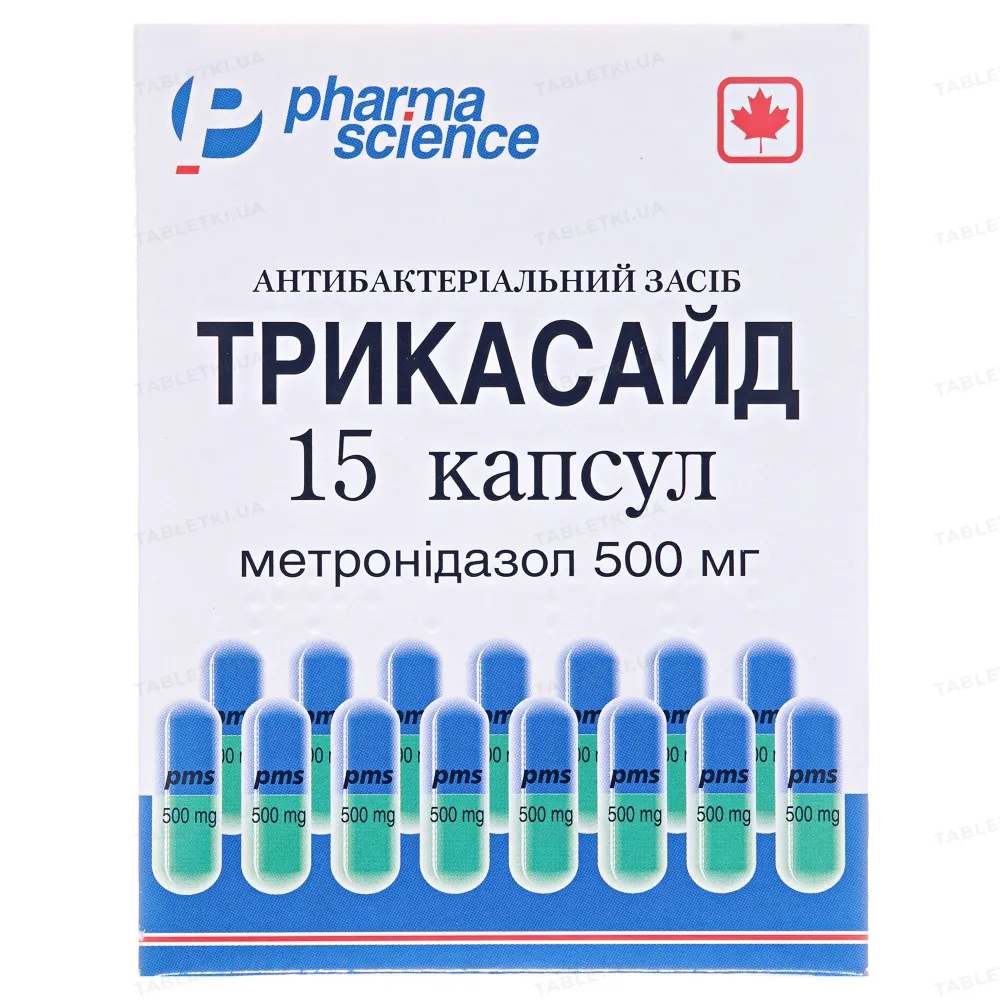
Table of Contents
INSTRUCTIONS FOR MEDICAL USE OF THE MEDICINAL PRODUCT TRICACIDE (TRIKACIDE)
Composition:
Active substance: metronidazole;
1 capsule contains 500 mg of metronidazole;
Excipients: microcrystalline cellulose, anhydrous colloidal silicon dioxide, magnesium stearate;
Capsule shell composition: gelatin, titanium dioxide (E 171), colorants: quinoline yellow (E 104), FD&C green №3 (E 143), D&C red №28 (E 129), brilliant blue FCF (E 133).
Pharmaceutical form. Capsules.
Main physico-chemical properties:
capsules № 0, green-colored body with the inscription "500 mg", blue-colored cap with the inscription "pms", containing white to light yellow powder.
Pharmacotherapeutic group.
Antibacterial agents for systemic use. Imidazole derivatives. ATC code J01X D01.
Agents for treatment of amoebiasis and other protozoal diseases. Antiprotozoal agents. ATC code P01A B01.
Pharmacological Properties.
Pharmacodynamics.
Metronidazole belongs to the nitro-5-imidazoles and has a broad spectrum of activity. The serum concentration breakpoints that allow differentiation of susceptible strains (S) from strains with intermediate susceptibility, and strains with intermediate susceptibility from resistant strains (R), are as follows: S ≤ 4 mg/L and R > 4 mg/L.
The prevalence of acquired resistance among certain microorganisms may vary depending on geographical location and time. Therefore, information on local resistance patterns is useful, especially when treating severe infections. These data are only general guidelines indicating the likelihood of a particular bacterial strain being susceptible to metronidazole.
Organisms susceptible to the drug include: Peptostreptococcus spp., Clostridium spp., Bacteroides spp., Fusobacterium spp., Porphyromonas, Bilophila, Helicobacter pylori, Prevotella spp., Veillonella. Metronidazole inhibits the growth of protozoa – Trichomonas vaginalis, Entamoeba histolytica, Giardia intestinalis (Lamblia intestinalis). Organisms with variable susceptibility: Bifidobacterium spp., Eubacterium spp. Resistant microorganism strains: Propionibacterium, Actinomyces, Mobiluncus.
Pharmacokinetics.
Absorption. After oral administration, metronidazole is rapidly and almost completely absorbed (at least 80% within 1 hour). The maximum serum concentration achieved after oral administration is similar to that achieved after intravenous infusion of equivalent doses.
The oral bioavailability is 100% and is not significantly reduced by concomitant food intake.
Distribution. Approximately 1 hour after a single 500 mg dose, the mean peak plasma concentration is 10 µg/mL. After 3 hours, the mean plasma concentration is 13.5 µg/mL.
The elimination half-life is 8–10 hours; protein binding is minimal – no more than 20%. The volume of distribution is high (approximately 40 L, i.e., 0.65 L/kg).
Distribution is rapid and extensive, achieving concentrations close to plasma levels in the lungs, kidneys, liver, skin, bile, cerebrospinal fluid, saliva, seminal fluid, and vaginal secretions.
Metronidazole crosses the placental barrier and is excreted into breast milk.
Biotransformation. Metronidazole is metabolized by hepatic oxidation. Two metabolites are formed:
- the main alcohol metabolite, which accounts for approximately 30% of the antibacterial activity of metronidazole against anaerobic bacteria, with an elimination half-life of approximately 11 hours;
- the acid metabolite, present in smaller amounts, which accounts for approximately 5% of metronidazole's antibacterial activity.
Elimination. High concentrations are found in the liver and bile; low concentrations in the colon; negligible fecal excretion. The drug is eliminated via the kidneys by 35–65% (as metronidazole and oxidized metabolites).
Clinical characteristics.
Indications.
Infections caused by microorganisms sensitive to the drug: amoebiasis; urogenital trichomoniasis; nonspecific vaginitis; giardiasis; surgical infections caused by anaerobic microorganisms sensitive to metronidazole; replacement of intravenous treatment for infections caused by anaerobic microorganisms sensitive to metronidazole.
Contraindications.
Hypersensitivity to metronidazole, to drugs of the imidazole group, or to any other components of the medicinal product; age under 10 years (due to the pharmaceutical form).
Pregnancy or breastfeeding.
Interaction with other medicinal products and other forms of interaction.
Disulfiram-like reaction
There are many medicinal products that trigger a disulfiram-like reaction to alcohol, and their concomitant use with alcohol is not recommended.
Combinations not recommended.
Alcohol. Patients should be advised not to consume alcohol (in the form of beverages or as an excipient in medicinal products) during metronidazole therapy and for at least 48 hours after the last dose due to the possibility of a disulfiram-like reaction (antabuse effect: flushing, erythema, vomiting, tachycardia). Psychotic reactions may occur when metronidazole is used concomitantly with disulfiram. Consumption of alcoholic beverages and use of medicinal products containing alcohol should be avoided.
Disulfiram. Cases of delirium and confusion have been reported in patients taking metronidazole and disulfiram concurrently. There is a risk of developing acute psychotic episodes or confusion, which are reversible after discontinuation of the drug.
Busulfan. Metronidazole may double plasma levels of busulfan, potentially leading to significant busulfan toxicity.
Combinations requiring precautions during use.
Enzyme-inducing anticonvulsants. Reduced plasma concentrations of metronidazole due to enhanced hepatic metabolism induced by enzyme inducers. Clinical monitoring is indicated, and dose adjustment of metronidazole may be necessary during and after treatment with enzyme inducers.
Oral anticoagulant therapy
Enhanced effects of oral anticoagulants and increased risk of hemorrhagic complications due to slowed hepatic metabolism. International normalized ratio (INR) should be monitored more frequently. Dose adjustment of the oral anticoagulant is recommended during metronidazole therapy and for 8 days after its discontinuation.
Rifampicin. Reduced plasma concentrations of metronidazole due to enhanced hepatic metabolism by rifampicin. Clinical monitoring is indicated, and dose adjustment of metronidazole may be necessary during and after treatment with rifampicin.
Lithium. Increased blood levels of lithium, potentially reaching toxic levels, with signs of lithium overdose. Evidence suggests lithium retention when co-administered with metronidazole, possibly due to renal impairment. The dose of lithium should be reduced or treatment discontinued prior to starting metronidazole. Neurotoxicity of lithium may be increased when used concomitantly with metronidazole. Careful monitoring of lithium, creatinine, and electrolyte levels in blood is required; dose adjustments may be necessary.
Combinations requiring special attention.
Amiodarone. Cases of QT interval prolongation and development of torsade de pointes have been reported with concomitant use of metronidazole and amiodarone. ECG monitoring of the QT interval may be advisable when amiodarone is used in combination with metronidazole. Outpatients should be advised to seek medical attention if symptoms suggestive of torsade de pointes occur, such as dizziness, rapid heartbeat, or loss of consciousness.
Fluorouracil (tegafur, capecitabine). Increased fluorouracil toxicity due to reduced clearance.
Cyclosporine. In patients taking cyclosporine, there is a risk of increased serum cyclosporine levels. Cyclosporine and creatinine plasma concentrations should be monitored if concomitant use with metronidazole is necessary.
Phenytoin and phenobarbital. In patients taking phenytoin or phenobarbital, metronidazole is metabolized faster than usual, with its elimination half-life reduced to approximately 3 hours. A similar effect may occur with other drugs that induce hepatic enzymes.
Contraceptives. Some antibiotics may in individual cases reduce the efficacy of oral contraceptives by affecting bacterial hydrolysis of steroid conjugates in the intestine, thereby reducing reabsorption of unconjugated steroids and lowering plasma levels of active steroids. This unusual interaction may occur in women with high biliary excretion of steroid conjugates. Cases of oral contraceptive failure have been associated with the use of various antibiotics, including ampicillin, amoxicillin, tetracyclines, and metronidazole.
INR (International Normalized Ratio).
Numerous cases of enhanced activity of oral anticoagulants have been reported in patients receiving antibacterial therapy. Risk factors include severity of infection or inflammation, patient age, and general health status. In such circumstances, it is difficult to determine to what extent the imbalance in INR is due to the infection itself or its treatment. However, certain antibiotic groups are more commonly associated with this effect, particularly fluoroquinolones, macrolides, tetracyclines, co-trimoxazole, and some cephalosporins.
Special precautions for use.
Hypersensitivity/skin and subcutaneous tissue disorders. Allergic reactions, including anaphylactic shock, which may be life-threatening, may occur (see section "Adverse reactions"). In such cases, metronidazole therapy must be discontinued and appropriate treatment initiated.
Severe bullous skin reactions, sometimes fatal, such as Stevens-Johnson syndrome (SJS), toxic epidermal necrolysis (TEN), or acute generalized exanthematous pustulosis (AGEP) have been reported during metronidazole treatment (see section "Adverse reactions").
If generalized erythema and pustular eruptions accompanied by fever develop at the beginning of treatment, acute generalized exanthematous pustulosis should be suspected (see section "Adverse reactions"); in case such a reaction occurs, treatment with the drug must be discontinued, and further use of metronidazole, either alone or in combination with other drugs, is contraindicated.
Most cases of SJS were reported within the first 7 weeks after initiation of metronidazole therapy. Patients should be informed about signs and symptoms, and skin reactions should be closely monitored. If symptoms of SJS, TEN, or AGEP (e.g., influenza-like symptoms, progressive skin rashes, often with blisters or mucosal lesions) are present, treatment must be immediately discontinued (see section "Adverse reactions").
Renal disorders. In patients with renal insufficiency, the elimination half-life of metronidazole remains unchanged; therefore, dose adjustment is not required. However, metronidazole metabolites may accumulate in these patients. The clinical significance of this is unknown.
Metronidazole and its metabolites are removed by hemodialysis over 8 hours. Therefore, patients should receive a supplementary dose of metronidazole immediately after hemodialysis.
No dose adjustment is required for patients with renal insufficiency undergoing intermittent peritoneal dialysis (IPD) or continuous ambulatory peritoneal dialysis (CAPD).
Nervous system disorders. The drug must be discontinued if patients develop ataxia, dizziness, or confusion.
In patients with severe, chronic, or active diseases of the peripheral or central nervous system, the risk of neurological status exacerbation should be considered. Seizures, myoclonus, and peripheral neuropathy characterized primarily by numbness or paresthesia of the extremities have been reported in patients receiving metronidazole. The appearance of abnormal neurological symptoms requires immediate reassessment of the benefit-risk ratio for continuing therapy.
In cases requiring prolonged therapy, the physician should consider the possibility of peripheral neuropathy or leukopenia. Both effects are usually reversible. Regular hematological testing and clinical monitoring for signs indicating the development of adverse effects, such as central or peripheral neuropathy (paresthesia, ataxia, dizziness, seizures), are recommended.
High doses of metronidazole have been associated with transient epileptiform seizures. Metronidazole should be used with caution in patients with active central nervous system disorders, except for brain abscess.
Intensive or prolonged metronidazole therapy should be administered only under close clinical and biological monitoring and under the supervision of a specialist.
If aseptic meningitis develops in patients during metronidazole treatment, re-administration of the drug is not recommended, or the decision to re-administer should be made only after careful evaluation of the benefit-risk ratio in patients with serious infections.
If symptoms characteristic of encephalopathy or cerebellar syndrome occur, treatment must be immediately reviewed and metronidazole discontinued.
Cases of encephalopathy with corresponding MRI changes have been reported during post-marketing surveillance (see section "Adverse reactions"). Lesions are most commonly located in the cerebellum (particularly in the dentate nucleus) and the corpus callosum. In most cases, encephalopathy and MRI changes resolved after discontinuation of the drug. Fatal cases have been very rarely reported.
Patients should be monitored for possible signs of encephalopathy or worsening of symptoms in those with central nervous system disorders.
Psychiatric disorders. Psychotic reactions may occur immediately after initiation of treatment with this drug, which may be associated with behavior placing patients at risk, especially in those with a history of psychiatric disorders (see section "Adverse reactions"). If this occurs, metronidazole must be discontinued, the physician should be notified, and appropriate therapeutic measures initiated immediately.
Gastrointestinal disorders. Prolonged use of metronidazole may lead to overgrowth of resistant bacteria and protozoa.
Severe, persistent diarrhea occurring during or shortly after treatment may be due to pseudomembranous colitis (in most cases caused by Clostridium difficile). This antibiotic-associated intestinal disease may be life-threatening and requires immediate appropriate treatment. Medicinal products that inhibit peristalsis should not be prescribed.
Hematological effects. Prolonged metronidazole therapy may be associated with bone marrow suppression leading to impaired hematopoiesis. Regular clinical and laboratory monitoring, especially complete blood count and leukocyte count, is required for patients with a history of hematological disorders or those receiving high doses and/or prolonged treatment, particularly in cases of blood dyscrasias, severe infection, or severe hepatic insufficiency.
If leukopenia develops, careful assessment of the benefit-risk ratio for continuing treatment is essential.
The decision on continuing metronidazole therapy in patients with leukopenia depends on the severity of the infection.
Metronidazole should be used in patients with severe hepatic damage or impaired hematopoiesis (including granulocytopenia) only if the expected benefit outweighs the potential risk.
Metronidazole is not recommended for patients with porphyria.
The duration of treatment with metronidazole or other nitroimidazole-containing drugs should not exceed 10 days. Only in exceptional cases, when clinically necessary, may the treatment period be extended, with mandatory clinical and laboratory monitoring. These limitations should be strictly observed, as mutagenic activity of metronidazole cannot be excluded, and due to increased incidence of certain tumors observed in animal studies.
Metronidazole and its metabolites have shown mutagenicity in some tests with non-mammalian cells.
The drug is considered to pose no carcinogenic risk in humans, although a carcinogenic effect has been observed in some strains of mice. However, this effect was not observed in rats or hamsters.
Pediatric patients. Capsules are contraindicated in children under 10 years of age due to the risk of choking. Other dosage forms of metronidazole are available for younger children.
Interaction with other medicinal products. Concomitant use of metronidazole and alcohol is not recommended (see section "Interaction with other medicinal products and other forms of interaction").
Concomitant use of metronidazole and busulfan is not recommended (see section "Interaction with other medicinal products and other forms of interaction").
Concomitant use of metronidazole and disulfiram is not recommended (see section "Interaction with other medicinal products and other forms of interaction").
Effect on laboratory test results. Metronidazole may immobilize treponemes, thereby causing false-positive results in the Nelson test.
Metronidazole should be used with caution in patients with hepatic encephalopathy. Since metronidazole is primarily metabolized in the liver, its clearance may be reduced in patients with impaired liver function. The benefit-risk ratio of using metronidazole for the treatment of trichomoniasis in such patients should be carefully evaluated. Significant accumulation of metronidazole may occur in patients with hepatic encephalopathy. Increased plasma concentrations of metronidazole may exacerbate encephalopathy symptoms. If necessary, the daily dose may be reduced to one-third and administered once daily.
Patients should be informed about the possibility of darkening of urine due to the presence of metronidazole metabolites.
Hepatotoxicity in patients with Cockayne syndrome. Cases of severe hepatotoxicity/acute liver failure, including rapidly progressing fatal cases after initiation of treatment, have been reported in patients with Cockayne syndrome receiving systemic metronidazole-containing medicinal products. Therefore, metronidazole should not be used in this patient group, except when the benefit outweighs the risk and no alternative treatment is available. Liver function tests must be performed immediately before starting therapy, during treatment, and after its completion until liver function parameters return to normal or baseline values. If liver function parameters markedly increase during treatment, the drug should be discontinued. Patients with Cockayne syndrome should be advised to immediately inform their physician about any symptoms suggestive of potential liver injury and to stop taking metronidazole (see section "Adverse reactions").
Use during pregnancy or breastfeeding.
Pregnancy. The safety of metronidazole use during pregnancy has not been established. Some studies have indicated an increased frequency of malformations.
Animal studies have not demonstrated a teratogenic effect associated with metronidazole use.
However, further epidemiological studies are needed to confirm the absence of risk; therefore, the medicinal product should not be prescribed during pregnancy.
Breastfeeding. Metronidazole passes into breast milk; therefore, Tricaseid should not be used during breastfeeding.
Ability to influence reaction speed when driving or operating machinery.
Individuals operating vehicles or machinery should be aware of the possible occurrence of somnolence, confusion, dizziness, hallucinations, seizures, or visual disturbances during treatment and should refrain from driving or operating machinery during therapy.
Dosage and Administration
The drug should be taken orally during meals to reduce gastrointestinal irritation.
For amoebiasis: Trikasaid should be taken continuously for 7 days. Adults: 1.5 g daily, i.e. 500 mg three times a day.
Children aged 10 years and older: 30−40 mg/kg body weight daily in three divided doses.
In cases of hepatic abscess due to amoebiasis, drainage or aspiration of pus should be performed concurrently with metronidazole therapy.
For giardiasis: treatment should last for 5 days. Adults should be administered 750−1000 mg of Trikasaid daily. Children aged 10−15 years: 500 mg daily.
For trichomoniasis, women (urethritis and vaginitis caused by trichomonads) should be administered Trikasaid for a 10-day treatment course at a dose of 500 mg of metronidazole twice daily. Women should additionally be prescribed metronidazole in the form of vaginal suppositories.
The sexual partner should be treated simultaneously, regardless of the presence or absence of clinical signs of trichomoniasis infection, even if laboratory test results are negative.
For trichomoniasis in men (urethritis caused by trichomonads), Trikasaid should be administered for a 10-day treatment course at a dose of 500 mg daily.
In exceptional cases, it may be necessary to increase the daily dose up to 750 mg or even up to 1 g.
For non-specific vaginitis, administer 500 mg of Trikasaid twice daily for 7 days. The sexual partner should be treated simultaneously.
For the treatment of anaerobic infections (first-line therapy or substitute treatment), adults should be administered 1.0−1.5 g of Trikasaid daily. Children aged 10 years and older should be administered 20−30 mg/kg body weight daily in two divided doses (to achieve the required dosage, metronidazole in appropriate dosage or other pharmaceutical forms may be used).
Children
This medicinal product in the given pharmaceutical form can be administered to children aged 10 years and older when the calculated dose is a multiple of 500 mg (1 capsule of Trikasaid).
Overdose
Cases of single-dose intake of up to 12 g during suicide attempts and accidental overdoses have been reported.
Symptoms included nausea, vomiting, ataxia, mild disorientation, chills, darkening of urine, anorexia, headache, insomnia, somnolence, and depression.
There is no specific antidote. In cases of significant overdose, gastric lavage is recommended, along with symptomatic therapy.
Side effects.
Gastrointestinal system:
- mild gastrointestinal disturbances (epigastric pain, nausea, vomiting, diarrhea, malaise);
- glossitis with dry mouth, stomatitis, taste disturbances, anorexia, mucositis of the oral mucosa;
- pancreatitis, which is reversible upon discontinuation of the drug;
- tongue discoloration / coated (hairy) tongue (e.g., due to excessive development of fungal flora).
Skin and subcutaneous tissue:
- flushing, pruritus, skin rash, sometimes accompanied by fever;
- urticaria, angioneurotic edema, anaphylactic shock (see section "Special precautions");
- very rare cases of acute generalized exanthematous pustulosis (see section "Special precautions");
- Stevens-Johnson syndrome, toxic epidermal necrolysis;
- fixed drug eruption.
Nervous system:
- headache;
- peripheral sensory neuropathy or transient epileptic seizures, paresthesia;
- seizures, dizziness, ataxia, somnolence;
- confusion;
- cases of encephalopathy (e.g., confusion, fever, headache, photophobia, nuchal rigidity, hallucinations, paralysis, visual and motor disturbances) and subacute cerebellar syndrome (e.g., ataxia, dysarthria, gait disturbance, nystagmus, tremor), which may resolve after discontinuation of the drug. Very rare cases of fatal outcomes have been reported (see section "Special precautions");
- aseptic meningitis (see section "Special precautions").
Eye disorders:
- transient visual disturbances such as diplopia, myopia, blurred vision, decreased visual acuity, color vision changes;
- optic neuropathy/optic neuritis.
Ear and labyrinth disorders:
- hearing impairment/hearing loss (including sensorineural);
- tinnitus.
Psychiatric disorders:
- hallucinations;
- psychotic reactions with paranoia and/or delirium, which in some cases may be associated with suicidal ideation or suicide attempts (see section "Special precautions");
- depressed mood.
Blood and lymphatic system:
− neutropenia, agranulocytosis, thrombocytopenia.
Hepatobiliary system:
- increased liver enzyme activity (aspartate aminotransferase (AST), alanine aminotransferase (ALT), alkaline phosphatase), cholestatic or mixed hepatitis, and hepatocellular damage, sometimes with jaundice;
- cases of severe hepatic failure requiring liver transplantation have been reported, primarily when used in combination with other antibiotics.
General disorders:
- hot flushes.
Infections and infestations:
- oral candidiasis and vaginal candidiasis.
Other:
- red-brown discoloration of urine due to water-soluble pigments formed during metabolism of this medicinal product.
If severe adverse effects occur, treatment should be discontinued.
Cases of severe, irreversible hepatotoxicity/acute liver failure, including fatal cases with rapid onset after initiation of systemic metronidazole administration, have been reported in patients with Cockayne syndrome (see section "Special precautions").
Shelf life. 4 years.
Storage conditions.
Store out of reach of children at a temperature not exceeding 30 °C.
Packaging.
15 capsules in a blister pack, 1 blister pack in a cardboard box; 30 capsules in a bottle.
Prescription category. Prescription only.
Manufacturer.
Pharmascience Inc.
Manufacturer's address.
6111 Royalmount Avenue, 100, Montreal, Quebec H4P 2T4, Canada.