Trazodone ms
Ukraine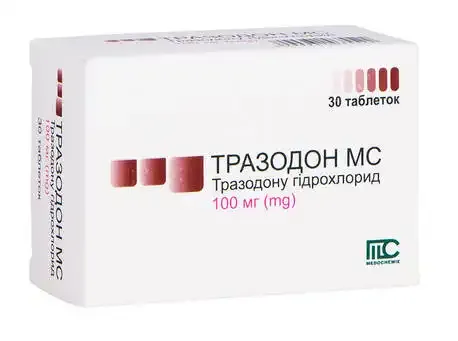
Table of Contents
INSTRUCTION FOR MEDICAL USE OF THE MEDICINAL PRODUCT TRAZODON MC (TRAZODONEMC)
Composition:
Active substance: trazodone hydrochloride;
1 tablet contains: trazodone hydrochloride 50 mg, 100 mg;
Excipients: maize starch; lactose monohydrate; povidone K30; calcium hydrogen phosphate; microcrystalline cellulose 102; sodium starch glycolate (type A); magnesium stearate.
Pharmaceutical form. Tablets.
Main physicochemical properties:
50 mg tablets: round, standard convex tablet of almost white color, diameter: 8.9 – 9.2 mm, thickness: 4.2 – 4.6 mm;
100 mg tablets: elongated tablet of almost white color with 3 score lines, length: 18.4 – 18.7 mm, width: 6.6 – 6.8 mm, thickness: 4.4 – 4.7 mm.
Pharmacotherapeutic group. Psycholeptics. Antidepressants. Other antidepressants. ATC code N06AX05.
Pharmacological Properties.
Pharmacodynamics. Trazodone is a potent antidepressant. It also reduces feelings of anxiety. Trazodone is a triazolopyridine derivative chemically unrelated to the known tricyclic, tetracyclic, and other antidepressant agents. It has minimal effect on the mechanism of norepinephrine reuptake. Although the exact mechanism of action of trazodone is not fully understood, its antidepressant effect may be related to noradrenergic potentiation through mechanisms other than reuptake blockade. The central anti-serotonergic effect may explain trazodone's ability to reduce anxiety.
Pharmacokinetics. Trazodone is rapidly absorbed from the gastrointestinal tract and extensively metabolized. Metabolic pathways of trazodone include N-oxidation and hydroxylation. The metabolite m-chlorophenylpiperazine is pharmacologically active. Trazodone is excreted in the urine almost entirely as metabolites, either in free or conjugated form. Elimination of trazodone is biphasic, with a terminal elimination half-life ranging from 5 to 13 hours. Trazodone penetrates into breast milk. Approximately a twofold increase in the terminal phase half-life and significantly higher plasma concentrations of trazodone were observed in 10 patients aged 65 to 74 years compared to 12 patients aged 23 to 30 years after a 100 mg dose of trazodone. This suggests an age-related reduction in hepatic metabolism of trazodone. In vitro studies using human liver microsomes have shown that trazodone is metabolized by cytochrome P450 3A4 (CYP3A4).
Clinical characteristics.
Indications. Relief of symptoms of all types of depression, including depression associated with anxiety.
Contraindications.
Known hypersensitivity to the drug or to any of its components. Alcohol intoxication and intoxication with hypnotics. Acute myocardial infarction.
Interaction with other medicinal products and other forms of interactions.
Sedative effects of antipsychotics, hypnotics, anxiolytics, and antihistamines may be enhanced. Dose reduction of these agents is recommended.
Oral contraceptives, phenytoin, carbamazepine, and barbiturates accelerate the metabolism of antidepressants due to their hepatic effects. Cimetidine and certain other antipsychotics slow down the metabolism of antidepressants.
CYP3A4 inhibitors. In vitro metabolism studies of the drug indicate a potential for drug interactions when trazodone is used concomitantly with cytochrome CYP3A4 inhibitors such as erythromycin, ketoconazole, itraconazole, ritonavir, indinavir, and nefazodone. The use of CYP3A4 inhibitors may lead to a significant increase in trazodone plasma concentrations. In vivo studies in healthy volunteers have confirmed that administration of ritonavir at a dose of 200 mg twice daily resulted in more than a two-fold increase in trazodone plasma levels, leading to nausea, syncope, and arterial hypotension. Therefore, when trazodone is used concomitantly with a potent CYP3A4 inhibitor, a reduction in trazodone dose is advisable. However, if possible, concomitant use of trazodone and potent CYP3A4 inhibitors should be avoided altogether.
Carbamazepine. Concomitant administration of trazodone with carbamazepine reduces trazodone plasma concentrations. When used concomitantly with carbamazepine at a dose of 400 mg daily, plasma concentrations of trazodone and its active metabolite m-chlorophenylpiperazine decreased by 76% and 60%, respectively. Close monitoring of the patient is required to determine the need for increasing the trazodone dose.
Tricyclic antidepressants. There is a risk of drug interaction; therefore, concomitant use with trazodone should be avoided. If used together, serotonin syndrome and cardiovascular side effects may be expected.
Fluoxetine. Rare cases of increased trazodone plasma levels and adverse effects have been reported during concomitant use of trazodone with fluoxetine (a CYP1A2/2D6 inhibitor). The mechanism underlying this pharmacokinetic interaction is not fully understood. A pharmacodynamic interaction (serotonin syndrome) cannot be excluded.
Monoamine oxidase inhibitors (MAOIs). Isolated cases of possible interactions between trazodone and MAO inhibitors have been reported. Although some physicians use these agents concomitantly, it is not recommended to administer trazodone together with MAO inhibitors or within 2 weeks after discontinuation of MAO inhibitors. It is also not recommended to initiate MAOI therapy within 1 week after discontinuation of trazodone.
Phenothiazines. When used concomitantly with phenothiazines such as chlorpromazine, fluphenazine, levomepromazine, and perphenazine, cases of severe orthostatic hypotension have been observed.
Anesthetics/muscle relaxants. Trazodone hydrochloride may enhance the effects of muscle relaxants and volatile anesthetics. Such combinations should be used with caution.
Alcohol. The sedative effects of alcohol are intensified under the influence of trazodone. Patients should avoid alcohol consumption during trazodone therapy.
Levodopa. Antidepressants may accelerate the metabolism of levodopa.
Buprenorphine. Trazodone should be used with caution when administered concomitantly with buprenorphine due to an increased risk of serotonin syndrome, a potentially life-threatening condition.
Other agents. Concomitant use of trazodone with medicinal products known to prolong the QT interval may increase the risk of ventricular arrhythmias, including polymorphic ventricular tachycardia (torsade de pointes). Such agents should be used concomitantly with trazodone with caution. Trazodone is only a very weak inhibitor of norepinephrine reuptake and does not affect the arterial pressure response to tyramine; therefore, an effect of trazodone on the hypotensive action of guanethidine-like compounds is not expected. However, animal studies have shown that trazodone may inhibit most of the rapid effects of clonidine. Although no drug interactions have been reported with concomitant use of trazodone and other types of antihypertensive agents, potentiation of effects should be considered. The incidence of adverse effects may increase when trazodone is used concomitantly with products containing Hypericum perforatum (St. John's wort). Cases of changes in prothrombin time values have been reported in patients receiving concomitant trazodone and warfarin. Serum levels of digoxin or phenytoin may increase when these agents are used concomitantly with trazodone. Serum levels of these agents should be monitored in patients receiving such combination therapy.
Special precautions for use.
Suicide/suicidal thoughts or clinical worsening. Depression is associated with an increased risk of suicidal thoughts, self-harm, and suicide (suicidal behaviour). This risk persists until significant remission occurs. Lack of improvement may continue for several weeks or longer at the beginning of therapy. Patients should be closely monitored until such improvement occurs. General clinical experience indicates that the risk of suicide may increase during the early stages of recovery.
Other psychiatric conditions for which Trazodone MC is prescribed may also be associated with an increased risk of suicide-related events. In addition, these conditions may coexist with major depressive disorder. The same precautions observed during treatment of patients with major depressive disorder should be followed when treating patients with other psychiatric disorders.
Patients with a history of suicidal behaviour or those who had a significant degree of suicidal ideation prior to treatment initiation are at higher risk of developing suicidal thoughts or suicide attempts and therefore require careful monitoring during treatment. In a meta-analysis of placebo-controlled clinical trials of antidepressants in psychiatric disorders, patients under the age of 25 had a higher risk of suicidal behaviour in the antidepressant group compared to the placebo group.
Treatment with this medicinal product should be accompanied by close monitoring of patients, particularly those at high risk, especially at the beginning of therapy and after dose changes. Patients (and caregivers) should be advised to monitor for any clinical worsening, emergence of suicidal thoughts or behaviour, or unusual changes in behaviour, and to seek immediate medical advice if such symptoms occur.
To minimize the potential risk of suicide attempts, especially at the beginning of therapy, the physician should prescribe only limited quantities of trazodone at each visit. Careful dose selection and regular monitoring are recommended for patients with the following conditions:
- Epilepsy, particularly in patients who should not abruptly increase or decrease the dose;
- Hepatic or renal impairment, especially severe;
- Cardiac diseases such as angina pectoris, conduction disorders, or various degrees of atrioventricular block; recent myocardial infarction;
- Hyperthyroidism;
- Urinary retention, e.g., due to benign prostatic hyperplasia, although such problems are not expected since the anticholinergic effect of trazodone is negligible;
- Acute angle-closure glaucoma, elevated intraocular pressure, although significant changes are not expected due to the negligible anticholinergic effect of trazodone.
When antidepressants are used in patients with schizophrenia or other psychotic disorders, psychotic symptoms may be exacerbated. Paranoid thoughts may become more pronounced. During trazodone therapy, the depressive phase of bipolar disorder may shift into a manic phase. In such cases, trazodone treatment should be discontinued.
Serotonin syndrome. Drug interactions leading to serotonin syndrome/neuroleptic malignant syndrome have been reported when trazodone is used concomitantly with other serotonergic medicinal products such as other antidepressants (e.g., tricyclic antidepressants, selective serotonin reuptake inhibitors, serotonin-norepinephrine reuptake inhibitors, and MAO inhibitors) and neuroleptics. Cases of neuroleptic malignant syndrome with fatal outcomes have been reported with concomitant use of trazodone and neuroleptics known to be associated with this syndrome (see sections "Interaction with other medicinal products and other forms of interaction" and "Side effects").
Concomitant use of trazodone and buprenorphine may lead to serotonin syndrome (see section "Interaction with other medicinal products and other forms of interaction"). If concomitant treatment with other serotonergic agents is clinically justified, careful patient monitoring is recommended, especially at the beginning of treatment and during dose escalation. Symptoms of serotonin syndrome may include mental status changes, autonomic instability, neuromuscular disturbances, and/or gastrointestinal symptoms. If serotonin syndrome is suspected, consideration should be given to reducing the dose or discontinuing therapy depending on the severity of symptoms.
Agranulocytosis. Since agranulocytosis may clinically present as influenza-like illness, sore throat, and fever, blood laboratory tests should be performed if these symptoms occur.
Cases of arterial hypotension, including orthostatic hypotension, and somnolence have been reported during trazodone therapy. When trazodone is used concomitantly with antihypertensive agents, a reduction in the dose of the antihypertensive drug may be required.
At the end of a course of trazodone therapy, particularly if prolonged, gradual dose reduction is recommended before complete discontinuation to minimize the likelihood of withdrawal symptoms such as nausea, headache, and general malaise. Currently, there is no evidence that trazodone hydrochloride is addictive.
QT interval prolongation. Very rare cases of QT interval prolongation, an effect also observed with other antidepressants, have been reported with trazodone use. Caution is required when using trazodone concomitantly with medicinal products known to prolong the QT interval. Trazodone should be used cautiously in patients with diagnosed cardiovascular diseases, including those associated with QT interval prolongation. Serum levels of trazodone may increase when used concomitantly with potent inhibitors of cytochrome CYP3A4 (see section "Interaction with other medicinal products and other forms of interaction").
Priapism. Like other medicinal products with alpha-adrenergic blocking activity, trazodone has very rarely caused priapism. In case of occurrence, intracavernous injection of an alpha-adrenergic agent such as adrenaline or metaraminol should be administered. However, cases of trazodone-induced priapism requiring surgical intervention or resulting in permanent sexual dysfunction have been reported. Trazodone should be discontinued immediately in patients suspected of this adverse reaction.
The frequency of adverse effects may increase when trazodone is used concomitantly with products containing St. John's wort (Hypericum perforatum).
Trazodone MC contains lactose. This medicinal product should not be used in patients with rare hereditary conditions such as galactose intolerance, glucose-galactose malabsorption, or Lapp lactase deficiency.
Pediatric population. Trazodone should not be used for the treatment of depression in children and adolescents under 18 years of age. Studies with other classes of antidepressants have shown an increased risk of self-harm, suicide, and hostility. This risk cannot be excluded with trazodone use. Furthermore, there are currently no data on the long-term safety of the drug in children and adolescents regarding its effects on growth, sexual maturation, and cognitive and behavioural development.
Elderly patients. Elderly patients are often more susceptible to orthostatic hypotension, somnolence, and other anticholinergic effects of trazodone. Potential additive effects should be considered when used concomitantly with other medicinal products such as other psychotropic or antihypertensive agents, or in the presence of risk factors such as concomitant diseases that may enhance such reactions. Information should be provided to the patient/caregiver about the possibility of such reactions and the need for closer monitoring for their emergence, especially at the beginning of therapy and after dose escalation.
Hepatic impairment. Severe hepatic dysfunction with potentially fatal outcomes has been reported during trazodone use (see section "Side effects"). Patients should be informed about the need to immediately report symptoms such as asthenia, anorexia, nausea, vomiting, abdominal pain, or jaundice. Prompt evaluation, including clinical examination and biochemical assessment of liver function, should be performed, and discontinuation of trazodone therapy should be considered. If jaundice occurs, trazodone therapy must be discontinued.
Use during pregnancy or breastfeeding
Trazodone should be prescribed during pregnancy or breastfeeding only if considered necessary by the physician.
Pregnancy. Data from studies involving a limited number of pregnant women (<200) exposed to trazodone indicate no adverse effects on pregnancy course or on fetal/neonatal health. Currently, no other adequate epidemiological data are available. Animal studies do not indicate any direct or indirect harmful effects of the substance administered at therapeutic doses on pregnancy, embryonic/fetal development, parturition, or postnatal development.
This medicinal product should be used with caution in pregnant women. If trazodone is used during pregnancy, the newborn should be monitored after delivery for possible withdrawal syndrome.
Breastfeeding . Limited data indicate that trazodone passes into breast milk in small amounts, but the concentration of the active metabolite is unknown. Due to insufficient data, the decision to continue or discontinue breastfeeding or to continue or discontinue trazodone therapy should be made taking into account the benefits of breastfeeding for the child and the benefits of trazodone therapy for the mother.
Ability to influence reaction speed when driving or operating machinery
Trazodone has a minor to moderate influence on the ability to drive vehicles and operate machinery. Patients should be advised to ensure that they do not experience somnolence, sedation, dizziness, confusion, or blurred vision while taking trazodone before driving or operating machinery.
Dosage and Administration
The drug is taken orally with water. The 100 mg tablet, which has three parallel dividing lines, can be divided into four equal parts.
Reduced side effects (increased absorption and reduced peak plasma concentration) may be achieved by taking trazodone hydrochloride after food.
Adults: Depending on severity, treatment should begin with a single evening dose of 75 to 150 mg daily, which may then be increased to 200 mg or 300 mg daily by the end of the first week. For hospitalized patients, the dose may be increased up to 600 mg daily, divided into several doses.
Elderly patients: For elderly or debilitated patients, the initial recommended dose should be reduced to 100 mg daily, taken either in divided doses or as a single evening dose before bedtime (see section "Special Instructions"). The dose may be gradually increased under supervision, depending on clinical response and tolerability. Generally, single doses exceeding 100 mg should be avoided in these patients. Doses exceeding 300 mg daily are rarely required.
Children: Insufficient safety data are available to recommend the use of trazodone in children under 18 years of age.
Hepatic impairment: Trazodone is extensively metabolized in the liver (see section "Pharmacological Properties") and has been associated with hepatotoxicity (see sections "Special Instructions" and "Adverse Reactions"). Therefore, the drug should be prescribed with caution in patients with hepatic impairment, especially in cases of severe impairment. Periodic monitoring of liver function may be recommended.
Renal impairment: Dose adjustment is generally not necessary; however, the drug should be prescribed with caution in patients with severe renal impairment (see sections "Special Instructions" and "Pharmacological Properties").
Children. Do not use in children.
Overdose.
Symptoms. The most commonly observed symptoms of overdose include drowsiness, dizziness, nausea, and vomiting. In severe cases, coma, tachycardia, arterial hypotension, hyponatremia, seizures, and respiratory depression may occur. Cardiac symptoms may include bradycardia, QT interval prolongation, and polymorphic ventricular tachycardia (torsade de pointes). Symptoms may appear within 24 hours after overdose or later. Overdose with trazodone combined with other antidepressants may lead to serotonin syndrome.
Treatment of overdose. There is no specific antidote. Activated charcoal should be administered to adults who have ingested more than 1 g of trazodone, or to children who have ingested more than 150 mg of trazodone, within 1 hour of overdose detection. In other cases in adults, gastric lavage may be considered within 1 hour after ingestion of potentially life-threatening doses. Patient monitoring is required for at least 6 hours after drug intake (or 12 hours in case of extended-release formulations). Arterial pressure, pulse, and Glasgow Coma Scale (GCS) scores should be monitored. In case of decreased GCS score, blood oxygen saturation should be monitored. Cardiac monitoring is necessary in symptomatic patients.
Brief, isolated seizures do not require treatment. For frequent or prolonged seizures, intravenous diazepam (0.1–0.3 mg/kg body weight) or lorazepam (4 mg for adults and 0.05 mg/kg for children) should be administered. If these measures fail to control seizures, intravenous phenytoin infusion may be considered. Oxygen should be administered as needed, and acid-base balance and metabolic disturbances should be corrected.
In cases of arterial hypotension and excessive sedation, symptomatic and supportive therapy should be provided. If severe arterial hypotension persists, consideration should be given to the use of inotropic agents such as dopamine or dobutamine.
Adverse reactions.
Cases of suicidal ideation and suicidal behavior have been reported during therapy with trazodone or shortly after its discontinuation.
The following symptoms have also been observed in patients receiving trazodone therapy, some of which are commonly observed in cases of untreated depression.
| MedDRA System Organ Class |
Frequency unknown (cannot be estimated from available data) |
| Blood and lymphatic system disorders |
Blood dyscrasias (including agranulocytosis, thrombocytopenia, eosinophilia, leukopenia, and anemia) |
| Immune system disorders |
Allergic reactions |
| Endocrine disorders |
Syndrome of inappropriate antidiuretic hormone secretion |
| Metabolism and nutrition disorders |
Hypnatremia1, weight decrease, anorexia, increased appetite |
| Psychiatric disorders |
Suicidal ideation or suicidal behaviour2, confusion, insomnia, disorientation, mania, anxiety, nervousness, agitation (rarely progressing to delirium), delirium, aggressive reaction, hallucinations, nightmares, decreased libido, drug withdrawal syndrome |
| Nervous system disorders |
Serotonin syndrome, seizures, neuroleptic malignant syndrome, dizziness, vertigo, headache, somnolence3, restlessness, decreased attention, tremor, blurred vision, memory impairment, myoclonus, expressive aphasia, paresthesia, dystonia, taste disturbances |
| Cardiac disorders |
Cardiac arrhythmias4 (including polymorphic ventricular tachycardia (torsade de pointes), palpitations, ventricular extrasystoles, paired ventricular extrasystoles, ventricular tachycardia), bradycardia, tachycardia, ECG abnormalities (prolonged QT interval)2 |
| Vascular disorders |
Orthostatic hypotension, hypertension, syncope |
| Respiratory, thoracic and mediastinal disorders |
Nasal congestion, dyspnea |
| Gastrointestinal disorders |
Nausea, vomiting, dry mouth, constipation, diarrhea, dyspepsia, abdominal pain, gastroenteritis, increased salivation, paralytic ileus |
| Hepatobiliary disorders |
Severe liver function disorders such as hepatitis/fulminant hepatitis, liver failure with potentially fatal outcome. |
| Skin and subcutaneous tissue disorders |
Skin rash, pruritus, hyperhidrosis |
| Musculoskeletal and connective tissue disorders |
Limb pain, back pain, myalgia, arthralgia |
| Renal and urinary disorders |
Urinary retention |
| Reproductive system and breast disorders |
Pruritus6 |
| General disorders and administration site conditions |
Weakness, edema, influenza-like symptoms, fatigue, chest pain, increased body temperature |
| Investigations |
Elevated liver enzymes |
1 In patients with relevant symptoms, fluid levels and electrolyte balance should be monitored.
2 See also section "Special precautions for use".
3 Trazodone – a sedative antidepressant; drowsiness sometimes experienced by patients during the first days of therapy usually disappears as treatment continues.
4 Animal studies have shown that trazodone has less pronounced cardiotoxicity than tricyclic antidepressants, and clinical data indicate that trazodone is less likely to cause cardiac arrhythmias in humans. However, clinical data in patients with pre-existing heart disease suggest that trazodone may have arrhythmogenic effects in some individuals within this population.
5 Rare cases of adverse effects, sometimes severe, on liver function have been reported.
6 See also section "Special precautions for use".
Reporting of suspected adverse reactions. Suspected adverse reactions should be reported in accordance with legal requirements. In case of adverse reactions or questions regarding the safety of the medicinal product, please contact us via the feedback form on the website: www.ukraine.medochemie.com
Shelf life. 3 years.
Storage conditions. Store at temperatures not exceeding 25 °C in the original packaging to protect from light and moisture, and keep out of reach of children.
Packaging. 10 tablets in a blister; 3 blisters in a cardboard box.
Prescription status. Prescription only.
Manufacturer.
- Medochemie Limited / Medochemie Limited.
- Farmaceutisch Analytisch Laboratorium Duiven B.V. / Farmaceutisch Analytisch Laboratorium Duiven B.V.
Manufacturer's address and place of business.
- Agios Athanassios Industrial Area, Michail Irakleous 2, Agios Athanassios, Limassol, 4101, Cyprus / Agios Athanassios Industrial Area, Michail Irakleous 2, Agios Athanassios, Limassol, 4101, Cyprus.
- Dijkgraaf 30, Duiven, 6921 RL, Netherlands / Dijkgraaf 30, Duiven, 6921 RL, Netherlands.