Terbinafine-kv
Ukraine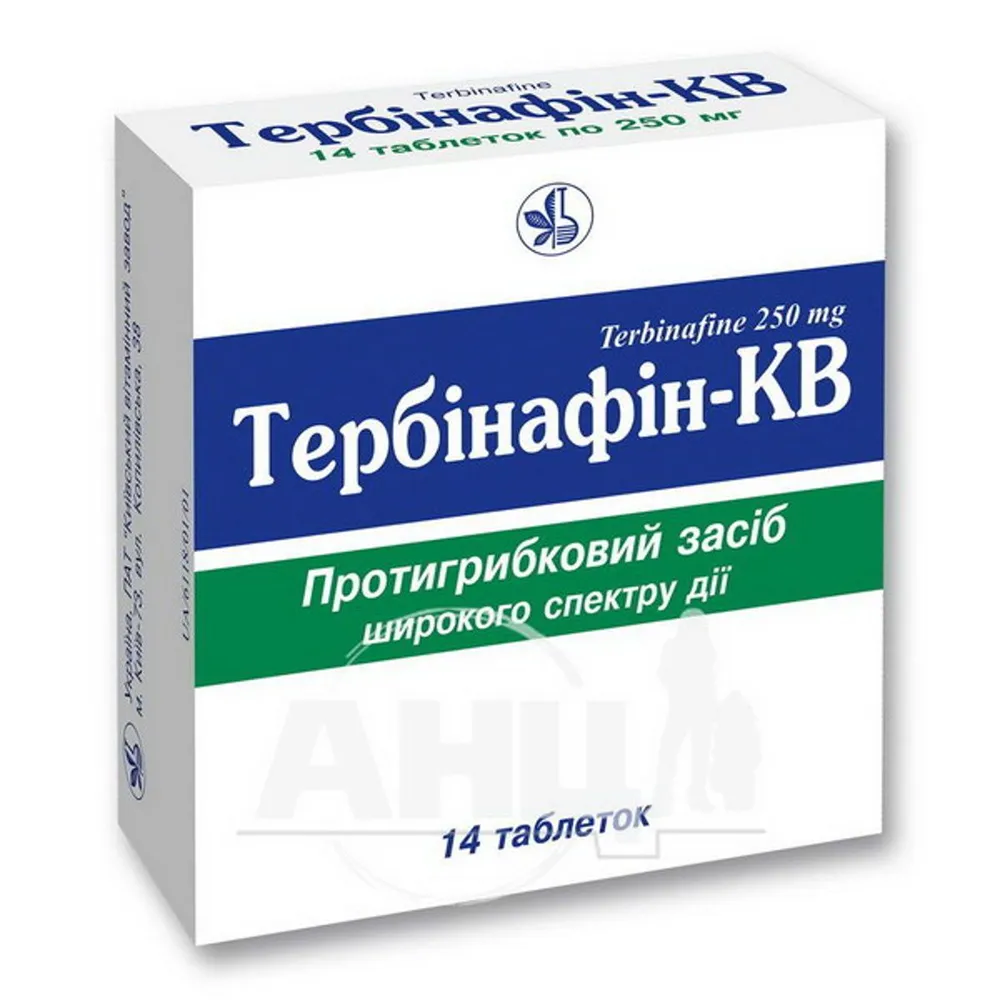
Table of Contents
INSTRUCTIONS FOR MEDICAL USE OF THE MEDICINAL PRODUCT TERBINAINE-KV (TERBINAFINE-KV)
Composition:
Active substance: terbinafine;
One tablet contains terbinafine hydrochloride equivalent to 250 mg of terbinafine;
Excipients: microcrystalline cellulose, maize starch, sodium starch glycolate (type A), colloidal anhydrous silicon dioxide, magnesium stearate, hypromellose (hydroxypropyl methylcellulose).
Pharmaceutical form. Tablets.
Main physicochemical properties: flat cylindrical tablets with bevelled edges and a score line, white or almost white in colour.
Pharmacotherapeutic group. Antifungal agents for dermatological use. Systemic antifungal agents. Terbinafine. ATC code D01B A02.
Pharmacological properties.
Pharmacodynamics.
Terbinafine is an allylamine with a broad spectrum of antifungal activity against skin, hair, and nail infections caused by dermatophytes such as Trichophyton (e.g., T. rubrum, T. mentagrophytes, T. verrucosum, T. tonsurans, T. violaceum), Microsporum (e.g., Microsporum canis), Epidermophyton floccosum, as well as yeast fungi of the genus Candida (e.g., Candida albicans) and Pityrosporum. At low concentrations, terbinafine exhibits fungicidal activity against dermatophytes, molds, and some dimorphic fungi. Activity against yeast fungi may be either fungicidal or fungistatic, depending on the species.
Terbinafine specifically targets an early stage of sterol biosynthesis in fungal cells. This leads to ergosterol deficiency and intracellular accumulation of squalene, resulting in fungal cell death. The action of terbinafine is mediated by inhibition of squalene epoxidase, an enzyme located in the fungal cell membrane. This enzyme does not belong to the cytochrome P450 system.
When administered orally, the drug accumulates in the skin at concentrations sufficient to exert fungicidal effects.
Pharmacokinetics.
After oral administration, terbinafine is well absorbed (>70%); the absolute bioavailability of terbinafine contained in the medicinal product Terbinafine-KV tablets, due to presystemic metabolism, is approximately 50%.
A single oral dose of 250 mg of terbinafine resulted in a mean peak plasma concentration of 1.3 µg/mL, reached 1.5 hours after administration. At steady state, compared to a single dose, the maximum concentration of terbinafine was on average 25% higher, and the plasma AUC increased 2.3-fold. Based on the increase in plasma AUC, the effective elimination half-life can be estimated at approximately 30 hours.
Food intake has a moderate effect on terbinafine bioavailability (an increase in AUC of less than 20%), but not to an extent requiring dose adjustment.
Terbinafine is highly bound to plasma proteins. It rapidly diffuses through the dermis and concentrates in the lipophilic stratum corneum.
Terbinafine is also excreted in sebum and thus achieves high concentrations in sebaceous follicles, hair, and sebum-rich skin. It has also been demonstrated that terbinafine distributes into nail plates within the first weeks of therapy.
Terbinafine is rapidly and extensively metabolized by at least seven CYP isoenzymes, with significant contributions from CYP2C9, CYP1A2, CYP3A4, CYP2C8, and CYP2C19.
The biotransformation of terbinafine produces metabolites that lack antifungal activity and are primarily excreted in urine. The elimination half-life of the drug is 17 hours. There is no evidence of drug accumulation in the body.
No significant changes in pharmacokinetics related to patient age have been observed; however, the elimination rate of the drug may be reduced in patients with impaired renal or hepatic function, leading to elevated blood levels of terbinafine.
The bioavailability of Terbinafine-KV is not affected by food intake.
Pharmacokinetic studies of single doses of the drug in patients with impaired renal function (creatinine clearance <50 mL/min) or pre-existing liver disease showed that the clearance of Terbinafine-KV may be reduced by approximately 50%.
Clinical characteristics.
Indications.
Fungal infections of skin and nails caused by Trichophyton (e.g. T. rubrum, T. mentagrophytes, T. verrucosum, T. violaceum), Microsporum canis, and Epidermophyton floccosum.
- Tinea infections (tinea of smooth skin, tinea cruris, and tinea pedis), when the site, severity, or extent of infection warrants oral therapy.
- Onychomycosis.
Contraindications.
Hypersensitivity to terbinafine or to any of the excipients of the medicinal product.
Interaction with other medicinal products and other forms of interaction.
Effect of other medicinal products on terbinafine
The plasma clearance of terbinafine may be increased by medicinal products that induce metabolism and may be decreased by medicinal products that inhibit cytochrome P450. If concomitant therapy with such medicinal products is necessary, the dosage of Terbinafine-KV should be adjusted accordingly.
MEDICINAL PRODUCTS THAT MAY INCREASE THE EFFECT OR PLASMA CONCENTRATIONS OF TERBINAFINE
Cimetidine reduced the clearance of terbinafine by 30%.
Fluconazole increased Cmax and AUC of terbinafine by 52% and 69%, respectively, due to inhibition of CYP2C9 and CYP3A4 enzymes. Similar increases in these parameters may occur when terbinafine is used concomitantly with other medicinal products that inhibit CYP2C9 and CYP3A4, such as ketoconazole and amiodarone.
MEDICINAL PRODUCTS THAT MAY DECREASE THE EFFECT OR PLASMA CONCENTRATIONS OF TERBINAFINE
Rifampicin increased the clearance of terbinafine by 100%.
Effect of terbinafine on other medicinal products
Terbinafine is known to have minimal potential to inhibit or enhance the clearance of medicinal products metabolized via the cytochrome P450 system (e.g., terfenadine, triazolam, tolbutamide, or oral contraceptives), except for those medicinal products metabolized via CYP2D6.
Terbinafine does not affect the clearance of antipyrine or digoxin.
No effect of terbinafine on the pharmacokinetics of fluconazole has been observed. In addition, no clinically significant interaction has been observed between terbinafine and concomitantly administered medicinal products with potential for interaction, such as co-trimoxazole (trimethoprim and sulfamethoxazole), zidovudine, or theophylline.
There have been some reported cases of menstrual cycle disturbances (intermenstrual bleeding and irregular menstrual cycles) in women taking Terbinafine-KV concurrently with oral contraceptives, although the frequency of these disturbances remains within the range of adverse reaction rates in patients taking oral contraceptives alone.
MEDICINAL PRODUCTS WHOSE EFFECT OR PLASMA CONCENTRATIONS MAY BE INCREASED BY TERBINAFINE
Terbinafine reduced the clearance of intravenously administered caffeine by 21%.
It is known that terbinafine inhibits CYP2D6-mediated metabolism. These data may be clinically relevant for patients receiving medicinal products metabolized via CYP2D6, such as tricyclic antidepressants (TCAs), beta-blockers, selective serotonin reuptake inhibitors (SSRIs), antiarrhythmic drugs (including class 1A, 1B, and 1C), and monoamine oxidase inhibitors (MAO-Is) of type B, particularly when the medicinal product used has a narrow therapeutic concentration range.
Terbinafine reduced the clearance of desipramine by 82%.
In patients who were rapid metabolizers of dextromethorphan (an antitussive agent and a marker substrate for CYP2D6), terbinafine increased the urinary metabolic ratio of dextromethorphan/dextrorphan on average by 16 to 97 times.
Thus, the use of terbinafine may convert the metabolic status of rapid CYP2D6 metabolizers into that of poor metabolizers.
MEDICINAL PRODUCTS WHOSE EFFECT OR PLASMA CONCENTRATIONS MAY BE DECREASED BY TERBINAFINE
Terbinafine increased the clearance of cyclosporine by 15%.
Rare changes in International Normalized Ratio (INR) and/or prothrombin time have been reported in patients receiving terbinafine concomitantly with warfarin.
Special precautions for use.
Liver function
Terbinafine-KV tablets are not recommended for patients with chronic or active liver disease. Prior to prescribing Terbinafine-KV tablets, any pre-existing liver disorders must be evaluated.
Hepatotoxicity may occur in patients both with and without pre-existing liver disease; therefore, periodic monitoring of liver function (after 4–6 weeks of treatment) is recommended. Treatment with Terbinafine-KV tablets should be discontinued immediately if liver function tests show increased activity.
In patients treated with terbinafine, very rare cases of severe hepatic failure (some of which were fatal or required liver transplantation) have been reported. In most cases of liver failure, patients had serious underlying systemic diseases, and the causal relationship with terbinafine use was uncertain.
Patients taking Terbinafine-KV should be advised to immediately inform their physician about any signs or symptoms suggesting impaired liver function, such as pruritus, unexplained persistent nausea, loss of appetite, anorexia, jaundice, vomiting, increased fatigue, right upper abdominal pain, dark urine, or pale stools. Patients experiencing such symptoms should discontinue oral terbinafine immediately, and liver function should be evaluated promptly.
Taste disturbances
Disturbances of taste and loss of taste have been reported during treatment with this medicinal product. These may lead to reduced appetite, weight loss, anxiety, and depressive symptoms. If taste disturbances occur, the drug should be discontinued.
Smell disturbances
Disturbances and loss of smell have also been reported. These disturbances may resolve after discontinuation of therapy, but may also be prolonged (more than 1 year) or permanent.
If smell disturbance occurs, treatment with the medicinal product should be discontinued.
Depressive symptoms
Depressive symptoms may occur during treatment, which may require medical intervention.
Cutaneous effects
Very rare cases of serious skin reactions (e.g., Stevens-Johnson syndrome, toxic epidermal necrolysis) have been reported in patients receiving Terbinafine-KV tablets. If progressive skin rashes occur, treatment with Terbinafine-KV tablets should be discontinued.
Terbinafine-KV should be used with caution in patients with psoriasis, as very rare cases of psoriasis exacerbation have been reported.
Haematological effects
Very rare cases of blood disorders (neutropenia, agranulocytosis, thrombocytopenia, pancytopenia) have been reported in patients receiving terbinafine tablets. The cause of any blood abnormalities should be evaluated, and a possible change in treatment regimen, including discontinuation of Terbinafine-KV tablets, should be considered.
Pharmacokinetic studies of single-dose terbinafine in patients with liver disease have shown that drug clearance may be reduced by approximately 50%.
Renal function
The use of Terbinafine-KV tablets in patients with impaired renal function (creatinine clearance less than 50 mL/min or serum creatinine levels greater than 300 µmol/L) has not been adequately studied and is therefore not recommended.
Other
Terbinafine-KV should be used with caution in patients with systemic lupus erythematosus, as very rare cases of lupus exacerbation have been reported.
Use during pregnancy or breastfeeding.
Clinical experience with the use of terbinafine in pregnant women is very limited. Therefore, Terbinafine-KV should not be used during pregnancy except when the patient's clinical condition requires oral terbinafine treatment and the expected benefit to the mother outweighs any potential risk to the fetus.
Terbinafine passes into breast milk; therefore, women who are breastfeeding should not receive treatment with Terbinafine-KV.
Ability to affect reaction speed when driving or operating machinery.
There are no data on the effect of Terbinafine-KV on the ability to drive or operate machinery. Patients who experience dizziness as an adverse reaction to the medicinal product should avoid driving vehicles or operating machinery.
Dosage and Administration
The medicinal product is intended for oral use.
For adults, the recommended dose is one 250 mg tablet once daily.
The duration of treatment depends on the type and severity of the infection.
Skin Infections
Recommended treatment duration:
- Tinea pedis (interdigital, plantar/moccasin type) – 2–6 weeks;
- Tinea corporis – 4 weeks;
- Tinea cruris – 2 to 4 weeks.
Complete resolution of infection symptoms may occur only several weeks after laboratory tests confirm the absence of pathogens.
Scalp Infections
Recommended treatment duration for fungal infections of the scalp – 4 weeks.
Fungal infections of the scalp occur predominantly in children.
Onychomycosis
Treatment duration for most patients ranges from 6 weeks to 3 months. Treatment periods shorter than 3 months may be sufficient for patients with fingernail infections, toenail infections other than the great toe, or younger patients. For infections of toenails, a treatment duration of 3 months is usually adequate, although some patients may require 6 months or longer. Patients who need prolonged treatment can be identified by a reduced nail growth rate during the first weeks of therapy.
Complete resolution of infection symptoms may occur only several weeks after laboratory tests confirm the absence of pathogens.
Special Populations
Patients with Hepatic Impairment
Terbinafine-KV tablets are not recommended for patients with chronic or active liver disease.
Patients with Renal Impairment
The use of Terbinafine-KV tablets in patients with renal impairment has not been adequately studied and is therefore not recommended in this patient group.
Children
The adverse event profile of terbinafine in children has been found to be similar to that in adults. There is no evidence of any new, unusual, or more severe reactions compared to those observed in adult patients. Currently, information on the use of terbinafine in children is limited, and therefore its use is not recommended in this age group.
Elderly Patients
There is no evidence that dosage adjustment is required in elderly patients or that they experience adverse reactions different from younger patients. However, in this age group, possible hepatic or renal impairment should be taken into account when administering the medicinal product.
Children
Data on the use of the medicinal product in children are limited; therefore, its use is not recommended in this age group.
Overdose
Several cases of overdose (oral intake up to 5 g of terbinafine) have been reported.
Symptoms: headache, nausea, epigastric pain, and dizziness.
Treatment: elimination of the drug, primarily with activated charcoal, and if necessary, symptomatic and supportive therapy.
Adverse reactions.
Adverse reactions are usually mild to moderate in severity and transient in nature.
Blood and lymphatic system disorders: neutropenia, agranulocytosis, thrombocytopenia, anemia, pancytopenia.
Immune system disorders: anaphylactoid reactions (including Quincke's edema), cutaneous and systemic lupus erythematosus, anaphylactic reaction, serum sickness-like symptoms, hypersensitivity reactions.
Metabolism and nutrition disorders: decreased appetite.
Psychiatric disorders: anxiety and depressive symptoms secondary to taste disturbances.
Nervous system disorders: headache; paresthesia, hypoesthesia, dizziness; anosmia, including persistent anosmia, hyposmia; taste disturbances, including loss of taste, which usually resolves within several weeks after discontinuation of the drug. Very rarely, prolonged taste disturbance has been reported, sometimes leading to reduced food intake and significant weight loss.
Eye disorders: blurred vision, decreased visual acuity.
Ear and labyrinth disorders: vertigo, hearing loss, hearing impairment, tinnitus.
Vascular disorders: vasculitis.
Gastrointestinal disorders: gastrointestinal symptoms (feeling of stomach fullness, dyspepsia, nausea, abdominal pain, diarrhea); pancreatitis.
Hepatobiliary disorders: cases of serious liver function abnormalities, including hepatic failure, elevated liver enzyme levels, jaundice, cholestasis, and hepatitis. If liver function impairment develops, treatment with Terbinafine-KV must be discontinued. Very rare cases of severe hepatic failure (some with fatal outcomes or requiring liver transplantation) have been reported. In most cases of hepatic failure, patients had serious underlying systemic diseases, and the causal relationship with terbinafine use was questionable.
Skin and subcutaneous tissue disorders: mild skin reactions (rash, urticaria); rash with eosinophilia and systemic symptoms, exfoliative and bullous dermatitis; serious skin reactions (e.g., erythema multiforme, Stevens-Johnson syndrome, toxic epidermal necrolysis); photosensitivity (e.g., photodermatosis, photosensitization reaction, polymorphic photodermatosis); alopecia. Treatment with Terbinafine-KV must be discontinued if progressive skin rashes occur; psoriasis-like rash or exacerbation of psoriasis (acute generalized exanthematous pustulosis).
Musculoskeletal and connective tissue disorders: musculoskeletal reactions (arthralgia, myalgia); rhabdomyolysis.
General disorders: malaise; fatigue; influenza-like illness, pyrexia.
Laboratory test results: elevated blood creatine phosphokinase levels, changes in prothrombin time (prolongation, shortening) in patients who concurrently took warfarin.
Shelf life. 4 years.
Storage conditions.
Store in the original packaging at a temperature not exceeding 25 °C.
Keep out of reach of children.
Packaging.
7 tablets per blister; 2 blisters per pack.
Prescription status. Prescription only.
Manufacturer. JSC "KYIV VITAMIN PLANT".
Manufacturer's address and location of business activity.
38 Kopilivska Street, Kyiv, 04073, Ukraine.
Web-site: www.vitamin.com.ua.
INSTRUCTIONS
for medical use of medicinal product
TERBINAFINE-KV
(TERBINAFINE-KV)
Composition:
Active ingredient: terbinafine;
1 tablet contains terbinafine hydrochloride equivalent to 250 mg of terbinafine;
Excipients: microcrystalline cellulose, corn starch, sodium starch glycolate (type A), colloidal anhydrous silicon dioxide, magnesium stearate, hypromellose (hydroxypropylmethylcellulose).
Pharmaceutical form. Tablets.
Main physicochemical properties: flat cylindrical tablets with beveled edges and a score line, white or almost white in color.
Pharmacotherapeutic group. Antifungal agents for dermatological use. Systemic antifungal agents. Terbinafine. ATC code D01BA02.
Pharmacological properties.
Pharmacodynamics.
Terbinafine is an allylamine with a broad spectrum of antifungal activity against infections of the skin, hair, and nails caused by dermatophytes such as Trichophyton (e.g., T. rubrum, T. mentagrophytes, T. verrucosum, T. tonsurans, T. violaceum), Microsporum (e.g., Microsporum canis), Epidermophyton floccosum, and yeast fungi of the genus Candida (e.g., Candida albicans) and Pityrosporum. At low concentrations, terbinafine exhibits fungicidal activity against dermatophytes, molds, and some dimorphic fungi. Activity against yeast fungi may be fungicidal or fungistatic depending on the species.
Terbinafine specifically inhibits an early stage of sterol biosynthesis in fungal cells.
This leads to ergosterol deficiency and intracellular accumulation of squalene, resulting in fungal cell death. Terbinafine acts by inhibiting the enzyme squalene epoxidase in the fungal cell membrane. This enzyme does not belong to the cytochrome P450 system.
After oral administration, the drug accumulates in the skin at concentrations providing fungicidal activity.
Pharmacokinetics.
After oral administration, terbinafine is well absorbed (>70%); the absolute bioavailability of terbinafine in Terbinafine-KV tablets, due to presystemic metabolism, is approximately 50%.
A single oral dose of 250 mg terbinafine resulted in mean peak plasma concentrations of 1.3 µg/mL reached within 1.5 hours after administration. At steady state, compared to a single dose, the maximum concentration of terbinafine was on average 25% higher, and plasma AUC increased 2.3-fold. Based on the increased plasma AUC, the effective half-life is estimated at approximately 30 hours.
Food intake has a moderate effect on terbinafine bioavailability (increase in AUC by less than 20%), but not sufficient to require dose adjustment.
Terbinafine is highly bound to plasma proteins. It rapidly diffuses through the dermis and concentrates in the lipophilic stratum corneum.
Terbinafine is also excreted in sebum and thus reaches high concentrations in hair follicles, hair, and sebum-rich skin. It has also been shown to distribute into nail plates within the first weeks of therapy. Terbinafine is rapidly and extensively metabolized by at least seven CYP isoenzymes, with significant contributions from CYP2C9, CYP1A2, CYP3A4, CYP2C8, and CYP2C19.
Due to biotransformation, metabolites without antifungal activity are formed and are primarily excreted in urine. The elimination half-life of the drug is 17 hours. There is no evidence of accumulation in the body.
No age-related changes in pharmacokinetics have been observed, but elimination may be reduced in patients with renal or hepatic impairment, leading to increased blood levels of terbinafine.
The bioavailability of Terbinafine-KV is not affected by food intake.
Pharmacokinetic studies of single doses in patients with impaired renal function (creatinine clearance <50 mL/min) or pre-existing liver disease showed that the clearance of Terbinafine-KV may be reduced by approximately 50%.
Clinical characteristics.
Indications.
Fungal infections of the skin and nails caused by Trichophyton (e.g., T. rubrum, T. mentagrophytes, T. verrucosum, T. violaceum), Microsporum canis, and Epidermophyton floccosum.
- Dermatophytosis (tinea of smooth skin, tinea cruris, and tinea pedis) when the location, severity, or extent of infection warrants systemic therapy.
- Onychomycosis.
Contraindications.
Hypersensitivity to terbinafine or any excipients of the drug.
Interaction with other medicinal products and other forms of interaction.
Effect of other medicinal products on terbinafine
Plasma clearance of terbinafine may be increased by drugs inducing metabolism and decreased by drugs inhibiting cytochrome P450. If concomitant therapy with such drugs is necessary, the dosage of Terbinafine-KV should be adjusted accordingly.
Medicinal products that may increase the effect or plasma concentrations of terbinafine
Cimetidine reduced terbinafine clearance by 30%.
Fluconazole increased Cmax and AUC of terbinafine by 52% and 69%, respectively, due to inhibition of CYP2C9 and CYP3A4 enzymes. Similar increases may occur when terbinafine is used concomitantly with drugs inhibiting CYP2C9 and CYP3A4, such as ketoconazole and amiodarone.
Medicinal products that may decrease the effect or plasma concentrations of terbinafine
Rifampicin increased terbinafine clearance by 100%.
Effect of terbinafine on other medicinal products
Terbinafine is known to have minimal potential to inhibit or enhance the clearance of drugs metabolized by the cytochrome P450 system (e.g., terfenadine, triazolam, tolbutamide, or oral contraceptives), except for those metabolized by CYP2D6.
Terbinafine does not affect the clearance of antipyrine or digoxin.
No effect of terbinafine on the pharmacokinetics of fluconazole was observed. Additionally, no clinically significant interaction was observed between terbinafine and co-administered drugs with potential for interaction, such as co-trimoxazole (trimethoprim and sulfamethoxazole), zidovudine, or theophylline.
Some cases of menstrual cycle disturbances (intermenstrual bleeding and irregular menstrual cycles) have been reported in women taking Terbinafine-KV concurrently with oral contraceptives, although the frequency of these events remains within the range of adverse reactions reported in women taking oral contraceptives alone.
Medicinal products whose effect or plasma concentrations may be increased by terbinafine
Terbinafine reduced intravenous caffeine clearance by 21%.
Terbinafine is known to inhibit CYP2D6-mediated metabolism. These data may be clinically relevant for patients receiving drugs metabolized by CYP2D6, such as tricyclic antidepressants (TCAs), beta-blockers, selective serotonin reuptake inhibitors (SSRIs), antiarrhythmics (including class 1A, 1B, and 1C), and monoamine oxidase inhibitors (MAO-Is) type B, especially when the drug has a narrow therapeutic index.
Terbinafine reduced desipramine clearance by 82%.
In patients who are rapid metabolizers of dextromethorphan (an antitussive and CYP2D6 marker substrate), terbinafine increased the urinary dextromethorphan/dextrorphan metabolic ratio by 16 to 97 times on average.
Thus, terbinafine use may convert rapid CYP2D6 metabolizers into a phenotype resembling slow metabolizers.
Medicinal products whose effect or plasma concentrations may be decreased by terbinafine
Terbinafine increased cyclosporine clearance by 15%.
Rare changes in International Normalized Ratio (INR) and/or prothrombin time have been reported in patients receiving terbinafine concurrently with warfarin.
Special precautions.
Hepatic function
Terbinafine-KV tablets are not recommended for patients with chronic or active liver disease. Pre-existing liver conditions should be evaluated before prescribing Terbinafine-KV tablets.
Hepatotoxicity may occur in patients with or without prior liver disease; therefore, periodic monitoring of liver function (every 4–6 weeks during treatment) is recommended. Treatment with Terbinafine-KV tablets should be discontinued immediately if liver function tests show elevated activity.
Very rare cases of severe hepatic failure (some fatal or requiring liver transplantation) have been reported in patients taking terbinafine. In most cases, patients had serious underlying systemic diseases, and the causal link with terbinafine intake was questionable.
Patients taking Terbinafine-KV should be advised to immediately report any signs or symptoms suggestive of liver dysfunction, such as pruritus, unexplained persistent nausea, decreased appetite, anorexia, jaundice, vomiting, increased fatigue, right upper abdominal pain, dark urine, or pale stools. Patients with these symptoms should discontinue oral terbinafine immediately, and liver function should be assessed promptly.
Taste disturbances
Taste disturbances and loss of taste have been reported during treatment. These may lead to reduced appetite, weight loss, anxiety, and depressive symptoms. If taste disturbances occur, the drug should be discontinued.
Olfactory disturbances
Disturbances and loss of smell have also been reported. These may resolve after discontinuation of therapy but may also be prolonged (more than 1 year) or permanent.
If olfactory disturbance occurs, the drug should be discontinued.
Depressive symptoms
Depressive symptoms may occur during treatment and may require medical management.
Cutaneous effects
Very rare cases of serious skin reactions (e.g., Stevens-Johnson syndrome, toxic epidermal necrolysis) have been reported in patients receiving Terbinafine-KV tablets. If progressive skin rash develops, treatment with Terbinafine-KV tablets should be discontinued.
Terbinafine-KV should be used with caution in patients with psoriasis, as very rare cases of psoriasis exacerbation have been reported.
Hematological effects
Very rare cases of blood disorders (neutropenia, agranulocytosis, thrombocytopenia, pancytopenia) have been reported in patients receiving terbinafine tablets. The cause of any blood abnormality should be evaluated, and possible changes in treatment regimen, including discontinuation of Terbinafine-KV tablets, should be considered.
Pharmacokinetic studies of single-dose terbinafine in patients with liver disease showed that drug clearance may be reduced by approximately 50%.
Renal function
The use of Terbinafine-KV tablets in patients with renal impairment (creatinine clearance <50 mL/min or serum creatinine >300 µmol/L) has not been adequately studied and is therefore not recommended.
Other
Terbinafine-KV should be used with caution in patients with lupus erythematosus, as very rare cases of lupus exacerbation have been reported.
Use during pregnancy or breastfeeding.
Clinical experience with terbinafine use in pregnant women is very limited; therefore, Terbinafine-KV should not be used during pregnancy except when the woman's clinical condition requires systemic terbinafine therapy and the expected benefit to the mother outweighs any potential risk to the fetus.
Terbinafine passes into breast milk; therefore, breastfeeding women should not receive treatment with Terbinafine-KV.
Ability to affect reaction rate when driving or operating machinery.
There is no data on the effect of Terbinafine-KV on the ability to drive or operate machinery. Patients who experience dizziness as an adverse effect should avoid driving or operating machinery.
Method of administration and dosage.
The drug is intended for oral use.
Adults: 1 tablet of 250 mg once daily.
Duration of treatment depends on the nature and severity of the condition.
Skin infections
Recommended treatment duration:
- Tinea pedis (interdigital, plantar/"moccasin" type) – 2–6 weeks;
- Tinea corporis – 4 weeks;
- Tinea cruris – 2 to 4 weeks.
Complete resolution of infection symptoms may occur only several weeks after laboratory confirmation of pathogen eradication.
Scalp infections
Recommended treatment duration for fungal scalp infections – 4 weeks.
Fungal scalp infections occur predominantly in children.
Onychomycosis
Treatment duration for most patients – 6 weeks to 3 months. Treatment periods shorter than 3 months may be sufficient for patients with fingernail involvement, toenails other than the big toe, or younger patients. For toenail infections, 3 months of treatment is generally sufficient, although some patients may require 6 months or longer. Patients requiring longer treatment can be identified by slow nail growth during the first weeks of therapy.
Complete resolution of infection symptoms may occur only several weeks after laboratory confirmation of pathogen eradication.
Special populations
Patients with hepatic impairment
Terbinafine-KV tablets are not recommended for patients with chronic or active liver disease.
Patients with renal impairment
The use of Terbinafine-KV tablets in patients with renal impairment has not been adequately studied and is therefore not recommended.
Children
The adverse event profile of terbinafine in children is similar to that in adults. There is no evidence of new, unusual, or more severe reactions compared to those observed in adult patients. However, data on terbinafine use in children is limited; therefore, its use is not recommended in this age group.
Elderly patients
There is no evidence that dosage adjustment is required or that adverse reactions differ from those in younger patients. However, impaired hepatic or renal function should be considered when using the drug in this age group.
Children.
Data on the use of the drug in children are limited; therefore, its use is not recommended in this age group.
Overdose.
Several cases of overdose (oral intake up to 5 g of terbinafine) have been reported.
Symptoms: headache, nausea, epigastric pain, dizziness.
Treatment: elimination of the drug, primarily with activated charcoal, and if necessary, symptomatic and supportive therapy.
Adverse reactions.
Adverse reactions are usually mild to moderate in severity and transient in nature.
Blood and lymphatic system disorders: neutropenia, agranulocytosis, thrombocytopenia, anemia, pancytopenia.
Immune system disorders: anaphylactoid reactions (including Quincke's edema), cutaneous and systemic lupus erythematosus, anaphylactic reaction, serum sickness-like symptoms, hypersensitivity reactions.
Metabolism and nutrition disorders: decreased appetite.
Psychiatric disorders: anxiety and depressive symptoms secondary to taste disturbances.
Nervous system disorders: headache; paresthesia, hypoesthesia, dizziness; anosmia, including persistent anosmia, hyposmia; taste disturbances, including loss of taste, which usually resolves within several weeks after discontinuation of the drug. Very rarely, prolonged taste disturbance has been reported, sometimes leading to reduced food intake and significant weight loss.
Eye disorders: blurred vision, decreased visual acuity.
Ear and labyrinth disorders: vertigo, hearing loss, hearing impairment, tinnitus.
Vascular disorders: vasculitis.
Gastrointestinal disorders: gastrointestinal symptoms (feeling of stomach fullness, dyspepsia, nausea, abdominal pain, diarrhea); pancreatitis.
Hepatobiliary disorders: cases of serious liver function abnormalities, including hepatic failure, elevated liver enzyme levels, jaundice, cholestasis, and hepatitis. If liver function impairment develops, treatment with Terbinafine-KV must be discontinued. Very rare cases of severe hepatic failure (some with fatal outcomes or requiring liver transplantation) have been reported. In most cases of hepatic failure, patients had serious underlying systemic diseases, and the causal relationship with terbinafine use was questionable.
Skin and subcutaneous tissue disorders: mild skin reactions (rash, urticaria); rash with eosinophilia and systemic symptoms, exfoliative and bullous dermatitis; serious skin reactions (e.g., erythema multiforme, Stevens-Johnson syndrome, toxic epidermal necrolysis); photosensitivity (e.g., photodermatosis, photosensitization reaction, polymorphic photodermatosis); alopecia. Treatment with Terbinafine-KV must be discontinued if progressive skin rashes occur; psoriasis-like rash or exacerbation of psoriasis (acute generalized exanthematous pustulosis).
Musculoskeletal and connective tissue disorders: musculoskeletal reactions (arthralgia, myalgia); rhabdomyolysis.
General disorders: malaise; fatigue; influenza-like illness, pyrexia.
Laboratory test results: elevated blood creatine phosphokinase levels, changes in prothrombin time (prolongation, shortening) in patients who concurrently took warfarin.
Shelf life. 4 years.
Storage conditions.
Store in the original packaging at a temperature not exceeding 25 °C.
Keep out of reach of children.
Packaging.
7 tablets per blister; 2 blisters per pack.
Prescription status. Prescription only.
Manufacturer. JSC "KYIV VITAMIN PLANT".
Manufacturer's address and location of business activity.
38 Kopilivska Street, Kyiv, 04073, Ukraine.
Web-site: www.vitamin.com.ua.