Theotard
Ukraine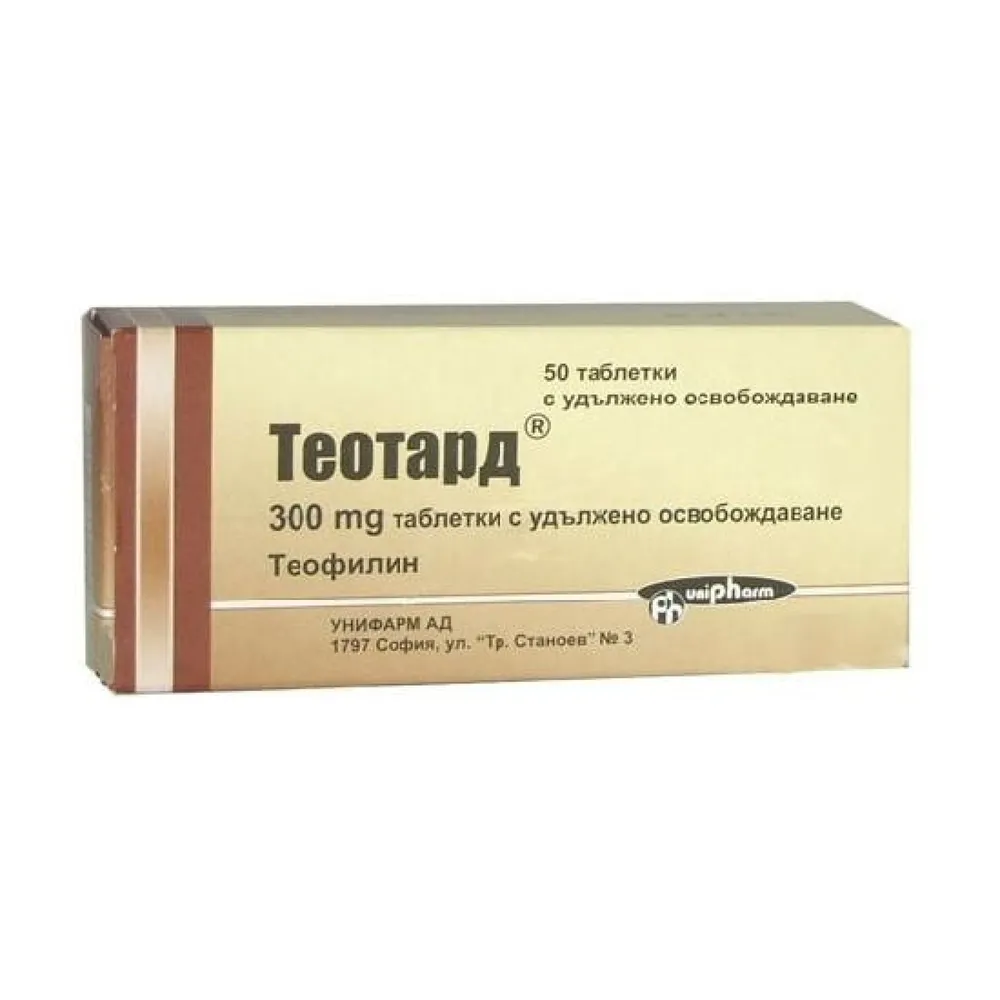
Table of Contents
INSTRUCTIONS FOR MEDICAL USE OF THE MEDICINAL PRODUCT TEOTARD (TEOTARD)
Composition:
Active substance: theophylline
One prolonged-release tablet contains 300 mg of theophylline;
Excipients: methacrylic acid copolymer dispersion, polyacrylate dispersion, microcrystalline cellulose, talc, magnesium stearate.
Medicinal form. Prolonged-release tablets.
Main physicochemical characteristics: white, round tablets of regular shape, 10 mm in diameter, with beveled edge and score line on one side.
Pharmacotherapeutic group.
Other drugs for systemic use in obstructive airway diseases. Xanthines. ATC code R03D A04.
Pharmacological properties.
Pharmacodynamics.
The mechanism of action of theophylline includes:
- inhibition of the enzyme phosphodiesterase, resulting in increased levels of cAMP;
- antagonism at adenosine receptors;
- inhibition of intracellular calcium release;
- stimulation of catecholamine release;
- anti-inflammatory action achieved by suppressing the activity of T-lymphocytes, eosinophils, and neutrophils.
Theophylline has two distinct effects on the airways of patients with reversible obstructive airway diseases: relaxation of smooth muscle (bronchodilation) and suppression of airway responsiveness to stimuli (non-bronchodilator anti-inflammatory prophylactic effect).
Pharmacokinetics.
The pharmacokinetics of theophylline varies within quite broad limits under the influence of various factors such as sex, age, and body weight. In addition, certain concomitant diseases or deviations from normal physiological processes in the body, as well as concomitant use with other medicinal products, can significantly alter the pharmacokinetic characteristics of theophylline.
Absorption. Theophylline is rapidly and completely absorbed after oral administration in the form of solutions or solid dosage forms. After a single dose of 5 mg/kg in adults, the mean peak serum concentration is approximately 10 µg/mL (range 5–12 µg/mL), reached about 5 hours after administration. Administration of theophylline in solid dosage forms with food or concomitant use with antacids does not cause clinically significant changes in its absorption.
Distribution. Theophylline is approximately 60% bound to plasma proteins (mainly albumin). Unbound theophylline distributes into body fluids and distributes poorly into body fats. The apparent volume of distribution is approximately 0.45 L/kg (range 0.3–0.7 L/kg).
Theophylline freely crosses the placenta, enters breast milk, and penetrates into cerebrospinal fluid. Its concentration in saliva is approximately equal to that of unbound serum theophylline. An increased volume of distribution of theophylline is mainly due to decreased binding to serum proteins and is observed in premature infants, patients with liver cirrhosis, uncorrected acidemia, adult patients, and pregnant women in the third trimester of pregnancy. In some cases, signs of intoxication may occur at total (bound + unbound) serum theophylline concentrations within the therapeutic range (10–20 µg/mL), due to elevated concentrations of pharmacologically active, unbound theophylline.
Similarly, in patients with reduced theophylline protein binding, subtherapeutic total drug concentrations may be observed, while the concentration of pharmacologically active unbound theophylline remains within the therapeutic range. Measuring only total serum theophylline concentration may lead to inappropriate and potentially dangerous dose escalation. The concentration of unbound serum theophylline should be maintained within the range of 5–12 µg/mL.
Metabolism. After oral administration, theophylline does not undergo significant first-pass hepatic metabolism. In adults and children aged one year and older, approximately 90% of the dose is metabolized in the liver. It undergoes biotransformation via demethylation to 1-methylxanthine and 3-methylxanthine, and hydroxylation to 1,3-dimethyluric acid.
1-Methylxanthine is hydroxylated by xanthine oxidase to 1-methyluric acid. Approximately 6% of the theophylline dose is N-demethylated to caffeine. N-demethylation of theophylline to 3-methylxanthine is catalyzed by cytochrome P450 2E1, while P450 3A3 catalyzes hydroxylation to 1,3-dimethyluric acid. N-demethylation to 1-methylxanthine is likely catalyzed by either cytochrome P450 1A2 or a similar cytochrome.
In neonates, the N-demethylation pathway is absent, and the hydroxylation pathway is only poorly developed. The activity of these two metabolic pathways gradually increases, reaching maximum levels after one year of age.
Caffeine and 3-methylxanthine are active metabolites of theophylline. Methylxanthine has approximately 1/10 the pharmacological activity of theophylline, and serum concentrations in adults with normal renal function are <1 µg/mL. In patients with renal disease, 3-methylxanthine may accumulate to concentrations approximately equal to those of unchanged theophylline. Caffeine concentrations are always negligible, regardless of renal function. In neonates, caffeine may accumulate to concentrations approximately equal to those of unchanged theophylline and thus contribute to the pharmacological effect.
Excretion. In neonates, approximately 50% of the administered theophylline dose is excreted unchanged in urine. After the first three months of life, approximately 10% of the administered dose is excreted unchanged in urine. The remainder is excreted in urine mainly as 1,3-dimethyluric acid (35–40%), 1-methyluric acid (20–25%), and 3-methylxanthine (15–20%). Since only a small fraction of theophylline is excreted unchanged and its active metabolites (caffeine, 3-methylxanthine) do not accumulate to clinically significant levels in the presence of renal disease, dose reduction is not necessary in adults and children aged 3 months and older. Conversely, in neonates, due to the high proportion of unchanged theophylline and caffeine excreted in urine, careful dose reduction and frequent monitoring of serum levels are required, especially in neonates with impaired renal function.
Clinical characteristics.
Indications.
Symptomatic treatment and prevention of bronchial asthma, chronic bronchitis, and pulmonary emphysema.
Contraindications.
Hypersensitivity to theophylline, other xanthine derivatives (caffeine, pentoxifylline, theobromine), or to any of the excipients; epilepsy; glaucoma; porphyria; concomitant use of theophylline and ephedrine in children; acute phase of myocardial infarction, acute cardiac arrhythmias (acute tachyarrhythmia), severe arterial hypertension, hyperthyroidism, peptic ulcer of the stomach and duodenum in the stage of exacerbation, severe hepatic impairment.
Interaction with other medicinal products and other forms of interactions.
- Barbiturates, carbamazepine, phenytoin, primidone, aminoglutethimide, magnesium hydroxide, isoproterenol, lithium, moracizine, rifampicin, ritonavir, and sulfinpyrazone increase theophylline clearance, thus higher doses of theophylline may be required.
- Reduced theophylline clearance, and consequently dose reduction, may be necessary when using: allopurinol, probenecid, carbimazole, ranitidine, cimetidine, fluoroquinolones (ofloxacin, norfloxacin; when using ciprofloxacin, the dose should be reduced by at least 60%, and by 30% with enoxacin), macrolides (clarithromycin, erythromycin), calcium channel blockers (diltiazem, verapamil), disulfiram, fluconazole, interferon, isoniazid, methotrexate, mexiletine, nizatidine, propafenone, propranolol, oxpentifylline, pentoxifylline, phenylbutazone, furosemide, imipenem, lincomycin, paracetamol, tacrine, ticlopidine, influenza vaccine, thiabendazole, viloxazine hydrochloride, and oral contraceptives. Combination of theophylline with fluvoxamine should be avoided. If this combination cannot be avoided, patients should take half the dose of theophylline and plasma theophylline concentrations should be closely monitored.
- Concomitant use of theophylline with beta-blockers may antagonize its bronchodilating effect; with ketamine – may reduce the seizure threshold; with doxapram – may cause stimulation of the central nervous system.
- Theophylline may enhance the effects of diuretics and reserpine.
- Theophylline may reduce the effectiveness of adenosine, lithium carbonate, and beta-receptor antagonists.
- Combinations of theophylline with adenosine, benzodiazepines, halothane, and lomustine should be used with particular caution. Anesthesia with halothane may cause serious cardiac arrhythmias in patients receiving theophylline.
- There is conflicting evidence regarding potentiation of theophylline effects during influenza-like illnesses.
- Concomitant administration of Theotard and large amounts of food and beverages containing methylxanthines (coffee, tea, cocoa, chocolate, cola, and similar tonic beverages), medicinal products containing xanthine derivatives (caffeine, theobromine, pentoxifylline), alpha- and beta-adrenergic agonists (selective and non-selective), and glucagon should be avoided due to the potential for additive effects of theophylline.
- Xanthines may potentiate hypokalemia induced by beta-2 agonists, corticosteroids, diuretics, and hypoxia. This is particularly relevant in hospitalized patients with severe asthma and necessitates monitoring of serum potassium levels.
- Plasma concentrations of theophylline may be decreased when co-administered with herbal products containing St. John's wort (Hypericum perforatum).
Special precautions for use.
- Theotard should be prescribed with caution and only if urgently needed in patients with unstable angina, cardiac conditions in which tachyarrhythmia may occur, hypertrophic obstructive cardiomyopathy, renal and hepatic impairment, patients with a history of peptic ulcer disease, and patients aged 60 years and older.
- The use of theophylline in patients with severe atherosclerosis or sepsis may be considered with caution under physician supervision if there are clear indications for theophylline therapy.
- Theophylline use should be limited in patients with gastroesophageal reflux due to its effect on smooth muscles of the cardioesophageal sphincter, which may worsen gastroesophageal reflux by promoting reflux.
- Smoking and alcohol consumption may increase theophylline clearance, thereby reducing its therapeutic effect and necessitating higher doses.
- Careful monitoring and dose reduction are required when treating patients with heart failure, chronic alcoholism, impaired liver function (especially cirrhosis), hypoxemia, persistently elevated body temperature, pneumonia, or viral infections (particularly influenza), due to the potential for reduced theophylline clearance. Plasma theophylline levels exceeding the normal range should be closely monitored.
- Close monitoring is necessary when treating patients with peptic ulcer disease, cardiac arrhythmias, severe arterial hypertension, other cardiovascular disorders, hyperthyroidism, or acute febrile conditions.
- Theophylline should be avoided in patients with a history of seizures; alternative treatments should be considered.
- Increased caution is required when administering the drug to patients suffering from insomnia and in elderly men with a history of benign prostatic hyperplasia due to the risk of urinary retention.
- If aminophylline (theophylline-ethylenediamine) must be used in patients previously treated with Theotard, plasma theophylline levels should be re-monitored.
- Due to the inability to guarantee bioequivalence between different sustained-release theophylline formulations, switching from Theotard sustained-release tablets to another sustained-release xanthine preparation should be done only after clinical reassessment and dose re-titration.
- Hypokalemia induced by treatment with beta-agonists, corticosteroids, diuretics, or hypoxia may be potentiated by xanthines. This is particularly relevant in hospitalized patients with severe asthma and necessitates monitoring of serum potassium levels.
- Theophylline may alter certain laboratory parameters: it may increase levels of free fatty acids and urinary catecholamines.
Use during pregnancy or breastfeeding.
Pregnancy. Theophylline crosses the placental barrier. Adequate data from well-controlled studies in pregnant women are lacking. The use of theophylline during pregnancy is not recommended due to unproven safety.
Theophylline may be used during pregnancy only if there are strict medical indications, with careful dose calculation and continuous monitoring of the mother and fetus, as theophylline may suppress uterine contractions in late pregnancy.
Breastfeeding. Theophylline is excreted in breast milk and may cause increased irritability in the newborn. Use in breastfeeding mothers is permitted only if the expected benefit to the mother outweighs the potential risk to the infant.
Ability to influence reaction speed when driving or operating machinery.
Some adverse reactions (e.g., dizziness) may affect the ability to drive or operate machinery. Patients should be advised not to drive or operate hazardous machinery until they are certain they respond normally to the treatment.
Method of Administration and Dosage
The drug should be taken orally, 30–60 minutes before meals or 2 hours after meals, with an adequate amount of liquid. The 300 mg tablet may be divided in half, but must not be crushed, chewed, or dissolved in water. In some cases, to reduce irritation of the gastric mucosa, the drug should be taken during or immediately after a meal.
The dosage regimen is determined individually, depending on the patient's age, body weight, and metabolic characteristics.
Adults and children aged 12 years and older with body weight over 45 kg
The initial daily dose is 300 mg, divided into two doses (administered 12 hours apart). After 3 days, if no serious adverse reactions occur, the dose may be increased to 600 mg per day, also divided into two doses (one 300 mg tablet twice daily).
Dose escalation is possible only if the drug is well tolerated.
Elderly patients with cardiovascular diseases and/or impaired liver or kidney function
The recommended daily dose is 8 mg/kg of body weight.
The maximum therapeutic effect typically begins to appear on the 3rd to 4th day after initiation of treatment.
Further dose increases should be based on monitoring serum theophylline concentrations.
Dosage should be individualized, but tablets are usually administered twice daily. In patients with the most severe clinical symptoms, it may be appropriate to use higher morning or evening doses.
For patients whose symptoms persist during the night or daytime, regardless of other ongoing therapies, or in patients who have not previously received theophylline, treatment may be supplemented with the recommended single morning or evening daily dose of theophylline.
When high doses are prescribed during treatment, plasma theophylline concentrations should be monitored (therapeutic concentration range: 10–15 mcg/mL).
The total daily dose must not exceed 24 mg/kg body weight in children and 13 mg/kg in adults. Nevertheless, plasma theophylline levels measured 4–8 hours after administration, and no sooner than three days after any dose adjustment, provide a more accurate assessment of the required dose due to significant individual differences in elimination rates among patients.
The following table may be used as a guideline for appropriate dosing.
| Plasma concentration (μg/mL) |
Result |
Action (if clinically indicated) |
| below 10 |
Too low |
Increase dose by 25% |
| 10-20 |
Normal |
Maintenance dose |
| 20-25 |
Very high |
Reduce dose by 10% |
| 25-30 |
Very high |
Skip next dose and further reduce dose by 25% |
| above 30 |
Very high |
Skip next two doses and further reduce dose by 50% |
Children.
The drug should not be used for the treatment of children under 12 years of age.
Overdose.
Severe intoxication may result from ingestion of doses exceeding 3 g in adults (40 mg/kg in children). The lethal dose may be at least 4.5 g in adults (60 mg/kg in children), but is usually higher.
Symptoms: Severe symptoms may develop within 12 hours after overdose with sustained-release formulations.
Gastrointestinal symptoms: nausea, vomiting (often severe), diarrhea, epigastric pain, and hematemesis. If abdominal pain persists, pancreatitis should be considered.
Neurological symptoms: restlessness, tremor, muscular hyperactivity, increased limb reflexes, seizures, delirium. Coma may develop in very severe cases.
Cardiovascular symptoms: sinus tachycardia is a common response; ectopic rhythms, supraventricular and ventricular tachycardia, abrupt decrease in arterial pressure, arterial hypotension.
Metabolic disturbances: hypokalemia (due to potassium shift from plasma into cells), which may develop rapidly and severely. Hyperglycemia, hypomagnesemia, metabolic acidosis, and rhabdomyolysis may also occur.
Treatment: activated charcoal or gastric lavage may be appropriate in significant overdose within 1–2 hours after ingestion. Multiple doses of orally administered activated charcoal may enhance theophylline elimination. Plasma potassium concentration should be urgently and repeatedly measured, and hypokalemia corrected. However, hyperkalemia may develop during recovery if large amounts of potassium are administered. If plasma potassium levels are low, plasma magnesium concentration should be measured as soon as possible.
When treating ventricular arrhythmias, antiarrhythmic drugs with proconvulsant effects, such as lidocaine, should be avoided due to the risk of worsening seizures.
In severe poisoning, plasma theophylline concentrations should be monitored regularly until normalization. Antiemetics such as metoclopramide or ondansetron should be used to control vomiting.
In tachycardia with adequate cardiac output, treatment is generally not recommended. Beta-blockers may be used as a last resort, but should not be administered if the patient has asthma. Isolated seizures may be controlled by intravenous diazepam. Hypokalemia must be ruled out.
Adverse Reactions
Adverse reactions usually occur at theophylline plasma concentrations > 20 mcg/mL. In most cases, they resolve with the use of lower doses.
Based on long-term use of theophylline, the following adverse effects have been reported, classified by system organ classes:
Immune system disorders: hypersensitivity, anaphylactic and anaphylactoid reactions.
Metabolism and nutrition disorders: hyperuricemia, hypokalemia and/or hypercalcemia, hyperglycemia, metabolic acidosis, rhabdomyolysis.
Psychiatric disorders: excitation, insomnia, especially in children; nervousness, delirium.
Nervous system disorders: headache, tremor, confusion, seizures, irritability, dizziness, sleep disturbances.
Gastrointestinal disorders: abdominal pain, gastric irritation, gastroesophageal reflux, nausea, vomiting, anorexia, occasional diarrhea, stimulation of gastric acid secretion.
Cardiac disorders: palpitations, arrhythmia, tachycardia.
Vascular disorders: decreased blood pressure.
Renal and urinary disorders: increased diuresis, especially in children, urinary retention in elderly men.
Skin and subcutaneous tissue disorders: pruritus, rash, urticaria, exfoliative dermatitis.
General disorders: increased body temperature, sensation of warmth, weakness.
Adverse reactions observed are mostly dose-dependent and can be avoided by accurate dosage calculation and individualization of dosing.
Shelf life.
3 years.
Storage conditions.
Keep out of reach of children.
Store in the original packaging (in a dry, light-protected place) at a temperature not exceeding 25 °C.
Packaging.
10 prolonged-release tablets in a blister of PVC film and aluminum foil. 5 blisters per cardboard box.
Prescription category.
Prescription only.
Manufacturers.
JSC "Sofarma".
JSC "VITAMINS".
Manufacturers' addresses and locations of business activities.
JSC "Sofarma".
16 Iliensko Shose Str., Sofia, 1220, Bulgaria.
JSC "VITAMINS".
31 Uspenska Street, Uman, Cherkasy region, 20300, Ukraine.