Theotard
Ukraine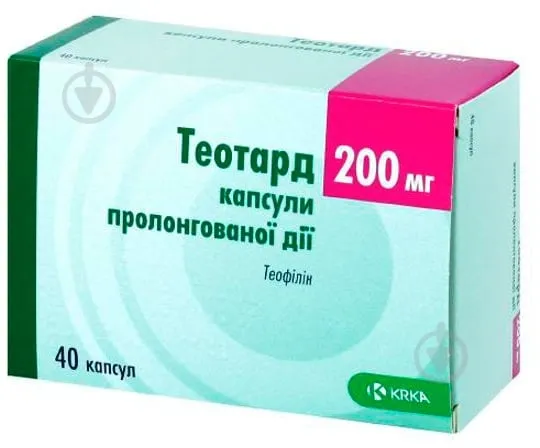
Table of Contents
INSTRUCTIONS FOR MEDICAL USE OF THE MEDICINAL PRODUCT Teotard (Teotard®)
Composition:
Active substance: theophylline;
1 prolonged-release capsule contains 200 mg of theophylline;
Excipients: povidone, colloidal anhydrous silicon dioxide, triethyl citrate, ammonio-methacrylate copolymer (type A), ammonio-methacrylate copolymer (type B), talc;
Capsule shell: gelatin, titanium dioxide (E 171), indigotine (E 132), quinoline yellow (E 104).
Pharmaceutical form. Prolonged-release capsules.
Main physicochemical properties: the capsule body is transparent, green-colored; the capsule cap is opaque, green-colored. Capsules are filled with white granules.
Pharmacotherapeutic group. Agents for systemic use in obstructive respiratory diseases. ATC code R03DA04.
Pharmacological Properties
Pharmacodynamics
Theophylline has spasmolytic and anti-inflammatory effects, as well as hemodynamic and extrapulmonary effects.
By relaxing the smooth muscles of the bronchi, theophylline increases airflow through the bronchial tubes and thereby improves breathing. Theophylline enhances bronchial mucus transport by increasing mucus and surfactant secretion and stimulating ciliary movement of the epithelium. The anti-inflammatory action of theophylline involves inhibition of T-lymphocyte proliferation, suppression of cytokine secretion (e.g., interleukin-2, tumor necrosis factor), and reduced activity of eosinophils, macrophages, and tissue basophils. These effects lead to reduced inflammation of the bronchial mucosa.
Theophylline also affects smooth muscles of the coronary arteries, blood vessels of muscles and kidneys, and relaxes uterine muscles, the cardioesophageal sphincter, and bile ducts. Theophylline promotes increased right ventricular ejection fraction, increased cardiac output, reduced resistance in pulmonary blood vessels, and decreased pulmonary hypertension. Theophylline stimulates the respiratory center, enhances diaphragmatic and respiratory muscle contractions, increases diuresis, and enhances catecholamine secretion from the adrenal glands.
Pharmacokinetics
Theotard is manufactured using a special technology. The capsules contain pellets from which theophylline is gradually released to prevent sudden increases or decreases in its concentration. Theophylline is completely absorbed from the gastrointestinal tract. Peak blood concentrations are reached approximately 7 hours after administration, and steady-state therapeutic concentrations are achieved within 2–3 days of regular use. Effective plasma concentrations range from 5 to 12 mcg/mL, although in some cases concentrations up to 20 mcg/mL may be required to achieve a therapeutic effect. Plasma theophylline concentrations should not exceed 20 mcg/mL.
The drug is distributed throughout all organs and body fluids. It is metabolized in the liver. One of its metabolites (3-methylxanthine) also has bronchodilating activity. Theophylline and its metabolites are excreted by the kidneys.
The elimination half-life of theophylline in non-smoking adults is 7–9 hours. This half-life is shorter in smokers and children, and prolonged in patients with impaired liver function or heart failure.
Clinical characteristics.
Indications.
Chronic obstructive pulmonary disease, bronchial asthma, pulmonary emphysema, central sleep apnea syndrome.
Contraindications.
Hypersensitivity to any component of the medicinal product, as well as to xanthine derivatives (e.g., caffeine, theobromine, pentoxifylline); acute heart failure; angina pectoris; decompensated chronic heart failure; acute phase of myocardial infarction; acute cardiac arrhythmias (acute tachyarrhythmia); extrasystoles; severe arterial hypertension; severe arterial hypotension; generalized atherosclerosis; pulmonary edema; hemorrhagic stroke; epilepsy; increased seizure susceptibility; hyperthyroidism; uncontrolled hypothyroidism; thyrotoxicosis; severe hepatic dysfunction; retinal hemorrhage; glaucoma; history of bleeding; peptic ulcer of the stomach and duodenum (in the acute phase); gastroesophageal reflux; porphyria; sepsis; concomitant use with ephedrine in children.
Children under 6 years of age or with body weight less than 20 kg.
Interaction with other medicinal products and other forms of interactions.
During treatment with Theotard, alcoholic beverages, large amounts of food, and beverages containing methylxanthines (coffee, tea, cocoa, chocolate, cola, and similar tonic drinks) should not be consumed, nor should drugs related to theophylline (caffeine, theobromine, pentoxifylline), as these substances may enhance the stimulatory effect of theophylline on the central nervous system.
The effect of theophylline may be enhanced due to decreased clearance when used concomitantly with acyclovir, allopurinol, carbimazole, cimetidine, disulfiram, ethinyltestosterone, phenylbutazone, febuxostat, fluvoxamine, fluoroquinolones (ciprofloxacin, enoxacin), furosemide, imipenem (in addition, concomitant use may reduce the seizure threshold of the brain), interferon alpha, isoniazid, calcium channel blockers (diltiazem, verapamil), amiodarone, oxpentifylline, lincomycin, macrolides (clarithromycin, erythromycin), mexiletine, paracetamol, pentoxifylline, oral contraceptives, probenecid, propafenone, propranolol (pharmacokinetic interaction: the metabolic clearance of theophylline decreases by 30–50%), ranitidine, rofecoxib, nizatidine, tacrine, thiabendazole, ticlopidine, viloxazine, carbimazole, isoprenaline, fluconazole, methotrexate, zafirlukast, zileuton, viloxazine, influenza vaccine, or tuberculosis vaccine (BCG vaccine). In patients who are taking one or more of the above-mentioned drugs concomitantly with theophylline, serum theophylline concentration should be monitored and the dose reduced if necessary. The frequency of toxic effects may be increased when used concomitantly with ephedrine. Combination of theophylline with fluvoxamine should be avoided; if unavoidable, the theophylline dose should be reduced and plasma theophylline levels carefully monitored. Factors such as viral infections, liver disease, and heart failure may reduce theophylline clearance (see section "Overdose"). Dose reduction may also be necessary in elderly patients. Thyroid disorders or related treatments may alter theophylline plasma levels.
When co-administered with ciprofloxacin, the theophylline dose should be reduced by at least 60%, and when used concomitantly with enoxacin, by 30%.
Due to increased theophylline clearance, its effect may be reduced when used concomitantly with antiepileptic agents (e.g., phenytoin, fosphenytoin, carbamazepine, primidone), barbiturates (especially phenobarbital and pentobarbital), aminoglutethimide, isoprenaline, magnesium hydroxide, moricizine, rifampicin, ritonavir, or sulfinpyrazone. In patients taking one or more of the above-mentioned drugs concomitantly with theophylline, serum theophylline concentration should be monitored and the dose increased if necessary. The effect of theophylline may be reduced in smokers.
Theophylline may potentiate the effects of β-receptor agonists, diuretics, and reserpine.
Theophylline may reduce the steady-state level of phenytoin.
Theophylline may reduce the efficacy of adenosine receptor agonists (adenosine, regadenoson, dipyridamole), benzodiazepines, lithium carbonate, and β-receptor antagonists.
Concomitant use of theophylline and adrenergic receptor antagonists should be avoided, as theophylline may lose its bronchodilating effect.
Concomitant use of theophylline with herbal products containing St. John's wort (Hypericum perforatum) should also be avoided.
Particular caution is required when combining theophylline with benzodiazepines or lomustine. Concomitant use of theophylline with lomustine may lead to thrombocytopenia.
Concomitant use of theophylline with ketamine or quinolones reduces the seizure threshold; with doxapram – may cause central nervous system stimulation. Such combinations should be avoided.
Halothane anesthesia may cause serious cardiac arrhythmias in patients taking theophylline.
Hypokalemia may occur during theophylline treatment, especially during combination therapy with α-receptor agonists, ß2-receptor agonists, thiazide diuretics, furosemide, corticosteroids, and also in the presence of hypoxemia; therefore, periodic monitoring of serum potassium levels is recommended.
Xanthines may potentiate hypokalemia, particularly in hospitalized patients with severe asthma, necessitating monitoring of serum potassium levels.
Caution is advised when using theophylline concomitantly with glucagon, as it may enhance the effect of theophylline.
Special precautions for use.
Theotard should be prescribed with caution only if urgently required in cardiac disorders in which tachyarrhythmia may occur; in hypertrophic obstructive cardiomyopathy, renal and hepatic dysfunction, chronic alcoholism, lung diseases, peptic ulcer, as well as in patients with a history of peptic ulcer, atherosclerosis, and patients aged 60 years and older.
In patients with gastroesophageal reflux, theophylline administration may worsen the condition (exacerbate reflux) due to its effect on the smooth muscles of the cardioesophageal sphincter.
Dosage of theophylline should be reduced in patients with heart failure, hepatic dysfunction (especially in cirrhosis), acute exacerbation of lung diseases, thyroid dysfunction (hyperthyroidism, hypothyroidism), hypoxemia, fever, pneumonia, viral infections (particularly influenza), patients receiving certain medications (see section "Interaction with other medicinal products and other forms of interaction"), and elderly patients, due to possible decreased theophylline clearance. Monitoring of plasma theophylline levels is required to achieve therapeutic concentrations.
Monitoring is necessary during theophylline treatment in patients with peptic ulcer, cardiac arrhythmia, arterial hypertension, other cardiovascular disorders, or acute febrile conditions.
Smoking and alcohol consumption may increase theophylline clearance, thus requiring higher doses. Careful monitoring and control of plasma theophylline levels exceeding normal values are required in patients with chronic alcoholism, and theophylline dosage should be reduced.
Due to possible increased theophylline clearance in patients with fibrous osteitis, an increase in the drug dosage and monitoring of serum theophylline concentration may be necessary.
However, it should be noted that treatment of hyperthyroidism (e.g., with carbimazole) reduces theophylline clearance, thus potentially requiring a reduction in theophylline dosage (see section "Interaction with other medicinal products and other forms of interaction").
Fever reduces theophylline clearance. In cases of acute fever, dosage reduction may be necessary to avoid intoxication.
Theophylline may:
- irritate the gastrointestinal tract and increase gastric secretion, thus patients with peptic ulcer should use it with caution;
- exacerbate cardiac arrhythmias, thus patients with cardiac disorders should use it with caution.
Theophylline use should be avoided and alternative treatment considered in patients with a history of seizure disorders.
Particular caution is required if the patient is undergoing electroconvulsive therapy, as theophylline may prolong seizures. Epileptic status may occur.
Theophylline should be used cautiously in patients suffering from insomnia.
Increased attention is required when administering the drug to elderly men with a history of benign prostatic hyperplasia due to the risk of urinary retention.
If aminophylline (theophylline/ethylenediamine) needs to be administered to patients already receiving theophylline, plasma theophylline levels should be monitored.
Particular caution is required during theophylline treatment in severe asthma. In such cases, monitoring of potassium levels and serum theophylline concentration is recommended.
Worsening of asthma symptoms requires immediate medical attention. In case of acute asthmatic attack in a patient receiving prolonged-release theophylline, intravenous aminophylline should be administered very cautiously.
Theophylline is not a drug of choice for children with bronchial asthma.
If theophylline use is necessary in children with pyrexia or in children with epilepsy and a history of seizures, careful monitoring of their clinical condition and plasma theophylline levels is required.
Theophylline may alter certain laboratory parameters: increase free fatty acid levels and catecholamine levels in urine.
Since bioequivalence between different sustained-release theophylline products cannot be guaranteed, switching from Theotard prolonged-release capsules to another sustained-release theophylline product should be done by re-titrating the dose and following clinical evaluation.
If the recommended dose is ineffective or if adverse effects occur, plasma theophylline concentration should be monitored.
Use during pregnancy or breastfeeding.
Pregnancy.
Theophylline crosses the placenta. Pregnant women should take the drug only when the expected benefit to the mother outweighs the potential risk to the fetus. Pregnant women should have serum theophylline concentrations monitored more frequently, and dosage should be adjusted accordingly if necessary. Theophylline use should be avoided towards the end of pregnancy, as it may inhibit uterine contractions and cause fetal tachycardia.
Breastfeeding.
Theophylline passes into breast milk, and thus therapeutic concentrations in serum may be achieved in infants. Women who are breastfeeding may take the drug only when the expected benefit to the mother outweighs the potential risk to the infant.
Theophylline may cause increased irritability in the infant; therefore, the therapeutic dose of theophylline should be as low as possible. If higher therapeutic doses are required, breastfeeding should be discontinued.
Breastfeeding should be performed immediately before taking the medicinal product. Infants should be carefully monitored for any effects of theophylline. If hypersensitivity reaction, excitability, or sleep disturbances occur in the infant, medical advice should be sought.
Fertility.
There are no clinical data on fertility in humans. Preclinical data indicate an adverse effect of theophylline on fertility in rodents. However, it is uncertain whether these results are relevant to humans.
Ability to affect reaction speed when driving vehicles or operating machinery.
Theophylline does not significantly impair the ability to drive vehicles or operate machinery. However, certain adverse effects (e.g., dizziness) may affect the ability to drive or operate machinery. Patients should be advised not to drive or operate hazardous machinery until they have determined their individual response to the treatment.
Method of Administration and Dosage.
The dose is determined individually by a physician depending on age, body weight, and metabolic characteristics.
Adult and Elderly Patients
The usual maintenance dose is 200 mg twice daily. In more severe cases, the dose may be increased to 400 mg twice daily.
Children
The usual dose for adolescents is 200 mg twice daily.
The usual dose for children aged 6 years and older with a body weight exceeding 20 kg is 10–15 mg/kg/day administered in two divided doses.
Theophylline distributes poorly into adipose tissue; therefore, for dose calculation in mg/kg, the lean (excluding fat deposits) body weight should be used.
Patients with nocturnal asthma or central sleep apnea syndrome may take a single dose of TheoTARD at night.
The medicinal product should be taken after meals with a large amount of water. Capsules must be swallowed whole, without chewing.
Therapeutic efficacy and tolerance to theophylline should be assessed on day 3 of treatment. If the therapeutic effect is adequate, continue treatment with the established dose; otherwise, the dose should be increased. If adverse effects occur, the dose should be reduced.
Theophylline doses should be determined based on clinical response, serum theophylline concentration, and possible adverse effects.
Therapeutic serum theophylline concentrations are determined in the laboratory. Accurate serum theophylline levels can be obtained by drawing blood 4 hours after the morning dose in patients taking TheoTARD twice daily, or 12 hours after the evening dose in patients taking a single daily dose of TheoTARD.
Children.
The medicinal product is contraindicated in children under 6 years of age or with body weight less than 20 kg.
Overdose.
Theophylline has a low therapeutic index. Theophylline toxicity is most likely when serum theophylline concentration exceeds 110 µmol/L and becomes more severe as serum concentration increases.
Adverse reactions usually indicate mild overdose. If they occur, serum theophylline concentration should be determined immediately and the TheoTARD dose adjusted accordingly.
Severe symptoms may develop up to 12 hours after overdose with the prolonged-release formulation.
Clinical signs of overdose include hand tremors (tremor), nausea, epigastric pain, hematemesis, vomiting (often severe), diarrhea, pancreatitis, delirium, excitement, anxiety, dementia, toxic psychosis, hyperreflexia, muscle hypertonia, supraventricular and ventricular tachycardia, arterial hypertension, metabolic acidosis, hypokalemia (which may develop rapidly and severely due to potassium shift from plasma into cells), hypomagnesemia, hypophosphatemia, hypercalcemia, hyperglycemia, rhabdomyolysis, respiratory alkalosis, hyperventilation, acute renal failure, and dehydration. Other adverse reactions may be intensified. In particularly severe cases, cardiac arrhythmias (tachyarrhythmia), ectopic rhythm, abrupt drop in arterial pressure, muscle seizures, and even coma may develop. Tachyarrhythmia and seizures may occur suddenly without preceding signs typical of mild overdose (e.g., nausea and vomiting). In most cases, reducing the dose or temporarily discontinuing TheoTARD is sufficient.
After ingestion of an excessive number of capsules, arterial hypotension, restlessness, tremor, delirium, seizures, and life-threatening cardiac rhythm disturbances may occur. In such cases, serum theophylline concentration should be determined immediately and the TheoTARD dose reduced accordingly.
Treatment
The patient's condition should be closely monitored, especially arterial pressure, heart rhythm, respiration, and serum potassium and theophylline levels. Treatment is symptomatic.
Gastric lavage and administration of activated charcoal may be beneficial if a large overdose was ingested within the past 1–2 hours. Repeated administration of activated charcoal orally may enhance theophylline elimination. Serum potassium levels should be determined immediately and monitored until hypokalemia is corrected. Caution: excessive potassium administration may lead to hyperkalemia. In cases of low serum potassium, serum magnesium levels should be determined as soon as possible.
When treating ventricular arrhythmias, antiarrhythmic agents with proconvulsant effects, such as lidocaine, should be avoided due to the risk of inducing or worsening seizures.
In suspected severe overdose, plasma theophylline levels should be monitored until normalization. Antiemetics such as metoclopramide or ondansetron should be used to control vomiting.
In tachycardia with adequate cardiac output, treatment is generally not required. In severe cases, β-adrenergic blockers may be considered for patients without bronchial asthma. Severe cardiac rhythm disturbances may be treated with intravenous propranolol at a dose of 1 mg (0.02 mg/kg body weight in children). This dose may be repeated every 5–10 minutes as needed until normal rhythm is restored or until the maximum dose of 0.1 mg/kg body weight is reached. In patients with asthma, verapamil should be used instead of propranolol. Isolated seizures should be managed with intravenous diazepam at doses of 0.1–0.3 mg/kg. The total dose should not exceed 10 mg. Airway patency must be ensured and oxygen administered. Hypokalemia should be ruled out as a contributing factor. Postictal coma should be managed with oxygen and intubation if necessary.
The most severe cases of overdose (or intoxication) with very high serum theophylline concentrations unresponsive to the above measures may be rapidly and effectively treated with hemoperfusion or hemodialysis.
In particular, in cases of seizures induced by theophylline overdose, the efficacy of certain anticonvulsant agents, such as benzodiazepines, may be reduced due to suspected pharmacodynamic interactions.
Adverse Reactions
The adverse reactions are listed below. Adverse reactions decrease with lower doses of the drug. If adverse reactions occur, serum theophylline levels should be monitored and maintained within the range of 10–15 mcg/mL (see section "Overdose").
Frequency of adverse reactions is defined as follows: very common (<u>></u> 1/10), common (<u>></u> 1/100, < 1/10), uncommon (<u>></u> 1/1000, < 1/100), rare (<u>></u> 1/10000, < 1/1000), very rare (< 1/10000), frequency not known (cannot be estimated based on available data).
Within each frequency group, adverse reactions are listed in order of decreasing severity.
| Body systems and organs |
Very common |
Uncommon |
Frequency not known |
| Immune system |
allergic reactions (anaphylactic reactions, anaphylactoid reactions, hypersensitivity reactions, including bronchospasm) |
||
| Psychiatric |
irritability, delirium* |
increased excitability, anxiety, insomnia, sleep disturbances* |
|
| Nervous system |
dizziness, headache |
convulsions*, tremor*, vertigo |
seizures, restlessness*, excitement*, anxiety*, confusion/loss of consciousness*, hallucinations*, presyncopal state*, acute encephalopathy* (in severe cases of overdose) |
| Cardiac |
rapid heartbeat (palpitations), tachyarrhythmia* (atrial tachycardia, sinus tachycardia) |
arrhythmias*, chest pain*, tachycardia, increased frequency of angina attacks*, extrasystoles (ventricular, supraventricular)*, heart failure* |
|
| Vascular |
sudden drop in blood pressure* |
||
| Gastrointestinal tract |
nausea, abdominal pain, diarrhea, vomiting, repeated vomiting* |
gastroesophageal reflux (stimulation of gastric acid secretion**), stomach irritation |
decreased appetite/anorexia*, exacerbation of peptic ulcer disease*, intestinal atony*, gastrointestinal bleeding* |
| Skin and subcutaneous tissues |
skin rashes, itching |
exfoliative dermatitis*, urticaria* |
|
| Musculoskeletal and connective tissue |
rhabdomyolysis*, muscle spasms* |
||
| Renal and urinary system |
increased diuresis*, urinary retention*** |
||
| General disorders |
fever* |
metabolic acidosis*, flushing and sensation of facial hyperemia*, increased sweating*, weakness*, dyspnea* |
|
| Respiratory system, thoracic organs and mediastinum |
increased respiratory rate |
||
| Laboratory findings |
hypokalemia, hyperkalemia, hyperuricemia, hyperglycemia |
hyperkalemia*, electrolyte imbalance*, increased blood creatinine level* |
*Adverse reactions occurring when serum theophylline levels exceed therapeutic levels.
**Due to decreased lower esophageal sphincter tone, nocturnal gastroesophageal reflux may occur and may be exacerbated at night.
***Theophylline may cause urinary retention in elderly males with partial obstruction of the urinary tract (see section "Special precautions for use").
If serious adverse reactions occur, treatment should be discontinued.
Reporting of suspected adverse reactions
Reporting suspected adverse reactions after a medicinal product is authorized is important. It allows ongoing monitoring of the benefit-risk balance of the medicinal product. Healthcare professionals and patients, as well as their legal representatives, are encouraged to report any suspected adverse reactions and lack of efficacy to the State Expert Center of the Ministry of Health of Ukraine via the following link: https://aisf.dec.gov.ua.
Shelf life.
5 years.
Storage conditions.
Store below 30 °C. Keep out of the reach and sight of children.
Packaging.
10 capsules in a blister; 4 blisters in a cardboard box.
Prescription status.
Prescription only.
Manufacturer.
KRKA, d.d., Novo mesto / KRKA, d.d., Novo mesto.
Manufacturer's address.
Smarjeska cesta 6, 8501 Novo mesto, Slovenia / Smarjeska cesta 6, 8501 Novo meste, Slovenia.