Tamoxifen "ebewe"
Ukraine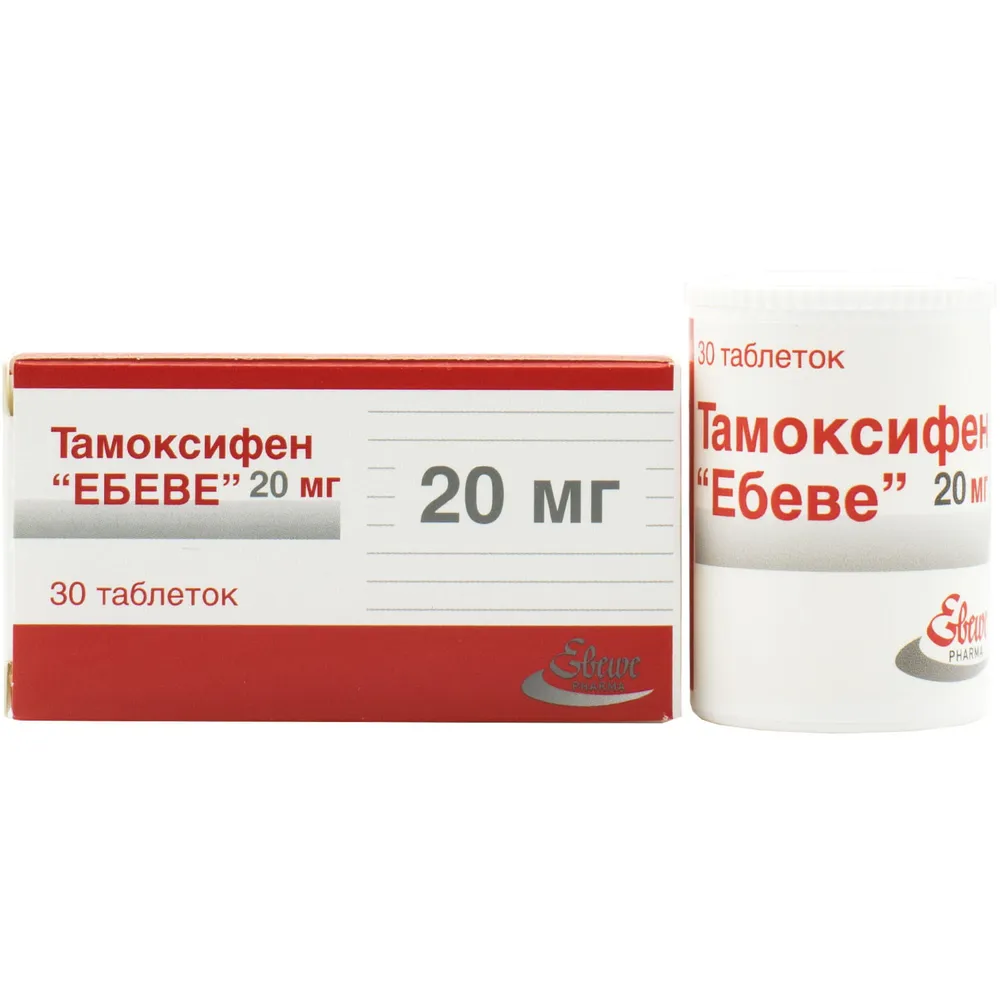
Table of Contents
INSTRUCTIONS FOR MEDICAL USE OF THE MEDICINAL PRODUCT TAMOXIFEN «EBEWE» (TAMOXIFEN «EBEWE»)
Composition:
Active substance: tamoxifen citrate;
1 tablet contains 30.4 mg of tamoxifen citrate (equivalent to 20 mg of tamoxifen);
Excipients: lactose monohydrate, maize starch, microcrystalline cellulose, colloidal anhydrous silicon dioxide, magnesium stearate.
Pharmaceutical form. Tablets.
Main physicochemical characteristics: nearly white, round tablets with a score line on one side.
Pharmacotherapeutic group.
Hormone antagonists and related agents. Anti-estrogenic agents. ATC code L02B A01.
Pharmacological Properties
Pharmacodynamics
Tamoxifen is a potent non-steroidal estrogen antagonist. It may also exhibit partial or full agonistic properties depending on the tissue type and animal species. In humans, a predominantly antiestrogenic effect is observed, which is explained by tamoxifen binding to the hormone-binding domain of the estrogen receptor and blocking the action of estradiol.
Pharmacokinetics
After oral administration, tamoxifen is rapidly absorbed. Maximum plasma concentration of tamoxifen is reached within 4–7 hours after intake, and steady-state concentration is achieved after 4–6 weeks of therapy. Following a single dose of tamoxifen as a solution, maximum plasma concentration in male volunteers was 42 µg/L for tamoxifen and 12 µg/L for its metabolite N-desmethyltamoxifen. Elimination half-lives of tamoxifen and its metabolite were approximately 4 days and 9 days, respectively. The ratio of N-desmethyltamoxifen to tamoxifen in blood gradually increases from about 20% after the first dose to 200% at steady state, likely due to the longer half-life of the metabolite. During tamoxifen therapy at a dose of
20 mg twice daily, the mean steady-state plasma concentration of tamoxifen in patients was 310 µg/L (range: 164–494 µg/L), and for N-desmethyltamoxifen it was 481 µg/L (range: 300–851 µg/L).
During tamoxifen therapy at a dose of 40 mg/day, concentrations of tamoxifen and N-desmethyltamoxifen in tumor tissues were 5.4–117 ng/mg (mean: 25.1 ng/mg) protein and 7.8–210 ng/mg (mean: 52 ng/mg) protein, respectively. Plasma concentrations of tamoxifen and N-desmethyltamoxifen were 27–520 ng/mL (mean: 300 ng/mL) and 210–761 ng/mL (mean: 462 ng/mL), respectively. Over 99% of tamoxifen is bound to plasma proteins.
In the human body, tamoxifen is metabolized in the liver and primarily excreted via bile. Renal excretion of the unchanged compound is negligible. The main metabolic pathway of tamoxifen in humans is demethylation, forming the active metabolite N-desmethyltamoxifen, followed by further N-demethylation to form N-didesmethyl metabolite.
The elimination process of tamoxifen is biphasic. In women, the half-life in the initial phase ranges from 7 to 14 hours, while in the terminal phase it is approximately 7 days. The half-life of N-desmethyltamoxifen is approximately 14 days.
Clinical response to therapy is observed at plasma concentrations of tamoxifen exceeding 70 µg/L.
Pharmacokinetic characteristics of tamoxifen and its major metabolites in elderly patients, patients with impaired liver function, as well as under fasting conditions and after food intake, have probably not been studied.
Clinical characteristics.
Indications.
- Adjuvant chemotherapy following primary treatment of breast cancer;
- Metastatic breast cancer.
Contraindications.
- Hypersensitivity to tamoxifen or to any of the excipients;
- Severe thrombocytopenia, leukopenia;
- Severe hypercalcemia;
- Concomitant use of anastrozole and tamoxifen;
- Pregnancy and breastfeeding.
Interaction with other medicinal products and other forms of interaction.
When tamoxifen is used in combination with other hormonal preparations containing estrogens, a reduction in the efficacy of both agents may occur (including unreliable contraceptive effect of the respective preparations).
An increased incidence of thromboembolic events has been reported during tamoxifen therapy in combination with other chemotherapeutic agents.
Concomitant use of tamoxifen and platelet aggregation inhibitors may enhance the tendency to bleeding during a possible thrombocytopenic phase.
The use of tamoxifen in combination with coumarin-type anticoagulants, such as warfarin, may significantly potentiate the anticoagulant effect. Patients receiving coumarin anticoagulants together with tamoxifen should be closely monitored for coagulation status, especially at the beginning of treatment.
Concomitant use of tamoxifen and aromatase inhibitors during adjuvant therapy has not demonstrated increased efficacy compared to tamoxifen alone.
The main known metabolic pathway of tamoxifen in humans is demethylation mediated by the enzyme CYP3A4. Pharmacokinetic interactions with the CYP3A4 inducer rifampicin have been reported in the literature, resulting in decreased plasma levels of tamoxifen.
The clinical significance of this reduction is unknown.
Pharmacokinetic interactions with CYP2D6 inhibitors affecting reduced plasma concentrations of the active metabolite of tamoxifen, 4-hydroxy-N-desmethyltamoxifen (endoxifen), have been reported in the literature.
Medicinal products that inhibit cytochrome CYP2D6 reduce endoxifen concentrations—the active metabolite of tamoxifen—by 65–75%, leading to reduced therapeutic efficacy. In several studies, reduced efficacy of tamoxifen was observed when co-administered with certain antidepressants—selective serotonin reuptake inhibitors (SSRIs) (e.g., paroxetine). Therefore, whenever possible, concomitant use of strong inhibitors of cytochrome CYP2D6, such as paroxetine, fluoxetine, quinidine, cinacalcet, or bupropion, should be avoided.
When anastrozole is administered during tamoxifen treatment, no increase in efficacy has been observed compared to treatment with tamoxifen alone.
In the case of concomitant administration of tamoxifen and the aromatase inhibitor letrozole, plasma concentrations of letrozole decreased by 37%.
Concomitant therapy with bromocriptine increases serum concentrations of tamoxifen and its active metabolite N-desmethyltamoxifen.
Special precautions for use.
Patients with estrogen receptor-positive tumors and postmenopausal women respond better to tamoxifen therapy.
Tamoxifen should be administered with caution in patients with impaired liver or kidney function, diabetes mellitus, history of thromboembolic disorders, or ophthalmological abnormalities.
In premenopausal women receiving tamoxifen for the treatment of breast cancer, cessation of menstruation may occur.
An increased incidence of endometrial changes, including endometrial hyperplasia, polyps, endometrial cancer, and uterine sarcoma (predominantly malignant mixed Müllerian tumors), has been reported in patients treated with tamoxifen. The frequency and nature of these changes suggest that they may be due to the estrogenic effect of tamoxifen.
Before initiating therapy and every 6 months thereafter, patients should undergo gynecological examination. Any unusual symptoms (particularly abnormal vaginal bleeding, menstrual irregularities, vaginal discharge, pelvic pain, or pressure) require immediate and thorough evaluation.
Close monitoring for signs of possible endometrial hyperplasia is necessary in patients receiving tamox游戏副本en for breast cancer prevention. In case of atypical endometrial hyperplasia, tamoxifen should be discontinued, appropriate treatment initiated, and the need for hysterectomy evaluated before considering continuation of tamoxifen therapy.
During clinical trials of tamoxifen for the treatment of breast cancer, cases of other primary tumors (not located in the endometrium or contralateral breast) have been observed. A causal relationship has not been established, and the clinical significance of these observations remains unclear.
Ocular disorders, including decreased visual acuity, corneal clouding, cataract development, and retinopathy, have been reported in patients receiving tamoxifen. Therefore, ophthalmological examinations are recommended before starting therapy and periodically during treatment to detect early corneal or retinal lesions, which may be reversible upon timely discontinuation of the drug.
In patients with a history of liver disease, liver function should be closely monitored. In all patients, periodic monitoring of blood cell counts (especially platelets), liver and kidney function tests, serum calcium, and glucose levels is recommended. To detect possible metastases early, periodic chest X-rays, bone scans, and liver ultrasound are also recommended.
Periodic monitoring of blood cell counts (including platelets), liver function tests, and serum calcium levels is recommended.
Published data indicate that patients with reduced metabolic biotransformation capacity mediated by cytochrome CYP2D6 exhibit lower levels of endoxifen, one of the most important active metabolites of tamoxifen. Concomitant use of drugs that inhibit cytochrome CYP2D6 may reduce endoxifen concentrations. Therefore, if possible, strong CYP2D6 inhibitors such as paroxetine, fluoxetine, quinidine, cinacalcet, or bupropion should be avoided during tamoxifen therapy.
Tamoxifen increases the risk of venous thromboembolism. This risk is higher in patients with obesity, increasing age, concomitant chemotherapy, or other risk factors for thromboembolic events. For some patients with breast cancer who have multiple risk factors for venous thromboembolism, long-term anticoagulant therapy should be considered. If venous thromboembolism occurs, tamoxifen therapy must be discontinued immediately and antithrombotic treatment initiated. Tamoxifen should not be used in patients with a history of thromboembolic events.
In delayed microsurgical breast reconstruction, tamoxifen may increase the risk of microvascular complications associated with the transplanted flap.
Tamoxifen may yield positive results in doping tests.
The effect of food on tamoxifen absorption has not been studied. However, it is unlikely that food intake significantly affects the steady-state pharmacokinetic parameters of tamoxifen.
The product contains lactose, which should be taken into account in patients with lactose or galactose intolerance.
Serious skin reactions, including Stevens-Johnson syndrome and toxic epidermal necrolysis (TEN), which may be life-threatening or fatal, have been observed during treatment with tamoxifen. Patients should be informed about the signs and symptoms of severe skin reactions, and closely monitored. If signs or symptoms suggestive of these reactions occur, the drug should be discontinued immediately and alternative therapy considered (if necessary). If a patient develops a serious reaction such as Stevens-Johnson syndrome or toxic epidermal necrolysis during tamoxifen treatment, therapy must be stopped immediately and the drug must never be used again.
In patients with hereditary angioedema, tamoxifen may induce or exacerbate symptoms of angioedema.
Use during pregnancy or breastfeeding.
Tamoxifen "Ebewe" is contraindicated during pregnancy and breastfeeding. Isolated cases of spontaneous abortion and congenital malformations in children whose mothers took tamoxifen during pregnancy have been reported; however, a causal relationship has not been established.
Before initiating tamoxifen therapy, it must be confirmed that the patient is not pregnant. Women of reproductive potential should use effective non-hormonal contraception during treatment and for at least 3 months after discontinuation of Tamoxifen "Ebewe". Due to possible interactions, hormonal contraceptives should not be used.
Tamoxifen at a dose of 20 mg twice daily suppresses lactation in women, which does not recover even after therapy is discontinued. Limited data indicate that tamoxifen and its active metabolites are excreted in breast milk and may accumulate over time; therefore, the drug is not recommended during breastfeeding. The decision to discontinue breastfeeding or to discontinue tamoxifen therapy should take into account the importance of the drug to the woman.
Ability to affect reaction speed when driving or operating machinery.
The effect of tamoxifen on reaction speed during driving or operating machinery is unlikely. However, during tamoxifen therapy, fatigue, somnolence, and decreased visual acuity have been reported. Patients experiencing these symptoms should exercise caution when driving or operating machinery.
Dosage and Administration
The initial dose should be adjusted according to the patient's general condition. The usual dose is 20–40 mg per day, which may be taken as a single dose or divided into two doses. Typically, a dose of 20 mg/day is sufficiently effective for treatment. The duration of treatment depends on the severity and course of the disease. Treatment is usually long-term.
For adjuvant therapy of early hormone receptor-positive breast cancer subtype, the recommended duration of treatment is at least 5 years. The optimal duration of tamoxifen therapy has not yet been established.
Tablets should be swallowed whole with sufficient fluid, without chewing.
Use in special patient groups
No dose adjustment is required for elderly patients or for patients with impaired hepatic or renal function.
Children
Recommendations for tamoxifen treatment in children have not yet been established.
Overdose
Symptoms of overdose
High doses of tamoxifen have caused estrogenic effects in animals. In theory, overdose is expected to intensify antiestrogenic adverse effects.
Cases of acute overdose in humans have not been documented. Information on human overdose is limited. Doses of 160 mg/m² and higher have been associated with ECG changes (prolonged QT interval), and daily doses of 300 mg/m² have led to neurotoxicity (tremor, hyperreflexia, unsteady gait, and vertigo).
Therapeutic measures in case of overdose
There is no specific antidote. Symptomatic treatment should be administered in case of overdose.
Adverse Reactions
Most of the adverse effects listed below are reversible and often resolve after dose reduction.
The following categories are used to indicate the frequency of adverse reactions:
Very common (> 1/10), common (≥ 1/100 to < 1/10), uncommon (≥ 1/1,000 to < 1/100), rare (≥ 1/10,000 to < 1/1,000), very rare (< 1/10,000), frequency not known (cannot be estimated from the available data).
Infections and infestations
Bullous pemphigoid.
Benign and malignant neoplasms (including cysts and polyps)
Disease exacerbation has been reported. In a small number of patients with bone metastases, hypercalcemia may develop at the beginning of tamoxifen therapy. During this initial period, bone and tumor pain may intensify, and erythema around skin lesions may increase, which are signs of response to therapy. Existing skin lesions may also enlarge or new lesions may appear.
Tamoxifen therapy is associated with an increased incidence of proliferative changes in the endometrium, including polyps and endometrial cancer. The risk of developing endometrial cancer increases with the duration of tamoxifen therapy and is approximately 2–3 times higher than the risk in women not receiving the drug. There is also a slightly increased incidence of uterine sarcoma (predominantly malignant mixed Müllerian tumors). However, the clinical benefit of tamoxifen in the treatment of breast cancer outweighs the potential risk of developing endometrial neoplasia.
Common: uterine fibroids.
Uncommon: endometrial cancer.
Rare: uterine sarcoma (mainly mixed malignant Müllerian tumors).
Blood and lymphatic system disorders
Common: transient anemia.
Uncommon: leukopenia, transient thrombocytopenia.
Rare: agranulocytosis, neutropenia.
Very rare: pancytopenia.
Immune system disorders
Common: hypersensitivity reactions, angioedema.
Endocrine system disorders
Very common: hot flushes.
Uncommon: hypercalcemia.
Metabolism and nutrition disorders
Very common: fluid retention.
Common: increased serum triglyceride levels, anorexia.
Very rare: severe hypertriglyceridemia, sometimes associated with pancreatitis.
Nervous system disorders
Common: dizziness, headache, somnolence, sensory disturbances (paresthesia, dysgeusia).
Psychiatric disorders
Rare: depression.
Eye disorders
Common: decreased visual acuity, corneal opacity, cataract, and retinopathy. These effects are likely dose- and duration-dependent. They may be partially reversible after discontinuation of tamoxifen therapy.
Rare: optic neuropathy, optic neuritis (in isolated cases, vision loss has been observed).
Vascular disorders
Common: facial flushing, ischemic cerebrovascular events, leg cramps, thrombosis, stroke. When tamoxifen is used in combination with other cytotoxic agents, the risk of thromboembolic events may increase, including venous thromboembolism: deep vein thrombosis, microvascular thrombosis, and pulmonary embolism.
Uncommon: stroke.
Frequency not known: thrombophlebitis.
Respiratory, thoracic and mediastinal disorders
Uncommon: interstitial pneumonitis.
Gastrointestinal disorders
Very common: nausea.
Common: vomiting, constipation, diarrhea.
Uncommon: pancreatitis.
Rare: loss of taste sensation, appetite disturbances.
Hepatobiliary disorders
Common: changes in liver enzyme levels, fatty infiltration of the liver.
Uncommon: cirrhosis, fatty hepatosis.
Very rare: cholestasis, hepatitis, jaundice, necrotic hepatitis, hepatocellular damage, liver failure.
In some cases, more severe liver disorders have led to fatal outcomes.
Skin and subcutaneous tissue disorders
Very common: skin rashes (including isolated reports of erythema multiforme or bullous pemphigoid).
Common: alopecia, hypersensitivity reactions, increase in existing or development of new skin lesions.
Rare: hypertrichosis, erythema multiforme, Stevens-Johnson syndrome, bullous pemphigoid, cutaneous vasculitis, angioedema, toxic epidermal necrolysis.
Very rare: cases of cutaneous lupus erythematosus have also been reported.
Frequency not known: exacerbation of hereditary angioedema.
Musculoskeletal and connective tissue disorders
Common: leg cramps, myalgia.
Reproductive system and breast disorders
Very common: vaginal discharge, menstrual cycle disturbances and suppression of menstruation in the premenopausal period, vaginal bleeding.
Common: genital pruritus, increased size of uterine fibroids, endometrial proliferative changes (endometrial neoplasia, hyperplasia and polyps, rarely endometriosis).
Uncommon: endometrial cancer.
Rare: impotence in men, ovarian cystic swelling, uterine sarcoma (mainly mixed malignant Müllerian tumors), vaginal polyps.
Congenital, familial and genetic disorders
Very rare: chronic hematoporphyria.
General disorders and administration site conditions
Very common: hot flushes (partially due to the antiestrogenic effect of tamoxifen), fatigue.
Rare: at the beginning of therapy – bone pain and pain in the affected tissue area as a response to tamoxifen therapy.
Changes in laboratory parameters
Changes in serum lipid profile, increased liver enzyme activity.
Injury, poisoning and procedural complications
Very rare: radiation reactions.
Shelf life
3 years.
Storage conditions
No special storage conditions required.
Keep out of reach of children.
Packaging
30 tablets in a container; 1 container with the package leaflet in a carton.
Prescription status
Prescription only.
Manufacturers
- EBEWE Pharma Ges.m.b.H. Nfg. KG
- Solutas Pharma GmbH
Manufacturer addresses
- Mondseestrasse 11, 4866 Unterach am Attersee, Austria
- Otto-von-Guericke-Allee 1, 39179 Barleben, Germany