Talzenna
Ukraine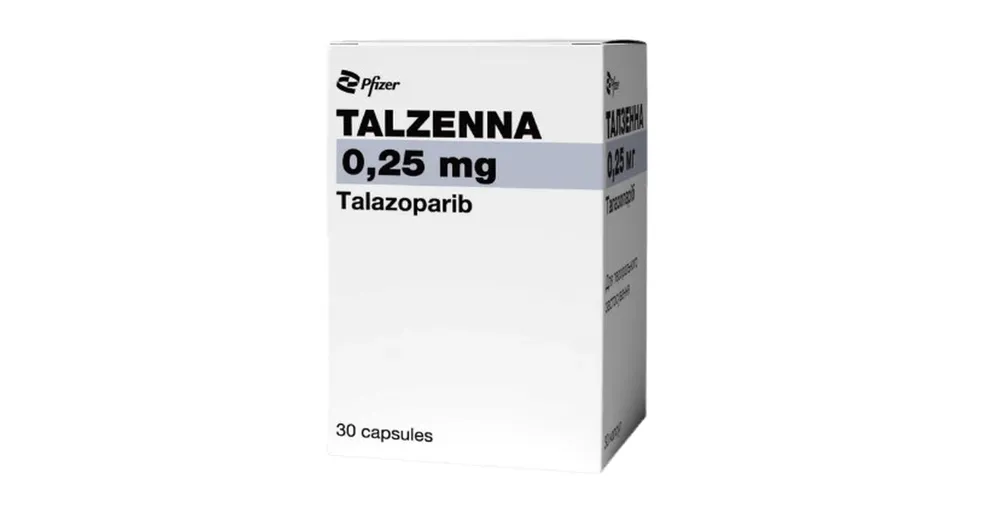
Table of Contents
INSTRUCTIONS FOR MEDICAL USE OF THE MEDICINAL PRODUCT TALZENNA (TALZENNA)
Composition:
Active substance: talazoparib;
1 capsule of 0.25 mg contains 0.363 mg of talazoparib tosilate, equivalent to 0.25 mg of talazoparib;
1 capsule of 1 mg contains 1.453 mg of talazoparib tosilate, equivalent to 1 mg of talazoparib;
Excipients: microcrystalline cellulose silicified (Prosolv® 50)1, microcrystalline cellulose silicified (Prosolv® 90)1; capsule shell: hypromellose, titanium dioxide (E 171), iron oxide red (E 172) (only for 1 mg capsules), iron oxide yellow (E 172); ink2: shellac, anhydrous ethanol, isopropyl alcohol, butyl alcohol, propylene glycol, concentrated ammonia solution, black iron oxide, potassium hydroxide, purified water.
1Composed of 98% microcrystalline cellulose and 2% silicon dioxide.
2Volatile components of the ink do not remain on the capsule after application.
Pharmaceutical form. Capsules.
Main physicochemical properties:
0.25 mg capsules:
opaque hard capsules size № 4 with a white body with black print "TLZ 0.25" and an ivory-colored cap with black print "Pfizer";
1 mg capsules:
opaque hard capsules size № 4 with a white body with black print "TLZ 1" and a light reddish cap with black print "Pfizer".
Pharmacotherapeutic group.
Antineoplastic agents. Other antineoplastic agents.
ATC code L01X X60.
Pharmacological Properties
Mechanism of Action
Talazoparib is an inhibitor of poly(ADP-ribose) polymerases (PARP), including PARP1 and PARP2, which play a role in DNA repair. In vitro studies using cancer cell lines with defects in DNA repair genes, including BRCA1 and BR2, have shown that talazoparib-induced cytotoxicity may involve inhibition of PARP enzymatic activity and enhanced formation of PARP-DNA complexes, leading to DNA damage, reduced cell proliferation, and apoptosis. Antitumor activity of talazoparib was observed in human tumor xenograft models of breast cancer expressing either mutant or wild-type BRCA1 and BRCA2.
Pharmacodynamics
Clinical Studies
Study EMBRACA (NCT01945775)
Locally Advanced or Metastatic HER2 (Human Epidermal Growth Factor Receptor 2)-Negative Breast Cancer with a Pathogenic or Likely Pathogenic Germline BRCA Mutation (gBRCAm)
EMBRACA (NCT01945775) was an open-label study in which patients (N = 431) with HER2-negative locally advanced or metastatic breast cancer and a gBRCAm mutation were randomized 2:1 to receive Talzenna 1 mg or physician’s choice chemotherapy (capecitabine, eribulin, gemcitabine, or vinorelbine) until disease progression or unacceptable toxicity. Randomization was stratified by number of prior chemotherapy regimens for metastatic disease (0 vs. 1, 2, or 3), triple-negative disease status (triple-negative breast cancer [TNBC] or non-TNBC), and history of central nervous system (CNS) metastases (present or absent).
Patients had received no more than 3 prior regimens of cytotoxic chemotherapy for metastatic or locally advanced disease. Patients were required to have received treatment with an anthracycline and/or taxane (in the absence of contraindications) in the neoadjuvant, adjuvant, and/or metastatic setting. Use of talazoparib as first-line treatment for advanced or metastatic disease without prior adjuvant chemotherapy was permitted if the investigator determined that one of the four chemotherapy options in the control arm would be an acceptable treatment option for the patient. Patients previously treated with platinum agents for advanced disease were required not to have evidence of disease progression while on platinum therapy. Prior therapy with a PARP inhibitor was not permitted. Of the 431 patients randomized in the EMBRACA study, 408 (95%) had centralized confirmation of a pathogenic or likely pathogenic gBRCAm mutation by clinical testing; 354 (82%) of these were confirmed using the BRACAnalysis CDx® test. BRCA mutation status (positive for breast cancer susceptibility gene 1 [BRCA1] or positive for breast cancer susceptibility gene 2 [BRCA2]) was balanced between the two treatment groups.
The median age of patients receiving Talzenna was 45 years (range: 27 to 84 years), and the median age of patients receiving chemotherapy was 50 years (range: 24 to 88 years). Among all patients randomized to the Talzenna and chemotherapy groups, 1% and 2% were male, 67% and 75% were White, 11% and 11% were Asian, and 4% and 1% were Black or African American, respectively. Nearly all patients (98%) in both groups had an Eastern Cooperative Oncology Group (ECOG) performance status of 0 or 1. Approximately 56% of patients had estrogen receptor-positive and/or progesterone receptor-positive disease; 44% had triple-negative disease; this distribution was balanced across both treatment groups. Fifteen percent (15%) of patients in the Talzenna group and 14% of patients in the chemotherapy group had a history of CNS metastases. Ninety-one percent (91%) of patients in the Talzenna group had received prior taxane therapy, and 85% had received prior anthracycline therapy in any setting. Sixteen percent (16%) of patients in the Talzenna group and 21% in the chemotherapy group had received prior platinum-based therapy in any setting. The median number of prior cytotoxic chemotherapy regimens for patients with advanced breast cancer was 1; 38% of patients had not received prior cytotoxic therapy for advanced or metastatic disease, 37% had received one regimen, 20% had received two regimens, and 5% had received three or more prior cytotoxic regimens.
The primary efficacy endpoint was progression-free survival (PFS), assessed according to Response Evaluation Criteria in Solid Tumors (RECIST) version 1.1 by blinded independent central review (BICR). A statistically significant improvement in PFS was demonstrated for Talzenna compared to chemotherapy. The investigator-assessed PFS sensitivity analysis was consistent with the BICR-assessed PFS results. Consistent PFS results were observed in patient subgroups defined by study stratification factors (line of therapy, TNBC status, and history of CNS metastases). Efficacy results from the EMBRACA study are summarized in Table 1.
Table 1
| Summary of efficacy results, EMBRACA study* |
||
| Efficacy outcome |
Talzenna |
Chemotherapy |
| PFS by BICR assessment |
N = 287 |
N = 144 |
| Events, number (%) |
186 (65) |
83 (58) |
| Median, months (95% CI) |
8.6 (7.2, 9.3) |
5.6 (4.2, 6.7) |
| Hazard ratio (95% CI)a |
0.54 (0.41, 0.71) |
|
| p-valueb |
p < 0.0001 |
|
| Patients with measurable disease at baseline by investigator assessment |
N = 219 |
N = 114 |
| ORR, % (95% CI)c |
50.2 (43.4, 57.0) |
18.4 (11.8, 26.8) |
| Median duration of responsed, months (95% CI) |
6.4 (5.4, 9.5) |
3.9 (3.0, 7.6) |
| Overall survivale |
||
| Events, number (%) |
216 (75.3%) |
108 (75.0%) |
| Median, months (95% CI) |
19.3 (16.6, 22.5) |
19.5 (17.4, 22.4) |
| Hazard ratio (95% CI)a |
0.85 (0.67, 1.07) |
|
| p-valueb |
p = 0.1693 |
|
| Probability of 24-month survival, % (95% CI) |
42 (36, 47) |
38 (30, 47) |
| Probability of 36-month survival, % (95% CI) |
27 (22, 33) |
21 (14, 29) |
| Abbreviations: BICR — blinded independent central review assessment; CI — confidence interval; ITT — intent-to-treat patient population; ORR — objective response rate; OS — overall survival; PARP — poly(adenosine diphosphate [ADP]-ribose) polymerase; PFS — progression-free survival. * PFS, ORR, and duration of response are based on data cut-off date of September 15, 2017. OS is based on data cut-off date of September 30, 2019, with median follow-up: 44.9 months (95% CI: 37.9, 47.0) in the Talzenna group and 36.8 months (95% CI: 34.3, 43.0) in the chemotherapy group. a Hazard ratio was estimated using a Cox proportional hazards model stratified by number of prior chemotherapy regimens for metastatic disease (0 vs. 1, 2, or 3), triple-negative disease status (triple-negative breast cancer [TNBC] vs. non-TNBC), and history of central nervous system metastases (present or absent), and was consistent with that observed for overall chemotherapy with <1 favoring talazoparib. b p-value from stratified log-rank test (two-sided). c Evaluated in the ITT population with measurable disease at baseline. d ORR based on confirmed responses. e Median estimated using Kaplan-Meier method. f At the time of final OS analysis, 46.3% vs. 41.7% of patients randomized to the TALZENNA and chemotherapy groups, respectively, received post-study platinum-based therapy, and 4.5% vs. 32.6% received post-study PARP inhibitor therapy. |
||
Cardioelectrophysiology
The effect of talazoparib on cardiac repolarization was evaluated in 37 patients with advanced solid tumors. Talazoparib did not cause prolonged QTc prolongation (> 20 ms) at the recommended dose.
Pharmacokinetics
After oral administration of the recommended dose of 1 mg of Talzenna once daily to patients, the geometric mean [% coefficient of variation (CV%)] values for AUC and maximum observed plasma concentration (Cmax) of talazoparib at steady state were 208 (37%) ng × h/mL and 16.4 (32%) ng/mL, respectively. The pharmacokinetics (PK) of talazoparib are linear when administered at doses ranging from 0.025 mg to 2 mg (a dose 2 times higher than the recommended dose). The median accumulation ratio of talazoparib after repeated oral administration of 1 mg once daily ranged from 2.3 to 5.2. Talazoparib plasma concentrations reached steady state within 2–3 weeks.
Absorption
After oral administration of talazoparib, the median time to Cmax (Tmax) was generally between 1 and 2 hours after dose administration.
Interaction with food
Following a single oral dose of 0.5 mg of Talzenna administered with a high-calorie, high-fat meal (approximately 800–1000 calories, with 150, 250, and 500–600 calories from protein, carbohydrates, and fat, respectively), the mean Cmax of talazoparib decreased by 46%, the median Tmax increased from 1 to 4 hours, and AUCinf remained unchanged.
Distribution
The mean apparent volume of distribution of talazoparib is 420 L. In vitro, protein binding of talazoparib is 74% and is independent of talazoparib concentration.
Elimination
The mean terminal half-life (± standard deviation) of talazoparib in plasma is 90 (± 58) hours, and the mean apparent oral clearance (inter-individual variability) in cancer patients is 6.45 L/h (31.1%).
Metabolism
Talazoparib undergoes minimal hepatic metabolism. Identified metabolic pathways of talazoparib in humans include mono-oxidation, dehydrogenation, cysteine conjugation of mono-defluoro-talazoparib, and glucuronide conjugation.
Excretion
The primary route of elimination is renal excretion of talazoparib. Approximately 68.7% (54.6% as unchanged drug) of the total radioactive dose of [14C]-labeled talazoparib was excreted in urine, and 19.7% (13.6% as unchanged drug) was excreted in feces.
Special populations
Age (18 to 88 years), sex, race (361 White, 41 Asian, 16 Black, 9 other, and 63 not specified), and body weight (36 to 162 kg) had no clinically significant effect on the pharmacokinetics of talazoparib.
Pediatric
The pharmacokinetics of talazoparib in patients under 18 years of age have not been evaluated.
Patients with renal impairment
Total exposure to talazoparib at steady state (AUC0–24) increased by 12%, 43%, and 163% in patients with mild (estimated glomerular filtration rate (eGFR) 60–89 mL/min/1.73 m²), moderate (eGFR 30–59 mL/min/1.73 m²), and severe (eGFR 15–29 mL/min/1.73 m²) renal impairment, respectively, compared to patients with normal renal function (eGFR ≥ 90 mL/min/1.73 m²). Maximum plasma concentration of talazoparib at steady state (Cmax) increased by 11%, 32%, and 89% in patients with mild, moderate, and severe renal impairment, respectively, compared to patients with normal renal function. Pharmacokinetics of talazoparib have not been studied in patients requiring hemodialysis. No evidence of dependence of talazoparib protein binding on renal function was observed.
Clinical Characteristics
Indications
Talzenna is indicated for the treatment of adult patients with locally advanced or metastatic HER2*-negative breast cancer who have a germline pathogenic or likely pathogenic BRCA gene mutation associated with hereditary breast cancer susceptibility.
*HER2 – human epidermal growth factor receptor type 2.
Contraindications
Hypersensitivity to the active substance or to any of the excipients of the medicinal product.
Breastfeeding (see section "Use during pregnancy and breastfeeding").
Interaction with other medicinal products and other forms of interaction
Effect of P-glycoprotein inhibitors
Concomitant use with P-gp inhibitors may increase talazoparib exposure.
In patients with advanced solid tumors, co-administration of a P-gp inhibitor (multiple doses of itraconazole 100 mg twice daily) with a single 0.5 mg dose of talazoparib increased AUCinf and Cmax of talazoparib by approximately 56% and 40%, respectively. In clinical studies, concomitant use with P-gp inhibitors, including amiodarone, carvedilol, clarithromycin, itraconazole, and verapamil, resulted in approximately a 45% increase in talazoparib exposure and an increased frequency of Talzenna dose reductions. If concomitant use of Talzenna with such P-gp inhibitors cannot be avoided, the dose of Talzenna should be reduced (see section "Dosage and administration"). After discontinuation of the P-gp inhibitor, the Talzenna dose should be increased (after 3–5 half-lives of the inhibitor) to the dose used prior to initiating the P-gp inhibitor (see section "Dosage and administration").
Concomitant use of Talzenna with P-gp inhibitors, including azithromycin, atorvastatin, diltiazem, felodipine, fluvoxamine, and quercetin, in clinical studies resulted in an 8% increase in talazoparib exposure.
When Talzenna is used concomitantly with P-gp inhibitors not listed above, patients should be monitored for increased likelihood of adverse reactions (see section "Dosage and administration").
Effect of P-glycoprotein inducers
In patients with advanced solid tumors, concomitant administration of a P-gp inducer (multiple doses of rifampicin 600 mg once daily) with a single 1 mg dose of talazoparib increased Cmax of talazoparib by 37% without affecting talazoparib exposure.
Effect of BCRP inhibitors
The effect of BCRP inhibitors on the pharmacokinetics of talazoparib has not been studied. Concomitant use with BCRP inhibitors may increase talazoparib exposure. If concomitant use cannot be avoided, patients should be monitored for increased likelihood of adverse reactions.
Effect of acid-reducing agents
Concomitant use with acid-reducing agents, including proton pump inhibitors (PPIs), histamine H2-receptor antagonists (H2RAs), or other agents that reduce gastric acidity, does not affect talazoparib absorption.
In vitro studies
Talazoparib is a substrate of P-gp and BCRP transporters.
Talazoparib is not a substrate of organic anion transporting polypeptide [OATP]1B1, OATP1B3, organic cation transporter [OCT]1, OCT2, organic anion transporter [OAT]1, OAT3, bile salt export pump [BSEP], multidrug and toxin extrusion protein [MATE]1 and MATE2-K.
Talazoparib is not an inhibitor of cytochrome (CYP) 1A2, CYP2B6, CYP2C8, CYP2C9, CYP2C19, CYP2D6, or CYP3A4/5, nor an inducer of CYP1A2, CYP2B6, or CYP3A4.
Talazoparib is not an inhibitor of transporters, including P-gp, BCRP, OATP1B1, OATP1B3, OCT1, OCT2, OAT1, OAT3, BSEP, MATE1, and MATE2-K.
Talazoparib is not an inhibitor of uridine diphosphate glucuronosyltransferase (UGT) isoforms (1A1, 1A4, 1A6, 1A9, 2B7, and 2B15).
Special precautions for use
Myelodysplastic syndrome/acute myeloid leukemia
Cases of myelodysplastic syndrome/acute myeloid leukemia (MDS/AML) have been reported in patients treated with Talzenna. Overall, MDS/AML has been reported in <1 % (3 out of 787, 0.4 %) of patients with solid tumors who received Talzenna in clinical trials. The duration of treatment with Talzenna prior to the development of MDS/AML in these three patients was 4 months, 24 months, and 60 months, respectively. These patients had received prior chemotherapy with platinum agents and/or other DNA-damaging agents, including radiation therapy.
Treatment with Talzenna should not be initiated until patients have adequately recovered from hematologic toxicity caused by prior chemotherapy. A complete blood count should be performed at baseline and monthly thereafter to monitor for cytopenia. In the event of prolonged hematologic toxicity, Talzenna should be discontinued and blood counts monitored weekly until recovery. If counts have not recovered within 4 weeks, patients should be referred to a hematologist for further evaluation, including bone marrow examination and cytogenetic analysis of blood. Talzenna treatment should be discontinued if MDS/AML is confirmed.
Myelosuppression
Cases of myelosuppression, including anemia, leukopenia/neutropenia, and/or thrombocytopenia, have been reported in patients receiving Talzenna (see section "Adverse reactions"). Grade ≥ 3 anemia, neutropenia, and thrombocytopenia occurred in 39 %, 21 %, and 15 % of patients receiving Talzenna, respectively. Treatment with Talzenna was discontinued due to anemia, neutropenia, and thrombocytopenia in 0.7 %, 0.3 %, and 0.3 % of patients, respectively.
A complete blood count should be performed to monitor for cytopenia prior to starting treatment and monthly thereafter. Treatment with Talzenna should not be initiated until patients have adequately recovered from hematologic toxicity caused by prior therapy. Dose modification (discontinuation with or without dose reduction) should be considered as appropriate (see section "Dosage and administration").
Embryo-fetal toxicity
Due to the mechanism of action and findings from animal studies, Talzenna may cause harm to the fetus if administered to a pregnant woman. In animal reproductive studies, administration of talazoparib to pregnant rats during the period of organogenesis resulted in fetal malformations and skeletal structural abnormalities, as well as embryo-fetal lethality at exposures of 0.24 AUC (area under the concentration-time curve) compared to exposures in patients receiving the recommended human dose of 1 mg daily. Pregnant women and women of reproductive potential should be informed of the potential risks to the fetus. Women of reproductive potential should be advised to use effective contraception during treatment and for at least 7 months after the last dose of Talzenna (see section "Pregnancy and breastfeeding").
Based on findings from genotoxicity and animal reproductive studies, patients with female partners of reproductive potential or pregnant partners should use effective contraception during treatment and for at least 4 months after the last dose of Talzenna (see section "Pregn游戏副本 and breastfeeding").
Use during pregnancy and breastfeeding
Due to the mechanism of action and findings from animal studies, Talzenna may cause harm to the fetus if administered to a pregnant woman. There are no available data on the use of Talzenna in pregnant women to establish a drug-related risk. Pregnant women and women of reproductive potential should be informed of the potential risks to the fetus.
The background risk of major birth defects and miscarriage in the indicated population is unknown. In the U.S. general population, the estimated background risk of major birth defects and miscarriage in clinically recognized pregnancies is 2–4 % and 15–20 %, respectively.
Breastfeeding
There are no data on the presence of talazoparib in human milk, the effects on milk production, or the effects on the breastfed infant. Due to the potential for serious adverse reactions in breastfed infants, women are advised not to breastfeed during treatment with Talzenna and for at least 1 month after the last dose.
Females and males of reproductive potential
A pregnancy test should be performed in females of reproductive potential prior to initiating treatment with Talzenna.
Talzenna may cause harm to the fetus if administered to a pregnant woman. Females of reproductive potential should use effective contraception during treatment and for at least 7 months after the last dose of Talzenna.
Based on findings from genotoxicity and animal reproductive studies, patients with female partners of reproductive potential or pregnant partners should use effective contraception during treatment with Talzenna and for at least 4 months after the last dose.
Animal studies indicate that Talzenna may impair fertility in males of reproductive potential.
Ability to drive and use machines
Talzenna may have a minor influence on the ability to drive and use machines. Fatigue/asthenia or dizziness may occur after administration of talazoparib.
Method of Administration and Dosage
Therapy should be initiated and conducted under the supervision of a physician experienced in the use of anticancer medicinal products.
To select patients for whom treatment with Talzenna for breast cancer is to be prescribed, testing for pathogenic or likely pathogenic germline BRCA gene mutation must be performed in a laboratory with appropriate experience and using a validated method.
Recommended Dosage
The recommended dose of Talzenna is 1 mg orally once daily, with or without food.
Capsules of 0.25 mg are available for dose reduction.
Treatment should be continued until disease progression or unacceptable toxicity.
Capsules should be swallowed whole and should not be opened or dissolved. In the event of vomiting or missed dose, an additional dose should not be taken. The next prescribed dose should be taken at the usual time.
Dose Adjustment for Adverse Reactions
In the event of adverse reactions, treatment may be interrupted and/or the dose reduced according to the severity of the reactions and clinical presentation. Recommended dose reductions are shown in Tables 1 and 2. Talzenna treatment should be discontinued if more than three dose reductions are required.
Table 2
| Levels of dose reduction in case of adverse reactions |
|
| Dose level |
Dose |
| Recommended initial dose |
1 mg (one 1 mg capsule) once daily |
| First dose reduction |
0.75 mg (three 0.25 mg capsules) once daily |
| Second dose reduction |
0.5 mg (two 0.25 mg capsules) once daily |
| Third dose reduction |
0.25 mg (one 0.25 mg capsule) once daily |
A monthly clinical blood test should be performed and whenever clinically indicated (see section "Special precautions for use").
Table 3
Dose adjustment and administration schedule
Adverse reactions |
Temporarily discontinue Talzenna treatment until levels recover to: |
Resumption of Talzenna treatment |
| Hemoglobin < 8 g/dL |
≥ 9 g/dL |
Resume Talzenna treatment at a reduced dose |
| Platelet count < 50,000/µL |
≥ 75,000/µL |
|
| Neutrophil count < 1,000/µL |
≥ 1,500/µL |
|
| Non-hematological toxicities grade 3 or 4 |
≤ grade 1 |
Consider resuming Talzenna treatment at a reduced dose or discontinuing treatment |
Dosage adjustment for use with P-glycoprotein (P-gp) inhibitors
The dose of Talzenna should be reduced to 0.75 mg once daily when co-administered with certain P-gp inhibitors. For additional information on the interaction with P-gp inhibitors, see section "Interaction with other medicinal products and other types of interactions".
After discontinuation of the P-gp inhibitor, the dose of Talzenna should be increased (after 3–5 half-lives of the P-gp inhibitor) to the dose used prior to initiating the P-gp inhibitor (see section "Interaction with other medicinal products and other types of interactions").
Special populations
Elderly patients
In clinical trials of Talzenna involving 494 patients with advanced solid tumors receiving monotherapy with Talzenna at a dose of 1 mg daily, 85 (17%) patients were aged ≥65 years, including 19 (4%) patients aged ≥75 years. There were also 5 patients aged ≥85 years. No overall differences in safety or efficacy of Talzenna were observed between these elderly patients and younger patients, although increased sensitivity of some older individuals cannot be excluded.
Renal impairment
In patients with moderate or severe renal impairment, talazoparib exposure is higher compared to patients with normal renal function. The recommended dose of Talzenna for patients with moderate renal impairment (creatinine clearance 30–59 mL/min) is 0.75 mg. For patients with severe renal impairment (creatinine clearance 15–29 mL/min), the recommended dose is 0.5 mg once daily. Patients with severe renal impairment should also be monitored for the emergence of adverse reactions, which may be more likely, and dose adjustments should be made accordingly. No dose adjustment is required for patients with mild renal impairment (creatinine clearance 60–89 mL/min). The use of Talzenna in patients requiring hemodialysis has not been studied (see section "Pharmacokinetics").
Hepatic impairment
Dose adjustment is not recommended for patients with mild, moderate, or severe hepatic impairment (based on NCI criteria).
Children
The safety and efficacy of Talzenna in pediatric patients have not been established.
Overdose
There is no specific antidote for overdose with Talzenna, and symptoms of overdose have not been established. In case of overdose, treatment with Talzenna should be discontinued, gastric lavage should be considered, and general supportive measures and symptomatic treatment should be administered.
Adverse Reactions
The following clinically significant adverse reactions are described in other sections of the medicinal product's instructions for medical use:
- Myelodysplastic syndrome/acute myeloid leukemia (see section "Special Warnings and Precautions for Use");
- Myelosuppression (see section "Special Warnings and Precautions for Use").
Clinical Trial Experience
Because clinical trials are conducted under widely varying conditions, the frequency of adverse reactions observed in the clinical trials of a drug cannot be directly compared to that of another drug, and may not reflect the frequency observed in clinical practice.
Treatment of HER2-negative locally advanced or metastatic breast cancer with gBRCAm gene mutation
EMBRACA
The safety of talazoparib monotherapy was evaluated in patients with HER2-negative locally advanced or metastatic breast cancer with gBRCAm gene mutation who had received no more than 3 prior lines of chemotherapy for locally advanced or metastatic disease. EMBRACA was a randomized, open-label, multicenter trial in which 412 patients received either talazoparib 1 mg once daily (n = 286) or physician’s choice of chemotherapy (capecitabine, eribulin, gemcitabine, or vinorelbine) (n = 126) until disease progression or unacceptable toxicity. The median duration of study treatment was 6.1 months for patients receiving talazoparib and 3.9 months for those receiving chemotherapy. Treatment interruption due to an adverse reaction of any grade occurred in 65% of patients receiving talazoparib and 50% of patients receiving chemotherapy; dose reduction for any reason occurred in 53% of patients receiving talazoparib and 40% of patients receiving chemotherapy. Treatment was permanently discontinued due to adverse reactions in 5% of patients receiving talazoparib and 6% of patients receiving chemotherapy.
The most common adverse reactions and laboratory abnormalities are presented in Tables 4 and 5, respectively, for patients receiving talazoparib and those receiving chemotherapy in the EMBRACA trial.
| Table 4 Adverse reactionsa (in > 20% of patients receiving Talzenna) in the EMBRACA study |
|||||||
Adverse reactions |
Talzenna N = 286 (%) |
Chemotherapy N = 126 (%) |
|||||
| Grade 1–4 |
Grade 3 |
Grade 4 |
Grade 1–4 |
Grade 3 |
Grade 4 |
||
| Blood and lymphatic system disorders |
|||||||
| Anemiab Neutropeniac Thrombocytopeniad |
53 35 27 |
38 18 11 |
1 3 4 |
18 43 7 |
4 20 2 |
1 16 0 |
|
| Metabolism and nutrition disorders |
|||||||
| Decreased appetite |
21 |
< 1 |
0 |
22 |
1 |
0 |
|
| Nervous system disorders |
|||||||
| Headache |
33 |
2 |
0 |
22 |
1 |
0 |
|
| Gastrointestinal disorders |
|||||||
| Nausea Vomiting Diarrhea |
49 25 22 |
< 1 2 1 |
0 0 0 |
47 23 26 |
2 2 6 |
0 0 0 |
|
| Skin and subcutaneous tissue disorders |
|||||||
| Alopeciae |
25 |
0 |
0 |
28 |
0 |
0 |
|
| General disorders |
|||||||
| Fatiguef |
62 |
3 |
0 |
50 |
5 |
0 |
|
| Abbreviations: CTCAE — Common Terminology Criteria for Adverse Events; NCI — National Cancer Institute; N — number of patients. aGrading according to NCI CTCAE 4.03. bIncludes anemia, decreased hematocrit, decreased hemoglobin, and decreased red blood cell count. cIncludes febrile neutropenia, neutropenia, and decreased neutrophil count. dIncludes thrombocytopenia and decreased platelet count. eFor Talzenna — grade 1 in 23% and grade 2 in 2% of patients. For the chemotherapy group — grade 1 in 20% and grade 2 in 8% of patients. fIncludes fatigue and asthenia. |
|||||||
Adverse reactions identified in < 20 % of 286 patients treated with Talzenna, and thus not included in Table 4: abdominal pain (19 %), dizziness (17 %), leukopenia (17 %), dysgeusia (10 %), dyspepsia (10 %), stomatitis (8 %), lymphopenia (7 %).
| Table 5 Laboratory abnormalities occurring at ≥ 25% in patients in the EMBRACA study |
||||||
| Parameter |
Talzenna Na = 286 (%) |
Chemotherapy Na = 126 (%) |
||||
| Grade 1–4 |
Grade 3 |
Grade 4 |
Grade 1–4 |
Grade 3 |
Grade 4 |
|
| Hemoglobin decreased |
90 |
39 |
0 |
77 |
6 |
0 |
| Leukocyte count decreased |
84 |
14 |
0.3 |
73 |
22 |
2 |
| Neutrophil count decreased |
68 |
17 |
3 |
70 |
21 |
17 |
| Lymphocyte count decreased |
76 |
17 |
0.7 |
53 |
8 |
0.8 |
| Platelet count decreased |
55 |
11 |
4 |
29 |
2 |
0 |
| Glucose increased |
54 |
2 |
0 |
51 |
2 |
0 |
| Aspartate aminotransferase increased |
37 |
2 |
0 |
48 |
3 |
0 |
| Alkaline phosphatase increased |
36 |
2 |
0 |
34 |
2 |
0 |
| Alanine aminotransferase increased |
33 |
1 |
0 |
37 |
2 |
0 |
| Calcium decreased |
28 |
1 |
0 |
16 |
0 |
0 |
| Abbreviation: N — number of patients. aSafety population. Derived values in the table are based on the total number of evaluable patients for each laboratory parameter. |
||||||
Glucose level when not fasting.
Reporting of suspected adverse reactions
Reporting of suspected adverse reactions after drug registration is important. It allows continuous monitoring of the benefit-risk balance of the medicinal product. Physicians should report any suspected adverse reactions in accordance with applicable legal requirements.
Shelf life. 4 years.
Storage conditions.
Store at a temperature of 20 to 25 °C. Deviations within the range of 15 to 30 °C are permitted. Keep out of the reach of children.
Packaging.
30 capsules in a bottle; 1 bottle in a cardboard box.
Prescription status. Prescription only.
Manufacturer.
Excella GmbH & Co. KG.
Manufacturer's address.
Nuernberger Str. 12, Feucht, Bayern, 90537, Germany.