Taflotan®
Ukraine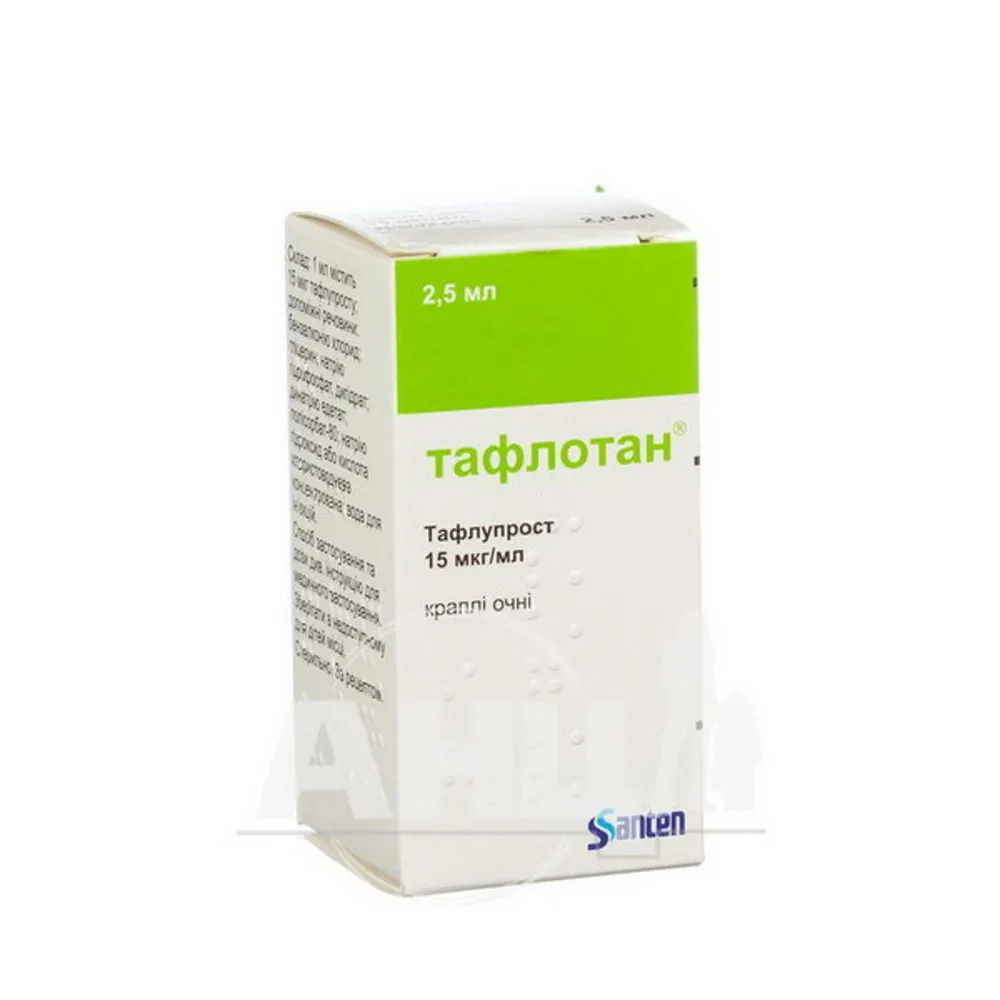
Table of Contents
INSTRUCTIONS FOR MEDICAL USE OF THE MEDICINAL PRODUCT TAFLOTAN® (TAFLOTAN®)
Composition:
Active substance: tafluprost;
1 ml of eye drops contains 15 μg of tafluprost;
1 vial (2.5 ml) of eye drops contains 37.5 μg of tafluprost;
Excipients: benzalkonium chloride; glycerin; sodium dihydrogen phosphate, dihydrate; disodium edetate; polysorbate 80; sodium hydroxide or hydrochloric acid concentrated; water for injections.
Pharmaceutical form. Eye drops.
Main physicochemical properties: clear, colorless solution. Does not contain visible particles.
Pharmacotherapeutic group. Medicinal products used in ophthalmology. Anti-glaucoma agents and miotics. Prostaglandin analogues. Tafluprost.
ATC code S01EE05.
Pharmacological properties.
Pharmacodynamics.
Mechanism of action
Tafluprost is a fluorinated analogue of prostaglandin F2α. Tafluprost acid—the biologically active metabolite of tafluprost—is a highly potent and selective agonist of the human prostaglandin FP receptor. Tafluprost acid has 12 times greater affinity for the FP receptor than latanoprost. Pharmacodynamic studies in monkeys indicate that tafluprost reduces intraocular pressure by increasing uveoscleral outflow of aqueous humor.
Pharmacodynamic effects
Tafluprost is a substance effective in reducing intraocular pressure. In a study evaluating the effects of tafluprost metabolites on intraocular pressure reduction, only tafluprost acid caused a significant decrease in intraocular pressure.
In rabbits treated for 4 weeks with 0.0015% tafluprost ophthalmic solution once daily, blood flow in the optic nerve head significantly (by 15%) increased compared to baseline when measured by laser speckle flowgraphy on day 14 and day 28.
Clinical efficacy
Reduction in intraocular pressure begins 2–4 hours after the first administration of the drug, with maximum effect achieved approximately 12 hours after instillation. The duration of effect lasts for at least 24 hours.
Core clinical studies of tafluprost containing the preservative benzalkonium chloride demonstrated the efficacy of tafluprost as monotherapy and its additive effect when used as adjunctive therapy with timolol.
In a 6-month study, tafluprost showed a significant intraocular pressure-lowering effect of 6–8 mm Hg when administered at various times of day, compared to 7–9 mm Hg achieved with latanoprost. In another 6-month clinical study, tafluprost reduced intraocular pressure by 5–7 mm Hg compared to 4–6 mm Hg with timolol. The intraocular pressure-lowering effect of tafluprost was maintained throughout the extension of these studies up to 12 months. In a 6-week study comparing tafluprost versus placebo in combination with timolol, additional intraocular pressure reduction compared to baseline (measured after a 4-week run-in period on timolol alone) was 5–6 mm Hg in the timolol-tafluprost group and 3–4 mm Hg in the timolol-placebo control group. Both preserved and preservative-free formulations of tafluprost showed comparable intraocular pressure reduction of more than 5 mm Hg in a small crossover study with a 4-week treatment period. Furthermore, in a 3-month U.S. study comparing preservative-free tafluprost with preservative-free timolol, the intraocular pressure-lowering effect of tafluprost ranged from 6.2 to 7.4 mm Hg at different time points, while the effect of timolol ranged from 5.3 to 7.5 mm Hg.
Pharmacokinetics.
Absorption
After a single ocular instillation of one drop of tafluprost 0.0015% ophthalmic solution in each eye once daily for 8 days, plasma concentrations of tafluprost acid were low and showed similar profiles on day 1 and day 8. Plasma concentrations peaked 10 minutes after administration and declined to levels below the lower limit of quantification (10 pg/mL) before the end of the first hour post-instillation. Mean values of Cmax (maximum plasma concentration) (24.4 and 31.4 pg/mL) and AUC0-last (area under the concentration-time curve from time of administration to the time of last quantifiable concentration) (405.9 and 581.1 pg*min/mL) were similar on day 1 and day 8, indicating achievement of steady-state concentrations within the first week after ocular administration. No statistically significant differences in systemic bioavailability were observed between the preserved and preservative-free formulations.
In a rabbit study, ocular absorption of tafluprost into aqueous humor was comparable after single-dose instillation of preservative-free or preserved 0.0015% tafluprost ophthalmic solution.
Distribution
In monkeys, no specific distribution of radiolabeled tafluprost was observed in the iris–ciliary body or choroid, including the retinal pigment epithelium, indicating low affinity for melanin pigment. In whole-body autoradiography studies in rats, the highest concentrations of radioactivity were observed in the cornea, eyelids, sclera, and iris, in descending order. Outside the eye, radioactivity was distributed in the lacrimal apparatus, palate, esophagus, gastrointestinal tract, kidneys, liver, gallbladder, and urinary bladder.
In vitro, binding of tafluprost acid to human serum albumin was 99% at a concentration of 500 ng/mL.
Biotransformation
The primary metabolic pathway of tafluprost in humans, as analyzed in vitro, involves hydrolysis of the pharmacologically active metabolite—tafluprost acid—followed by further metabolism via glucuronidation or beta-oxidation. The beta-oxidation products—1,2-dinor- and 1,2,3,4-tetranor-tafluprost acid—are pharmacologically inactive and may undergo glucuronidation or hydroxylation. The cytochrome P450 (CYP) enzyme system is not involved in the metabolism of tafluprost acid. Based on studies using rabbit corneal tissue and purified enzymes, carboxylesterase is the primary esterase responsible for hydrolysis of the ester to tafluprost acid. Butyrylcholinesterase may also participate in hydrolysis, but not acetylcholinesterase.
Elimination
After daily administration of 3H-tafluprost (0.005% ophthalmic solution; 5 µL/eye) to both eyes of rats for 21 days, approximately 87% of the total radioactive dose was eliminated from the body. The fraction of the total dose excreted in urine was approximately 27–38%, and approximately 44–58% of the dose was excreted in feces.
Clinical characteristics.
Indications.
Reduction of elevated intraocular pressure in open-angle glaucoma and ocular hypertension in adults.
Used as monotherapy in patients:
- with inadequate response to first-line therapy;
- with intolerance or contraindications to first-line therapy.
As adjunctive treatment in combination with beta-blockers.
Contraindications.
Hypersensitivity to the active substance tafluprost or to any of the excipients.
Interaction with other medicinal products and other forms of interaction.
Interactions in humans are not expected, as systemic concentrations of tafluprost after ocular administration are very low. Therefore, no specific studies on tafluprost interactions with other medicinal products have been conducted.
In clinical trials, tafluprost was used concomitantly with timolol without any signs of interaction.
Special precautions for use.
Before initiating treatment, patients should be informed about the possible growth of eyelashes, darkening of the eyelid skin, and increased pigmentation of the iris. Some of these changes may be long-lasting and may lead to differences in appearance between the eyes if only one eye is treated.
Changes in iris pigmentation occur gradually and may go unnoticed for several months. Eye color changes have mainly been observed in patients with mixed-color irises, such as blue-brown, gray-brown, yellow-brown, or green-brown. The risk of developing permanent heterochromia exists when treating only one eye.
There is a potential risk of increased hair growth in areas where the tafluprost solution repeatedly contacts the skin surface.
There is no experience with the use of tafluprost in neovascular, closed-angle, narrow-angle, or congenital glaucoma. Experience with tafluprost in patients with aphakia, pseudophakia with posterior lens capsule rupture or anterior chamber lenses, or in pigmentary or pseudoexfoliative glaucoma is limited.
Caution is recommended when using tafluprost in patients with aphakia, pseudophakia with posterior capsule rupture or anterior chamber lenses, or in patients with known risk factors for cystoid macular edema or inflammation of the iris/uveitis.
There is no experience with the use of the medicinal product in patients with severe asthma. Therefore, the product should be used with caution in such patients.
Benzalkonium chloride, commonly used as a preservative in ophthalmic preparations, has been reported to cause punctate keratitis and/or toxic ulcerative keratitis. Since the product contains benzalkonium chloride, careful monitoring is required in cases of frequent or prolonged use, particularly in patients with dry eye syndrome or conditions characterized by corneal involvement.
The product contains benzalkonium chloride, which may cause eye irritation. Contact with soft contact lenses should be avoided. Contact lenses must be removed before instilling the product, and at least 15 minutes should elapse before reinserting them. Benzalkonium chloride is known to cause discoloration of soft contact lenses.
Use during pregnancy or breastfeeding.
Women of childbearing potential/contraception
The product should not be used in women of childbearing potential who are not using appropriate contraceptive measures.
Pregnancy
There are no adequate data on the use of tafluprost in pregnant women. Tafluprost may have adverse pharmacological effects on pregnancy and/or the fetus/newborn. Animal studies have shown reproductive toxicity. Therefore, the product should not be used during pregnancy except in cases of clear medical necessity (when no alternative treatment options are available).
Breastfeeding
It is unknown whether tafluprost or its metabolites are excreted in human breast milk. Studies in rats have shown excretion of tafluprost and/or its metabolites in milk after topical administration. Therefore, tafluprost should not be used during breastfeeding.
Fertility
In rats, intravenous administration of tafluprost at doses up to 100 µg/kg/day had no effect on mating ability or fertility.
Ability to affect reaction speed when driving or operating machinery.
Tafluprost does not affect the ability to drive or operate machinery. However, as with any ophthalmic preparation, if transient blurred vision occurs after instillation, patients should wait for vision to clear before driving or operating machinery.
Method of Administration and Dosage
Dosage
The recommended dose is 1 drop of the medication into the conjunctival sac of the affected eye(s) once daily in the evening.
Administration of the medication more frequently than once daily is not recommended, as more frequent administration may reduce the intraocular pressure-lowering effect.
Use in elderly patients
No dosage adjustment is required for elderly patients.
Use in patients with renal or hepatic impairment
Studies on tafluprost in patients with renal or hepatic impairment have not been conducted; therefore, it should be used with caution when treating such patients.
Method of Administration
To prevent potential contamination of the solution, patients should avoid touching their eyelids, surrounding areas, or any other surfaces with the dropper tip of the bottle.
To minimize the risk of skin darkening of the eyelids, patients should wipe off any excess solution from the skin. As with any other ophthalmic drops, after instillation, it is recommended to close the nasolacrimal passage or gently press the eyelids closed. This may reduce systemic absorption of ophthalmic medications.
If a patient is using more than one ophthalmic topical medication, the interval between each medication should be at least 5 minutes.
Children
The safety and efficacy of tafluprost in children (under 18 years of age) have not been established. Data are lacking.
Overdose
Overdose following ophthalmic administration is unlikely. In the event of overdose, treatment should be symptomatic.
Adverse Reactions
During clinical trials, over 1400 patients received tafluprost either as monotherapy or as adjunctive therapy to 0.5% timolol. The most commonly reported treatment-related adverse reaction was ocular hyperemia, occurring in approximately 13% of patients participating in tafluprost clinical trials in Europe and the United States. In most cases, ocular hyperemia was mild and led to treatment discontinuation in only about 0.4% of patients in the core clinical studies.
The following treatment-related adverse reactions were observed during clinical trials of tafluprost in Europe and the United States, with a maximum observation period of 24 months.
Within each frequency category, adverse reactions are listed in order of decreasing severity.
Frequency terms are defined as follows:
Very common (≥ 1/10), common (≥ 1/100 to < 1/10), uncommon (≥ 1/1000 to < 1/100), rare (≥ 1/10,000 to < 1/1000), very rare (< 1/10,000), and not known (cannot be estimated from available data).
Systemic nervous system disorders
Common (≥ 1/100 to < 1/10): headache.
Eye disorders
Very common (≥ 1/10): conjunctival/ocular hyperemia.
Common (≥ 1/100 to < 1/10): eye pruritus, eye irritation, eye pain, eyelash changes (increased length, thickness, and number of eyelashes), dry eye syndrome, foreign body sensation in the eye, eyelid redness, superficial punctate keratitis (SPK), photophobia, increased lacrimation, blurred vision, decreased visual acuity, and increased iris pigmentation.
Uncommon (≥ 1/1,000 to < 1/100): eyelid pigmentation, eyelid edema, asthenopia (eye strain), conjunctival edema, eye discharge, blepharitis, anterior chamber cell reaction, eye discomfort, ciliary hyperemia, conjunctival pigmentation, conjunctival follicles, allergic conjunctivitis, and abnormal sensation in the eye.
Not known (cannot be estimated from available data): iritis/uveitis, deepening of eyelid sulcus, macular edema/cystoid macular edema.
In some patients with significant corneal damage, corneal calcification has very rarely been observed following the use of ophthalmic solutions containing phosphates.
Respiratory system disorders
Not known (cannot be estimated from available data): asthma exacerbation, dyspnea.
Skin and subcutaneous tissue disorders
Uncommon (≥ 1/1,000 to < 1/100): eyelid hypertrichosis.
Reporting of suspected adverse reactions
It is important to report suspected adverse reactions after marketing authorization. This allows continued monitoring of the benefit-risk balance of the medicinal product. Healthcare professionals are encouraged to report any suspected adverse reactions.
Shelf life. 3 years.
Use within 4 weeks after opening the bottle.
Storage conditions.
Store in the original packaging at a temperature not exceeding 25 °C.
Keep out of the reach of children.
Packaging.
2.5 mL in a bottle. One bottle with a dropper cap and lid in a cardboard box.
Prescription status.
Prescription only.
Manufacturer. Santen AT / Santen Oy.
Manufacturer's address and location of operations.
Kelloportinkatu 1, Tampere, 33100, Finland / Kelloportinkatu 1, Tampere, 33100, Finland.