Strepsils® intensive
Ukraine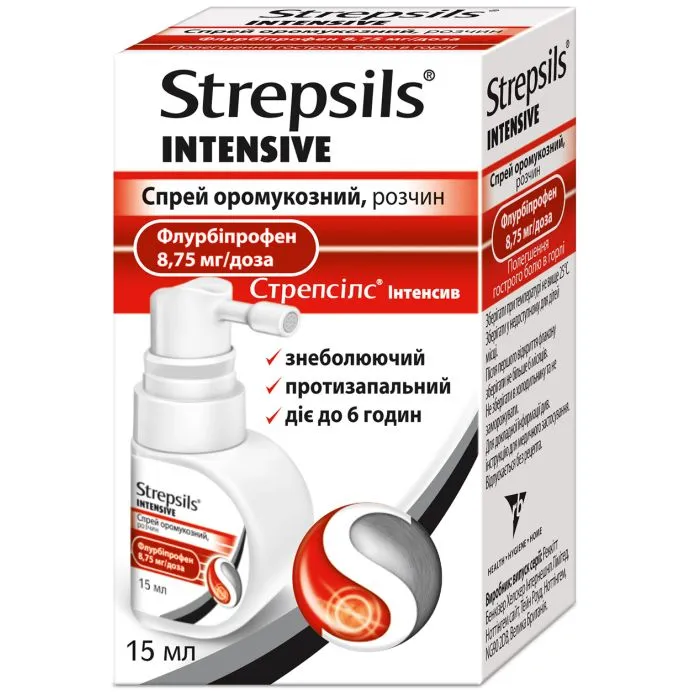
Table of Contents
INSTRUCTIONS FOR MEDICAL USE OF THE MEDICINAL PRODUCT Strepsils® Intensive (Strepsils® Intensive)
Composition:
Active substance: flurbiprofen;
1 dose (3 sprays) contains flurbiprofen 8.75 mg;
Excipients: betadex; sodium hydrogen phosphate, dodecahydrate; citric acid, monohydrate; methylparahydroxybenzoate (E 218); propylparahydroxybenzoate (E 216); sodium hydroxide; peppermint flavoring; cherry flavoring; N,2,3-trimethyl-2-isopropyl-butanamide; sodium saccharin; hydroxypropyl betadex; purified water.
Pharmaceutical form. Oromucosal spray, solution.
Main physicochemical properties: clear solution, colorless to slightly yellow.
Pharmacotherapeutic group.
Preparations used in throat disorders.
Other preparations used in throat disorders. Flurbiprofen.
ATC code R02A X01.
Pharmacological Properties
Pharmacodynamics
Flurbiprofen is a non-steroidal anti-inflammatory drug (NSAID), a propionic acid derivative, which acts by inhibiting the synthesis of prostaglandins. Flurbiprophen exerts potent analgesic, antipyretic, and anti-inflammatory effects. In studies using cultured human cells, it has been shown that a single dose dissolved in artificial saliva reduces swelling of the respiratory mucosa. According to whole blood assay studies, flurbiprofen is a mixed inhibitor of COX-1/COX-2 with some selectivity towards COX-1.
Preclinical studies indicate that the R(−) enantiomer of flurbiprofen and related NSAIDs may affect the central nervous system; the likely mechanism involves inhibition of COX-2 induction at the spinal cord level.
A single dose of flurbiprofen 8.75 mg (three sprays), applied directly to the throat mucosa, has been shown to relieve sore throat pain. In particular, significantly reduced swelling and inflammation in irritated areas of the throat were observed (AUC) compared to baseline curve (mean difference (standard deviation)) for active treatment versus placebo from 0 to 2 hours (−1.82 (1.35) vs. −1.13 (1.14)), from 0 to 3 hours (−2.01 (1.405) vs. −1.31 (1.233)), and from 0 to 6 hours (−2.14 (1.551) vs. −1.50 (1.385)). Significant differences in AUC from baseline from 0 to 6 hours compared to placebo were also observed for other pharyngitis symptoms, including pain intensity (−22.50 (17.894) vs. −15.64 (16.413)), difficulty swallowing (−22.50 (18.260) vs. −16.01 (15.451)), throat swelling (−20.97 (18.897) vs. −13.80 (15.565)), and relief of sore throat (3.24 (1.456) vs. 2.47 (1.248)). Changes from baseline at individual time points for various pharyngitis parameters were significant starting from 5 minutes up to 6 hours.
In patients receiving antibiotics for streptococcal infection, symptom relief of pharyngitis was statistically more significant after administration of flurbiprofen 8.75 mg lozenges 7 hours after and beyond antibiotic administration. The analgesic effect of flurbiprofen 8.75 mg lozenges is not diminished when antibiotics are used to treat patients infected with streptococcal throat infection.
Efficacy has also been demonstrated after multiple doses administered over 3 days. Strepsils® Intensive, an oromucosal spray solution, is simple and convenient to use. Upon application to the inflamed area of the throat, it helps restore voice while simultaneously soothing and softening the throat.
Pharmacokinetics
Absorption.
A single dose of flurbiprofen 8.75 mg (three sprays) is delivered directly to the throat; flurbiprofen is readily absorbed and detectable in blood within 2–5 minutes. Maximum plasma concentration is observed 30 minutes after administration, but plasma levels remain low, averaging 1.6 µg/mL—approximately 4 times lower than that achieved with a 50 mg tablet. Strepsils® Intensive is bioequivalent to flurbiprofen 8.75 mg lozenges. Flurbiprofen absorption occurs in the oral cavity via passive diffusion. The rate of absorption depends on the pharmaceutical formulation. Peak concentrations after administration of the oromucosal spray are achieved faster than after administration of an equivalent oral dose.
Distribution.
Flurbiprofen is rapidly distributed throughout the body and binds to plasma proteins.
Metabolism/Excretion.
Flurbiprofen is metabolized via hydroxylation and excreted by the kidneys. The elimination half-life ranges from 3 to 6 hours. Flurbiprofen passes into breast milk only in minimal amounts (less than 0.05 µg/mL). Approximately 20–25% of orally administered flurbiprofen is excreted unchanged from the body.
Special populations.
No differences in pharmacokinetic parameters have been observed between elderly individuals and young adult volunteers after oral administration of flurbiprofen in tablet form.
Clinical characteristics.
Indications. For short-term symptomatic relief of acute sore throat in adults.
Contraindications.
- Hypersensitivity to flurbiprofen or to any of the other components of the medicinal product.
- Hypersensitivity reactions (e.g. bronchial asthma, bronchospasm, rhinitis, Quincke's edema, or urticaria) following the administration of acetylsalicylic acid or other nonsteroidal anti-inflammatory drugs (NSAIDs).
- Recurrent peptic ulcer/bleeding in medical history or in the acute phase (two or more episodes confirmed by characteristic clinical manifestations) and intestinal ulcers.
- Gastrointestinal bleeding or perforation in medical history, severe colitis, hemorrhagic or hematopoietic disorders associated with previous NSAID therapy.
- Third trimester of pregnancy.
- Severe heart failure, severe renal impairment, or severe hepatic impairment.
- Pediatric population (under 18 years of age).
Interaction with other medicinal products and other forms of interactions.
Concomitant use of flurbiprofen should be avoided with:
acetylsalicylic acid, unless acetylsalicylic acid has been prescribed by a physician at low doses (not exceeding 75 mg per day), as this may lead to the occurrence of adverse reactions;
other NSAIDs, including selective cyclooxygenase-2 (COX-2) inhibitors, as this increases the risk of adverse effects (particularly gastrointestinal adverse reactions such as ulcers and bleeding).
Flurbiprofen should be used with caution in combination with the following medicinal products:
Anticoagulants. Nonsteroidal anti-inflammatory drugs may enhance the effects of anticoagulants such as warfarin.
Antihypertensive agents and diuretics, ACE inhibitors, angiotensin II receptor antagonists. Nonsteroidal anti-inflammatory drugs may reduce the therapeutic effect of these agents. The risk of nephrotoxicity is increased.
Glucocorticoids increase the risk of gastrointestinal bleeding or ulcers.
Cardiac glycosides may exacerbate heart failure, reduce glomerular filtration rate, and increase glycoside levels in plasma. Monitoring of the patient is recommended, and dose adjustment if necessary.
Antiplatelet agents and selective serotonin reuptake inhibitors. The risk of gastrointestinal bleeding is increased.
Lithium. Increased serum lithium levels may occur. Monitoring of the patient is required, and dose adjustment if necessary.
MTX (methotrexate). Administration of NSAIDs within 24 hours before or after methotrexate may lead to increased methotrexate concentrations and enhanced toxicity.
Cyclosporines. The risk of nephrotoxicity is increased.
Mifepristone. NSAIDs should not be taken within 8–12 days following mifepristone administration, as this may reduce the efficacy of mifepristone.
Tacrolimus. The risk of nephrotoxicity is increased.
Zidovudine. When NSAIDs are used concomitantly, the risk of hematological toxicity is increased.
Quinolone antibiotics increase the risk of seizures.
Oral antidiabetic agents. Blood glucose levels may fluctuate (increased monitoring of blood glucose levels is recommended).
Phenytoin. Increased plasma phenytoin levels may occur. Monitoring of the patient is required, and dose adjustment if necessary.
Potassium-sparing diuretics. Hyperkalemia may occur.
Probenecid, sulfinpyrazone. Flurbiprofen is released slowly.
Alcohol. The risk of adverse reactions, particularly gastrointestinal bleeding, is increased.
To date, no interactions have been identified between flurbiprofen and tolbutamide or antacids.
Special precautions for use.
Adverse effects may be minimized by using the lowest effective dose for the shortest duration necessary to control symptoms.
Masking of symptoms of underlying infection.
Epidemiological studies suggest that systemic NSAIDs may mask the signs of infection, potentially leading to delayed initiation of appropriate treatment and consequently worsening the outcome of the infection. This has been observed in bacterial pneumonia and bacterial complications of varicella. If Strepsils® Intensive, oromucosal spray, solution is used in patients with fever or pain associated with infection, monitoring of the infection is recommended.
Since exacerbations of infectious inflammation (e.g. development of necrotizing fasciitis) have been reported in temporal association with the use of systemic NSAIDs, patients should be advised to seek immediate medical attention if signs of bacterial infection occur or if their condition worsens during treatment with flurbiprofen spray. The need for anti-infective antibiotic therapy should be considered.
In cases of purulent bacterial pharyngitis/tonsillitis, patients are advised to consult a physician, as treatment should be re-evaluated.
Treatment should not exceed three days.
If symptoms worsen or new symptoms appear, medical advice should be sought, as treatment should be re-evaluated.
If irritation in the oral cavity occurs, treatment with flurbiprofen should be discontinued.
In elderly patients, the frequency of adverse reactions associated with nonsteroidal anti-inflammatory drugs increases, particularly gastrointestinal bleeding or perforation, which may be fatal.
Bronchospasm may occur in patients with bronchial asthma or allergic disorders, as well as in those with a history of bronchospasm.
Concomitant use of flurbiprofen with other NSAIDs, including selective cyclooxygenase-2 inhibitors, is not recommended.
Systemic lupus erythematosus and systemic connective tissue diseases increase the risk of aseptic meningitis; however, this effect is usually not observed with short-term, limited use of drugs such as flurbiprofen in spray form.
Cardiac, renal, and hepatic insufficiency.
NSAIDs may cause nephrotoxicity in various forms, including interstitial nephritis, nephrotic syndrome, and renal failure. NSAID use may lead to dose-dependent reduction in prostaglandin production and provoke renal failure. Patients at highest risk include those with pre-existing renal impairment, heart failure, hepatic dysfunction, those taking diuretics, and elderly patients. However, this effect is usually not observed with short-term, limited use of drugs such as flurbiprofen in spray form.
Hepatic function impairment.
Mild to moderate impairment of liver function (see sections "Contraindications" and "Adverse reactions").
Effects on the cardiovascular and cerebrovascular systems. Flurbiprofen-containing products should be initiated with caution (after consultation with a physician) in patients with elevated blood pressure and/or heart failure, as NSAIDs have been associated with fluid retention, increased blood pressure, and edema.
Results from clinical and epidemiological studies indicate that the use of certain NSAIDs (particularly at high doses and for prolonged periods) may increase the risk of arterial thrombotic events (e.g. myocardial infarction or stroke). There is insufficient data to exclude such risk with the use of 5 doses per day (1 dose = 3 sprays).
Neurological symptoms. Prolonged use of analgesics or use without medical indication may lead to medication-overuse headache, which cannot be treated by increasing the dose of the drug.
Effects on the gastrointestinal tract. NSAIDs should be used with caution in patients with a history of ulcerative colitis or Crohn’s disease, as their condition may worsen.
During the use of all NSAIDs, gastrointestinal bleeding, ulcers, or perforations have been reported, which may be fatal, both in patients with and without prior gastrointestinal symptoms or serious gastrointestinal adverse events in their history.
The risk of gastrointestinal bleeding, ulcers, and perforation increases with higher NSAID doses, particularly in patients with a history of peptic ulcer disease, especially if complicated by bleeding or perforation (see section "Contraindications"), and in elderly patients. However, this effect is usually not observed during short-term, limited use of drugs such as flurbiprofen in spray form. Patients with a history of gastrointestinal toxicity, particularly elderly individuals, should be advised to inform their physician of any unusual abdominal symptoms (especially gastrointestinal bleeding).
The drug should be used with caution in patients receiving concomitant therapy with medications that increase the risk of peptic ulceration or bleeding, such as oral corticosteroids, anticoagulants (e.g. warfarin), selective serotonin reuptake inhibitors, or antiplatelet agents such as acetylsalicylic acid (see section "Interaction with other medicinal products and other forms of interaction").
If gastrointestinal bleeding or ulceration occurs in a patient receiving flurbiprofen, treatment should be discontinued.
Hematological effects. Like other NSAIDs, flurbiprofen may inhibit platelet aggregation and prolong bleeding time. Flurbiprofen in spray form should be used with caution in patients with potential for abnormal bleeding.
Skin reactions, such as exfoliative dermatitis, Stevens-Johnson syndrome, and toxic epidermal necrolysis, have occurred very rarely. Patients should discontinue treatment with flurbiprofen at the first sign of rash, mucosal lesions, or other signs of hypersensitivity (see section "Adverse reactions").
The product contains methylparahydroxybenzoate and propylparahydroxybenzoate, which may cause allergic reactions (possibly delayed).
Use during pregnancy or breastfeeding.
Pregnancy.
Inhibition of prostaglandin synthesis may adversely affect pregnancy and/or embryonic/fetal development. Epidemiological data suggest an increased risk of miscarriage and congenital heart defects with gastroschisis following use of prostaglandin synthesis inhibitors in early pregnancy. The absolute risk of cardiac malformation increased from less than 1% to approximately 1.5%. The risk is considered to increase with higher doses and longer duration of therapy. In animal studies, administration of prostaglandin synthesis inhibitors resulted in increased pre- and post-implantation loss and embryolethality. Additionally, an increased incidence of various developmental abnormalities, including cardiovascular malformations, was observed in animals exposed to prostaglandin synthesis inhibitors during organogenesis.
There are no clinical data on the use of Strepsils® Intensive, oromucosal spray, solution during pregnancy. Even though systemic exposure is lower compared to oral administration, it is unknown whether systemic exposure achieved after local application could be harmful to the embryo/fetus. Flurbiprofen should not be used during the first and second trimesters of pregnancy. If use is necessary, the dose should be as low as possible and the duration of treatment as short as possible.
The drug is contraindicated during the third trimester of pregnancy, as all prostaglandin synthesis inhibitors may cause:
- in the fetus: cardiopulmonary toxicity (with premature closure of the ductus arteriosus and development of pulmonary hypertension), renal dysfunction progressing to renal failure, oligo- or polyhydramnios;
- in the mother and newborn: prolonged bleeding time due to anti-aggregatory effect, which may occur even at very low doses; inhibition of uterine contractions, leading to delayed or prolonged labor.
Breastfeeding.
A small amount of flurbiprofen has been detected in breast milk, but no adverse effects of flurbiprofen on breastfed infants have been reported. However, use of the drug during breastfeeding should be avoided.
Fertility.
There is evidence that drugs which inhibit cyclooxygenase/prostaglandin synthesis may adversely affect female fertility, specifically ovulation. Fertility is restored after discontinuation of treatment.
Ability to influence reaction speed when driving or operating machinery.
Dizziness, drowsiness, fatigue, and visual disturbances may occur during NSAID use. If such adverse effects occur, driving or operating machinery is not recommended.
Method of Administration and Dosage
For oromucosal use. For short-term use only.
Adults should use 1 dose (3 sprays) onto the back of the oral cavity every 3–6 hours as needed, but not more than 5 doses within 24 hours.
Do not inhale during spraying.
The product is not recommended for use for more than 3 days.
Before first use, the spray pump must be primed. To do this, turn the nozzle away from yourself and press the cap at least four times until a fine, clear, homogeneous mist is produced. This ensures that the medication reaches the spray mechanism and the device is ready for use.
Before administering each subsequent dose, turn the nozzle away from yourself, press the cap at least once, and ensure that a clear, homogeneous mist is produced. The spray should be checked each time before use to confirm a consistent, uniform mist.
Elderly patients should receive the lowest possible effective dose for the shortest duration necessary. Elderly patients are at increased risk of serious adverse reactions.
Use the lowest effective dose required to control symptoms for the shortest duration (see section "Special Instructions").
Children
The safety and efficacy of Strepsils® Intensive in children (under 18 years of age) have not been established.
Overdose
Symptoms. In most patients who have ingested clinically significant amounts of nonsteroidal anti-inflammatory drugs, symptoms may include nausea, vomiting, epigastric pain, or very rarely, diarrhea. Tinnitus, headache, and gastrointestinal bleeding may also occur. In more severe poisoning, toxic effects on the central nervous system may develop, such as drowsiness, occasionally excitement, visual disturbances, disorientation, or coma. Seizures may occasionally occur. Severe poisoning may lead to metabolic acidosis and prolonged prothrombin time due to effects on blood clotting factors. Acute renal failure and hepatic injury may also occur. In patients with bronchial asthma, the condition may worsen.
Treatment. Treatment should be symptomatic and supportive, including airway management, monitoring of cardiac function and vital signs until stabilization is achieved. Oral activated charcoal or gastric lavage is recommended if the patient presents within 1 hour of ingestion of a potentially toxic amount. Electrolyte imbalances in serum should be corrected as needed. In cases of frequent or prolonged seizures, intravenous diazepam or lorazepam should be administered. Bronchodilators should be used in patients with bronchial asthma. There is no specific antidote for flurbiprofen.
Adverse reactions.
Hypersensitivity reactions to NSAIDs have been reported, including:
- non-specific allergic reactions and anaphylaxis;
- respiratory tract reactivity, e.g. bronchial asthma, exacerbation of bronchial asthma, bronchospasm, dyspnea;
- various skin reactions, e.g. pruritus, urticaria, angioedema (Quincke's edema), and more rarely exfoliative and bullous dermatitis (including epidermal necrolysis and polymorphic erythema).
Edema, arterial hypertension, and heart failure have been reported in connection with NSAID therapy. There are insufficient data to exclude such risks when using flurbiprofen oral spray solution.
The adverse reactions listed below were observed during short-term use of flurbiprofen. The frequency of adverse reactions is defined as follows: very common (> 1/10), common (> 1/100 to < 1/10), uncommon (> 1/1000 to < 1/100), rare (> 1/10,000 to < 1/1000), very rare (< 1/10,000), not known (cannot be estimated from the available data).
Blood and lymphatic system disorders:
not known: anemia, thrombocytopenia.
Cardiovascular and cerebrovascular system disorders:
not known: edema, arterial hypertension, heart failure.
Nervous system disorders:
common: dizziness, headache, paraesthesia (tingling, numbness, itching);
uncommon: somnolence.
Respiratory, thoracic and mediastinal disorders:
common: throat irritation;
uncommon: exacerbation of bronchial asthma, bronchospasm, dyspnea, wheezing, mouth blisters, pharyngeal hypaesthesia.
Gastrointestinal disorders:
common: diarrhea, mouth ulcers, nausea, oral pain, oral paraesthesia, oropharyngeal pain, oral discomfort (sensation of warmth, burning, or tingling in the mouth);
uncommon: abdominal distension, abdominal pain, constipation, dry mouth, dyspepsia, flatulence, burning mouth syndrome, dysgeusia, oral dysaesthesia, vomiting.
Skin and subcutaneous tissue disorders:
uncommon: various skin rashes, pruritus;
not known: severe skin reactions such as bullous reactions, including Stevens-Johnson syndrome and toxic epidermal necrolysis.
General disorders and administration site conditions:
uncommon: pyrexia, pain.
Immune system disorders:
rare: anaphylactic reactions.
Psychiatric disorders:
uncommon: insomnia.
Hepatobiliary disorders:
not known: hepatitis.
If adverse reactions occur, treatment should be discontinued and medical advice should be sought.
Shelf life. 2 years.
Storage conditions.
Store at a temperature not exceeding 25 °C. Keep out of reach of children.
After first opening of the bottle, store for no more than 6 months.
Do not store in the refrigerator and do not freeze.
Packaging.
15 ml in a bottle, 1 bottle in a cardboard box.
Supply category. Over-the-counter.
Manufacturer.
Reckitt Benckiser Healthcare International Limited.
Manufacturer's address and place of business.
Nottingham site, Taylors Road, Nottingham, NG90 2DB, United Kingdom