Stomato-gel zdorovya
Ukraine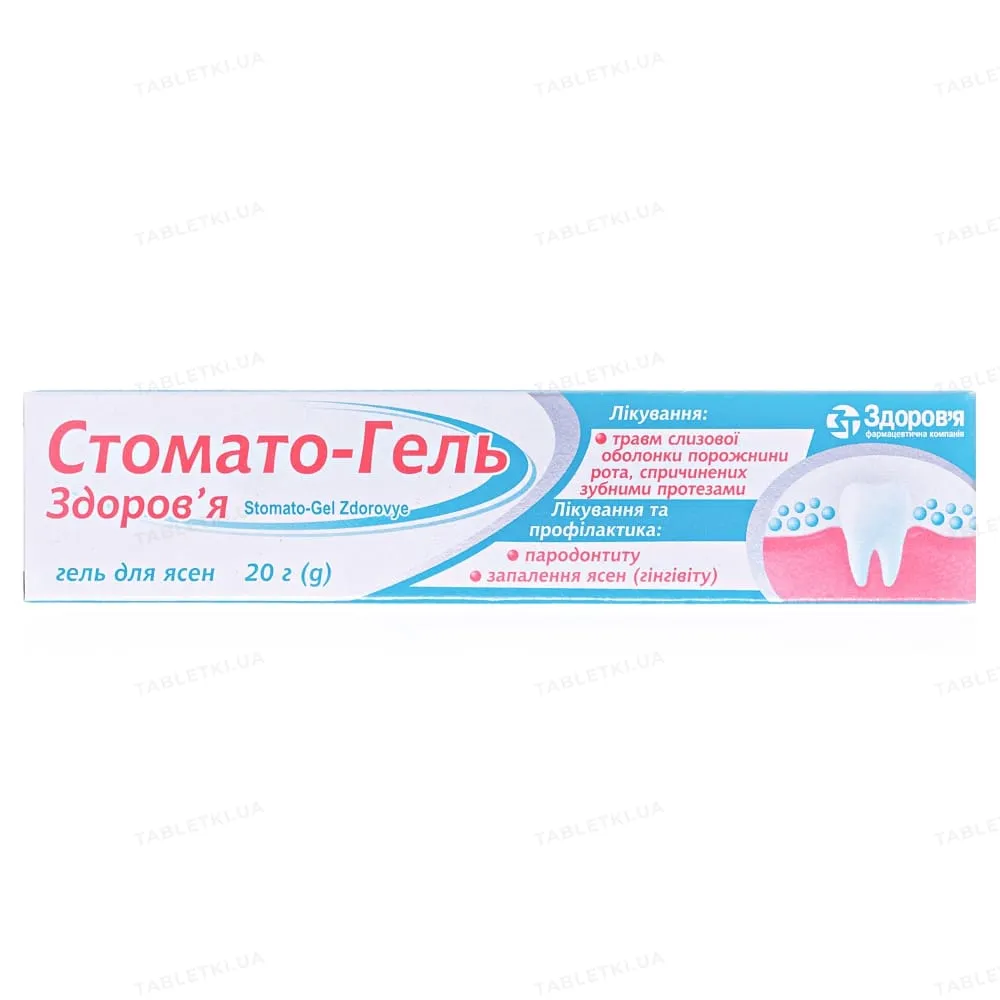
Table of Contents
INSTRUCTIONS FOR MEDICAL USE OF THE MEDICINAL PRODUCT STOMATO-GEL ZDOROVYE (STOMATO-GEL ZDOROVYE)
Composition:
Active substances: metronidazole, chlorhexidine;
1 g of gel contains 10 mg of metronidazole benzoate calculated as metronidazole, 0.5 mg of chlorhexidine digluconate;
Excipients: propylene glycol, carbomer, sodium saccharin, menthol, sodium hydroxide, disodium edetate (Trilon B), purified water.
Pharmaceutical form. Gel for gingival application.
Main physicochemical properties: soft, semi-transparent white or almost white gel.
Pharmacotherapeutic group. Antimicrobial and antiseptic agents for local application in dentistry. ATC code A01AB.
Pharmacological properties.
Pharmacodynamics. An antimicrobial combination drug for comprehensive treatment and prevention of certain infectious and inflammatory diseases of the oral cavity.
The efficacy of the drug is due to the presence of two antibacterial components — metronidazole and chlorhexidine.
Metronidazole is a nitroimidazole derivative with antiprotozoal and antibacterial activity. It is active against anaerobic bacteria causing periodontal diseases: Porphyromonas gingivalis, Prevotella intermedia, Prevotella denticola, Fusobacterium fusiformis, Wolinella recta, Eikenella corrodens, Borrelia vincenti, Bacteroides melaninogenicus, Selenomonas spp. The minimum inhibitory concentration (MIC50) of metronidazole against anaerobic bacteria is below 1 mcg/mL.
Chlorhexidine is a bactericidal antiseptic. It is active against a broad spectrum of vegetative forms of gram-negative and gram-positive microorganisms, as well as yeasts, dermatophytes, and lipophilic viruses.
Pharmacokinetics. When the drug is applied topically (applied to the gums), the concentration of metronidazole in the gingival area is significantly higher than with oral administration, while the level of systemic absorption of metronidazole with topical application is considerably lower than with oral administration. The main route of elimination of metronidazole and its metabolites is via the kidneys. Impaired renal function does not alter the pharmacokinetics of a single dose of metronidazole.
In case of accidental swallowing of excess chlorhexidine during its topical application as part of a dental gel, approximately 1% of the dose reaching the stomach is absorbed from the gastrointestinal tract. Chlorhexidine does not accumulate in the body and undergoes minimal metabolism.
Clinical characteristics.
Indications. For the treatment of infectious-inflammatory diseases of the periodontium and oral mucosa:
- Catarrhal hypertrophic gingivitis (acute and chronic course);
- Acute ulcerative-necrotic gingivitis (Vincent's gingivitis);
- Generalized periodontitis (chronic and acute exacerbation);
- Trauma of the oral mucosa caused by dental prostheses;
- Alveolitis (inflammation of the socket after tooth extraction).
For the prevention of exacerbations of chronic gingivitis and periodontitis.
Contraindications. Hypersensitivity to metronidazole, chlorhexidine, as well as to nitroimidazole derivatives and any components of the drug.
Interaction with other medicinal products and other types of interactions. When applied topically at recommended doses, no systemic interactions with other medicinal products have been observed. However, caution should be exercised when prescribing the drug concomitantly with certain medicinal agents.
Warfarin and other coumarin anticoagulants. Metronidazole potentiates anticoagulant effects, leading to prolonged prothrombin formation time.
Disulfiram. Concomitant use increases toxicity, which may lead to the development of neurological symptoms.
Phenobarbital, phenytoin. Concurrent use reduces the antimicrobial activity of metronidazole. The cause is accelerated metabolism of metronidazole.
Cimetidine. Inhibits the metabolism of metronidazole, potentially leading to increased plasma concentrations of metronidazole.
Special precautions for use.
Avoid contact of the gel with the eyes. The use of this product does not replace dental hygiene practices. Alcohol consumption must be avoided during treatment with this product, as it may lead to gastric spasms, nausea, vomiting, headache, and facial flushing.
Propylene glycol contained in the product may cause skin irritation.
Use during pregnancy or breastfeeding. The product should not be used during pregnancy. Breastfeeding must be discontinued for the duration of treatment with this product.
Ability to affect reaction speed when driving or operating machinery. When used at the recommended dose, this product does not impair the ability to drive or operate potentially hazardous machinery.
Method of Administration and Dosage.
Topically, for dental use only.
The medication should be used after consultation with a dentist.
Adults:
For gingivitis, apply the gel to the gums twice daily. For 30 minutes after application, do not rinse the mouth, drink, or eat. The average duration of treatment is 7–10 days.
For periodontitis, after removal of dental deposits, treat periodontal pockets with the medication and also apply it to the gums. The application duration is 30 minutes. The number of procedures depends on the severity of the disease. Afterwards, the patient applies the gel independently—twice daily to the affected gum areas for 7–10 days.
For prevention of exacerbations of chronic gingivitis and periodontitis, apply to the gums twice daily for 7–10 days. Preventive treatment courses should be carried out 2–3 times per year.
For treatment of post-extraction alveolitis following tooth removal, treat the socket with the medication, then continue self-application 2–3 times daily for 7–10 days.
For prevention of exacerbations of chronic gingivitis and periodontitis, as well as for bleeding gums and unpleasant oral odor, the gel should be rubbed into the gum area using finger massage for 2–3 minutes. After application, spit out the gel and do not rinse the mouth.
For prevention of exacerbations in patients with catarrhal gingivitis and generalized mild periodontitis, perform finger massage of the gums with the gel for 2–3 minutes in the morning and evening after hygienic tooth cleaning. After the procedure, refrain from rinsing the mouth and from drinking liquids for one hour. Preventive treatment courses lasting 2 weeks should be conducted 2–3 times per year.
Children. Not recommended.
Overdose. Cases of overdose with topical application are unknown. Accidental or intentional ingestion of a large amount of gel may lead to exacerbation of adverse reactions primarily caused by metronidazole (chlorhexidine is poorly absorbed from the gastrointestinal tract). These reactions include nausea, vomiting, and dizziness. In more severe cases, paresthesia and seizures may occur. Treatment includes gastric lavage and, if necessary, symptomatic therapy.
Adverse reactions.
When the gel is used locally, the risk of developing systemic adverse effects is negligible; however, the reactions described below may occasionally occur.
Immune system disorders: allergic reactions, including skin rash, pruritus, urticaria, angioedema. One case of eyelid swelling as a manifestation of angioedema reaction has been reported.
Nervous system disorders: headache.
Eye disorders: if the gel gets into the area near the eyes, lacrimation, dryness of the mucous membrane, and transient conjunctival redness may occur.
Gastrointestinal disorders: metallic taste in the mouth, bitter taste in the mouth, nausea, possible appearance of coating in the oral cavity, on the surface of teeth and tongue.
Application site reactions: burning at the site of application, irritation at the site of application.
Shelf life. 2 years.
Storage conditions. Store in the original packaging at a temperature not exceeding 25 °C.
Keep out of reach of children.
Packaging. 20 g in a tube in a carton.
Availability. Over-the-counter.
Manufacturer. LIMITED LIABILITY COMPANY "CORPORATION "ZDOROVIYA".
Manufacturer's address and place of business. 22 Shevchenka Street, Kharkiv, Kharkiv region, 61013, Ukraine.