Spironolactone sandoz®
Ukraine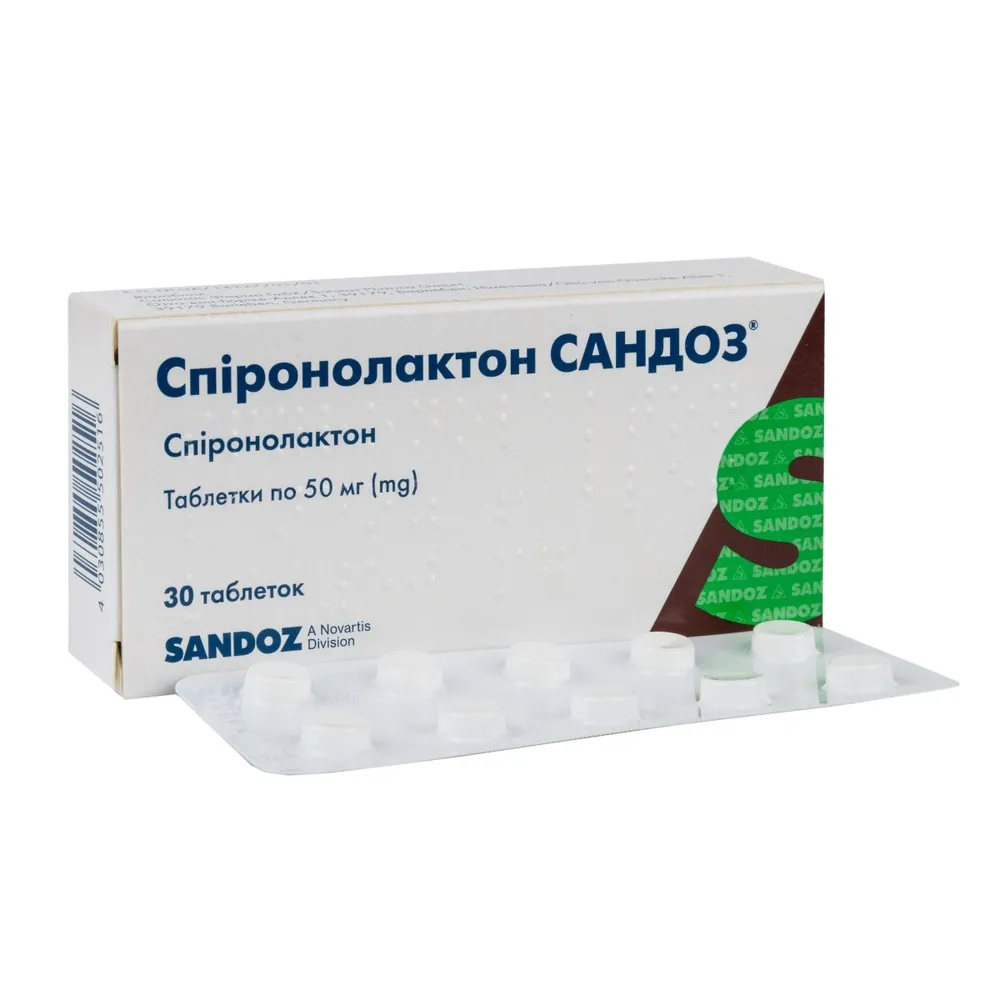
Table of Contents
INSTRUCTIONS FOR MEDICAL USE OF THE MEDICINAL PRODUCT SPIRONOLACTONE SANDOZ®
Composition:
Active substance: spironolactone;
1 tablet contains 50 mg or 100 mg of spironolactone;
Excipients: maize starch, calcium hydrogen phosphate dihydrate, povidone K 25, sodium lauryl sulfate, colloidal anhydrous silicon dioxide, magnesium stearate.
Pharmaceutical form. Tablets.
Main physical and chemical properties: round, flat tablets on both sides, with smooth edges, white in color, with a score line on one side.
Pharmacotherapeutic group.
Potassium-sparing diuretics. ATC code C03D A01.
Pharmacological properties.
Pharmacodynamics.
Spironolactone is a competitive antagonist of aldosterone. It acts on the distal renal tubules.
By blocking aldosterone, it inhibits the retention of water and Na+ and promotes the retention of K+, which not only increases the excretion of Na+ and Cl− but also reduces the excretion of K+ in urine, as well as decreases H+ excretion. As a result, the diuretic effect also has antihypertensive activity.
Pharmacokinetics.
Absorption
Spironolactone is rapidly absorbed after oral administration, approximately 73%. The absorption of spironolactone is increased when taken with food. As a result, the plasma concentration of the active substance increases by 50–100%.
Distribution
The binding of spironolactone and canrenone to plasma proteins is 90% (by equilibrium dialysis method) or 98% (by ultrafiltration method), depending on the method used.
Metabolism
After oral administration, spironolactone undergoes a pronounced first-pass effect and is metabolized primarily in the liver and kidneys. Its main metabolites are 7-α-thiospironolactone, canrenone (or canrenoate), 7-α-thiomethylspironolactone, and 6-β-hydroxy-7-α-thiomethylspironolactone. Compared to the parent compound, the three metabolites listed above have relatively low antimineralocorticoid activity—26%, 68%, and 33%, respectively.
After oral administration, the maximum plasma concentration of spironolactone is reached within 1–2 hours, and the maximum concentration of its metabolites within 2–3 hours.
At low doses (50–200 mg), the area under the concentration-time curve of canrenone increases linearly with dose, whereas higher doses result in lower concentrations, likely due to enzymatic conversion into metabolites.
The steady-state concentration of canrenone ranges between 50–188 ng/mL and is reached approximately 3–8 days after daily administration of spironolactone. In patients with liver cirrhosis and ascites, it is achieved only after 14 days.
Elimination
Spironolactone is primarily excreted in urine and to a lesser extent in bile. The proportion of unchanged spironolactone is negligible. Only metabolites are excreted in urine, primarily canrenone and its glucuronide ester, as well as 6-β-hydroxy-sulfoxide. After administration of a single oral radiolabeled dose of spironolactone, 47–57% is excreted in urine and 35–41% in feces within 6 days.
After oral administration, the elimination half-life of spironolactone is 1–2 hours, whereas its metabolites are eliminated more slowly. The terminal elimination half-life is approximately 20 hours for canrenone, about 3 hours for 7-α-thiomethylspironolactone, and about 10 hours for 6-β-hydroxy-7-α-thiomethylspironolactone.
Spironolactone and its metabolites cross the placental barrier. Canrenone is excreted into breast milk.
Clinical characteristics.
Indications.
- Congestive heart failure in patients who do not respond to treatment with other diuretics, or when potentiation of their effects is required.
- Essential arterial hypertension, primarily in cases of hypokalemia (usually in combination with other antihypertensive agents).
- Liver cirrhosis associated with edema and/or ascites.
- Primary hyperaldosteronism.
- Edema due to nephrotic syndrome.
- Hypokalemia, when alternative therapies are not feasible.
The drug may be used for prevention of hypokalemia in patients receiving cardiac glycosides, if other approaches are considered inappropriate or unsuitable.
Contraindications.
- Hypersensitivity to the active substance or to any of the excipients.
- Use in combination with mitotane, as it may block the action of mitotane.
- Anuria, acute renal failure, severe impairment of renal excretory function (glomerular filtration rate <10 mL/min).
- Severe renal insufficiency associated with oliguria or anuria (creatinine clearance below 30 mL/min per 1.73 m² body surface area and/or serum creatinine above 1.8 mg/dL).
- Hyperkalemia (serum potassium levels > 5.0 mmol/L).
- Hyponatremia.
- Addison's disease.
- Hypovolemia or dehydration.
- Concomitant use of eplerenone or other potassium-sparing diuretics.
- Pregnancy or breastfeeding.
- Concomitant use of ACE inhibitors or AT1 receptor blockers.
Interaction with other medicinal products and other forms of interaction.
Concomitant use of spironolactone with potassium-containing solutions (e.g., potassium chloride), ACE inhibitors (e.g., captopril, enalapril), heparin, low-molecular-weight heparin, angiotensin-II receptor antagonists (e.g., candesartan, valsartan), aldosterone blockers, or potassium-sparing diuretics (triamterene, amiloride) should be avoided, as this may lead to elevated serum potassium levels and development of severe, potentially life-threatening hyperkalemia.
Concomitant use of ACE inhibitors, loop diuretics, and spironolactone may lead to development of acute renal failure.
Concomitant use of trimethoprim/sulfamethoxazole (co-trimoxazole) and spironolactone may result in clinically significant hyperkalemia.
Spironolactone must not be used in combination with mitotane, as it may block the effect of mitotane.
In patients with adrenocortical carcinoma receiving mitotane therapy, spironolactone may reduce plasma levels of mitotane.
Additional intake of antihypertensive agents may result in significant blood pressure reduction.
Other diuretics: increased diuresis and marked reduction in blood pressure.
Cholestyramine, ammonium chloride: increased risk of hyperkalemia and hyperchloremic metabolic acidosis.
Immunosuppressants (tacrolimus and cyclosporine): increased risk of hyperkalemia.
Tricyclic antidepressants and antipsychotic agents: may enhance the hypotensive effect of Spironolactone Sandoz®.
Antihypertensive agents (particularly ganglionic blockers): excessive hypotension may occur. Therefore, the dose of antihypertensive agents may be reduced when adding Spironolactone Sandoz® to the therapeutic regimen, with subsequent adjustment as needed.
Alcohol, barbiturates, or narcotics: may potentiate orthostatic hypotension induced by spironolactone.
Pressor amines (noradrenaline): spironolactone reduces their effect. This should be considered during local or general anesthesia using these agents.
Nonsteroidal anti-inflammatory drugs (NSAIDs), including acetylsalicylic acid, indomethacin, and mefenamic acid: increased risk of hyperkalemia, accompanied by reduced diuretic, natriuretic, and antihypertensive effects of spironolactone. In patients who develop hypovolemia or dehydration during spironolactone therapy, concomitant use of nonsteroidal anti-inflammatory drugs (NSAIDs) may lead to acute renal failure.
Glucocorticoids, adrenocorticotropic hormone (ACTH): paradoxical increase in potassium excretion.
Digoxin: spironolactone may increase the half-life of digoxin, potentially leading to elevated serum digoxin levels and development of glycoside toxicity.
Lithium preparations should not be prescribed concurrently with diuretics, as they reduce renal clearance of lithium and may increase the risk of lithium toxicity.
Carbenoxolone may cause sodium retention and thereby reduce the effectiveness of spironolactone; mutual reduction in efficacy of the drugs is possible. Excessive consumption of licorice has an effect similar to that of carbenoxolone.
Carbamazepine: when taken concomitantly with spironolactone, may cause clinically significant hyponatremia.
Terfenadine: when used concomitantly with spironolactone, increases the risk of ventricular arrhythmias due to hypokalemia and imbalance of other electrolytes.
Coumarin derivatives: their effect is diminished.
Triptorelin, buserelin, gonadorelin: their effects are enhanced.
Neomycin may delay absorption of spironolactone.
Antipyrine: spironolactone accelerates antipyrine metabolism.
Inhalational anesthetics: marked reduction in blood pressure may occur.
Effect on laboratory test results: interference with radioimmunological methods for determination of digoxin concentration may be expected.
Hyperkalemic metabolic acidosis has been reported with cholestyramine use.
Concomitant use of spironolactone and ACE inhibitors (such as captopril, enalapril) is associated with a risk of marked reduction in blood pressure, potentially progressing to shock, and with a risk of worsening renal function, which in rare cases may lead to acute renal failure. To avoid possible development of arterial hypotension at the beginning of treatment, diuretic therapy should be discontinued 2–3 days prior to initiation of ACE inhibitor therapy.
Spironolactone binds to the androgen receptor and may increase prostate-specific antigen (PSA) levels in patients with prostate cancer receiving abiraterone. Concomitant use with abiraterone is not recommended.
Special precautions for use.
Careful monitoring of the patient's condition is required in the following cases:
- patients with moderate renal impairment (creatinine clearance 30–60 mL/min and/or serum creatinine levels between 1.2–1.8 mg/dL);
- patients with diathesis, acidosis and/or hyperkalemia caused by the underlying disease (e.g., in diabetes mellitus);
- patients with arterial hypotension.
Spironolactone may increase the risk of developing hyperkalemia in patients with diabetic nephropathy.
In case of hyperkalemia development, spironolactone should be discontinued and, if necessary, measures should be taken to normalize serum potassium levels.
Hyperkalemia can be life-threatening. In patients with severe heart failure, serum potassium levels should be monitored. Potassium-sparing diuretics should be avoided. Patients with serum potassium levels exceeding 3.5 mmol/L should avoid taking oral potassium supplements. Monitoring of potassium and creatinine levels is recommended one week after initiation of therapy or dose increase, then monthly during the first 3 months, followed by 4 times per year for 1 year, and thereafter every 6 months. If serum potassium exceeds 5 mmol/L or serum creatinine exceeds 4 mg/dL, treatment should be discontinued or interrupted.
Spironolactone therapy may cause transient increases in blood urea nitrogen, especially in patients with pre-existing renal impairment and hyperkalemia. Spironolactone may lead to reversible hyperchloremic metabolic acidosis. Therefore, in patients with renal or hepatic impairment, as well as in elderly patients, regular monitoring of biochemical markers of renal function and electrolyte balance is recommended.
Spironolactone should be used with particular caution in patients with porphyria, as many drugs may provoke porphyria exacerbation.
Alcohol consumption is prohibited during spironolactone treatment.
Prolonged, unjustified use of the drug should be avoided, as published data indicate that long-term administration of spironolactone at maximum doses in animals led to development of carcinomas and myeloid leukemia.
Concomitant use of spironolactone with potassium-sparing diuretics (e.g., triamterene, amiloride), potassium-containing solutions, or angiotensin-converting enzyme (ACE) inhibitors may lead to life-threatening hyperkalemia. Therefore, concomitant use of the above-mentioned agents is not recommended.
In cases of severe renal insufficiency (glomerular filtration rate below 30 mL/min and/or serum creatinine above 1.8 mg/dL), spironolactone is not only ineffective but even harmful, as glomerular filtration rate will continue to decline.
In cases of renal dysfunction (serum creatinine levels between 1.2–1.8 mg/dL and creatinine clearance between 60–30 mL/min) and concomitant use of drugs that may increase blood potassium levels, spironolactone therapy should be administered only under conditions of regular monitoring of blood potassium levels.
During spironolactone treatment, serum electrolytes (primarily potassium, sodium, calcium, bicarbonate), serum creatinine, urea, uric acid (which are normally excreted in urine), and acid-base balance should be monitored regularly.
Body weight loss caused by increased diuresis should not exceed 1 kg/day, regardless of urine output volume.
Due to chronic diuretic abuse, a pseudosyndrome of Bartter may develop, accompanied by edema. Edema reflects increased renin levels, resulting in secondary hyperaldosteronism.
Spironolactone may affect the results of certain diagnostic tests (e.g., serum digoxin concentration measurement by radioimmunoassay (RIA), plasma cortisol, and epinephrine levels).
During intensive diuresis or very rapid reduction of arterial pressure at the beginning of treatment, symptoms related to circulatory disturbances may occur, such as increased intracranial pressure, dizziness, visual disturbances, and reduced ability to concentrate.
No negative effects of spironolactone on carbohydrate metabolism have been observed.
Patients undergoing spironolactone treatment should consume adequate amounts of fluid.
Use of Spironolactone Sandoz® may cause a false-positive doping test result.
Improper use of Spironolactone Sandoz® as a doping agent may harm health.
Spironolactone Sandoz® 50 mg tablets contain 5 mg of sodium lauryl sulfate, and 100 mg tablets contain 6 mg of sodium lauryl sulfate. Caution is advised when administering to patients on a sodium-restricted diet.
Children and adolescents
If potassium levels in children and adolescents fall outside the normal range, spironolactone dosage should be reduced or discontinued, and more careful monitoring of electrolyte levels should be implemented.
Information for diabetic patients
One tablet contains less than 0.01 bread units.
Use during pregnancy or breastfeeding.
Spironolactone should not be used during pregnancy or breastfeeding.
There are insufficient data on the use of spironolactone in pregnant women. In animal studies, feminization of male offspring genitalia and hormonal disturbances in both male and female offspring were observed. Antiandrogenic effects have been reported in humans. Therefore, spironolactone is contraindicated during pregnancy.
It is unknown whether spironolactone passes into breast milk. The pharmacologically active metabolite canrenone is excreted in breast milk (milk-to-plasma concentration ratio of 0.7). Therefore, spironolactone is contraindicated during breastfeeding. If treatment is necessary, breastfeeding should be discontinued.
Ability to affect reaction speed when driving or operating machinery.
During the initial period of spironolactone use, the duration of which is individual, driving vehicles and operating machinery associated with increased risk of injury is prohibited.
Dosage and Administration
The dose should be determined individually, depending on the severity of the condition and the degree of hyperaldosteronism.
Primary hyperaldosteronism
In diagnosed cases of primary hyperaldosteronism, the drug may be administered preoperatively at a daily dose of 100–400 mg. For patients not scheduled for surgery, the drug may be used as long-term maintenance therapy at the lowest effective dose, which should be determined individually. In such cases, the initial dose may be reduced every 14 days until the minimum effective dose is reached. During prolonged use, it is recommended to combine the drug with diuretics of other classes to reduce adverse effects.
Edema (congestive heart failure, nephrotic syndrome)
Adults: initial daily dose is 100 mg (25–200 mg), administered in 1 or 2 divided doses. When higher doses of Spironolactone Sandoz® are prescribed, it may be taken in combination with diuretics acting at more proximal segments of the renal tubules. In such cases, the dosage of Spironolactone Sandoz® should be adjusted accordingly.
Cirrhosis of the liver accompanied by ascites or edema
If the urinary Na+/K+ ratio is greater than 1, the initial and maximum daily dose is 100 mg. If this ratio is less than 1, the initial daily dose is 200 mg and the maximum dose is 400 mg/day.
Maintenance dose should be determined individually.
Essential arterial hypertension
The initial daily dose, administered in 1 or 2 divided doses, is 50–100 mg and should be used in combination with other antihypertensive agents. Therapy should continue for at least two weeks, as maximal antihypertensive effect is achieved by the end of this period. The dose should then be adjusted individually based on the therapeutic response.
Hypokalemia
For patients who do not respond adequately to dietary potassium supplements or other potassium-replacement therapies, the drug should be administered at a daily dose of 25–100 mg.
Children
The recommended initial dose for children is 1–3 mg of spironolactone per kg of body weight per day, administered in 1 or 2 divided doses over 5 days. If administration to children under 3 years of age is necessary, the tablet should be crushed, dissolved, and given as a suspension.
If continued treatment is required, the dose should be reduced while maintaining the therapeutic effect achieved.
Elderly patients
Treatment should be initiated with lower doses, gradually increasing to achieve the maximum effect. Hepatic and renal impairments should be taken into account, as they may affect drug metabolism and excretion.
Spironolactone Sandoz® 100 mg
Due to the high content of active substance, Spironolactone Sandoz® (100 mg) is not suitable for treatment of children.
Administration method and duration
Tablets should be swallowed whole, without chewing, with sufficient fluid (e.g., a glass of water).
The duration of treatment depends on the type and severity of the disease. Treatment should be as short as possible. The need for prolonged spironolactone therapy should be periodically reassessed.
Children
Spironolactone Sandoz® 50 mg tablets may be used in pediatric practice.
Due to the high content of active substance, Spironolactone Sandoz® (100 mg) is not suitable for treatment of children.
Overdose
Symptoms
Spironolactone overdose may cause symptoms such as drowsiness, lethargy, confusion, nausea, vomiting, dizziness, or diarrhea. Hyponatremia, hypokalemia, or hyperkalemia may occur, particularly in patients with impaired renal function. In patients with severe liver disease, hepatic coma may develop, although it is unlikely to be directly related to acute spironolactone overdose. Hyperkalemia may manifest as paresthesia, weakness, flaccid paralysis, or muscle cramps and may be clinically difficult to distinguish from hypokalemia. Changes in ECG are the first specific signs of potassium imbalance.
Electrolyte disturbances, arrhythmias, and cardiac conduction disturbances may occur.
Treatment of hyperkalemia
Symptomatic treatment; there is no specific antidote. Water-electrolyte and acid-base balance should be maintained. Potassium-wasting diuretics should be administered. Intravenous glucose with insulin may be given; in severe cases, hemodialysis should be performed.
Treatment of hyponatremia
1M sodium chloride solution, or in cases of concomitant acidosis, 1M sodium bicarbonate solution, should be administered as an additive to the carrier solution.
Adverse reactions.
Adverse reactions are the result of competitive antagonism of aldosterone, which increases potassium excretion, and the antiandrogenic effect of spironolactone.
Adverse reactions are listed by system organ classes according to the Medical Dictionary for Regulatory Activities (MedDRA), using MedDRA frequency definitions:
very common (≥ 1/10)
common (≥ 1/100 to < 1/10)
uncommon (≥ 1/1000 to < 1/100)
rare (≥ 1/10,000 to < 1/1000)
very rare (< 1/10,000)
frequency not known (cannot be estimated from the available data).
| Adverse reactions by organ systems, according to MedDRA |
Very common |
Common |
Uncommon |
Rare |
Very rare |
Frequency not known |
| Blood and lymphatic system disorders |
Thrombocytopenia, leukopenia (including agranulocytosis), eosinophilia |
|||||
| Immune system disorders |
Hypersensitivity |
|||||
| Endocrine disorders |
Hirsutism, menstrual disorders |
Amenorrhea |
||||
| Metabolism and nutrition disorders |
Hyperkalemia1 |
Hyperkalemia2 |
Hypnatremia, dehydration, porphyria |
Hyperchloremic acidosis |
||
| Psychiatric disorders |
Confusion |
|||||
| Nervous system disorders |
Somnolence3, headache, vertigo, dizziness, lethargy, ataxia, confusion |
Paralysis, paraplegia |
||||
| Cardiac disorders |
Arrhythmias4 |
Vasculitis |
Hypotension, orthostatic regulation disorders |
|||
| Respiratory system disorders |
Change in voice tone. Change in voice tone (including hoarseness) in some patients does not resolve even after discontinuation of spironolactone |
|||||
| Gastrointestinal disorders |
Nausea, vomiting, abdominal pain, diarrhea, ulcer, gastrointestinal hemorrhage |
Dry mouth, intestinal colic |
Gastritis, stomach pain, diarrhea |
|||
| Hepatobiliary disorders |
Hepatitis, hepatotoxicity |
Liver function abnormalities |
||||
| Skin and subcutaneous tissue disorders |
Redness of the skin, urticaria, fever, annular erythema and skin changes resembling lupus erythematosus and erythema multiforme, as well as alopecia |
Rash, pruritus, exanthema, urticaria, erythema |
Alopecia, eczema, annular erythema, hirsutism in women |
Hypertrichosis, hyperemia, Stevens-Johnson syndrome6, toxic epidermal necrolysis, drug reaction with eosinophilia and systemic symptoms (DRESS), pemphigoid |
||
| Musculoskeletal and connective tissue disorders |
Leg muscle cramps |
Osteomalacia |
||||
| Renal and urinary disorders |
Acute renal failure |
|||||
| Reproductive and breast disorders |
Decreased libido, erectile dysfunction, gynecomastia (in men), nipple tenderness and breast pain, breast enlargement, menstrual disorders in women |
Infertility5 |
Sexual dysfunction |
Benign breast tumors, amenorrhea7 |
||
| General disorders |
Asthenia, fatigue |
|||||
| Laboratory test abnormalities |
Increase in serum urea, increase in serum creatinine |
|||||
| Eye disorders |
Visual disturbances |
1 In patients with renal insufficiency and those receiving potassium supplements.
2 In elderly patients, diabetics, and those receiving ACE inhibitors.
3 In patients with liver cirrhosis.
4 In patients with renal insufficiency and those receiving potassium supplements.
5 When using high doses (450 mg per day).
6 In individual cases.
7 Dose-dependent.
Metabolism and digestive disorders
During administration of spironolactone, life-threatening hyperkalemia may occur primarily in patients with impaired renal function. This may cause symptoms such as muscle paralysis (hyperkalemic paralysis) and arrhythmia. Therefore, additional intake of potassium supplements, other potassium-sparing diuretics, or a potassium-rich diet should be avoided.
In case of impaired renal function, disturbances in water-electrolyte balance (hyponatremia, hypomagnesemia, hyperchloremia, hypercalcemia) may occur due to increased excretion of water and electrolytes.
As a result of excessive diuresis, hypovolemia and hyponatremia may develop in patients. Hyponatremia may occur primarily after excessive water intake during spironolactone therapy. Due to disturbances in electrolyte balance in blood, loss of appetite, dry mouth, thirst, vomiting, headache or flushing, asthenia, vertigo, drowsiness, fatigue, visual disturbances, apathy, confusion, generalized myasthenia, muscle cramps (in the calves), as well as arrhythmia and circulatory disorders may be observed (see adverse reactions "Cardiac disorders"). Therefore, it is necessary to compensate for undesirable fluid loss (e.g., due to vomiting, diarrhea, hyperhidrosis).
In case of irregular pulse, fatigue, or myasthenia (e.g., in the legs), the possibility of hyperkalemia should be considered. Lethargy and confusion have been observed after administration of high doses.
Serum electrolyte balance (especially potassium, sodium, and calcium) should be monitored regularly.
At the beginning of therapy and during prolonged use of spironolactone, serum potassium levels should be monitored at regular intervals to prevent the development of hyperkalemia.
Disturbances in acid-base balance are possible. Spironolactone may cause or exacerbate hyperchloremic metabolic acidosis.
Cases of reversible increase in serum concentrations of nitrogenous compounds normally excreted in urine (urea, creatinine) have been reported infrequently.
Hyperuricemia has been frequently observed during spironolactone therapy. This may lead to development of acute gout in predisposed patients.
Serum concentrations of urea, creatinine, and uric acid, as well as acid-base balance and water-electrolyte equilibrium, should be monitored regularly during spironolactone therapy.
Cardiac disorders
As a result of excessive diuresis and hypovolemia, headache, vertigo, visual disturbances, dry mouth, and thirst, as well as orthostatic dysregulation or sudden drop in blood pressure progressing to circulatory failure, may occur.
With excessive diuresis, dehydration, and resulting hypovolemia, a decrease in plasma volume may occur, thereby increasing the risk of thrombosis and embolism in elderly patients.
During spironolactone use, serum creatinine and urea concentrations may increase. Increased urine production may lead to worsening of condition or exacerbation of pre-existing disorders in patients with urinary tract obstruction.
Shelf life.
2 years.
Storage conditions.
No special storage conditions required.
Keep out of reach and sight of children.
Packaging. 10 tablets in a blister; 2 or 3 or 6 blisters in a cardboard box.
Prescription category.
Prescription only.
Manufacturer.
Salutas Pharma GmbH.
Manufacturer's address and location of business operations.
Otto-von-Guericke-Allee 1, 39179 Barleben, Germany.