Sorbifer durules
Ukraine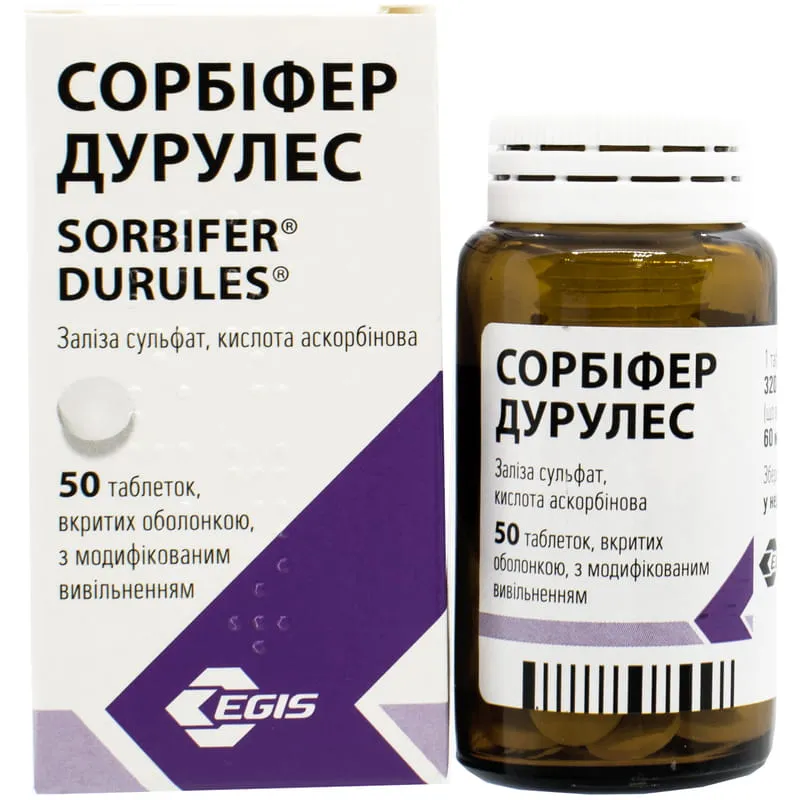
Table of Contents
INSTRUCTIONS FOR MEDICAL USE OF THE MEDICINAL PRODUCT SORBIFER DURULES (SORBIFER® DURULES)
Composition:
Active substances: ferrous sulfate, ascorbic acid;
One tablet contains: 320 mg anhydrous ferrous sulfate (equivalent to 100 mg ferrous iron), 60 mg ascorbic acid;
Excipients: povidone, polyethylene powder, carbomers, magnesium stearate;
Coating composition: hypromellose, macrogols, titanium dioxide (E 171), yellow iron oxide (E 172), paraffin.
Pharmaceutical form. Film-coated tablets with modified release.
Main physico-chemical properties:
lentil-shaped, slightly biconvex, film-coated tablets of ochre-yellow color, with "Z" engraved on one side, with a characteristic odor.
Pharmacotherapeutic group. Antianemic agents. Iron preparations, various combinations.
ATC code B03AE10.
Pharmacological Properties
Pharmacodynamics
Ferrous sulfate replenishes iron deficiency in the body. As a component of the protoporphyrin prosthetic group of hemoglobin, iron (II) plays an essential role in the binding and transport of oxygen and carbon dioxide.
As part of the protoporphyrin group of cytochrome enzymes, iron plays a key role in electron transport processes. In these processes, uptake and release of electrons occur through reversible transformation (Fe (II) <–––> Fe (III)).
A significant amount of iron can also be found in myoglobin molecules within muscle tissue.
Vitamin C enhances iron absorption in the intestinal tract and participates in redox reactions.
Pharmacokinetics
Iron is absorbed from the duodenum and proximal jejunum. The absorption rate of heme-bound iron is nearly 20%, whereas non-heme iron absorption is approximately 10%. For optimal absorption, iron must be in the Fe (II) form. Gastric hydrochloric acid and vitamin C promote iron absorption by reducing Fe (III) to Fe (II).
Upon entering intestinal epithelial cells, iron (Fe (II) – ferro) is oxidized to Fe (III) – ferri and binds to apoferritin. One portion of apoferritin enters the bloodstream, while another remains temporarily in intestinal epithelial cells as ferritin, which either enters the bloodstream within 1–2 days or is excreted in feces along with desquamated epithelium. Almost 1/3 of the iron entering the bloodstream binds to apotransferrin, converting it into transferrin. Iron is transported to target organs in the form of transferrin, which, after binding to extracellular receptors, enters the cytoplasm via endocytosis. Here, iron dissociates from transferrin and again binds to apoferritin. Under the influence of apoferritin, iron is oxidized, and the oxidized form [Fe (III)] is reduced to flavoprotein.
The method of manufacturing coated tablets ensures continuous release of ferrous (II) ions. During their passage through the gastrointestinal tract, ferrous (II) ions are continuously released from the porous matrix over a period of 6 hours. The slow release of the active substance prevents dangerously high iron concentrations, thereby avoiding irritation of the intestinal epithelium.
Clinical characteristics.
Indications.
Prevention and treatment of iron deficiency anemia.
Contraindications.
Hypersensitivity to any component of the medicinal product; esophageal stricture and/or other obstructive gastrointestinal disorders; peptic ulcer, ulcerative colitis in the phase of exacerbation; intestinal diverticulosis; intestinal obstruction; conditions associated with increased iron accumulation (hemochromatosis, hemosiderosis); repeated blood transfusions; other types of anemia not caused by iron deficiency (e.g., aplastic and hemolytic anemia, anemia due to vitamin B12 deficiency); disorders of iron incorporation into hemoglobin (anemia caused by lead poisoning, sideroachrestic anemia); thrombosis, predisposition to thrombosis, thrombophlebitis, severe kidney disease; concomitant use of parenteral iron preparations; impaired iron excretion mechanisms (thalassemia); diabetes mellitus; urolithiasis (when ascorbic acid is used in doses exceeding 1 g per day); fructose intolerance.
Interaction with other medicinal products and other forms of interaction.
Interactions related to iron.
Fluoroquinolones: concomitant administration of Sorbifer Durules should be avoided:
- with ciprofloxacin, as absorption of ciprofloxacin decreases by approximately 50%, and plasma concentration of ciprofloxacin may fall below therapeutic levels;
- with levofloxacin, as absorption of levofloxacin decreases;
- with moxifloxacin, as bioavailability of moxifloxacin decreases by approximately 40%; therefore, if concomitant use is necessary, the interval between administration of these drugs should be at least 6 hours;
- with norfloxacin, as absorption of norfloxacin decreases by approximately 75%;
- with ofloxacin, as absorption of ofloxacin decreases by approximately 30%;
- with gatifloxacin, as absorption of the drug decreases by 30–90%.
Fluoroquinolones should be administered at least 2 hours before or 4–6 hours after taking Sorbifer Durules.
Iron preparations and other medicinal products containing iron: possible iron accumulation in the liver, increased risk of iron overdose.
Oral iron salts, by forming chelate complexes, inhibit the absorption of many medicinal products. Therefore, a certain interval should be maintained between the administration of iron preparations and the medicinal products listed below.
Concomitant use of Sorbifer Durules and the following drugs requires dose adjustment, and the interval between their administration should be at least 2 hours.
-
Calcium- and magnesium-containing dietary supplements, aluminum hydroxide, and calcium- or magnesium-containing antacids form complexes with iron salts, thereby reducing mutual absorption;
-
oral zinc, calcium, aluminum, magnesium preparations, cholestyramine, pancreatin, proton pump inhibitors, trientine: reduced gastrointestinal absorption of iron;
-
entacapone, sulfasalazine: iron salts may reduce bioavailability of these drugs;
-
captopril: when used concomitantly, the area under the concentration-time curve of captopril decreases (by approximately 37%), possibly due to a chemical reaction in the gastrointestinal tract;
-
zinc: when used concomitantly, absorption of zinc salts decreases;
-
clodronate: in vitro studies have shown that iron-containing drugs form a complex with clodronate. Although in vivo interaction studies have not been conducted, it can be concluded that concomitant administration of these drugs reduces clodronate absorption;
-
deferoxamine: combined use of these drugs reduces absorption of both deferoxamine and iron due to complex formation;
-
levodopa: when administered with levodopa or carbidopa, ferrous sulfate reduces bioavailability of a single levodopa dose by approximately 50%, and bioavailability of a single carbidopa dose by almost 75%, possibly due to chelate complex formation;
-
methyldopa: when used concomitantly with methyldopa and iron salts (ferrous sulfate or ferrous gluconate), bioavailability of methyldopa decreases, possibly due to chelate complex formation, which may lead to reduced antihypertensive effect;
-
penicillamine: when used concomitantly with penicillamine and iron salts, absorption of both penicillamine and iron salts decreases due to chelate complex formation;
-
risedronate: in vitro studies have shown that iron-containing drugs form a complex with risedronate. Although in vivo interaction studies have not been conducted, it can be assumed that concomitant administration of these drugs reduces risedronate absorption;
-
tetracyclines: when used concomitantly, absorption of both iron and tetracyclines decreases; therefore, if simultaneous use is necessary, Sorbifer Durules should be taken at least 3 hours before or 2 hours after their administration;
-
thyroid hormones: absorption of thyroxine decreases, which may affect treatment outcomes. The interval between thyroxine and Sorbifer Durules administration should be at least 2 hours. Patients should regularly monitor thyroid function;
-
mycophenolate mofetil: oral iron preparations significantly reduce absorption of mycophenolate mofetil;
-
tocopherol: reduced activity of both drugs;
-
D-penicillamine: when used concomitantly, absorption of both penicillamine and iron salts decreases due to chelate complex formation;
-
glucocorticosteroids: possible enhancement of erythropoiesis stimulation;
-
ethanol: increased absorption and risk of toxic complications;
-
ascorbic acid and citric acid: enhanced iron absorption.
When Sorbifer Durules is used concomitantly with cimetidine, secretion of hydrochloric acid in the stomach decreases, as cimetidine reduces iron absorption. Therefore, the interval between administration of these drugs should be at least 2 hours.
Food products: simultaneous consumption of foods high in phytates, phosphates, oxalates, and tannins found in plant-based foods, milk and dairy products, coffee, tea, eggs, whole grains, and bread may reduce iron absorption. Fish and foods high in ascorbic acid and fruit acids promote iron absorption. Iron preparations should not be taken within 1 hour before or 2 hours after consuming these foods.
Administration of the medicinal product may result in a false-positive fecal occult blood test.
Chloramphenicol: delayed onset of clinical effect of iron preparations. Chloramphenicol slows plasma clearance of iron and its incorporation into erythrocytes, thus interfering with erythropoiesis.
Bisphosphonates: absorption of the latter may be impaired. The time interval between administration of the drugs should be at least 2 hours.
Nonsteroidal anti-inflammatory agents: possible enhancement of irritant effect of iron on the gastrointestinal mucosa.
Dimercaprol: formation of toxic complexes with iron; concomitant use should be avoided.
Allopurinol: enhanced iron absorption with risk of developing hemosiderosis.
Acetohydroxamic acid: reduced activity of both drugs.
Etidronic acid: reduced activity of etidronic acid. It should be taken no earlier than 2 hours after Sorbifer Durules.
Interactions related to ascorbic acid.
Absorption of ascorbic acid is reduced when used concomitantly with oral contraceptives, fruit or vegetable juices, and alkaline beverages. Orally administered ascorbic acid increases absorption of penicillin and tetracycline, reduces effectiveness of heparin and indirect anticoagulants, increases risk of crystalluria during salicylate therapy. Concomitant intake of ascorbic acid and deferoxamine increases tissue toxicity of iron, especially in cardiac muscle, which may lead to circulatory decompensation. The product may be taken only 2 hours after deferoxamine injection.
Prolonged intake of large doses by patients treated with disulfiram inhibits the disulfiram-alcohol reaction. Large doses of the drug reduce effectiveness of tricyclic antidepressants, phenothiazine-derived neuroleptics, tubular reabsorption of amphetamine, and impair renal excretion of mexiletine.
Quinoline derivatives, calcium chloride, salicylates, and corticosteroids, when used long-term, reduce body stores of ascorbic acid.
Iron salts reduce resorption of simultaneously administered drugs such as tetracycline, DNA-gyrase inhibitors (e.g., ciprofloxacin, levofloxacin, norfloxacin, ofloxacin), diphosphonate, penicillamine, levodopa, carbidopa, and methyldopa, penicillin, sulfasalazine.
Special precautions for use.
The medicinal product is effective only in iron-deficiency anemia and is ineffective in anemias unrelated to iron deficiency. Prior to initiating therapy, iron deficiency must be diagnosed (serum iron levels, elevated total iron-binding capacity in serum) and specific causes of iron deficiency (e.g., gastric erosions or colorectal carcinoma) must be ruled out.
It is inappropriate to use this product in cases of decreased serum iron concentration/anemia caused by chronic or acute inflammatory conditions or tumors, since administered iron accumulates in the reticuloendothelial system and is utilized by the body only after the underlying disease has been resolved.
To avoid potential overdose, special caution is required when using dietary or other supplements containing iron salts.
Iron preparations should be used with caution in patients with leukemia, rheumatoid arthritis, chronic liver or kidney diseases, during remission phase of peptic ulcer disease of the stomach and duodenum, gastrointestinal inflammatory disorders, and intestinal diseases (enteritis, ulcerative colitis, Crohn’s disease).
In patients suffering simultaneously from anemia and Crohn’s disease, iron overload may occur, and anemia symptoms may persist. Such patients require thorough evaluation and concurrent treatment of both anemia and Crohn’s disease.
Inflammatory and ulcerative disorders of the gastrointestinal tract may worsen during oral administration of the drug.
Iron preparations are considered to enhance the pathogenicity of certain microorganisms and may negatively affect the prognosis of infectious diseases in HIV-infected patients. Therefore, iron preparations should not be prescribed to HIV-infected patients who do not have documented iron-deficiency anemia.
During course treatment, serum iron and hemoglobin levels, erythrocyte count, erythrocyte volume, mean corpuscular hemoglobin content, and reticulocyte count should be monitored periodically (approximately every 4 weeks). Serum ferritin determination allows assessment of stored iron levels; a serum ferritin level < 15 μg/L indicates absence of iron stores in the body. Treatment should not be discontinued immediately after hemoglobin and erythrocyte levels normalize. Premature discontinuation of therapy usually leads to recurrence of iron-deficiency anemia.
To improve intestinal iron absorption, patients should maintain a balanced diet including meat products, vegetables, and fruits during treatment.
Concurrent intake of the drug with alkaline drinks or fresh fruit or vegetable juices may reduce absorption of ascorbic acid. Absorption of ascorbic acid may be impaired in intestinal dyskinesia, enteritis, and achylia.
Foods that slow iron absorption include cereal products (bread, millet and wheat porridge, flakes), legumes (soy, peas), rice, seafood, dairy products, and eggs. The interval between drug intake and consumption of these foods should be at least 2 hours. The drug should not be taken with strong tea, coffee, or milk.
Alcohol consumption should be avoided during treatment with this drug.
High doses of the drug should not be prescribed to patients with increased blood coagulability.
Preparations containing ascorbic acid should be used with caution in patients with glucose-6-phosphate dehydrogenase deficiency and in patients with a history of kidney disease.
It should be noted that ascorbic acid in doses exceeding 1 g per day is contraindicated in patients with urolithiasis.
When high doses are used or the drug is administered for prolonged periods, kidney function, arterial blood pressure, and pancreatic function should be monitored.
High doses of the drug should not be prescribed to patients with increased blood coagulability.
Since ascorbic acid exerts a mild stimulating effect, it is not recommended to take the drug late in the day.
The medicinal product may cause dark discoloration of feces, which is clinically insignificant. This is due to excretion of unabsorbed iron. To prevent staining of tooth enamel, tablets should be swallowed whole, without chewing. To avoid constipation, the drug should be taken with a large amount of water.
False-positive results in fecal occult blood testing may occur during drug intake.
Concurrent intake of the drug with alkaline drinks reduces absorption of ascorbic acid; therefore, the drug should not be taken with alkaline mineral water. Absorption of ascorbic acid may also be impaired in intestinal dyskinesia, enteritis, and achylia.
Use with caution in patients with glucose-6-phosphate dehydrogenase deficiency.
As a reducing agent, ascorbic acid may affect laboratory test results, for example, blood glucose, bilirubin, transaminase activity, lactate dehydrogenase, etc.
Accidental inhalation of iron-containing preparations may lead to irreversible bronchial necrosis. Therefore, in case of accidental inhalation of tablet fragments, immediate medical attention is required.
Use during pregnancy or breastfeeding.
The medicinal product may be used in pregnant and breastfeeding women both for prevention and treatment of iron-deficiency anemia.
Ability to affect reaction speed when driving or operating machinery.
The drug should be used with caution when driving or operating machinery due to the potential for adverse reactions affecting the central nervous system.
Dosage and Administration.
For the prevention of anemia, adults and children aged 12 years and older should take 1 tablet per day. For the treatment of anemia, adults and children aged 12 years and older should take 1 tablet twice daily. Tablets should be swallowed whole, without chewing, with a glass of water, at least 30 minutes before a meal. If adverse reactions occur, the daily dose may be reduced by 50% (1 tablet per day).
During the first 6 months of pregnancy, the recommended dose is 1 tablet per day; during the third trimester of pregnancy and during breastfeeding, the dose is 1 tablet twice daily. The duration of treatment depends on individual laboratory assessments of plasma iron levels. After hemoglobin levels have normalized, treatment should continue for approximately 2 months to fully replenish iron stores.
In cases of symptomatic iron-deficiency anemia, the average duration of treatment is 3–6 months.
Children.
This medication is indicated for children aged 12 years and older.
Overdose.
Symptoms. Ingestion of 20 mg/kg of elemental iron is considered potentially toxic; 200–250 mg/kg is potentially lethal. Acute iron overdose progresses through several stages. The first stage (within 6 hours after ingestion) may include tachycardia, arterial hypotension, abdominal pain, nausea, vomiting, diarrhea, melena, and/or hematemesis. In more severe cases, coma, seizures, and shock may occur. The second stage (6–24 hours after ingestion) is characterized by temporary remission or clinical stabilization. The third stage involves recurrence of gastrointestinal toxicity (vomiting, diarrhea, gastrointestinal bleeding). Additional symptoms of overdose may include profound drowsiness (lethargy) or coma, dehydration, circulatory failure/severe shock (due to hypovolemia or direct cardiotoxicity), hepatic failure/hepatocellular necrosis with jaundice, coagulation disorders and hemorrhage, hypoglycemia, encephalopathy, metabolic acidosis, seizures, hyperthermia, renal failure (due to decreased tissue perfusion), and pulmonary edema. There is a risk of gastrointestinal tract perforation and development of Yersinia enterocolica sepsis. The fourth stage (2–5 weeks after ingestion) may involve partial or complete gastrointestinal obstruction (due to scarring strictures/pyloric stenosis) and liver cirrhosis.
In certain sensitive patients (with glucose-6-phosphate dehydrogenase deficiency), ascorbic acid overdose may cause severe acidosis and hemolytic anemia.
Acute poisoning in children due to accidental ingestion of large amounts of iron-containing medications is severe and may present with hemorrhagic gastroenteritis, vomiting with blood, bloody diarrhea, and vascular shock.
Treatment depends on symptoms, ingested dose, and time elapsed since ingestion of a potentially dangerous dose. Supportive and symptomatic measures include inducing vomiting, administration of milk or raw eggs (to form an iron-protein complex), gastric lavage with a 1% sodium hydroxide solution (to form insoluble iron carbonate), gastric lavage with deferoxamine solution (2 g/L), and instillation of deferoxamine solution into the stomach via nasogastric tube (5–10 g of deferoxamine dissolved in 100 mL of isotonic sodium chloride solution), as well as ensuring adequate pulmonary ventilation, ECG monitoring of cardiac activity, monitoring of blood pressure and diuresis, establishing intravenous access, and ensuring adequate hydration. Serum iron levels should be monitored throughout the period of intoxication.
For adults, administration of mannitol or sorbitol may be beneficial to enhance gastric motility. Inducing diarrhea may be highly dangerous in children, especially younger ones, and should be avoided. The patient must remain under close observation to promptly detect possible aspiration.
The tablets are radiopaque; therefore, abdominal X-ray examination may reveal the number of tablets remaining in the gastrointestinal tract after induced vomiting and gastric lavage.
If serum iron concentration exceeds 3–5 mg/L (55–90 μmol/L) with a rising trend, parenteral administration of deferoxamine should be considered. In cases of severe intoxication—such as shock and/or coma, or high serum iron levels (>90 μmol/L in children and >142 μmol/L in adults)—immediate intensive supportive therapy and intravenous deferoxamine infusion should be initiated (15 mg/kg/hour given as a slow infusion; maximum dose 80 mg/kg/day). Excessively rapid infusion may lead to arterial hypotension.
In cases of less severe intoxication, deferoxamine may be administered intramuscularly (50 mg/kg; maximum total dose 4 g).
Hemodialysis is ineffective for iron elimination but may be used to accelerate the removal of the iron-deferoxamine complex and is indicated in cases of oliguria or anuria. Peritoneal dialysis may also be considered.
Side effects.
Gastrointestinal side effects: abdominal discomfort, dyspepsia, gastric spasm, vomiting, anorexia, epigastric/abdominal pain, gastritis, flatulence. Prolonged use of high doses of oral iron preparations, especially in elderly patients, may cause constipation, which sometimes leads to fecal impaction.
When high doses are administered, gastrointestinal erosions/ulcers (including of the esophagus), bleeding, and esophageal stenosis may occur due to local irritation of the gastrointestinal mucosa by iron sulfate tablets.
Prolonged use of high doses of ascorbic acid exceeding 1 g per day may cause gastrointestinal mucosal irritation and heartburn.
Immune system side effects: hypersensitivity reactions, including skin rash, eczema, pruritus, urticaria, skin hyperemia, anaphylactic reactions (including sore throat, angioedema, anaphylactic shock) in sensitized individuals, and respiratory hypersensitivity reactions.
Urinary system side effects: acidification of urine, hyperoxaluria in patients at risk when ascorbic acid doses exceed 1 g/day; prolonged high-dose use may lead to glomerular damage, crystalluria, formation of urate, cystine and/or oxalate kidney and urinary tract stones, and renal failure. Ascorbic acid doses exceeding 600 mg/day have a diuretic effect.
Metabolic side effects: prolonged high-dose use (the drug contains ascorbic acid) may lead to vitamin C hypervitaminosis, impaired tissue trophism, suppression of pancreatic islet function (hyperglycemia, glucosuria), impaired glycogen synthesis, diabetes mellitus, sodium and fluid retention, disturbances in zinc and copper metabolism.
Cardiovascular side effects: arterial hypertension, myocardial dystrophy, chest tightness, sensation of warmth, development of microangiopathies.
Hematopoietic system side effects: thrombocytosis, thrombus formation, hyperprothrombinemia, erythrocytopenia, neutrophilic leukocytosis; hemolysis of erythrocytes may occur in patients with glucose-6-phosphate dehydrogenase deficiency.
Nervous system side effects: increased excitability, sleep disturbances, headache, dizziness, weakness, irritability, fatigue.
Shelf life. 3 years.
Storage conditions.
Store at a temperature not exceeding 25 °C in a place inaccessible to children.
Packaging.
30 or 50 tablets in a glass bottle; 1 bottle in a cardboard box.
Prescription status. Prescription only.
Manufacturer.
Egis Pharmaceuticals Ltd., Hungary.
Address:
65 Matyas Kiraly Street, Kermend, 9900, Hungary.