Sonapax® 25 mg
Ukraine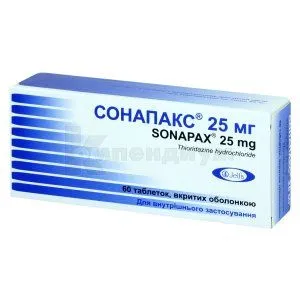
Table of Contents
INSTRUCTIONS FOR MEDICAL USE OF THE MEDICINAL PRODUCT SONAPAX® 10 mg SONAPAX® 25 mg
Composition:
Active substance: thioridazine hydrochloride;
One film-coated tablet contains: thioridazine hydrochloride 10 mg or 25 mg;
Excipients:
Film-coated tablets, 10 mg: maize starch, colloidal anhydrous silicon dioxide, sucrose, monohydrate lactose, gelatin, stearic acid, talc, gum arabic (E 414), cochineal red A (E 124);
Film-coated tablets, 25 mg: potato starch, sucrose, gelatin, gum arabic (E 414), magnesium stearate, sucrose, talc, quinoline yellow (E 104).
Pharmaceutical form. Film-coated tablets.
Main physicochemical properties:
Tablets Sonapax® 10 mg — round, biconvex, film-coated tablets, light pink in color, uniform in coloration. White at the break.
Tablets Sonapax® 25 mg — round, biconvex, film-coated tablets, light yellow in color, uniform in coloration. White at the break.
Pharmacotherapeutic group. Antipsychotic agents. Piperidine derivatives of phenothiazine. ATC code N05A C02.
Pharmacological Properties.
Pharmacodynamics.
Thioridazine belongs to the group of neuroleptics. It is a piperidine derivative of phenothiazine that significantly affects the nervous system, both centrally and peripherally. It exerts a predominantly suppressive effect on the brainstem and, to a lesser extent, on the cerebral cortex. Peripherally, it produces α-adrenolytic, antihistaminic, and pronounced cholinolytic effects, which are more prominent than with other neuroleptics. It does not produce antiemetic effects, causes fewer extrapyramidal disturbances compared to other neuroleptics, and does not suppress intrinsic motor activity.
Thioridazine possesses all typical neuroleptic properties: it exerts weak antipsychotic, antiaggressive, and weak antidepressant effects; it does not have an activating effect.
Pharmacokinetics.
Thioridazine is rapidly and completely absorbed from the gastrointestinal tract, reaching maximum blood concentration within 2–4 hours. Approximately 95% of the drug is bound to plasma proteins. The elimination half-life is 10 hours.
Thioridazine is metabolized in the liver. About 35% is excreted in the urine, the remainder—via feces (in unchanged form and as metabolites). It crosses the placental barrier and is excreted into breast milk.
Clinical characteristics.
Indications.
Mental and emotional disorders associated with fear, anxiety, and agitation.
In psychiatric practice: acute and subacute schizophrenia, organic psychoses, psychomotor agitation, manic-depressive states, neuroses, alcohol withdrawal syndrome, behavioral disorders in children, agitated states in elderly patients.
Contraindications.
Hypersensitivity to phenothiazine derivatives or to any component of the medicinal product.
Thioridazine is contraindicated in patients with the following conditions: clinically significant heart disorders (heart failure, angina pectoris, cardiomyopathy, or left ventricular dysfunction), QTc interval prolongation syndrome, family history of QTc interval prolongation syndrome. Since thioridazine prolongs the QTc interval, it is contraindicated when used concurrently with drugs that are also capable of prolonging the QTc interval.
Ventricular arrhythmia, including in medical history, bradycardia, second- or third-degree sinoatrial or atrioventricular conduction block, uncorrected hypokalemia or hypomagnesemia. History of cardiac arrhythmia, severe arterial hypotension, pheochromocytoma, porphyria, blood disorders (hypoplastic and aplastic processes), concomitant use with fluoxetine, paroxetine, propranolol, pindolol, fluvoxamine, genetic disorders leading to reduced activity of CYP2D6 enzyme.
Severe photosensitivity, severe depressive states, comatose states of any etiology, dementia, head injuries, progressive systemic diseases of the brain and spinal cord.
Interaction with other medicinal products and other forms of interaction.
When used concurrently, exhibits a synergistic effect with general anesthetics, opioids, barbiturates, ethanol, and atropine.
When used concurrently, increases hepatotoxic effects of antidiabetic agents.
When used concurrently with amphetamine, acts antagonistically.
When used concurrently with levodopa, reduces its antiparkinsonian effect.
Concomitant use with adrenaline may lead to sudden and significant reduction in blood pressure.
When used concurrently with guanethidine, reduces its antihypertensive effect, but enhances the effect of other antihypertensive agents, increasing the risk of orthostatic hypotension.
Antithyroid agents increase the risk of agranulocytosis.
Quinidine potentiates the cardiodepressant effect of the drug.
Ephedrine promotes abnormal reduction in blood pressure.
Sympathomimetics – increase the arrhythmogenic effect.
Reduces the effects of appetite-suppressing agents (except fenfluramine).
Reduces the emetic effect of apomorphine, enhances its inhibitory effect on the central nervous system (CNS).
Increases plasma prolactin concentration and reduces bromocriptine efficacy.
Concomitant use with tricyclic antidepressants, maprotiline, monoamine oxidase inhibitors (MAOIs), and antihistamines may prolong and enhance sedative and anticholinergic effects.
When used concurrently with thiazide diuretics, hyponatremia may increase;
with lithium preparations – reduced gastrointestinal absorption, accelerated renal excretion of lithium ions, increased severity of extrapyramidal disorders. Early signs of lithium intoxication (nausea and vomiting) may be masked by the antiemetic effect of thioridazine.
When used concurrently with beta-blockers, promotes enhanced hypotensive effect.
Pharmacokinetic interactions
Probucol, astemizole, cisapride, disopyramide, erythromycin, pimozide, procainamide, and quinidine promote QT interval prolongation, increasing the risk of ventricular tachycardia.
CYP2D6 cytochrome metabolism
Thioridazine is metabolized by cytochrome CYP2D6 and simultaneously acts as an inhibitor of the enzyme metabolizing the drug. Plasma concentration and efficacy of thioridazine may be increased and prolonged by drugs that are substrates and/or inhibitors of the CYP2D6 isoenzyme, potentially leading to severe hypotension, cardiac rhythm disturbances, or CNS-related adverse effects. Examples of drugs that are substrates or inhibitors of CYP2D6 include certain antiarrhythmics, some antidepressants, including selective serotonin reuptake inhibitors (SSRIs) and tricyclic compounds, certain antipsychotics, beta-blockers, protease inhibitors, opioids, and "ecstasy" (methylenedioxymethamphetamine – MDMA).
Antiepileptic drugs
Under the influence of thioridazine, serum phenytoin levels may increase or decrease, thus dose adjustment may be essential. No influence on serum levels of thioridazine or carbamazepine has been established when interacting with carbamazepine.
Barbiturates
Concomitant use of phenothiazines reduces serum levels of both drugs; an increase in serum levels of either drug is also ruled out.
Antihypertensive agents and beta-blockers
Like other phenothiazines, thioridazine antagonizes adrenaline and other sympathomimetic agents. Since beta-blockers are substrates of CYP2D6, they may cause bradycardia. Concomitant use of thioridazine with beta-blockers is not recommended. In addition, thioridazine may block the antihypertensive effect of adrenergic blockers such as guanethidine and clonidine.
Anticoagulants
Concomitant treatment with phenothiazines may increase the effect of anticoagulants. Pharmacodynamic interactions
The effect of thioridazine on the QTc interval may be enhanced when used concurrently with other drugs that also prolong the QTc interval. Therefore, concomitant use of these drugs with thioridazine is contraindicated. Such drugs include certain antiarrhythmics, particularly class IA (e.g., quinidine, disopyramide, procainamide) and class III (e.g., amiodarone, sotalol), tricyclic antidepressants (e.g., amitriptyline), certain tetracyclic antidepressants (e.g., maprotiline), certain antipsychotics (e.g., phenothiazines, pimozide), and certain antihistamines (e.g., terfenadine), lithium preparations, quinine, pentamidine, and sparfloxacin.
Electrolyte imbalance, particularly hypokalemia, significantly increases the risk of QTc interval prolongation. Therefore, concomitant use of drugs causing electrolyte imbalance should be avoided.
CNS depressants
Thioridazine may enhance central nervous system depression caused by other CNS depressants, such as narcotics, alcohol, sedatives, and narcotic analgesics.
MAO inhibitors
Concomitant use may increase sedation, constipation, dry mouth, and hypotension.
Lithium
Serious complications, neurotoxic extrapyramidal side effects, and episodes of somnambulism have been reported in patients receiving concomitant lithium and phenothiazines, including thioridazine.
Anticholinergic agents
Unwanted anticholinergic effects may result from concomitant use of anticholinergic drugs and thioridazine. Strict monitoring and dose adjustment are required when used concomitantly with agents such as antihistamines, tricyclic antidepressants, and atropine-containing compounds.
Antiparkinsonian agents
The efficacy of both drugs may be reduced when used concomitantly with thioridazine.
Adrenergic vasoconstrictors
Due to its ability to lower blood pressure, phenothiazine may reduce the vasoconstrictor activity of adrenergic vasoconstrictors (e.g., ephedrine, phenylephrine).
Phenylpropanolamine
Ventricular arrhythmias have been reported with concomitant use of phenylpropanolamine and thioridazine.
Thiazide diuretics
Concomitant use of phenothiazines and thiazide diuretics may lead to severe hypotension and diuretic-induced hypokalemia, which may potentiate thioridazine-induced cardiotoxicity.
Antacids, antidiarrheal agents
These agents may reduce gastrointestinal absorption of orally administered phenothiazines. Antacids should not be administered within 2 hours of phenothiazine intake.
Antidiabetic medicinal products
Phenothiazines affect carbohydrate metabolism and thus interfere with blood glucose control in diabetic patients.
Special precautions for use.
QT interval prolongation: Due to the risk of developing arrhythmias caused by QT interval prolongation, thioridazine should be used only after assessing the risk factor for QT interval prolongation in patients who have undergone ECG and have a normal serum potassium concentration. Thioridazine must not be administered to patients with a mean QTc interval of 500 ms. During treatment with Sonapax, serum electrolyte levels should be monitored periodically and any electrolyte abnormalities corrected. Concomitant therapy should be carefully evaluated when using drugs that inhibit CYP 2D6, inhibit thioridazine metabolism via other pathways, or cause QT interval prolongation. The use of thioridazine is contraindicated with such drugs. Caution is advised if the patient is taking medications that may cause hypokalemia.
Since thioridazine is metabolized by CYP 2D6, patients who are poor metabolizers via this enzyme are also at increased risk of QT interval prolongation. A reduced metabolic rate may be anticipated in some patients based on experience with other agents metabolized by CYP 2D6. Testing methods to identify poor metabolizers are not widely available. Thioridazine should not be prescribed to patients known to be poor metabolizers.
Anticholinergic properties: Due to the known anticholinergic effects of thioridazine, caution is advised in patients with increased intraocular pressure, glaucoma, urinary retention (e.g., prostate hypertrophy), or chronic constipation.
Hepatic disease: Patients with liver disease require regular monitoring of liver function.
Blood dyscrasias: Although rare cases of leukopenia or agranulocytosis have been reported, blood counts should be performed regularly during the first 3–4 months of treatment. Blood tests should be performed immediately if clinical signs of dyscrasia appear.
Blood pressure: Orthostatic hypotension is frequently observed in patients taking thioridazine. Blood pressure should be monitored after initiating thioridazine therapy, especially in elderly patients with orthostatic hypotension or labile circulation.
Alcohol: Since alcohol may increase the risk of hepatotoxic reactions, heat stroke, akathisia, dystonia, or other central nervous system disorders, alcohol consumption should be avoided during thioridazine treatment.
Tolerance: Cases of tolerance to the sedative effects of phenothiazines and cross-tolerance to antipsychotics have been reported. Tolerance may also increase the risk of developing clinical withdrawal symptoms.
Malignant neuroleptic syndrome.
Malignant neuroleptic syndrome has been observed during treatment with neuroleptics. Clinical features include hyperpyrexia, muscle rigidity, altered mental status, and autonomic dysfunction (irregular pulse, changes in blood pressure, tachycardia, diaphoresis, cardiac arrhythmia). Diagnosis of this syndrome may be complicated. When establishing this diagnosis, it is important to consider serious conditions such as pneumonia, systemic infections, inadequate treatment of extrapyramidal disorders, anticholinergic toxicity symptoms, myocardial infarction, drug-induced fever, or primary central nervous system pathology. Treatment of malignant neuroleptic syndrome includes immediate discontinuation of neuroleptics, intensive supportive care, and treatment of concomitant conditions. There is no specific treatment. Neuroleptics should be used cautiously if their subsequent use is necessary.
Central nervous system depression.
Like other phenothiazines, thioridazine may potentiate the effects of agents that depress the central nervous system (alcohol, anesthetics, barbiturates, narcotics, opioids, other psychotropic substances), as well as atropine and phosphorus-containing preparations. When high doses of barbiturates are taken concomitantly, severe respiratory depression may develop.
The drug should be prescribed with caution in alcoholism (increased risk of hepatotoxic reactions), breast cancer (phenothiazine-induced prolactin secretion increases the potential risk of disease progression and resistance to endocrine and cytotoxic therapy), hepatic and/or renal insufficiency, active peptic ulcer disease of the stomach or duodenum, conditions associated with an increased risk of thromboembolic complications, Parkinson’s disease (exacerbation of extrapyramidal effects), epilepsy, myxedema, chronic conditions associated with respiratory impairment (especially in children), Reye’s syndrome (increased risk of hepatotoxicity in children), cachexia, vomiting (the antiemetic effect of phenothiazines may mask vomiting associated with overdose of other drugs), elderly patients, patients with cardiac arrhythmias, heart disease, myasthenia, and epilepsy. In liver disease, regular monitoring of liver function is required. In patients with schizophrenia and a history of seizures, anticonvulsant therapy should be administered concurrently with thioridazine. Pigmentary retinopathy, characterized by decreased visual acuity, night vision disturbances, and color vision changes, may occur when thioridazine is used at doses exceeding the recommended levels. In such cases, the dose should be reduced. Orthostatic hypotension occurs more frequently in women than in men.
Epinephrine should be avoided for the treatment of drug-induced hypotension, as phenothiazines may provoke a paradoxical response. If vasoconstrictors are required, levarterenol or phenylephrine are recommended. Chronic use of neuroleptics increases serum prolactin levels. Cases of galactorrhea, amenorrhea, gynecomastia, and impotence have been reported. Alcohol consumption should be avoided during treatment, and sun exposure should be limited.
ECG monitoring, including Holter monitoring, should be performed in patients with a history of symptoms that may indicate torsade de pointes (dizziness, palpitations, syncope).
When prescribing neuroleptics, the risk of tardive dyskinesia should be minimized as much as possible. During long-term use of neuroleptics, treatment response should be evaluated, and if necessary, alternative, less toxic agents should be considered; neuroleptics should be used at the lowest effective dose or in short courses.
When diagnosing "malignant neuroleptic syndrome," it is important to consider serious conditions such as pneumonia, systemic infections, inadequate treatment of extrapyramidal disorders, symptoms of anticholinergic toxicity, myocardial infarction, drug-induced fever, or primary central nervous system pathology. Treatment of malignant neuroleptic syndrome includes immediate discontinuation of neuroleptics, intensive supportive care, and treatment of concomitant conditions. There is no specific treatment. Neuroleptics should be used cautiously if their subsequent use is necessary.
Sonapax® 10 mg tablets contain cochineal red A (E 124), which may cause allergic reactions.
Use during pregnancy or breastfeeding.
The effect of thioridazine on the fetus is unknown.
The medicinal product should not be used during pregnancy.
Breastfeeding should be discontinued during treatment.
Ability to influence reaction speed when driving or operating machinery.
Thioridazine impairs motor coordination and reduces reaction ability, especially at the beginning of treatment. Patients should not drive or operate machinery during therapy.
Dosage and Administration
The dosage is determined individually by a physician; the lowest effective therapeutic dose should be established for each patient separately. The daily dose should be divided into 2–4 administrations.
Adults and adolescents.
Psychiatric and emotional disorders such as schizophrenia, manic psychoses, and similar conditions: 150–600 mg daily. The initial dose may be increased to 200 mg in patients with acute schizophrenia. The daily dose may be increased up to 800 mg in treatment-resistant patients under physician supervision, but not for longer than 4 weeks.
Outpatient treatment of psychosis: daily dose of 50–300 mg; in patients with depression and elderly patients: 25–200 mg; alcohol withdrawal syndrome: 100–200 mg; severe non-psychotic mental disorders: 25–150 mg. As a sedative and tranquilizer, Sonapax® should be administered to adults in a daily dose of 10–75 mg.
Usual pediatric dosages.
Children aged 5–12 years: 0.25–3 mg per kg of body weight daily, divided into 2–4 doses. Severe disorders: 25 mg 2–3 times daily. Maximum daily dose: 300 mg. When the required dose is not a multiple of 25 mg, thioridazine in appropriate dosage forms and strengths should be used.
Children.
Do not use in children under 5 years of age.
Overdose.
Symptoms of overdose, including symptoms typical of phenothiazine overdose:
Cardiovascular system: cardiac arrhythmia, arterial hypotension, shock, ECG changes, QT and PR interval prolongation, ST and T wave changes, bradycardia, sinus tachycardia, atrioventricular block, ventricular tachycardia, ventricular fibrillation, torsade de pointes-type rhythm disturbances, myocardial changes;
Nervous system: mydriasis, miosis, dry skin, dry mouth, nasal mucosa hyperemia, nasal congestion, urinary retention, visual disturbances, speech impairment, drowsiness, disturbances of consciousness and orientation, visual acuity, excitement, motor hyperactivity, extrapyramidal symptoms, seizures, coma, agitation, hypothermia, hyperthermia, insomnia, areflexia;
Respiratory system: respiratory depression, apnea, pulmonary edema;
Gastrointestinal tract: decreased peristalsis, constipation, ileus, paralytic intestinal obstruction, nausea, vomiting;
Urinary system: oliguria, uremia. The toxic dose and blood concentration of phenothiazines have not been precisely established.
Treatment: gastric lavage with activated charcoal. Ensure airway patency; perform cardiovascular and ECG monitoring to detect arrhythmias; correct electrolyte and acid-base imbalances; administer lidocaine, phenytoin, isoprenaline, and defibrillation if needed. Avoid using disopyramide, procainamide, and quinidine, as they, like thioridazine, prolong the QT interval (see sections "Special precautions" and "Contraindications"). Exercise caution when using lidocaine, as it increases the risk of seizures.
For treatment of arterial hypotension, administer intravenous fluids and vasoconstrictors (for refractory hypotension, use phenylephrine, norepinephrine, or metaraminol, as well as epinephrine and dopamine).
Treatment should aim to reduce drug absorption and enhance elimination.
Do not induce vomiting due to the risk of dystonia and aspiration of vomitus.
For treatment of acute extrapyramidal symptoms, use diphenhydramine hydrochloride or benztropine mesylate.
In managing seizures, avoid barbiturates, as they may exacerbate phenothiazine-induced respiratory depression.
Forced diuresis, hemoperfusion, and hemodialysis are ineffective due to the drug's protein binding.
Side effects.
Central nervous system and sensory organs: drowsiness, sluggishness, especially when taking high doses at the beginning of treatment, which usually disappears during further treatment or after dose reduction; pseudoparkinsonism with other extrapyramidal symptoms, confusion, hyperactivity, lethargy, psychotic reactions, emotional instability, headache, insomnia, emotional disturbances, impaired thermoregulation, lowered seizure threshold, loss of consciousness, blurred vision, nasal congestion, pallor, miosis, yawning, emotional excitement, visual disturbances.
Endocrine system: galactorrhea, breast enlargement, edema.
Cardiovascular system: arterial hypotension, tachycardia, palpitations, QT interval prolongation which may lead to the development of torsade de pointes arrhythmia, polymorphic ventricular tachycardia, and sudden fatal outcome (see "Special precautions"), other ECG changes (prolonged QT interval, depression or inversion of T wave, bifid T or U wave). These changes are reversible, occur due to altered repolarization, and are not associated with myocardial damage. Prolongation of the QT interval is associated with severe ventricular arrhythmias and sudden death; arterial hypotension has been reported following myocardial infarction.
Gastrointestinal tract: xerostomia, increased appetite, dyspepsia, weight gain, lingual papillae hypertrophy, dry mouth, nausea, vomiting, diarrhea, constipation, anorexia, paralytic ileus.
Skin: skin rashes, erythema, urticaria, exfoliative dermatitis, contact dermatitis, skin melanosis (with prolonged use in high doses), photosensitivity reactions.
Blood system: agranulocytosis, leukopenia, eosinophilia, thrombocytopenia, anemia, aplastic anemia, pancytopenia, granulocytopenia.
Allergic reactions: fever, laryngeal edema, angioneurotic edema, bronchospastic syndrome, nasal congestion, asthma, allergic skin reactions.
Hepatobiliary system: cholestatic jaundice, bile stasis.
Psychiatric disorders: akathisia, agitation, motor restlessness, dystonic reactions, trismus, torticollis, opisthotonus, oculogyric crises, tremor, muscle rigidity, akinesia.
Late dyskinesia: prolonged use of antipsychotic agents may lead to this type of dyskinesia. This syndrome is characterized by involuntary choreiform movements, including movements of the tongue, face, mouth, lips, jaw (protrusion of the tongue, puffing of cheeks, puckering of the mouth, chewing movements), facial grimacing, limb movements. The severity of the syndrome and degree of impairment vary. The syndrome may occur during treatment, upon dose change, or after discontinuation of treatment. Early diagnosis of this symptom is essential. Movements may diminish or even disappear if antipsychotic drugs are discontinued. Reversibility of these reactions is more pronounced with short-term treatment than with long-term use. Prompt diagnosis of this symptom is important. Patients should be monitored, and antipsychotic doses should be reduced whenever possible. It should be noted that antipsychotic drugs may mask the symptoms of this syndrome.
Malignant neuroleptic syndrome: prolonged use of antipsychotic drugs is associated with the development of malignant neuroleptic syndrome, whose clinical manifestations include hyperpyrexia, muscle rigidity, impaired cognition and consciousness, autonomic dysfunction (arrhythmic pulse, changes in blood pressure, tachycardia, diaphoresis, cardiac arrhythmia).
Reproductive system: menstrual cycle disturbances, changes in libido, gynecomastia, lactation, weight gain, edema, false-positive pregnancy tests.
Urinary and genital system: urinary retention, urinary incontinence, decreased libido, ejaculation disorders, dysmenorrhea, hyperprolactinemia, gynecomastia, paradoxical ischuria, dysuria, priapism.
Other: hyperpyrexia, rare episodes of salivary gland swelling, priapism. Paradoxical reactions have been reported, including behavioral disorders such as excitement, exacerbation of psychosis, impaired consciousness due to toxic effects, progressive pigmentation of the skin or conjunctiva with or without changes in color of the sclera and cornea, opacity of the anterior surface of the eye lens, systemic lupus erythematosus.
The occurrence of adverse reactions associated with phenothiazine derivatives cannot be excluded. The most common neurological disorders are parkinsonism and akathisia, as well as an increased risk of agranulocytosis and leukopenia in elderly patients.
Shelf life. 4 years.
Storage conditions. Store in a dry place at a temperature not exceeding 25 °C.
Packaging.
For 10 mg coated tablets: 30 tablets in a blister, 2 blisters together with the instruction for medical use are packed in a cardboard box;
for 25 mg coated tablets: 20 tablets in a blister, 3 blisters together with the instruction for medical use are packed in a cardboard box.
Prescription status. Prescription only.
Manufacturer.
Pharmaceutical Plant Jelfa A.T.
Manufacturer's address and place of business.
58-500 Jelenia Góra, ul. Wincentego Paula 21, Poland.
Date of last review.