Glycyrrhizae radix syrup
Ukraine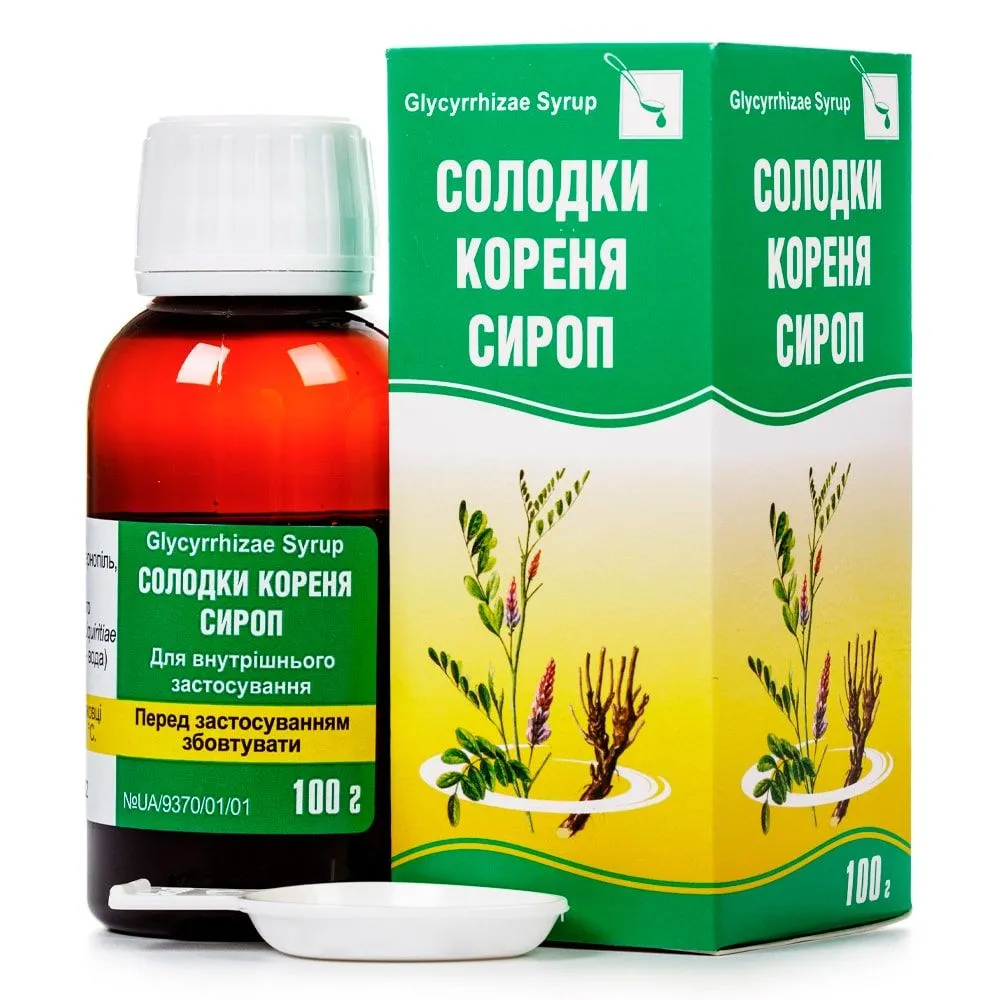
Table of Contents
INSTRUCTIONS FOR MEDICAL USE OF THE MEDICINAL PRODUCT LICORICE ROOT SYRUP (GLYCYRRHIZAE SYRUP)
Composition:
Active ingredient: dry extract of licorice root;
5 ml of syrup contains dry extract of licorice root (Glycyrrhizae extractum siccum) ((4.0–5.0):1) (extractant – water) (calculated as 8.0% content of 18β-glycyrrhizic acid) – 250 mg;
Excipients: sodium benzoate (E 211), potassium sorbate, glycerin, sucrose, hydroxyethylcellulose, citric acid monohydrate, purified water.
Pharmaceutical form. Syrup.
Main physicochemical properties: viscous brown liquid with a characteristic odor and taste.
Pharmacotherapeutic group. Medicinal products used for cough and colds. Expectorants. ATC Code R05CA.
Pharmacological Properties
Pharmacodynamics
The root of Glycyrrhiza glabra contains glycyrrhizin, potassium and calcium salts of glycyrrhizic acid, and flavonoid glycosides (liquiritin, liquiritigenin, liquiritoside). The expectorant effect of licorice preparations is associated with glycyrrhizin, which stimulates the ciliary epithelium of the trachea and bronchi and enhances secretory function of the mucous membranes of the upper respiratory tract.
The spasmolytic effect of the drug on smooth muscles of the respiratory tract is due to the presence of flavonoid compounds, among which liquiritoside is the most active. The anti-inflammatory (corticosteroid-like) effect is attributed to glycyrrhizic acid, which is released upon hydrolysis of glycyrrhizin.
Pharmacokinetics
Not studied.
Clinical characteristics.
Indications.
As part of complex therapy for infectious and inflammatory diseases of the respiratory tract accompanied by cough and difficult expectoration (chronic and acute bronchitis, bronchopneumonia, bronchiectasis).
Contraindications.
- Individual hypersensitivity to any component of the drug;
- liver and kidney dysfunction;
- hypokalemia;
- arterial hypertension;
- severe obesity.
Interaction with other medicinal products and other forms of interactions.
Hypokalemia (due to excessive use of licorice root) may be potentiated when used concomitantly with cardiac glycosides, antiarrhythmic agents, and drugs affecting heart rhythm (e.g., quinidine).
When used concomitantly with medicinal products causing hypokalemia (thiazide and loop diuretics, adrenocorticosteroids, and laxatives), electrolyte imbalance may occur. Therefore, licorice root syrup should not be used for prolonged periods simultaneously with the above-mentioned medicinal products.
Licorice root syrup may antagonize the effects of antihypertensive drugs.
When using any other medicinal products concurrently, consult a physician.
Special precautions for use
Use with caution in patients with diabetes mellitus due to the sugar content of the syrup.
5 ml of syrup contain 0.142 bread units.
Prolonged use of the drug is not recommended, as it may lead to disturbances in water and electrolyte balance and edema.
Patients taking Licorice Root Syrup should not take other products containing licorice, as serious adverse effects may occur, such as fluid retention, hypokalemia, hypertension, and cardiac arrhythmias.
Concomitant use with diuretics, cardiac glycosides, corticosteroids, stimulant laxatives, or other drugs that may worsen electrolyte imbalance is not recommended (see section «Interaction with other medicinal products and other forms of interaction»).
The drug contains potassium sorbate; therefore, caution is advised when administering to patients with impaired renal function or those on a potassium-controlled diet.
The drug contains sodium benzoate (E 211); therefore, caution is advised when administering to patients on a sodium-controlled diet.
Use during pregnancy or breastfeeding
The drug is contraindicated during pregnancy because deglycyrrhizinated licorice increases estrogen levels, thereby disrupting hormonal balance. It stimulates uterine activity. In high doses, it exerts embryotoxic effects.
If use of the drug is necessary in breastfeeding women, breastfeeding should be discontinued during the treatment period.
Effect on ability to drive and use machines
The drug does not affect the ability to drive or operate potentially dangerous machinery.
Dosage and Administration.
Liquorice root syrup is taken orally after meals, 3–4 times daily. The preparation should not be diluted before use; however, it should be followed by an adequate amount of liquid (tea or warm water).
For adults and children aged 12 years and older: the recommended dose is 15 ml per administration.
For children aged 1 to 3 years: 2.5 ml per administration;
For children aged 4 to 6 years: 2.5–5 ml per administration;
For children aged 7 to 9 years: 5–7.5 ml per administration;
For children aged 10 to 12 years: 7.5–10 ml per administration.
The dose should be measured using a dosing spoon.
The duration of treatment is determined individually by the physician, taking into account the nature, severity, and specific course of the disease, stability of the achieved therapeutic effect, and the patient's tolerance to the drug.
Children.
The drug may be prescribed to children aged 1 year and older.
Overdose.
Cases of overdose have been reported following prolonged use (more than 4 weeks) and/or intake of excessive doses of liquorice-based preparations, with symptoms such as fluid retention, hypokalemia, hypertension, cardiac arrhythmias, and hypertensive encephalopathy.
An increase in adverse effects is possible.
Treatment: symptomatic.
Adverse reactions.
In case of individual hypersensitivity, allergic reactions may occur, including rash, itching, skin hyperemia, edema.
Prolonged use of licorice preparations in excessive doses may cause disturbances in water-electrolyte balance and lead to the development of edema and hypokalemia; in individual cases, elevated arterial pressure, hypokalemic myopathy, and myoglobinuria are possible.
If any adverse events occur, the patient must discontinue the use of the drug and consult a physician immediately!
Shelf life. 2 years. After first opening of the packaging, the preparation can be used for up to 6 months if stored at a temperature not exceeding 25 °C.
Do not use the drug after the expiry date stated on the packaging.
Storage conditions.
In the original packaging at a temperature not exceeding 25 °C.
Keep out of reach of children.
Packaging.
100 mL or 200 mL in a bottle, 1 bottle with a dosing spoon in a carton pack.
100 mL in a jar; 1 jar with a dosing spoon in a carton pack.
Supply category. Over-the-counter (without prescription).
Manufacturer.
Public joint-stock company "Scientific and Production Center "Borshchagovskiy Chemical and Pharmaceutical Plant".
Manufacturer's address and location of business activity.
17, Miru Street, Kyiv, 03134, Ukraine.