Soliqua
Ukraine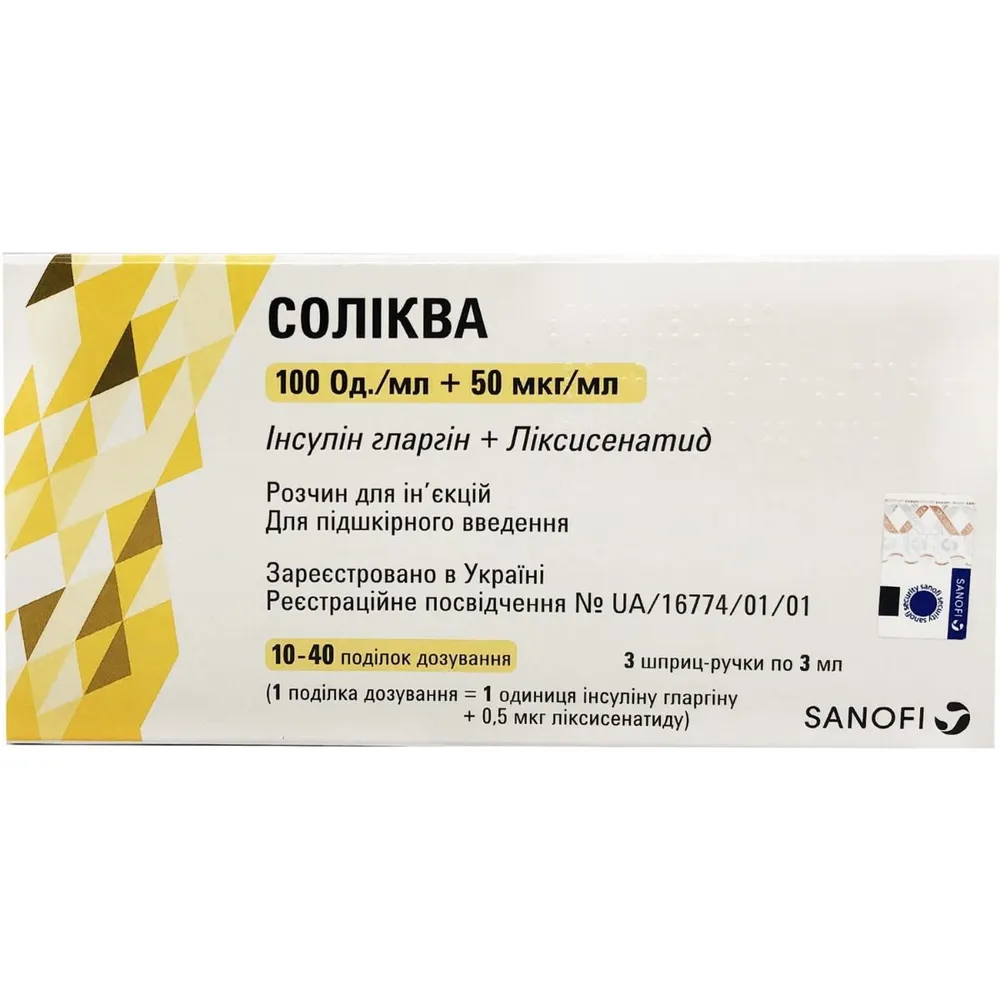
Table of Contents
INSTRUCTIONS for medical use of the medicinal product SOLIQUA® (SOLIQUA®)
Composition:
Active substances: insulin glargine, lixisenatide;
1 ml of injection solution contains 100 units of insulin glargine and 50 mcg of lixisenatide;
1 pre-filled pen contains 3 ml of injection solution, equivalent to 300 units of insulin glargine and 150 mcg of lixisenatide;
1 dose increment corresponds to 1 unit of insulin glargine and 0.5 mcg of lixisenatide;
Excipients: glycerol (85%); methionine; metacresol; zinc chloride; hydrochloric acid concentrated; sodium hydroxide; water for injections.
Pharmaceutical form. Solution for injection.
Main physicochemical properties: colorless or almost colorless solution.
Pharmacotherapeutic group. Medicinal products used in diabetes mellitus. Insulins and their long-acting analogues for injection.
ATC code A10AE54.
Pharmacological Properties
Pharmacodynamics
Mechanism of action. Soliqua® is a combination of two active substances with complementary mechanisms of action to improve glycemic control: insulin glargine (a basal insulin analog, primarily responsible for controlling fasting plasma glucose levels) and lixisenatide (a GLP-1 receptor agonist, primarily responsible for controlling postprandial glucose levels).
Insulin glargine. The most important action of insulin, including insulin glargine, is the regulation of glucose metabolism. Insulin and its analogs lower blood glucose levels by stimulating glucose uptake in peripheral tissues, particularly skeletal muscle and adipose tissue, and by suppressing hepatic glucose production. Insulin also inhibits lipolysis and proteolysis, and stimulates protein synthesis.
Lixisenatide. Lixisenatide is a glucagon-like peptide-1 receptor (GLP-1R) agonist. GLP-1 receptors are the target of endogenous GLP-1, an incretin hormone that potentiates glucose-dependent insulin secretion from pancreatic β-cells and suppresses glucagon secretion from α-cells.
Lixisenatide enhances insulin secretion in response to elevated blood glucose levels, but does not stimulate insulin secretion during normoglycemia, thereby minimizing the risk of hypoglycemia. Glucagon secretion is simultaneously suppressed. In the event of hypoglycemia, the counter-regulatory glucagon secretion mechanism remains intact. Prandial administration of lixisenatide also slows gastric emptying, thereby reducing the rate of glucose absorption and entry into the systemic circulation from ingested food.
Pharmacodynamic effects
The combination of insulin glargine and lixisenatide does not affect the pharmacodynamics of insulin glargine. The effect of the combination on the pharmacodynamics of lixisenatide has not been studied in phase 1 trials.
Given the relatively constant "concentration-time" profile of insulin glargine over 24 hours without pronounced peaks when administered alone, the "glucose utilization rate-time" profile was similar when the combination of insulin glargine and lixisenatide was used.
The duration of action of insulin, including Soliqua®, may vary between individuals and even within the same individual.
Insulin glargine. Clinical studies using insulin glargine (100 units/mL) have shown that, on a molar basis (i.e., at equivalent doses), the glucose-lowering effect of insulin glargine following intravenous administration is approximately equivalent to that of human insulin.
Lixisenatide. In a 28-day placebo-controlled study in patients with type 2 diabetes, administration of lixisenatide at doses of 5–20 mcg resulted in a statistically significant reduction in postprandial glucose levels after breakfast, lunch, and dinner.
Gastric emptying. After ingestion of a standardized test meal in the aforementioned study, it was confirmed that lixisenatide slows gastric emptying, thereby reducing the rate of postprandial glucose absorption. The effect of delayed gastric emptying was maintained throughout the study period.
Clinical efficacy and safety. The safety and efficacy of Soliqua® in glycemic control were evaluated in three randomized clinical trials involving patients with type 2 diabetes:
- Addition to metformin (in patients not previously treated with insulin).
- Transition from basal insulin.
- Transition from a GLP-1 receptor agonist.
In each of the active-controlled trials, treatment with Soliqua® resulted in clinically and statistically significant improvements in glycated hemoglobin (HbA1c) levels.
Achieving lower HbA1c levels and greater HbA1c reduction did not lead to an increased risk of hypoglycemia with combination therapy compared to insulin glargine monotherapy (see section "Adverse Reactions").
In the study adding the drug to metformin, treatment was initiated at a dose corresponding to 10 dose increments (10 units of insulin glargine and 5 mcg of lixisenatide). In the study transitioning from basal insulin, the initial dose was either 20 dose increments (20 units of insulin glargine and 10 mcg of lixisenatide) or 30 dose increments (30 units of insulin glargine and 10 mcg of lixisenatide), depending on the prior insulin dose (see section "Dosage and Administration"). In both studies, dose titration was performed once weekly based on self-monitored fasting plasma glucose levels.
Addition to metformin (in patients not previously treated with insulin)
Clinical trial in patients with type 2 diabetes inadequately controlled on oral antidiabetic therapy. A total of 1170 patients with type 2 diabetes were randomized in a 30-week, open-label, active-controlled trial to evaluate the efficacy and safety of Soliqua® compared to its individual components—insulin glargine (100 units/mL) and lixisenatide (20 mcg).
Patients with type 2 diabetes receiving metformin as monotherapy or in combination with another oral antidiabetic agent (such as a sulfonylurea, glinide, sodium-glucose cotransporter-2 [SGLT-2] inhibitor, or dipeptidyl peptidase-4 [DPP-4] inhibitor), and who had inadequate glycemic control on such therapy (HbA1c levels ranging from 7.5% to 10.0% in those previously on metformin monotherapy, and from 7.0% to 9.0% in those previously on metformin plus another oral antidiabetic agent), were enrolled in a 4-week run-in period. During this run-in phase, metformin therapy was optimized, and other oral antidiabetic agents were discontinued. At the end of the run-in period, patients with persistent inadequate glycemic control (HbA1c levels between 7% and 10%) were randomized to receive the study drug, insulin glargine, or lixisenatide. Of the 1479 patients enrolled in the run-in phase, 1170 were randomized. The main reasons for exclusion from the randomized phase were fasting plasma glucose > 13.9 mmol/L and HbA1c < 7% or > 10% at the end of the run-in period.
Baseline characteristics of the randomized population with type 2 diabetes were as follows: mean age was 58.4 years, with the majority (57.1%) aged between 50 and 64 years; 50.6% were male; mean body mass index (BMI) at baseline was 31.7 kg/m², with 63.4% of patients having a BMI > 30 kg/m²; mean duration of diabetes was approximately 9 years. Metformin was a mandatory background therapy, and 58% of patients were also receiving another oral antidiabetic agent at screening, most commonly a sulfonylurea (in 54% of patients).
At week 30 of treatment with the study drug, statistically significant improvement in HbA1c levels was observed (p-value < 0.0001) compared to treatment with the individual components. Pre-specified subgroup analyses of this primary endpoint showed consistent results across baseline HbA1c levels (< 8% or ≥ 8%) and baseline oral antidiabetic therapy (metformin monotherapy or combination with another oral antidiabetic agent).
Information on other study endpoints is presented in Table 1 and Figure 1.
Table 1
Results from the clinical trial adding the drug to metformin at week 30 (treated patient population)
| Parameter |
Soliqua® |
Insulin glargine |
Lixisenatide |
| Number of patients who received treatment |
468 |
466 |
233 |
| HbA1c level (%) |
|||
| Baseline (mean value, after run-in phase) |
8.1 |
8.1 |
8.1 |
| End of study (mean value) |
6.5 |
6.8 |
7.3 |
| Change from baseline, determined by least squares method (mean value) |
-1.6 |
-1.3 |
-0.9 |
| Difference vs. insulin glargine [95% confidence interval] (p-value) |
-0.3 [-0.4; -0.2] (< 0.0001) |
||
| Difference vs. lixisenatide [95% confidence interval] (p-value) |
-0.8 [-0.9; -0.7] (< 0.0001) |
||
| Number of patients (%) achieving HbA1c < 7% at week 30* |
345 (74%) |
277 (59%) |
77 (33%) |
| Fasting plasma glucose level (mmol/L) |
|||
| Baseline (mean value) |
9.88 |
9.75 |
9.79 |
| End of study (mean value) |
6.32 |
6.53 |
8.27 |
| Change from baseline, determined by least squares method (mean value) |
-3.46 |
-3.27 |
-1.50 |
| Change vs. insulin glargine, determined by least squares method (mean value) [95% confidence interval] (p-value) |
-0.19 [-0.420 to 0.038] (0.1017) |
||
| Change vs. lixisenatide, determined by least squares method (mean value) [95% confidence interval] (p-value) |
-1.96 [-2.246 to -1.682] (< 0.0001) |
||
| Postprandial glucose level 2 hours after meal (mmol/L)** |
|||
| Baseline (mean value) |
15.19 |
14.61 |
14.72 |
| End of study (mean value) |
9.15 |
11.35 |
9.99 |
| Change from baseline, determined by least squares method |
-5.68 |
-3.31 |
-4.58 |
| Change vs. insulin glargine, determined by least squares method (mean value) [95% confidence interval] |
-2.38 [-2.79 to -1.96] |
||
| Change vs. lixisenatide, determined by least squares method (mean value) [95% confidence interval] |
-1.10 [-1.63 to -0.57] |
||
| Body weight (kg) |
|||
| Baseline (mean value) |
89.4 |
89.8 |
90.8 |
| Change from baseline, determined by least squares method (mean value) |
-0.3 |
1.1 |
-2.3 |
| Comparison with insulin glargine [95% confidence interval] (p-value) |
-1.4 [-1.9 to -0.9] (< 0.0001) |
||
| Comparison with lixisenatide [95% confidence interval]* |
2.01 [1.4 to 2.6] |
||
| Number of patients (%) achieving HbA1c < 7.0% without weight gain at week 30 |
202 (43.2%) |
117 (25.1%) |
65 (27.9%) |
| Proportional difference vs. insulin glargine [95% confidence interval] (p-value) |
18.1 [12.2 to 24.0] (< 0.0001) |
||
| Proportional difference vs. lixisenatide [95% confidence interval]* |
15.2 [8.1 to 22.4] |
||
| Daily dose of insulin glargine |
|||
| Insulin dose at week 30, determined by least squares method (mean value) |
39.8 |
40.5 |
Not applicable |
* Not included in the predefined study procedure of gradual lowering of levels.
** Postprandial glucose level 2 hours after meal minus glucose level before meal.
Fig. 1. Mean HbA1c (%) levels at visits during 30 weeks of treatment – treatment population
Patients in the investigational drug group showed a statistically significant greater reduction in mean plasma glucose profile measured at 7 time points from baseline to week 30 (-3.35 mmol/L) compared to patients in the insulin glargine group (-2.66 mmol/L; difference -0.69 mmol/L) and to patients in the lixisenatide group (-1.95 mmol/L; difference -1.40 mmol/L) (p < 0.0001 for both comparisons). At all time points at week 30, mean plasma glucose levels were lower in the investigational drug group compared to both the insulin glargine group and the lixisenatide group, except for pre-breakfast glucose levels, which were similar between the investigational drug group and the insulin glargine group.
Transition from basal insulin
Clinical trial in patients with type 2 diabetes mellitus inadequately controlled on basal insulin therapy
A total of 736 patients with type 2 diabetes participated in a randomized, 30-week, active-controlled, open-label, two-treatment-arm, parallel-group, multicenter study evaluating the efficacy and safety of Soliqua® compared to insulin glargine (100 units/mL).
Screened patients with type 2 diabetes had received basal insulin for at least 6 months at a stable daily dose of 15 to 40 IU as monotherapy or in combination with one or two oral antidiabetic agents (metformin, a sulfonylurea, a glinide, a SGLT-2 inhibitor, or a DPP-4 inhibitor), with HbA1c levels ranging from 7.5% to 10% (mean HbA1c at screening was 8.5%) and fasting plasma glucose levels ≤ 10.0 mmol/L or ≤ 11.1 mmol/L depending on prior antidiabetic treatment.
After screening, patients determined eligible for the study (n = 1018) entered a 6-week run-in phase during which they continued receiving insulin glargine or were switched to insulin glargine if they were previously on another basal insulin; insulin dose titration/stabilization was performed while continuing metformin therapy (if previously prescribed). Treatment with any other oral antidiabetic agents was discontinued.
After completion of the run-in period, patients with HbA1c levels between 7% and 10%, fasting plasma glucose ≤ 7.77 mmol/L, and a daily insulin glargine dose between 20 and 50 units were randomized to either the Soliqua® group (n = 367) or the insulin glargine group (n = 369).
Characteristics of the randomized population with type 2 diabetes were as follows: mean age was 60.0 years, with the majority of patients (56.3%) aged between 50 and 64 years; 53.3% of patients were female; mean body mass index (BMI) at baseline was 31.1 kg/m², with 57.3% of patients having a BMI ≥ 30 kg/m²; mean duration of diabetes was approximately 12 years, and mean duration of prior basal insulin therapy was approximately 3 years. At screening, 64.4% of patients were receiving insulin glargine as basal insulin, and 95.0% were receiving at least one oral antidiabetic agent.
At week 30 of treatment, statistically significant improvement in HbA1c levels was observed with the investigational drug compared to insulin glargine (p-value < 0.0001). Information on other study endpoints is presented in Table 2 and Figure 2.
Table 2
Results from the clinical trial in patients with type 2 diabetes inadequately controlled on basal insulin therapy at week 30 (treatment population)
| Parameter |
Soliqua® |
Insulin glargine |
| Number of patients treated |
366 |
365 |
| HbA1c level (%) |
||
| Baseline (mean value after run-in phase) |
8.1 |
8.1 |
| End of treatment (mean value) |
6.9 |
7.5 |
| Change from baseline, determined by least squares method (mean value) |
-1.1 |
-0.6 |
| Difference vs. insulin glargine [95% confidence interval] (p-value) |
-0.5 [-0.6; -0.4] (< 0.0001) |
|
| Number of patients [n (%)] who achieved HbA1c < 7% at week 30* |
201 (54.9%) |
108 (29.6%) |
| Fasting plasma glucose level (mmol/L) |
||
| Baseline (mean value) |
7.33 |
7.32 |
| End of study (mean value) |
6.78 |
6.69 |
| Change from baseline, determined by least squares method (mean value) |
-0.35 |
-0.46 |
| Difference vs. insulin glargine [95% confidence interval] |
0.11 (-0.21 to 0.43) |
|
| 2-hour postprandial glucose level (mmol/L)** |
||
| Baseline (mean value) |
14.85 |
14.97 |
| End of study (mean value) |
9.91 |
13.41 |
| Change from baseline, determined by least squares method (mean value) |
-4.72 |
-1.39 |
| Change vs. insulin glargine, determined by least squares method (mean value) [95% confidence interval] |
-3.33 [-3.89 to -2.77] |
|
| Mean body weight (kg) |
||
| Baseline (mean value) |
87.8 |
87.1 |
| Change from baseline, determined by least squares method (mean value) |
-0.7 |
0.7 |
| Comparison vs. insulin glargine [95% confidence interval] (p-value) |
-1.4 [-1.8 to -0.9] (< 0.0001) |
|
| Number of patients (%) achieving HbA1c < 7.0% without weight gain at week 30 |
125 (34.2%) |
49 (13.4%) |
| Proportional difference vs. insulin glargine [95% confidence interval] (p-value) |
20.8 [15.0 to 26.7] (< 0.0001) |
|
| Daily dose of insulin glargine |
||
| Baseline (mean value) |
35.0 |
35.2 |
| End point (mean value) |
46.7 |
46.7 |
| Change in insulin dose at week 30, determined by least squares method (mean value) |
10.6 |
10.9 |
* Not included in the predefined study procedure of gradual dose escalation.
** Postprandial glucose level 2 hours after meal minus glucose level before meal.
Fig. 2. Mean HbA1c (%) levels at visits during 30 weeks of treatment – treatment population
Transition from a GLP-1 receptor agonist
Clinical study in patients with type 2 diabetes inadequately controlled on a GLP-1 receptor agonist
The efficacy and safety of Soliqua® compared to continued treatment with a GLP-1 receptor agonist were evaluated in a 26-week randomized, open-label study. The study included 514 patients with type 2 diabetes who were inadequately controlled (HbA1c level from 7% to 9%, inclusive) while receiving treatment with liraglutide or exenatide for at least 4 months, or dulaglutide, albiglutide, or exenatide extended-release for at least 6 months (all agents administered at the maximum tolerated dose), in combination with metformin as monotherapy or in combination with pioglitazone, a sodium-glucose cotransporter-2 (SGLT2) inhibitor, or both. Eligible patients were randomized either to switch to the investigational medicinal product or to continue their previous GLP-1 receptor agonist, both in addition to their prior oral antidiabetic therapy.
At screening, 59.7% of subjects were receiving a GLP-1 receptor agonist once or twice daily, and 40.3% were receiving a GLP-1 receptor agonist once weekly. During screening, 6.6% of subjects received pioglitazone, and 10.1% received an SGLT2 inhibitor in combination with metformin. Baseline characteristics of the study population were as follows: mean age was 59.6 years, 52.5% of subjects were male, mean duration of diabetes was 11 years, mean duration of prior GLP-1 receptor agonist treatment was 1.9 years, mean BMI was approximately 32.9 kg/m², mean eGFR was 87.3 mL/min/1.73 m², and 90.7% of patients had eGFR ≥ 60 mL/min.
At week 26 of treatment, the investigational medicinal product demonstrated statistically significant improvement in HbA1c levels (p < 0.0001). A predefined subgroup analysis by type of prior GLP-1 receptor agonist (daily/bi-daily vs. weekly) used at screening showed that the change in HbA1c at week 26 was similar across subgroups and consistent with the primary analysis of the overall population. The mean daily dose of the investigational product at week 26 was 43.5 dose units. Information on other study endpoints is presented in Table 3 and Figure 3.
Table 3
Results of the clinical study in patients with type 2 diabetes inadequately controlled on GLP-1 receptor agonists at week 26 (treatment population)
| Parameter |
Soliqua® |
GLP-1 receptor agonist* |
| Number of patients who received treatment |
252 |
253 |
| HbA1c level (%) |
||
| Baseline (mean value after run-in phase) |
7.8 |
7.8 |
| End of treatment (mean value) |
6.7 |
7.4 |
| Change from baseline, determined by least squares method (mean value) |
-1.0 |
-0.4 |
| Difference vs. GLP-1 receptor agonist [95 % CI] (p-value) |
-0.6 [-0.8; -0.5] (< 0.0001) |
|
| Number of patients [n (%)] who achieved HbA1c < 7 % at week 26 |
156 (61.9 %) |
65 (25.7 %) |
| Proportional difference vs. GLP-1 receptor agonist (95 % CI) |
36.1 % (28.1 % to 44.0 %) |
|
| p-value |
< 0.0001 |
|
| Fasting plasma glucose level (mmol/L) |
||
| Baseline (mean value) |
9.06 |
9.45 |
| End of study (mean value) |
6.86 |
8.66 |
| Change from baseline, determined by least squares method (mean value) |
-2.28 |
-0.60 |
| Difference vs. GLP-1 receptor agonist [95 % CI] (p-value) |
-1.67 [-2.00 to -1.34] (< 0.0001) |
|
| 2-hour postprandial glucose level (mmol/L)** |
||
| Baseline (mean value) |
13.60 |
13.78 |
| End of study (mean value) |
9.68 |
12.59 |
| Change from baseline, determined by least squares method (mean value) |
-4.0 |
-1.11 |
| Change vs. GLP-1 receptor agonist, determined by least squares method (mean value) (p-value) |
-2.9 [-3.42 to -2.28] (< 0.0001) |
|
| Body weight (kg) |
||
| Baseline (mean value) |
93.01 |
95.49 |
| Change from baseline, determined by least squares method (mean value) |
1.89 |
-1.14 |
| Comparison vs. GLP-1 receptor agonist [95 % CI] (p-value) |
-3.03 [2.417 to 3.643] (< 0.0001) |
|
* Liraglutide, exenatide twice daily or with prolonged release, dulaglutide, or albiglutide.
** Postprandial glucose level 2 hours after food intake minus glucose level before food intake.
Figure 3. Mean HbA1c (%) levels at visits during 26 weeks of treatment – treated patient population
Concomitant use of Soliqua® with sodium-glucose cotransporter-2 (SGLT2) inhibitors
The concomitant use of Soliqua® with SGLT2 inhibitors is supported by subgroup analyses from three phase 3 randomized clinical trials (119 patients receiving the fixed-ratio combination of insulin glargine/lixisenatide who also received SGLT2 inhibitors).
One study conducted in Europe and North America included data from 26 patients (10.1%) who concurrently received the fixed-ratio combination of insulin glargine and lixisenatide, metformin, and SGLT2 inhibitors. Two additional phase 3 studies from a specialized Japanese clinical development program, conducted in patients who did not achieve adequate glycemic control with oral antidiabetic drugs, provided data on 59 patients (22.7%) and 34 patients (21.1%), respectively, who concurrently received SGLT2 inhibitors and the fixed-ratio combination of insulin glargine and lixisenatide.
Data from these three studies indicate that initiating Soliqua® in patients with inadequate control on SGLT2 inhibitors demonstrates greater improvement in HbA1c levels compared to comparator agents (insulin glargine, lixisenatide, liraglutide, exenatide twice daily or with prolonged release, dulaglutide, or albiglutide). In patients receiving SGLT2 inhibitors, there was no increased risk of hypoglycemia and no significant differences in the overall safety profile compared to those not receiving SGLT2 inhibitors.
Studies on cardiovascular outcomes
The cardiovascular safety of insulin glargine and lixisenatide was evaluated in the ORIGIN and ELIXA clinical trials, respectively. No specific study on the cardiovascular effects of Soliqua® has been conducted.
Insulin glargine. The Outcome Reduction with Initial Glargine Intervention (ORIGIN) trial was an open-label, randomized study involving 12,537 patients, comparing insulin glargine 100 units/mL with standard therapy regarding the time to first occurrence of a major cardiovascular event. A major cardiovascular event included cardiovascular death, non-fatal myocardial infarction, and non-fatal stroke. The median duration of follow-up in the ORIGIN trial was 6.2 years. The rate of major cardiovascular events was similar in the group receiving insulin glargine 100 units/mL and the group receiving standard therapy (risk ratio [95% CI] for major cardiovascular events: 1.02 [0.94; 1.11]).
Lixisenatide. The ELIXA trial was a randomized, double-blind, placebo-controlled, multinational study evaluating cardiovascular complications during lixisenatide treatment in patients with type 2 diabetes (n = 6068) following a recent acute coronary syndrome. The primary composite efficacy endpoint was time to first occurrence of any of the following events: cardiovascular death, non-fatal myocardial infarction, non-fatal stroke, or hospitalization for unstable angina. The median duration of follow-up was 25.8 months in the lixisenatide group and 25.7 months in the placebo group.
The rate of the primary endpoint was similar in the lixisenatide group (13.4%) and the placebo group (13.2%): the risk ratio for lixisenatide versus placebo was 1.017 with an associated two-sided 95% confidence interval (CI) of 0.886 to 1.168.
Pharmacokinetics
Absorption. The insulin glargine/lixisenatide ratio does not significantly affect the pharmacokinetics of insulin glargine and lixisenatide in Soliqua®.
After subcutaneous administration of the insulin glargine/lixisenatide combination in patients with type 1 diabetes, insulin glargine did not show a pronounced peak. Exposure to insulin glargine after administration of the insulin glargine/lixisenatide combination was 86−88% of the exposure observed after separate simultaneous injections of insulin glargine and lixisenatide. This difference is not considered clinically significant.
After subcutaneous administration of the insulin glargine/lixisenatide combination in patients with type 1 diabetes, the median tmax of lixisenatide ranged from 2.5 to 3.0 hours. AUC was comparable, while a slight reduction in Cmax of lixisenatide by 22−34% was observed compared to Cmax after separate simultaneous injections of insulin glargine and lixisenatide; however, this reduction is unlikely to be clinically significant.
Clinically significant differences in the absorption rate of lixisenatide following subcutaneous administration in the abdominal area, deltoid muscle, or thigh are absent.
Distribution. Lixisenatide exhibits low (55%) binding to human plasma proteins. The predicted volume of distribution of lixisenatide after subcutaneous administration of the insulin glargine/lixisenatide combination (unbound volume of distribution, Vz/F) is approximately 100 L. The predicted volume of distribution of insulin glargine after subcutaneous administration of the insulin glargine/lixisenatide combination (steady-state volume of distribution, Vss/F) is approximately 1700 L.
Biotransformation and elimination. Study results on metabolism in diabetic patients receiving insulin glargine as monotherapy indicate that insulin glargine is rapidly metabolized at the carboxyl terminus of the B-chain, forming two active metabolites – M1 (21A-glycine-insulin) and M2 (21A-glycine-des-30B-threonine-insulin). In blood plasma, the main circulating compound is metabolite M1. Pharmacokinetic and pharmacodynamic data indicate that the effect of subcutaneous insulin glargine injection primarily depends on M1 metabolite exposure.
Like all peptides, lixisenatide is eliminated via glomerular filtration, followed by tubular reabsorption and subsequent metabolic degradation into smaller peptides and amino acids, which are reincorporated into protein metabolism.
After single subcutaneous administration of the insulin glargine/lixisenatide combination, the mean apparent clearance (CL/F) of insulin glargine was 120 L/h. After multiple subcutaneous administrations of lixisenatide in patients with type 2 diabetes, the mean terminal half-life was approximately 3 hours, and the mean apparent clearance (CL/F) was approximately 35 L/h.
Special patient populations
Patients with renal impairment. In patients with mild (creatinine clearance calculated by Cockcroft-Gault formula, 60−90 mL/min), moderate (creatinine clearance 30−60 mL/min), and severe (creatinine clearance 15−30 mL/min) renal impairment, AUC of lixisenatide increased by 46%, 51%, and 87%, respectively.
The use of insulin glargine in patients with renal impairment has not been studied. However, in patients with renal impairment, insulin requirements may be reduced due to decreased insulin metabolism.
Patients with hepatic impairment. Since lixisenatide is primarily eliminated by the kidneys, no pharmacokinetic studies have been conducted in patients with acute or chronic liver failure. Hepatic impairment is not expected to affect the pharmacokinetics of lixisenatide.
The use of insulin glargine in diabetic patients with hepatic impairment has not been studied. In patients with hepatic impairment, insulin requirements may be reduced due to decreased gluconeogenesis capacity and reduced insulin metabolism.
Age, race, gender, and patient body weight
Insulin glargine. The effects of age, race, and gender on the pharmacokinetics of insulin glargine have not been studied. Subgroup analyses by age, race, and gender in controlled clinical trials in adult patients receiving insulin glargine (100 units/mL) showed no differences in safety and efficacy.
Lixisenatide. Patient age does not have a clinically significant effect on the pharmacokinetics of lixisenatide. In a pharmacokinetic study involving elderly subjects without diabetes, administration of lixisenatide 20 mcg resulted in a mean increase in AUC of lixisenatide by 29% (11 study participants aged 65 to 74 years and 7 participants aged ≥75 years) compared to 18 subjects aged 18 to 45 years, likely related to decreased renal function in the elderly.
Patient ethnicity does not have a clinically significant effect on the pharmacokinetics of lixisenatide, as shown by pharmacokinetic studies conducted in Caucasian, Japanese, and Chinese populations.
Patient gender does not have a clinically significant effect on the pharmacokinetics of lixisenatide.
Patient body weight does not have a clinically significant effect on AUC of lixisenatide.
Immunogenicity. In the presence of antibodies to lixisenatide, its exposure and variability in exposure are substantially increased, regardless of dose level.
Children
Studies on the use of Soliqua® in children have not been conducted.
Preclinical safety data
No animal studies with the combination of insulin glargine and lixisenatide have been conducted to evaluate repeated-dose toxicity, carcinogenicity, genotoxicity, or toxic effects on the reproductive system.
Insulin glargine. Preclinical data obtained from standard studies on pharmacological safety, repeated-dose toxicity, genotoxicity, carcinogenic potential, and toxic effects on the reproductive system indicate no specific risks to humans with the use of insulin glargine.
Lixisenatide. In 2-year carcinogenicity studies with subcutaneous administration in rats and mice, non-lethal C-cell tumors of the thyroid gland were observed, considered to be mediated by a non-genotoxic, receptor-mediated (GLP-1 receptor) mechanism to which rodents are particularly sensitive. C-cell hyperplasia and adenoma were observed in rats at all tested doses, and a no-observed-adverse-effect level could not be established. In mice, these effects occurred at exposures approximately 9.3 times higher than in humans at therapeutic doses. No C-cell carcinomas were observed in mice, while in rats they occurred at exposures approximately 900 times higher than in humans at therapeutic doses.
In a 2-year carcinogenicity study with subcutaneous administration in mice, 3 cases of endometrial adenocarcinoma were observed, with a statistically significant increase in the incidence of this disease in the group receiving medium doses of the drug, resulting in exposures 97 times higher than in humans. No drug-related effects were noted.
Results from animal studies do not indicate any direct adverse effect of the drug on fertility in male and female rats. In dogs receiving lixisenatide, reversible changes in testes and epididymides were observed. No effect on spermatogenesis related to drug administration was observed in healthy men.
In studies evaluating the drug's effects on embryofetal development in rats at all tested doses of lixisenatide (exposures 5 times higher than in humans) and in rabbits at high doses (exposures 32 times higher than in humans), developmental abnormalities, fetal growth retardation, delayed ossification, and skeletal side effects were observed. In both animal models, minor toxic effects on the maternal organism were noted, manifested by reduced food consumption and decreased body weight. Slowed growth was observed in newborn male rats exposed to high doses of lixisenatide during late gestation and lactation, along with a slight increase in mortality rate.
Clinical characteristics
Indications
Soliqua® is indicated for the treatment of adult patients with inadequately controlled type 2 diabetes mellitus to improve glycemic control as an adjunct to diet and exercise, in combination with metformin with or without sodium-glucose cotransporter-2 (SGLT2) inhibitors.
Results of studies on the effect on glycemic control and the studied patient populations are provided in the sections "Pharmacodynamics" and "Use in specific populations".
Contraindications
Hypersensitivity to the active substances or to any of the excipients of the medicinal product.
Interaction with other medicinal products and other forms of interaction
No drug interaction studies with Soliqua® have been conducted. The information provided below is based on results from studies conducted with the individual components of the product.
Pharmacodynamic interactions. A number of substances affect glucose metabolism and therefore their use may necessitate dose adjustment of Soliqua®.
Substances that may enhance the hypoglycemic effect and increase the risk of hypoglycemia include antidiabetic agents, angiotensin-converting enzyme (ACE) inhibitors, disopyramide, fibrates, fluoxetine, monoamine oxidase inhibitors (MAO), pentoxifylline, propoxyphene, salicylates, and sulfonamide antibiotics.
Substances that may reduce the hypoglycemic effect include corticosteroids, danazol, diazoxide, diuretics, glucagon, isoniazid, estrogens and progestogens, phenothiazine derivatives, somatropin, sympathomimetic agents (e.g., epinephrine (adrenaline), salbutamol, terbutaline), thyroid hormones, atypical antipsychotics (e.g., clozapine and olanzapine), and protease inhibitors.
Beta-blockers, clonidine, lithium salts, or alcohol may either potentiate or weaken the hypoglycemic effect of insulin. Pentamidine may cause hypoglycemia, which may sometimes be followed by hyperglycemia.
In addition, under the influence of sympatholytic agents such as beta-blockers, clonidine, guanethidine, and reserpine, the signs of adrenergic counter-regulation may be reduced or absent.
Pharmacokinetic interactions. Lixisenatide is a peptide and is not metabolized by cytochrome P450 enzymes. In vitro studies have shown that lixisenatide does not affect the activity of human cytochrome P450 isoenzymes or transporters.
No pharmacokinetic interactions are known for insulin glargine.
Effect of gastric emptying on the action of oral medicinal products. Delayed gastric emptying caused by lixisenatide may reduce the rate of absorption of orally administered drugs. Close monitoring is required for patients receiving medicinal products with a narrow therapeutic index or those requiring careful clinical monitoring, especially at the beginning of lixisenatide treatment. These medicinal products should be taken in a standardized sequence relative to lixisenatide administration. If such medicinal products must be taken with food, patients should be advised to take them, if possible, with a meal during which lixisenatide is not administered.
For oral medicinal products whose efficacy is particularly dependent on threshold concentrations (e.g., antibiotics), patients should be advised to take these products at least 1 hour before or 4 hours after lixisenatide injection.
Enteric-coated formulations containing substances sensitive to degradation in the stomach should be taken 1 hour before or 4 hours after lixisenatide injection.
Paracetamol. Paracetamol was used as a model medicinal product to evaluate the effect of lixisenatide on gastric emptying. After a single 1000 mg dose of paracetamol, AUC and elimination half-life (t1/2) of paracetamol remained unchanged regardless of the timing of administration (before or after lixisenatide injection). When paracetamol was administered 1 hour or 4 hours after injection of 10 mcg lixisenatide, Cmax of paracetamol decreased by 29% and 31%, respectively, and median tmax increased by 2.0 and 1.75 hours, respectively. With maintenance doses of 20 mcg lixisenatide, a further increase in tmax and reduction in Cmax of paracetamol is expected.
When paracetamol was taken 1 hour before lixisenatide injection, Cmax and tmax of paracetamol were unchanged.
Based on these results, no dose adjustment of paracetamol is required; however, the observed prolongation of tmax when paracetamol is taken 1–4 hours after lixisenatide injection should be considered when a rapid onset of action is required for efficacy.
Oral contraceptives. After a single dose of an oral contraceptive (ethinylestradiol 0.03 mg / levonorgestrel 0.15 mg) taken 1 hour before or 11 hours after injection of 10 mcg lixisenatide, Cmax, AUC, t1/2, and tmax of ethinylestradiol and levonorgestrel were unchanged.
When the oral contraceptive was taken 1 hour or 4 hours after lixisenatide injection, AUC and t1/2 of ethinylestradiol and levonorgestrel were unchanged, although Cmax of ethinylestradiol decreased by 52% and 39%, respectively, Cmax of levonorgestrel decreased by 46% and 20%, respectively, and median tmax increased by 1–3 hours. This reduction in Cmax has limited clinical significance, and no dose adjustment of oral contraceptives is required.
Atorvastatin. When lixisenatide 20 mcg and atorvastatin 40 mg were co-administered in the morning for 6 days, exposure to atorvastatin was unchanged, while Cmax decreased by 31% and tmax was prolonged by 3.25 hours.
This increase in tmax was not observed when atorvastatin was taken in the evening and lixisenatide was administered in the morning; however, AUC and Cmax of atorvastatin increased by 27% and 66%, respectively.
These changes are not clinically significant; therefore, no dose adjustment of atorvastatin is required when co-administered with lixisenatide.
Warfarin and other coumarin derivatives. When warfarin 25 mg was administered concomitantly with multiple doses of lixisenatide 20 mcg, no effect on AUC or INR (international normalized ratio) was observed, while Cmax decreased by 19% and tmax was prolonged by 7 hours.
Based on these data, no dose adjustment of warfarin is required when co-administered with lixisenatide; however, frequent monitoring of INR is recommended at the initiation and termination of lixisenatide treatment in patients taking warfarin or other coumarin derivatives.
Digoxin. At steady state, when lixisenatide 20 mcg and digoxin 0.25 mg were co-administered, AUC of digoxin was unchanged. However, tmax of digoxin increased by 1.5 hours and Cmax decreased by 26%.
Based on these data, no dose adjustment of digoxin is required when co-administered with lixisenatide.
Ramipril. When lixisenatide 20 mcg and ramipril 5 mg were co-administered for 6 days, AUC of ramipril increased by 21%, while Cmax decreased by 63%. However, AUC and Cmax of the active metabolite (ramiprilat) were unchanged. The tmax of ramipril and ramiprilat increased by approximately 2.5 hours.
Based on these data, no dose adjustment of ramipril is required when co-administered with lixisenatide.
Special precautions
Traceability
To improve traceability of biological medicinal products, the name and batch number of the administered medicinal product should be clearly documented in the patient's medical records.
Type 1 diabetes
This medicinal product should not be used in patients with type 1 diabetes mellitus or for the treatment of diabetic ketoacidosis.
Injection site rotation
Patients should be advised to regularly rotate injection sites to reduce the risk of developing lipodystrophy and cutaneous amyloidosis. There is a potential risk of delayed insulin absorption and deterioration of glycaemic control following insulin injections at sites affected by these reactions. Changing the injection site to a new anatomical area has been reported to cause hypoglycaemia. Monitoring of blood glucose levels is recommended after changing the injection site, and dose adjustment of antidiabetic medications may need to be considered.
Hypoglycaemia
Hypoglycaemia was the most frequently reported adverse reaction during treatment with this medicinal product (see section "Adverse reactions"). Hypoglycaemia may occur if the dose of Soliqua® is higher than required.
Factors that increase the susceptibility to hypoglycaemia require particularly careful monitoring and may necessitate dose adjustments. Such factors include:
- change in injection site,
- increased insulin sensitivity (e.g., due to resolution of stress factors),
- unusual, excessive, or prolonged physical activity,
- concomitant illness (e.g., associated with vomiting or diarrhoea),
- inadequate nutrition,
- missed meals,
- alcohol consumption,
- certain uncompensated endocrine disorders (e.g., hypothyroidism, hypopituitarism, or adrenal insufficiency),
- concomitant use of certain other medicinal products (see section "Interaction with other medicinal products and other forms of interaction"),
- when lixisenatide and/or insulin are used in combination with sulphonylurea agents, the risk of hypoglycaemia may be increased; therefore, this medicinal product should not be used in combination with sulphonylureas.
The dosage of Soliqua® should be individually adjusted based on clinical response, and titrated according to the patient's insulin requirements (see section "Dosage and administration").
Acute pancreatitis
Use of glucagon-like peptide-1 (GLP-1) receptor agonists has been associated with a risk of acute pancreatitis. A small number of cases of acute pancreatitis have been reported with lixisenatide, although a causal relationship to the drug has not been established. Patients should be informed about the characteristic symptoms of acute pancreatitis, such as persistent severe abdominal pain. If pancreatitis is suspected, the medicinal product should be discontinued; if acute pancreatitis is confirmed, lixisenatide should not be restarted. Caution should be exercised when prescribing this medicinal product to patients with a history of pancreatitis.
Severe gastrointestinal disease
Use of glucagon-like peptide-1 (GLP-1) receptor agonists may be associated with gastrointestinal adverse reactions (see section "Adverse reactions"). The use of this medicinal product has not been studied in patients with severe gastrointestinal diseases, including severe gastroparesis; therefore, use of Soliqua® in such patients is not recommended.
Severe renal impairment
There is no therapeutic experience with this medicinal product in patients with severe renal impairment (creatinine clearance <30 mL/min) or in patients with end-stage renal disease. Use of this medicinal product is not recommended in patients with severe renal impairment or end-stage renal disease (see sections "Pharmacological properties. Pharmacokinetics" and "Dosage and administration").
Concomitant use of other medicinal products
The delayed gastric emptying caused by lixisenatide may reduce the rate of absorption of orally administered medicinal products. Soliqua® should be used with caution in patients receiving medicinal products that require rapid absorption in the gastrointestinal tract, those requiring close clinical monitoring, or those with a narrow therapeutic index. Specific recommendations for the use of such medicinal products are provided in the section "Interaction with other medicinal products and other forms of interaction".
Aspiration in combination with general anaesthesia or deep sedation
Cases of pulmonary aspiration have been reported in patients receiving GLP-1 receptor agonists under general anaesthesia or deep sedation. Therefore, before undergoing procedures involving general anaesthesia or deep sedation, the increased risk of residual gastric content due to delayed gastric emptying should be considered (see section "Adverse reactions").
Dehydration
Patients receiving this medicinal product should be informed about the potential risk of dehydration associated with gastrointestinal adverse reactions, and measures should be taken to prevent hypovolaemia in such patients.
Antibody formation
Use of this medicinal product may lead to the formation of antibodies against insulin glargine and/or lixisenatide. In rare cases, the presence of such antibodies may necessitate dose adjustments to prevent predisposition to hyper- or hypoglycaemia.
Prevention of medication errors
Patients should be instructed to always check the labelling of the pre-filled pen before each injection to avoid accidental confusion between the two different dosage strengths of Soliqua® and confusion with other injectable antidiabetic medicinal products.
To avoid dosing errors and potential overdose, neither patients nor healthcare professionals should ever use a syringe to withdraw the medicinal product from the pre-filled pen cartridge.
Antidiabetic medicinal products not studied in combination with Soliqua®
The use of Soliqua® has not been studied in combination with dipeptidyl peptidase-4 (DPP-4) inhibitors, sulphonylureas, glinides, or pioglitazone.
Travel
To avoid dosing errors and potential overdoses when crossing time zones, patients should consult their physician before travelling.
Excipients
This medicinal product contains less than 1 mmol sodium (23 mg) per dose, i.e., essentially "sodium-free".
This medicinal product contains metacresol, which may cause allergic reactions.
Use during pregnancy or breastfeeding
Soliqua® is not recommended for use in women of childbearing potential who are not using contraception.
Pregnancy. There are no clinical data from controlled clinical trials on the use of Soliqua®, insulin glargine, or lixisenatide during pregnancy. A large amount of data on the use of insulin glargine in pregnant women (over 1000 pregnancy cases) does not indicate malformative or foetal/neonatal toxicity of insulin glargine. Animal studies did not reveal signs of reproductive toxicity of insulin glargine.
There are no or only limited data on the use of lixisenatide in pregnant women. Animal studies indicate reproductive toxicity of lixisenatide (see section "Pharmacological properties. Preclinical safety data").
This medicinal product is not recommended during pregnancy and in women of childbearing potential who are not using contraception.
Breastfeeding. It is unknown whether insulin glargine or lixisenatide is excreted in human breast milk. A risk to newborns/infants cannot be excluded. Breastfeeding should be discontinued during treatment with this medicinal product.
Fertility. Animal studies did not reveal any direct harmful effect of lixisenatide or insulin glargine on fertility.
Effects on ability to drive and use machines
Soliqua® has no effect or has a negligible effect on the ability to drive and use machines. However, a patient's ability to concentrate and their reaction speed may be impaired as a result of hypoglycaemia or hyperglycaemia, or, for example, due to visual disturbances. This may be dangerous in situations where these abilities are of particular importance (e.g., when driving a vehicle or operating machinery).
Patients should be advised to take necessary precautions to avoid hypoglycaemia while driving or operating machinery. This is particularly important for patients who have poorly defined or absent early warning symptoms of hypoglycaemia, as well as for those who experience frequent hypoglycaemic episodes. Careful consideration should be given to whether it is safe to drive or operate machinery under such conditions.
Dosage and Administration
The medicinal product Soliqua® is available in two types of prefilled pen injectors with different dosing options, namely Soliqua® (10–40) pen injector and Soliqua® (30–60) pen injector. The difference between the pen injectors relates to their respective dose ranges.
- Soliqua® 100 units/mL + 50 mcg/mL in a prefilled pen injector: dose range is from 10 to 40 units of insulin glargine in combination with 5–20 mcg of lixisenatide (Soliqua® (10–40) pen injector).
- Soliqua® 100 units/mL + 33 mcg/mL in a prefilled pen injector: dose range is from 30 to 60 units of insulin glargine in combination with 10–20 mcg of lixisenatide (Soliqua® (30–60) pen injector).
To avoid medication errors, the prescribing physician must ensure that the prescription clearly specifies the correct dosage strength and the dose increment range of the pen injector (see section "Special Instructions for Use").
Dosage
Dosage must be individually adjusted according to the patient's individual response, and titrated according to the patient's insulin requirements. The lixisenatide dosage increases or decreases in parallel with insulin glargine dosage and also depends on which pen injector is being used.
Initial dose. Treatment with basal insulin, or a glucagon-like peptide-1 (GLP-1) receptor agonist, or any oral antidiabetic medicinal product other than metformin and sodium-glucose cotransporter-2 (SGLT2) inhibitors, should be discontinued prior to initiating Soliqua®.
The initial dose of the medicinal product is determined based on prior antidiabetic therapy. The recommended initial dose of lixisenatide should not exceed 10 mcg (see Table 4).
Table 4
| Previous therapy |
||||
| Patients previously not treated with insulin (oral antidiabetic agents or GLP-1 receptor agonist) |
Insulin glargine (100 units/mL)** |
Insulin glargine (100 units/mL)** |
||
| Starting dose and type of injection pen |
Soliqua® pen |
10 dose steps (10 units/5 mcg) |
20 dose steps (20 units/10 mcg)* |
|
| Soliqua® pen |
30 dose steps (30 units/10 mcg)* |
|||
* Insulin glargine units (100 units/ml) / micrograms of lixisenatide.
Patients using less than 20 units of insulin glargine may be considered as not previously receiving insulin.
** If another basal insulin was used:
- When using a basal insulin twice daily or insulin glargine (300 units/ml), the previous total daily dose should be reduced by 20% when selecting the initial dose of Soliqua®.
- When using any other basal insulin, the same rule should be applied as for insulin glargine (100 units/ml).
The maximum daily dose is 60 units of insulin glargine and 20 micrograms of lixisenatide, corresponding to 60 dose steps.
Soliqua® should be injected once daily within one hour before a meal. Ideally, the prandial injection should be administered before the same meal each day after the patient has chosen the most convenient meal for themselves.
Dose titration. The medication should be administered according to the individual patient's insulin requirements. Glycemic control should be optimized by adjusting the dose based on fasting plasma glucose levels (see section "Pharmacological properties", subsection "Pharmacodynamics"). Careful monitoring of glucose levels is recommended during the transition to this product and for the first few weeks thereafter.
- If a patient starts using the Soliqua® pen (10–40), dosing may be titrated up to 40 dose steps.
- For dosing > 40 dose steps per day, titration should continue using the Soliqua® pen (30–60).
- If a patient starts using the Soliqua® pen (30–60), dosing may be titrated up to 60 dose steps.
- For total daily dosing > 60 dose steps, the medication should not be used.
Patients who adjust the amount or timing of administration must do so only under medical supervision with appropriate glucose monitoring (see section "Special precautions for use").
Missed dose. If a dose of the medication is missed, it should be administered within one hour before the next meal.
Special patient populations
Elderly patients (≥ 65 years of age)
The medication can be used in elderly patients. Dosing should be individually adjusted based on glucose monitoring results. In elderly patients, progressive deterioration of renal function may lead to a continuous decrease in insulin requirements. Dose adjustment of lixisenatide based on patient age is not required. Therapeutic experience with the medication in patients aged ≥ 75 years is limited.
Patients with renal impairment
The medication is not recommended for patients with severe renal impairment or end-stage renal disease, as therapeutic experience with lixisenatide in such cases is insufficient.
For patients with mild or moderate renal impairment, dose adjustment of lixisenatide is not required.
In patients with renal impairment, insulin requirements may be reduced due to decreased insulin metabolism.
Patients with mild or moderate renal impairment using Soliqua® may require frequent glucose monitoring and appropriate dose adjustments.
Patients with hepatic impairment
For patients with hepatic impairment, dose adjustment of lixisenatide is not required (see section "Pharmacological properties", subsection "Pharmacokinetics"). In patients with hepatic impairment, insulin requirements may be reduced due to decreased gluconeogenic capacity and reduced insulin metabolism. In patients with hepatic impairment, frequent glucose monitoring and appropriate dose adjustments may be necessary.
Children
The medication is not intended for use in children.
Administration method. The medication should be administered by subcutaneous injection into the abdominal area, deltoid muscle, or thigh.
Injection sites should be rotated within one anatomical region (abdomen, deltoid muscle, or thigh) from one injection to the next to reduce the risk of lipodystrophy and/or cutaneous amyloidosis (see section "Special precautions for use" and "Adverse reactions").
Patients should be instructed about the constant need to use a new needle. Reusing the needle of an insulin pen increases the risk of blockage, which may lead to underdosing or overdosing. In case of pen blockage, the patient should follow the instructions provided below in the subsection "Instructions for use of Soliqua® pen".
The medication must not be drawn from the cartridge of the pre-filled pen into a syringe to avoid dosing errors and potential overdose (see section "Special precautions for use").
Special warnings for use
Before first use, the pen should be removed from the refrigerator and allowed to reach room temperature (not exceeding 25 °C) for 1–2 hours.
Before use, inspect the pen cartridge. It may only be used if it contains a clear, colorless solution resembling water, with no visible particles.
The medication must not be mixed with any other insulin or diluted. Mixing or diluting may alter the time-action profile of the medication; additionally, mixing with other products may lead to precipitation.
Before each injection, a new needle must always be attached. Needles must not be reused. The patient must dispose of the needle after each injection.
Needles are not included in the packaging.
In case of needle blockage, patients must follow the recommendations described in STEP 3 of the Instructions for use of Soliqua® pen (see below).
Empty pens must never be reused and must be properly disposed of.
To prevent possible transmission of disease, each pen must be used by only one patient.
Before each injection, the label should always be checked to avoid confusion between Soliqua® and other injectable antidiabetic medications, including the two different types of Soliqua® pens (see section "Special precautions for use").
The section "Instructions for use of Soliqua® pen" should be carefully read before using the medication.
Important information on the use of Soliqua® pen
- The pen is intended for personal use only and must not be shared with others.
- The pen must not be used if it is damaged or if there is any doubt about its proper functioning.
- A safety test must always be performed (see STEP 3).
- A spare pen and spare needles should always be kept in case the primary set is lost or damaged.
- The pen label must always be checked before use to ensure the correct pen is being used.
What you need to know for administering the injection
- Before using the pen, ask your doctor or nurse how to administer the injection.
- If you have any difficulties using the pen, for example due to vision problems, seek assistance.
- Before using the pen, reread these instructions. Failure to follow these instructions may result in receiving too high or too low a dose of the medication.
Additional items needed for administering this medication:
- a new sterile needle (see STEP 2);
- an alcohol swab;
- a puncture-resistant container for used needles and pens.
INSTRUCTIONS
for use of Soliqua® pen
* The plunger will not be visible until several doses have been administered.
STEP 1. Check your pen.
At least 1 hour before administering the injection, remove the new pen from the refrigerator. Injecting cold medication is more painful. After first use, the pen should be stored at a temperature not exceeding 25 °C.
A. Check the medication name and expiration date on the pen label.
- Make sure you have the correct medication. This pen is peach-colored and has an orange injection button.
- Do not use this pen if your daily dose corresponds to less than 10 dose steps or more than 40 dose steps. Discuss with your doctor which pen best suits your needs.
- Do not use the pen after its expiration date.
B. Remove the pen cap.
C. Ensure the medication is clear.
- Look at the transparent cartridge holder. Do not use the pen if the medication solution appears cloudy, discolored, or contains particles.
STEP 2. Attach a new needle.
- Do not reuse needles. Always use a new sterile needle for each injection. This helps prevent needle blockage, contamination, and infection.
- Always use only needles compatible for use with Soliqua®.
A. Take a new needle and peel off the protective film.
B. Hold the needle straight and screw it onto the pen until firmly attached. Do not overtighten the needle.
C. Remove the outer needle cap. Keep it—it will be needed later.
D. Remove the inner needle cap and discard it. If you try to reattach it, you may accidentally prick yourself with the needle.
Needle handling
Handle needles with care to prevent needlestick injuries and cross-contamination.
STEP 3. Perform the safety test.
Always perform the safety test before each injection to:
- check that your pen and needle are working properly;
- ensure you receive the correct dose of medication.
A. Select 2 dose steps by turning the dose selector until the dose indicator points to the "2" mark.
B. Press the injection button fully.
If medication solution comes out from the needle tip, your pen is working correctly. The dose selector will return to the "0" position.
If no medication solution comes out:
- You may need to repeat this step up to 3 times before seeing the medication solution.
- If no solution comes out after the third attempt, the needle may be blocked. If this occurs:
- replace the needle (see STEP 6 and STEP 2);
- then repeat the safety test (STEP 3).
- If no solution still comes out from the needle tip, do not use your pen. Use a new pen.
- Do not use a syringe to withdraw medication solution from your pen.
If you see air bubbles:
- You may see air bubbles in the medication solution. This is normal and will not harm you.
STEP 4. Select your dose.
- Use this pen only for administering a single daily dose corresponding to 10 to 40 dose steps.
- Never select a dose or press the injection button without an attached needle. This may damage your pen.
A. Ensure the needle is attached to the pen and the dose indicator points to "0".
B. Turn the dose selector until the dose indicator points to your required dose.
- If you turn the selector past your required dose, you may turn it back in the opposite direction.
- If there are not enough units left in your pen for your dose, the dose selector will stop after selecting the remaining units in the pen.
- If you cannot select the full prescribed dose, use a new pen or administer the remaining units with a new pen. In this case and only in this case, it is permitted to administer a partial dose corresponding to less than 10 dose steps. To complete your dose, always use another Soliqua® pen (10–40), not any other pen.
How to read the dose display window
- Even numbers are displayed next to the dose indicator, and odd numbers are shown as lines between even numbers.
- Do not use the pen if your single dose corresponds to less than 10 dose steps (these dose steps are marked with white numbers on a black background).
Number of medication units in your pen
- Your pen contains a total of 300 dose steps. You can select your dose in 1 dose step increments.
- Do not use this pen if your single daily dose corresponds to less than 10 dose steps or more than 40 dose steps. Discuss with your doctor which pen best suits your needs.
- Each pen contains more than one daily dose.
STEP 5. Administer your required dose.
If you find it difficult to press the injection button, do not force it, as this may break your pen.
- Replace the needle (see STEP 6 "Remove the needle" and STEP 2 "Attach a new needle"), then perform the safety test (see STEP 3).
- If you still find it difficult to press the button, take a new pen.
- Do not use a syringe to withdraw medication solution from your pen.
A. Select your injection site according to the illustration below.
B. Insert the needle into your skin as shown by your doctor or nurse.
- Do not press the injection button yet.
C. Place your thumb on the injection button. Then press it fully and hold it in this position.
- Do not press the button at an angle, as your thumb may block the rotation of the dose selector.
D. Keep the injection button pressed and, after seeing "0" in the dose display window, slowly count to 10.
This is necessary to ensure you receive the full dose of medication.
E. After holding the button and slowly counting to 10, release the injection button. Then withdraw the needle from the skin.
STEP 6. Remove the needle.
- Handle needles with care to prevent needlestick injuries and cross-contamination.
- Do not reattach the inner needle cap.
A. Take the outer needle cap by its widest part. Hold the needle straight and insert it into the outer needle cap. Then press them firmly together.
- The needle may pierce the cap if it is attached at an angle.
B. Hold the outer needle cap by its widest part and press it in this area. With the other hand, turn the pen several times to remove the needle.
- If the needle does not detach the first time, try again.
C. Dispose of the used needle in a puncture-resistant container or according to your doctor's or local authority's recommendations.
D. Replace the pen cap back onto the pen.
- Do not put the pen back into the refrigerator.
Storage instructions
Before first use, store the pen in the refrigerator at +2 °C to +8 °C, protected from light. Do not freeze.
After first use, the pen should be stored for no more than 28 days at room temperature below 25 °C, protected from light.
Do not put your pen back into the refrigerator. Do not freeze.
After each injection, the pen cap should be replaced to protect from light. The pen must not be stored with a needle attached.
Use
Handle the pen with care. If you suspect the pen is damaged, do not attempt to repair it; use a new one.
Protect the pen from dust and dirt: the outer surface of the pen may be cleaned by wiping with a damp cloth (moistened with water only). Do not immerse in liquid, rinse, or lubricate the pen, as this may damage it.
Disposal of the pen: before disposal, remove the needle from the pen. Dispose of the pen as recommended by local regulatory authorities.
Children
The safety and efficacy of Soliqua® for the treatment of children (under 18 years of age) have not been established. Data are lacking.
Overdose
If a higher dose of Soliqua® is administered than required, adverse reactions such as hypoglycemia and gastrointestinal disorders may occur.
Mild episodes of hypoglycemia can generally be managed by oral carbohydrate intake. Dose adjustments of the medication and changes in diet or physical activity may be required.
More severe episodes of hypoglycemia, accompanied by coma, seizures, or neurological disturbances, require administration of glucagon or intravenous infusion of concentrated glucose solution. Since hypoglycemia may recur even after apparent clinical improvement, prolonged carbohydrate intake and patient observation may be necessary.
In case of gastrointestinal adverse reactions, supportive therapy should be initiated according to the clinical signs and symptoms observed in the patient.
Adverse reactions
The most commonly reported adverse reactions during treatment with Soliqua® were hypoglycemia and gastrointestinal disorders (see section "Description of selected adverse reactions" below).
Adverse reactions associated with the use of the medicinal product observed during clinical studies are listed in Table 5 by "System-Organ-Class" in order of decreasing frequency (very common: ≥ 1/10; common: ≥ 1/100 to < 1/10; uncommon: ≥ 1/1,000 to < 1/100; rare: ≥ 1/10,000 to < 1/1,000; very rare: < 1/10,000; frequency not known: cannot be estimated from the available data). Within each frequency grouping, adverse reactions are presented in order of decreasing severity.
Table 5
| System Organ Class |
Frequency |
||||
| Very common |
Common |
Uncommon |
Rare |
Frequency not known |
|
| Infections and infestations |
Nasopharyngitis Upper respiratory tract infection |
||||
| Immune system disorders |
Urticaria |
||||
| Metabolism and nutrition disorders |
Hypoglycaemia |
||||
| Nervous system disorders |
Dizziness |
Headache Dysgeusia |
|||
| Gastrointestinal disorders |
Nausea Diarrhoea Vomiting |
Dyspepsia Abdominal pain |
Delayed gastric emptying |
||
| Hepatobiliary disorders |
Cholelithiasis Cholecystitis |
||||
| Skin and subcutaneous tissue disorders |
Cutaneous amyloidosis Lipodystrophy |
||||
| General disorders and administration site conditions |
Injection site reactions |
Increased fatigue |
|||
Description of individual adverse reactions
Hypoglycemia. Table 6 presents data on the frequency of documented symptomatic hypoglycemia (≤ 3.9 mmol/L) and severe hypoglycemia during treatment with Soliqua® and the comparator drug***.
Table 6
Adverse reactions in the form of documented symptomatic hypoglycemia or severe hypoglycemia
| Patients who have not previously received insulin |
Transition from basal insulin |
Transition from GLP-1 receptor agonist*** |
|||||
| Soliqua® |
Insulin glargine |
Lixisenatide |
Soliqua® |
Insulin glargine |
Soliqua® |
GLP-1 receptor agonist*** |
|
| N |
469 |
467 |
233 |
365 |
365 |
255 |
256 |
| Documented symptomatic hypoglycemia* |
|||||||
| Patients experiencing an adverse reaction, n (%) |
120 (25.6%) |
110 (23.6%) |
15 (6.4%) |
146 (40.0%) |
155 (42.5%) |
71 (27.8%) |
6 (2.3%) |
| Number of adverse reactions per patient-year, n |
1.44 |
1.22 |
0.34 |
3.03 |
4.22 |
1.54 |
0.08 |
| Severe hypoglycemia** |
|||||||
| Number of adverse reactions per patient-year, n |
0 |
< 0.01 |
0 |
0.02 |
< 0.01 |
< 0.01 |
0 |
* Documented symptomatic hypoglycemia was defined as an event during which typical symptoms of hypoglycemia were accompanied by a measured plasma glucose concentration ≤ 3.9 mmol/L.
** Severe symptomatic hypoglycemia was defined as an event requiring assistance from another person to administer carbohydrates, glucagon, or other resuscitative measures.
*** Liraglutide, exenatide twice daily or extended release, dulaglutide, or albiglutide.
Gastrointestinal disorders. Gastrointestinal disorders (nausea, vomiting, and diarrhea) were commonly reported adverse reactions during the treatment period. In patients receiving Soliqua®, the frequency of treatment-related nausea, diarrhea, and vomiting was 8.4%, 2.2%, and 2.2%, respectively. Gastrointestinal adverse reactions were predominantly mild in severity and transient in nature.
Immune system disorders. Allergic reactions (urticaria), possibly related to the use of the medicinal product, were reported in 0.3% of patients. Cases of generalized allergic reactions, including anaphylactic reactions and angioedema, have been reported during post-marketing use of insulin glargine and lixisenatide.
Immunogenicity. The use of Soliqua® may lead to the formation of antibodies to insulin glargine and/or lixisenatide.
The frequency of antibody development against insulin glargine was 21.0% and 26.2%. Approximately 93% of patients showed cross-reactivity of antibodies to insulin glargine with human insulin. The frequency of antibody development against lixisenatide was approximately 43%. Neither the antibody status to insulin glargine nor the antibody status to lixisenatide had a clinically significant impact on the safety or efficacy of the drug.
Skin and subcutaneous tissue disorders. Lipodystrophy and cutaneous amyloidosis may occur at the injection site of insulin and may lead to delayed insulin absorption. Regular rotation of injection sites within the same body region may help reduce or prevent these reactions (see section "Special instructions for use").
Injection site reactions. Injection site reactions (redness, local swelling, and itching) were observed in some patients (1.7%) receiving therapy involving insulin injections, including Soliqua®.
Heart rate. Increases in heart rate have been reported with GLP-1 receptor agonists; transient increases in heart rate were also observed in some studies with lixisenatide. Across all phase 3 clinical trials, Soliqua® did not result in an increase in mean heart rate.
Reporting of suspected adverse reactions
Reporting suspected adverse reactions after medicine registration is important. It allows ongoing monitoring of the benefit-risk balance of the medicinal product. Healthcare and pharmaceutical professionals, as well as patients or their legal representatives, should report all suspected adverse reactions and lack of efficacy through the automated pharmacovigilance information system at: https://aisf.dec.gov.ua.
Shelf life. 36 months.
Shelf life after first use of the pen device – 28 days.
Store below 25 °C. Do not freeze. Do not refrigerate. Do not store with attached needle. Store the pen device in a place protected from direct heat and light. After each injection, the pen cap should be replaced to protect from light.
Storage conditions
Keep out of the reach of children.
Unused pen devices
Store in a refrigerator (at +2 °C to +8 °C).
Do not freeze and avoid contact with the freezer compartment or cold accumulators.
Store the pen device in its outer cardboard packaging to protect from light.
Pen devices after first use
Storage conditions are described in the section "Shelf life".
Incompatibilities
This medicinal product must not be mixed with any other medicinal product.
Packaging
No. 3 or No. 5: 3 mL in a cartridge contained in a disposable pen device; 3 or 5 pen devices in a cardboard box. Needles are not included in the package.
Prescription status. By prescription only.
Manufacturer. Sanofi-Aventis Deutschland GmbH.
Manufacturer's address and place of business
Brunner Strasse 50, Industriepark Höchst, 65926 Frankfurt am Main, Germany.
Marketing Authorization Holder. LLC "Sanofi-Aventis Ukraine".
Address of the Marketing Authorization Holder. 48-50A Zhylianska St., Kyiv, 01033, Ukraine.