Skyrizi
Ukraine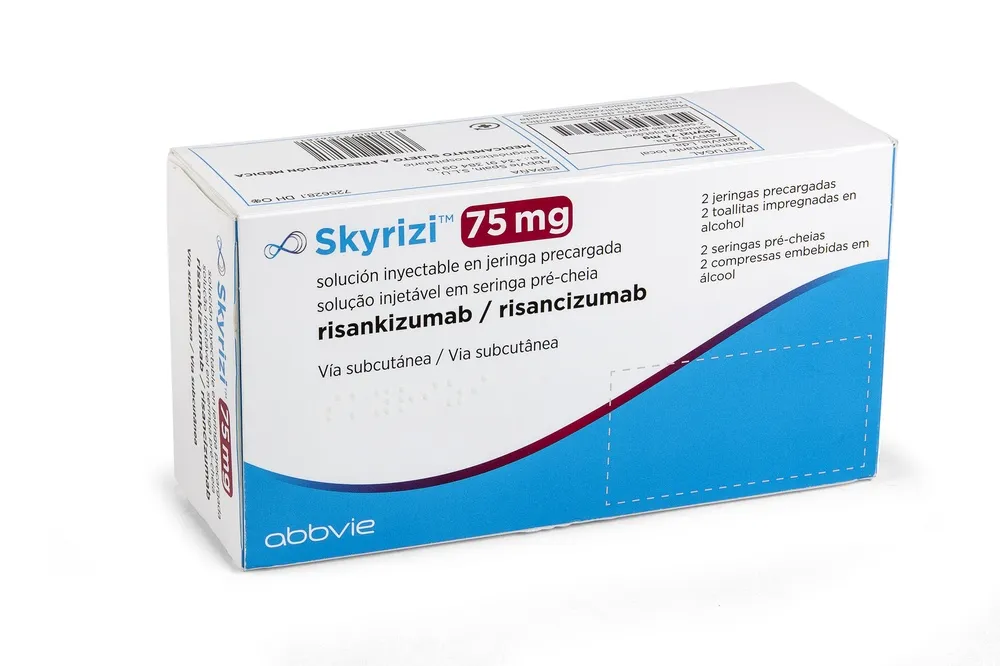
Instructions for Use
INSTRUCTION FOR MEDICINAL USE OF THE MEDICINAL PRODUCT SKYRIZI
Composition:
Active substance: risankizumab;
1 pre-filled syringe contains 150 mg of risankizumab in 1 mL of solution;
Excipients: sodium acetate trihydrate; acetic acid, trehalose dihydrate, polysorbate-20, water for injections.
Pharmaceutical form. Solution for injection.
Main physicochemical properties: colorless or yellow solution, from clear to slightly opalescent.
Pharmacotherapeutic group.
Immunosuppressants. Interleukin inhibitors. Risankizumab. ATC code L04AC18.
Pharmacological properties
Pharmacodynamics
Risankizumab is a humanized monoclonal antibody, immunoglobulin G1 (IgG1), selectively targeting the interleukin-23 (IL-23) protein, produced in Chinese hamster ovary cells using recombinant DNA technology.
Mechanism of action
Risankizumab is a humanized monoclonal antibody, immunoglobulin G1 (IgG1), which binds with high affinity to the p19 subunit of human interleukin-23 (IL-23) cytokine without binding to IL-12, thereby inhibiting its interaction with the IL-23 receptor complex. IL-23 is a cytokine involved in inflammatory and immune responses. By blocking IL-23 from binding to its receptor, risankizumab inhibits IL-23-dependent cellular signaling and the release of pro-inflammatory cytokines.
Pharmacodynamic effects
In a study involving patients with psoriasis, expression of genes associated with the IL-23/IL-17 axis decreased in the skin following single doses of risankizumab. Additionally, in psoriatic lesions, reductions were observed in epidermal thickness, inflammatory cell infiltration, and expression of psoriasis disease markers.
In a study involving patients with psoriatic arthritis, where risankizumab 150 mg was administered subcutaneously at week 0, week 4, and every 12 weeks thereafter, statistically and clinically significant reductions in IL-23- and IL-17-associated biomarkers, including serum levels of IL-17A, IL-17F, and IL-22, were observed at week 24 compared to baseline values.
Clinical efficacy and safety
Plaque psoriasis
The efficacy and safety of risankizumab were evaluated in 2109 patients with moderate to severe plaque psoriasis across four multicenter, randomized, double-blind studies (ULTIMMA-1, ULTIMMA-2, IMMHANCE, and IMMVENT). Patients included in these studies were aged 18 years or older, had plaque psoriasis affecting ≥10% of body surface area (BSA), a static Physician's Global Assessment (sPGA) score of ≥3 on a 0 to 4 severity scale for overall psoriasis (plaque thickness/induration, erythema, and scaling), a Psoriasis Area and Severity Index (PASI) score of ≥12, and were candidates for systemic therapy or phototherapy.
Overall, at baseline, the median PASI score was 17.8, the median BSA affected was 20.0%, and the median DLQI was 13.0. At baseline assessment by sPGA, disease was classified as severe in 19.3% of patients and moderate in 80.7%. Overall, 9.8% of study subjects had a history of diagnosed psoriatic arthritis.
Across all studies, 30.9% of patients had not previously received systemic therapy (including non-biological and biological medicinal products), 38.1% had prior phototherapy or photochemotherapy, 48.3% had prior systemic therapy with non-biological medicinal products, 42.1% had prior treatment with biological medicinal products, and 23.7% had previously been treated with at least one TNF-alpha inhibitor for psoriasis.
Pharmacokinetics
The pharmacokinetics of risankizumab were similar in patients with plaque psoriasis and patients with psoriatic arthritis.
Absorption
Risankizumab demonstrated linear pharmacokinetics with dose-dependent increases in exposure within the dose ranges of 18 to 300 mg and 0.25 to 1 mg/kg following subcutaneous administration, as well as 200 to 1200 mg and 0.01 to 5 mg/kg following intravenous administration.
After subcutaneous administration of risankizumab, maximum plasma concentration (Cmax) was reached within 3–14 days after dosing, with an estimated absolute bioavailability of 89%. When risankizumab was administered at a dose of 150 mg at week 0, week 4, and then every 12 weeks, the estimated steady-state plasma concentrations and trough plasma concentrations of risankizumab were 12 and 2 µg/mL, respectively.
Bioequivalence was demonstrated between a single 150 mg injection of risankizumab and two 75 mg injections from a pre-filled syringe. Bioequivalence was also demonstrated between 150 mg risankizumab in a pre-filled syringe and an autoinjector.
Distribution
The mean (± standard deviation) volume of distribution at steady state (Vss) of risankizumab was 11.4 (±2.7) L in phase 3 studies involving patients with psoriasis, indicating that risankizumab distribution is predominantly confined to vascular and interstitial spaces.
Biotransformation
Therapeutic monoclonal IgG antibodies are typically degraded into small peptides and amino acids via catabolic pathways, similar to endogenous IgG. Metabolism of risankizumab by cytochrome P450 enzymes is not expected.
Elimination
The mean (± standard deviation) systemic clearance (CL) of risankizumab was 0.3 (±0.1) L/day in phase 3 studies involving patients with psoriasis. The mean half-life of risankizumab ranged from 28 to 29 days in phase 3 studies involving patients with psoriasis.
As an IgG1 monoclonal antibody, risankizumab is not expected to be filtered via glomerular filtration in the kidneys or excreted unchanged in urine.
Linearity/Non-linearity
Risankizumab demonstrated linear pharmacokinetics with approximately dose-proportional increases in systemic exposure (Cmax and AUC) within the evaluated dose ranges of 18 to 300 mg or 0.25 to 1 mg/kg following subcutaneous administration in healthy volunteers or patients with psoriasis.
Interactions
Drug interaction studies were conducted in patients with plaque psoriasis to evaluate the effect of repeated risankizumab administration on the pharmacokinetics of cytochrome P450 (CYP) sensitive substrates. The effects of caffeine (CYP1A2 substrate), warfarin (CYP2C9 substrate), omeprazole (CYP2C19 substrate), metoprolol (CYP2D6 substrate), and midazolam (CYP3A substrate) after risankizumab treatment were comparable to their exposure prior to risankizumab treatment, indicating no clinically significant interaction via these enzymes.
Population pharmacokinetic analyses showed that concomitant medications used by some patients with plaque psoriasis or psoriatic arthritis during clinical trials did not affect risankizumab exposure.
Special patient populations
Children
The pharmacokinetics of risankizumab in children has not been established.
Geriatric patients
Of the 2234 patients with plaque psoriasis who received risankizumab treatment, 243 were aged 65 years or older, and 24 were aged 75 years or older. Of the 1542 patients with psoriatic arthritis who received risankizumab, 246 were aged 65 years or older, and 34 patients were aged 75 years or older. No overall differences in risankizumab exposure were observed between older and younger patients receiving risankizumab.
Patients with renal or hepatic impairment
No specific studies have been conducted to evaluate the effect of renal or hepatic impairment on the pharmacokinetics of risankizumab. Population pharmacokinetic analyses indicated that serum creatinine levels, creatinine clearance, or liver function markers (ALT/AST/bilirubin) did not affect risankizumab clearance in patients with plaque psoriasis or psoriatic arthritis.
As an IgG1 monoclonal antibody, risankizumab is primarily eliminated via intracellular catabolism; therefore, metabolism by hepatic cytochrome P450 enzymes or renal elimination is not expected.
Body weight
Risankizumab clearance and volume of distribution increase with increasing body weight, which may lead to reduced efficacy in patients with high body weight (>130 kg). However, this observation is based on data from a limited number of patients. Currently, dose adjustment based on body weight is not recommended.
Sex or race
In adult patients with plaque psoriasis or psoriatic arthritis, sex or race did not significantly affect risankizumab clearance. In a clinical pharmacokinetic study, no clinically significant differences in risankizumab exposure were observed in Chinese or Japanese subjects compared to Caucasian subjects.
Preclinical safety data
No special hazard for humans was identified from preclinical studies of toxicity, including safety pharmacology and reproductive toxicity studies in cynomolgus monkeys, following repeated administration of risankizumab at doses up to 50 mg/kg weekly (resulting in exposure approximately 70 times higher than human exposure at the maximum recommended human dose [MRHD]).
Mutagenicity and carcinogenicity studies of risankizumab have not been conducted. In a 26-week chronic toxicity study with risankizumab administered at doses up to 50 mg/kg/week (approximately 70 times the human exposure at MRHD), no pre-neoplastic or neoplastic lesions, adverse immunotoxicity effects, or effects on the cardiovascular system were observed.
Clinical characteristics.
Indications.
Plaque psoriasis
Treatment of moderate to severe plaque psoriasis in adults who are candidates for systemic therapy.
Psoriatic arthritis
Skyrizi, alone or in combination with methotrexate (MTX), is indicated for the treatment of active psoriatic arthritis in adult patients who have shown intolerance or inadequate response to one or more disease-modifying antirheumatic drugs (DMARDs).
Contraindications.
Hypersensitivity to the active substance or to any of the excipients of the medicinal product.
Clinically important active infections (e.g., active tuberculosis).
Interaction with other medicinal products and other forms of interaction.
Risankizumab is not expected to be metabolized by hepatic enzymes or excreted by the kidneys. Interactions between risankizumab and inhibitors, inducers, or substrates of drug-metabolizing enzymes are not expected; therefore, dose adjustment is not required.
Concomitant immunosuppressive therapy or phototherapy
The safety and efficacy of risankizumab when used in combination with immunosuppressants, including biological medicinal products, or phototherapy, have not been evaluated.
Special precautions for use.
Traceability
To improve the traceability of biological medicinal products, the name and batch number of the administered product should be clearly documented.
Infections
Risankizumab may increase the risk of infection.
Risankizumab should be used with caution in patients with chronic or recurrent infections in their medical history or with known risk factors for infection. Treatment with risankizumab should not be initiated in patients with any clinically significant active infection until the infection has resolved or been adequately treated.
Patients receiving risankizumab should be instructed to seek medical advice if symptoms of a clinically significant chronic or acute infection occur. If such an infection develops or if there is no response to standard anti-infective therapy, the patient's condition should be closely monitored, and risankizumab should not be administered until the infection has resolved.
Tuberculosis
Before initiating treatment with risankizumab, patients should be evaluated for the presence of tuberculosis. Patients receiving risankizumab should be monitored for signs and symptoms of active tuberculosis. For patients with a history of latent or active tuberculosis for whom completion of an adequate course of treatment has not been confirmed, consideration should be given to initiating anti-tuberculosis therapy prior to starting risankizumab treatment.
Immunisation
Appropriate immunisations should be completed according to current recommendations prior to initiating risankizumab therapy. If a patient has received a live (viral or bacterial) vaccine, it is recommended to wait at least 4 weeks before starting risankizumab treatment. Live vaccines should not be administered to patients receiving risankizumab, and for at least 21 weeks after treatment with risankizumab (see section "Pharmacokinetics").
Hypersensitivity
Serious hypersensitivity reactions, including anaphylaxis, have been reported during treatment with risankizumab (see section "Adverse reactions").
In the event of a serious hypersensitivity reaction, risankizumab should be discontinued immediately and appropriate therapy initiated.
Excipients with known effect
This medicinal product contains less than 1 mmol of sodium (23 mg) per 150 mg dose, i.e., essentially "sodium-free".
Use during pregnancy or breastfeeding.
Women of childbearing potential
Women of childbearing potential should use effective contraception during treatment and for at least 21 weeks after treatment.
Pregnancy
There are no or limited data (less than 300 pregnancy outcomes) on the use of risankizumab in pregnant women. Animal studies do not indicate a direct or indirect harmful effect with regard to reproductive toxicity. As a precautionary measure, it is advisable to avoid the use of risankizumab during pregnancy.
Breastfeeding
It is unknown whether risankizumab is excreted in human breast milk. It is known that human IgG is excreted into breast milk during the first few days after childbirth and then gradually declines to low concentrations. Therefore, a risk to the breastfed infant cannot be excluded during this short period. A decision should be made whether to discontinue breastfeeding or to discontinue/abstain from risankizumab therapy, taking into account the benefit of breastfeeding for the child and the benefit of risankizumab therapy for the mother.
Fertility
The effect of risankizumab on human fertility has not been evaluated. Animal studies showed no direct or indirect harmful effects with regard to fertility.
Ability to drive and use machines.
Risankizumab has no or negligible influence on the ability to drive and use machines.
Method of Administration and Dosage
The medicinal product SKYRIZI should be administered under the guidance and supervision of a physician experienced in the diagnosis and treatment of conditions for which SKYRIZI is indicated.
Dosage
The recommended dose is 150 mg administered by subcutaneous injection at Week 0, Week 4, and then every 12 weeks thereafter (either as two injections of 75 mg each using pre-filled syringes, or one injection of 150 mg using an autoinjector).
For patients who do not respond to treatment after 16 weeks of therapy, discontinuation of this medicinal product should be considered. In some patients with plaque psoriasis who show a partial response, further improvement may occur with continued treatment beyond 16 weeks.
Missed Dose
If a dose is missed, administer the medicinal product as soon as possible. After that, resume administration according to the regular schedule.
Special Patient Populations
Elderly patients (aged 65 years and older)
Dose adjustment is not required.
Information on the use of this medicinal product in patients aged ≥65 years is limited.
Patients with renal or hepatic impairment
No specific studies have been conducted to evaluate the impact of renal or hepatic impairment on the pharmacokinetics of SKYRIZI. Generally, such conditions are not expected to have any significant effect on the pharmacokinetics of monoclonal antibodies; therefore, dose adjustment is not considered necessary.
Children
The safety and efficacy of risankizumab in children and adolescents aged 5 to 18 years have not yet been established. Data are lacking.
There are no data on the appropriate use of risankizumab in children under 6 years of age for moderate to severe plaque psoriasis or in children under 5 years of age for psoriatic arthritis.
Patients with high body weight
Dose adjustment is not required.
Method of Administration
SKYRIZI is administered by subcutaneous injection. The injection should be given in the thigh or abdomen. When administering injections, avoid areas of sensitive skin, bruised, erythematous, hardened, or psoriatic-affected skin.
Patients may self-administer SKYRIZI after receiving training in subcutaneous injection technique. Patients should be instructed to read the self-injection instructions provided in the SKYRIZI medicinal product’s package leaflet.
Administration of SKYRIZI into the upper outer area of the arm should only be performed by a healthcare professional or a caregiver.
Self-Injection Instructions
Autoinjector
Green activation button
Viewing window
Needle
Dark grey protective cap
(Do not remove until time of injection)
Grey finger grip
White needle sleeve
Important information you should know before administering SKYRIZI
- Before injection, you must be trained on how to properly administer the SKYRIZI injection. Consult your doctor, pharmacist, or nurse if you need assistance.
- Mark the dates in your calendar to keep track of when to administer SKYRIZI.
- Keep SKYRIZI in its original cardboard packaging to protect it from light until the time of use.
- Before injection, remove the cardboard box containing the autoinjector from the refrigerator and allow it to reach room temperature for 30–90 minutes, avoiding direct sunlight. Do not remove the autoinjector from the box until it has reached room temperature. Do not heat SKYRIZI by any other method (e.g., microwave or hot water).
- Do not administer the medicinal product if, through the viewing window, the liquid appears cloudy or contains flakes or large particles. The liquid should appear clear or yellowish and may contain fine white or transparent particles.
- Do not shake the autoinjector.
- Remove the cap immediately before administration.
Do not use this medicinal product:
- if the expiry date has passed;
- if the solution has been frozen (even if it has since thawed);
- if the autoinjector has been dropped or damaged;
- if the integrity of the cardboard packaging has been compromised.
Always follow the step-by-step instructions when administering SKYRIZI.
| STEP 1 Place on a clean, flat surface:
Wash and dry your hands. |
|
| STEP 2 Injection sites Injection sites |
Select one of these 3 areas for administering the medication:
Before injection, clean the selected area with an alcohol wipe using circular motions.
|
| STEP 3 Check the liquid |
Hold the auto-injector with the protective cap pointing upward, as shown in the illustration.
|
| STEP 4 Thigh or abdomen |
Hold the auto-injector by the finger grip and orient it so that the needle shield is directed toward the injection site and you can see the green activation button. With the other hand, gently pinch the cleaned skin area and hold it firmly. Position the needle shield at a 90º angle to the skin fold. |
| STEP 5 First "click" – 15 seconds |
Hold the auto-injector so that you can see the green activation button and the viewing window. Press the needle shield firmly against the skin fold at the injection site and hold it in place.
Press the green activation button and hold the auto-injector in place for 15 seconds.
|
| STEP 6 Second "click" Yellow indicator |
Continue to hold the auto-injector against the injection site. The injection is complete when:
This may take up to 15 seconds. |
| STEP 7 |
After the injection is complete, slowly withdraw the auto-injector needle from the skin. The needle will retract into the shield and make another "click" sound. After the injection, place a cotton ball over the injection site.
|
| STEP 8
|
|
Children.
The safety and efficacy of risankizumab in children and adolescents aged 5 to 18 years have not been established. Data are lacking.
Data on the appropriate use of risankizumab in children under 6 years of age for moderate to severe plaque psoriasis or in children under 5 years of age for psoriatic arthritis are lacking.
Overdose.
In case of overdose, it is recommended to monitor the patient for the occurrence of any symptoms of adverse reactions and to immediately initiate appropriate symptomatic treatment.
Adverse reactions.
Summary of safety profile
The most common adverse reactions were upper respiratory tract infections, observed in 13% of patients.
List of adverse reactions in tabular form
Adverse reactions to risankizumab observed in clinical trials (see table) in psoriasis and psoriatic arthritis are listed by system organ class according to MedDRA terminology and by frequency: very common (≥ 1/10), common (≥ 1/100 to < 1/10), uncommon (≥ 1/1,000 to < 1/100), rare (≥ 1/10,000 to < 1/1,000), very rare (< 1/10,000), frequency not known (cannot be estimated from available data).
List of adverse reactions
| Organ system class |
Frequency |
Adverse reactions |
| Infections and infestations |
Very common |
Upper respiratory tract infections a |
| Common |
Fungal infections b |
|
| Uncommon |
Folliculitis |
|
| Nervous system disorders |
Common |
Headache c |
| Skin and subcutaneous tissue disorders |
Common |
Pruritus |
| Frequency not known |
Urticaria |
|
| General disorders and administration site conditions |
Common |
Fatigue d |
| Immune system disorders |
Rare |
Anaphylactic reactions |
a Includes respiratory tract infections (viral, bacterial or unspecified), sinusitis (including acute), rhinitis, nasopharyngitis, pharyngitis (including viral), tonsillitis, laryngitis, tracheitis.
b Includes tinea pedis, tinea cruris, tinea corporis, pityriasis versicolor, tinea manuum, onychomycosis, fungal skin infections.
c Includes headache, tension headache, sinus headache.
d Includes fatigue, asthenia.
e Includes injection site bleeding, erythema, hematoma, hemorrhage, irritation, pain, pruritus, reaction, swelling, induration, rash.
Description of individual adverse reactions
Infections
The incidence of infections was 75.5 cases per 100 patient-years in clinical trials of psoriasis and 43.0 cases per 100 patient-years in clinical trials of psoriatic arthritis, including long-term use of risankizumab. Most cases were non-serious, mild or moderate in severity, and did not require discontinuation of risankizumab treatment. The incidence of serious infections was 1.7 cases per 100 patient-years in psoriasis trials and 2.6 cases per 100 patient-years in psoriatic arthritis trials.
Psoriatic arthritis
Overall, the safety profile observed in patients with psoriatic arthritis receiving risankizumab was consistent with the safety profile observed in patients with plaque psoriasis.
Immunogenicity
In patients with psoriasis receiving risankizumab at the recommended clinical dose for up to 52 weeks in clinical trials, anti-drug antibodies and neutralizing antibodies were observed in 24% (263/1079) and 14% (150/1079) of evaluated subjects, respectively. In patients receiving long-term risankizumab treatment (up to 204 weeks in an extension study), a stable immunogenic profile was observed compared to the first 52 weeks of treatment.
In most psoriasis patients, anti-risankizumab antibodies, including neutralizing antibodies, were not associated with changes in clinical response or safety parameters. In a small number of patients (approximately 1%; 7/1000 at week 16 and 6/598 at week 52) with high antibody titers (>128), clinical response was reduced. The incidence of injection site reactions was numerically higher in patients with anti-risankizumab antibodies compared to those without anti-risankizumab antibodies during both short-term (16 weeks: 2.7% vs. 1.3%) and long-term therapy (>52 weeks: 5.0% vs. 3.3%). Injection site reactions were mild to moderate in severity. None were serious and none led to discontinuation of risankizumab therapy.
In clinical trials of psoriatic arthritis treated with risankizumab at the recommended clinical dose for 28 weeks, treatment-emergent anti-drug antibodies and neutralizing antibodies were detected in 12.1% (79/652) and 0% (0/652) of evaluated patients, respectively. The development of anti-risankizumab antibodies during treatment for psoriatic arthritis was not associated with changes in clinical response or safety parameters.
Elderly patients
Safety information in patients aged ≥65 years is limited.
Reporting of suspected adverse reactions after drug authorization is important. It allows ongoing monitoring of the benefit-risk balance of this medicinal product. Healthcare and pharmaceutical professionals, as well as patients or their legal representatives, should report all suspected adverse reactions and lack of efficacy via the automated pharmacovigilance information system at the following link: https://aisf.dec.gov.ua.
Shelf life: 2 years.
Do not use the medicinal product after the expiry date stated on the packaging.
Storage conditions.
Store out of reach and sight of children and protected from light at 2–8°C (in a refrigerator), within the original cardboard box. Do not freeze.
The product may be stored outside the refrigerator at temperatures not exceeding 25°C for up to 24 hours, within the original cardboard box to protect from light.
Incompatibilities.
In the absence of compatibility studies, this medicinal product must not be mixed with other medicinal products.
Packaging.
1 pre-filled glass syringe incorporated in an autoinjector; one autoinjector per cardboard box.
Prescription status.
Prescription only.
Manufacturer.
Batch release.
AbbVie Deutschland GmbH & Co. KG, Germany.
Manufacturer's address and location of its operations.
Knollstraße, 67061 Ludwigshafen, Germany.
Frequently Asked Questions
What is Skyrizi prescribed for?
The drug is used to treat adults with moderate to severe plaque psoriasis, as well as for the treatment of active psoriatic arthritis (either alone or in combination with methotrexate).
How should Skyrizi be taken correctly?
The drug is administered subcutaneously (into the abdomen or the front of the thigh). The recommended dose is 150 mg: the first injection at week 0, the second at week 4, and then every 12 weeks.
What are the possible side effects of Skyrizi?
Upper respiratory tract infections are the most common. Headache, pruritus (itching), rash, fatigue, and injection site reactions are also frequently observed. Less commonly, fungal skin infections or anaphylactic reactions may occur.
Who should not use this drug?
The drug is contraindicated in cases of hypersensitivity to its components or the presence of active infections (e.g., active tuberculosis).
Can the drug be taken with other medicines?
No specific restrictions regarding interactions with other drugs (e.g., caffeine, warfarin, or omeprazole) have been identified. However, the safety of use in combination with other immunosuppressants or phototherapy has not been established.
What are the considerations when planning pregnancy and breastfeeding?
Women of reproductive age should use effective methods of contraception during treatment and for 21 weeks after it. Use during pregnancy should be avoided if possible. During breastfeeding, the benefit to the mother and the risk to the child must be weighed.
Can the drug be used in children?
The safety and efficacy of the drug in children and adolescents aged 5 to 18 years have not yet been established.
This page has been machine-translated and may contain inaccuracies. The original data is available in the manufacturing country's language.
Last data check: July 21, 2026 · Data source: Державний реєстр лікарських засобів України