Serrata
Ukraine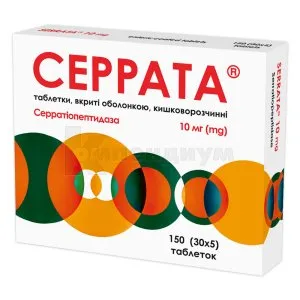
Table of Contents
- INSTRUCTIONS FOR MEDICAL USE OF THE MEDICINAL PRODUCT SERRATA® (SERRATA®)
- Composition:
- Pharmacological Properties.
- Clinical characteristics.
- Special precautions for use.
- Method of administration and dosage.
- Adverse reactions.
- Composition:
- Pharmacological properties.
- Clinical characteristics.
- Special precautions for use.
- Dosage and Administration.
- Adverse Reactions.
INSTRUCTIONS FOR MEDICAL USE OF THE MEDICINAL PRODUCT SERRATA® (SERRATA®)
Composition:
Active substance: serratiopeptidase;
1 tablet contains 10 mg of serratiopeptidase;
Excipients: lactose monohydrate, corn starch, light magnesium carbonate, sodium starch glycolate (type A), magnesium stearate, coating Opadry-YS-1-7027*, coating Opadry-OY-P-7171**.
* – Coating Opadry-YS-1-7027: hypromellose, titanium dioxide (E 171), triacetin.
** – Coating Opadry-OY-P-7171: polyvinyl acetate phthalate, titanium dioxide (E 171), diethyl phthalate, stearic acid.
Pharmaceutical form. Enteric-coated tablets.
Main physicochemical properties: white, round, biconvex, enteric-coated tablets.
Pharmacotherapeutic group.
Agents used in musculoskeletal disorders. Enzymes. ATC code M09A B.
Pharmacological Properties.
Pharmacodynamics.
Serratiopeptidase is a proteolytic enzyme isolated from the non-pathogenic intestinal bacterium Serratia E15. It possesses fibrinolytic, anti-inflammatory, and anti-edematous activity. In addition to reducing the inflammatory process, serratiopeptidase reduces pain by blocking the release of pain-inducing amines from inflamed tissues.
Serratiopeptidase binds to α-2-macroglobulin in blood in a 1:1 ratio, which masks its antigenicity while preserving its enzymatic activity. Subsequently, it gradually migrates to the site of inflammation and enters the exudate, thereby decreasing its blood concentration.
Serratiopeptidase directly reduces capillary dilation (expansion) and controls capillary permeability by hydrolyzing bradykinin, histamine, and serotonin. Serratiopeptidase also blocks plasmin inhibitors, thereby promoting the fibrinolytic activity of plasmin. By proteolysis of structural proteins in sputum, it improves the rheological properties of sputum and facilitates its expectoration.
The enzymatic activity of the drug is 10 times higher than that of α-chymotrypsin. In chronic inflammatory foci, serratiopeptidase reduces levels of polypeptide-type inflammatory mediators (bradykinin) and fibrin, but has no significant effect on endogenous proteins such as albumin and α- and γ-globulins.
The drug penetrates well into sites of inflammation, lyses necrotic tissues and their degradation products, reduces hyperemia, and enhances the penetration and activity of antibiotics. The drug reduces the viscosity of saliva and nasal secretions, thereby facilitating their removal.
Pharmacokinetics.
The drug passes through the stomach unchanged and is absorbed in the intestine. The drug is inactivated by gastric juice. Maximum plasma concentration is reached within 1 hour. Serratiopeptidase reaches systemic circulation in an enzymatically active form, is excreted in active form via bile, and is detected in urine in negligible amounts.
Clinical characteristics.
Indications.
Surgical conditions: ligament sprains and ruptures, fractures and dislocations, edema following plastic surgery.
Respiratory tract diseases: reduces sputum viscosity and facilitates its elimination from the respiratory tract.
ENT disorders: facilitates drainage of secretions from the paranasal sinuses.
Skin diseases: acute inflammatory dermatoses.
Gynecological and mammary gland disorders: hematomas, mammary gland congestion.
Contraindications.
Hypersensitivity to serrapeptase or to any other component of the medicinal product. Coagulation disorders.
Interaction with other medicinal products and other forms of interaction.
When used concomitantly, the drug enhances the effect of anticoagulants (such combination should be administered under strict medical supervision) and accelerates penetration of antibiotics and nonsteroidal anti-inflammatory drugs into inflamed tissues.
Special precautions for use.
Since serratiopeptidase affects the blood coagulation system, the drug should be used with caution under the following conditions:
- risk of bleeding;
- coagulation disorders;
- concomitant use of anticoagulants;
- severe hepatic impairment;
- severe renal impairment.
The drug contains lactose. In case of diagnosed intolerance to certain sugars, consult a physician before taking this medicinal product.
Use during pregnancy or breastfeeding.
Use of the drug during pregnancy or breastfeeding is not recommended due to the lack of clinical data.
Ability to influence reaction rate when driving or operating machinery.
Does not affect.
Method of administration and dosage.
The drug is taken orally by adults. Take 1 tablet 2-3 times a day after meals.
The tablets should be swallowed whole, without chewing, and taken with one glass of water.
Maximum daily dose – 30 mg.
The dosage and duration of treatment depend on the nature and progression of the pathological process and are determined individually for each case by a physician.
Children.
The drug should not be used in children due to lack of clinical data.
Overdose.
Symptoms: nausea, vomiting, anorexia, epigastric discomfort, in some cases bleeding and blood streaks in sputum.
Treatment: symptomatic therapy.
Adverse reactions.
Gastrointestinal system: diarrhea, nausea, vomiting, anorexia, epigastric discomfort, abdominal pain.
Respiratory system: nasal hemorrhage, hemoptysis, acute eosinophilic pneumonia.
Immune system: hypersensitivity reactions.
Skin: skin rashes, pruritus, skin hyperemia.
Shelf life. 3 years.
Storage conditions.
Store at a temperature not exceeding 25 °C.
Keep out of reach of children.
Packaging.
10 tablets in a strip; 1 strip in a cardboard package;
10 tablets in a strip; 1 strip in a cardboard package, 10 packages in a box;
10 tablets in a strip; 3 strips in a cardboard package;
30 tablets in a blister or strip; 1 blister or strip in a cardboard package;
30 tablets in a strip; 5 strips in a cardboard package.
Prescription status.
Prescription only.
Manufacturer.
KUSUM HEALTHCARE PVT LTD.
Manufacturer's address and address of its business location
SP-289 (A), RIICO Industrial area, Chopanki, Bhiwadi, Dist. Alwar (Rajasthan), India.
INSTRUCTIONS
for medical use of the medicinal product
SERRATA®
(SERRATA®)
Composition:
Active substance: serratiopeptidase;
1 tablet contains serratiopeptidase 10 mg;
Excipients: lactose monohydrate, corn starch, light magnesium carbonate, sodium starch glycolate (type A), magnesium stearate, coating Opadry-YS-1-7027*, coating Opadry-OY-P-7171**.
* – Opadry-YS-1-7027 coating: hypromellose, titanium dioxide (E 171), triacetin.
** – Opadry-OY-P-7171 coating: polyvinyl acetate phthalate, titanium dioxide (E 171), diethyl phthalate, stearic acid.
Pharmaceutical form. Enteric-coated tablets.
Main physico-chemical properties: white, round, biconvex, enteric-coated tablets.
Pharmacotherapeutic group.
Preparations used in disorders of the musculoskeletal system. Enzymes. ATC code M09A B.
Pharmacological properties.
Pharmacodynamics.
Serratiopeptidase is a proteolytic enzyme isolated from the non-pathogenic intestinal bacterium Serratia E15. It possesses fibrinolytic, anti-inflammatory, and anti-edematous activity. In addition to reducing the inflammatory process, serratiopeptidase reduces pain by blocking the release of pain-inducing amines from inflamed tissues.
Serratiopeptidase binds in a 1:1 ratio to α-2-macroglobulin in blood, which masks its antigenicity while preserving its enzymatic activity. Subsequently, it gradually migrates to the site of inflammation and enters the exudate, thus its blood concentration decreases.
Serratiopeptidase directly reduces capillary dilation and controls capillary permeability by hydrolyzing bradykinin, histamine, and serotonin. Serratiopeptidase also blocks plasmin inhibitors, thereby promoting plasmin's fibrinolytic activity. Due to proteolysis of structural proteins in sputum, it improves sputum rheological properties and facilitates expectoration.
The enzymatic activity of the drug is 10 times higher than that of α-chymotrypsin. In chronic inflammatory foci, serratiopeptidase reduces levels of polypeptide mediators of inflammation (bradykinin) and fibrin, but has no significant effect on proteins of the living organism such as albumin and α- and γ-globulins.
The drug penetrates well into sites of inflammation, lyses necrotic tissues and their degradation products, reduces hyperemia, and accelerates the penetration and activity of antibiotics. The drug reduces the viscosity of saliva and nasal secretions, thereby facilitating their removal.
Pharmacokinetics.
The drug passes through the stomach unchanged and is absorbed in the intestine. The drug is inactivated by gastric juice. Maximum plasma concentration is reached within 1 hour. Serratiopeptidase reaches systemic circulation in enzymatically active form, is excreted in active form via bile, and appears in urine in negligible amounts.
Clinical characteristics.
Indications.
Surgical conditions: ligament sprains and ruptures, fractures and dislocations, edema caused by plastic surgery.
Respiratory tract diseases: reduces sputum viscosity and facilitates its elimination from the respiratory tract.
ENT diseases: facilitates secretion drainage from paranasal sinuses.
Dermatological conditions: acute inflammatory dermatoses.
Gynecological and mammary gland disorders: hematomas, mammary gland congestion.
Contraindications.
Hypersensitivity to serrapeptidase or to any other component of the drug. Coagulation disorders.
Interaction with other medicinal products and other forms of interaction.
When used concomitantly, the drug enhances the effect of anticoagulants (such combination should be used under strict medical supervision) and accelerates penetration of antibiotics and non-steroidal anti-inflammatory drugs into inflamed tissues.
Special precautions for use.
Since serrapeptidase affects the blood coagulation system, the drug should be used with caution in the following conditions:
- risk of bleeding;
- coagulation disorders;
- concomitant use of anticoagulants;
- severe hepatic disease;
- severe renal disease.
The product contains lactose. In case of established intolerance to certain sugars, consult a physician before taking this medicinal product.
Use during pregnancy or breastfeeding.
Use of the drug during pregnancy or breastfeeding is not recommended due to the lack of clinical data.
Ability to influence reaction rate while driving or operating machinery.
Does not affect.
Dosage and Administration.
The drug is taken orally by adults. The recommended dose is 1 tablet 2–3 times daily after meals.
Tablets should be swallowed whole, without chewing, and taken with a glass of water.
Maximum daily dose – 30 mg.
The dosage and duration of treatment depend on the nature and course of the pathological process and are determined individually by a physician in each case.
Children.
The drug should not be used in children due to lack of clinical data.
Overdose.
Symptoms: nausea, vomiting, anorexia, epigastric discomfort; in some cases, bleeding and blood streaks in sputum.
Treatment: symptomatic therapy.
Adverse Reactions.
Gastrointestinal system: diarrhea, nausea, vomiting, anorexia, epigastric discomfort, abdominal pain.
Respiratory system: nasal hemorrhage, sputum with blood, acute eosinophilic pneumonia.
Immune system: hypersensitivity reactions.
Skin: skin rashes, pruritus, skin hyperemia.
Shelf life. 3 years.
Storage conditions.
Store at a temperature not exceeding 25 °C.
Keep out of reach of children.
Packaging.
10 tablets in a strip; 1 strip in a cardboard package;
10 tablets in a strip; 1 strip in a cardboard package, 10 packages in a box;
10 tablets in a strip; 3 strips in a cardboard package;
30 tablets in a blister or strip; 1 blister or strip in a cardboard package;
30 tablets in a strip; 5 strips in a cardboard package.
Prescription category.
By prescription only.
Manufacturer.
KUSUM HEALTHCARE PVT LTD.
Manufacturer's address and address of its business location
Plot No. M-3, Indore Special Economic Zone, Phase-II, Pithampur, Distt. Dhar, Madhya Pradesh, Pin 454774, India