Savis
Ukraine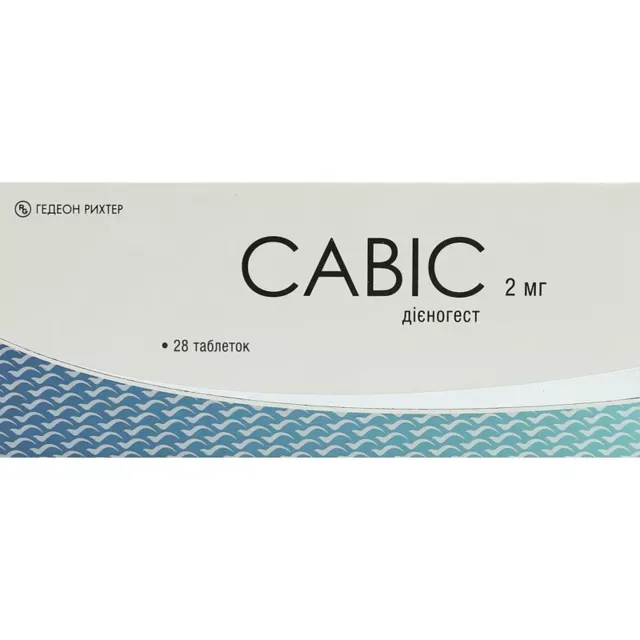
Table of Contents
INSTRUCTION FOR MEDICAL USE OF THE MEDICINAL PRODUCT SAVIS (SAWIS)
Composition:
Active substance: dienogest;
1 tablet contains 2 mg of dienogest;
Excipients: magnesium stearate, talc, crospovidone (type A), povidone K-25, microcrystalline cellulose, pregelatinized corn starch, lactose monohydrate.
Pharmaceutical form. Tablets.
Main physico-chemical properties: white or almost white, round, flat tablets with a bevel and engraving «» on one side and «RG» on the other. Diameter 7 mm.
Pharmacotherapeutic group. Sex hormones and drugs used in disorders of the reproductive organs. Progestogens. ATC code G03DB08.
Pharmacological Properties
Pharmacodynamics
Dienogest is a derivative of nortestosterone without androgenic activity and with certain antiandrogenic activity, approximately one-third the activity of cyproterone acetate. Dienogest binds to progesterone receptors in the uterus with only 10% relative affinity. Despite its low affinity for progesterone receptors, dienogest demonstrates a strong progestogenic effect in vivo. Dienogest does not exhibit significant androgenic, mineralocorticoid, or glucocorticoid activity in vivo.
Dienogest affects endometriosis by reducing endogenous estradiol production, thereby suppressing the trophic effects of estradiol on eutopic and ectopic endometrium. With continuous administration, dienogest creates a hypoestrogenic and hypergestagenic endocrine environment, leading to initial decidualization of endometrial tissue followed by atrophy of endometriotic lesions.
Efficacy Data
In a 3-month placebo-controlled study involving 198 patients with endometriosis, dienogest 2 mg demonstrated superiority over placebo. Pelvic pain associated with endometriosis was measured using a visual analog scale (0–100 mm). After 3 months of therapy, a statistically significant difference compared to placebo was observed (Δ = 12.3 mm; 95% CI: 6.4–18.1; p<0.0001), along with a clinically meaningful reduction in pain from baseline (mean reduction = 27.4 mm ± 22.9).
After 3 months of treatment, a 50% or greater reduction in pelvic pain associated with endometriosis was achieved in 37.3% of patients receiving dienogest 2 mg tablets (placebo: 19.8%), without a corresponding increase in concomitant analgesic dosage. A 75% or greater reduction in pelvic pain associated with endometriosis (also without a corresponding increase in concomitant analgesic dosage) was achieved in 18.6% of patients receiving dienogest 2 mg tablets (placebo: 7.3%).
An open-label extension of this placebo-controlled study demonstrated continuous reduction in endometriosis-associated pelvic pain with treatment up to 15 months.
Results from placebo-controlled trials were confirmed by findings from a 6-month active-controlled study comparing dienogest with a gonadotropin-releasing hormone agonist in 252 patients with endometriosis.
Three studies involving 252 patients receiving dienogest 2 mg daily demonstrated significant reduction in endometriotic lesions after 6 months of treatment.
In a small study (n=8 per dosage group), administration of dienogest at a dose of 1 mg daily resulted in absence of ovulation after 1 month of therapy. The contraceptive efficacy of dienogest has not been evaluated in larger studies.
Safety Data
Endogenous estrogen levels are only moderately suppressed during treatment with dienogest 2 mg tablets.
To date, long-term data on bone mineral density (BMD) and fracture risk in patients receiving dienogest 2 mg tablets are not yet available. BMD was evaluated in 21 adult patients before and after 6 months of treatment with dienogest 2 mg tablets. No decrease in mean BMD was observed. In 29 patients receiving leuprorelin acetate, a mean reduction of 4.04% ± 4.84 was observed over the same period (Δ between groups = 4.29%; 95% CI: 1.93–6.66; p<0.0003).
No significant impact on standard laboratory parameters, including blood count, serum biochemistry, liver enzyme levels, lipid levels, and HbA1c, was observed during 15 months of treatment with dienogest 2 mg tablets (N = 168).
Safety Data in Adolescents
The safety of dienogest 2 mg tablets regarding BMD was evaluated in a 12-month uncontrolled study involving 111 adolescent patients (aged 12 to <18 years) with clinically suspected or confirmed endometriosis. The mean relative change in lumbar spine (L2–L4) BMD from baseline in 103 patients with BMD measurements was -1.2%. Repeat measurements 6 months after completion of treatment in a subgroup with decreased BMD values showed an increase in BMD to -0.6%.
Non-clinical Safety Data
Non-clinical studies do not indicate any special risk for humans based on standard repeated-dose toxicity, genotoxicity, carcinogenicity, and reproductive toxicity studies. However, it should be noted that sex steroids may promote the growth of certain hormone-dependent tissues and tumors.
Safety Data from Long-Term Use
An observational post-marketing study with active surveillance was conducted to assess the incidence of new-onset or worsening clinically significant depression and anemia. A total of 27,840 women who were newly prescribed hormonal therapy for endometriosis were enrolled and followed for up to 7 years.
Dienogest 2 mg was prescribed to 3,023 women, and 3,371 patients were prescribed other medications approved for endometriosis treatment. The overall adjusted risk ratio for new-onset anemia in patients taking dienogest compared to those taking other approved endometriosis treatments was 1.1 (95% CI: 0.4–2.6). The adjusted risk ratio for depression in patients taking dienogest compared to those taking other approved endometriosis treatments was 1.8 (95% CI: 0.3–9.4). A slight increase in the risk of depression in patients taking dienogest compared to those taking other approved endometriosis treatments cannot be ruled out.
Pharmacokinetics
Absorption
After oral administration, dienogest is rapidly and completely absorbed. Maximum serum concentration is reached approximately 1.5 hours after a single oral dose, amounting to 47 ng/mL. Bioavailability is approximately 91%. The pharmacokinetics of dienogest are dose-dependent within the dose range of 1–8 mg.
Distribution
Dienogest binds to serum albumin and does not bind to sex hormone-binding globulin (SHBG) or corticosteroid-binding globulin (CBG). Ten percent of the total dienogest concentration in serum exists as free steroid, while 90% is nonspecifically bound to albumin. The apparent volume of distribution (Vd/F) of dienogest is 40 L.
Metabolism
Dienogest is completely metabolized via known steroid metabolic pathways, forming predominantly endocrinologically inactive metabolites. Based on in vitro and in vivo studies, CYP3A4 is the primary enzyme involved in dienogest metabolism. These metabolites are rapidly eliminated from plasma, such that unchanged dienogest remains the predominant fraction in plasma.
The clearance rate (Cl/F) from serum is 64 mL/min.
Elimination
Serum dienogest levels decline in a biphasic manner. The terminal elimination phase is characterized by a half-life of approximately 9–10 hours. Dienogest is excreted in the form of metabolites in urine and feces in a ratio of approximately 3:1 after an oral dose of 0.1 mg/kg. The half-life of metabolites in urine is approximately 14 hours.
After oral administration, 86% of the administered dose is eliminated within 6 days, with the majority excreted within the first 24 hours, primarily via urine.
Steady State
The pharmacokinetics of dienogest are independent of SHBG levels. With daily administration, serum concentrations increase by approximately 1.24-fold, reaching steady state within 4 days of treatment. The pharmacokinetics of dienogest after repeated administration of 2 mg tablets can be predicted based on single-dose pharmacokinetic data.
Pharmacokinetics in Special Patient Populations
The pharmacokinetics of the medicinal product Cavis 2 mg tablets have not been studied in patients with renal impairment.
The pharmacokinetics of the medicinal product Cavis 2 mg tablets have not been studied in patients with hepatic impairment.
Clinical characteristics
Indications. Treatment of endometriosis.
Contraindications. Savis must not be used in the presence of any of the following conditions or diseases. This information is partially derived from experience with other progestogen-only products. If any of these conditions or diseases occurs for the first time during treatment with Savis, the drug should be discontinued immediately:
- active venous thromboembolism;
- arterial or cardiovascular disease, current or in medical history (e.g. myocardial infarction, cerebrovascular event, ischemic heart disease);
- diabetes mellitus with vascular complications;
- severe liver disease, current or in medical history, until liver function tests return to normal;
- current or past liver tumors (benign or malignant);
- known or suspected hormone-dependent malignant neoplasms;
- vaginal bleeding of unknown etiology;
- known hypersensitivity to the active substance or to any of the excipients of the medicinal product (see section "Composition").
Interaction with other medicinal products and other forms of interaction
Note: To identify potential interactions, the package leaflets of concomitantly administered medicinal products should be consulted.
Effect of other medicinal products on Savis
Progestogens, including dienogest, are metabolized primarily by the cytochrome P450 3A4 (CYP3A4) system located in the intestinal mucosa and the liver. Therefore, inducers or inhibitors of CYP3A4 may influence the metabolism of progestogens.
Increased clearance of sex hormones due to enzyme induction may reduce the therapeutic effect of Savis and lead to undesirable effects, such as changes in the pattern of menstrual bleeding.
Reduced clearance of sex hormones due to enzyme inhibition may increase the effect of dienogest and lead to the development of adverse reactions.
Substances increasing the clearance of sex hormones (reduced efficacy due to enzyme induction), e.g.: phenytoin, barbiturates, primidone, carbamazepine, rifampicin, and possibly oxcarbazepine, topiramate, felbamate, griseofulvin, and products containing St John’s wort (Hypericum perforatum).
Enzyme induction may occur within a few days of starting therapy. Maximum enzyme induction is generally observed after several weeks. Enzyme induction may persist for up to 4 weeks after discontinuation of therapy.
The effect of the CYP3A4 inducer rifampicin was studied in healthy postmenopausal women. Concomitant administration of rifampicin with an oral formulation of estradiol valerate/dienogest resulted in a significant reduction in the steady-state concentration and systemic exposure of both dienogest and estradiol. The systemic exposure of dienogest and estradiol at steady state, measured as AUC (0–24 hours), decreased by 83% and 44%, respectively.
Substances with variable effects on the clearance of sex hormones
Concomitant use of sex hormones with various combinations of HIV protease inhibitors and non-nucleoside reverse transcriptase inhibitors, as well as combinations of hepatitis C virus inhibitors, may increase or decrease plasma levels of progestins. The net effect of these changes may be clinically significant in some cases.
Substances reducing the clearance of sex hormones (enzyme inhibitors)
Dienogest is a substrate of cytochrome P450 (CYP) 3A4.
The clinical significance of potential interactions with enzyme inhibitors remains unknown.
Concomitant use of strong CYP3A4 inhibitors may increase plasma concentrations of dienogest.
Concomitant administration with the strong CYP3A4 inhibitor ketoconazole resulted in a 2.9-fold increase in the steady-state AUC (0–24 hours) of dienogest. Concomitant administration with the moderate inhibitor erythromycin resulted in a 1.6-fold increase in the steady-state AUC (0–24 hours) of dienogest.
Effect of Savis on other medicinal products
Based on in vitro inhibition studies, clinically significant interactions between dienogest and other medicinal products whose metabolism is mediated by cytochrome P450 enzymes are unlikely.
Interaction with food
Consumption of a high-fat meal did not affect the bioavailability of Savis.
Laboratory tests
The use of progestogens may influence the results of certain laboratory tests, including liver, thyroid, renal and adrenal function tests, plasma protein (carrier proteins) levels (e.g. SHBG), lipid/lipoprotein fractions, carbohydrate metabolism parameters, and coagulation and fibrinolysis parameters. Changes are usually within the laboratory reference range.
Special precautions for use
Warnings
Since Savis is a progestogen-only preparation, it is considered that special warnings and safety precautions applicable to progestogen-only preparations also apply to Savis, although not all warnings and precautions are based on appropriate clinical trial results of tablets containing 2 mg of dienogest.
If any of the conditions / risk factors listed below is present or worsening, an individual risk/benefit assessment must be performed before initiating or continuing treatment with Savis.
Severe uterine bleeding
Uterine bleeding, for example in women with adenomyosis or uterine leiomyoma, may increase during treatment with Savis. If bleeding is heavy and persistent over a long period of time, it may lead to anaemia (in some cases severe). In such cases, discontinuation of the drug should be considered.
Changes in bleeding pattern
Treatment with 2 mg dienogest tablets affects the pattern of menstrual bleeding in most women (see section "Adverse reactions").
Circulatory disorders
Epidemiological studies have provided limited data on a possible association between the use of progestogen-only preparations and an increased risk of myocardial infarction or cerebral thromboembolism. Cardiovascular and cerebrovascular events are more likely related to age, arterial hypertension, and smoking. In women with hypertension, the risk of stroke may slightly increase with the use of progestogen-only preparations.
Some studies suggest a certain, although not statistically significant, increased risk of venous thromboembolism (deep vein thrombosis, pulmonary embolism) associated with the use of progestogen-only preparations. Well-established risk factors for venous thromboembolism (VTE) include: personal or family history (e.g., VTE in siblings or parents at a relatively young age), age, obesity, prolonged immobilization, major surgery, or trauma. In case of prolonged immobilization, use of Savis should be discontinued (at least 4 weeks before planned surgery) and not restarted until at least 2 weeks after full remobilization.
An increased risk of thromboembolism should also be considered during the postpartum period.
If symptoms of venous or arterial thrombotic disease occur or are suspected, treatment should be discontinued.
Tumours
A meta-analysis of 54 epidemiological studies indicates a slight increase in relative risk (RR = 1.24) of breast cancer in women using oral contraceptives (OCs), primarily combined estrogen-progestogen products. This increased risk gradually disappears within 10 years after discontinuation of combined oral contraceptives (COCs). Since breast cancer is rare in women under 40 years of age, the increase in diagnosed cases among women currently or recently using COCs is small relative to the overall risk of breast cancer. The risk of detecting breast cancer is similar in women using progestogen-only preparations or COCs. However, information regarding progestogen-only preparations is based on a much smaller number of users and is therefore less conclusive than data for COCs. These studies do not provide evidence of a causal relationship. The increased risk may be due to earlier diagnosis of breast cancer in OC users, a biological effect of these drugs, or a combination of both factors. A trend has been observed that breast cancer diagnosed in women who have ever used OCs tends to be less clinically advanced than in those who have never used OCs.
In rare cases, benign and even more rarely malignant liver tumours have been observed in women using hormonal substances similar to the one contained in Savis, which in some cases led to life-threatening intra-abdominal haemorrhage. In case of complaints of severe epigastric pain, hepatomegaly, or signs of intra-abdominal bleeding, the possibility of a liver tumour should be considered in the differential diagnosis of women taking 2 mg dienogest tablets.
Osteoporosis
Changes in bone mineral density (BMD).
The use of 2 mg dienogest tablets in adolescents (12 – <18 years) over a 12-month treatment period was associated with a decrease in mean BMD at the lumbar spine (L2–L4). The mean relative change in BMD from baseline to end of treatment was –1.2%, with a range between –6% and 5% (95% CI: –1.70% to –0.78%, n=103).
Repeat measurements 6 months after treatment completion in a subgroup with decreased BMD values showed a trend towards recovery (mean relative change from baseline: –2.3% at end of treatment and –0.6% at 6 months after treatment completion, range between –9% and 6%; 95% CI: –1.20% to 0.06%, n=60).
Changes in BMD are of particular concern during adolescence and early puberty, which is a critical period for bone growth. It is unknown whether reduced BMD in this population may reduce peak bone mass and increase the risk of fractures in later life (see sections "Pharmacological properties" and "Paediatric population").
In patients at increased risk of osteoporosis, a careful risk/benefit assessment should be performed before initiating treatment with Savis, as endogenous oestrogen levels are moderately reduced during treatment with Savis (see section "Pharmacodynamics").
Before initiating treatment, physicians should weigh the benefits of using Savis against potential risks for each individual adolescent, considering also the presence of significant risk factors for osteoporosis.
Adequate intake of calcium and vitamin D through diet or dietary supplements is important for maintaining healthy bone status in women of all ages.
No decrease in BMD was observed in adult women (see section "Pharmacodynamics").
Other conditions
Patients with a history of depression should be carefully monitored, and treatment should be discontinued if severe depressive symptoms develop.
Dienogest generally does not affect blood pressure in normotensive women. However, if prolonged clinically evident hypertension develops during treatment, Savis should be discontinued and hypertension treated.
Treatment with Savis should be discontinued in case of recurrence of cholestatic jaundice and/or pruritus that occurred during pregnancy or previous use of sex hormones.
Dienogest may have a minor effect on peripheral insulin resistance and glucose tolerance. Women with diabetes mellitus, especially those with a history of gestational diabetes, should be closely monitored during treatment with Savis.
Melasma may occasionally develop, particularly in women with a history of melasma gravidarum. Women prone to melasma should avoid direct sunlight or ultraviolet radiation during treatment with Savis.
The likelihood of ectopic pregnancy in women using progestogen-only contraceptives is higher than in women using COCs. Therefore, the use of Savis in women with a history of ectopic pregnancy or tubal dysfunction should be considered only after careful benefit/risk assessment.
During treatment with Savis, follicular persistence (often referred to as functional ovarian cysts) may occur. Most of these follicles are asymptomatic, although some may be associated with pelvic pain.
Do not use in geriatric practice.
Lactose
One tablet of Savis contains 62.8 mg of lactose monohydrate. This medicinal product is contraindicated in patients with rare hereditary problems of galactose intolerance, total lactase deficiency, or glucose-galactose malabsorption.
Use during pregnancy or breastfeeding
Pregnancy
Data on the use of dienogest in pregnant women are limited. Animal studies do not indicate direct or indirect reproductive toxicity (see section "Pharmacological properties").
Savis is not recommended during pregnancy as there is no need to treat endometriosis during pregnancy.
Breastfeeding
Treatment with Savis is not recommended during breastfeeding.
It is unknown whether dienogest passes into human breast milk. Animal data indicate that dienogest is excreted into the milk of rats.
A decision must be made whether to discontinue breastfeeding or to discontinue therapy with Savis, taking into account the benefit of breastfeeding for the child and the necessity of therapy for the woman.
Fertility
Based on available data, ovulation is inhibited in most patients during treatment with Savis. However, Savis is not a contraceptive.
If contraception is needed, an additional non-hormonal method of contraception should be used (see section "Dosage and administration").
Based on available data, the menstrual cycle returns to normal within 2 months after discontinuation of 2 mg dienogest tablets.
Effect on ability to drive and use machines
No effects on the ability to drive or operate machinery have been observed in patients taking dienogest-containing preparations.
Method of Administration and Dosage
Method of Administration
For oral use.
Dosage
Take 1 tablet daily without interruption in the use of the drug, approximately at the same time each day, with a small amount of liquid if necessary. Tablets may be taken regardless of food intake.
Tablets should be taken regularly, regardless of menstrual bleeding. As soon as the tablets from one pack are finished, the next pack should be started immediately without any break in the use of the medicinal product.
Treatment may be initiated on any day of the menstrual cycle.
Any hormonal contraceptives should be discontinued before starting therapy with Savis. If contraception is required, a non-hormonal method of contraception (e.g., barrier method) should be used.
Missed Dose
If a tablet is missed, or if vomiting and/or diarrhea occur within 3–4 hours after taking the tablet, the effectiveness of Savis may be reduced. If one or more tablets are missed, take 1 tablet as soon as remembered, and take the next tablet at the usual time. Similarly, a tablet that was not absorbed due to vomiting or diarrhea should be replaced with another tablet.
Use in Special Patient Populations
Elderly Patients
There are no relevant indications for the use of Savis in this patient group.
Hepatic Impairment
The drug is contraindicated in patients with severe liver disease, either currently or in the medical history (see section "Contraindications").
Renal Impairment
There are no data indicating the need for dose adjustment in patients with renal impairment.
Children
Savis is not indicated for use in children before menarche.
The safety and efficacy of dienogest 2 mg tablets were evaluated in an uncontrolled 12-month study involving 111 adolescent female patients (12 – <18 years) with clinically suspected or confirmed endometriosis (see sections "Pharmacological Properties" and "Special Instructions").
The efficacy of dienogest 2 mg tablets has been demonstrated in the treatment of endometriosis-associated pelvic pain in adolescents (12–18 years), with an overall favorable safety and tolerability profile.
Treatment with dienogest 2 mg tablets in adolescents over a 12-month period was associated with a 1.2% decrease in mean lumbar spine bone mineral density (BMD). After discontinuation of treatment, BMD increased again in these patients.
Alterations in bone mineral density are of particular importance during adolescence and early stages of sexual maturation, which are critical periods for bone growth. It is unknown whether the reduction in BMD in this population may affect peak bone mass or increase the risk of fractures in later life.
Therefore, physicians should carefully weigh the benefits of using dienogest 2 mg tablets against the potential risks for each individual adolescent (see sections "Special Instructions" and "Pharmacodynamics").
Overdose. Acute toxicity studies conducted with dienogest did not indicate a risk of acute adverse reactions following unintentional ingestion of several daily therapeutic doses. No specific antidotes are available. Doses of 20–30 mg dienogest per day (10–15 times higher than the dose in Savis tablets) were well tolerated over periods exceeding 24 weeks.
Adverse Reactions
Adverse reactions are listed according to MedDRA.
Adverse reactions most commonly occur during the first months of treatment and usually resolve over time. Changes in bleeding patterns such as spotting, irregular bleeding, or amenorrhea may occur.
The adverse reactions listed below have been reported during treatment with Dienogest 2 mg tablets. The most frequently reported adverse events during treatment were headache (9.0%), breast discomfort (5.4%), depressed mood (5.1%), and acne (5.1%).
In addition, the use of the drug affects the nature of menstrual bleeding in most women. Menstrual bleeding patterns were systematically assessed using patient diaries and analyzed according to the WHO method over a 90-day reporting period. During the first 90 days of treatment with Dienogest 2 mg tablets, the following bleeding patterns were observed (n=290; 100%): amenorrhea (1.7%), infrequent bleeding (27.2%), frequent bleeding (13.4%), irregular bleeding (35.2%), prolonged bleeding (38.3%), and normal menstrual bleeding, i.e., bleeding not belonging to any of the previous categories (19.7%). During the fourth reporting period, the following bleeding patterns were observed (n=149; 100%): amenorrhea (28.2%), infrequent bleeding (24.2%), frequent bleeding (2.7%), irregular bleeding (21.5%), prolonged bleeding (4.0%), and normal menstrual bleeding, i.e., bleeding not belonging to any of the previous categories (22.8%). Changes in menstrual bleeding patterns were only rarely reported as adverse reactions by patients (see table of adverse reactions).
Table 1 lists the adverse reactions according to MedDRA classification (MedDRA SOCs) reported during treatment with the drug and their frequency. Within each group, adverse effects are listed in order of decreasing frequency: common (≥ 1/100 to <1/10) and uncommon (≥ 1/1000 to <1/100).
Frequency is based on pooled data from four clinical trials involving 332 patients (100%).
Table 1
Adverse reactions, Phase III clinical trials, N = 332
| Organ system (MedDRA) |
Common |
Uncommon |
| Blood and lymphatic system disorders |
anaemia |
|
| Metabolism and nutrition disorders |
weight increased |
weight decreased, increased appetite |
| Psychiatric disorders |
depressed mood, sleep disturbance, nervousness, decreased libido, mood changes |
anxiety, depression, mood lability |
| Nervous system disorders |
headache, migraine |
autonomic dysfunction, attention disturbance |
| Eye disorders |
dry eyes |
|
| Ear and labyrinth disorders |
tinnitus |
|
| Cardiac disorders |
non-specific circulatory disorders, palpitations |
|
| Vascular disorders |
arterial hypotension |
|
| Respiratory, thoracic and mediastinal disorders |
dyspnoea |
|
| Gastrointestinal disorders |
nausea, abdominal pain, flatulence, abdominal distension, vomiting |
diarrhoea, constipation, abdominal discomfort, gastrointestinal inflammation, gingivitis |
| Skin and subcutaneous tissue disorders |
acne, alopecia |
dry skin, hyperhidrosis, pruritus, hirsutism, onycholysis, dandruff, dermatitis, hair growth disorders, photosensitivity reactions, pigmentation changes |
| Musculoskeletal and connective tissue disorders |
back pain |
bone pain, muscle cramps, limb pain, heaviness in limbs |
| Renal and urinary disorders |
urinary tract infection |
|
| Reproductive system and breast disorders |
breast discomfort, ovarian cyst, hot flushes, uterine/vaginal bleeding including spotting |
vaginal candidiasis, vulvovaginal dryness, genital discharge, pelvic pain, atrophic vaginitis, breast enlargement, fibrocystic breast disease, breast induration |
| General disorders and administration site conditions |
asthenia, irritability |
oedema |
The following adverse reactions were also observed: persistence of follicles, increased appetite, hypersensitivity reactions.
Other serious adverse reactions were observed during the use of steroidal sex hormones – progestogens (see section "Special instructions"): venous and arterial thromboembolic disorders, arterial hypertension, myocardial infarction, stroke, breast neoplasms, liver tumors, back discomfort, chloasma, cholestatic jaundice, osteoporosis (see below), changes in glucose tolerance or effects on peripheral insulin resistance.
Decrease in bone mineral density
In an uncontrolled clinical study involving 111 adolescent female patients (aged 12 to <18 years) receiving dienogest 2 mg tablets, bone mineral density (BMD) was measured in 103 patients. A decrease in lumbar spine (L2–L4) BMD was observed in approximately 72% of study participants after 12 months of treatment (see section "Special instructions").
Reporting of suspected adverse reactions
Reporting of adverse reactions after drug registration is important. It allows continuous monitoring of the benefit-risk balance of the medicinal product. Healthcare and pharmaceutical professionals, as well as patients or their legal representatives, should report all cases of suspected adverse reactions and lack of efficacy through the Automated Information System for Pharmacovigilance at the following link: https://aisf.dec.gov.ua.
Shelf life. 5 years.
Storage conditions. The medicinal product does not require special storage temperature conditions. Store in the original packaging to protect from light.
Keep out of reach and sight of children.
Packaging. 14 tablets in a blister; 2 or 6 blisters in a cardboard box.
Prescription status. Prescription only.
Manufacturer. Gedeon Richter Plc., Hungary.
Manufacturer's address and location of operations
H-1103 Budapest, Demrédi út 19-21, Hungary.