Rizatriptan-farmaten
Ukraine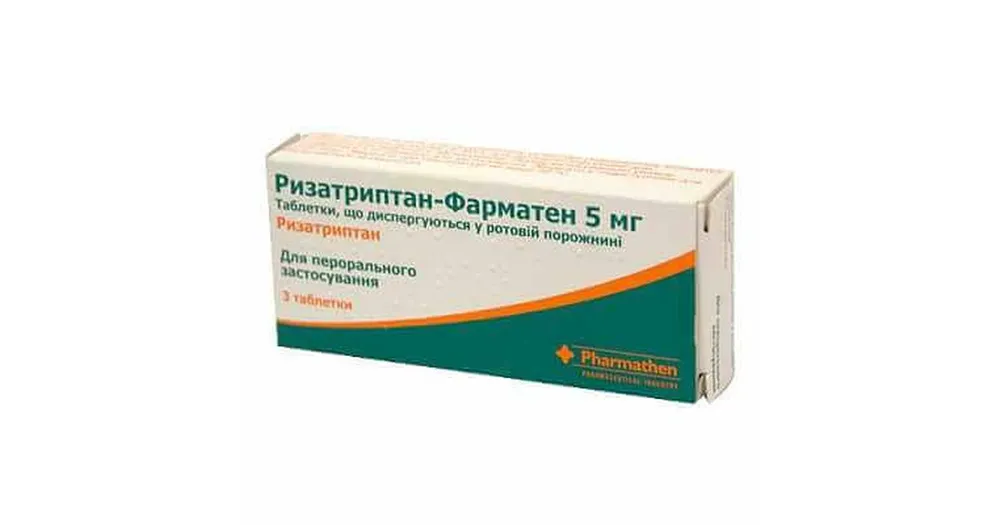
Table of Contents
INSTRUCTIONS FOR MEDICAL USE OF THE MEDICINAL PRODUCT RIZATRIPTAN-PHARMATHEN
Composition:
Active substance: rizatriptan;
One orally disintegrating tablet contains 5 mg or 10 mg of rizatriptan (as rizatriptan benzoate);
Excipients: microcrystalline cellulose, corn starch, colloidal anhydrous silicon dioxide, aspartame (E 951), mint powder, magnesium stearate.
Dosage form. Orally disintegrating tablets.
Main physicochemical properties: white, round, biconvex tablets with beveled edges (and a score line on one side for the 10 mg dosage).
Pharmacotherapeutic group. Medicinal products used in the treatment of migraine. Selective serotonin 5HT1-receptor agonists. Rizatriptan.
ATC code N02C C04.
Pharmacological properties.
Pharmacodynamics.
Rizatriptan is a selective agonist of human serotonin 5-HT1B and 5-HT1D receptors, which has no effect or only minimal effect on the activity of other receptors.
The therapeutic efficacy of rizatriptan in the treatment of migraine may be related to its agonist effect on 5-HT1B and 5-HT1D receptors located on extracerebral intracranial blood vessels, which dilate during an attack, and on trigeminal sensory nerves, leading to their innervation. Activation of these 5-HT1B and 5-HT1D receptors may result in constriction of intracranial vessels involved in pain development and inhibition of neuropeptide release, leading to reduced inflammation in sensitive tissues and reduced central transmission of pain signals via the trigeminal nerve.
The use of orally disintegrating rizatriptan tablets allows patients to treat migraine attacks without taking liquid to swallow the medication. This enables patients to take the drug earlier, for example in situations where water is not available, and to avoid potential worsening of gastrointestinal symptoms caused by fluid intake.
Pharmacokinetics.
Rizatriptan is rapidly and completely absorbed after oral administration.
The mean oral bioavailability of orally disintegrating tablets is approximately 40–45%, and mean peak plasma concentrations (Cmax) are reached approximately 1.6–2.5 hours (Tmax) after administration. The time to reach peak plasma concentration after administration of orally disintegrating rizatriptan tablets is prolonged by 30–60 minutes compared to conventional tablets.
Rizatriptan binds minimally (14%) to plasma proteins. The volume of distribution is approximately 140 L in males and 110 L in females.
The primary metabolic pathway of rizatriptan is mediated by oxidative deamination involving monoamine oxidase-A (MAO-A), leading to the formation of a pharmacologically inactive metabolite—indoleacetic acid derivative. The N-monodesmethyl derivative of rizatriptan—a metabolite with 5-HT1B/1D receptor activity similar to that of the parent compound—is formed in smaller amounts but does not significantly contribute to the pharmacodynamic activity of rizatriptan. The plasma concentration of the N-monodesmethyl derivative of rizatriptan is approximately 14% of the parent compound concentration, and this metabolite is eliminated at a similar rate. Other minor metabolites do not exhibit pharmacological activity.
After oral administration, AUC values increase almost proportionally with dose increases in the range of 2.5–10 mg. The mean elimination half-life of rizatriptan in plasma is 2–3 hours. The mean plasma clearance of rizatriptan is 1000–1500 ml/min in males and approximately 900–1100 ml/min in females; about 20–30% of this value corresponds to renal clearance.
Consistent with the mechanism of first-pass metabolism, approximately 14% of an oral dose of rizatriptan is excreted unchanged in urine, while 51% is excreted as the indoleacetic acid metabolite. No more than 1% of the dose is excreted in urine as the active N-monodesmethyl derivative.
When rizatriptan is administered at the maximum recommended doses, no daily accumulation of the drug in plasma occurs.
Elderly patients. Plasma concentrations of rizatriptan observed after tablet administration in elderly patients (age range 65 to 77 years) were similar to those observed in younger adults.
Patients with hepatic impairment (Child–Pugh score 5–6). After oral administration of tablets to patients with mild hepatic impairment due to alcoholic liver cirrhosis, plasma concentrations of rizatriptan were similar to those observed in young men and women. A significant increase in AUC (50%) and Cmax (25%) was observed in patients with moderate hepatic impairment (Child–Pugh score 7). The pharmacokinetic parameters of the drug in patients with severe hepatic impairment (Child–Pugh score >7) have not been studied.
Patients with renal impairment. In patients with renal impairment (creatinine clearance 10–60 ml/min/1.73 m²), AUC values after rizatriptan tablet administration did not differ significantly from those obtained in healthy volunteers. In patients undergoing hemodialysis (creatinine clearance <10 ml/min/1.73 m²), the AUC for rizatriptan was approximately 44% higher than in patients with normal renal function. The maximum plasma concentration of rizatriptan in patients with all degrees of renal impairment was similar to that in healthy volunteers.
Clinical characteristics.
Indications.
Acute treatment of the headache phase of migraine attacks, with or without aura.
Contraindications.
- Hypersensitivity to the active substance or to any of the excipients;
- Concomitant use with monoamine oxidase inhibitors (MAOIs) or use within two weeks after discontinuation of MAOI therapy;
- Severe hepatic or renal impairment;
- Previous cerebrovascular accidents or transient ischemic attacks;
- Moderate to severe arterial hypertension or mild arterial hypertension without treatment;
- Established coronary atherosclerosis, including ischemic heart disease (angina, history of myocardial infarction or documented silent ischemia), signs and symptoms of ischemic heart disease, Prinzmetal’s angina;
- Occlusive peripheral vascular disorders;
- Concomitant use with ergotamine, ergot alkaloid derivatives (including methysergide), or other 5-HT1B/1D receptor agonists.
Interaction with other medicinal products and other forms of interaction.
Due to additive effects, concomitant use of rizatriptan with ergotamine, ergot alkaloid derivatives (including methysergide), or other 5-HT1B/1D receptor agonists (such as sumatriptan, zolmitriptan, naratriptan) increases the risk of coronary vasospasm and hypertensive effects. Therefore, use of such combinations is contraindicated (see section "Contraindications").
Rizatriptan is primarily metabolized by monoamine oxidase subtype A (MAO-A). When used concomitantly with a selective reversible inhibitor of MAO-A, plasma concentrations of rizatriptan and its active N-monodesmethyl metabolite increase. A similar or even greater effect is expected with non-selective reversible (e.g., linezolid) and irreversible MAO inhibitors. Due to the risk of coronary vasospasm and episodes of arterial hypertension, rizatriptan is contraindicated in patients taking MAO inhibitors (see section "Contraindications").
Plasma concentrations of rizatriptan may increase when co-administered with propranolol. This increase is most likely due to presystemic metabolic interaction between the two active substances, as MAO-A is involved in the metabolism of both rizatriptan and propranolol. This interaction leads to an average increase in AUC and Cmax by 70–80%. In patients taking propranolol, the medication Rizatriptan-Pharmaten should be administered at a dose of 5 mg (see section "Dosage and administration").
In clinical studies, nadolol and metoprolol did not affect plasma concentrations of rizatriptan.
There have been reports of patients developing symptoms resembling serotonin syndrome (including mental status changes, autonomic dysfunction, and neuromuscular abnormalities) after using selective serotonin reuptake inhibitors (SSRIs) or serotonin-norepinephrine reuptake inhibitors (SNRIs) together with triptans (see section "Special precautions").
In vitro studies have shown that rizatriptan inhibits the 2D6 isoenzyme of the cytochrome P450 system (CYP2D6), but clinical data on such interactions are lacking. The possibility of such interactions should be considered when prescribing rizatriptan to patients taking CYP2D6 substrates.
Special precautions for use
The drug should be prescribed only to patients with a clearly established diagnosis of migraine. The drug should not be prescribed to patients with basilar or hemiplegic migraine.
The drug should not be used for the treatment of atypical headache, i.e. headache that may be associated with potentially serious medical conditions (e.g. acute cerebrovascular disorders, aneurysm rupture), in which cerebral vasoconstriction may be harmful.
Rizatriptan may cause transient symptoms such as pain and sensations of tightness in the chest, which may be intense and radiate to the throat. If such symptoms suggest the possibility of ischemic heart disease, further use of the drug is contraindicated and appropriate investigations should be performed.
As with other 5-HT1B/1D receptor agonists, rizatriptan should not be prescribed without prior cardiovascular evaluation to patients with suspected undiagnosed cardiac disease or to patients at risk of coronary atherosclerosis (e.g. patients with arterial hypertension, diabetes, smokers or those undergoing nicotine replacement therapy, men over 40 years of age, postmenopausal women, patients with bundle branch block, or those with a strong family history of severe coronary atherosclerosis). Cardiological evaluation may not detect all patients with heart disease, and in very rare cases, serious cardiac complications have been reported in patients without known cardiovascular disorders following administration of 5-HT1 receptor agonists. Rizatriptan is contraindicated in patients with diagnosed coronary atherosclerosis (see section "Contraindications").
The use of 5-HT1B/1D receptor agonists has been associated with the development of coronary spasm. In isolated cases, ischemia or myocardial infarction have been reported during the use of 5-HT1B/1D receptor agonists, including rizatriptan (see section "Adverse reactions").
Rizatriptan should not be used concomitantly with other 5-HT1B/1D receptor agonists (e.g. sumatriptan).
It is recommended to wait at least 6 hours after rizatriptan administration before using ergot-type medications (such as ergotamine, dihydroergotamine, or methysergide). At least 24 hours should elapse after the use of ergotamine-containing medications before administering rizatriptan. Although in clinical pharmacology studies involving 16 healthy male volunteers who received rizatriptan and parenteral ergotamine, no additional vasospastic effect was observed, such an additive effect is theoretically possible (see section "Contraindications").
Cases of serotonin syndrome (including altered mental status, autonomic dysfunction, and neuromuscular abnormalities) have been reported following concomitant use of triptans and selective serotonin reuptake inhibitors (SSRIs) or serotonin-norepinephrine reuptake inhibitors (SNRIs). These reactions may be serious. If concomitant use of rizatriptan and an SSRI or SNRI is clinically justified, appropriate monitoring of patients is recommended, particularly at the start of treatment, during dose escalation, or when adding another serotonergic agent.
When triptans (5-HT1B/1D receptor agonists) are used concomitantly with herbal products containing St. John's wort (Hypericum perforatum), adverse reactions may occur more frequently.
Angioedema (e.g. swelling of the face, tongue, and larynx) may develop in patients receiving triptans, including rizatriptan. In the event of tongue or laryngeal swelling, the patient should remain under medical supervision until symptoms resolve. Treatment with triptans should be discontinued immediately and replaced with a drug from a different pharmacological class.
Potential drug interactions should be considered when prescribing rizatriptan to patients taking substrates of the CYP2D6 isoenzyme.
Prolonged use of any analgesic for headache treatment may lead to headache exacerbation. If medication-overuse headache (MOH) is suspected or develops, treatment should be discontinued and medical advice sought. MOH should be considered in patients with frequent or daily headaches that occur despite (or because of) regular use of headache medications.
Rizatriptan-Pharmaten orally disintegrating tablets contain aspartame, a phenylalanine derivative, which may be harmful to patients with phenylketonuria.
Use during pregnancy or breastfeeding.
Pregnancy. Moderate data from pregnant women (between 300 and 1000 pregnancy cases) indicate no evidence of malformative toxicity following exposure during the first trimester. Animal studies do not indicate reproductive toxicity.
Data on the use of rizatriptan during the second and third trimesters of pregnancy are limited. Rizatriptan may be considered during pregnancy if clinically necessary.
Lactation. Rizatriptan-Pharmaten is excreted in breast milk in low concentrations, with a mean relative infant dose < 1% (less than 6% in the worst-case scenario based on Cmax in breast milk). Data on the passage of rizatriptan into human breast milk are limited. The drug should be used with caution in breastfeeding women. Infant exposure should be minimized by avoiding breastfeeding for 12 hours after drug administration.
Fertility. The effect of the drug on human fertility has not been studied. Animal studies showed only minimal effects on fertility at plasma concentrations more than 500 times higher than therapeutic concentrations in humans.
Ability to affect reaction speed when driving or operating machinery.
Migraine or treatment with rizatriptan may cause drowsiness in some patients. Dizziness has also been reported in some patients using rizatriptan. Therefore, during migraine attacks and after rizatriptan administration, patients should assess their ability to perform complex tasks.
Method of Administration and Dosage
General Instructions
The recommended dose of the medicinal product for adults is 10 mg.
Rizatriptan-Pharmaten should not be used for prophylactic purposes.
Repeat Dosing
When administering a repeat dose, an interval of at least 2 hours should be maintained; no more than 2 doses of the medicinal product should be taken within any 24-hour period.
- Recurrence of headache within 24 hours: if headache recurs after relief of the initial attack, one additional dose may be taken. The dosage limitations outlined above must be observed.
- In case of lack of response: the efficacy of repeat dosing for treatment of a single attack, when the first dose is ineffective, has not been studied in controlled trials. Therefore, if there is no response to the first dose, a second dose should not be taken to treat the same attack.
Clinical studies have shown that patients who do not respond to treatment of one migraine attack may respond to treatment of subsequent attacks.
A lower dose of rizatriptan (5 mg) should be considered for some patients, particularly when:
- patients are taking propranolol-containing medications. Rizatriptan should be administered at least 2 hours after propranolol intake;
- patients have mild or moderate renal impairment;
- patients have mild or moderate hepatic impairment.
Doses should be taken with an interval of at least 2 hours; no more than 2 doses should be taken within any 24-hour period.
Elderly Patients
The efficacy and safety of rizatriptan in patients aged 65 years and older have not been systematically evaluated.
Dosing Instructions
- Open the blister pack with dry hands.
- Take the whole tablet and place it on the tongue, where it will dissolve and can be swallowed with saliva.
- The medicinal product does not need to be taken with liquid. The 10 mg tablets are not intended to be divided.
- Orally disintegrating tablets may be used in situations where liquid is unavailable for swallowing, or to help prevent nausea and vomiting that may accompany swallowing tablets with liquid.
Children
The use of orally disintegrating tablets of Rizatriptan-Pharmaten in patients under 18 years of age is not recommended. The efficacy and safety of the medicinal product in pediatric patients have not been studied.
Overdose
Over 300 patients have received rizatriptan at a dose of 40 mg (either as a single dose or as two doses administered with a 2-hour interval); this dosing was well tolerated, and the most commonly reported adverse effects associated with the medicinal product were dizziness and somnolence.
In a clinical pharmacology study in which 12 adult subjects received rizatriptan at a total cumulative dose of 80 mg (over 4 hours), loss of consciousness and/or bradycardia were observed in two subjects. In one subject, a 29-year-old female, vomiting, bradycardia, and dizziness occurred 3 hours after a total intake of 80 mg rizatriptan (administered over 2 hours). Following these symptoms, third-degree atrioventricular block occurred, which was responsive to atropine. In the second subject, a 25-year-old male, transient dizziness, loss of consciousness, urinary incontinence, and a 5-second systolic pause (on ECG monitoring) occurred immediately after a painful venipuncture. The venipuncture was performed 2 hours after the subject had received a total dose of 80 mg rizatriptan (administered over 4 hours).
Additionally, based on the pharmacological properties of rizatriptan, arterial hypertension or other more serious cardiovascular symptoms may occur following overdose. In patients suspected of overdose, consideration should be given to gastrointestinal decontamination (e.g., gastric lavage followed by activated charcoal). Clinical and electrocardiographic monitoring should be continued for at least 12 hours, even in the absence of clinical symptoms of overdose.
The effect of hemodialysis or peritoneal dialysis on serum concentrations of rizatriptan is unknown.
Adverse Reactions
Rizatriptan-containing products (in the form of tablets and orally disintegrating tablets) were evaluated in controlled clinical studies of up to 1 year duration involving more than 8630 adult patients. The most commonly reported adverse reactions observed during clinical studies were dizziness, somnolence, and asthenia/weakness. Adverse reactions reported during clinical studies and/or post-marketing surveillance are listed below by system organ class and frequency, defined as follows: very common (≥ 1/10); common (≥ 1/100 to < 1/10); uncommon (≥ 1/1000 to < 1/100); rare (≥ 1/10000 to < 1/1000); very rare (< 1/10000); frequency not known (cannot be estimated from available data).
Immune system disorders
Rare: hypersensitivity reactions, anaphylactic/anaphylactoid reactions.
Psychiatric disorders
Common: insomnia.
Uncommon: disorientation, nervousness.
Nervous system disorders
Common: dizziness, somnolence, paraesthesia, headache, hypoesthesia, decreased mental acuity.
Uncommon: ataxia, vertigo, dysgeusia/bad taste in mouth, tremor, loss of consciousness.
Frequency not known: serotonin syndrome, seizures.
Eye disorders
Uncommon: blurred vision.
Cardiac disorders
Common: palpitations.
Uncommon: arrhythmia, ECG abnormalities, tachycardia.
Rare: acute cerebrovascular events (most of these adverse reactions were observed in patients with risk factors for coronary atherosclerosis), bradycardia.
Frequency not known: myocardial ischemia or myocardial infarction (most of these adverse reactions were observed in patients with risk factors for coronary atherosclerosis).
Vascular disorders
Uncommon: flushing, arterial hypertension.
Frequency not known: peripheral vascular ischemia.
Respiratory, thoracic and mediastinal disorders
Common: throat discomfort.
Uncommon: dyspnea.
Rare: wheezing.
Gastrointestinal disorders
Common: nausea, dry mouth, vomiting, diarrhea, dyspepsia.
Uncommon: thirst.
Frequency not known: ischemic colitis.
Skin and subcutaneous tissue disorders
Common: erythema.
Uncommon: pruritus, urticaria, angioedema (e.g., facial, tongue, laryngeal swelling) (for angioedema, see also section "Special precautions"), rash, sweating.
Frequency not known: toxic epidermal necrolysis.
Musculoskeletal and connective tissue disorders
Common: sensation of heaviness, neck pain, feeling of stiffness.
Uncommon: sensation of tightness in various areas, muscle weakness, facial pain, myalgia.
General disorders and administration site conditions
Common: asthenia/weakness, abdominal or chest pain.
Shelf life. 3 years.
Do not use after the expiry date stated on the packaging.
Storage conditions. Store at temperatures not exceeding 30 °C. Keep out of reach of children.
Packaging. 2 or 3 orally disintegrating tablets per blister made of polyamide/aluminum/PVC and aluminum. 1 blister (containing 2 or 3 tablets) or 2 blisters (containing 3 tablets each) in a cardboard box.
Prescription status. Prescription only.
Manufacturer. Pharmathen S.A.
or
Pharmathen International S.A.
Manufacturer's address and place of business.
Dervenakion 6, Pallini Attiki 15351, Greece
or
Industrial Park Sapes, Rodopi Prefecture, Block № 5, Rodopi 69300, Greece.