Rinobact®
Ukraine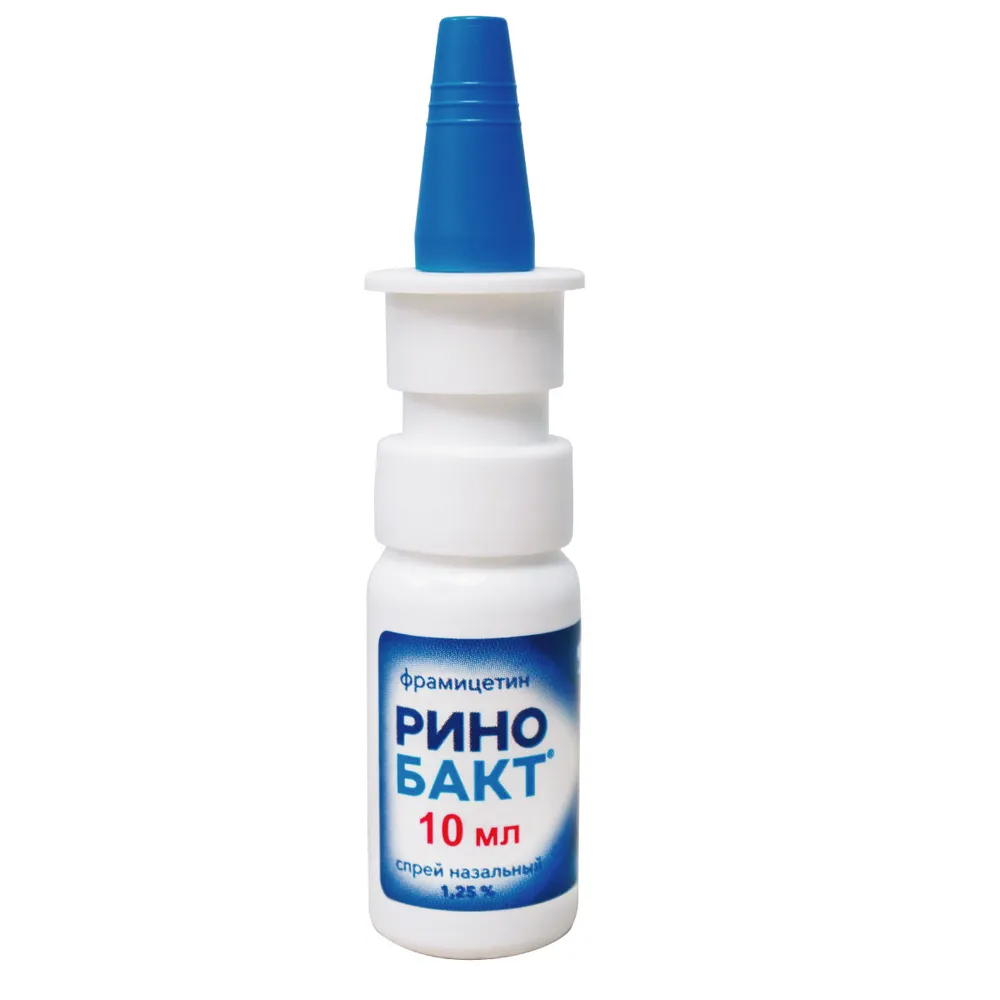
Table of Contents
INSTRUCTIONS for medical use of the medicinal product RINOBACT® (RINOBACT®)
Composition:
Active substances: xylometazoline hydrochloride, lysozyme hydrochloride;
1 ml of solution contains xylometazoline hydrochloride 1.0 mg, lysozyme hydrochloride 0.5 mg, corresponding to 20,000 FIP U (Federation Internationale Pharmaceutique units of activity);
one spray (0.14 ml of solution) contains 0.14 mg of xylometazoline hydrochloride and 0.07 mg of lysozyme hydrochloride;
Excipients: propylene glycol, sodium chloride, methylparahydroxybenzoate (E 218), disodium edetate, propylparahydroxybenzoate (E 216), sodium hydroxide, purified water.
Pharmaceutical form. Nasal spray, solution.
Main physicochemical properties: clear, colorless solution.
Pharmacotherapeutic group.
Agents used in nasal disorders. Decongestants and other agents for local treatment of nasal disorders. Sympathomimetics, combinations, excluding corticosteroids. ATC code R01A B06.
Pharmacological properties.
Pharmacodynamics.
Xylometazoline hydrochloride, an imidazole derivative, is a sympathomimetic active substance with alpha-adrenergic activity. When applied intranasally, xylometazoline hydrochloride causes vasoconstriction of the blood vessels in the nasal mucosa and adjacent areas of the nasopharynx, thereby reducing swelling of the nasal and nasopharyngeal mucosa.
The onset of action usually occurs within 5–10 minutes after administration, resulting in improved nasal breathing due to reduction of swelling and enhanced drainage of nasal secretions.
Lysozyme is a natural component (mucopolysaccharide) present in body fluids such as nasopharyngeal secretions, tears, and saliva. Lysozyme has moisturizing and protective properties for the nasal mucosa. Furthermore, it enhances ciliary epithelial motility and stimulates mucociliary activity, helping to clear the nasal cavity of accumulated secretions, allergens, and infectious agents. Thus, lysozyme supports the action of xylometazoline.
Lysozyme is effective against gram-positive bacteria by converting insoluble cell wall polysaccharides into soluble mucoproteins. It is also effective against gram-negative bacteria, viruses, and fungi. Lysozyme exhibits local anti-inflammatory activity and enhances non-specific resistance of the body.
Pharmacokinetics.
The effect of the medicinal product begins within a few minutes after administration and lasts on average 6–8 hours.
In some cases, the amount of drug absorbed following intranasal administration may lead to systemic effects, for example, on the central nervous and cardiovascular systems.
Pharmacokinetic data in humans are lacking.
Clinical characteristics.
Indications.
For reduction of nasal mucosal edema (nasal congestion) associated with the common cold (viral rhinitis).
For reduction of nasal mucosal edema (nasal congestion) and nasal mucosal irritation associated with vasomotor rhinitis and allergic rhinitis.
For facilitating drainage of secretions in nasal sinus disorders, as well as in catarrhal inflammation of the middle ear associated with the common cold.
Contraindications.
Hypersensitivity to xylometazoline hydrochloride and lysozyme hydrochloride or to any of the excipients. Hypersensitivity to egg protein.
Dry inflammation of the nasal mucosa or atrophic rhinitis.
Condition following transsphenoidal hypophysectomy or other surgical interventions exposing the meninges.
Acute coronary diseases. Coronary asthma. Hyperthyroidism. Closed-angle (congestive) glaucoma.
Concomitant treatment with monoamine oxidase inhibitors (MAOIs) and within 2 weeks after discontinuation of these drugs.
Interaction with other medicinal products and other forms of interaction.
Concomitant use of xylometazoline with drugs having a hypertensive effect may lead to increased blood pressure.
Xylometazoline may potentiate the effect of MAO inhibitors and induce hypertensive crisis. Xylometazoline must not be used in patients receiving or who have received MAO inhibitors within the preceding two weeks.
When used concomitantly with tricyclic or tetracyclic antidepressants and sympathomimetic agents, an enhanced sympathomimetic effect of xylometazoline may occur; therefore, concomitant use of such medicinal products is not recommended.
Concomitant use with β-blockers may cause bronchospasm or decreased blood pressure.
Special precautions for use
This medicinal product should only be used after careful assessment of the risk/benefit ratio in the following cases:
- Patients being treated with monoamine oxidase inhibitors (MAO inhibitors) or medicinal products capable of increasing blood pressure;
- Patients with elevated intraocular pressure, particularly in the case of closed-angle glaucoma;
- Patients with cardiovascular disorders (coronary artery disease, high blood pressure);
- Patients with phaeochromocytoma;
- Patients with metabolic disorders (hyperthyroidism, diabetes mellitus, porphyria);
- Patients with benign prostatic hyperplasia.
Patients with long QT syndrome who use xylometazoline may have an increased risk of serious ventricular arrhythmias.
The decongestant effect of the medicinal product may be reduced with prolonged use or in case of overdose.
Improper use of nasal decongestants may lead to reactive hyperemia of the nasal mucosa (medication-induced rhinitis) or atrophy of the nasal mucosa. In such cases, it may be sufficient to discontinue the sympathomimetic agent first in one nostril, and then, once symptoms have subsided, repeat this procedure with the other nostril, in order to maintain at least partial nasal breathing.
RINOBACT®, nasal spray, solution, contains propylene glycol, which may cause skin irritation upon local application.
RINOBACT®, nasal spray, solution, contains methylparahydroxybenzoate (E218) and propylparahydroxybenzoate (E216), which may cause allergic reactions (including delayed hypersensitivity reactions), and in rare cases bronchospasm.
If symptoms indicating hypersensitivity reactions occur, the use of the medicinal product must be discontinued and medical advice should be sought.
The medicinal product should be prescribed with caution to patients who experience pronounced reactions to adrenergic agents, such as insomnia, dizziness, tremor, cardiac arrhythmia, or increased blood pressure.
Use during pregnancy or breastfeeding
Pregnancy
Data from a limited number of pregnancies in which xylometazoline was used during the first trimester do not provide evidence of adverse effects on pregnancy or fetal/neonatal health. There are no other relevant epidemiological data available. Animal studies have shown reproductive toxicity at doses exceeding the therapeutic dose range. The medicinal product should not be used during pregnancy.
Period of breastfeeding
The medicinal product should not be used during breastfeeding due to the lack of data on the passage of its components into breast milk.
Effect on ability to drive vehicles or operate machinery
If the medicinal product is used according to the instructions, no effect on reaction speed when driving vehicles or operating machinery is expected.
Method of Administration and Dosage
RINOBACT®, nasal spray, solution, is intended for use in adults and children aged 12 years and older.
Administer 1 spray into each nostril 2–3 times daily.
RINOBACT® should not be used more than 3 times per day.
RINOBACT® should not be used for longer than 7 days.
Do not exceed the recommended doses.
Method of Administration
RINOBACT®, nasal spray, solution, is indicated for nasal administration:
- thoroughly clean the nose before using the nasal spray;
- remove the protective cap from the nozzle;
- before first use, press the pump several times until a fine, uniform mist appears, indicating that the spray is ready for use;
- hold the bottle vertically, insert the nozzle into the nostril; administer one spray by pressing the pump once, while gently inhaling through the nose during spraying; repeat for the other nostril;
- after use, clean and dry the nozzle, then replace the protective cap;
- the last administration is recommended to be performed immediately before bedtime.
To prevent infection, the bottle should be used by only one person.
Children. The medicinal product should not be administered to children under 12 years of age.
Overdose
The clinical picture of intoxication with imidazole derivatives may be unclear, as periods of stimulation may alternate with periods of depression of the central nervous and cardiovascular systems.
Symptoms of central nervous system stimulation include anxiety, excitement, hallucinations, and seizures. Symptoms of central nervous system depression may manifest as decreased body temperature, lethargy, drowsiness, and coma.
Excessive local use of xylometazoline hydrochloride or accidental ingestion may also lead to pronounced dizziness, excessive sweating, and headache.
Additional possible symptoms include miosis, mydriasis, nausea, cyanosis, fever, pallor, tachycardia, bradycardia, cardiac arrest, cardiac arrhythmia, arterial hypertension, shock-like hypotension, pulmonary edema, respiratory depression, apnea, and occasionally impaired consciousness.
Overdose, especially in children, may lead to significant effects on the central nervous system, including seizures, coma, bradycardia, apnea, and arterial hypertension, which may subsequently shift to arterial hypotension. Younger children are more sensitive to toxicity than adults.
Treatment in case of overdose
In cases of severe overdose, treatment should be conducted in a hospital setting. Since xylometazoline hydrochloride is rapidly absorbed when ingested, activated charcoal (adsorbent) or sodium sulfate (laxative) should be administered immediately, or gastric lavage should be performed (in cases of high-dose ingestion). Decreased blood pressure can be managed with non-selective alpha-blockers. Vasoconstrictors are contraindicated. If necessary, antipyretics and anticonvulsants should be used, along with artificial ventilation.
Adverse Reactions
Adverse reactions are classified by organs and systems and by frequency of occurrence: very common (≥ 1/10), common (≥ 1/100 to < 1/10), uncommon (≥ 1/1000 to < 1/100), rare (≥ 1/10,000 to < 1/1000), very rare (< 1/10,000), frequency not known (frequency cannot be estimated from the available data, including isolated cases).
From the nervous system:
very rare: excitement, insomnia, increased fatigue (drowsiness, sedative effect), headache, hallucinations (especially in children).
From the cardiovascular system:
rare: palpitations, accelerated pulse, increased blood pressure;
very rare: arrhythmia.
From the respiratory system, thoracic cavity and mediastinum:
common: burning sensation, dryness of nasal mucosa, sneezing, reactive hyperemia;
uncommon: increased swelling of nasal mucosa, nasal bleeding, nasal itching;
very rare: apnea in infants and newborns.
From the musculoskeletal and connective tissue system:
very rare: convulsions (especially in children).
From the immune system:
uncommon: hypersensitivity reactions, including angioneurotic edema, rash, itching;
rare: anaphylactic shock, anaphylactic reactions, Quincke's edema.
From the visual system:
very rare: temporary visual disturbances.
From the gastrointestinal system:
common: nausea.
General disorders and administration site reactions:
common: burning sensation, irritation or dryness of nasal mucosa.
Information on suspected adverse reactions
Reporting of suspected adverse reactions after marketing authorization is of great importance. It allows continuous monitoring of the benefit-risk balance of the medicinal product. Healthcare and pharmaceutical professionals, as well as patients or their legal representatives, should report all suspected adverse reactions and lack of efficacy of the medicinal product via the Automated Information System for Pharmacovigilance at the following link: https://aisf.dec.gov.ua and by email to Bosnalijek d.d.: [email protected]
Shelf life. 2 years.
Shelf life after first opening of the container – 3 months.
Storage conditions.
Store at temperatures not exceeding 25 °C. Do not freeze.
Keep out of reach of children.
Packaging.
10 ml in a dark glass bottle with a pump-spray, applicator and protective cap. One bottle per cardboard box.
Prescription status. Over-the-counter.
Manufacturer.
Bosnalijek d.d.
Manufacturer's address and place of business.
71000, Yukicheva 53, Sarajevo, Bosnia and Herzegovina.
Marketing Authorization Holder.
Bosnalijek d.d.
Address of the Marketing Authorization Holder.
71000, Yukicheva 53, Sarajevo, Bosnia and Herzegovina.