Fish oil-teva
Ukraine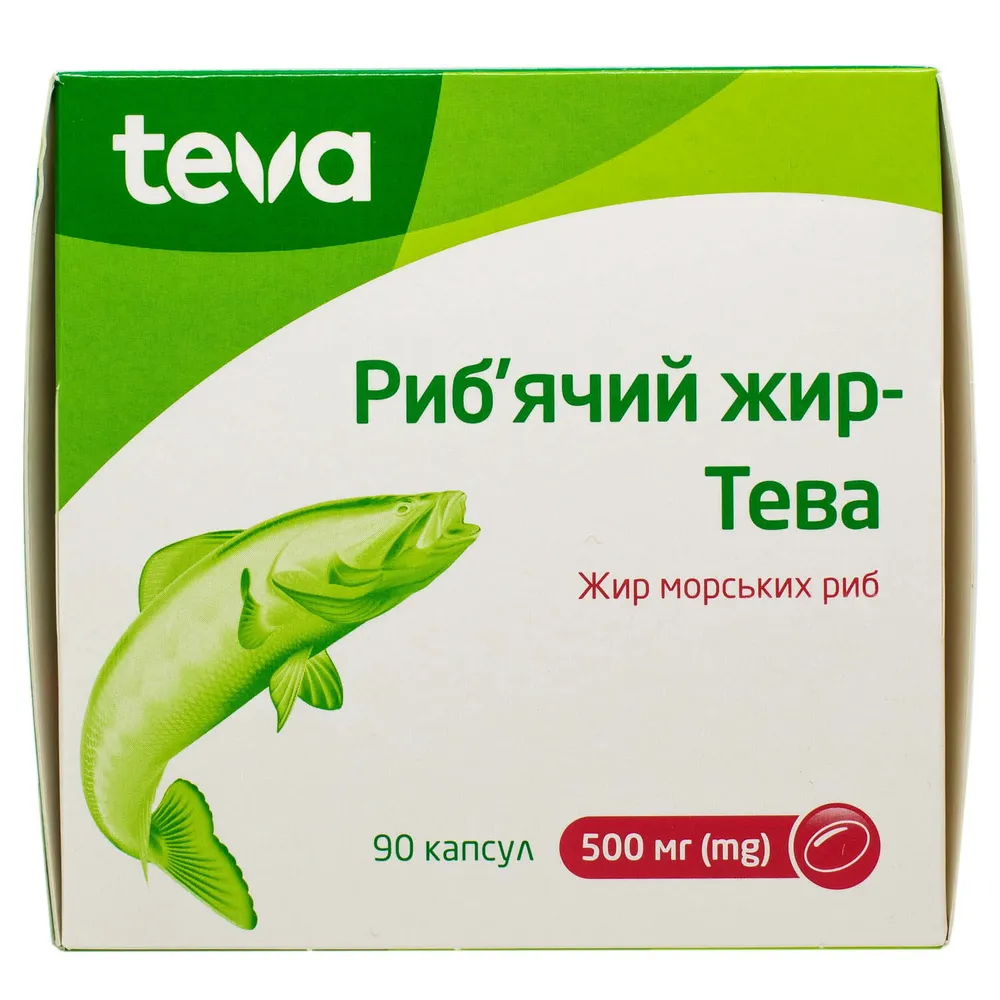
Table of Contents
INSTRUCTION FOR MEDICAL USE OF THE MEDICINAL PRODUCT FISH OIL-TEVA (FISHOIL-TEVA)
Composition:
Active substance: fish oil;
1 capsule contains 500 mg of fish oil;
Excipients: gelatin; glycerin; sorbitol solution, non-crystallizing (E 420); purified water.
Pharmaceutical form. Capsules.
Main physicochemical properties: pale yellow, transparent, soft gelatin capsules of oval shape, containing a particle-free, slightly viscous, yellow oil with a characteristic pleasant odor.
Pharmacotherapeutic group. Hypolipidemic agents. ATC code C10AX.
Pharmacological properties.
Pharmacodynamics.
Fish oil contains two polyunsaturated fatty acids (PUFAs) — eicosapentaenoic acid (EPA) and docosahexaenoic acid (DHA), which have a hypolipidemic effect and exert mild anticoagulant, antiplatelet, anti-inflammatory, and immunomodulatory actions.
The hypolipidemic effect is due to normalization of low-density lipoprotein (LDL) and very low-density lipoprotein (VLDL) levels, alteration of cellular membrane fluidity, and increased functional activity of membrane receptors, thereby improving lipoprotein-receptor interaction and normalization of lipoprotein metabolism.
The antiplatelet effect is associated with changes in the lipid composition of cell membranes, including platelet membranes, characterized by a decrease in arachidonic acid (AA) content and an increase in eicosapentaenoic acid levels. As a result, synthesis of thromboxane A₂ and other diunsaturated eicosanoids (derivatives of AA), which promote platelet aggregation, is reduced. At the same time, thromboxane synthesis from EPA produces triunsaturated eicosanoids, such as thromboxane A₃, which do not exhibit aggregatory activity. Consequently, the risk of bleeding may be increased. No significant effect on blood coagulation factors has been observed.
Vasodilatory action is related to the influence on the synthesis of vasodilatory prostaglandins and other vasoactive substances involved in the regulation of vascular tone (e.g., release of depressor adenosine, reduction of plasma noradrenaline levels, inhibition of calcium influx into cells).
Pharmacokinetics.
EPA and DHA are administered in the form of triacylglycerols, which are hydrolyzed by pancreatic and intestinal lipases and absorbed into intestinal epithelial cells as free fatty acids. After re-esterification in enterocytes, they form chylomicrons together with phospholipids, cholesterol, and apoproteins. Chylomicrons enter systemic circulation via the lymphatic system. Subsequently, chylomicrons are degraded by lipoprotein lipases, leading to the release of essential fatty acids. These fatty acids are either incorporated into membranes of various cell types, metabolized, or stored.
Clinical characteristics.
Indications.
The drug is used for the prevention of diseases or as part of combination therapy for the following conditions:
- prevention of early atherosclerosis and slowing the progression of atherosclerosis;
- in combination therapy of diseases associated with pathologically elevated lipid levels.
Contraindications.
Hypersensitivity to the components of the drug, coagulation disorders, hemophilia, all conditions associated with bleeding, idiopathic hypercalcemia, hypercalciuria, active forms of pulmonary tuberculosis, acute and chronic liver or kidney diseases, nephrolithiasis, acute and chronic cholecystitis and pancreatitis, periods of exacerbation of chronic cholecystitis and pancreatitis, hypervitaminosis D, sarcoidosis, prolonged immobilization, thyrotoxicosis.
Interaction with other medicinal products and other types of interactions.
Fish Oil-Teva should be used with particular caution when administered concomitantly with anticoagulant drugs. Interaction may also occur with acetylsalicylic acid or other nonsteroidal anti-inflammatory drugs (NSAIDs). Signs of such interactions may include nosebleeds, hematuria, melena, very rarely vomiting with blood admixture, hemoptysis. In such cases, it is recommended to immediately discontinue the drug and consult a physician.
The activity of vitamin D may be reduced when used concomitantly with anticonvulsants or barbiturates.
The risk of hypervitaminosis A increases when used concomitantly with estrogens. Vitamin A reduces the anti-inflammatory effect of glucocorticoids.
Special precautions for use.
Extreme caution should be exercised when administering Fish Oil-TEVA to patients taking anticoagulants (e.g., warfarin); in cardiac disorders; acute and chronic gastrointestinal diseases; peptic ulcer of the stomach and duodenum; hypothyroidism; and in elderly patients.
Concomitant use of this medication with other vitamin products containing vitamins A and D is not recommended to avoid risk of vitamin overdose.
If the medication is administered in courses, laboratory monitoring of blood coagulation parameters should be performed regularly (typically every 2–3 months).
It is recommended to discontinue the medication at least 4 days prior to surgery or other surgical procedures.
This medicinal product should be used with caution in patients with hypersensitivity or allergy to fish.
Systematic reviews and meta-analyses of randomized controlled clinical trials have demonstrated a dose-dependent increased risk of atrial fibrillation in patients with established cardiovascular diseases or cardiovascular risk factors who were treated with omega-3 acid ethyl esters compared to placebo. The risk is highest with a daily dose of 4 g (see section "Adverse reactions"). If atrial fibrillation develops, treatment should be permanently discontinued.
The product contains sorbitol; therefore, if you have been diagnosed with an intolerance to certain sugars, consult your physician before taking this medicinal product.
Use during pregnancy or breastfeeding.
Due to the antithrombotic effect of the medication, its use during pregnancy is possible only with the approval of a physician and after careful assessment of the benefit-risk ratio.
There are insufficient data on the use of the medication during breastfeeding. Use is possible only under medical prescription.
Ability to influence reaction speed when driving or operating machinery.
No effect has been observed.
Dosage and Administration.
TEVA Fish Oil should be administered orally to adults and children aged 6 years and older at a dose of 1–2 capsules three times a day.
It is recommended to take the product in courses (2–3 months). After 2–3 months of use, coagulation parameters should be monitored, and further treatment should be continued based on these results.
Capsules should preferably be taken after meals with plenty of liquid.
The duration of treatment is determined individually by a physician.
Children.
The product is not recommended for children under 6 years of age.
Overdose.
Cases of overdose have not been reported. Prolonged use of high doses may increase the risk of adverse effects: in adults – drowsiness, lethargy, headache; in children – increased body temperature, drowsiness, excessive sweating, vomiting, skin rashes.
Treatment: symptomatic therapy, discontinuation of the product, dietary restriction of calcium intake.
Adverse reactions.
The frequency of adverse events is defined according to the following principle: very common (≥ 1/10), common (≥ 1/100 to < 1/10), uncommon (≥ 1/1000 to < 1/100), rare (≥ 1/10000 to < 1/1000), very rare (< 1/10000, including individual case reports), not known (cannot be estimated due to insufficient available data).
Immune system
Not known: allergic reactions.
Metabolism and nutrition
Not known: hyperglycaemia.
Cardiovascular system
Common: atrial fibrillation.
Not known: epistaxis, bleeding (in the presence of wounds or abrasions).
Skin and subcutaneous tissue
Not known: pruritus, urticaria.
Gastrointestinal tract
Rare: stomach discomfort.
Not known: breath with a specific odor, diarrhea, exacerbation of chronic cholecystitis, pancreatitis.
Shelf life. 2 years.
Storage conditions. Store at temperatures not exceeding 25 ºC in the original packaging.
Packaging. 10 capsules in a blister; 7 or 9 blisters in a cardboard box.
Supply classification. Over-the-counter.
Manufacturer. Teva Pharmaceutical Works Ltd.
Manufacturer's address and location of business operation.
Site 1; 13 Pallagi Street, H-4042 Debrecen, Hungary.