Fish oil
Ukraine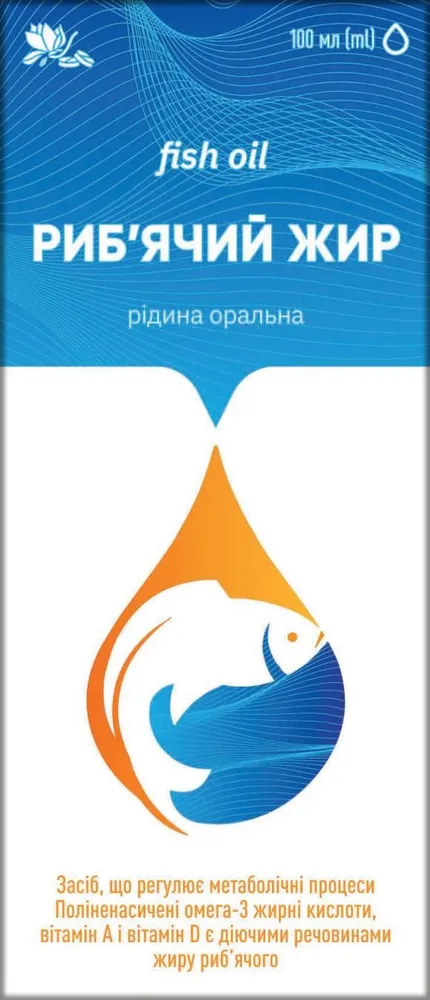
Table of Contents
INSTRUCTION FOR MEDICAL USE OF THE MEDICINAL PRODUCT FISH OIL (OLEUM JECORIS ASELLI)
Composition:
Active substance: Fish oil produced from the liver of cod fish;
1 ml of the preparation contains fish oil produced from the liver of cod fish – 1 ml.
Pharmaceutical form. Oral liquid.
Main physico-chemical properties: Clear, oily liquid, ranging from light yellow to yellow, with a characteristic odor.
Pharmacotherapeutic group.
Medicinal products regulating metabolic processes. ATC code A11JC.
Pharmacological properties.
The medicinal product Fish Oil contains vitamin A (retinol), vitamin D (calciferol), eicosapentaenoic acid, eicosatetraenoic acid, and docosahexaenoic acid. The active ingredients of fish oil are polyunsaturated omega-3 fatty acids, vitamin A, and vitamin D. Omega-3 polyunsaturated fatty acids (eicosapentaenoic acid (EPA) and docosahexaenoic acid (DHA)), which are present in significant amounts in cod liver oil, produce the following biological effects: DHA is necessary for normal development of the brain, nervous system, and retina in children; EPA serves as a precursor for biologically active molecules – eicosanoids, including thromboxanes, leukotrienes, prostacyclins, and prostaglandins. Eicosanoids derived from saturated arachidonic acid differ significantly in biological effect from eicosanoids derived from EPA. For example, thromboxane (TXA2) formed from arachidonic acid has a pronounced vasoconstrictive effect, whereas TXA2 formed from EPA exhibits almost no such effect. Prostaglandins derived from arachidonic acid are considerably more active than prostaglandins derived from EPA. This explains the reduction in the activity of non-specific inflammatory reactions when sufficient amounts of essential omega-3 polyunsaturated fatty acids are consumed. Omega-3 polyunsaturated fatty acids act as precursors for certain enzymes, alter the physical properties of cell membranes by incorporating into phospholipids, directly participate in gene transcription processes, and in the binding of protein molecules to cell membranes. The use of Fish Oil containing omega-3 polyunsaturated fatty acids leads to a reduction in levels of triglycerides, cholesterol, low-density lipoproteins, and very low-density lipoproteins; promotes a vasodilatory effect over vasoconstriction; increases the elasticity of blood cell membranes; reduces platelet activation and chemotaxis, thereby decreasing blood viscosity and the risk of thrombosis. These properties improve microcirculation, particularly in blood vessels affected by atherosclerosis.
Clinical characteristics.
Indications.
Treatment of hypovitaminosis and avitaminosis A, eye diseases (pigmentary retinopathy, xerophthalmia, hemeralopia, keratomalacia), systemic therapy of skin and mucous membrane lesions, rickets, hypotrophy, acute and chronic respiratory diseases, inflammatory and erosive gastrointestinal tract disorders, urinary tract disorders, acceleration of wound healing and bone fracture consolidation; prevention of atherosclerosis and thrombosis development, restoration of normal coagulation after thrombosis.
Contraindications.
Hypersensitivity to the components of the medicinal product; idiopathic hypercalcemia; hypercalciuria; active forms of pulmonary tuberculosis; acute and chronic liver and kidney diseases; nephrolithiasis; chronic pancreatitis; hypervitaminosis D; sarcoidosis; prolonged immobilization; thyrotoxicosis; coagulation disorders; all conditions associated with bleeding; cholecystitis; acute pancreatitis.
Interaction with other medicinal products and other types of interactions.
When used concomitantly with other medicinal products containing vitamins A and D, there is a risk of developing hypervitaminosis.
Fish oil should be used with particular caution when administered simultaneously with drugs affecting blood coagulation. Interaction may also occur with acetylsalicylic acid or other nonsteroidal anti-inflammatory drugs (NSAIDs). Signs of such interactions may include epistaxis, hematuria, melena. Very rarely – vomiting with blood admixture, hemoptysis. In such cases, immediate discontinuation of the product is recommended.
The activity of vitamin D may be reduced when used concomitantly with anticonvulsants or barbiturates.
Concomitant use with estrogens increases the risk of hypervitaminosis A. Vitamin A reduces the anti-inflammatory effect of glucocorticoids.
Special precautions for use.
Systematic reviews and meta-analyses of randomized controlled clinical trials have identified a dose-dependent increased risk of developing atrial fibrillation in patients with established cardiovascular diseases or cardiovascular risk factors who were administered omega-3 acid ethyl esters, compared to placebo. The risk is highest when using the 4 g/day dose (see section "Adverse reactions"). If atrial fibrillation develops, treatment should be discontinued permanently.
Particular caution should be exercised when administering Fish Oil to patients receiving anticoagulants (e.g., warfarin); in patients with heart disease, acute and chronic gastrointestinal disorders, peptic ulcer of the stomach and duodenum, hypothyroidism; and in elderly patients.
Concomitant use of the drug with other vitamin preparations containing vitamins A and D is not recommended to avoid overdosing of these vitamins.
If the drug is administered in courses, laboratory monitoring of blood coagulation parameters should be performed regularly (every 2–3 months).
It is recommended to discontinue the drug at least 4 days prior to surgery or other surgical procedures.
Use during pregnancy or breastfeeding.
Due to the antithrombotic effect of the drug, its use during pregnancy is possible only with a physician’s approval and after careful assessment of the benefit-risk ratio. During breastfeeding, the drug may be used after consultation with a physician.
Ability to influence reaction rate when driving or operating machinery.
The use of the drug does not affect the ability to drive or operate machinery.
Dosage and Administration.
The dosage of the drug is individually determined by a physician. Adults are generally recommended to take 1 tablespoon orally 2–3 times daily. For children from 4 weeks of age, the initial dose is 3–5 drops twice daily, gradually increasing the dose to ½–1 teaspoon (2.5–5 mL) daily. For children under 1 year of age: 1 teaspoon (5 mL) daily; for children up to 6 years of age: 1 teaspoon (5 mL) twice daily; for children aged 7 years and older: 1 teaspoon (5 mL) three times daily.
It is recommended to use the drug in courses (2–3 months). After 2–3 months of treatment, coagulation parameters should be monitored, and further treatment continued based on the results (after consultation with a physician).
Children.
The medicinal product can be used in pediatric practice.
When using the drug, the indicated dosages must be strictly observed.
Overdose.
With prolonged use of the drug, somnolence, lethargy, headache, nausea, vomiting, pain in the lower limb bones, bone demineralization, elevated body temperature, increased sweating, and skin rashes may occur.
Treatment: symptomatic therapy, discontinuation of the drug, and dietary restriction of calcium intake.
Side effects.
Cardiovascular system: frequently – atrial fibrillation;
Immune system: allergic reactions;
Vascular system: nosebleeds, increased bleeding from wounds or bruises;
Gastrointestinal tract: mild stomach disorders, which can be alleviated by dose reduction; diarrhea, exacerbation of chronic cholecystitis, pancreatitis. With prolonged use of the drug in high doses, the air exhaled by the patient may have a slight fishy odor.
If any adverse reactions occur, the use of the drug should be discontinued and medical advice must be sought immediately.
Reporting suspected adverse reactions
Reporting of adverse reactions after drug registration is of great importance. It allows continuous monitoring of the benefit-risk balance of the medicinal product. Healthcare professionals, as well as patients or their legal representatives, are encouraged to report all suspected adverse reactions and lack of drug efficacy via the Automated Pharmacovigilance Information System at the following link: https://aisf.dec.gov.ua.
Shelf life. 1 year 6 months.
Storage conditions.
Store in the original packaging at a temperature not exceeding 25 °C.
Keep out of reach of children.
Packaging.
50 ml or 100 ml in a bottle; 1 bottle per cardboard pack;
50 ml or 100 ml in a jar; 1 jar per cardboard pack.
Availability. Over-the-counter (without prescription).
Manufacturer.
JSC "Lubnifarm".
Manufacturer's location and address of business activity.
16, Barvinкова St., Lubny, Poltava region, 37500, Ukraine.