Riboxin
Ukraine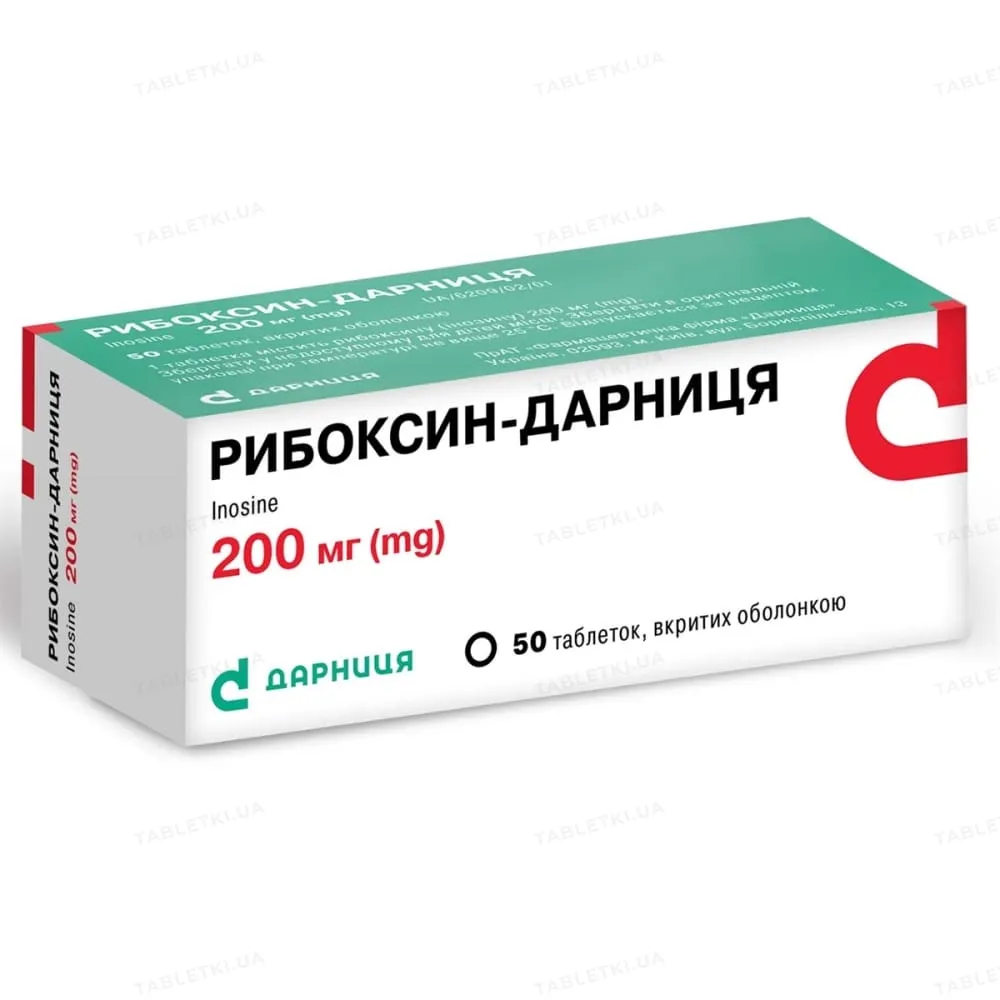
Table of Contents
INSTRUCTIONS FOR MEDICAL USE OF THE MEDICINAL PRODUCT RIBOXINE (RIBOXINE)
Composition:
Active ingredient: inosine;
One tablet contains 200 mg of inosine calculated as 100% substance;
Excipients: potato starch; powdered sugar; calcium stearate; coating mixture "Opadry II Yellow" 33G22623 (hypromellose (hydroxypropylmethylcellulose); lactose monohydrate; titanium dioxide (E 171); polyethylene glycol (macrogol) 3000; triacetin; quinoline yellow (E 104); yellow FCF (E 110); iron oxide (E 172); indigocarmine (E 132)).
Pharmaceutical form. Film-coated tablets.
Main physicochemical properties: film-coated tablets of yellow color with a biconvex surface. Two layers are visible in cross-section.
Pharmacotherapeutic group. Cardiology medicinal products. ATC code C01EB.
Pharmacological properties.
Pharmacodynamics. Riboxin has anti-hypoxic and antiarrhythmic properties and exerts an anabolic effect. It is a precursor of ATP, directly participates in glucose metabolism, and promotes activation of metabolism under conditions of hypoxia and in the absence of ATP. The medicinal product activates metabolism of pyruvic acid to ensure normal tissue respiration and promotes activation of xanthine dehydrogenase. Riboxin positively influences myocardial metabolism, in particular increases cellular energy balance, stimulates nucleotide synthesis, and enhances the activity of certain enzymes in the Krebs cycle. The drug normalizes myocardial contractility and promotes more complete myocardial relaxation in diastole due to its ability to bind calcium ions that have entered cells during the excitation phase. It also activates tissue regeneration (especially of the myocardium and gastrointestinal mucosa).
Pharmacokinetics. Riboxin is well absorbed in the gastrointestinal tract. It enters cells via the bloodstream, where it can be converted into nucleotides involved in energy and protein metabolism. Inosine is metabolized in the liver to form glucuronic acid, followed by its further oxidation. Excretion occurs mainly via urine, and to a minor extent via feces and bile.
Clinical characteristics.
Indications. As part of combination therapy for ischemic heart disease (post-myocardial infarction state, angina pectoris), cardiac arrhythmias, intoxication with cardiac glycosides, treatment of cardiomyopathies of various etiologies, myocardial dystrophies (due to severe physical exertion, infectious and endocrine causes), myocarditis, liver diseases (hepatitis, liver cirrhosis, fatty liver dystrophy), uroporphyrinuria.
Contraindications. Hypersensitivity to the active substance or to other components of the drug; gout; hyperuricemia. Renal insufficiency is a limitation for the use of the drug.
Interaction with other medicinal products and other types of interactions.
Possible interactions when used concomitantly with other medicinal products:
with heparin – enhanced effects of heparin, prolonged duration of action;
with cardiac glycosides – prevention of arrhythmias, enhanced positive inotropic effect;
with hypouricemic agents – reduced efficacy of hypouricemic agents.
The effect of riboxin is not reduced when used concomitantly with β-adrenoblockers.
Inosine can be used concomitantly with anabolic agents (potassium orotate, methandienone), nitroglycerin, nifedipine, furosemide, spironolactone.
Forms a precipitate with tannin.
Special precautions for use.
Riboxin should not be used for emergency correction of cardiac disorders.
If itching or skin hyperemia occur, treatment with the drug should be discontinued.
Riboxin tablets contain lactose; therefore, if a patient has known sugar intolerance, medical advice should be sought before taking this medicinal product.
The drug should not be administered to patients with rare hereditary conditions such as galactose intolerance, lactase deficiency, or glucose-galactose malabsorption syndrome.
During treatment, blood and urine urea levels should be monitored. Renal insufficiency is a limitation for the use of this medicinal product. Administration of the drug in cases of renal insufficiency is advisable only when, in the physician's opinion, the expected benefit outweighs the potential risk.
The colorant E 110 present in the tablet coating may cause allergic reactions.
Use during pregnancy or breastfeeding. Studies on the efficacy and safety of the drug in this patient group have not been conducted; therefore, it should not be used during pregnancy or breastfeeding.
Ability to influence reaction rate when driving or operating machinery. The drug does not affect the speed of neuromuscular conduction; thus, it can be used by individuals who drive vehicles or operate complex machinery, when used at recommended doses.
Dosage and Administration.
Tablets should be taken orally, before meals, without chewing, and washed down with sufficient amount of water. The daily dose is determined individually and amounts to 600–2400 mg (3–12 tablets) for adults. During the first days of treatment, the daily dose for adults is 600–800 mg (1 tablet 3–4 times daily). If the drug is well tolerated, the dose should be increased over 2–3 days from 1200 mg (2 tablets 3 times daily) up to 2400 mg.
Duration of treatment course – from 4 weeks to 1.5–3 months.
In case of uroporphyrinuria, the daily dose is 800 mg (1 tablet 4 times daily), duration of treatment course – 1–3 months.
Children. Should not be used in children due to lack of safety data.
Overdose.
Symptoms: cases of overdose have not been reported. If recommended doses are exceeded, manifestations of adverse reactions may be intensified, including allergic reactions, nausea, diarrhea, abdominal pain.
Treatment: discontinue the drug, symptomatic therapy.
Adverse reactions.
Immune system disorders: allergic/anaphylactic reactions, including rash, pruritus, skin hyperemia, urticaria, anaphylactic shock.
Metabolism and nutrition disorders: hyperuricemia, exacerbation of gout (with prolonged use of high doses).
Cardiovascular system disorders: tachycardia, arterial hypotension, which may be accompanied by headache, dyspnea, dizziness, nausea, vomiting, sweating.
General disorders: general weakness.
Laboratory findings: increased blood uric acid levels.
If any adverse reactions occur, discontinue use of the medicinal product.
Reporting of adverse reactions after marketing authorization is of great importance. It enables ongoing monitoring of the benefit-risk balance of the medicinal product. Healthcare and pharmaceutical professionals, as well as patients or their legal representatives, should report all suspected adverse reactions and lack of efficacy through the Automated Pharmacovigilance Information System at the following link: https://aisf.dec.gov.ua.
Shelf life. 4 years.
Storage conditions. Store in original packaging at a temperature not exceeding 25 °C.
Keep out of reach and sight of children.
Packaging. 10 tablets in a blister; 5 blisters in a carton.
Prescription category. Prescription only.
Manufacturers.
JSC "Kyivmedpreparat", Kyiv.
JSC "Halychpharm", Lviv.
Manufacturers' locations and addresses of sites of activity.
JSC "Kyivmedpreparat", Ukraine, 01032, Kyiv, Saksahanskoho St., 139.
JSC "Halychpharm", Ukraine, 79024, Lviv, Opryshkivska St., 6/8.
Marketing authorization holder. JSC "Halychpharm", Lviv.
Address of the marketing authorization holder.
JSC "Halychpharm", Ukraine, 79024, Lviv, Opryshkivska St., 6/8.