Riboxine
Ukraine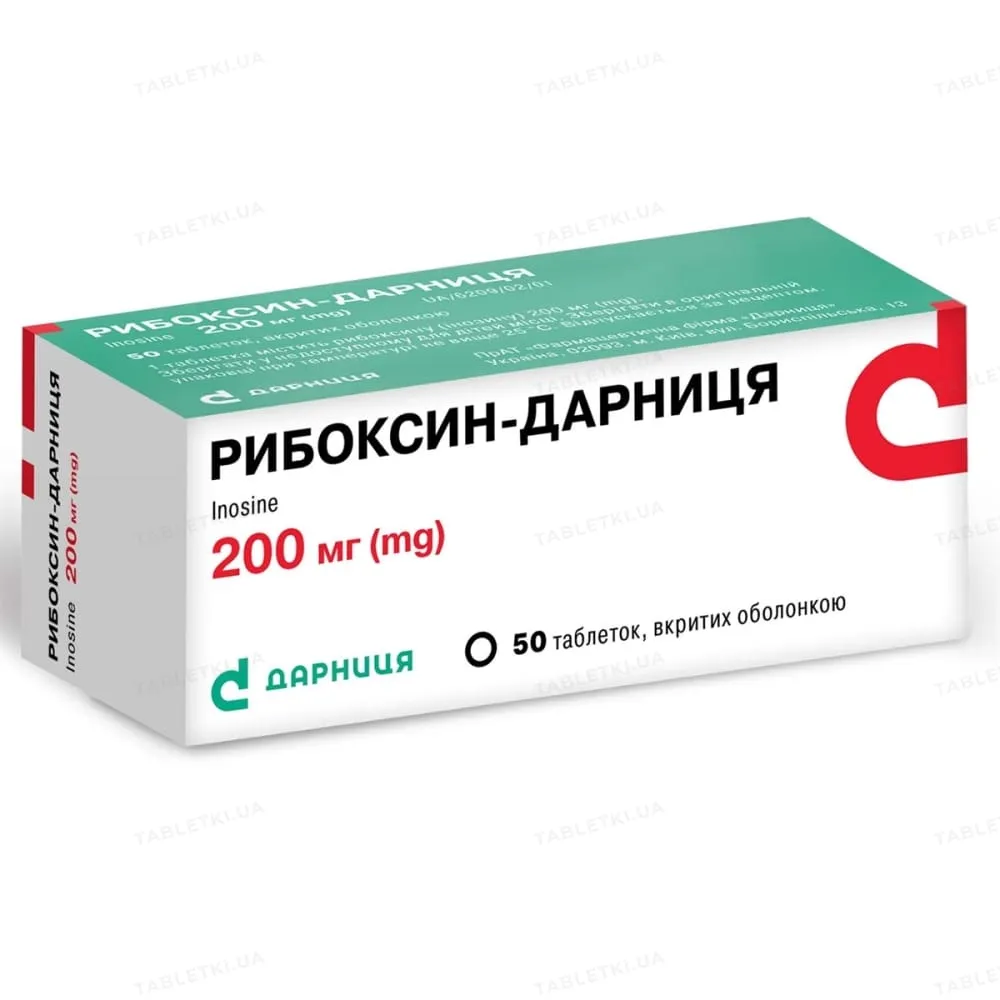
Table of Contents
INSTRUCTIONS FOR MEDICAL USE OF THE MEDICINAL PRODUCT RIBOXIN (RiboxinE)
Composition:
Active substance: inosine;
One tablet contains 200 mg of inosine;
Excipients: potato starch, corn starch, sucrose, stearic acid, Opadry II Yellow 33G32563 film-coating mixture (indigo carmine (E 132); yellow FCF (E 110); hypromellose; lactose monohydrate; polyethylene glycol; quinoline yellow (E 104); titanium dioxide (E 171); triacetin).
Pharmaceutical form. Film-coated tablets.
Main physicochemical characteristics: film-coated, biconvex tablets, yellow in colour.
Pharmacotherapeutic group. Cardiological preparations. ATC code C01EB.
Pharmacological Properties.
Pharmacodynamics.
Riboxin is an anabolic medicinal agent that exerts anti-hypoxic and antiarrhythmic effects. It is a precursor of adenosine triphosphate (ATP), directly participates in glucose metabolism, and promotes metabolic activation under hypoxic conditions and in the absence of ATP. The drug activates pyruvic acid metabolism to ensure normal tissue respiration and promotes the activation of xanthine dehydrogenase. Riboxin positively affects myocardial metabolism, in particular increases cellular energy balance, stimulates nucleotide synthesis, and enhances the activity of several enzymes in the Krebs cycle. The drug normalizes myocardial contractility and promotes more complete myocardial relaxation in diastole due to its ability to bind calcium ions that enter cells during excitation. It also activates tissue regeneration (especially myocardium and mucous membrane of the gastrointestinal tract).
Pharmacokinetics.
Well absorbed in the gastrointestinal tract. Metabolized in the liver with the formation of glucuronic acid and its subsequent oxidation. Excreted in insignificant amounts by the kidneys.
Clinical characteristics.
Indications.
Complex treatment of ischemic heart disease (post-myocardial infarction condition, angina pectoris), cardiac arrhythmias, intoxication with cardiac glycosides, treatment of cardiomyopathies of various etiologies, myocardial dystrophies (against severe physical exertion, infectious and endocrine causes), myocarditis; liver diseases (hepatitis, liver cirrhosis, fatty liver dystrophy); uroporphyrinuria.
Contraindications.
Increased individual sensitivity to the active substance or to components of the drug, gout, hyperuricemia. A limitation for the use of the drug is renal insufficiency.
Interaction with other medicinal products and other types of interactions.
When used concomitantly with other medicinal products, the following is possible:
with heparin – potentiation of heparin effects, prolonged duration of action;
with cardiac glycosides – prevention of arrhythmias, enhancement of positive inotropic effect;
with hypouricemic agents – weakening of hypouricemic effects;
with tannin – formation of precipitate.
Inosine may be used concomitantly with anabolic agents (potassium orotate, methandrostenolone).
Concomitant use of the drug with β-adrenoblockers does not reduce the effect of riboxine.
Concomitant use with nitroglycerin, nifedipine, furosemide, and spironolactone is possible.
Special precautions for use.
Riboxin is not used for emergency correction of heart function disorders.
During prolonged use of the medicinal product, the concentration of uric acid in blood and urine should be monitored.
The medicinal product may be used in renal insufficiency only if, in the opinion of the physician, the expected positive effect outweighs the risk of application. If itching or skin hyperemia occur, treatment with the medicinal product should be discontinued. The medicinal product contains sugar, which should be taken into account in patients with diabetes mellitus.
The medicinal product contains lactose and therefore should not be administered to patients with rare hereditary forms of galactose intolerance, lactase deficiency, or glucose-galactose malabsorption syndrome.
The colouring agent E 110 contained in the tablet coating may cause allergic reactions.
Use during pregnancy or breastfeeding.
Clinical studies on the use of the medicinal product during pregnancy or breastfeeding are lacking; therefore, the medicinal product is not used during pregnancy or breastfeeding.
Ability to influence reaction rate when driving or operating machinery.
The medicinal product does not affect reaction speed; it can be used at recommended doses by patients who drive vehicles or operate machinery.
Dosage and Administration.
Riboxin should be administered orally to adults before meals. The initial daily dose is 3–4 tablets (600–800 mg), calculated as 1 tablet (200 mg) taken 3–4 times daily. If the drug is well tolerated, the dose may be increased over 2–3 days to 6 tablets (1200 mg) daily (2 tablets 3 times daily), and if necessary, up to 12 tablets (2400 mg) daily, calculated as 4 tablets (800 mg) 3 times daily. The duration of treatment course is from 1 to 3 months.
Children.
There are no studies regarding the use of this medicinal product in children. The drug is not used in pediatric patients.
Overdose.
Symptoms: There have been no reports of overdose. Exceeding the recommended doses may lead to an increase in adverse reactions, nausea, diarrhea, abdominal pain, and hypersensitivity reactions (itching, skin hyperemia).
Treatment: discontinue the drug, symptomatic therapy.
Side effects.
Sometimes the following adverse reactions may occur when using the medicinal product.
Cardiovascular system: tachycardia; arterial hypotension, which may be accompanied by headache, dyspnea, dizziness, nausea, vomiting, sweating.
Immune system, skin and subcutaneous tissue: allergic/anaphylactic reactions, including rash, pruritus, skin hyperemia, urticaria, anaphylactic shock.
Metabolism and nutritional disorders: hyperuricemia, exacerbation of gout (with prolonged use of high doses).
Other: increased blood uric acid levels, general weakness.
If any adverse reactions occur, the use of the medicinal product should be discontinued.
Shelf life. 3 years.
Storage conditions.
Store in the original packaging at a temperature not exceeding 25 °C.
Keep out of reach of children.
Packaging.
10 tablets in blisters.
10 tablets in a blister; 5 blisters per pack.
Prescription category. Prescription only.
Manufacturer.
JSC "KYIV VITAMIN PLANT".
Manufacturer's address and place of business.
38 Kopilivska Street, Kyiv, 04073, Ukraine.
Web-site: www.vitamin.com.ua.