Rinvok
Ukraine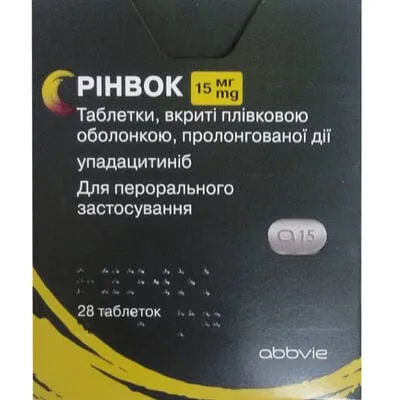
Table of Contents
INSTRUCTIONS FOR MEDICAL USE OF THE MEDICINAL PRODUCT RINVOQ®
Composition:
Active substance: upadacitinib;
1 tablet contains upadacitinib hemihydrate equivalent to 15 mg of upadacitinib;
Excipients: microcrystalline cellulose, hypromellose, mannitol, tartaric acid, colloidal anhydrous silicon dioxide, magnesium stearate, polyvinyl alcohol, macrogol, talc, titanium dioxide (E 171), iron oxide black (E 172), iron oxide red (E 172).
Pharmaceutical form. Prolonged-release film-coated tablets.
Main physicochemical characteristics: elongated, biconvex, purple-colored tablets with "a15" debossed on one side.
Pharmacotherapeutic group
Immunosuppressants, janus kinase (JAK) inhibitors. ATC code L04AF03.
Pharmacological Properties
Pharmacodynamics
Mechanism of Action
Upadacitinib is a selective and reversible inhibitor of Janus-associated kinase (JAK). JAKs are intracellular enzymes involved in cytokine or growth factor signal transduction and play a role in a wide range of cellular processes, including inflammatory responses, hematopoiesis, and immune surveillance. The JAK enzyme family consists of four isoforms—JAK1, JAK2, JAK3, and TYK2—which act in pairs to phosphorylate and activate signal transducers and activators of transcription (STAT). This phosphorylation, in turn, modulates gene expression and cellular function. JAK1 is important for signaling of inflammatory cytokines, whereas JAK2 is critical for erythrocyte maturation, and JAK3 signaling plays a role in immune surveillance and lymphocyte function.
In human cell culture studies, upadacitinib preferentially inhibits signaling through JAK1 or JAK1/3 with higher functional selectivity compared to cytokine receptors that signal via JAK2 pairs. Atopic dermatitis is driven by proinflammatory cytokines (including IL-4, IL-13, IL-22, TSLP, IL-31, and IFN-γ) that signal through the JAK1 pathway. Inhibition of JAK1 by upadacitinib reduces signaling from multiple mediators responsible for the signs and symptoms of atopic dermatitis, such as eczematous skin lesions and pruritus. Proinflammatory cytokines (primarily IL-6, IL-7, IL-15, and IFN-γ) signal via JAK1 and are involved in the pathogenesis of inflammatory bowel diseases. Inhibition of JAK1 by upadacitinib modulates signaling of JAK-dependent cytokines, thereby influencing the severity of inflammation and the signs and symptoms of inflammatory bowel diseases.
Inhibition of IL-6-induced STAT3 and IL-7-induced STAT5 phosphorylation
In healthy volunteers, administration of upadacitinib (in immediate-release formulation) resulted in dose- and concentration-dependent inhibition of IL-6-induced STAT3 phosphorylation (JAK1/JAK2) and IL-7-induced STAT5 phosphorylation (JAK1/JAK3) in whole blood. Maximum inhibition was observed 1 hour after dosing, and inhibition returned to baseline levels by the end of the dosing interval.
Lymphocytes
In patients with rheumatoid arthritis, a slight transient increase in mean absolute lymphocyte count was observed during upadacitinib treatment up to week 36 compared to baseline, followed by a gradual decline in lymphocyte count with complete or near-complete return to baseline levels with continued treatment.
High-sensitivity C-reactive protein
In patients with rheumatoid arthritis, a reduction in mean concentration of high-sensitivity C-reactive protein compared to baseline was observed as early as week 1 of treatment and was maintained throughout the treatment period.
Vaccination Studies
The effect of upadacitinib on humoral response following administration of an adjuvanted recombinant zoster vaccine based on glycoprotein E was evaluated in 93 patients with rheumatoid arthritis on stable upadacitinib 15 mg therapy. 98% of patients were concomitantly receiving methotrexate. At study initiation, 49% of patients were receiving oral corticosteroids. The primary endpoint was the proportion of patients achieving an adequate humoral response, defined as ≥4-fold increase in anti-glycoprotein E titer from baseline, at week 16 (4 weeks after the second vaccine dose). Vaccination elicited an adequate humoral response in 79/90 (88% (95% confidence interval (CI): 81.0, 94.5)) of patients receiving upadacitinib 15 mg for 16 weeks.
The effect of upadacitinib on humoral response following administration of inactivated pneumococcal polysaccharide conjugate vaccine (13-valent, adsorbed) was evaluated in 111 patients with rheumatoid arthritis on stable upadacitinib therapy at a dose of 15 mg (n = 87) or 30 mg (n = 24). 97% of patients (n = 108) were concomitantly receiving methotrexate. Vaccination elicited an adequate humoral response in 67.5% (95% confidence interval (CI): 57.4, 77.5) and 56.5% (95% CI: 36.3, 76.8) of patients receiving upadacitinib 15 mg and 30 mg, respectively.
Pharmacokinetics
Within the therapeutic dose range, upadacitinib exposure in plasma is proportional to the administered dose. Steady-state plasma concentrations are achieved within 4 days after repeated once-daily administration, with minimal accumulation.
Absorption
After oral administration in the form of extended-release tablets, upadacitinib is absorbed with a median Tmax of 2 to 4 hours. Administration of upadacitinib with a high-fat meal did not result in a clinically significant effect on its exposure (AUC increased by 29%, and Cmax increased by 39–60%). In clinical trials, patients took upadacitinib regardless of food intake. In vitro studies have shown that upadacitinib is a substrate for P-glycoprotein and breast cancer resistance protein transporters.
Distribution
Approximately 52% of the upadacitinib dose is plasma protein-bound. Upadacitinib distributes evenly between plasma and blood cellular components, as indicated by a blood-to-plasma ratio of 1.0.
Metabolism
Upadacitinib metabolism is mediated primarily by CYP3A4, with a possible minor contribution from CYP2D6. The pharmacological activity of upadacitinib is attributable to the parent molecule. In a human radiolabeled study, unchanged upadacitinib accounted for 79% of total radioactivity in plasma, while the major metabolite (a product of mono-oxidation followed by glucuronidation) accounted for 13% of total plasma radioactivity. No active metabolites of upadacitinib were identified.
Excretion
After a single dose of [14C]-upadacitinib immediate-release formulation, upadacitinib was primarily excreted as unchanged parent drug in urine (24%) and feces (38%). Approximately 34% of the administered dose was excreted as metabolites. The mean terminal half-life of upadacitinib ranged from 9 to 14 hours.
Special Patient Populations
Renal Impairment
Following upadacitinib administration, AUC values were 18%, 33%, and 44% higher in patients with mild (estimated glomerular filtration rate 60–89 mL/min/1.73 m²), moderate (estimated glomerular filtration rate 30–59 mL/min/1.73 m²), and severe (estimated glomerular filtration rate 15–29 mL/min/1.73 m²) renal impairment, respectively, compared to patients with normal renal function. Cmax of upadacitinib was similar in patients with normal renal function and those with renal impairment. Mild or moderate renal impairment does not have a clinically significant effect on upadacitinib exposure (see section "Dosage and Administration").
Hepatic Impairment
Mild (Child-Pugh class A) and moderate (Child-Pugh class B) hepatic impairment did not have a clinically significant effect on upadacitinib exposure. In patients with mild and moderate hepatic impairment, upadacitinib AUC values were 28% and 24% higher, respectively, compared to patients with normal hepatic function. Cmax of upadacitinib was unchanged in patients with mild hepatic impairment and was 43% higher in patients with moderate hepatic impairment compared to patients with normal hepatic function. The use of upadacitinib in patients with severe hepatic impairment (Child-Pugh class C) has not been studied.
Children
The pharmacokinetics of upadacitinib in pediatric patients with rheumatoid arthritis, psoriatic arthritis, axial spondyloarthritis, ulcerative colitis, and Crohn's disease have not been studied (see section "Dosage and Administration").
Pharmacokinetics of upadacitinib and its steady-state concentrations are similar in adults and children aged 12–17 years with atopic dermatitis. Dosing for pediatric patients with body weight between 30 kg and 40 kg was determined using population pharmacokinetic modeling and simulation.
The pharmacokinetics of upadacitinib in pediatric patients (<12 years) with atopic dermatitis have not yet been established.
Subject Factors
Age, sex, body weight, race, and ethnicity did not have a clinically significant effect on upadacitinib exposure. Pharmacokinetic data for upadacitinib in patients with rheumatoid arthritis, psoriatic arthritis, axial spondyloarthritis, atopic dermatitis, ulcerative colitis, and Crohn's disease are consistent across these populations.
Clinical Characteristics
Indications
Rheumatoid Arthritis
RINVOQ® is indicated for the treatment of moderate to severe active rheumatoid arthritis in adult patients when an adequate response has not been achieved or there is intolerance to one or more disease-modifying antirheumatic drugs (DMARDs).
RINVOQ® may be used as monotherapy or in combination with methotrexate.
Psoriatic Arthritis
RINVOQ® is indicated for the treatment of active psoriatic arthritis in adult patients who have shown inadequate response or intolerance to one or more disease-modifying antirheumatic drugs (DMARDs). RINVOQ® may be used as monotherapy or in combination with methotrexate.
Axial Spondyloarthritis
Non-radiographic Axial Spondyloarthritis
RINVOQ® is indicated for the treatment of active non-radiographic axial spondyloarthritis in adults with objective signs of inflammation confirmed by elevated C-reactive protein (CRP) levels and/or MRI findings, and who have had an inadequate response to nonsteroidal anti-inflammatory drugs (NSAIDs).
Ankylosing Spondylitis (AS, radiographic axial spondyloarthritis)
RINVOQ® is indicated for the treatment of active ankylosing spondylitis in adult patients with inadequate response to standard therapy.
Atopic Dermatitis
RINVOQ® is indicated for the treatment of moderate to severe atopic dermatitis in adults and children aged 12 years and older who are candidates for systemic therapy.
Ulcerative Colitis
RINVOQ® is indicated for the treatment of moderate to severe active ulcerative colitis in adult patients who have had inadequate response, loss of response, or intolerance to standard therapy or biologic agents.
Crohn’s Disease
RINVOQ® is indicated for the treatment of moderate to severe Crohn’s disease in adult patients who have had inadequate response, loss of response, or intolerance to standard therapy or biologic agents.
Contraindications
- Hypersensitivity to the active substance or to any of the excipients of the medicinal product.
- Active tuberculosis or other active serious infections (see section "Special Warnings and Precautions for Use").
- Severe hepatic impairment (see section "Dosage and Administration").
- Pregnancy (see section "Use in Pregnancy and Breastfeeding").
Interaction with Other Medicinal Products and Other Forms of Interaction
Potential effect of other medicinal products on upadacitinib pharmacokinetics
Upadacitinib is primarily metabolized by the CYP3A4 enzyme. Therefore, plasma concentrations of upadacitinib may be affected by medicinal products that strongly inhibit or induce CYP3A4 enzyme activity.
Concomitant use with CYP3A4 inhibitors
Exposure to upadacitinib increases when used concomitantly with strong CYP3A4 inhibitors (such as ketoconazole, itraconazole, posaconazole, voriconazole, clarithromycin, and grapefruit). In a clinical study, concomitant administration of upadacitinib with ketoconazole resulted in increases of 70% and 75% in Cmax and AUC (area under the curve) of upadacitinib, respectively. Upadacitinib at a dose of 15 mg once daily should be used with caution in patients who are chronically taking strong CYP3A4 inhibitors. Upadacitinib at a dose of 30 mg once daily is not recommended for patients with atopic dermatitis or Crohn’s disease who are chronically taking strong CYP3A4 inhibitors. For patients with ulcerative colitis who are taking strong CYP3A4 inhibitors, the recommended induction dose is 30 mg once daily and the recommended maintenance dose is 15 mg once daily (see section "Dosage and Administration"). During long-term use, consider switching to an alternative agent that is not a strong CYP3A4 inhibitor. Grapefruit-containing foods and beverages should be avoided during upadacitinib treatment.
Concomitant use with CYP3A4 inducers
Concomitant use of upadacitinib with strong CYP3A4 inducers (e.g., rifampicin and phenytoin) decreases upadacitinib exposure, which may lead to reduced therapeutic effect. In a clinical study, multiple-dose administration of upadacitinib following rifampicin (a strong CYP3A inducer) resulted in 50% and 60% reductions in Cmax and AUC of upadacitinib, respectively. When upadacitinib is administered concomitantly with a strong CYP3A4 inducer, patients should be monitored for potential changes in disease activity.
Methotrexate and medicinal products that alter pH (e.g., antacids or proton pump inhibitors) do not affect plasma concentrations of upadacitinib.
Ability of upadacitinib to affect the pharmacokinetics of other medicinal products
In healthy volunteers, multiple-dose administration of upadacitinib at 30 mg or 45 mg once daily was associated with minimal effects on plasma exposure of midazolam (a sensitive CYP3A substrate), with 24–26% reductions in AUC and Cmax of midazolam, indicating that upadacitinib at 30 mg or 45 mg once daily may exert weak inducing effects on CYP3A. In a clinical study in healthy volunteers, multiple-dose administration of upadacitinib at 30 mg once daily reduced AUC of rosuvastatin and atorvastatin by 33% and 23%, respectively, and Cmax of rosuvastatin by 23%. Upadacitinib did not show a relevant effect on Cmax of atorvastatin or on plasma exposure of ortho-hydroxyatorvastatin (the main active metabolite of atorvastatin).
Multiple-dose administration of upadacitinib at 45 mg once daily in healthy volunteers led to limited increases in AUC and Cmax of dextromethorphan (a sensitive CYP2D6 substrate) by 30% and 35%, respectively, indicating a weak inhibitory effect of upadacitinib on CYP2D6 at the 45 mg once-daily dose.
Dose adjustments are not required for rosuvastatin, atorvastatin, or substrates of CYP3A or CYP2D6 when used concomitantly with upadacitinib.
Upadacitinib did not significantly affect plasma exposures of ethinylestradiol, levonorgestrel, methotrexate, or medicinal products that are substrates for metabolism by CYP1A2, CYP2B6, CYP2C9, or CYP2C19 enzymes.
Special precautions for use
The following patient categories should only receive upadacitinib if no other acceptable treatment options are available:
- Age 65 years and older;
- History of atherosclerotic cardiovascular disease or other cardiovascular risk factors (such as long-term smoking status, even if the patient has quit smoking);
- Risk factors for malignancies (e.g. current or past history of cancer).
Use in patients aged 65 years and older
Due to the increased risk of major adverse cardiovascular events (MACE), malignancies, serious infections, and all-cause mortality observed in patients aged 65 years and older in a large randomized trial of tofacitinib (another Janus kinase (JAK) inhibitor), upadacitinib should be used in this patient population only if no other acceptable treatment options are available.
Patients over the age of 65 have an increased risk of adverse reactions when receiving upadacitinib 30 mg once daily. Therefore, the recommended dose for long-term use in this patient population is 15 mg once daily (see sections "Dosage and administration" and "Adverse reactions").
Immunosuppressants
Interactions with other potent immunosuppressants such as azathioprine, 6-mercaptopurine, cyclosporine, tacrolimus, as well as with biologic disease-modifying antirheumatic drugs (bDMARDs) or other JAK inhibitors, have not been studied in clinical trials. Therefore, combination therapy is not recommended due to the potential risk of additive immunosuppression.
Serious infections
Serious and sometimes fatal infections have been reported during treatment with upadacitinib. The most frequently reported serious infections during upadacitinib treatment were pneumonia (see section "Adverse reactions") and cellulitis. Cases of bacterial meningitis and sepsis have also been observed in some patients receiving upadacitinib. Opportunistic infections reported during upadacitinib treatment include tuberculosis, disseminated herpes zoster, oral/esophageal candidiasis, and cryptococcosis.
Upadacitinib treatment should not be initiated in patients with active serious infections, including localized infections (see section "Contraindications").
Before initiating upadacitinib therapy, the risks and benefits should be carefully considered in patients:
- with chronic or recurrent infections,
- with a history of tuberculosis,
- with a history of serious or opportunistic infections,
- who have lived in or traveled to regions endemic for tuberculosis or fungal infections,
- with underlying conditions that may increase the risk of infection.
Patients should be closely monitored for signs and symptoms of infection during and after treatment with upadacitinib. If a serious or opportunistic infection develops, upadacitinib therapy should be suspended. Patients who develop a new infection during upadacitinib treatment require prompt and comprehensive diagnostic evaluation, typically performed in immunocompromised patients; appropriate antimicrobial therapy should be initiated with close monitoring of the patient's condition. If there is no response to antimicrobial therapy, upadacitinib treatment should be discontinued. After the infection is controlled, upadacitinib therapy may be resumed.
The incidence of serious infections was higher when the medicinal product RINVOQ® was administered at a dose of 30 mg compared to 15 mg.
As elderly individuals and patients with diabetes mellitus are at higher risk of infections, treatment in these patient populations should be conducted with caution. Upadacitinib should be used in patients aged 65 years and older only if no other acceptable treatment options are available (see section "Dosage and administration").
Tuberculosis
Patients should be screened for tuberculosis before initiating upadacitinib therapy. Upadacitinib should not be administered to patients with active tuberculosis. For patients with previously untreated latent tuberculosis or those with risk factors for developing tuberculosis infection, consideration should be given to initiating anti-tuberculosis therapy prior to starting upadacitinib.
It is recommended to consult a physician experienced in the management of tuberculosis when deciding whether to initiate anti-tuberculosis therapy in a specific patient.
Patients should be monitored for signs and symptoms of tuberculosis, including those who tested negative for latent tuberculosis infection prior to starting therapy.
Reactivation of viral infections
Cases of reactivation of viral infections, including herpes virus reactivation (e.g. herpes zoster), have been reported in clinical trials (see section "Adverse reactions"). The risk of herpes zoster is higher in patients from Japan receiving upadacitinib. If herpes zoster develops in a patient, consideration should be given to temporarily discontinuing upadacitinib treatment until the infection resolves.
Screening for viral hepatitis and monitoring for reactivation are recommended before and during upadacitinib treatment. Clinical trials did not include patients with positive test results for hepatitis C virus antibodies or hepatitis C virus RNA. Clinical trials also excluded patients with positive test results for hepatitis B surface antigen or hepatitis B virus DNA. If hepatitis B virus DNA is detected in a patient during upadacitinib treatment, consultation with a hepatologist is recommended.
Vaccination
There are no data on the response to live vaccines in patients receiving upadacitinib. Live attenuated vaccines should not be administered during or immediately before starting upadacitinib treatment. Prior to initiating upadacitinib therapy, patients should receive all necessary vaccinations according to the current immunization schedule and current vaccination recommendations, including preventive vaccination against herpes zoster (see section "Pharmacodynamics").
Malignancies
Cases of lymphoma and other malignancies have been reported in patients receiving JAK inhibitors, including upadacitinib.
In a large randomized, active-controlled trial of tofacitinib (another JAK inhibitor) involving patients with rheumatoid arthritis aged 50 years and older with at least one additional cardiovascular risk factor, an increased incidence of malignancies, including lung cancer, lymphoma, and non-melanoma skin cancer, was observed with tofacitinib compared to tumor necrosis factor (TNF) inhibitors.
The incidence of malignancies was higher when the medicinal product RINVOQ® was administered at a dose of 30 mg compared to 15 mg.
Upadacitinib should be prescribed only if no other acceptable treatment options are available for patients aged 65 years and older, patients with a long-term smoking history (even if they have quit), and patients with other risk factors for malignancies (e.g. current or past history of cancer).
Non-melanoma skin cancer
Cases of non-melanoma skin cancer have been reported in patients treated with upadacitinib (see section "Adverse reactions"). The incidence of non-melanoma skin cancer was higher when RINVOQ® was administered at a dose of 30 mg compared to 15 mg. All patients, especially those with risk factors for skin cancer, should undergo periodic skin examinations.
Blood count abnormalities
In clinical trials, absolute neutrophil counts < 1 × 10⁹ cells/L, absolute lymphocyte counts < 0.5 × 10⁹ cells/L, and hemoglobin levels < 8 g/dL were reported in ≤ 1% of patients. Treatment should not be initiated or should be temporarily discontinued if, during routine monitoring, the patient's absolute neutrophil count is < 1 × 10⁹ cells/L, absolute lymphocyte count is < 0.5 × 10⁹ cells/L, or hemoglobin level is < 8 g/dL.
Gastrointestinal perforations (GI)
Cases of diverticulitis and gastrointestinal perforations have been reported in clinical trials and post-marketing sources (see section "Adverse reactions").
RINVOQ® should be used with caution in patients who may have an increased risk of gastrointestinal perforations (e.g. patients with diverticular disease, history of diverticulitis, or those taking NSAIDs, corticosteroids, or opioids).
Patients with active Crohn's disease have an increased risk of gastrointestinal perforations.
Patients who present with abdominal symptoms should be promptly evaluated for early detection of diverticulitis or gastrointestinal perforations.
Serious cardiovascular adverse events
Cases of major adverse cardiovascular events (MACE) were observed in clinical trials of upadacitinib.
In a large randomized, active-controlled trial involving patients with rheumatoid arthritis aged 50 years and older with at least one additional cardiovascular risk factor, a higher incidence of serious cardiovascular adverse events, specifically cardiovascular death, non-fatal myocardial infarction, and non-fatal stroke, was observed with tofacitinib (another JAK inhibitor) compared to TNF inhibitors.
Therefore, upadacitinib should be prescribed only if no other acceptable treatment options are available for patients aged 65 years and older, patients with a long-term smoking history (even if they have quit), those with a history of atherosclerotic cardiovascular disease, or other cardiovascular risk factors.
Lipids
Treatment with upadacitinib was associated with dose-dependent increases in lipid levels, including total cholesterol, low-density lipoprotein cholesterol (LDL-C), and high-density lipoprotein cholesterol (HDL-C) (see section "Adverse reactions"). Statin therapy reduced elevated LDL-C levels to pre-upadacitinib treatment levels, but available evidence is limited. The impact of these lipid level increases on cardiovascular morbidity and mortality has not been established (see section "Dosage and administration").
Elevated liver transaminase levels
Treatment with upadacitinib was associated with a higher incidence of increased liver enzyme concentrations compared to placebo (see section "Adverse reactions").
Liver transaminases should be assessed at baseline and during treatment according to standard patient management practices. If liver enzyme elevations occur, the cause should be promptly investigated to timely identify potential cases of drug-induced liver injury.
If elevated ALT or AST levels are detected during routine monitoring and drug-induced liver injury is suspected, upadacitinib treatment should be suspended until this diagnosis is ruled out.
Thromboembolism
Cases of deep vein thrombosis (DVT) and pulmonary embolism (PE) were observed in clinical trials of upadacitinib.
In a large randomized, active-controlled trial involving patients with rheumatoid arthritis aged 50 years and older with at least one additional cardiovascular risk factor, a dose-dependent increase in the incidence of venous thromboembolism (VTE), including DVT and PE, was observed with tofacitinib (another JAK inhibitor) compared to TNF inhibitors.
Upadacitinib should be prescribed only if no other acceptable treatment options are available for patients with risk factors for cardiovascular and malignant diseases (see section "Special precautions for use": "Serious cardiovascular adverse events" and "Malignancies").
Upadacitinib should be used with caution in patients with VTE risk factors unrelated to cardiovascular or malignant diseases. VTE risk factors unrelated to cardiovascular or malignant diseases include history of VTE, major surgery, immobilization, use of combined hormonal contraceptives or hormone replacement therapy, and inherited coagulation disorders. Patients receiving upadacitinib should be regularly monitored for the development of VTE. If signs or symptoms of VTE occur, prompt evaluation is required, and upadacitinib treatment should be discontinued at any dose if VTE is suspected.
Hypersensitivity reactions
Serious hypersensitivity reactions, such as anaphylaxis and angioedema, have been reported during clinical trials of RINVOQ®. If clinically significant hypersensitivity reactions occur, RINVOQ® should be discontinued and appropriate therapy initiated (see sections "Contraindications" and "Adverse reactions").
Hypoglycemia in patients with diabetes mellitus
Cases of hypoglycemia have been reported in patients receiving antidiabetic medications after treatment with JAK inhibitors, including upadacitinib. Dose adjustment of antidiabetic agents may be required if hypoglycemia occurs.
Presence of drug residue in feces
Cases of drug residue in feces, stoma output, or intestinal stoma drainage have been reported in patients receiving upadacitinib. Most reports described anatomical (e.g. ileostomy, colostomy, intestinal resection) or functional gastrointestinal disorders with shortened gastrointestinal transit time. Patients should be instructed to contact their physician if drug residue is observed repeatedly. Clinical evaluation should be performed, and alternative treatment should be considered if therapeutic response is inadequate.
Use during pregnancy or breastfeeding
Women of reproductive potential
Women of reproductive potential should use effective contraception during treatment and for 4 weeks after the last dose of upadacitinib. Pediatric patients and/or their parents/guardians should be advised to contact a physician if menstruation occurs during upadacitinib treatment.
Pregnancy
Data on the use of upadacitinib in pregnant women are lacking or limited. Animal studies have shown toxic effects on reproductive function. In rats and rabbits, upadacitinib showed teratogenic effects, causing skeletal development abnormalities in rat fetuses and cardiac function disturbances in rabbit fetuses exposed in utero.
Upadacitinib is contraindicated during pregnancy (see section "Contraindications").
If a patient becomes pregnant while receiving upadacitinib, she should be informed of the potential risk to the fetus.
Breastfeeding
It is unknown whether upadacitinib or its metabolites are excreted in human breast milk. Available data on pharmacodynamics/toxicity in animals indicate that upadacitinib is excreted in milk.
The risk to newborns/infants cannot be excluded.
Upadacitinib is not recommended during breastfeeding. A decision should be made whether to discontinue breastfeeding or to discontinue upadacitinib therapy, taking into account the benefits of breastfeeding for the child and the benefits of therapy for the mother.
Fertility
The effect of upadacitinib on human fertility has not been evaluated. Animal studies did not show any effect on fertility.
Ability to drive and use machines
Upadacitinib may have a minor influence on the ability to drive and use machines, as dizziness and vertigo may occur during treatment with RINVOQ® (see section "Adverse reactions").
Method of Administration and Dosage
Treatment with upadacitinib should be initiated and supervised by a physician experienced in the diagnosis and management of conditions for which upadacitinib is indicated.
Dosage
Rheumatoid Arthritis, Psoriatic Arthritis, and Axial Spondyloarthritis
The recommended dose of upadacitinib is 15 mg once daily.
For patients with axial spondyloarthritis who have not shown a clinical response after 16 weeks of treatment, discontinuation of therapy should be considered. In some patients who initially showed a partial response, further improvement may occur with continued treatment beyond 16 weeks.
Atopic Dermatitis
The recommended dose of upadacitinib is 15 mg or 30 mg once daily, depending on the individual clinical presentation.
- The 15 mg dose is recommended for patients at high risk of venous thromboembolism (VTE), major adverse cardiovascular events (MACE), and malignancies (see section "Special Warnings and Precautions").
- The 30 mg dose once daily may be appropriate for patients with severe disease without high risk of VTE, MACE, or malignancies (see section "Special Warnings and Precautions"), or for patients who have had an inadequate response to the 15 mg dose once daily.
- For adolescents (12–17 years) with body weight ≥30 kg, the recommended dose is 15 mg. If an inadequate response is observed with 15 mg once daily, the dose may be increased to 30 mg once daily. The lowest effective dose sufficient to maintain therapeutic response should be used.
For patients aged 65 years and older, the recommended dose is 15 mg once daily (see section "Special Warnings and Precautions").
Topical Therapy
Upadacitinib may be used as monotherapy or in combination with topical corticosteroids. Topical calcineurin inhibitors may be applied to sensitive areas such as the face, neck, intertriginous areas, and genital regions.
If no therapeutic effect is observed after 12 weeks of treatment, discontinuation of upadacitinib should be considered.
Ulcerative Colitis
Induction
The recommended induction dose of upadacitinib is 45 mg once daily for 8 weeks. Patients who have not achieved an adequate therapeutic response during the 8-week period may continue upadacitinib 45 mg for an additional 8 weeks (see section "Pharmacodynamics"). Patients who show no evidence of therapeutic response after 16 weeks should discontinue upadacitinib.
Maintenance Therapy
The recommended maintenance dose of upadacitinib is 15 mg or 30 mg once daily, individualized based on clinical response:
- The 15 mg dose is recommended for patients at high risk of venous thromboembolism (VTE), major adverse cardiovascular events (MACE), and malignancies (see section "Special Warnings and Precautions").
- The 30 mg dose once daily may be appropriate for patients with severe disease or those requiring a 16-week induction period without high risk of VTE, MACE, or malignancies (see section "Special Warnings and Precautions"), or for patients who had an inadequate response to the 15 mg dose once daily.
- The lowest effective dose for maintenance therapy should be considered.
For patients aged 65 years and older, the recommended dose is 15 mg once daily (see section "Special Warnings and Precautions").
For patients responding to upadacitinib treatment, tapering and/or discontinuation of corticosteroids may be considered according to standard treatment guidelines.
Crohn’s Disease
Induction Therapy
The recommended induction dose of upadacitinib is 45 mg once daily for 12 weeks. For patients who have not achieved an adequate therapeutic response after the initial 12-week induction period, continuation of induction therapy for an additional 12 weeks with a dose of 30 mg once daily may be considered. For these patients, upadacitinib should be discontinued if no therapeutic response is observed after 24 weeks of treatment.
Maintenance Therapy
The recommended maintenance dose of upadacitinib is 15 mg or 30 mg once daily, individualized based on clinical response:
- The 15 mg dose is recommended for patients at high risk of venous thromboembolism (VTE), major adverse cardiovascular events (MACE), and malignancies (see section "Special Warnings and Precautions").
- The 30 mg dose once daily may be appropriate for patients with severe disease who do not have high risk of VTE, MACE, or malignancies (see section "Special Warnings and Precautions"), or for patients who did not achieve an adequate therapeutic response with 15 mg once daily.
- The lowest effective dose should be used to maintain response.
For patients aged 65 years and older, the recommended dose is 15 mg once daily (see section "Special Warnings and Precautions").
For patients responding to upadacitinib treatment, tapering and/or discontinuation of corticosteroids may be considered according to standard treatment guidelines.
Drug Interactions
For patients with ulcerative colitis or Crohn’s disease receiving strong inhibitors of cytochrome P450 (CYP) 3A4 (e.g., ketoconazole, clarithromycin), the recommended induction dose is 30 mg once daily, and the recommended maintenance dose is 15 mg once daily (see section "Interaction with Other Medicinal Products and Other Forms of Interactions").
Initiation of Treatment
Treatment should not be initiated in patients with absolute lymphocyte count (ALC) < 0.5 × 10⁹ cells/L, absolute neutrophil count (ANC) < 1 × 10⁹ cells/L, or hemoglobin (Hb) levels < 8 g/dL (see sections "Special Warnings and Precautions" and "Adverse Reactions").
Interruption of Treatment
If a patient develops a serious infection, treatment should be suspended until the infection is controlled.
Treatment interruption may also be necessary in case of laboratory abnormalities as described in Table 1.
Table 1
Laboratory Parameters and Monitoring Recommendations
| Laboratory parameter |
Action |
Monitoring recommendations |
| Absolute neutrophil count (ANC) |
Treatment should be interrupted if ANC is less than 1 × 10⁹ cells/l, and treatment may be resumed once ANC increases above this value |
Assessment at baseline, then no later than 12 weeks after initiation of treatment. Thereafter, according to individual patient management |
| Absolute lymphocyte count (ALC) |
Treatment should be interrupted if ALC is less than 0.5 × 10⁹ cells/l, and treatment may be resumed once ALC increases above this value |
|
| Hemoglobin (Hb) level |
Treatment should be interrupted if Hb is less than 8 g/dl, and treatment may be resumed once Hb increases above this value |
|
| Hepatic transaminases |
If drug-induced liver injury is suspected, treatment should be temporarily discontinued |
Assessment at baseline and thereafter according to standard patient management |
| Lipids |
Patients should be managed according to international clinical guidelines for hyperlipidemia |
Assessment 12 weeks after initiation of treatment and during ongoing treatment according to international clinical guidelines for hyperlipidemia |
Specific patient populations
Elderly patients
Rheumatoid arthritis, psoriatic arthritis, axial spondyloarthritis
Data on use in patients aged 75 years and older are limited (see section "Special precautions").
Atopic dermatitis
In atopic dermatitis, doses exceeding 15 mg once daily are not recommended for patients aged 65 years and older (see sections "Special precautions" and "Adverse reactions").
Ulcerative colitis and Crohn's disease
In ulcerative colitis and Crohn's disease, doses exceeding 15 mg once daily are not recommended for maintenance therapy in patients aged 65 years and older (see sections "Special precautions" and "Adverse reactions"). Safety and efficacy data for use of upadacitinib in patients aged 75 years and older are lacking.
Patients with renal impairment
Dose adjustment is not required in patients with mild or moderate renal impairment. Data on use of upadacitinib in patients with severe renal impairment are limited (see section "Pharmacokinetics").
Upadacitinib should be used with caution in patients with severe renal impairment, as specified in Table 2. Use of upadacitinib in patients with end-stage renal disease has not been studied and is therefore not recommended.
Table 2
Recommended dose in severe renal impairmenta
| Therapeutic indication |
Recommended daily dose |
| Rheumatoid arthritis, psoriatic arthritis, axial spondyloarthritis, atopic dermatitis |
15 mg |
| Ulcerative colitis, Crohn's disease |
Induction: 30 mg |
| Maintenance: 15 mg |
a Calculated glomerular filtration rate (cGFR) from 15 to < 30 mL/min/1.73 m2.
Patients with hepatic impairment
Dose adjustment is not required in patients with mild (Child-Pugh class A) or moderate (Child-Pugh class B) hepatic impairment (see section "Pharmacokinetics"). Upadacitinib is not recommended in patients with severe hepatic impairment (Child-Pugh class C) (see section "Contraindications").
Method of administration
RINVOQ® should be administered orally once daily, independent of meals, at any time of day. Tablets should be swallowed whole and not split, crushed, or chewed to ensure complete delivery of the prescribed dose. Avoid concomitant intake of RINVOQ® with food and beverages containing grapefruit, as this may increase the risk of adverse effects due to increased upadacitinib exposure.
Pediatric population
The safety and efficacy of RINVOQ® in children under 12 years of age with atopic dermatitis have not been established. Data are lacking.
The safety and efficacy of RINVOQ® in pediatric patients (aged 0 to 18 years) with rheumatoid arthritis, psoriatic arthritis, axial spondyloarthritis, ulcerative colitis, and Crohn’s disease have not been established. Appropriate data are not available.
Overdose
In clinical studies, upadacitinib was administered once daily at doses up to 60 mg, equivalent to daily AUC exposure levels. Adverse reactions were comparable to those observed with lower doses of upadacitinib, and no specific signs of toxicity were identified. Approximately 90% of upadacitinib is eliminated from systemic circulation within 24 hours after administration (within the dose range evaluated in clinical studies). In the event of overdose, patients should be monitored for signs and symptoms of adverse reactions. Patients who develop adverse reactions should receive appropriate treatment.
Adverse Reactions
Brief description of the safety profile
In placebo-controlled clinical trials in rheumatoid arthritis, psoriatic arthritis, and axial spondyloarthritis, the most commonly reported adverse reactions (≥ 2% of patients in at least one of the indications with the highest rate among the listed indications) with upadacitinib 15 mg were upper respiratory tract infections (19.5%), increased blood creatine phosphokinase (CPK) levels (8.6%), increased alanine aminotransferase levels (4.3%), bronchitis (3.9%), nausea (3.5%), neutropenia (2.8%), cough (2.2%), increased aspartate aminotransferase levels (2.2%), and hypercholesterolemia (2.2%).
In placebo-controlled clinical trials in atopic dermatitis, the most commonly reported adverse reactions (≥ 2% of patients) with upadacitinib 15 mg or 30 mg were upper respiratory tract infections (25.4%), acne (15.1%), herpes simplex (8.4%), headache (6.3%), increased blood CPK levels (5.5%), cough (3.2%), folliculitis (3.2%), abdominal pain (2.9%), nausea (2.7%), neutropenia (2.3%), pyrexia (2.1%), and influenza (2.1%).
The most common serious adverse reactions were serious infections (see section "Special precautions").
The safety profile of upadacitinib with long-term treatment was generally similar to that observed during the placebo-controlled periods across studies in various indications.
In placebo-controlled clinical trials of induction and maintenance in ulcerative colitis and Crohn’s disease, the most commonly reported adverse reactions (≥ 3% of patients) with upadacitinib 45 mg, 30 mg, or 15 mg were upper respiratory tract infections (19.9%), pyrexia (8.7%), increased blood CPK levels (7.6%), anemia (7.4%), headache (6.6%), acne (6.3%), herpes zoster (6.1%), neutropenia (6.0%), rash (5.2%), pneumonia (4.1%), hypercholesterolemia (4.0%), bronchitis (3.9%), increased aspartate aminotransferase levels (3.9%), fatigue (3.9%), folliculitis (3.6%), increased alanine aminotransferase levels (3.5%), herpes simplex (3.2%), and influenza (3.2%).
List of adverse reactions in tabular form
The list of adverse reactions below was compiled based on data from clinical trials and post-marketing sources. Adverse reaction frequencies are defined using the following categories: very common (≥ 1/10); common (≥ 1/100 to < 1/10); uncommon (≥ 1/1000 to < 1/100). Table 3 lists adverse reactions observed with the highest frequency in clinical trials of RINVOQ® for the treatment of rheumatologic disorders (15 mg) and atopic dermatitis (15 mg and 30 mg), ulcerative colitis (15 mg, 30 mg, and 45 mg), or Crohn’s disease (15 mg, 30 mg, and 45 mg). If there were notable differences in the frequency of adverse reactions across different indications, these are noted in the footnotes to the table.
Table 3
Adverse reactions
| System organ classes |
Very common |
Common |
Uncommon |
| Infections and infestations |
Upper respiratory tract infections |
Bronchitisa,b Herpes zostera Herpes simplexa Folliculitis Influenza Urinary tract infections Pneumoniaa,h |
Pneumonia Oral candidiasis Diverticulitis Sepsis |
| Benign, malignant and unspecified neoplasms (including cysts and polyps) |
Non-melanoma skin cancerf |
||
| Blood and lymphatic system disorders |
Anemiaa Neutropeniaa Lymphopenia |
||
| Immune system disorders |
Urticariac,g |
Severe hypersensitivity reactionsa,e |
|
| Metabolism and nutrition disorders |
Hypercholesterolemiaa,b Hyperlipidemiaa,b |
Hypertriglyceridemia |
|
| Nervous system disorders |
Headachea Dizziness |
||
| Ear and labyrinth disorders |
Vertigoa |
||
| Respiratory, thoracic and mediastinal disorders |
Cough |
||
| Gastrointestinal disorders |
Abdominal paina Nausea |
Gastrointestinal perforationi |
|
| Skin and subcutaneous tissue disorders |
Acnea,c,d,g |
Rash |
|
| General disorders and administration site conditions |
Fatigue Pyrexia |
||
| Investigations |
Increased blood creatine phosphokinase Increased ALTb Increased ASTb Increased body weightg |
a Presented as a group term.
b In atopic dermatitis studies, the frequencies of bronchitis, hypercholesterolemia, hyperlipidemia, and increased ALT and AST were uncommon.
c In rheumatological disease studies, acne was frequently observed and urticaria was uncommon.
d In ulcerative colitis studies, acne cases were common.
e Serious hypersensitivity reactions, including anaphylactic reaction and angioedema.
f Most cases were basal cell and squamous cell skin carcinomas.
g In Crohn’s disease, acne was frequently observed, and urticaria and weight gain were uncommon.
h Pneumonia was frequently observed in Crohn’s disease and uncommonly observed in other indications.
i Frequency is based on clinical trial data in Crohn’s disease.
Description of selected adverse reactions
Rheumatoid arthritis
Infections
During placebo-controlled clinical trials in which patients received background therapy with disease-modifying antirheumatic drugs, the incidence of infections over 12/14 weeks was 27.4% in the group receiving upadacitinib 15 mg compared to 20.9% in the placebo group. In methotrexate-controlled trials, the incidence of infections over 12/14 weeks was 19.5% in the upadacitinib 15 mg monotherapy group compared to 24.0% in the methotrexate group. During long-term evaluation, in the upadacitinib 15 mg group across all five Phase III clinical trials (2630 patients), the overall incidence of infections was 93.7 events per 100 patient-years.
In placebo-controlled clinical trials in which patients received background therapy with disease-modifying antirheumatic drugs, the incidence of serious infections over 12/14 weeks was 1.2% in the upadacitinib 15 mg group compared to 0.6% in the placebo group. In methotrexate-controlled trials, the incidence of serious infections over 12/14 weeks was 0.6% in the upadacitinib 15 mg monotherapy group compared to 0.4% in the methotrexate group. During long-term evaluation in the upadacitinib 15 mg group across all five Phase III clinical trials, the overall incidence of serious infections was 3.8 events per 100 patient-years. The most common serious infection was pneumonia. The incidence of serious infections remained stable with prolonged upadacitinib use.
Opportunistic infections (excluding tuberculosis)
During placebo-controlled clinical trials in which patients received background therapy with disease-modifying antirheumatic drugs, the incidence of opportunistic infections over 12/14 weeks was 0.5% in the upadacitinib 15 mg group compared to 0.3% in the placebo group. In methotrexate-controlled trials, no cases of opportunistic infections were reported over 12/14 weeks in the upadacitinib 15 mg monotherapy group, while the incidence was 0.2% in the methotrexate group. During long-term evaluation in the upadacitinib 15 mg group across all five Phase III clinical trials, the overall incidence of opportunistic infections was 0.6 events per 100 patient-years.
The long-term incidence of herpes zoster in the upadacitinib 15 mg group across all five Phase III clinical trials was 3.7 events per 100 patient-years. Most herpes zoster cases involved only one dermatome and were non-serious.
Elevated liver transaminase activity
During placebo-controlled clinical trials in which patients received background therapy with disease-modifying antirheumatic drugs, over a period of up to 12/14 weeks, the incidence of alanine aminotransferase (ALT) and aspartate aminotransferase (AST) levels rising to three times or more above the upper limit of normal (ULN) at least once was 2.1% and 1.5%, respectively, in the upadacitinib 15 mg group compared to 1.5% and 0.7% in the placebo group. Most of the 22 cases of elevated liver transaminases were asymptomatic and transient.
In methotrexate-controlled trials, over a period of up to 12/14 weeks, the incidence of ALT and AST levels rising to three times or more above ULN at least once was 0.8% and 0.4%, respectively, in the upadacitinib 15 mg group compared to 1.9% and 0.9% in the methotrexate group.
With prolonged use, including during long-term extension studies, the pattern and incidence of ALT/AST elevations did not change.
Elevated lipid levels
Treatment with upadacitinib 15 mg was associated with increases in lipid parameters, including total cholesterol, triglycerides, LDL cholesterol, and HDL cholesterol. The LDL/HDL ratio remained unchanged. Increases were observed within 2–4 weeks of treatment initiation and remained stable with prolonged use. The following are the frequencies of lipid parameter changes exceeding defined thresholds at least once during 12/14 weeks (including patients with a single elevation) in controlled trials among patients whose baseline values were below the defined thresholds:
- Total cholesterol ≥ 5.17 mmol/L (200 mg/dL): 62% vs. 31% in the upadacitinib 15 mg and placebo groups, respectively;
- LDL cholesterol ≥ 3.36 mmol/L (130 mg/dL): 42% vs. 19% in the upadacitinib 15 mg and placebo groups, respectively;
- HDL cholesterol ≥ 1.03 mmol/L (40 mg/dL): 89% vs. 61% in the upadacitinib 15 mg and placebo groups, respectively;
- Triglycerides ≥ 2.26 mmol/L (200 mg/dL): 25% vs. 15% in the upadacitinib 15 mg and placebo groups, respectively.
Creatine phosphokinase (CPK)
During placebo-controlled clinical trials in which patients received background therapy with disease-modifying antirheumatic drugs, increases in creatine phosphokinase (CPK) levels were observed over a period of up to 12/14 weeks. The incidence of CPK levels rising to more than five times above the upper limit of normal over 12/14 weeks was 1.0% and 0.3% in the upadacitinib 15 mg and placebo groups, respectively. Most instances of CPK elevations exceeding five times the ULN were transient and did not require treatment discontinuation. Mean CPK levels increased by 60 U/L after 4 weeks of treatment and remained stably elevated throughout the 12-week period and during the extended treatment phase.
Neutropenia
In placebo-controlled trials in which patients received background therapy with disease-modifying antirheumatic drugs, over 12/14 weeks, the incidence of neutrophil counts decreasing below 1 × 10⁹ cells/L at least once was 1.1% and < 0.1% in the upadacitinib 15 mg and placebo groups, respectively. In clinical trials, treatment was discontinued if absolute neutrophil count (ANC) fell below 1 × 10⁹ cells/L (see section "Dosage and administration"). Mean neutrophil counts decreased within 4–8 weeks. This reduction remained stable, with neutrophil counts remaining lower than baseline throughout the treatment period, including during the extended phase of the study.
Gastrointestinal (GI) perforations
Placebo-controlled trials: No cases of GI perforations (as per medical reports) were reported in patients receiving placebo or RINVOQ® at 15 mg or 30 mg.
Methotrexate-controlled trials: No cases of GI perforations were reported in the group receiving methotrexate and RINVOQ® at 15 mg over 12/14 weeks. Two cases of GI perforations were observed in the group receiving RINVOQ® at 30 mg.
12-month study results: Cases of GI perforations were reported in one patient receiving RINVOQ® at 15 mg and in four patients receiving RINVOQ® at 30 mg.
Psoriatic arthritis
The safety profile in patients with active psoriatic arthritis receiving upadacitinib 15 mg was generally consistent with the safety profile in patients with rheumatoid arthritis. In patients receiving upadacitinib in combination with methotrexate compared to monotherapy, higher rates of serious infections (2.6 vs. 1.3 events per 100 patient-years, respectively) and higher rates of elevated liver transaminases (grade 3 ALT elevation: 1.4% vs. 0.4%, respectively) were observed.
Ankylosing spondylitis
The safety profile in patients with active ankylosing spondylitis treated with upadacitinib 15 mg was generally consistent with the safety profile in patients with rheumatoid arthritis. No new safety data were identified.
Atopic dermatitis
Infections
During the placebo-controlled period of clinical trials, the incidence of infections over 16 weeks was 39% and 43% in the upadacitinib 15 mg and 30 mg groups, respectively, compared to 30% in the placebo group. The long-term incidence of infections in the upadacitinib 15 mg and 30 mg groups was 98.5 and 109.6 events per 100 patient-years, respectively.
In placebo-controlled clinical trials, the incidence of serious infections over 16 weeks was 0.8% and 0.4% in the upadacitinib 15 mg and 30 mg groups, respectively, compared to 0.6% in the placebo group. The long-term incidence of serious infections in the upadacitinib 15 mg and 30 mg groups was 2.3 and 2.8 events per 100 patient-years, respectively.
Opportunistic infections (excluding tuberculosis)
During the placebo-controlled period of clinical trials, all reported opportunistic infections (excluding tuberculosis and herpes zoster) were eczema herpeticum. The incidence of eczema herpeticum over 16 weeks was 0.7% and 0.8% in the upadacitinib 15 mg and 30 mg groups, respectively, compared to 0.4% in the placebo group. The long-term incidence of eczema herpeticum in the upadacitinib 15 mg and 30 mg groups was 1.6 and 1.8 events per 100 patient-years, respectively. One case of esophageal candidiasis was reported in the upadacitinib 30 mg group.
The long-term incidence of herpes zoster in the upadacitinib 15 mg and 30 mg groups was 3.5 and 5.2 events per 100 patient-years, respectively. Most herpes zoster cases involved only one dermatome and were non-serious.
Laboratory abnormalities
Dose-dependent changes such as elevated ALT and/or AST (more than 3 times above the upper limit of normal [ULN]), lipid parameters, CPK levels (more than 5 times above ULN), and neutropenia (ANC < 1 × 10⁹ cells/L) associated with upadacitinib use were similar to those observed in clinical trials for rheumatological diseases.
In atopic dermatitis studies, a slight increase in low-density lipoprotein (LDL) cholesterol levels was observed after week 16. At week 52, the mean increase in LDL cholesterol from baseline was 0.41 mmol/L with upadacitinib 15 mg and 0.56 mmol/L with upadacitinib 30 mg.
Ulcerative colitis
The overall safety profile in patients with ulcerative colitis was generally consistent with the safety profile in patients with rheumatoid arthritis.
The incidence of herpes zoster was higher in patients receiving the drug during the 16-week induction therapy period compared to those with an 8-week period.
Infections
In placebo-controlled clinical trials of induction therapy, the incidence of infections over 8 weeks was 20.7% in the upadacitinib 45 mg group compared to 17.5% in the placebo group. In placebo-controlled clinical trials of maintenance therapy, the incidence of infections over 52 weeks was 40.4% and 44.2% in the upadacitinib 15 mg and 30 mg groups, respectively, compared to 38.8% in the placebo group. The long-term incidence of infections in the upadacitinib 15 mg and 30 mg groups was 64.5 and 77.8 events per 100 patient-years, respectively.
In placebo-controlled clinical trials of induction therapy, the incidence of serious infections over 8 weeks was 1.3% in both the upadacitinib 45 mg and placebo groups. No additional serious infections were observed during the extended 8-week treatment period with upadacitinib 45 mg. In placebo-controlled clinical trials of maintenance therapy, the incidence of serious infections over 52 weeks was 3.6% and 3.2% in the upadacitinib 15 mg and 30 mg groups, respectively, compared to 3.3% in the placebo group. The long-term incidence of serious infections in the upadacitinib 15 mg and 30 mg groups was 3.0 and 4.6 events per 100 patient-years, respectively. The most commonly reported serious infections during induction and maintenance phases were pneumonia associated with COVID-19.
Opportunistic infections (excluding tuberculosis)
In placebo-controlled clinical trials of induction therapy over 8 weeks, the incidence of opportunistic infections (excluding tuberculosis and herpes zoster) was 0.4% in the upadacitinib 45 mg group compared to 0.3% in the placebo group. No additional opportunistic infections (excluding tuberculosis and herpes zoster) were observed during the extended 8-week treatment period with upadacitinib 45 mg. In placebo-controlled clinical trials of maintenance therapy over 52 weeks, the incidence of opportunistic infections (excluding tuberculosis and herpes zoster) was 0.8% and 0.8% in the upadacitinib 15 mg and 30 mg groups, respectively, compared to 0.8% in the placebo group. The long-term incidence of opportunistic infections (excluding tuberculosis and herpes zoster) in the upadacitinib 15 mg and 30 mg groups was 0.3 and 0.6 events per 100 patient-years, respectively.
In placebo-controlled clinical trials of induction therapy over 8 weeks, the incidence of herpes zoster was 0.6% in the upadacitinib 45 mg group compared to 0% in the placebo group. The incidence of herpes zoster was 3.9% during the 16-week treatment period with upadacitinib 45 mg. In placebo-controlled clinical trials of maintenance therapy over 52 weeks, the incidence of herpes zoster was 4.8% and 5.6% in the upadacitinib 15 mg and 30 mg groups, respectively, compared to 0% in the placebo group. The long-term incidence of herpes zoster in the upadacitinib 15 mg and 30 mg groups was 4.5 and 7.2 events per 100 patient-years, respectively.
Gastrointestinal (GI) perforations
During the placebo-controlled maintenance therapy period, one case of GI perforation was reported in a patient receiving placebo (1.5 per 100 patient-years), with no cases reported in patients receiving upadacitinib 15 mg or 30 mg. In the long-term extension study, one patient receiving upadacitinib 15 mg (0.1 per 100 patient-years) and one patient receiving upadacitinib 30 mg (< 0.1 per 100 patient-years) reported GI perforation.
Laboratory abnormalities
In induction and maintenance therapy studies, laboratory abnormalities, namely elevated ALT and/or AST (more than 3 times above ULN), CPK levels (more than 5 times above ULN), and neutropenia (ANC < 1 × 10⁹ cells/L), associated with upadacitinib use were generally similar to those observed in clinical trials for rheumatological diseases and atopic dermatitis. Dose-dependent changes in these laboratory parameters were associated with upadacitinib 15 mg and 30 mg dosing.
In placebo-controlled clinical trials of induction therapy lasting up to 8 weeks, lymphocyte counts decreased below 0.5 × 10⁹ cells/L at least once in 2.0% and 0.8% of patients in the upadacitinib 45 mg and placebo groups, respectively. In placebo-controlled clinical trials of maintenance therapy lasting up to 52 weeks, lymphocyte counts decreased below 0.5 × 10⁹ cells/L at least once in 1.6%, 1.2%, and 0.8% of patients in the upadacitinib 15 mg, 30 mg, and placebo groups, respectively. Treatment was interrupted in clinical trials if absolute lymphocyte count (ALC) fell below 0.5 × 10⁹ cells/L (see section "Dosage and administration"). No significant changes in mean lymphocyte counts over time were observed during upadacitinib therapy.
Treatment with upadacitinib 45 mg was associated with increased lipid parameters by week 8, which generally remained stable during longer-term treatment with upadacitinib 15 mg and 30 mg. The following are the frequencies of parameter changes exceeding defined thresholds at least once during 8 weeks (including patients with a single elevation) among patients in the placebo-controlled clinical trial of induction therapy whose baseline values were below the defined thresholds:
- Total cholesterol ≥ 5.17 mmol/L (200 mg/dL): 49% vs. 11% in the upadacitinib 45 mg and placebo groups, respectively;
- LDL cholesterol ≥ 3.36 mmol/L (130 mg/dL): 27% vs. 9% in the upadacitinib 45 mg and placebo groups, respectively;
- HDL cholesterol ≥ 1.03 mmol/L (40 mg/dL): 79% vs. 36% in the upadacitinib 45 mg and placebo groups, respectively;
- Triglycerides ≥ 2.26 mmol/L (200 mg/dL): 6% vs. 4% in the upadacitinib 45 mg and placebo groups, respectively.
Crohn’s disease
Overall, the safety profile observed in patients with Crohn’s disease receiving upadacitinib treatment was consistent with the known safety profile of upadacitinib.
Serious infections
In placebo-controlled clinical trials of induction therapy, the incidence of serious infections over 12 weeks was 1.9% in the upadacitinib 45 mg group and 1.7% in the placebo group. In placebo-controlled clinical trials of maintenance therapy, the incidence of serious infections over 52 weeks was 3.2% and 5.7% in the upadacitinib 15 mg and 30 mg groups, respectively, compared to 4.5% in the placebo group. In patients who responded to induction therapy with upadacitinib 45 mg, the long-term incidence of serious infections in the upadacitinib 15 mg and 30 mg groups was 5.1 and 7.3 events per 100 patient-years, respectively. The most commonly reported serious infections in induction and maintenance therapy trials were gastrointestinal infections.
Gastrointestinal (GI) perforations
During the placebo-controlled period of the Phase III clinical trial of induction therapy, one case of GI perforation (0.1%) was reported in a patient receiving upadacitinib 45 mg, with no cases in the placebo group over 12 weeks. GI perforations were reported in 4 (0.4%) of 938 patients receiving upadacitinib 45 mg during the induction therapy trial.
During the long-term placebo-controlled period, one case of GI perforation was reported in each group: placebo (0.7 events per 100 patient-years), upadacitinib 15 mg (0.4 events per 100 patient-years), and upadacitinib 30 mg (0.4 events per 100 patient-years). GI perforations were reported in 3 (0.8 events per 100 patient-years) of 336 patients receiving upadacitinib 30 mg during worsening symptoms in long-term treatment.
Laboratory abnormalities
During clinical trials of induction and maintenance therapy, changes in laboratory parameters, including elevated ALT and/or AST (≥ 3 times above upper limit of normal [ULN]), CPK levels (≥ 5 times above ULN), neutropenia (ANC < 1 × 10⁹ cells/L), and lipid parameters associated with upadacitinib treatment, were generally similar to those observed in clinical trials for rheumatological diseases, atopic dermatitis, and ulcerative colitis. Dose-dependent changes in these laboratory parameters were associated with upadacitinib 15 mg and 30 mg dosing.
In placebo-controlled induction therapy trials lasting up to 12 weeks, lymphocyte counts decreased below 0.5 × 10⁹ cells/L at least once in 2.2% and 2.0% of patients in the upadacitinib 45 mg and placebo groups, respectively. In the placebo-controlled maintenance therapy trial lasting up to 52 weeks, lymphocyte counts decreased below 0.5 × 10⁹ cells/L at least once in 4.6%, 5.2%, and 1.8% of patients in the upadacitinib 15 mg, 30 mg, and placebo groups, respectively. Treatment was discontinued in clinical trials upon reaching ALC < 0.5 × 10⁹ cells/L (see section "Dosage and administration"). No notable changes in mean lymphocyte counts over time were observed during upadacitinib therapy.
In placebo-controlled induction therapy trials lasting up to 12 weeks, hemoglobin levels decreased below 8 g/dL (80 g/L) at least once in 2.7% and 1.4% of patients in the upadacitinib 45 mg and placebo groups, respectively. In the placebo-controlled maintenance therapy trial lasting up to 52 weeks, hemoglobin levels decreased below 8 g/dL (80 g/L) at least once in 1.4%, 4.4%, and 2.8% of patients in the upadacitinib 15 mg, 30 mg, and placebo groups, respectively. Treatment was discontinued in clinical trials upon reaching hemoglobin concentration < 8 g/dL (80 g/L) (see section "Dosage and administration"). No notable changes in mean hemoglobin levels were observed during upadacitinib therapy.
Elderly patients
Data in patients aged 65 years and older with atopic dermatitis, ulcerative colitis, and Crohn’s disease are limited and indicate a higher overall incidence of adverse reactions with upadacitinib 30 mg compared to 15 mg during maintenance therapy (see section "Special patient populations").
Children
A total of 541 children aged 12–17 years with atopic dermatitis were enrolled in global Phase III trials (n = 343) and additional pediatric studies (n = 198), of whom 264 received the drug at 15 mg and 265 at 30 mg. The safety profile of upadacitinib 15 mg and 30 mg in children aged 12–17 years was similar to that in adults. With long-term use, the adverse reaction of skin papillomas was reported in 3.4% and 6.8% of patients aged 12–17 years with atopic dermatitis in the upadacitinib 15 mg and 30 mg groups, respectively.
Reporting of adverse reactions after drug registration is important. It enables ongoing monitoring of the benefit-risk balance of the medicinal product. Healthcare professionals and patients or their legal representatives should report all suspected adverse reactions and lack of efficacy via the automated pharmacovigilance information system at: https://aisf.dec.gov.ua.
Shelf life
2 years.
Storage conditions
No special storage temperature requirements. Store in the original packaging to protect from moisture, in a place inaccessible to children.
Packaging
No. 28: 7 tablets per blister, 4 blisters per cardboard box.
Prescription status
Prescription only.
Manufacturer
Batch release.
AbbVie S.r.l., Italy.
Manufacturer's address and location of operations
S.S. 148 Pontina Km 52, SNCS - Campoverde di Aprilia (loc. Aprilia) - 04011 Aprilia (LT), Italy.