Rialtris
Ukraine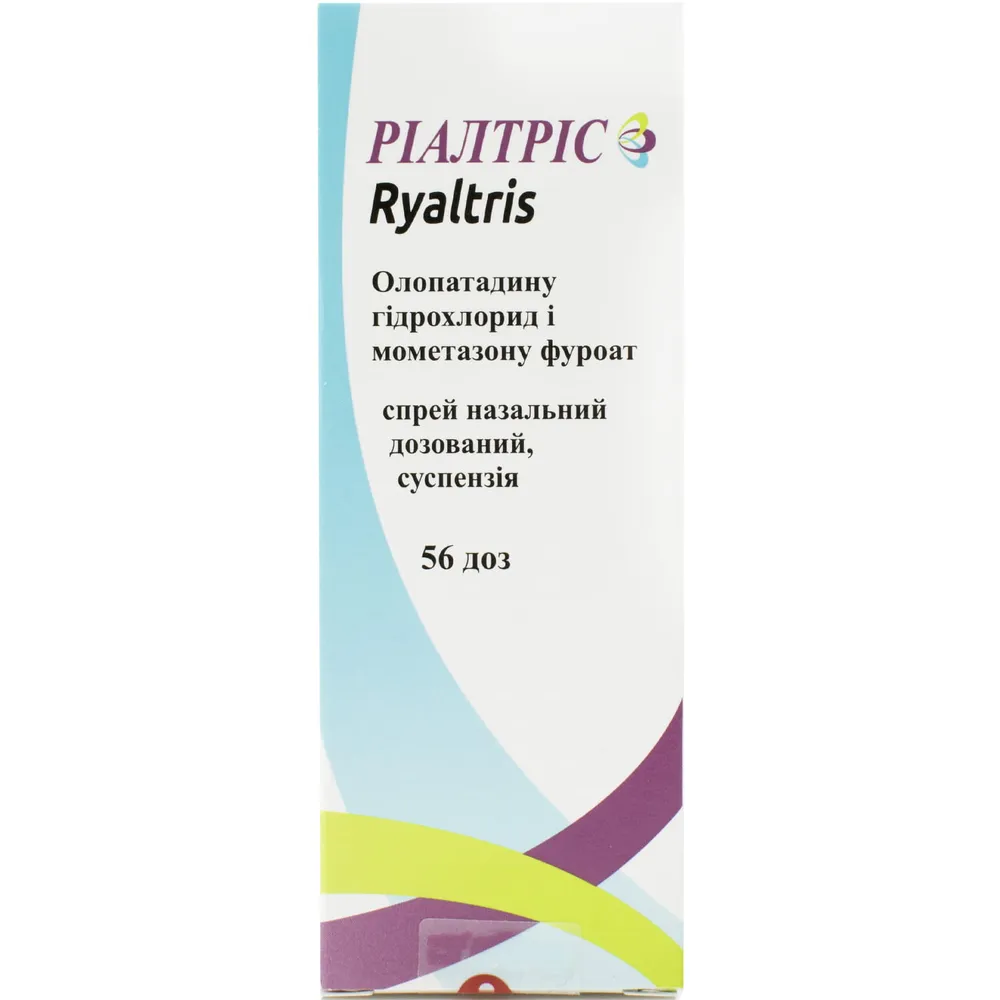
Table of Contents
INSTRUCTIONS FOR MEDICAL USE OF THE MEDICINAL PRODUCT RYALTRIS (RYALTRIS)
Composition:
Active substances: olopatadine hydrochloride and mometasone furoate;
One dose contains olopatadine hydrochloride 665 mcg equivalent to olopatadine 600 mcg and mometasone furoate monohydrate equivalent to mometasone furoate 25 mcg;
Excipients: microcrystalline cellulose and sodium carboxymethylcellulose; sodium hydrogen phosphate, heptahydrate; sodium carboxymethylcellulose; sodium chloride; benzalkonium chloride 50% solution; benzalkonium chloride; disodium edetate; polysorbate 80; hydrochloric acid; sodium hydroxide; water for injections.
Pharmaceutical form. Nasal spray, suspension, metered dose.
Main physicochemical properties: white homogeneous suspension, free from particles.
Pharmacotherapeutic group.
Anti-edema and other locally acting drugs for nasal cavity disorders. Corticosteroids. ATC code R01AD.
Pharmacological Properties.
Pharmacodynamics. A combined topical anti-edematous agent containing olopatadine hydrochloride and mometasone furoate.
Olopatadine is a histamine H1-receptor antagonist. The antihistaminic activity of olopatadine has been confirmed in isolated tissues, animal models, and in humans.
Mometasone furoate is a synthetic corticosteroid for topical use that exerts a pronounced anti-inflammatory effect. The exact mechanism of action of corticosteroids in allergic rhinitis is not yet known. Corticosteroids demonstrate a broad range of effects on various cells, including mast cells, eosinophils, neutrophils, macrophages, lymphocytes, as well as on inflammatory mediators (histamine, eicosanoids, leukotrienes, and cytokines). The mechanism of anti-inflammatory and antiallergic action of mometasone furoate is primarily related to its ability to inhibit the release of mediators of allergic reactions.
Pharmacokinetics.
Absorption
After intranasal administration of 2 sprays in each nostril of the drug Rialtris (total dose 2660 mcg olopatadine hydrochloride and 100 mcg mometasone furoate) twice daily in patients with seasonal allergic rhinitis, the mean peak plasma concentration (Cmax) was 19.80±7.01 ng/mL for olopatadine and 9.92±3.74 pg/mL for mometasone furoate, and the mean systemic exposure at this dosing regimen (AUC) was 88.77±23.87 ng/mL*hr for olopatadine and 58.40±27.00 pg/mL*hr for mometasone furoate. The mean time to reach peak concentration of olopatadine and mometasone furoate after a single dose administration was 1 hour.
Systemic bioavailability of olopatadine and mometasone furoate after intranasal administration of Rialtris was considered comparable to that observed when olopatadine and mometasone furoate were administered separately as monotherapies.
Distribution
Binding of olopatadine to human plasma proteins is moderate, approximately 55%, and is independent of drug concentration within the range of 0.1 to 1000 ng/mL. Olopatadine binds predominantly to human serum albumin.
In vitro, plasma protein binding of mometasone furoate is 98–99% at concentrations ranging from 5 to 500 ng/mL.
Metabolism
Olopatadine does not undergo extensive metabolism. Based on the metabolite profile in plasma after oral administration of [14C]olopatadine, at least six minor metabolites circulate in human plasma. Olopatadine accounts for 77% of total peak radioactivity in plasma, while all metabolites combined account for <6%. Two of these were identified as olopatadine N-oxide and olopatadine N-desmethyl. In vitro studies using cDNA-expressed human cytochrome CYP isoforms and flavin-containing monooxygenases (FMO) indicate that formation of olopatadine N-desmethyl (MI) is primarily catalyzed by the CYP3A4 system, whereas olopatadine N-oxide (M3) is primarily catalyzed by FMO1 and FMO3. Olopatadine at concentrations up to 33,900 ng/mL does not inhibit the metabolism of specific in vitro substrates of CYP1A2, CYP2C9, CYP2C19, CYP2D6, CYP2E1, and CYP3A4. The potential of olopatadine and its metabolites as inducers of CYP enzymes has not been evaluated.
Studies have shown that mometasone furoate undergoes extensive metabolism after oral administration and absorption, forming several metabolites. No major metabolites were detected in plasma. After in vitro incubation, one of the minor metabolites formed was identified as 6β-hydroxymometasone furoate. In human liver microsomes, formation of this metabolite is mediated by cytochrome CYP3A4.
Elimination
After a single intranasal administration of the combination of olopatadine and mometasone furoate, the mean elimination half-life of olopatadine and mometasone furoate was 8.63 and 18.11 hours, respectively.
Olopatadine is primarily excreted in urine. Approximately 70% of an oral dose of [14C]olopatadine hydrochloride is excreted in urine and 17% in feces. 86% of the drug dose excreted in urine within the first 24 hours is unchanged olopatadine, while the remainder consists of olopatadine N-oxide and olopatadine N-desmethyl.
After intravenous administration, the effective elimination half-life of mometasone furoate in plasma was 5.8 hours. The administered dose of the drug is excreted predominantly in bile as metabolites, with a small amount eliminated in urine.
Pharmacokinetics in Specific Patient Populations
Pharmacokinetic studies of Rialtris in specific patient populations have not been conducted. The pharmacokinetics of the olopatadine and mometasone furoate combination are expected to reflect the pharmacokinetic properties of the individual components, as the pharmacokinetics of this combination are similar to those of the individual components.
Hepatic Impairment
No specific pharmacokinetic studies evaluating the effect of the olopatadine and mometasone furoate combination on hepatic impairment have been conducted. A negligible portion of the olopatadine dose is eliminated via metabolism.
After administration of a single inhaled dose of 400 mcg mometasone furoate to patients with mild (n = 4), moderate (n = 4), and severe (n = 4) hepatic impairment, peak plasma concentrations of mometasone furoate ranging from 50 to 105 pg/mL were detected in only 1 or 2 patients in each group. Peak plasma concentrations were found to increase with the severity of hepatic impairment; however, the number of observed peak levels was minimal.
Based on data from studies with individual components, dose adjustment of Rialtris is not required in patients with hepatic impairment.
Renal Impairment
Mean Cmax values for olopatadine after a single intranasal dose did not differ significantly between healthy volunteers (18.1 ng/mL) and patients with mild, moderate, or severe renal impairment (15.5 to 21.6 ng/mL). The mean AUC0–12 in patients with severe renal impairment (creatinine clearance <30 mL/min/1.73 m²) was twice that observed in healthy volunteers. In patients with severe renal impairment, the maximum plasma concentration of olopatadine at steady state was approximately 10 times lower than concentrations observed after administration of higher oral doses (20 mg twice daily), which were well tolerated.
The effect of renal impairment on the pharmacokinetics of mometasone furoate has not been thoroughly studied.
Based on data from studies with individual components, patients with renal impairment do not require dose adjustment.
Age
The pharmacokinetics of Rialtris have not been studied in patients under 12 years of age. Population pharmacokinetic analysis in patients aged 12 years and older showed that age does not affect the pharmacokinetics of olopatadine and mometasone furoate as components of Rialtris.
Controlled clinical studies have demonstrated that intranasal corticosteroids may lead to a reduction in growth velocity in children. This effect was observed in the absence of laboratory evidence of hypothalamic-pituitary-adrenal (HPA) axis suppression, indicating that growth velocity is a more sensitive indicator of systemic corticosteroid effects in children than some commonly used HPA axis function tests. The long-term consequences of this growth suppression associated with intranasal corticosteroid use, including its impact on final adult height, are unknown.
Use in Elderly Patients
Based on data from 145 patients aged 65 years and older, as well as younger patients receiving Rialtris in a placebo- and active-controlled study, no overall differences in safety or efficacy of the drug were observed.
Gender and Race
Population pharmacokinetic analysis of Rialtris has shown that gender and race do not influence the pharmacokinetics of olopatadine and mometasone furoate.
Clinical characteristics.
Indications.
Seasonal allergic rhinitis.
Contraindications.
Hypersensitivity to olopatadine hydrochloride, mometasone furoate, or to any of the excipients.
Presence of untreated localized infection of the nasal mucosa.
Due to the inhibitory effect of corticosteroids on wound healing, patients who have recently experienced nasal septum ulcers, nasal surgery, or nasal trauma should not use Rialtris until fully recovered.
Interaction with other medicinal products and other forms of interaction.
No specific studies on drug interactions of the fixed-dose combination of olopatadine hydrochloride and mometasone furoate in the form of a nasal spray have been conducted. Any drug interactions of this combination are expected to be similar to those of the individual components, since no pharmacokinetic interaction between olopatadine and mometasone furoate has been observed when administered in combination.
Olopatadine: drug interaction with hepatic enzyme inhibitors is not expected, as olopatadine is predominantly excreted by the kidneys. Olopatadine does not inhibit in vitro the metabolism of specific substrates for CYP1A2, CYP2C9, CYP2C19, CYP2D6, CYP2E1, and CYP3A4. Therefore, drug interactions resulting from inhibition of the cytochrome P450 system are not expected. Due to the moderate plasma protein binding of olopatadine (55%), drug interactions caused by displacement from plasma proteins are also not expected.
Mometasone furoate: studies have shown that mometasone furoate is primarily and extensively metabolized in the liver into several metabolites in all studied species. In vitro studies have confirmed the major role of cytochrome P450 (CYP) 3A4 in the metabolism of this compound. Concomitant administration with ketoconazole, a potent inhibitor of CYP3A4, may increase the plasma concentration of mometasone furoate.
Special precautions for use.
Local effects
Following intranasal administration of antihistamines, cases of nasal ulceration and nasal septum perforation have been reported.
Following intranasal administration of corticosteroids, isolated cases of nasal septum perforation have been reported.
Nasal bleeding has been reported following intranasal use of antihistamines and corticosteroids.
In clinical studies with intranasal mometasone furoate, localized fungal infections of the nose and throat (Candida albicans) have been observed in isolated cases. If a fungal infection develops, treatment with Ryaltris should be discontinued and appropriate therapy initiated. Patients using Ryaltris for several months or longer should be periodically examined for Candida infection or other signs of adverse effects on the nasal mucosa. In clinical studies with Ryaltris, no cases of Candida infection were reported.
Glaucoma and cataract
Intranasal and inhaled corticosteroids may lead to the development of glaucoma and/or cataracts. Therefore, regular ophthalmological examinations are recommended for patients with visual disturbances or with a history of increased intraocular pressure, glaucoma, and/or cataracts.
Hypersensitivity reactions
Hypersensitivity reactions, including wheezing, may occur after intranasal administration of mometasone furoate. In such cases, treatment with Ryaltris should be discontinued.
Immunosuppression
Patients receiving drugs that suppress the immune system are more susceptible to infections than healthy individuals. For example, chickenpox and measles may have a more severe course in children and adults with suppressed immunity who are taking corticosteroids. Such patients require special attention and may need antiviral therapy or vaccination. The influence of dose, route, and duration of corticosteroid use on the risk of developing systemic infection is currently unknown.
Nasal spray containing mometasone furoate should be used with caution or not used at all in patients with active or latent respiratory tuberculosis, as well as in those with untreated fungal, bacterial, systemic viral infections, or herpes simplex infection involving the eyes.
Effect on the hypothalamic-pituitary-adrenal (HPA) axis
With prolonged use of intranasal corticosteroids, especially at high doses, systemic effects such as hyperadrenocorticism and adrenal suppression may occur. It is important that once a therapeutic effect is achieved, the dose of intranasal corticosteroids should be reduced to the lowest effective dose controlling the disease, in order to avoid systemic adverse effects.
If signs of undesirable systemic effects appear, treatment with Ryaltris should be gradually discontinued.
Concomitant use of intranasal corticosteroids with other inhaled corticosteroids may increase the risk of hypercorticism and/or suppression of the hypothalamic-pituitary-adrenal axis.
Switching from systemic corticosteroid therapy to locally acting corticosteroids may be associated with signs of adrenal insufficiency, and in some patients, withdrawal symptoms (e.g., joint and/or muscle pain, dizziness, and depression) may occur. Patients who have received systemic corticosteroids for a prolonged period and have switched to locally acting corticosteroids should be carefully monitored for acute adrenal insufficiency in response to stress. In patients with bronchial asthma or other clinical conditions requiring long-term systemic corticosteroid therapy, too rapid reduction of systemic corticosteroid dosage may lead to exacerbation of symptoms of the underlying disease.
Effect on growth in children
Corticosteroids may cause growth retardation in children. Regular monitoring of growth in children receiving long-term intranasal corticosteroid therapy is recommended.
Somnolence
Patients treated with Ryaltris should be warned about the risks of activities requiring increased attention and motor coordination, such as operating machinery or driving vehicles. Concomitant use of Ryaltris with alcohol or other central nervous system depressants should be avoided, as clinical studies have reported additional impairment of attention and additional central nervous system effects.
During clinical trials, cases of somnolence were reported following administration of Ryaltris.
Ryaltris contains benzalkonium chloride, which may cause irritation of the nasal mucosa and bronchospasm.
When using the product, avoid spraying into the eyes or mouth.
The Ryaltris bottle containing 240 doses contains sufficient medication for 30 days of regular use. Monitor the number of days during treatment with Ryaltris. Do not use the same bottle beyond 30 days of use or after the expiry date indicated on the packaging.
Do not count the sprays used for initial priming of the bottle.
Store the medication bottle in an upright position with the protective cap closed.
Use during pregnancy or breastfeeding.
No specific studies on the use of Ryaltris during pregnancy or breastfeeding have been conducted.
Use during pregnancy.
Reproductive and developmental studies in animals have been conducted with olopatadine administered orally and mometasone furoate administered subcutaneously, orally, and topically. Animal studies have shown treatment-related adverse effects on the fetus and offspring following systemic exposure to olopatadine hydrochloride and mometasone furoate. Developmental abnormalities in animals due to systemic effects of mometasone furoate correspond to the known effects of corticosteroids.
Since animal reproductive studies do not always predict human response, Ryaltris should be used during pregnancy only if the potential benefit to the woman outweighs the potential risk to the fetus.
Use during breastfeeding.
It is unknown whether olopatadine hydrochloride and mometasone furoate are excreted in human breast milk. Olopatadine has been detected in the milk of rats after oral administration. It is unknown whether local intranasal administration may result in sufficient systemic absorption to cause excretion into breast milk in measurable amounts.
Since most drugs are excreted in breast milk, particular caution should be exercised when prescribing Ryaltris to nursing women, and the drug should be used only if the expected benefit to the mother outweighs the potential risk to the infant.
Ability to affect reaction speed when driving vehicles or operating machinery.
During treatment with Ryaltris, patients should be advised to avoid activities requiring increased attention and rapid reaction times, such as operating machinery or driving vehicles.
Method of Administration and Dosage
The medication is intended for intranasal use only.
Adults and children aged 12 years and older: the recommended dose is 2 sprays into each nostril twice daily.
Use of the nasal spray
Before each use, the bottle must be shaken well. Then remove the protective cap. Before the first use, prime the pump by pressing down 6 times consecutively and releasing the spray into the air, holding the bottle as far away from eyes and face as possible, until a fine, uniform mist appears. If the nasal spray has not been used for more than 14 days, shake the bottle well and press the pump-sprayer 2 times, or until a uniform spray is achieved, before use.
Before each administration, clear the nose thoroughly of mucus. After clearing the nasal passages, administer the suspension into each nostril while keeping the head slightly tilted forward. After application, wipe the spray nozzle and cover it with the protective cap.
Do not spray into the eyes or directly onto the nasal septum (the wall between the two nostrils).
Avoid clearing the nose for at least 15 minutes after application to ensure the medication's effectiveness. Do not tilt the head backward after spraying to prevent the medication from draining into the throat.
Cleaning the dosing device of Rialtris in case of clogging
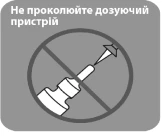
Do not attempt to clean the dosing device with a needle or any other sharp object. Doing so may damage the dispenser and result in incorrect dosing (see Figure 1).
Figure 1
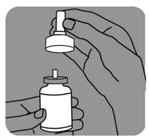
If the nozzle becomes clogged, carefully remove it by pulling upward (see Figure 2).
Figure 2
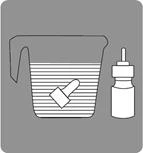
Remove the protective cap and soak the dosing device in warm water for 15 minutes (see Figure 3).
Figure 3
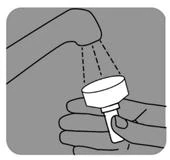
After soaking, rinse both the outer and inner surfaces of the nozzle under warm running water for 1–2 minutes and leave it to dry completely (see Figure 4).
Figure 4
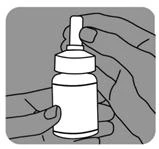
After drying, cover the nozzle with the protective cap and reattach it to the bottle (see Figure 5).
Figure 5
After cleaning the nozzle, review the instructions for nasal spray use in the section "Method of Administration and Dosage" and prepare the dosing device by spraying twice into the air. Cover the spray nozzle with the protective cap. The Rialtris medication is now ready for use.
If further cleaning is required, repeat the described procedure.
The dosing device should be cleaned at least once a week to prevent clogging.
Children.
There is insufficient clinical experience regarding the use of Rialtris in children under 12 years of age; therefore, the medication should not be used in this age group.
Overdose.
There have been no reported cases of overdose with Rialtris. Therefore, there is no data on the consequences of acute or chronic overdose. Rialtris contains a combination of olopatadine hydrochloride and mometasone furoate; thus, the risks associated with overdose of the individual components, as described below, also apply to Rialtris.
Acute overdose with this formulation is unlikely, as a single bottle of Rialtris, intended for 30 days of use (240 doses), contains approximately 160 mg of olopatadine hydrochloride and 6 mg of mometasone furoate.
Olopatadine hydrochloride: symptoms of overdose with antihistamines may include drowsiness in adults and initial excitation and hyperactivity followed by drowsiness in children. There is no specific antidote for olopatadine hydrochloride. In case of overdose, symptomatic and supportive treatment is recommended.
Mometasone furoate: due to its low systemic bioavailability and the absence of acute systemic effects in clinical studies, overdose is unlikely to require any treatment other than observation. Intranasal administration of 1600 mcg (8 times the recommended daily dose of mometasone furoate in Rialtris) daily for 29 days in healthy volunteers did not result in an increased incidence of adverse effects. In a study involving volunteers who received single intranasal doses of 4000 mcg and inhaled oral doses of 8000 mcg, no adverse reactions were observed. Chronic overdose with any corticosteroid may lead to symptoms of hypercorticism.
Adverse Reactions
The safety data described below reflect the use of Ryaltris in 3062 patients with seasonal allergic rhinitis in clinical studies of 2-week duration.
Nervous system disorders: Dysgeusia – common; dizziness, lethargy, somnolence, anxiety, insomnia – uncommon.
Infections and infestations: Pharyngitis, respiratory tract infections – uncommon.
Respiratory, thoracic and mediastinal disorders: Cough, nasal dryness, nasal discomfort, throat irritation, wheezing – uncommon.
Gastrointestinal disorders: Dry mouth, abdominal discomfort, vomiting – uncommon.
Skin and subcutaneous tissue disorders: Rash, pruritus, contact dermatitis – uncommon.
After intranasal administration of corticosteroids, the following adverse events may occur in individual cases:
Immune system disorders: Immediate-type allergic reactions (e.g. bronchospasm, dyspnea), anaphylactic reactions, angioedema.
Eye disorders: Glaucoma, increased intraocular pressure, cataract, blurred vision.
In a long-term safety clinical study (52 weeks of treatment), 593 patients with perennial allergic rhinitis reported the following adverse effects during treatment with Ryaltris: allergic reactions, conjunctivitis, eye discomfort, diarrhea, nausea, constipation, headache, and fatigue.
Systemic and local corticosteroids may cause the following adverse effects (see section "Special precautions for use"): mucosal ulceration of the nose, nasal septum perforation, epistaxis, impaired wound healing, development of localized fungal infection of the nose and throat (Candida albicans), glaucoma and cataract, somnolence, immunosuppression, suppression of the hypothalamic-pituitary-adrenal (HPA) axis, including growth retardation in children.
Shelf life.
3 years.
Storage conditions.
Store at a temperature not exceeding 25 °C. Do not freeze. Do not store in the refrigerator. Keep out of reach of children.
Packaging.
56, 120 or 240 doses in a polyethylene bottle. One bottle with a metered pump-spray dispenser, closed with a cap, in a cardboard box.
Prescription status.
Prescription only.
Manufacturer.
Glenmark Pharmaceuticals Ltd.
Manufacturer's name and address of the place of business.
-
Unit III, Village Kishanpura, Baddi-Nalagarh Road, Tehsil Baddi, Distt. Solan (H.P.) 173 205, India.
-
Plot No. B-25, M.I.D.C., Shendra, Aurangabad, Maharashtra 431154, India.