Remesulid
Ukraine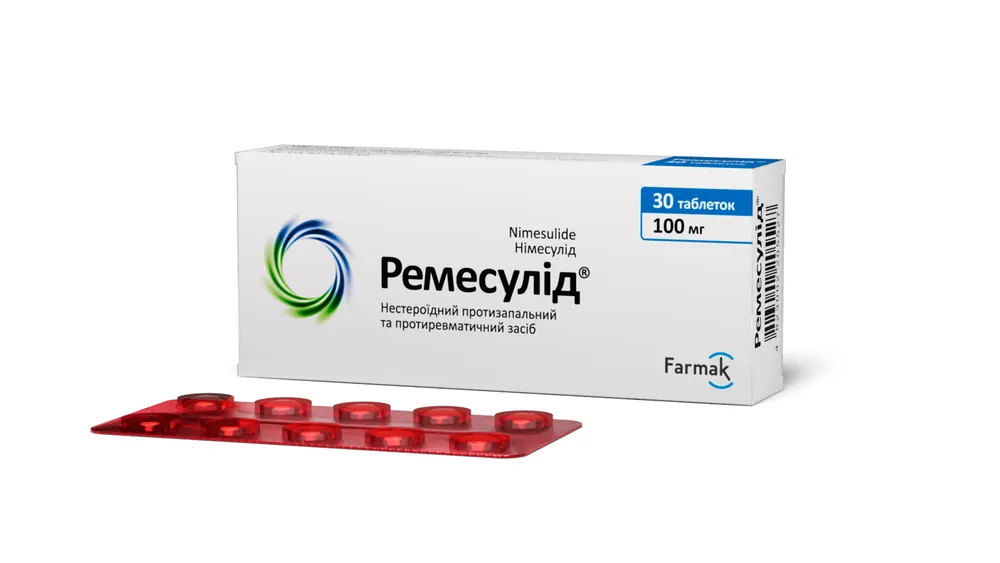
Table of Contents
INSTRUCTIONS FOR MEDICAL USE OF THE MEDICINAL PRODUCT REMESULIDE® (REMESULIDE)
Composition:
Active ingredient: nimesulide;
One tablet contains 100 mg of nimesulide calculated as 100% substance;
Excipients: lactose monohydrate, potato starch, hypromellose, colloidal anhydrous silicon dioxide, crospovidone, magnesium stearate.
Pharmaceutical form. Tablets.
Main physicochemical properties: tablets of yellowish or yellowish-greenish color with a biconvex surface. Marbling on the tablet surface is permissible.
Pharmacotherapeutic group.
Non-steroidal anti-inflammatory and antirheumatic agents. ATC code M01AX17.
Pharmacological properties.
Pharmacodynamics.
Nimesulide is an active substance with anti-inflammatory, analgesic, and antipyretic properties. Nimesulide selectively inhibits COX-2 (cyclooxygenase-2) and suppresses the synthesis of prostaglandins at the site of inflammation.
Nimesulide inhibits the release of the enzyme myeloperoxidase and also suppresses the formation of reactive oxygen species, without affecting phagocytosis and chemotaxis processes. It inhibits the production of tumor necrosis factor and other inflammatory mediators.
Pharmacokinetics.
After oral administration, nimesulide is rapidly absorbed in the gastrointestinal tract. Maximum plasma concentration is reached within 2–3 hours. Plasma protein binding of nimesulide is up to 97.5%.
The drug is metabolized in the liver; the main metabolite is hydroxynimesulide – a pharmacologically active substance.
Approximately 65% of the administered dose of nimesulide is excreted in urine, and the remaining 35% in feces.
Clinical characteristics.
Indications.
Treatment of acute pain, primary dysmenorrhea.
Remesulid® should be used only as a second-line agent.
The decision to prescribe nimesulide should be made based on an assessment of all risks for the individual patient.
Contraindications.
Hypersensitivity to nimesulide or to any component of the drug.
History of hypersensitivity reactions (bronchospasm, rhinitis, urticaria) to acetylsalicylic acid or other NSAIDs. History of hepatotoxic reactions to nimesulide.
Concomitant use of other agents with potential hepatotoxicity.
Alcoholism and drug addiction.
History of gastrointestinal bleeding or perforation associated with previous use of NSAIDs.
Active gastric or duodenal ulcer, history of ulcer, perforation, or gastrointestinal bleeding.
History of cerebrovascular hemorrhage or other hemorrhages, as well as diseases associated with bleeding tendency.
Severe disorders of blood coagulation.
Severe heart failure.
Severe renal impairment.
Hepatic dysfunction.
Patients with elevated body temperature and/or flu-like symptoms.
Children under 12 years of age.
Third trimester of pregnancy or breastfeeding period.
Interaction with other medicinal products and other forms of interaction.
Pharmacodynamic interactions.
Glucocorticoids: increased risk of gastrointestinal ulcers or bleeding.
Antiplatelet agents and selective serotonin reuptake inhibitors (SSRIs): increased risk of gastrointestinal bleeding.
Anticoagulants: NSAIDs may enhance the effect of anticoagulants such as warfarin or acetylsalicylic acid, making such combination contraindicated in patients with severe coagulation disorders. If such combination therapy cannot be avoided, careful monitoring of blood coagulation parameters is required.
Diuretics, angiotensin-converting enzyme (ACE) inhibitors, and angiotensin II antagonists: NSAIDs may attenuate the effects of diuretics and other antihypertensive agents. In some patients with impaired renal function (e.g., dehydrated patients or elderly patients), concomitant use of ACE inhibitors, angiotensin II antagonists, or agents that inhibit the cyclooxygenase system may lead to further deterioration of renal function and development of acute renal failure, which is usually reversible. These interactions should be considered when patients are taking nimesulide concomitantly with ACE inhibitors or angiotensin II antagonists. Extreme caution should be exercised when using such combinations, especially in elderly patients. Patients should receive adequate hydration, and renal function should be closely monitored after initiation of such combination therapy. Remesulid® temporarily reduces the sodium-excreting effect of furosemide and, to a lesser extent, potassium excretion, and also diminishes the diuretic effect. Concomitant use of furosemide and nimesulide in patients with impaired renal or cardiac function requires caution.
In healthy volunteers, nimesulide rapidly reduces the sodium-excreting effect of furosemide and, to a lesser extent, potassium excretion, and also reduces diuresis. Concomitant administration of nimesulide and furosemide results in a reduction (by approximately 20%) of the area under the concentration-time curve (AUC) and decreased cumulative excretion of furosemide without changes in renal clearance of furosemide.
Pharmacokinetic interactions with other medicinal products.
There have been reports that NSAIDs reduce the clearance of lithium, leading to increased plasma lithium levels and lithium toxicity. When prescribing Remesulid® to patients receiving lithium therapy, plasma lithium levels should be monitored frequently.
No clinically significant interactions with glyburide, theophylline, warfarin, digoxin, cimetidine, and antacid agents (aluminum and magnesium hydroxide combination) have been observed in vivo. Remesulid® inhibits the activity of the CYP2C9 enzyme. When co-administered with medicinal products that are substrates of this enzyme, their plasma concentrations may increase. Caution is required if nimesulide is administered less than 24 hours before or less than 24 hours after methotrexate, as this may lead to increased methotrexate serum levels and enhanced toxicity.
Due to its effect on renal prostaglandins, cyclooxygenase inhibitors such as nimesulide may increase the nephrotoxicity of cyclosporine.
Effect of other drugs on nimesulide.
In vitro studies have shown that nimesulide is displaced from binding sites by tolbutamide, salicylic acid, and valproic acid. Despite these interactions being identified in plasma, such effects have not been observed during clinical use of the drug.
Special precautions for use.
Adverse side effects can be minimized by using the lowest effective dose for the shortest duration necessary to control disease symptoms.
If treatment is ineffective (no reduction in disease symptoms), therapy with the drug should be discontinued.
During treatment with nimesulide, concomitant use of hepatotoxic drugs should be avoided, and alcohol consumption should be refrained from. Use of nonsteroidal anti-inflammatory drugs (NSAIDs) may mask fever associated with underlying bacterial infection. If fever or influenza-like symptoms develop in patients taking nimesulide, the drug should be discontinued.
There have been reports of serious hepatic reactions during nimesulide treatment, including cases with fatal outcomes. Patients who develop symptoms suggestive of liver injury, such as anorexia, nausea, vomiting, abdominal pain, increased fatigue, dark urine, or who have abnormal liver function test results, should discontinue the drug. Re-administration of nimesulide to such patients is contraindicated. During nimesulide therapy, patients should refrain from using other analgesics. Concomitant use of other NSAIDs, including selective cyclooxygenase-2 inhibitors, should be avoided.
Patients taking nimesulide who develop influenza-like symptoms should discontinue its use.
In elderly patients, the frequency of adverse reactions to NSAIDs is increased, particularly gastrointestinal bleeding and perforation, which may be life-threatening.
Gastrointestinal ulceration, bleeding, or perforation may be life-threatening, especially in patients with a history of such events during treatment with any other NSAID (regardless of time elapsed). The risk of such events increases with higher NSAID doses in patients with a history of peptic ulcer, particularly if complicated by bleeding or perforation, and in elderly patients. These patients should be initiated on the lowest possible effective dose. For these patients, as well as for those concurrently taking low-dose acetylsalicylic acid or other drugs increasing the risk of gastrointestinal complications, consideration should be given to concomitant protective therapy, such as misoprostol or proton pump inhibitors.
Patients with gastrointestinal toxicity, particularly elderly patients, should report any unusual gastrointestinal symptoms, especially bleeding. This is particularly important during the initial stages of treatment. Patients taking concomitant medications that may increase the risk of ulceration or bleeding, such as corticosteroids, anticoagulants, selective serotonin reuptake inhibitors, or antiplatelet agents (acetylsalicylic acid), should be informed about the need for caution when using nimesulide.
If gastrointestinal bleeding or ulceration occurs in a patient receiving Remesulid®, treatment with the drug should be discontinued.
NSAIDs should be prescribed with caution in patients with Crohn’s disease or a history of ulcerative colitis, as nimesulide may provoke exacerbations.
Concomitant use of nimesulide with other medicinal products, such as oral contraceptives, anticoagulants, and antiplatelet agents, may trigger exacerbations of Crohn’s disease and other gastrointestinal disorders.
Patients with a history of arterial hypertension and/or heart failure, as well as those experiencing fluid retention and edema due to NSAID use, require appropriate monitoring and physician consultation.
Clinical studies and epidemiological data suggest that some NSAIDs, particularly at high doses and with prolonged use, may be associated with a small increased risk of arterial thrombotic events, such as myocardial infarction and stroke. Data on the risk of such events with nimesulide are insufficient.
Nimesulide should be prescribed with caution after careful assessment in patients with uncontrolled arterial hypertension, acute heart failure, established ischemic heart disease, peripheral arterial disease, and/or cerebrovascular disease. The same approach should be applied when prescribing the drug to patients with risk factors for cardiovascular disease, such as arterial hypertension, hyperlipidemia, diabetes mellitus, or smoking.
The drug should be administered with caution in patients with impaired renal function or heart failure due to the possibility of worsening renal function. If the patient’s condition deteriorates, treatment should be discontinued.
Elderly patients require careful monitoring due to the potential for gastrointestinal bleeding and perforation, as well as worsening renal, hepatic, or cardiac function. Since nimesulide may affect platelet function, it should be used with caution in patients with hemorrhagic diathesis. However, nimesulide does not replace acetylsalicylic acid for cardiovascular disease prevention.
Rare cases of severe skin reactions have been reported with NSAID use, some of which may be life-threatening, such as exfoliative dermatitis, Stevens-Johnson syndrome, and toxic epidermal necrolysis. In most cases, the risk of such reactions is significantly increased if they occur within the first month of treatment. Remesulid® should be discontinued at the first signs of skin rash, mucosal lesions, or other allergic manifestations.
Skin reactions. Cases of fixed drug eruption have been reported with nimesulide use.
Nimesulide should not be re-administered to patients with a history of fixed drug eruption associated with nimesulide (see section "Adverse reactions").
The product contains lactose; therefore, patients with rare hereditary forms of galactose intolerance, Lapp lactase deficiency, or glucose-galactose malabsorption should not take this medicine.
Use during pregnancy or breastfeeding.
Inhibition of prostaglandin synthesis may adversely affect pregnancy and/or fetal development. Epidemiological data suggest that use of drugs inhibiting prostaglandin synthesis during early pregnancy may increase the risk of spontaneous abortion and congenital malformations, including cardiac defects and gastroschisis. The absolute risk of cardiovascular malformations increases from less than 1% to approximately 1.5%. The risk is considered to increase with higher doses and longer duration of use.
From the 20th week of pregnancy, nimesulide use may cause oligohydramnios due to fetal renal dysfunction. This may occur soon after starting treatment and is usually reversible upon discontinuation. Additionally, there have been reports of arterial duct constriction after second-trimester treatment, most of which resolved after stopping the drug. Therefore, nimesulide should not be used during the first and second trimesters of pregnancy unless absolutely necessary. If the drug is used in women attempting to conceive or during the first and second trimesters, the lowest possible dose and shortest possible duration of treatment should be chosen. Monitoring for oligohydramnios and arterial duct constriction should be considered after exposure to nimesulide for several days starting from the 20th gestational week. Remesulid® treatment should be discontinued if oligohydramnios or arterial duct constriction is detected.
During the third trimester of pregnancy, all prostaglandin synthesis inhibitors may cause the following in the fetus:
- pulmonary toxicity (premature closure/constriction of the arterial duct and pulmonary hypertension);
- renal dysfunction, which may progress to renal failure with oliguria (see above).
In both mother and fetus near term, the following may occur:
- prolonged bleeding time, antiplatelet effect (which may occur even with very low doses);
- inhibition of uterine contractions, potentially leading to delayed or prolonged labor.
Therefore, nimesulide is contraindicated during the third trimester of pregnancy (see section "Contraindications").
As an NSAID that inhibits prostaglandin synthesis, nimesulide may cause premature closure of the ductus arteriosus, pulmonary hypertension, oliguria, and oligohydramnios. The risk of bleeding, weak labor, and peripheral edema increases. There are isolated reports of renal failure in newborns whose mothers used nimesulide near the end of pregnancy. The potential risk to humans is not fully defined; therefore, nimesulide is not recommended during the first and second trimesters of pregnancy. Since it is unknown whether nimesulide is excreted in breast milk, its use is contraindicated during breastfeeding.
Nimesulide may impair female fertility and therefore is not recommended for women attempting to conceive. Women with infertility or undergoing infertility evaluation should consider discontinuing nimesulide. If pregnancy is diagnosed during nimesulide use, the physician should be informed.
Ability to affect reaction speed when driving or operating machinery.
Studies on the effect of nimesulide on the ability to drive or operate machinery have not been conducted. However, if patients experience headache, dizziness, or drowsiness during nimesulide treatment, they should refrain from driving or operating machinery.
Dosage and Administration
To prevent the occurrence and reduce the severity of adverse reactions, the drug should be taken for the shortest possible duration and at the lowest effective dose. The drug should be prescribed only after careful assessment of the risk-benefit ratio.
The drug should be taken orally after meals with sufficient amount of liquid.
For adults and children aged 12 years and older: 1 tablet (100 mg) twice daily – in the morning and evening. The maximum duration of treatment is 15 days.
For elderly patients, no dose adjustment is required.
For patients with mild to moderate renal impairment (creatinine clearance 30–80 mL/min), dose adjustment is not necessary.
Children
Remesulid® is contraindicated in children under 12 years of age.
Overdose
Symptoms of acute overdose with nonsteroidal anti-inflammatory drugs are usually limited to: apathy, drowsiness, nausea, vomiting, epigastric pain. These symptoms are generally reversible with supportive treatment. Gastrointestinal bleeding, arterial hypertension, acute renal failure, respiratory depression, and coma are possible but occur rarely. Anaphylactoid reactions have been reported with therapeutic doses of NSAIDs as well as in cases of overdose. There is no specific antidote. Treatment of overdose is symptomatic and supportive. There are no data on the removal of nimesulide by hemodialysis; however, considering the high degree of plasma protein binding of nimesulide (up to 97.5%), dialysis is unlikely to be effective. If symptoms of overdose occur or a large dose has been ingested, within 4 hours of drug intake, patients may be given: induced vomiting and/or activated charcoal (60–100 g for adults) and/or an osmotic laxative. Forced diuresis, alkalinization of urine, hemodialysis, and hemoperfusion may be ineffective due to the high degree of plasma protein binding of nimesulide. Renal and hepatic functions should be monitored.
Adverse Reactions.
Blood system disorders: anemia, eosinophilia, thrombocytopenia, pancytopenia, purpura.
Immune system disorders: hypersensitivity, anaphylaxis.
Metabolic disorders: hyperkalemia.
Psychiatric disorders: fear, nervousness, nightmares.
Nervous system disorders: dizziness, headache, somnolence, encephalopathy (Reye's syndrome).
Eye disorders: blurred vision, visual disturbances.
Ear and labyrinth disorders: vertigo.
Cardiovascular disorders: tachycardia, hemorrhage, blood pressure lability, flushing, arterial hypertension, increased risk of arterial thrombotic complications such as myocardial infarction or stroke, heart failure.
Respiratory system disorders: dyspnea, asthma, bronchospasm.
Gastrointestinal disorders: diarrhea; nausea; vomiting, including bloody vomiting; constipation; flatulence; gastritis; abdominal pain; dyspepsia; stomatitis; black stools; gastrointestinal bleeding; peptic ulcer and perforation of the duodenum/stomach; exacerbation of colitis and Crohn's disease.
Hepatobiliary disorders: hepatitis; fulminant hepatitis, including fatal cases, jaundice; cholestasis.
Skin and subcutaneous tissue disorders: pruritus, skin rash, increased sweating, erythema, dermatitis, urticaria, angioneurotic edema, facial swelling, erythema multiforme, Stevens-Johnson syndrome, toxic epidermal necrolysis, fixed drug eruption (see section "Special precautions").
Renal and urinary disorders: dysuria, hematuria, urinary retention, renal failure, oliguria, interstitial nephritis.
General disorders: edema, malaise, asthenia, hypothermia.
Laboratory findings: elevated liver enzymes.
Reporting suspected adverse reactions
Reporting suspected adverse reactions after drug registration is important. It allows continuous monitoring of the benefit-risk balance of the medicinal product. Healthcare professionals and patients or their legal representatives are encouraged to report any suspected adverse reactions and lack of efficacy via the Automated Pharmacovigilance Information System at the following link: https://aisf.dec.gov.ua.
Shelf life.
5 years.
Do not use the medicinal product after the expiry date stated on the packaging.
Storage conditions.
Store in a light-protected place at a temperature not exceeding 25 °C.
Keep out of reach of children.
Packaging. 10 tablets per blister. 1 or 3 blisters per carton.
Prescription status. Prescription only.
Manufacturer. JSC "Farmak".
Manufacturer's name and address.
74, Kyrylivska Street, Kyiv, 04080, Ukraine.