Rapimax forte
Ukraine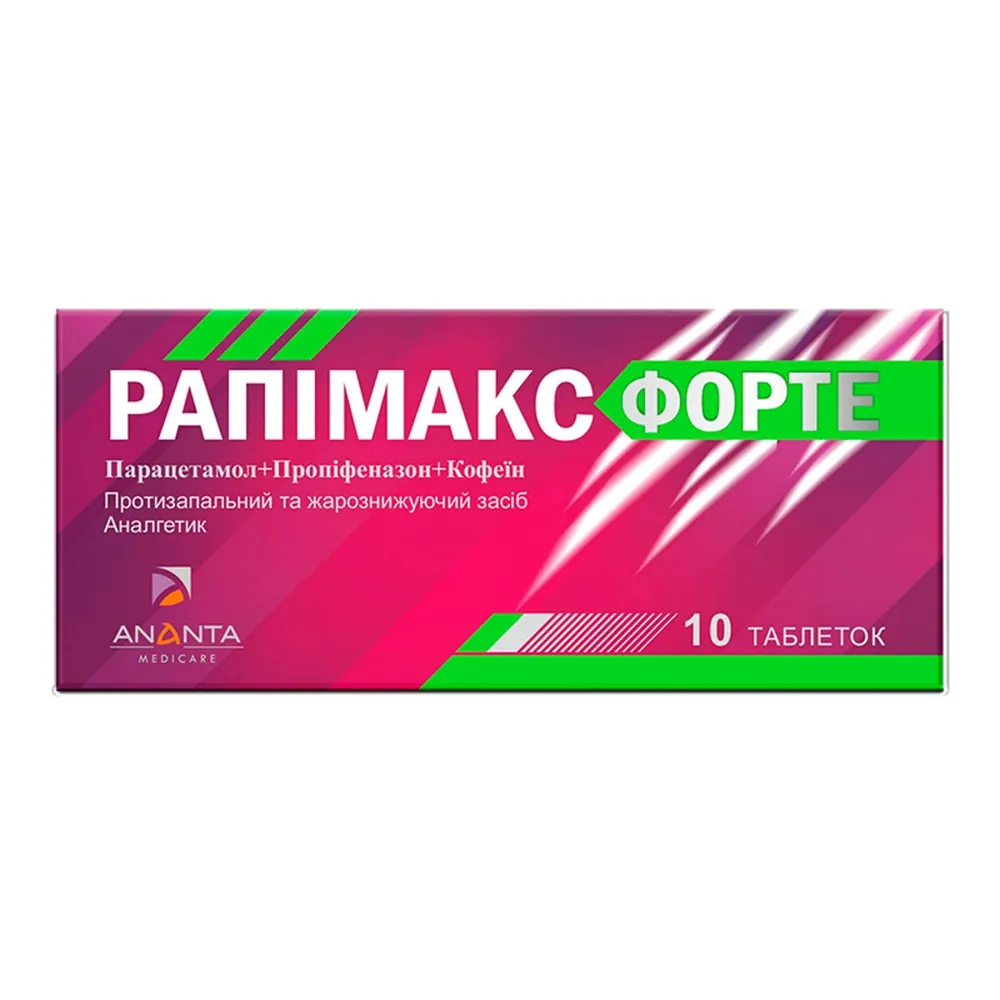
Table of Contents
INSTRUCTION FOR MEDICAL USE OF THE MEDICINAL PRODUCT RAPIMAX FORTE
Composition:
Active substances: paracetamol, propyphenazone; caffeine;
1 tablet contains: paracetamol 250 mg, propyphenazone 150 mg; caffeine 50 mg;
Excipients: lactose monohydrate, microcrystalline cellulose, maize starch, povidone, magnesium stearate, talc, colloidal anhydrous silicon dioxide, sodium croscarmellose, pregelatinized maize starch, hydroxypropylcellulose.
Pharmaceutical form. Tablets.
Main physico-chemical properties: flat, round tablets of white color, with a score line on one side.
Pharmacotherapeutic group. Paracetamol, combinations without psycholeptics. ATC code N02BE51.
Pharmacological Properties.
Pharmacodynamics.
The medicinal product contains caffeine, paracetamol, and propyphenazone, which have analgesic and antipyretic properties. In a study of acute toxicity in animals, the combined use of paracetamol and propyphenazone in a ratio of 5:3 demonstrated lower toxicity compared to the use of each substance individually.
The analgesic effect of the combination develops within 30 minutes and lasts for several hours.
Pharmacokinetics.
After oral administration, paracetamol is rapidly and completely absorbed. Peak plasma concentration is reached within 30–90 minutes after administration. The elimination half-life of paracetamol averages 2–3 hours. Thus, the administered dose of paracetamol is excreted in urine within 24 hours, primarily as glucuronide and sulfate conjugates.
Paracetamol crosses the placenta and is excreted in breast milk.
Propyphenazone is rapidly and completely absorbed after oral administration. Peak plasma concentration is achieved within 30 minutes.
Propyphenazone is metabolized primarily in the liver, forming the main metabolite N-desmethylpropyphenazone, 80% of which is excreted in urine.
When the combination of paracetamol and propyphenazone in the ratio contained in RAPIMAX FORTE is administered, the elimination half-life of propyphenazone increases from 64 ± 10 min (with administration of 150 mg propyphenazone) to 77 ± 10 min (with administration of 250 mg paracetamol and 150 mg propyphenazone).
The administered dose of propyphenazone is excreted in urine within 24 hours, primarily as a glucuronic acid conjugate. Only about 1% of propyphenazone is excreted unchanged in urine.
Propyphenazone crosses the placenta and is also excreted in breast milk.
In case of impaired renal or hepatic function, metabolism and elimination of propyphenazone may be suppressed.
Caffeine is rapidly and almost completely absorbed after oral administration.
The main metabolites of caffeine—1-methyluric acid, 1-methylxanthine, and 5-acetylamino-6-amino-3-methyluracil—are excreted in urine.
The main metabolite excreted in feces is 1,7-dimethyluric acid.
The elimination half-life of caffeine averages 4 to 6 hours. Caffeine and its metabolites are excreted primarily in urine (86%), with no more than 2% of caffeine excreted unchanged.
Caffeine crosses the placenta and is excreted in breast milk.
Clinical characteristics.
Indications.
Symptomatic treatment of headache, toothache, menstrual, postoperative and rheumatic pain; febrile conditions associated with colds and influenza.
Contraindications.
Hypersensitivity to phenazone and related substances (phenazone, aminophenazone, metamizole), as well as to phenylbutazone, acetylsalicylic acid, or any component of the medicinal product.
Glucose-6-phosphate dehydrogenase deficiency, impaired liver and/or kidney function, congenital hyperbilirubinemia, alcoholism, pancreatitis, benign prostatic hyperplasia; blood disorders, severe anemia, thrombosis, thrombophlebitis, leukopenia, acute hepatic porphyria; significant impairment of kidney function, congenital hyperbilirubinemia; states of increased excitation; sleep disorders; organic cardiovascular diseases (marked increase in blood pressure, decompensated heart failure, cardiac conduction disturbances, paroxysmal tachycardia, severe atherosclerosis, tendency to vascular spasm, ischemic heart disease, acute myocardial infarction); severe arterial hypertension, glaucoma, epilepsy, hyperthyroidism; elderly age (over 60 years); severe forms of diabetes mellitus; pregnancy or breastfeeding period; children under 12 years of age.
Do not use simultaneously with monoamine oxidase inhibitors (MAOIs) or within 2 weeks after discontinuation of MAOIs; contraindicated in patients taking tricyclic antidepressants or beta-blockers.
Special precautions.
The drug must not be used for prolonged periods.
During treatment with this drug, it is not recommended to consume excessive amounts of beverages containing caffeine (e.g., tea, coffee). This may cause sleep disturbances, tremor, palpitations. Do not exceed the recommended doses.
Do not use with other medications containing paracetamol.
Interaction with other medicinal products and other types of interactions.
The absorption rate of paracetamol may be increased when used with domperidone or metoclopramide, and decreased with cholestyramine. Prolonged concurrent use of the drug with acetylsalicylic acid or other nonsteroidal anti-inflammatory drugs may lead to kidney damage. Paracetamol enhances the effect of warfarin and increases plasma levels of acetylsalicylic acid, chloramphenicol, and acetazolamide. Long-term regular use of paracetamol may enhance the anticoagulant effect of warfarin and other coumarins, increasing the risk of bleeding.
Delayed gastric emptying, as occurs with propanteline, may slow paracetamol absorption and delay onset of action. Accelerated gastric emptying, as with metoclopramide, increases the rate of absorption.
Liver toxicity is increased when used concomitantly with anticonvulsants (including phenytoin, barbiturates, carbamazepine), which stimulate hepatic microsomal enzyme activity, rifampicin, isoniazid, hepatotoxic agents, and alcohol in excessive amounts, due to increased formation of hepatotoxic metabolites—even at therapeutic doses.
Barbiturates reduce the antipyretic effect of paracetamol.
Combination with chloramphenicol may prolong elimination of this drug, increasing the risk of toxicity.
Concomitant use of paracetamol with hepatotoxic agents increases the likelihood of paracetamol accumulation and enhances the hepatotoxic effects of both paracetamol and the co-administered agents. High-dose paracetamol with isoniazid increases the risk of hepatotoxic syndrome.
Paracetamol reduces the effectiveness of diuretics.
Neutropenia occurs more frequently with concomitant use of paracetamol and zidovudine. The drug may be taken with zidovudine only under medical supervision.
Hepatic microsomal enzyme inducers (rifampicin and phenobarbital) increase paracetamol toxicity, as greater amounts of toxic epoxide are formed during its biotransformation. Paracetamol may reduce lamotrigine bioavailability by inducing its hepatic metabolism, thereby reducing its effect.
Concomitant use of caffeine with MAO inhibitors may cause a dangerous increase in blood pressure. Cimetidine enhances the effect of caffeine.
Caffeine enhances the effect (improves bioavailability) of analgesic-antipyretic agents, improves gastrointestinal absorption of ergotamine, potentiates the effects of xanthine derivatives, alpha- and beta-adrenergic agonists, and psychostimulants, and enhances the thyroid effect of thyrotropic agents.
Caffeine reduces the effectiveness of opioid analgesics, anxiolytics, hypnotics, and sedatives. It acts as an antagonist to anesthetic agents and other drugs that depress the central nervous system (including barbiturates, antihistamines), and to adenosine and adenosine triphosphate (ATP) preparations. Caffeine reduces lithium concentration in blood and may enhance lithium excretion. Therefore, concomitant use of the drug with lithium preparations is not recommended.
Caffeine improves gastrointestinal (GI) absorption of ergotamine.
Caffeine enhances tachycardia induced by sympathomimetics (including ephedrine) and thyroxine. Interaction with broad-spectrum agents (benzodiazepines) may manifest in various unpredictable forms. Oral contraceptives, cimetidine, and disulfiram reduce caffeine metabolism, while barbiturates and smoking increase it. Caffeine delays the elimination of theophylline. Caffeine increases the likelihood of dependence on ephedrine-like substances. Concurrent use of certain xanthine oxidase inhibitors may prolong elimination of caffeine and its metabolite paraxanthine.
It is hypothesized that caffeine increases the risk of dependence on analgesics such as paracetamol, although clinical data confirming this are insufficient.
The effect of propyphenazone is enhanced when used concomitantly with hypnotics. The drug enhances the effect of oral antidiabetic agents (tolbutamide, chlorpropamide, acetazolamide) and oral anticoagulants such as coumarin, increasing the risk of bleeding. Therefore, patients taking oral anticoagulants should not use paracetamol for prolonged periods without medical supervision.
Hormonal contraceptives and isoniazid enhance the effect of caffeine.
Concomitant use of the drug with agents or other products that stimulate the CNS is not recommended.
Do not use concomitantly with alcohol.
Although there are no clinical data on interactions with propyphenazone, interactions have been reported between these drug classes and other nonsteroidal anti-inflammatory drugs:
- angiotensin-converting enzyme (ACE) inhibitors, beta-blockers: reduced antihypertensive effect;
- antithrombotic agents, excluding salicylates: increased risk of bleeding;
- methotrexate: increased concentration and, consequently, toxicity of methotrexate;
- lithium: increased serum lithium levels.
Special precautions for use.
Before using the medicine, consult a physician. Do not use the medicine in combination with other products containing paracetamol. Concurrent use with other paracetamol-containing medicines may lead to overdose. Paracetamol overdose may cause liver failure, which may necessitate liver transplantation or lead to fatal outcome.
Patients should be informed that analgesics should not be taken for prolonged periods unless directed by a physician. The medicine is not recommended for use longer than 7 days without consulting a physician. Do not exceed the recommended doses.
Prolonged use of analgesics containing high cumulative doses of paracetamol may, in individual cases, lead to analgesic nephropathy or irreversible renal failure. Patients with kidney disease should consult a physician before starting paracetamol, as dose adjustment may be required. Monitoring of kidney function is necessary.
Prolonged use beyond the recommended duration may lead to serious liver complications, such as cirrhosis. Acute or chronic overdose may result in severe hepatotoxic effects, sometimes with fatal outcome.
Patients with liver disorders or infections involving liver damage, such as viral hepatitis, should consult a physician before starting treatment. During paracetamol use, alanine aminotransferase (ALT) levels in blood serum may increase.
Alcoholic beverages must not be consumed during treatment. Paracetamol may be hepatotoxic at doses exceeding 6–8 g per day; however, liver damage may also occur at significantly lower doses when alcohol is consumed, or when enzyme inducers or other hepatotoxic substances are used. The risk is higher in patients with non-cirrhotic alcoholic liver disease. Chronic alcohol use significantly increases the risk of paracetamol-induced hepatotoxicity. In patients with impaired liver function or those taking high doses of paracetamol for prolonged periods, regular liver function tests are recommended.
Patients who take analgesics daily for mild forms of arthritis should consult a physician before use.
Long-term use of high doses may damage the liver and kidneys. The risk of hepatotoxic effects of paracetamol at therapeutic doses increases in conditions associated with increased renal oxidative stress and reduced hepatic glutathione reserves, such as concomitant use of multiple medications, severe exhaustion, anorexia, low body mass index, alcoholism, sepsis, or diabetes mellitus. In patients with severe infections such as sepsis, paracetamol use increases the risk of metabolic acidosis. Symptoms of metabolic acidosis include deep, rapid, or labored breathing, nausea, vomiting, and loss of appetite. Immediate medical attention is required if these symptoms occur.
The risk of neutropenia and agranulocytosis is primarily due to the presence of propyphenazone. If such a reaction occurs after taking the medicine (elevated temperature, sore throat, oral ulcers and abscesses, perianal abscesses, decreased granulocyte count in blood), discontinue the medicine immediately. These adverse effects are usually reversible and resolve within 1–2 weeks.
During treatment with this medicine, it is not recommended to consume excessive amounts of beverages containing caffeine (coffee, tea), as this may cause sleep disturbances, tremor, palpitations, discomfort behind the sternum, tension, and irritability. If tachycardia occurs, discontinue the medicine immediately. Individuals sensitive to caffeine or those who have not previously consumed it are more prone to caffeine-related adverse effects.
Avoid using other medicines containing paracetamol.
Prolonged use of analgesics for headache treatment may lead to chronic headache. If headaches become persistent, consult a physician.
Use with special caution in patients with heart disease associated with fluid retention and edema, immediate-type hypersensitivity, or history of bone marrow suppression, gastrointestinal disorders, or history of ulcer formation. Patients with polyposis have an increased risk of allergic reactions. Isolated cases of bronchial asthma attacks and anaphylactic shock associated with the use of medicines containing propyphenazone and paracetamol have been reported in sensitive individuals. If symptoms persist, consult a physician.
Consult a physician before using the medicine if you are taking warfarin or similar anticoagulant medicines. When treating with oral anticoagulants, monitoring of prothrombin time is required if high doses of paracetamol are taken concurrently.
The medicine may affect laboratory test results for blood glucose and uric acid levels.
The medicine contains lactose monohydrate. If you have been diagnosed with intolerance to certain sugars, consult your physician before taking this medicine.
Use during pregnancy or breastfeeding.
The medicine is contraindicated during pregnancy or breastfeeding, as the active ingredients of the medicine pass into breast milk.
Ability to affect reaction speed when driving or operating machinery.
The medicine does not affect the ability to drive or operate machinery; however, the possibility of dizziness should be taken into account.
Method of Administration and Dosage
RAPIMAX FORTE is administered orally. Tablets should be taken with sufficient fluid.
Adults:
1–2 tablets as a single dose. Do not exceed 3 doses per day.
Children aged 12–18 years:
1 tablet as a single dose. Do not exceed 3 doses per day.
The duration of treatment should not exceed 1 week. Exceeding the recommended dose is not recommended.
Children:
The medicinal product is indicated for children aged 12 years and older.
Overdose.
Symptoms: skin pallor, nausea, vomiting, abdominal pain, cardiac rhythm disturbances (including extrasystoles), increased sweating, decreased arterial pressure, visual disturbances and disorientation.
From the central nervous system (CNS) in case of large doses: dizziness, psychomotor agitation and disorientation, CNS depression, drowsiness or insomnia, impaired consciousness, nervousness, restlessness, tremor, hyperreflexia, seizures; from the urinary system: nephrotoxicity (renal colic, interstitial nephritis, capillary necrosis).
With prolonged use of the drug in high doses, hematopoietic system disorders may develop, such as aplastic anemia, pancytopenia, agranulocytosis, neutropenia, leukopenia, thrombocytopenia.
In overdose, each active component may cause specific symptoms.
Paracetamol overdose.
Symptoms of paracetamol overdose within the first 24 hours: pallor, nausea, vomiting, anorexia, and abdominal pain. Liver damage (hepatic necrosis, elevated activity of liver transaminases, increased prothrombin index) may appear 12–48 hours after overdose and usually peaks after 4–6 months. In severe poisoning, it may progress and lead to toxic encephalopathy, hemorrhages, hypoglycemia, coma, and fatal outcome.
Liver damage may occur 12–48 hours after overdose in adults who have ingested 10 g or more of paracetamol, and in children who have ingested more than 150 mg/kg body weight. In patients with risk factors (long-term treatment with carbamazepine, phenobarbital, phenytoin, primidone, rifampicin, St. John's wort, or other drugs inducing liver enzymes; regular consumption of excessive amounts of ethanol; glutamine cachexia: digestive disorders, cystic fibrosis, HIV infection, starvation cachexia), ingestion of 5 g or more of paracetamol may lead to liver damage.
Acute kidney injury with acute tubular necrosis may develop even in the absence of severe kidney damage, manifesting as severe flank pain, hematuria, proteinuria, and may occur even without severe liver injury.
Caffeine overdose.
Large doses of caffeine may cause epigastric pain, vomiting, increased diuresis, rapid breathing, extrasystoles, tachycardia, or cardiac arrhythmia; and may affect the central nervous system (loss of consciousness, insomnia, restlessness, headache, nervous excitement, irritability, affective state, anxiety, tremor, convulsions).
Clinically significant symptoms of caffeine overdose may also be associated with severe liver damage caused by paracetamol, which may occur when the amount of the drug ingested leads to caffeine overdose.
Propyphenazone overdose may cause CNS damage (seizures, coma).
Glucose metabolism disorders and metabolic acidosis may occur.
In severe poisoning, liver failure may progress to encephalopathy, hemorrhages, hypoglycemia, coma, and result in a fatal outcome. Cardiac arrhythmias and pancreatitis have also been reported.
Symptoms of overdose may be limited to nausea and vomiting or may not reflect the severity of overdose and risk of organ damage.
Prompt medical assistance is required in case of overdose, even if symptoms are absent.
Treatment: Gastric lavage followed by administration of activated charcoal, symptomatic therapy. Immediate medical assistance is necessary in case of overdose, even if no symptoms are observed. If overdose is confirmed or even suspected, the patient must be taken to the nearest medical facility where emergency care and qualified treatment can be provided. This must be done even if symptoms of overdose are not apparent due to the risk of delayed liver damage.
Plasma paracetamol concentration should be measured 4 hours or later after ingestion (earlier concentrations are unreliable). Treatment with N-acetylcysteine can be administered within 24 hours after paracetamol ingestion, but maximum protective effect is achieved when administered within 8 hours after ingestion. The efficacy of the antidote decreases sharply after this time. If necessary, intravenous N-acetylcysteine should be administered according to current guidelines. In the absence of vomiting, oral methionine may be used as an appropriate alternative in remote areas outside the hospital. Oral methionine or intravenous acetylcysteine is effective within 48 hours after overdose. General supportive measures should also be taken. If necessary, α-adrenergic blockers should be used. β-adrenergic receptor antagonists may alleviate cardiotoxic effects; oxygen therapy should be administered, and diazepam should be used in case of seizures.
Adverse Reactions
Information on the adverse reactions listed below was obtained from post-marketing surveillance. These reactions are reported voluntarily from a population of unknown size; therefore, it is not possible to reliably estimate their frequency or establish a causal relationship to drug exposure. However, these reactions are likely to be rare (< 1/10,000).
Adverse reactions due to paracetamol
The drug is generally well tolerated, but in individual cases the following adverse effects may occur:
Blood and lymphatic system disorders: thrombocytopenia, neutropenia, leukopenia, agranulocytosis, pancytopenia, anemia, sulfhemoglobinemia, and methemoglobinemia (cyanosis, dyspnea, chest pain), hemolytic anemia, bruising, and bleeding.
Cardiovascular system disorders: tachycardia, arrhythmia, increased blood pressure.
Immune system disorders: anaphylaxis, hypersensitivity reactions including skin and mucous membrane rashes (including generalized, erythematous rashes), urticaria, angioneurotic edema, Stevens–Johnson syndrome, pruritus, erythema multiforme, toxic epidermal necrolysis (Lyell’s syndrome), acute generalized exanthematous pustulosis, angioedema.
Gastrointestinal disorders: nausea, vomiting, heartburn, epigastric pain.
Endocrine system disorders: hypoglycemia, up to hypoglycemic coma.
Respiratory system disorders: bronchospasm in patients sensitive to acetylsalicylic acid and other nonsteroidal anti-inflammatory drugs.
Hepatobiliary disorders: liver function abnormalities, hepatic failure, liver necrosis, jaundice, elevated activity of "liver" enzymes, usually without development of jaundice, hepatonecrosis (dose-dependent effect).
Skin and subcutaneous tissue disorders: pruritus, hemorrhages, oral mucosal ulcers.
Renal and urinary disorders: nephrotoxicity (renal colic, interstitial nephritis, papillary necrosis).
Nervous system disorders: headache.
Adverse reactions due to caffeine
Central nervous system disorders: nervousness, dizziness, insomnia.
Cardiovascular system disorders: tachycardia, edema.
Gastrointestinal disorders: gastrointestinal discomfort, abdominal pain, diarrhea, nausea, vomiting.
Psychiatric disorders: insomnia, restlessness, anxiety, irritability.
Skin and subcutaneous tissue disorders: pruritus, rash, sweating, purpura, urticaria.
Concomitant use of the drug at recommended doses with products containing caffeine may enhance caffeine-related adverse effects such as dizziness, increased excitability, insomnia, restlessness, anxiety, irritability, headache, gastrointestinal disturbances, and tachycardia.
Shelf life. 3 years.
Storage conditions.
Store in the original packaging at a temperature not exceeding 25°C, in a place inaccessible to children.
Packaging.
10 tablets in a blister, 1 blister in a cardboard pack.
10 tablets in a blister, 10 blisters in a cardboard pack.
Prescription status.
Over-the-counter, package of 10 tablets.
By prescription only, package of 100 tablets (10×10).
Manufacturer.
Bafna Pharmaceuticals Ltd., India / Bafna Pharmaceuticals Ltd., India.
Manufacturer’s address and site of operations.
147, Madhavaram Red Hills Road, Grantlyon Village, Vadakarai, Chennai, Tamil Nadu, IN 600052, India / 147, Madhavaram Red Hills Road, Grantlyon Village, Vadakarai, Chennai, Tamil Nadu, IN 600052, India.
Marketing Authorization Holder.
JIVDHARA PHARMA PRIVATE LIMITED.
Address of the Marketing Authorization Holder.
504, Block-B, Shiv Angan Complex, Sallaiya, Bhopal, Madhya Pradesh, 462026, India / 504, Block-B, Shiv Angan Complex, Sallaiya, Bhopal, Madhya Pradesh, 462026, India.