Primolut-nor
Ukraine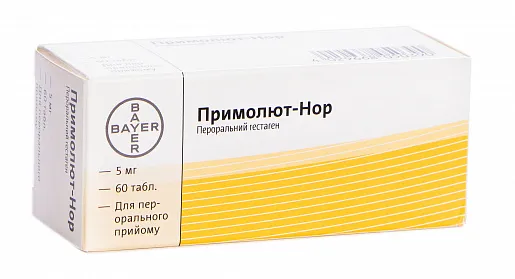
Table of Contents
INSTRUCTIONS FOR MEDICAL USE OF THE MEDICINAL PRODUCT PRIMOLUT-NOR (PRIMOLUT-NOR)
Composition:
Active substance: norethisterone acetate;
1 tablet contains: 5 mg norethisterone acetate;
Excipients: lactose monohydrate, corn starch, povidone 25000, talc, magnesium stearate.
Pharmaceutical form. Tablets.
Main physical and chemical properties: white tablets with a cross-shaped notch on one side and "AP" in a regular hexagon on the other.
Pharmacotherapeutic group. Sex gland hormones and drugs used in disorders of the reproductive system. Progestogens.
ATC code G03DC02.
Pharmacological Properties
Pharmacodynamics.
Norethisterone is a progestogen. In women who are sensitive to the effects of estrogens, continuous oral administration of 100–150 mg norethisterone during one menstrual cycle can achieve complete transformation of the endometrium, i.e., from a proliferative to a secretory state.
Secretion of gonadotropins and ovulation are inhibited with daily administration of 0.5 mg norethisterone acetate.
Norethisterone is a progestogenic substance and affects basal body temperature.
Pharmacokinetics.
- Absorption.
Norethisterone acetate is hydrolyzed during absorption and on first pass through the liver into norethisterone, the active substance of the medicinal product, and acetic acid. The maximum plasma concentration of norethisterone is 18 ng/mL (after administration of 5 mg norethisterone acetate) and 25 ng/mL (after administration of 10 mg norethisterone acetate). These levels are reached 2 hours after taking one tablet of Primolut-N. According to a relative bioavailability study, the active substance is completely released from the tablet.
- Distribution.
Norethisterone binds to plasma proteins and to sex hormone-binding globulin (SHBG). Only about 3–4% of the total concentration of the active substance in plasma exists as free steroid, approximately 35% binds to SHBG, and 61% binds to albumin. The apparent volume of distribution of norethisterone is 4.4 ± 1.3 L/kg. After oral administration, distribution of the active substance in plasma is biphasic. The elimination half-life in plasma for the first and second phases is 1–3 hours and 5–13 hours, respectively.
- Conditions for maintaining a steady state.
With repeated daily administration of norethisterone, accumulation of the substance is unlikely due to its relatively short elimination half-life from plasma. However, if daily co-administered drugs are SHBG inducers, such as ethinylestradiol, an increase in norethisterone plasma concentration may occur due to its binding to SHBG.
- Metabolism.
Norethisterone is metabolized primarily via saturation of the double bond in ring A and reduction of the 3-keto group to a hydroxyl group, followed by conjugation with corresponding sulfates and glucuronides. Some metabolites are eliminated from plasma very slowly, with a half-life in plasma of approximately 67 hours. Therefore, during prolonged treatment with daily oral administration of norethisterone, some metabolites accumulate in plasma.
Norethisterone is partially metabolized to ethinylestradiol; thus, from each milligram of orally administered norethisterone, an amount of ethinylestradiol is formed equivalent to an oral dose of approximately 4–6 μg in humans.
- Excretion.
Norethisterone is not excreted unchanged in significant amounts. Mainly metabolites with reduced ring A and hydroxylated forms, as well as their conjugates (glucuronides and sulfates), are excreted in urine and feces in a ratio of 7:3. The majority of metabolites excreted by the kidneys are eliminated within approximately 24 hours; their half-life in plasma is about 19 hours.
Norethisterone passes into breast milk. The concentration of this substance in milk is about 10% of maternal plasma levels, regardless of the route of administration. Considering that the average maximum level of active substance in maternal plasma is 16 ng/mL and the daily feeding volume is approximately 600 mL of milk, a maximum of about 1 μg of the substance (0.02% of the maternal dose) may be transferred to the infant.
Clinical characteristics.
Indications.
Secondary amenorrhea and endometriosis.
Contraindications.
The drug Primolut-N should not be used if any of the following conditions or diseases are present. If any of these conditions occur during treatment with Primolut-N, the drug should be discontinued immediately.
- Pregnancy or suspected pregnancy.
- Breastfeeding.
- Current or past venous or arterial thrombotic/thromboembolic events (e.g., myocardial infarction, stroke, transient ischemic attack, deep vein thrombosis, pulmonary embolism).
- Current or past history of thrombosis precursors (such as transient ischemic attack, angina pectoris).
- Presence of high-risk factors for arterial thrombosis (see section "Special precautions").
- History of migraine with focal neurological symptoms.
- Diabetes mellitus with vascular complications.
- Severe liver disease currently or in the past, until liver function tests return to normal values.
- Dubin-Johnson syndrome, Rotor syndrome, as well as cholestasis or episodes of severe pruritus during previous pregnancies.
- Previous cases of pemphigoid gestationis (herpes gestationis).
- Benign or malignant liver tumors currently or in the past.
- Malignant tumors dependent on sex hormones, or suspicion thereof (e.g., of genital organs or breast).
- Hypersensitivity to norethisterone or to any of the excipients of the drug.
- History of idiopathic cholestasis or severe pruritus during pregnancy.
- Vaginal bleeding of unknown etiology.
- Untreated endometrial hyperplasia.
- Use of direct-acting antiviral agents containing ombitasvir, paritaprevir, or dasabuvir, or their combination (see section "Interaction with other medicinal products and other forms of interaction").
Interaction with other medicinal products and other forms of interaction.
Effect of other medicinal products on Primolut-N
Interactions may occur with medicinal products that induce microsomal enzymes. This may lead to increased clearance of sex hormones, resulting in menstrual bleeding and/or loss of contraceptive efficacy.
Enzyme induction may be observed within several days of treatment. Maximum enzyme induction generally occurs within several weeks. After discontinuation of treatment, enzyme induction may persist for approximately 4 weeks.
Active substances increasing sex hormone clearance (reduced efficacy of COCs (combined oral contraceptives) due to enzyme induction), e.g.:
phenytoin, barbiturates, bosentan, primidone, carbamazepine, rifampicin, ritonavir, nevirapine, and efavirenz, possibly also oxcarbazepine, topiramate, felbamate, griseofulvin, and medicinal products containing St. John's wort extract.
Active substances with variable effects on sex hormone clearance
Concomitant use of COCs with many HIV/HCV protease inhibitors and non-nucleoside reverse transcriptase inhibitors may increase or decrease plasma concentrations of estrogens or progestogens. These changes may be clinically significant in some cases.
Active substances reducing COC clearance (enzyme inhibitors)
The clinical significance of potential interactions with enzyme inhibitors is not yet known. Concomitant use of moderate or strong CYP3A4 inhibitors, such as azole antifungals (itraconazole, voriconazole, fluconazole), verapamil, macrolides (e.g., clarithromycin, erythromycin), diltiazem, and grapefruit juice, may lead to increased plasma concentrations of estrogen, progestin, or both. Etoricoxib at doses of 60 to 120 mg/day has been shown to increase plasma concentrations of ethinylestradiol by 1.4–1.6 times when co-administered with a combined oral contraceptive containing 0.035 mg ethinylestradiol.
Effect of Primolut-N on other medicinal products
Progestogens may affect the metabolism of other medicinal products. Consequently, plasma and tissue concentrations may increase (e.g., cyclosporine) or decrease (e.g., lamotrigine). Clinical data indicate that ethinylestradiol inhibits the clearance of CYP1A2 substrates, leading to weak (e.g., theophylline) or moderate (e.g., tizanidine) increases in their plasma concentrations.
Pharmacodynamic interactions
Concomitant use with medicinal products containing ombitasvir/paritaprevir/ritonavir and dasabuvir with or without ribavirin increases the risk of elevated alanine aminotransferase (ALT) levels (see sections "Contraindications" and "Special precautions"). Treatment with Primolut-N may be resumed 2 weeks after completion of therapy with the aforementioned combination.
Other forms of interaction
Laboratory tests. The use of progestogens may affect the results of certain laboratory tests.
Note: The instructions for medical use of concomitantly administered medicinal products should be consulted to identify potential interactions.
Special precautions for use.
To prevent pregnancy, non-hormonal contraceptive methods (barrier methods) must be used.
Before initiating or continuing treatment with the medicinal product Primolut-Nor, an individual benefit-risk assessment should be performed if any of the disorders/factors listed below are present or worsening.
- Vascular disorders.
Epidemiological studies have established that oral administration of ovulation inhibitors containing estrogens/progestogens increases the incidence of thromboembolic disorders. Therefore, the possibility of an increased risk of thromboembolism should be considered, especially in the presence of such conditions in medical history.
Well-established risk factors for venous thromboembolism (VTE) include: personal or family history of VTE (in a sibling or parent at a relatively young age), age, obesity, prolonged immobilization, major surgery, severe trauma.
An increased risk of thromboembolism should be considered during the postpartum period.
Treatment must be discontinued immediately in case of symptoms of arterial or venous thrombosis or suspicion thereof.
Patients with a history of VTE or known thrombophilic conditions have an increased risk of developing VTE. Steroid hormone therapy may further increase this risk. Patients with personal or family histories of thromboembolism or recurrent spontaneous abortions should be evaluated to exclude thrombophilia. Patients receiving anticoagulant therapy require careful assessment of thromboembolic risks before starting progestogen treatment. Therapy with progestins should be discontinued 4–6 weeks before elective surgery, especially abdominal or orthopedic surgery of the lower limbs. Resumption of progestogen treatment is possible only after full restoration of mobility.
- Tumors.
Isolated cases of benign liver tumors and even rarer cases of malignant liver tumors have been reported in patients taking hormonal substances contained in the medicinal product Primolut-Nor. In some cases, these tumors led to life-threatening intra-abdominal hemorrhage.
In women taking combined oral contraceptives (COCs), isolated cases of benign liver tumors and very rare cases of malignant liver tumors have been reported. In isolated cases, these tumors have led to life-threatening intra-abdominal bleeding. If women receiving COCs develop severe upper abdominal pain, signs of liver enlargement, or signs of intra-abdominal bleeding, a liver tumor should be considered in differential diagnosis.
- Other conditions.
Patients with diabetes mellitus should be under close medical supervision.
Chloasma may occur in isolated cases, particularly in women with a history of chloasma during pregnancy. Women prone to chloasma should avoid exposure to sunlight or ultraviolet radiation during treatment with Primolut-Nor.
In cases of acute visual disturbance, exophthalmos, diplopia, or migraine, papilledema or retinal pathology should be ruled out.
Progestogens may cause fluid retention. Use with caution in patients with epilepsy, migraine, asthma, or cardiac dysfunction.
Use of hormonal contraceptives in women with hypertriglyceridemia or a family history of hypertriglyceridemia may increase the risk of pancreatitis.
Patients with a history of depression should be under close medical supervision. The drug should be discontinued if depression worsens.
- Medical examination, check-up, and physician consultation.
Before initiating or resuming treatment with Primolut-Nor, a complete medical history (including family history) should be obtained, and the woman should undergo a full medical examination, including a gynecological examination. Contraindications (see section "Contraindications") and special precautions for use (see section "Special precautions for use") should be considered. Examinations should be repeated periodically during treatment with Primolut-Nor. The frequency and type of examinations depend on individual characteristics of each woman but must include measurement of blood pressure, breast examination, abdominal and pelvic organ examination, and cervical cytology.
- Reasons for immediate discontinuation of treatment.
Sudden onset of severe headache or migraine, or increased frequency or severity of migraine; sudden sensory disturbances (e.g., visual or hearing impairment); first signs of thrombophlebitis or symptoms of thromboembolism; chest pain or tightness; planned surgical procedures (discontinue 6 weeks before surgery); immobilization; onset of jaundice; development of hepatitis (non-icteric); generalized pruritus; significant increase in blood pressure; pregnancy.
Additional warnings based on partial conversion of norethisterone to ethinylestradiol.
Norethisterone is partially metabolized to ethinylestradiol; thus, each milligram of orally administered norethisterone/norethisterone acetate produces an amount of ethinylestradiol equivalent to an oral human dose of approximately 4–6 µg.
Due to the partial conversion of norethisterone to ethinylestradiol, the use of Primolut-Nor may produce pharmacological effects similar to those of combined oral contraceptives (COCs). Therefore, the following general warnings related to COC use should be considered.
Vascular disorders.
The risk of VTE is highest during the first year of use. This increased risk occurs after first-time or reinitiation (after at least one month or longer break) of COC use.
Epidemiological studies have shown that the incidence of VTE in women using low-estrogen COCs (<50 µg ethinylestradiol) is approximately 20–40 cases per 100,000 woman-years, although risk estimates vary depending on the progestin. These data can be compared with 5–10 cases per 100,000 woman-years in women not using oral contraceptives. Use of any COC is associated with an increased risk of VTE compared to non-use. This increased risk is lower than the VTE risk associated with pregnancy, which is estimated at 60 cases per 100,000 pregnancies.
VTE can be life-threatening and may have fatal outcomes (in 1–2% of cases).
VTE manifesting as deep vein thrombosis and/or pulmonary embolism may occur during use of any COC.
Extremely rare cases of thrombosis in other vessels, such as hepatic, renal, mesenteric, cerebral, or retinal veins and arteries, have been reported in women using COCs.
COC use is associated with an increased risk of acute myocardial infarction (AMI) or stroke; this risk is significantly influenced by the presence of other risk factors.
General signs/symptoms of arterial or venous thrombotic/thromboembolic events or stroke may include:
- severe pain in the calf of one leg; leg swelling;
- sudden, severe chest pain possibly radiating to the left arm;
- sudden shortness of breath;
- sudden coughing;
- any unusual, severe, and prolonged headache;
- sudden partial or complete vision loss;
- diplopia;
- slurred speech or aphasia;
- dizziness;
- collapse with or without focal epilepsy;
- weakness or sudden numbness of one side or part of the body;
- motor disturbances;
- acute abdomen.
An increased synergistic risk of thrombosis should be considered in women with a combination of multiple risk factors or a single serious risk factor. The risk increase may exceed the sum of risks associated with each individual factor. If the benefit-risk ratio is unfavorable, COCs should not be prescribed (see section "Contraindications").
The risk of venous or arterial thrombotic/thromboembolic events or stroke increases with the presence of the following factors:
- age;
- obesity (body mass index >30 kg/m²);
- relevant family history (venous or arterial thromboembolism in close relatives at a relatively young age). If hereditary predisposition is suspected, the woman should be referred to an appropriate specialist before deciding on COC use;
- prolonged immobilization, major surgery, lower limb surgery, or major trauma. In such cases, COC use should be discontinued (at least 4 weeks before elective surgery) and not resumed until full mobilization;
- smoking (risk increases with intensity and age, especially in women over 35 years);
- dyslipoproteinemia;
- arterial hypertension;
- migraine (increased frequency or severity of migraine during COC use may be prodromal signs of cerebrovascular disorders and thus a reason for immediate discontinuation of COCs);
- cardiac valve pathology;
- atrial fibrillation.
There is no consensus on the possible influence of varicose veins or superficial thrombophlebitis on VTE development.
Other conditions associated with adverse cardiovascular effects include: diabetes mellitus, systemic lupus erythematosus, hemolytic-uremic syndrome, chronic inflammatory bowel diseases (Crohn’s disease and ulcerative colitis), and sickle cell anemia.
Increased frequency or severity of migraine during COC use may be prodromal signs of cerebrovascular disorders and thus a reason for immediate discontinuation of COCs.
Biochemical factors indicating hereditary or acquired predisposition to venous or arterial thrombosis include: activated protein C resistance (APC), hyperhomocysteinemia, antithrombin III deficiency, protein C deficiency, protein S deficiency, antiphospholipid antibodies (anticardiolipin antibodies, lupus anticoagulant).
When assessing the benefit-risk ratio of using the medicinal product, the physician should remember that proper patient management may reduce the relative risk of thrombosis and that the VTE risk associated with pregnancy is higher than that associated with low-dose COCs (<0.05 mg ethinylestradiol).
- Oncological diseases.
The most important risk factor for cervical cancer is persistent human papillomavirus (HPV) infection. Results of some epidemiological studies suggest an increased risk of cervical cancer with long-term COC use. However, this statement remains controversial, as it is not fully established whether study results adequately account for confounding risk factors such as higher frequency of cervical screening, sexual behavior, including use of barrier contraceptive methods.
A meta-analysis of 54 epidemiological studies indicates a slight increase in relative risk (RR = 1.24) of breast cancer in women using COCs. This increased risk gradually disappears within 10 years after discontinuation of COCs. Since breast cancer is rare in women under 40 years of age, the increase in breast cancer incidence among current or recent COC users is small compared to the overall risk of breast cancer. These study results do not provide evidence of a causal relationship. The observed increased risk may be due to earlier diagnosis of breast cancer in COC users, biological effects of COCs, or a combination of both. Breast cancer diagnosed in women who have ever used COCs is generally less clinically advanced than in those who have never used COCs.
Neoplasms may be life-threatening or lead to fatal outcomes.
- Other conditions.
Although a slight increase in blood pressure has been reported in many women using COCs, clinically significant elevations are rare. However, if clinically significant persistent arterial hypertension develops during COC use, the physician should discontinue COCs and initiate antihypertensive treatment. If normal blood pressure is achieved after antihypertensive therapy, COC use may be resumed if considered appropriate.
The occurrence or exacerbation of the following conditions has been reported during pregnancy and COC use, although a causal relationship with COC use has not been definitively established: jaundice and/or pruritus associated with cholestasis; gallstone formation; porphyria; systemic lupus erythematosus; hemolytic-uremic syndrome; Sydenham's chorea; herpes gestationis; hearing loss associated with otosclerosis.
In women with hereditary angioedema, exogenous estrogens may trigger or exacerbate symptoms.
Acute or chronic liver function disorders may require temporary discontinuation of COCs until liver function parameters normalize. Recurrent cholestatic jaundice, first manifesting during pregnancy or previous use of sex steroids, requires discontinuation of COCs. Crohn’s disease and ulcerative colitis have been associated with COC use.
- Effect on laboratory test results.
Progestogen use may affect results of certain laboratory tests.
Elevation of ALT levels
In clinical trials involving patients receiving treatment for hepatitis C with medicinal products containing ombitasvir/paritaprevir/ritonavir and dasabuvir with or without ribavirin, elevations in transaminase levels (ALT) >5 times the upper limit of normal (ULN) occurred significantly more frequently in women using ethinylestradiol-containing medicinal products, such as combined hormonal contraceptives (CHCs). Since norethisterone is partially metabolized to ethinylestradiol, this warning applies to women taking norethisterone (see sections "Contraindications" and "Interaction with other medicinal products and other forms of interaction").
Warnings regarding excipients.
This medicinal product contains lactose. Patients with hereditary forms of galactose intolerance, Lapp lactase deficiency, or glucose-galactose malabsorption should not take this medicinal product.
Use during pregnancy or breastfeeding.
Use of the medicinal product Primolut-Nor is contraindicated in women during pregnancy and breastfeeding (see section "Contraindications").
Ability to affect reaction speed when driving or operating machinery.
Unknown.
Dosage and Administration
To prevent pregnancy, non-hormonal contraceptive methods (barrier methods) must be used.
Dosage.
- Secondary amenorrhea.
Hormonal treatment of secondary amenorrhea should be initiated only after pregnancy has been excluded.
Before starting treatment for secondary amenorrhea, the presence of a prolactin-secreting pituitary tumor must be ruled out. It cannot be excluded that macroadenomas may increase in size under the influence of high doses of estrogens administered over a prolonged period.
Prior to initiating treatment with Primolut-Nor, the endometrium should be primed with estrogen (e.g., for 14 days). After this, 1–2 tablets of Primolut-Nor should be taken daily for 10 days. Withdrawal bleeding usually begins a few days after the last tablet is taken.
When sufficient endogenous estrogen production is achieved, an attempt may be made to discontinue estrogen therapy and induce cyclic bleeding by administering 1 tablet of Primolut-Nor twice daily from day 16 to day 25 of the cycle.
- Endometriosis.
Treatment should be initiated between days 1 and 5 of the cycle, starting with 1 tablet of Primolut-Nor twice daily. If breakthrough bleeding occurs, the dose should be increased to 2 tablets of Primolut-Nor twice daily. After cessation of bleeding, the dose may be reduced back to the initial dose. The treatment course should last for at least 4–6 months. With continuous daily administration, ovulation and menstruation are usually suppressed.
Administration.
Tablets should be swallowed whole with a small amount of liquid and must not be chewed.
Children.
Primolut-Nor must not be used in children.
Overdose.
Acute toxicity studies have not demonstrated a risk of acute adverse reactions following accidental ingestion of doses several times higher than the daily therapeutic dose.
Adverse reactions.
Adverse reactions are most commonly observed during the first months of Primolut-N treatment. Their frequency usually decreases over time. The adverse reactions described below were reported in patients taking Primolut-N. However, a causal relationship cannot always be established.
The table below lists adverse reactions according to the System Organ Class (MedDRA SOCs) classification. Adverse reactions are listed in descending order of severity within each category. Data on the frequency of adverse reactions are based on post-marketing studies and scientific literature.
| System Organ Class |
Very common (≥1/10) |
Common (≥1/100, <1/10) |
Uncommon (≥1/1000, <1/100) |
Rare (≥1/10000, <1/1000) |
Very rare (<1/10000) |
| Immune system disorders |
Hypersensitivity reactions |
||||
| Nervous system disorders |
Headache |
Migraine |
|||
| Eye disorders |
Visual disturbance |
||||
| Respiratory, thoracic and mediastinal disorders |
Dyspnea |
||||
| Gastrointestinal disorders |
Nausea |
||||
| Skin and subcutaneous tissue disorders |
Urticaria, rash |
||||
| Reproductive system and breast disorders |
Uterine/vaginal bleeding, including spotting*. |
Amenorrhea* |
|||
| General disorders |
Edema |
*In endometriosis.
Appropriate MedDRA terms have been used to describe specific reactions, their symptoms, and associated disorders.
Frequency unknown (cannot be estimated from available data) (see details in section "Special instructions"):
- thromboembolism,
- liver tumors leading to intra-abdominal hemorrhage,
- chloasma,
- severe headache and migraine or increased frequency of unusually severe migraine; sudden sensory disturbances; first signs of thrombophlebitis or symptoms of thromboembolism; chest pain and tightness; onset of jaundice, development of hepatitis, skin itching, significant increase in blood pressure.
Also observed were dizziness, worsening of depression, abdominal pain, cholestasis.
Very high doses of the drug Primolut-N can, in individual cases, lead to cholestatic liver disorders.
Reporting of suspected adverse reactions
Reporting of suspected adverse reactions during the post-marketing period is very important. It allows ongoing monitoring of the benefit-risk balance of the medicinal product. Healthcare professionals are required to report any suspected adverse reactions.
Shelf life.
5 years.
Storage conditions.
Store in the original packaging to protect from light at temperatures not exceeding 30°C. Keep out of reach of children.
Packaging.
15 tablets per blister; 2 blisters per cardboard pack.
Prescription status.
Prescription only.
Manufacturer.
Bayer Weimar GmbH & Co. KG.
Manufacturer's address and place of business.
Doktor-Dreser-Strasse 20, 99427 Weimar, Germany.