Proviron
Ukraine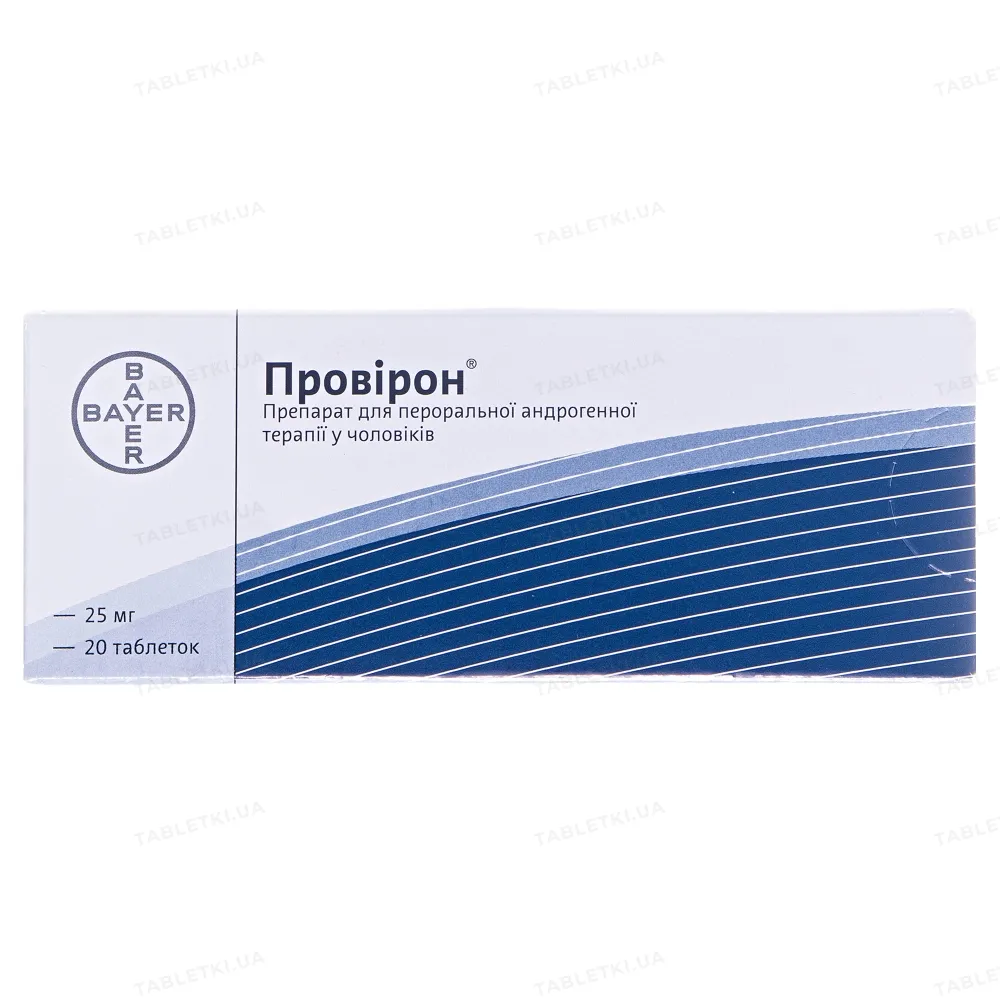
Table of Contents
INSTRUCTION FOR MEDICAL USE OF THE MEDICINAL PRODUCT PROVIRON® (PROVIRON®)
Composition:
Active substance: mesterolone;
1 tablet contains 25 mg of mesterolone;
Excipients: lactose monohydrate, corn starch, povidone, methylparahydroxybenzoate (E 218), propylparahydroxybenzoate (E 216), magnesium stearate.
Pharmaceutical form. Tablets.
Main physicochemical properties: round, white tablets with "AX" in a regular hexagon on one side and a score line on the other.
Pharmacotherapeutic group. Sex gland hormones and drugs used in disorders of the reproductive system. Androgens, 5-androstanone (3) derivatives. Mesterolone.
ATC code G03B B01.
Pharmacological properties.
Pharmacodynamics.
Mechanism of action
Mesterolone is a methylated derivative of dihydrotestosterone with weak androgenic properties, administered orally.
Pharmacodynamic effects
The presence of a methyl group at the C-1 position results in mesterolone, unlike testosterone and all its derivatives used for androgen therapy, not being metabolized to estrogen. This difference almost certainly explains why, at its usual therapeutic dosage, Proviron® has minimal suppressive effect on pituitary gonadotropin synthesis in healthy men. Therefore, it does not affect spermatogenesis. Hepatic tolerance to Proviron® is better compared to other orally active androgens (a fact probably related to the absence of a 17-alkyl substitution on the steroid nucleus).
Unlike other androgens, which replace endogenous androgens and suppress their synthesis, Proviron® complements the action of endogenous androgens. Also, unlike other orally active androgens, Proviron® is very well tolerated by the liver (likely due to the absence of a 17-alkyl substituent on the steroid core).
Pharmacokinetics.
Absorption. After oral administration, mesterolone is rapidly and almost completely absorbed within the dose range of 25–100 mg. Maximum serum concentration – 3.1 ± 1.1 ng/mL – is reached within 1.6 ± 0.6 hours after administration of Proviron®. The bioavailability of mesterolone is approximately 3% of the orally administered dose.
Distribution. 98% of mesterolone is bound to serum proteins: 40% to albumin and 58% to sex hormone-binding globulin (SHBG).
Metabolism/Biotransformation. Mesterolone is rapidly metabolized. The metabolic clearance rate from serum is 4.4 ± 1.6 mL×min⁻¹×kg⁻¹. The substance is not excreted unchanged by the kidneys. The main metabolites are 1α-methyl-androsterone, which in conjugated form accounts for 55–70% of renal-excreted metabolites. The ratio of glucuronides to sulfates of the main metabolite is approximately 12:1. Another metabolite is 1α-methyl-5α-androstan-3α,17β-diol, accounting for about 3% of metabolites excreted by the kidneys. No metabolic conversion into estrogens or corticoids has been observed.
Elimination. The level of active substance in serum decreases with an elimination half-life of 12–13 hours. 80% of the mesterolone dose is excreted in the form of metabolites in urine, and approximately 13% in feces. Within 7 days, 93% of the administered dose was recovered in urine and feces, of which 50% was excreted in urine within the first 24 hours.
Linearity/Non-linearity. Slight accumulation of mesterolone occurs with repeated dosing. Regular daily administration of Proviron® increases the drug concentration in serum by 30%.
Additional information on special patient groups
Paediatric patients. Proviron® is not indicated for use in children and adolescents and has not been clinically evaluated in males under 18 years of age (see section "Special precautions for use").
Elderly patients. Available data do not suggest the need for dose adjustment in elderly patients (see section "Special precautions for use").
Patients with hepatic impairment. Specific studies in patients with hepatic impairment have not been conducted. The use of Proviron® is contraindicated in men with current or past liver tumors (see section "Contraindications").
Patients with renal impairment. Specific studies in patients with renal impairment have not been conducted.
Ethnicity. Specific studies on the influence of ethnic factors on the pharmacokinetics of mesterolone have not been conducted.
Other patient groups. Specific studies in other patient groups have not been conducted.
Pharmacokinetic/pharmacodynamic relationship.
The pharmacokinetic/pharmacodynamic relationship has not been formally established.
Preclinical safety data.
In systemic tolerance studies after repeated administration of Proviron®, no contraindications to its use were found at doses required for therapy. Experimental studies on possible sensitizing effects of Proviron® have not been performed.
Embryotoxicity studies of Proviron® have not been conducted, as the drug is intended for therapeutic use in male patients. Fertility studies regarding possible harmful effects of Proviron® on spermatozoa have not been performed. Long-term systemic tolerance studies do not indicate toxic effects on spermatozoa, but do not exclude centrally mediated suppression of spermatogenesis. Such an effect is well known from animal experiments, but has not been observed in humans, even after long-term use at the recommended therapeutic dosage.
Mutagenicity studies have not been performed. Given the negative results from other in vitro and in vivo mutagenicity tests on similar steroid hormones, such an effect is not expected. Systemic tolerance studies in rats and dogs after repeated administration for 6 and 12 months showed no signs of tumorigenic potential of the substance. Therefore, further characterization of possible tumor-promoting potential was not pursued. However, it should be remembered that sex steroids may promote the growth of certain hormone-dependent tissues and tumors.
Overall, the results of toxicological studies do not raise concerns regarding the use of Proviron® in men for indicated conditions and at established dosages.
Clinical characteristics.
Indications.
Proviron® is indicated as replacement therapy in adult males with androgen deficiency or male infertility associated with male hypogonadism.
Contraindications.
Hypersensitivity to the active substance or to any of the excipients of the medicinal product.
Androgen-dependent carcinoma of the prostate or prostate-specific antigen level > 4 ng/mL.
Benign prostatic hyperplasia.
Current or previous liver tumors.
Breast cancer in men.
The use of Proviron® is contraindicated in women.
Interaction with other medicinal products and other forms of interaction.
No specific pharmacokinetic interaction studies with Proviron® have been conducted in vitro or in vivo. Also, there are no published studies on pharmacokinetic interactions with mesterolone.
Effect of other medicinal products on Proviron®
In general, anabolic steroids may cause pharmacokinetic interactions when co-administered with drugs that induce microsomal enzymes, which may lead to increased clearance of sex hormones and thus reduced therapeutic efficacy. This has been observed with several enzyme-inducing drugs, including rifampicin, carbamazepine, phenobarbital, and phenytoin.
An increase in peak concentration and overall exposure of mesterolone due to functional alteration of first-pass metabolism is expected when co-administered with strong inhibitors of the CYP3A4 enzyme, such as azole antifungals (e.g., itraconazole, voriconazole, fluconazole), fluvoxamine, verapamil, macrolides (e.g., clarithromycin, erythromycin), diltiazem, and grapefruit juice.
Since no specific interaction studies between CYP3A4 inhibitors and mesterolone have been conducted, the impact of such agents on the potential increase in mesterolone exposure is unknown. Therefore, the response to mesterolone treatment should be carefully monitored, especially when co-administered with strong CYP3A4 inhibitors (e.g., fluvoxamine).
If adverse effects typical of anabolic androgenic steroids occur during concomitant use of strong CYP3A4 inhibitors, consideration should be given to reducing the dose or temporarily discontinuing/discontinuation of treatment with mesterolone or CYP3A4 inhibitors.
Effect of the medicinal product Proviron® on other medicinal products
In general, androgens have been reported to enhance the activity of various medicinal products, leading to increased pharmacodynamic effects or toxicity. Such medicinal products include coumarin anticoagulants such as warfarin, antidiabetic agents, adrenocorticotropic hormone (ACTH) or corticosteroids, cyclosporine, and thyroxine. Resistance to neuromuscular blocking agents has also been reported.
Oral anticoagulants
Anabolic androgenic steroids such as mesterolone may alter anticoagulant activity; they may potentiate the effect of oral coumarin-type anticoagulants by modifying hepatic synthesis of clotting factors and through competitive inhibition of plasma protein binding. Enhanced monitoring of prothrombin time and INR is recommended. Patients receiving oral coumarin-type anticoagulants require careful observation, especially at the beginning and end of concomitant androgen therapy.
Antidiabetic agents
In patients receiving androgen therapy, insulin sensitivity may improve. Thus, anabolic steroids may improve glucose tolerance in diabetic patients, and the required dose of insulin and/or oral antidiabetic agents should be reduced.
ACTH or corticosteroids
Concomitant use of testosterone and ACTH or corticosteroids may increase the risk of fluid retention/edema. Therefore, these agents should be prescribed with caution, especially in patients with heart, kidney, or liver disease.
Other medicinal products
Concomitant use of androgens with cyclosporine may lead to increased plasma levels of cyclosporine, which may increase cyclosporine toxicity, primarily affecting liver or kidney function. Therefore, caution is recommended when co-administering mesterolone and cyclosporine. Plasma levels of cyclosporine should be monitored, especially at the beginning and end of androgen therapy. It is unknown whether this interaction may occur with other immunosuppressants.
Anabolic steroids have been reported to enhance the effect of neuromuscular blocking agents such as vecuronium, required to achieve adequate muscle relaxation for intubation and surgical intervention. It is unknown whether this interaction may occur with other neuromuscular blocking agents.
Concomitant use of androgens and bupropion may lead to a lowered seizure threshold. It is unknown whether this interaction may occur with other agents that lower the seizure threshold.
Generally, any hepatotoxic substance should not be used concomitantly with androgens.
Special precautions for use.
Proviron® is intended exclusively for men aged 18 years and older.
Misuse and dependence:
Mesterolone has been subject to abuse, typically in combination with other anabolic androgenic steroids. Misuse of mesterolone and other anabolic androgenic steroids poses serious health risks (e.g., cardiovascular events, in some cases with fatal outcome, hepatic and/or psychiatric events, as well as dependence) and is not recommended.
The medicinal product Proviron® should only be administered to men.
Prostate cancer
To exclude prostate cancer during treatment, periodic examination of the prostate gland is recommended.
Androgens may accelerate the development of subclinical prostate cancer or benign prostatic hyperplasia. Androgens and anabolic steroids such as testosterone must not be administered to men with prostate cancer or breast cancer.
Liver tumors and liver enzyme abnormalities
After administration of hormonal agents similar to those contained in the medicinal product Proviron®, benign liver tumors have been reported in isolated cases, and very rarely malignant liver tumors, which may sometimes lead to life-threatening intra-abdominal hemorrhage. In case of severe epigastric pain, hepatomegaly, or signs of intra-abdominal hemorrhage, the possibility of a liver tumor should be considered in differential diagnosis.
Priapism
Frequent or prolonged erections may occur. In some cases, the dose should be reduced or treatment discontinued to avoid penile damage (see section "Adverse reactions").
Use in athletes
Athletes should be informed that this medicinal product contains a component which may lead to positive doping tests.
Effect on laboratory tests
The use of androgenic steroids may influence the results of certain laboratory tests. Androgens may reduce thyroxine-binding to globulin, resulting in decreased plasma T4 concentration and increased resin uptake of T3 and T4 during laboratory testing of thyroxine. However, free thyroid hormone levels remain unchanged, and there are no clinical signs of thyroid dysfunction.
Precautions regarding excipients
The use of the medicinal product may cause allergic reactions (possibly delayed), as it contains methylparahydroxybenzoate (E 218) and propylparahydroxybenzoate (E 216).
The medicinal product contains lactose monohydrate. Patients with such rare hereditary conditions as galactose intolerance, Lapp lactase deficiency, or glucose-galactose malabsorption should not take this product.
Use during pregnancy or breastfeeding.
Pregnancy and lactation. Proviron® is not indicated for use in women.
Fertility. At the recommended dose, Proviron® does not have a negative effect on spermatogenesis. Treatment with Proviron® improves or normalizes the number and quality of spermatozoa, as well as fructose concentration in semen, thereby increasing the likelihood of conception.
Ability to influence reaction speed when driving or operating machinery.
Mesterolone has no effect or only a negligible effect on the ability to drive or operate machinery.
Method of administration and dosage.
| Androgen/testosterone deficiency should be clearly demonstrated by assessment of clinical characteristics and confirmed by two separate plasma testosterone measurements prior to initiating therapy with any testosterone replacement or testosterone derivatives, with other possible causes of symptoms being excluded beforehand. |
Dosage
Initial therapy: 75–100 mg/day in 3–4 divided doses for several months.
Maintenance therapy: 50–75 mg/day in 2–3 divided doses.
Regular monitoring of serum testosterone levels is recommended.
Elderly patients.
Available data do not suggest the need for dose adjustment in elderly patients (see section "Special instructions").
Patients with hepatic impairment.
Specific studies in patients with hepatic impairment have not been conducted. The use of Proviron® is contraindicated in men with current or past history of liver tumors (see section "Contraindications").
Patients with renal impairment.
Specific studies in patients with renal impairment have not been conducted.
Administration
The tablet should be swallowed whole with liquid.
Children.
Proviron® is not indicated for use in children and adolescents and has not been clinically evaluated in males under 18 years of age (see section "Special instructions").
Overdose.
No harmful consequences of overdose have been reported, and treatment is generally not required. According to acute toxicity studies following single-dose administration, Proviron® belongs to the category of non-toxic drugs. There is no risk of acute toxicity even if a patient accidentally takes several therapeutic doses at once.
Cases of androgenic steroid use for enhancing muscle development and physical performance in healthy individuals have been reported, using doses exceeding therapeutic levels, which may cause potential toxic effects.
Adverse reactions.
Warnings and precautions regarding the use of androgens are also provided in the section "Special precautions".
The table below lists adverse reactions reported from spontaneous reports and scientific literature sources; therefore, their frequency cannot be estimated.
| Organ system * |
Frequency unknown |
| Gastrointestinal disorders |
Abdominal pain |
| Skin and subcutaneous tissue disorders |
Acne, alopecia |
| Nervous system disorders |
Headaches |
| Benign and malignant neoplasms |
Benign and malignant liver neoplasms |
| Reproductive system and breast disorders |
Increased frequency of erection** Penile erection (priapism) |
* The preferred MedDRA term is used to describe a specific reaction and its synonyms and related conditions. The display of the adverse reaction term is based on MedDRA version 24.
** Increased frequency of erections.
Additional information regarding special patient groups
The effect of the medicinal product Proviron® has not been studied in special patient groups such as elderly men or patients with hepatic or renal impairment. There is no safety data available for these patient groups.
Reporting of suspected adverse reactions
Reporting suspected adverse reactions after medicinal product authorization is important. It allows ongoing monitoring of the benefit-risk balance of the medicinal product. Healthcare and pharmacy professionals, as well as patients or their legal representatives, are encouraged to report all cases of suspected adverse reactions and lack of efficacy via the Automated Pharmacovigilance Information System at the following link: https://aisf.dec.gov.ua.
Shelf life.
5 years.
Storage conditions.
Store in a place inaccessible to children. No special storage conditions required.
Packaging.
20 tablets per blister pack, 1 blister pack per cardboard box.
Prescription status.
Prescription only.
Manufacturer.
Bayer Weimar GmbH & Co. KG.
Manufacturer's address and place of business.
Dobbenheimer Strasse 20, 99427 Weimar, Germany.