Prospan® pastilles for sucking against cough
Ukraine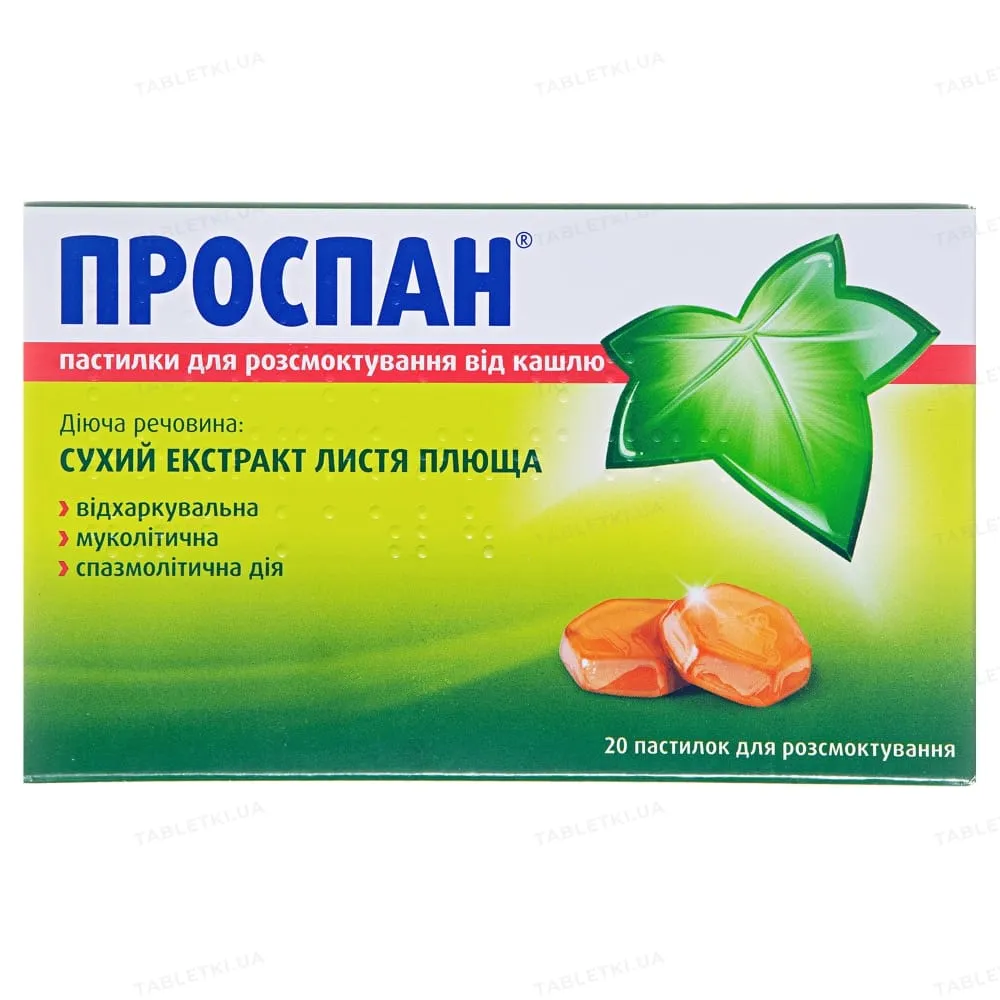
Table of Contents
INSTRUCTIONS FOR MEDICAL USE OF THE MEDICINAL PRODUCT PROSPAN® COUGH LOZENGES (PROSPAN® COUGH LOZENGES)
Composition:
Each lozenge contains 26 mg of dry extract of ivy leaves (Hedera helix L.) (5–7.5:1); extraction solvent: ethanol 30% (m/m);
Excipients: acacia (gum arabic), non-crystallizing sorbitol solution (E 420), liquid maltitol, anhydrous citric acid, acesulfame K, natural orange flavor, menthol flavor, medium-chain triglycerides, purified water.
Pharmaceutical form. Lozenges for oral dissolution.
Main physicochemical properties: yellow-brown hexagonal lozenges with orange and menthol flavor. The lozenges may contain air bubbles.
Pharmacotherapeutic group.
Medicinal products used in cough and colds. Expectorants.
ATC code R05CA.
Pharmacological Properties.
Pharmacodynamics.
Broncholytic effect of the medicinal product was observed in clinical studies. Experiments in animals demonstrated the spasmolytic effect of the drug.
The expectorant effect is presumed to result from irritation of the gastric mucosa, leading to reflex stimulation of bronchial mucosal glands via sensory parasympathetic fibers.
Immunohistochemical and biophysical in vitro studies have shown inhibition of β2-receptor internalization by α-hederin—even under conditions of strong stimulation—in alveolar epithelial type II cells.
Clinical characteristics.
Indications.
Chronic inflammatory diseases of the bronchi; viral infections of the upper respiratory tract accompanied by cough.
Contraindications.
Hypersensitivity to the active substance or to any other component of the medicinal product.
Interaction with other medicinal products and other forms of interaction.
Studies on interactions have not been conducted. Interactions are currently unknown.
Special precautions for use.
If symptoms persist for a prolonged period, as well as in case of dyspnea, fever, or expectoration of purulent or bloody sputum, immediate medical advice should be sought.
Concomitant use with opioid antitussives such as codeine or dextromethorphan is not recommended without medical consultation.
Should be used with caution in patients with gastritis or peptic ulcer disease.
The drug should not be taken by patients with rare hereditary fructose intolerance.
One pastille contains 0.53 g of maltitol and 0.53 g of sorbitol, equivalent to approximately 0.09 bread units, which should be taken into account by patients with diabetes mellitus.
Use during pregnancy or breastfeeding.
Due to lack of sufficient data, the drug is not recommended during pregnancy or breastfeeding.
Ability to influence reaction rate when driving or operating machinery. Does not affect.
Method of Administration and Dosage
For adults and children aged 12 years and older: 1 tablet 4 times daily (104 mg of dry ivy leaf extract per day).
For children aged 6 to 12 years: 1 tablet 2 times daily (52 mg of dry ivy leaf extract per day).
The tablets should be sucked in the oral cavity after meals. Do not suck while lying down.
The duration of treatment depends on the nature and severity of the disease symptoms, but usually lasts one week, even in cases of mild respiratory tract inflammation.
To achieve a sustained therapeutic effect, it is recommended to continue treatment for an additional 2–3 days after the patient's condition improves.
Children. The medicinal product is not recommended for children under 6 years of age.
Overdose.
Do not exceed the recommended daily dose. Ingestion of a large amount of the medicinal product (more than three daily doses) may cause nausea, vomiting, diarrhea, and nervous agitation.
Treatment is symptomatic.
Side effects.
Very rare (<1/10,000): allergic reactions (dyspnea, angioedema, skin rash, urticaria);
uncommon (≥1/10,000 – 1/1,000): gastrointestinal disturbances (nausea, vomiting, diarrhea, abdominal pain) may occur in sensitive patients.
If any adverse reactions occur, treatment should be discontinued and medical advice should be sought.
Shelf life.
3 years.
Do not use after the expiry date stated on the packaging.
Storage conditions.
Store at a temperature not exceeding 25 °C in a place protected from moisture.
Keep out of reach and sight of children.
Packaging. 10 pastilles in a blister; 2 blisters in a cardboard box.
Supply category. Over-the-counter (without prescription).
Manufacturer.
Engelhard Arzneimittel GmbH & Co. KG.
Manufacturer's address.
Herzbergstrasse 3, 61138 Niederdorfelden, Germany.