Prolia
Ukraine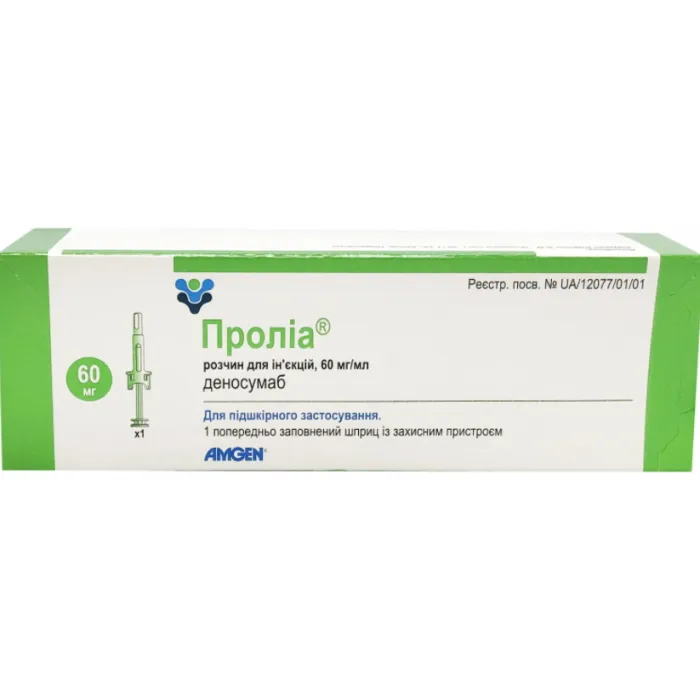
Table of Contents
INSTRUCTIONS FOR MEDICAL USE OF THE MEDICINAL PRODUCT PROLIA® (PROLIA®)
Composition:
Active substance: denosumab;
1 ml of solution contains 60 mg of denosumab;
Excipients: glacial acetic acid, sodium hydroxide, sorbitol (E 420), polysorbate 20, water for injections.
Pharmaceutical form. Solution for injection.
Main physicochemical properties: almost transparent, colorless or slightly yellowish solution with practically no foreign particles.
Pharmacotherapeutic group. Medicinal products for the treatment of bone diseases, other medicinal products affecting bone structure and mineralization.
ATC code M05B X04.
Pharmacological properties.
Pharmacodynamics.
Mechanism of action
Denosumab is a human monoclonal antibody (IgG2) produced in a mammalian cell line (Chinese hamster ovary cells) using recombinant DNA technology. Its target is RANKL, with which the drug binds with high affinity and specificity, thereby preventing activation of its receptor RANK on the surface of osteoclast precursors and mature osteoclasts. By inhibiting the RANKL/RANK interaction, denosumab suppresses the formation, function, and survival of osteoclasts, thus reducing bone resorption of both cortical and trabecular bone.
Pharmacodynamic effects
Treatment with Prolia® rapidly reduces the rate of bone remodeling, achieving the lowest level of the serum bone resorption marker, type 1 collagen C-telopeptides (CTX), within 3 days (85% reduction). This reduced level is maintained throughout the dosing interval. At the end of each dosing period, the CTX-lowering effect was partially attenuated: from a maximum reduction of more than 87% to a reduction of approximately more than 45% (ranging from 45% to 80%), reflecting the reversibility of Prolia®'s effects on bone remodeling following a decline in serum drug levels. With continued therapy, these effects were sustained.
Bone remodeling markers generally returned to levels observed prior to treatment with Prolia® within 9 months after the last dose. Upon re-initiation of treatment, the level of CTX inhibition by denosumab was similar to that observed in patients initiating therapy for the first time.
Immunogenicity
During clinical studies, no neutralizing antibodies to denosumab were detected. Less than 1% of patients treated with denosumab for up to 5 years tested positive (by a sensitive immunological assay) for non-neutralizing binding antibodies, with no evidence of changes in pharmacokinetics, toxicity, or clinical effect.
Clinical efficacy and safety in postmenopausal women with osteoporosis
The efficacy and safety of denosumab administered once every 6 months over 3 years were evaluated in postmenopausal women (7,808 women aged 60–91 years, of whom 23.6% had prevalent vertebral fractures) with baseline bone mineral density (BMD) T-scores at the lumbar spine or total hip between –2.5 and –4.0, and a mean absolute 10-year probability of major osteoporotic fracture of 18.60% (deciles: 7.9–32.4%) and of hip fracture of 7.22% (deciles: 1.4–14.9%). Women with other medical conditions or those receiving medications affecting bone were excluded from the study. All women received daily supplements of calcium (at least 1000 mg) and vitamin D (at least 400 IU).
Effect on vertebral fractures
Prolia® significantly reduced the risk of new vertebral fractures at 1, 2, and 3 years of treatment (p < 0.0001) (see Table 1).
Table 1. Effect of Prolia® on the risk of new vertebral fractures
| Period of use |
Proportion of women with fracture (%) |
Absolute risk reduction (%) (95% CI) |
Relative risk reduction (%) (95% CI) |
|
| Placebo n = 3906 |
Prolia® n = 3902 |
|||
| 0–1 year |
2.2 |
0.9 |
1.4 (0.8; 1.9) |
61 (42; 74)** |
| 0–2 years |
5.0 |
1.4 |
3.5 (2.7; 4.3) |
71 (61; 79)** |
| 0–3 years |
7.2 |
2.3 |
4.8 (3.9; 5.8) |
68 (59; 74)* |
*p < 0.0001, **p < 0.0001 – exploratory analysis
Effect on hip fractures
Prolia® demonstrated a 40% relative reduction (0.5% absolute risk reduction) in the risk of hip fracture over 3 years (p < 0.05). The incidence of hip fractures was 1.2% in the placebo group compared to 0.7% in the Prolia® group after 3 years.
In a post hoc analysis, a 62% relative risk reduction was observed with Prolia® in women >75 years of age (1.4% absolute risk reduction, p < 0.01).
Effect on all clinical fractures
Prolia® significantly reduced the occurrence of fractures of all types/groups (see Table 2).
Table 2. Effect of Prolia® on the risk of clinical fractures over 3 years
| Types of fractures |
Proportion of women with fracture (%) + |
Absolute risk reduction (%) (95% CI) |
Relative risk reduction (%) (95% CI) |
|
| Placebo n = 3906 |
Prolia® n = 3902 |
|||
| Any clinical fracture1 |
10.2 |
7.2 |
2.9 (1.6; 4.2) |
30 (19; 41)*** |
| Clinical vertebral fracture |
2.6 |
0.8 |
1.8 (1.2; 2.4) |
69 (53; 80)*** |
| Non-vertebral fracture2 |
8.0 |
6.5 |
1.5 (0.3; 2.7) |
20 (5; 33)** |
| Major non-vertebral fracture3 |
6.4 |
5.2 |
1.2 (0.1; 2.2) |
20 (3; 34)* |
| Major osteoporotic fracture4 |
8.0 |
5.3 |
2.7 (1.6; 3.9) |
35 (22; 45)*** |
*p ≤ 0.05, ** p = 0.0106 (secondary endpoint, included in multiplicity adjustment), *** p ≤ 0.0001
- Event rate based on Kaplan–Meier estimate over 3 years.
1 Includes clinical vertebral and nonvertebral fractures.
2 Excludes fractures of vertebrae, skull, face, mandible, metacarpals, phalanges of hands and feet.
3 Includes pelvis, distal femur, proximal tibia, ribs, proximal humerus, forearm, and femur.
4 Includes clinical vertebral fractures, hip, forearm, and humeral fractures as defined by WHO.
In women with baseline femoral neck BMD ≤ ‑2.5, treatment with Prolia® reduced the risk of nonvertebral fractures (35% relative risk reduction, 4.1% absolute risk reduction, p < 0.001, exploratory analysis).
Reductions in the incidence of new vertebral, hip, and nonvertebral fractures with Prolia® over 3 years were consistent regardless of baseline 10-year fracture risk.
Effect on bone mineral density
Compared to placebo, Prolia® significantly increased BMD at all anatomical sites at 1, 2, and 3 years. Prolia® increased BMD by 9.2% at the lumbar spine, 6.0% at the total hip, 4.8% at the femoral neck, 7.9% at the trochanter, 3.5% at the distal 1/3 radius, and 4.1% at the whole body over 3 years (all p < 0.0001).
In clinical studies evaluating discontinuation of Prolia®, BMD returned to approximately pre-treatment levels and remained higher than placebo for up to 18 months after the last dose. These data indicate that continued treatment with Prolia® is necessary to maintain the drug's effect. Reinitiation of Prolia® resulted in BMD increases similar to those observed with initial treatment.
Open-label extension study in postmenopausal osteoporosis
A total of 4550 women (2343 receiving Prolia® and 2207 receiving placebo), who had missed no more than one dose in the preceding pivotal study described above and completed the 36-month study visit, participated in a 7-year, multinational, multicenter, open-label, non-comparative extension study evaluating long-term safety and efficacy of Prolia®. All women in the extension study were required to receive 60 mg of Prolia® every 6 months, along with daily calcium (at least 1 g) and vitamin D (at least 400 IU). Overall, 2626 patients (58% of women enrolled in the extension study, i.e., 34% of women enrolled in the pivotal study) completed the extension study.
In patients receiving Prolia® for up to 10 years, BMD increased from baseline of the pivotal study by 21.7% at the lumbar spine, 9.2% at the total hip, 9.0% at the femoral neck, 13.0% at the trochanter, and 2.8% at the distal 1/3 radius. At the end of the study, the mean lumbar spine BMD T-score in patients treated for 10 years was -1.3.
Fracture incidence was assessed as a safety endpoint; however, fracture prevention efficacy could not be evaluated due to a high number of treatment discontinuations and the open-label study design. In patients treated with denosumab for 10 years (n = 1278), the cumulative incidence of new vertebral and nonvertebral fractures was approximately 6.8% and 13.1%, respectively. In patients who did not complete the study for any reason, fracture incidence during the treatment period was higher.
Thirteen confirmed cases of osteonecrosis of the jaw (ONJ) and two confirmed cases of atypical femoral fractures were observed during the extension study.
Clinical efficacy and safety in men with osteoporosis
The efficacy and safety of Prolia®, administered once every 6 months for 1 year, were evaluated in 242 men aged 31–84 years. Subjects with eGFR < 30 mL/min/1.73 m² were excluded from the study. All men received daily calcium (at least 1000 mg) and vitamin D (at least 800 IU) supplements.
The primary efficacy endpoint was the percentage change in BMD at the lumbar spine; fracture efficacy was not assessed. Compared to placebo, Prolia® significantly increased BMD at all anatomical sites over 12 months: by 4.8% at the lumbar spine, 2.0% at the total hip, 2.2% at the femoral neck, 2.3% at the trochanter, and 0.9% at the distal 1/3 radius (all p < 0.05). Prolia® increased lumbar spine BMD from baseline in 94.7% of men at the end of 1 year. Significant increases in BMD at the lumbar spine, total hip, femoral neck, and trochanter were observed as early as 6 months (p < 0.0001).
Bone histology in postmenopausal women and men with osteoporosis
Bone histology was evaluated in 62 postmenopausal women with osteoporosis or low bone mass who either had not previously received osteoporosis therapy or had switched from prior alendronate therapy, after 1–3 years of treatment with Prolia®. Fifty-nine women participated in a bone biopsy sub-study at 24 months (n = 41) and/or 84 months (n = 22) of the extension study in postmenopausal women with osteoporosis. Bone histology was also evaluated in 17 men with osteoporosis after 1 year of treatment with Prolia®. Bone biopsy results showed bone of normal morphology and quality without evidence of mineralization defects, immature bone, or bone marrow fibrosis. Histomorphometric results from the extension study demonstrated that the antiresorptive effects of Prolia®, measured by bone activation frequency and bone formation rate, were maintained over the long term in postmenopausal women with osteoporosis.
Clinical efficacy and safety in patients with bone loss due to androgen deprivation therapy
The efficacy and safety of Prolia®, administered once every 6 months for 3 years, were evaluated in men with histologically confirmed non-metastatic prostate cancer receiving androgen deprivation therapy (ADT) (1468 men aged 48–97 years). These patients were at increased risk of fracture (defined as age > 70 years or age < 70 years with a BMD T-score at the lumbar spine, total hip, or femoral neck < ‑1.0 or a history of osteoporotic fracture). All men received daily calcium (at least 1000 mg) and vitamin D (at least 400 IU) supplements.
Compared to placebo, Prolia® significantly increased BMD at all anatomical sites over 3 years: by 7.9% at the lumbar spine, 5.7% at the total hip, 4.9% at the femoral neck, 6.9% at the trochanter, 6.9% at the distal 1/3 radius, and 4.7% at the whole body (all p < 0.0001). In a prospectively planned exploratory analysis, significant increases in BMD at the lumbar spine, total hip, femoral neck, and trochanter were observed as early as 1 month after the initial dose.
Prolia® demonstrated a significant reduction in relative risk of new vertebral fractures: 85% (1.6% absolute risk reduction) at 1 year, 69% (2.2% absolute risk reduction) at 2 years, and 62% (2.4% absolute risk reduction) at 3 years (all p < 0.01).
Clinical efficacy and safety in patients with bone loss due to adjuvant aromatase inhibitor therapy
The efficacy and safety of Prolia®, administered once every 6 months for 2 years, were evaluated in women with non-metastatic breast cancer (252 women aged 35–84 years) and baseline BMD T-scores between -1.0 and -2.5 at the lumbar spine, total hip, or femoral neck. All women received daily calcium (at least 1000 mg) and vitamin D (at least 400 IU) supplements.
The primary efficacy endpoint was the percentage change in BMD at the lumbar spine; fracture efficacy was not assessed. Compared to placebo, Prolia® significantly increased BMD over 2 years: by 7.6% at the lumbar spine, 4.7% at the total hip, 3.6% at the femoral neck, 5.9% at the trochanter, 6.1% at the distal 1/3 radius, and 4.2% at the whole body (all p < 0.0001).
Treatment of glucocorticoid-induced bone loss
The efficacy and safety of Prolia® were evaluated in 795 patients (70% women and 30% men) aged 20 to 94 years receiving ≥ 7.5 mg of oral prednisone daily (or equivalent).
Two subpopulations were studied: patients continuing glucocorticoid therapy (≥ 7.5 mg prednisone daily or equivalent for ≥ 3 months prior to study entry; n = 505), and patients newly initiating glucocorticoid therapy (≥ 7.5 mg prednisone daily or equivalent for < 3 months prior to study entry; n = 290). Patients were randomized (1:1) to receive either Prolia® 60 mg subcutaneously every 6 months or risedronate 5 mg orally once daily (active control) for 2 years. Patients received daily calcium (at least 1000 mg) and vitamin D (at least 800 IU).
Effect on bone mineral density
In the subpopulation continuing glucocorticoid therapy, Prolia® demonstrated significantly greater increases in lumbar spine BMD compared to risedronate at 1 year (Prolia®: 3.6%, risedronate: 2.0%; p < 0.001) and at 2 years (Prolia®: 4.5%, risedronate: 2.2%; p < 0.001). In the subpopulation newly initiating glucocorticoid therapy, Prolia® demonstrated significantly greater increases in lumbar spine BMD compared to risedronate at 1 year (Prolia®: 3.1%, risedronate: 0.8%; p < 0.001) and at 2 years (Prolia®: 4.6%, risedronate: 1.5%; p < 0.001).
Additionally, Prolia® demonstrated significantly greater mean percentage increases in BMD from baseline compared to risedronate at the total hip, femoral neck, and trochanter.
The study was not designed to demonstrate fracture differences. At 1 year, the incidence of new radiographic vertebral fractures was 2.7% (denosumab) vs. 3.2% (risedronate). The incidence of nonvertebral fractures was 4.3% (denosumab) vs. 2.5% (risedronate). At 2 years, corresponding rates were 4.1% vs. 5.8% for new radiographic vertebral fractures and 5.3% vs. 3.8% for nonvertebral fractures. Most fractures occurred in the subpopulation continuing glucocorticoid therapy.
Pediatric population
An open-label, non-comparative Phase III clinical study evaluated the safety, efficacy, and pharmacokinetics of denosumab in children aged 2 to 17 years with osteogenesis imperfecta, of whom 52.3% were male and 88.2% were Caucasian. A total of 153 patients received subcutaneous injections of denosumab at a dose of 1 mg/kg body weight (up to a maximum of 60 mg) every 6 months for 36 months. Sixty patients were switched to a dosing regimen of once every 3 months.
After 12 months, in the group receiving treatment every 3 months, the least squares (LS) mean change (standard error – SE) in lumbar spine BMD Z-score from baseline was 1.01 (0.12).
The most common adverse reactions in the group receiving treatment every 6 months were arthralgia (45.8%), limb pain (37.9%), back pain (32.7%), and hypercalciuria (32.0%). Hypercalcemia was reported in both the group receiving treatment every 6 months (19%) and the group receiving treatment every 3 months (36.7%). Serious adverse events of hypercalcemia were observed in the group receiving treatment every 3 months (13.3%).
In the extension study (N = 75), serious adverse events of hypercalcemia (18.5%) were observed in the group receiving treatment every 3 months.
The studies were terminated prematurely due to life-threatening adverse events and hospitalizations resulting from hypercalcemia (see section "Dosage and administration").
The European Medicines Agency has waived the obligation to submit results of studies with Prolia® in all pediatric subpopulations for the treatment of bone loss associated with ablation therapy with sex hormones, and in pediatric subpopulations under 2 years of age for the treatment of osteoporosis. See section "Dosage and administration" for information on pediatric use.
Pharmacokinetics
Absorption
After subcutaneous administration at a dose of 1.0 mg/kg, approximately corresponding to the approved dose of 60 mg based on AUC, exposure was 78% of that achieved after intravenous administration of the same dose. Following subcutaneous administration of 60 mg denosumab, the maximum serum concentration (Cmax) of denosumab is 6 µg/mL (range: 1–17 µg/mL) and is reached at 10 days (range: 2–28 days).
Metabolism
Denosumab consists exclusively of amino acids and carbohydrates, similar to natural immunoglobulins. Therefore, it is unlikely to be eliminated via hepatic metabolism. Its metabolism and elimination are believed to occur via the same pathways as immunoglobulin clearance, following breakdown into small peptides and individual amino acids.
Elimination
After reaching Cmax, serum levels decline over 3 months (range: 1.5–4.5 months) due to a half-life of 26 days (range: 6–52 days). Denosumab was undetectable in 53% of patients 6 months after administration.
With repeated administration of denosumab at 60 mg subcutaneously every 6 months, no drug accumulation or changes in pharmacokinetics over time were observed. The pharmacokinetics of denosumab were not affected by the formation of anti-denoumab antibodies, and the pharmacokinetic profile was similar in women and men. Age (28–87 years), race, disease state (bone loss or osteoporosis, prostate cancer or breast cancer) did not have a significant impact on denosumab pharmacokinetics.
A trend toward increased body weight and decreased drug exposure (based on AUC and Cmax) was observed. However, this trend is not considered clinically significant, as the pharmacodynamic effect is assessed by bone remodeling markers and BMD increases, which were consistent across different weight categories.
Linearity/Non-linearity
Dose-dependent studies revealed a non-linear relationship between denosumab pharmacokinetics and dose, with decreasing clearance as dose or concentration increases. However, approximately dose-proportional increases in drug exposure are observed with doses of 60 mg.
Renal impairment
In a study involving 55 patients with various stages of renal impairment, including those requiring dialysis, the degree of renal impairment did not affect denosumab pharmacokinetics.
Hepatic impairment
No specific studies in patients with hepatic impairment have been conducted. Monoclonal antibodies are generally not eliminated via hepatic metabolism; therefore, hepatic impairment is not expected to affect denosumab pharmacokinetics.
Pediatric population
Prolia® should not be administered to pediatric patients (see sections "Dosage and administration" and "Pharmacological properties").
In a Phase III study in children with osteogenesis imperfecta (N = 153), maximum serum concentrations of denosumab were observed on day 10 across all age groups. In both the every-3-months and every-6-months treatment groups, mean minimum residual serum concentrations of denosumab were higher in children aged 11 to 17 years; the lowest mean residual concentrations were recorded in children aged 2 to 6 years.
Preclinical data
In single- and repeat-dose toxicity studies in cynomolgus monkeys, doses of denosumab that resulted in systemic exposure 100–150 times higher than recommended for humans did not affect cardiovascular physiology, male or female reproductive function, or cause specific target organ toxicity.
Standard tests to assess the genotoxic potential of denosumab were not performed, as such tests are not relevant for this molecule. However, it is unlikely that denosumab has any genotoxic potential.
The carcinogenic potential of denosumab has not been evaluated in long-term animal studies.
In preclinical studies, mice with blocked RANK or RANKL genes demonstrated impaired fetal lymph node development and lack of lactation due to inhibition of mammary gland maturation (lobulo-alveolar development during pregnancy).
In a study in cynomolgus monkeys administered denosumab during a period equivalent to the first trimester of human pregnancy, at exposures up to 99 times higher than in humans (60 mg every 6 months), no adverse effects on maternal or fetal organisms were observed. Lymph nodes of the fetus were not examined in this study.
In another study in cynomolgus monkeys administered denosumab throughout pregnancy at exposures 119 times higher than in humans (60 mg every 6 months), the following findings were observed: increased stillbirth and postnatal mortality; impaired bone growth manifested as reduced bone strength, decreased hematopoiesis, and delayed tooth eruption; absence of peripheral lymph nodes and reduced neonatal fetal growth. The no-observed-adverse-effect level (NOAEL) was not established. Six months after birth, bone-related changes returned to normal, and no effect on tooth eruption was observed. However, effects on lymph nodes and dentition persisted, and in one animal minimal to moderate mineralization of multiple tissues was observed (causal relationship to treatment not clear). There was no evidence of harm to the mother before delivery; adverse reactions in the mother occurred infrequently during delivery. Mammary gland development in monkeys was normal.
In preclinical bone quality studies in monkeys, long-term denosumab treatment was associated with slowed remodeling, improved bone strength, and normal bone histological parameters. Serum calcium levels decreased transiently, and parathyroid hormone levels increased transiently in ovariectomized monkeys receiving denosumab.
In male mice genetically modified to express huRANKL (knock-in mice) subjected to trans-cortical fracture, denosumab delayed cartilage tissue organization and bone callus remodeling compared to controls, but biochemical strength was not adversely affected.
Knockout mice (see section "Pregnancy and breastfeeding") with blocked RANK or RANKL genes demonstrated reduced body weight, impaired bone growth, growth plate abnormalities, and absence of tooth eruption. Impaired bone growth, growth plate abnormalities, and absence of tooth eruption were also observed in newborn rats administered RANKL inhibitors, and these changes were partially reversible after discontinuation of RANKL inhibition.
In newborn mice, high-dose inhibition of RANKL (targeted therapy by denosumab) using an osteoprotegerin-Fc fusion protein (OPG Fc) was associated with suppressed bone growth and tooth eruption. These changes were partially reversible in this model when RANKL inhibitor dosing was discontinued. In adolescent primates receiving denosumab at doses 27 and 150 times higher (10 and 50 mg/kg) than the clinical dose, pathological changes in growth plates were observed. Thus, denosumab treatment may impair bone growth in children with open growth plates and may suppress tooth eruption.
Clinical characteristics.
Indications.
Treatment of osteoporosis in postmenopausal women and in men at increased risk of fractures. In postmenopausal women, the drug Prolia® significantly reduces the risk of vertebral fractures, non-vertebral fractures, and hip fractures.
Treatment of bone mass loss in men at increased risk of fractures who are receiving androgen deprivation therapy due to prostate cancer (see section "Pharmacodynamics"). In men with prostate cancer receiving androgen deprivation therapy, Prolia® significantly reduces the risk of vertebral fractures.
Treatment of glucocorticoid-induced bone mass loss in adult patients at increased risk of fractures receiving long-term systemic glucocorticoid therapy (see section "Pharmacodynamics").
Contraindications.
Hypersensitivity to the active substance or to any of the excipients.
Hypocalcemia (see section "Special precautions").
Interaction with other medicinal products and other forms of interaction.
An interaction study demonstrated that denosumab does not affect the pharmacokinetics of midazolam, which is metabolized by cytochrome P450 3A4 (CYP3A4). This indicates no influence of denosumab on the pharmacokinetics of medicinal products metabolized by CYP3A4.
There are no clinical data regarding interaction between denosumab and hormone replacement therapy (estrogens); however, the potential for pharmacodynamic interaction is considered low.
According to study data (when switching from prior alendronate therapy to denosumab treatment), in postmenopausal women with osteoporosis, the pharmacokinetics and pharmacodynamics of denosumab were not altered following prior use of alendronate.
Special precautions for use.
Traceability
In order to improve traceability of biological medicinal products, the name and batch number of the administered product should be clearly recorded.
Calcium and vitamin D supplementation
Adequate intake of calcium and vitamin D is essential for all patients.
Precautions for use
Hypocalcemia
It is important to identify patients at risk of developing hypocalcemia. Hypocalcemia should be corrected with adequate calcium and vitamin D intake prior to initiating treatment with the medicinal product. Clinical monitoring of calcium levels is recommended in patients at risk of developing hypocalcemia during the first two weeks following the initial dose. If symptoms suggestive of hypocalcemia occur in any patient during treatment (see section "Adverse reactions" for symptoms), serum calcium levels should be measured. Patients should be advised to report any symptoms indicative of hypocalcemia.
During post-marketing surveillance, reports of severe symptomatic hypocalcemia (resulting in hospitalization, life-threatening events, and fatal cases) have been received. These cases mostly occurred within the first few weeks after initiation of treatment, but may also occur later.
Concomitant glucocorticoid therapy is an additional risk factor for hypocalcemia.
Renal impairment
Patients with severe renal impairment (creatinine clearance < 30 mL/min) or those on dialysis are at increased risk of developing hypocalcemia. The risk of hypocalcemia and associated elevation of parathyroid hormone levels increases with the severity of renal impairment. Severe and fatal cases have been reported. Adequate calcium and vitamin D intake, along with regular monitoring of serum calcium levels (see above), are particularly important for these patients.
Skin infections
Skin infections (predominantly cellulitis) may occur in patients receiving denosumab, leading to hospitalization (see section "Adverse reactions"). Patients should seek immediate medical attention if symptoms of cellulitis develop.
Osteonecrosis of the jaw (ONJ)
Rare cases of ONJ have been reported in patients receiving Prolia® for the treatment of osteoporosis (see section "Adverse reactions").
Treatment initiation or re-initiation should be delayed by one month in patients with non-healing soft tissue lesions in the oral cavity.
Prior to denosumab treatment, patients with concomitant risk factors should undergo a dental consultation to implement appropriate preventive measures and to individually assess the benefit-risk ratio.
Factors to consider when evaluating a patient's risk of developing ONJ include:
- Potency of the bone resorption-inhibiting agent (higher risk with more potent compounds), route of administration (higher risk with parenteral administration), and cumulative dose of the bone resorption-inhibiting agent;
- Cancer, comorbid conditions (e.g., anemia, coagulopathies, infections), smoking;
- Concomitant therapies: corticosteroids, chemotherapy, angiogenesis inhibitors, head and neck radiotherapy;
- Poor oral hygiene, periodontal disease, ill-fitting dentures, dental disease history, and invasive dental procedures (e.g., tooth extractions).
All patients should maintain appropriate oral hygiene, undergo regular preventive dental examinations, and promptly report any oral symptoms during denosumab treatment, including tooth mobility, pain or swelling, non-healing sores, or discharge from the oral cavity.
If invasive dental procedures are deemed necessary after careful consideration, they should not be performed immediately before or immediately after denosumab administration.
The occurrence of ONJ requires clinical evaluation and development of a treatment plan by the patient’s physician in collaboration with a dentist or surgeon experienced in managing ONJ. Temporary discontinuation of treatment should be considered until the jaw osteonecrosis is resolved and risk factors are mitigated.
Osteonecrosis of the external auditory canal
Cases of osteonecrosis of the external auditory canal have been reported during denosumab treatment. Potential risk factors include steroid use and chemotherapy and/or local risk factors such as infection or trauma. The possibility of osteonecrosis of the external auditory canal should be considered when treating patients with ear disorders, including chronic ear infections, with denosumab.
Atypical femoral fractures
Cases of atypical femoral fractures have been reported in patients treated with denosumab (see section "Adverse reactions"). Atypical femoral fractures may occur with minimal or no trauma in the subtrochanteric or diaphyseal region of the femur. These events are characterized by specific radiographic findings. Atypical femoral fractures have also been reported in patients with certain comorbidities (e.g., vitamin D deficiency, rheumatoid arthritis, hypophosphatasia) and with the use of certain medications (e.g., bisphosphonates, glucocorticoids, proton pump inhibitors). Such fractures have also occurred in the absence of anti-resorptive therapy. Similar fractures reported with bisphosphonate use are often bilateral; therefore, the contralateral femur should be examined in patients with a confirmed femoral shaft fracture during denosumab therapy.
Discontinuation of denosumab should be considered in patients suspected of having an atypical femoral fracture, based on an individual benefit-risk assessment.
Patients receiving denosumab should be advised to report new or unusual pain in the thigh, hip, or groin. Patients presenting with such symptoms should be evaluated for incomplete femoral fractures.
Long-term treatment with anti-resorptive agents
Long-term treatment with anti-resorptive agents (including both denosumab and bisphosphonates) may increase the risk of adverse effects such as osteonecrosis of the jaw and atypical femoral fractures due to substantial suppression of bone remodeling (see section "Dosage and administration").
Concomitant treatment with other medicinal products containing denosumab
Patients receiving denosumab should not simultaneously receive other medicinal products containing denosumab (e.g., for prevention of skeletal-related events in adult patients with bone metastases from solid tumors).
Hypercalcemia in pediatric patients
Prolia® must not be administered to pediatric patients (under 18 years of age). Severe cases of hypercalcemia have been reported. During clinical trials, complications such as acute renal failure occurred in some patients.
Precautions regarding excipients
This medicinal product contains 47 mg of sorbitol in each mL of solution.
The additive effect of concomitantly administered medicinal products containing sorbitol (or fructose), and dietary intake of sorbitol (or fructose), should be considered.
The product contains less than 1 mmol sodium (23 mg) per 60 mg, i.e., essentially "sodium-free".
Use during pregnancy or breastfeeding.
Pregnancy
Data on the use of denosumab in pregnant women are limited. Animal studies indicate reproductive toxicity (see section "Preclinical safety data").
Prolia® is not recommended for use in pregnant women or in women of reproductive potential who are not using contraception. Women should be advised to avoid pregnancy during treatment with Prolia® and for at least 5 months thereafter. Any effects of Prolia® are likely to be more pronounced in the second and third trimesters of pregnancy, as monoclonal antibodies are transferred across the placenta in a linear manner with advancing gestation, with the greatest transfer occurring during the third trimester.
Breastfeeding
It is unknown whether denosumab is excreted in human breast milk. Studies in genetically modified mice with RANKL inactivated by gene deletion (knockout mice) suggest that the absence of RANKL (the target of denosumab, see section "Pharmacodynamics") affects mammary gland development, leading to impaired breastfeeding after delivery (see section "Preclinical safety data"). The decision to discontinue breastfeeding or to discontinue therapy with Prolia® should be based on the importance of breastfeeding for the infant and the importance of therapy with Prolia® for the mother.
Fertility
There are no data on the effect of denosumab on human fertility. Animal studies do not indicate direct or indirect adverse effects on fertility (see section "Preclinical safety data").
Ability to influence the speed of reactions while driving or operating machinery.
Prolia® has no or negligible effect on the ability to drive or operate machinery.
Method of Administration and Dosage
Dosage
The recommended dose of denosumab is one subcutaneous injection of 60 mg of the drug administered once every 6 months, injected into the thigh, abdomen, or outer surface of the upper arm.
Patients should receive calcium supplements and vitamin D as an adjunct to treatment (see section "Special Warnings and Precautions for Use").
The optimal total duration of treatment for osteoporosis using anti-resorptive agents (including both denosumab and bisphosphonates) has not been established. The need for continued therapy should be periodically reassessed, taking into account the benefits and potential risks of denosumab for each individual patient, especially after 5 or more years of treatment (see section "Special Warnings and Precautions for Use").
Elderly patients (aged ≥ 65 years)
Dosage adjustment in elderly patients is not required.
Renal impairment
Dosage adjustment in patients with renal impairment is not required (see section "Special Warnings and Precautions for Use" regarding recommendations for monitoring calcium levels).
There are no data available for patients receiving long-term systemic glucocorticoid therapy and with severe renal impairment (GFR < 30 mL/min).
Hepatic impairment
The safety and efficacy of denosumab in patients with hepatic impairment have not been studied (see section "Pharmacokinetics").
Method of Administration
For subcutaneous use.
The product should be administered by patients who have been trained in proper injection technique.
Special Precautions for Handling and Disposal:
- Before administration, inspect the Prolia® solution for the presence of particulate matter or discoloration. Do not use the solution if it contains particles, appears cloudy, or has changed color.
- Do not shake.
- To minimize discomfort at the injection site, allow the prefilled syringe to warm to room temperature (up to 25 °C) before injection, and administer the drug slowly.
- The entire contents of the prefilled syringe must be administered.
Any unused portion of the medicinal product remaining in the prefilled syringe after injection must be discarded according to applicable regulations.
Instructions for Patients on the Use of the Prefilled Syringe with Needle Cap and Needle Shield Containing a Safety Device to Prevent Accidental Needlestick Injuries
| Device diagram |
||||||||||||||||||
| Before use |
After use |
|||||||||||||||||
|
|
|||||||||||||||||
| Important! |
|
| Before using the pre-filled syringe with needle and protective cap, equipped with a safety device against accidental needlestick injury, please read this important information: |
|
| |
Do not attempt to administer injections yourself without first receiving instructions from your doctor or healthcare professional. |
| |
Proliа® is administered by injection into the tissue just beneath the skin (subcutaneous injection). |
| Do not remove the grey cap from the pre-filled syringe until you are ready to administer the injection. |
|
| Do not use the pre-filled syringe if it has previously fallen onto a hard surface. Use a new pre-filled syringe and contact your doctor or healthcare professional. |
|
| Do not activate the pre-filled syringe unless you are about to administer the injection. |
|
| Do not remove the clear protective needlestick safety device from the pre-filled syringe. |
|
| If you have any questions, consult your doctor or healthcare professional. |
|
| Step 1: Preparation |
|
| A |
Remove the prefilled syringe container from the packaging and prepare the necessary injection supplies: alcohol wipes, cotton ball or gauze pad, adhesive plaster, and a sharps disposal container (not included). |
| For a more comfortable injection, allow the prefilled syringe to sit at room temperature for 30 minutes before injecting. Wash your hands thoroughly with soap and water. Place the syringe and necessary supplies on a clean, well-lit work surface. |
|
| Do not attempt to warm the syringe using a heat source, such as hot water or a microwave. |
|
| Do not leave the prefilled syringe in direct sunlight. |
|
| Do not shake the prefilled syringe. |
|
| |
Keep the prefilled syringe out of the sight and reach of children. |
| B |
Open the syringe container by removing the cover. Remove the pre-filled syringe from the container. |
| Hold here |
|
| For safe use: |
|
| Do not touch the plunger. |
|
| Do not touch the gray needle cap. |
|
| C |
Inspect the medicine and the prefilled syringe. |
|
| Medicine |
||
| Do not use the prefilled syringe if: |
||
|
||
| In all of these cases, contact your doctor or healthcare professional. |
||
| Step 2: Preparation |
|||
| A |
Wash your hands thoroughly. Prepare and clean the injection site. |
||
| You can use: |
Outer surface of the shoulder |
||
| Abdomen |
|||
| Upper part of the thigh |
|||
|
|||
| Clean the injection site with an alcohol swab. Wait until the skin is dry. |
|||
| Do not touch the injection site before administering the injection. |
|||
| Do not inject into areas where the skin is thin, discolored, tight, or damaged. Avoid injecting into scarred areas or stretch marks. |
|||
| B |
Remove the gray needle cap carefully in a direction away from your body. |
| C |
Pinch the injection site to create a firm surface. |
|
| It is important to keep the skin pinched during injection. |
||
| Step 3: Insertion |
|
| A |
Holding the skin taut, INSERT the needle into the skin. |
| Do not touch the prepared area of skin. |
|
| B |
Slowly and steadily PUSH the plunger, advancing it until you feel or hear a "click" sound. Press the plunger all the way down until the "click" is heard. |
|||
|
||||
| It is important to press the plunger fully until a "click" is heard to ensure the full dose is delivered. |
||||
| C |
RELEASE the thumb. Then LIFT the syringe away from the skin. |
| After you release the plunger, the needle safety guard will cover the needle. |
|
| Do not recap the grey cap onto the used syringe. |
|
| Step 4: Completion |
||
| A |
Dispose of the used syringe and other materials into the sharps disposal container. |
|
| Medicines must be disposed of according to local requirements. Ask your doctor how to properly dispose of the syringe. These measures will help protect the environment. Keep the syringe and sharps disposal container out of the sight and reach of children. |
||
| Do not reuse a used syringe. |
||
| Do not recycle pre-filled syringes or dispose of them in household waste. |
||
| B |
Inspect the injection site. |
| If blood appears, press a cotton ball or gauze pad against the injection site. Do not rub the injection site. Apply a bandage if necessary. |
|
Children
The drug Prolia® must not be administered to children (under 18 years of age) due to the risk of developing severe hypercalcemia, potential inhibition of bone growth, and delayed tooth eruption (see sections "Preclinical Findings" and "Special Warnings and Precautions for Use"). Current data regarding children aged 2 to 17 years are presented in the sections "Pharmacological Properties" and "Pharmacokinetics".
Overdose
There are no clinical data available on overdose. In clinical studies, denosumab was administered at doses up to 180 mg every 4 weeks (cumulative dose of up to 1080 mg over 6 months), and no adverse effects other than those already listed were observed.
Adverse reactions.
Summary of safety profile
The most common adverse effects observed with denosumab (occurring in more than 1 in 10 patients) are musculoskeletal pain and pain in extremities. Infrequent cases of cellulitis; rare cases of hypocalcemia, hypersensitivity, osteonecrosis of the jaw, and atypical femoral fractures (see sections "Special warnings and precautions for use" and "Adverse reactions": Description of selected adverse reactions) have been reported in patients receiving denosumab.
Tabulated list of adverse reactions
Table 3 lists adverse reactions reported during phase II and III clinical trials in patients with osteoporosis and patients with breast or prostate cancer receiving hormonal therapy, as well as spontaneous post-marketing reports.
Adverse reactions are classified into frequency categories as follows (see Table 3): very common (≥ 1/10), common (≥ 1/100 to < 1/10), uncommon (≥ 1/1,000 to < 1/100), rare (≥ 1/10,000 to < 1/1,000), very rare (< 1/10,000), and not known (cannot be estimated from the available data). Within each category, adverse reactions are listed by MedDRA system organ class and presented in order of decreasing frequency.
Table 3. Adverse reactions in patients with osteoporosis and patients with breast or prostate cancer receiving hormone suppression therapy
| MedDRA System Organ Class |
Frequency Category |
Adverse Reaction |
| Infections and infestations |
Common |
Urinary tract infections |
| Common |
Upper respiratory tract infections |
|
| Uncommon |
Diverticulitis1 |
|
| Uncommon |
Cellulitis1 |
|
| Uncommon |
Ear infections |
|
| Immune system disorders |
Rare |
Drug hypersensitivity1 |
| Rare |
Anaphylactic reaction1 |
|
| Metabolism and nutrition disorders |
Rare |
Hypocalcemia1 |
| Nervous system disorders |
Common |
Sciatica |
| Gastrointestinal disorders |
Common |
Constipation |
| Common |
Abdominal discomfort |
|
| Skin and subcutaneous tissue disorders |
Common |
Rash |
| Common |
Atopic dermatitis |
|
| Common |
Alopecia |
|
| Uncommon |
Drug-induced rash resembling lichen planus1 |
|
| Very rare |
Allergic vasculitis |
|
| Musculoskeletal and connective tissue disorders |
Very common |
Limb pain |
| Very common |
Musculoskeletal and bone pain1 |
|
| Rare |
Osteonecrosis of the jaw1 |
|
| Rare |
Atypical femoral fractures1 |
|
| Frequency unknown |
Osteonecrosis of the external auditory canal2 |
1 See section "Description of selected adverse reactions".
2 See section "Special precautions for use".
In a pooled analysis of data from all phase II and III placebo-controlled trials, influenza was reported at a rate of 1.2% for denosumab and 0.7% for placebo. However, this imbalance was established in the pooled analysis of data and was not observed in the stratified analysis.
Description of selected adverse reactions
Hypocalcemia
In two phase III placebo-controlled clinical studies in postmenopausal women with osteoporosis, approximately 0.05% (2 out of 4050) experienced reduced serum calcium levels (less than 1.88 mmol/L) after administration of Prolia®. Reduced serum calcium levels (less than 1.88 mmol/L) were not reported in either of the two phase III placebo-controlled clinical studies in patients receiving hormonal therapy or in the phase III placebo-controlled clinical study in men with osteoporosis.
Post-marketing surveillance data have reported rare cases of severe symptomatic hypocalcemia leading to hospitalization, life-threatening events, and fatal outcomes, primarily in patients at increased risk of developing hypocalcemia who were receiving denosumab, and primarily within the first weeks after initiation of therapy.
Cases of clinical manifestations of severe symptomatic hypocalcemia included QT interval prolongation, tetany, seizures, and mental status changes (see section "Special precautions for use"). Symptoms of hypocalcemia observed during clinical trials with denosumab included paresthesia or muscle stiffness, twitching, cramps, and muscle spasms.
Skin infections
In phase III placebo-controlled clinical trials, the overall incidence of skin infections was similar between the placebo and denosumab groups: in postmenopausal women with osteoporosis (placebo [1.2%, 50 out of 4041] versus Prolia® [1.5%, 59 out of 4050]); in men with osteoporosis (placebo [0.8%, 1 out of 120] versus Prolia® [0%, 0 out of 120]); in patients with breast or prostate cancer receiving hormonal therapy (placebo [1.7%, 14 out of 845] versus Prolia® [1.4%, 12 out of 860]). Skin infections leading to hospitalization occurred in 0.1% (3 out of 4041) among postmenopausal women with osteoporosis receiving placebo compared to 0.4% (16 out of 4050) among those receiving Prolia®. In most cases, these were cellulitis. Skin infections reported as serious adverse reactions were similar in the placebo group (0.6%, 5 out of 845) and the Prolia® group (0.6%, 5 out of 860) in breast and prostate cancer studies.
Osteonecrosis of the jaw (ONJ)
Cases of ONJ were reported rarely in 16 patients in clinical trials for osteoporosis and for breast or prostate cancer in patients receiving hormonal therapy, with a total of 23,148 patients (see section "Special precautions for use"). Thirteen of these cases occurred in postmenopausal women with osteoporosis during a phase III clinical trial with continued denosumab treatment up to 10 years. The incidence of ONJ was 0.04% at 3 years, 0.06% at 5 years, and 0.44% at 10 years of denosumab treatment. The risk of ONJ increased with longer duration of denosumab therapy.
Atypical femoral fractures
In patients treated with denosumab in osteoporosis clinical trials, atypical femoral fractures were rarely reported (see section "Special precautions for use").
Diverticulitis
In phase III of a placebo-controlled clinical trial in patients with prostate cancer receiving androgen deprivation therapy (ADT), an imbalance in adverse reactions related to diverticulitis was observed (1.2% in the denosumab group versus 0% in the placebo group). The incidence of diverticulitis was comparable between treatment groups in postmenopausal women or men with osteoporosis and in women with non-metastatic breast cancer treated with an aromatase inhibitor.
Drug hypersensitivity
Post-marketing observations in patients receiving Prolia® have reported rare occurrences of drug hypersensitivity, including rash, urticaria, facial swelling, erythema, and anaphylactic reactions.
Musculoskeletal pain
Post-marketing reports in patients receiving Prolia® have included musculoskeletal pain, including severe cases. In clinical trials, musculoskeletal pain was very commonly observed in both study groups: denosumab and placebo. Musculoskeletal pain leading to discontinuation of treatment was reported infrequently in clinical trials.
Drug-induced lichenoid eruptions.
Drug-induced lichenoid eruptions (e.g., reactions resembling lichen planus) have been observed in patients during the post-marketing period.
Other special patient groups
Paediatric population
Prolia® must not be administered to paediatric patients (under 18 years of age). Severe cases of hypercalcemia have been reported (see section "Pharmacological properties"). During clinical trials, complications such as acute renal failure occurred in some patients.
Renal impairment
In clinical studies, patients with severe renal impairment (creatinine clearance < 30 mL/min) or patients undergoing dialysis are at increased risk of hypocalcemia in the absence of calcium supplementation. Adequate intake of calcium and vitamin D is important in patients with severe renal impairment or in patients undergoing dialysis (see section "Special precautions for use").
Reporting of suspected adverse reactions
It is important to report suspected adverse reactions after marketing authorization. This allows continued monitoring of the benefit-risk balance of the medicinal product. Healthcare professionals are requested to report any suspected adverse reactions via the national reporting system.
Shelf life.
3 years.
Storage conditions.
Store in a refrigerator at 2–8 °C in the original packaging. After removal from the refrigerator, store at temperatures not exceeding 25 °C in the original packaging. Do not freeze. Do not shake. The shelf life after removal from the refrigerator is 30 days. Keep out of the reach of children.
Incompatibilities.
Due to lack of compatibility studies, this medicinal product must not be mixed with other medicinal products.
Packaging.
Prefilled syringe
A glass prefilled syringe with a needle protected by a cap and equipped with a needle safety device, containing 1 mL of solution for injection. One prefilled syringe with safety device is contained in a blister pack placed in a cardboard box,
or
a glass prefilled syringe with a needle protected by a cap, containing 1 mL of solution for injection. One prefilled syringe, with or without a blister, placed in a cardboard box.
Prescription category.
Prescription only.
Manufacturer.
Amgen Europe B.V., The Netherlands / Amgen Europe B.V., The Netherlands.
Manufacturer's location and address of place of business.
Minervum 7061, 4817 ZK, Breda, The Netherlands / Minervum 7061, 4817 ZK, Breda, The Netherlands.