Prograf
Ukraine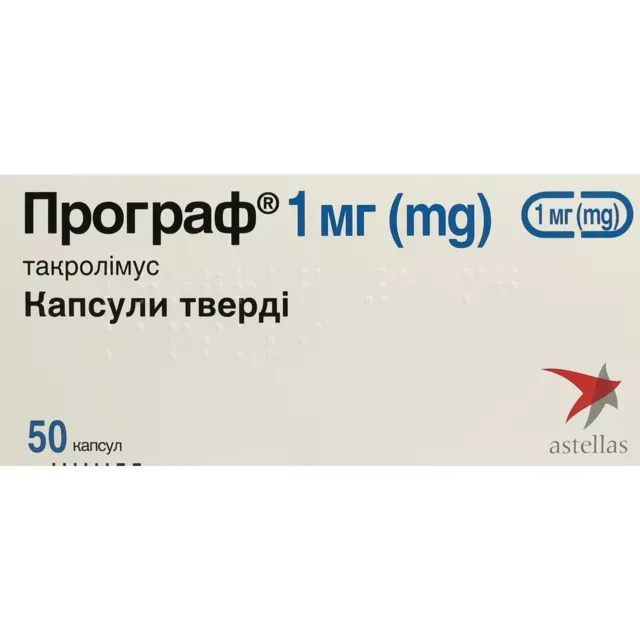
Table of Contents
I N S T R U C T I O N for medical use of the medicinal product PROGRAF® (PROGRAF®)
Composition:
Active substance: tacrolimus;
1 capsule contains tacrolimus 0.5 mg or 1 mg or 5 mg;
Excipients: hydroxypropylmethylcellulose, sodium croscarmellose, lactose monohydrate, magnesium stearate, titanium dioxide (E 171), iron oxide yellow (E 172) (for 0.5 mg capsules), iron oxide red (E 172) (for 5 mg capsules), gelatin.
Pharmaceutical form. Hard capsules.
Main physicochemical properties:
0.5 mg capsules: hard gelatin capsules with red-colored print "0.5 mg" on the cap and "[f] 607" on the body of the capsule; capsule cap: light yellow; capsule body: light yellow; capsule size 5; capsule content: white powder;
1 mg capsules: hard gelatin capsules with red-colored print "1 mg" on the cap and "[f] 617" on the body of the capsule; capsule cap: opaque white; capsule body: opaque white; capsule size 5; capsule content: white powder;
5 mg capsules: hard gelatin capsules with white-colored print "5 mg" on the cap and "[f] 657" on the body of the capsule; capsule cap: opaque grey-red; capsule body: opaque grey-red; capsule size 4; capsule content: white powder.
Pharmacotherapeutic group. Antineoplastic and immunomodulating medicinal products. Immunosuppressants. Calcineurin inhibitor. ATC code L04AD02.
Pharmacological properties.
Pharmacodynamics.
At the molecular level, the effects of tacrolimus are mediated by binding to a cytosolic protein (FKBP12), which facilitates intracellular accumulation of the drug. The FKBP12-tacrolimus complex specifically and competitively binds to calcineurin and inhibits it, resulting in calcium-dependent inhibition of T-cell signal transduction pathways, thereby preventing transcription of a discrete group of lymphokine genes.
Tacrolimus is a highly potent immunosuppressive agent that suppresses the formation of cytotoxic lymphocytes primarily responsible for graft rejection, reduces T-cell activation, T-helper-dependent B-cell proliferation, as well as production of lymphokines (such as interleukins-2, -3, and γ-interferon), and expression of the interleukin-2 receptor.
Pharmacokinetics.
Absorption. Tacrolimus is absorbed from the gastrointestinal tract.
Blood concentrations (Cmax) of tacrolimus reach peak levels approximately 1–3 hours after administration. In some patients, the drug is incompletely absorbed over a prolonged period, achieving a relatively flat absorption profile.
The oral bioavailability of tacrolimus averages 20–25%.
Following oral administration of Prograf**®** (0.3 mg/kg/day) to liver transplant patients, steady-state drug concentrations were achieved within 3 days in most patients.
Studies in healthy volunteers have demonstrated that Prograf**®** 0.5 mg, Prograf**®** 1 mg, and Prograf**®** 5 mg capsules are bioequivalent when administered at equivalent doses.
The rate and extent of tacrolimus absorption are higher when the drug is taken on an empty stomach. Concurrent administration with food reduces both the rate and extent of tacrolimus absorption, with the most pronounced effect observed after high-fat meals. The effect of high-carbohydrate meals is less pronounced.
In liver transplant patients in a stable condition, the bioavailability of Prograf**®** decreased when the drug was administered orally after a meal of moderate fat content. A reduction in the area under the pharmacokinetic curve (AUC) by 27%, maximum concentration (Cmax) by 50%, and an increase in tmax by 173% were observed in whole blood.
In a study of stable kidney transplant patients, oral administration of Prograf**®** immediately after a standard light breakfast resulted in a less pronounced effect on oral bioavailability. A reduction in AUC (2–12%), Cmax (15–38%), and an increase in tmax (38–80%) were observed in whole blood.
Biliary excretion does not affect the absorption of Prograf**®**.
A strong correlation exists between AUC and trough drug levels in whole blood at steady state. Therefore, monitoring of trough drug levels in whole blood may assist in adequately assessing systemic drug exposure.
Distribution
The distribution pattern of tacrolimus after intravenous administration can be described as biphasic.
In systemic circulation, tacrolimus is extensively bound to erythrocytes. The whole blood/plasma concentration ratio is approximately 20:1. In plasma, the drug is highly bound (>98.8%) to proteins, primarily serum albumin and α-1-acid glycoprotein.
Tacrolimus is widely distributed throughout the body. The steady-state volume of distribution based on plasma concentrations is approximately 1300 L (in healthy volunteers). The corresponding value based on whole blood averages 47.6 L.
Tacrolimus is a drug with low clearance. In healthy volunteers, the mean total clearance, estimated based on whole blood concentrations, is 2.25 L/h. In adult liver and kidney transplant recipients, total clearance values were 4.1 L/h, 6.7 L/h, and 3.9 L/h, respectively. In pediatric liver transplant patients, total clearance is approximately twice higher than in adult liver transplant patients.
Factors contributing to increased clearance should be considered, such as low hematocrit and low protein levels (leading to increased unbound fraction of tacrolimus) or enhanced metabolism due to concomitant corticosteroid therapy.
The elimination half-life of tacrolimus is prolonged and variable. In healthy volunteers, the mean elimination half-life from whole blood is approximately 43 hours. In adult and pediatric liver transplant patients, the half-life averages 11.7 hours and 12.4 hours, respectively, compared to 15.6 hours in adult kidney transplant patients. In transplant patients, increased drug clearance leads to a shorter elimination half-life.
Metabolism
Tacrolimus is metabolized primarily in the liver by cytochrome P450 3A4 (CYP3A4) and cytochrome P450 3A5 (CYP3A5). Tacrolimus is also significantly metabolized in the intestine.
Several metabolites have been identified. In vitro models have shown that only one metabolite exhibits significant immunosuppressive activity. Other metabolites have weak or negligible activity. Only one metabolite is present in systemic circulation, and at low concentrations. Therefore, metabolites do not contribute significantly to the pharmacological activity of tacrolimus.
Elimination
Following oral administration of 14C-labeled tacrolimus, most of the radioactivity was excreted in feces. Approximately 2% was excreted in urine. Less than 1% of unchanged tacrolimus was detected in urine and feces, indicating that tacrolimus is almost completely metabolized prior to elimination. The primary route of elimination is via bile.
Clinical characteristics.
Indications.
Prevention of rejection in allogeneic liver, kidney, or heart transplantation.
Treatment of allograft rejection resistant to treatment with other immunosuppressive medicinal agents.
Contraindications.
Hypersensitivity to tacrolimus, other macrolides, or to any of the excipients.
Special precautions.
Due to the immunosuppressive effect of tacrolimus, inhalation or direct contact with skin or mucous membranes of the injectable formulation or powder contained in the medicinal product packaging should be avoided. If such contact occurs, the skin and affected eye(s) should be thoroughly rinsed.
Interaction with other medicinal products and other forms of interaction.
Metabolic interactions
Systemically available tacrolimus is metabolized in the liver by CYP3A4. There is also evidence of gastrointestinal CYP3A4 metabolism in the intestinal wall. Concomitant administration of medicinal products, including herbal products, with known inhibitory or inductive effects on CYP3A4 may affect tacrolimus metabolism and consequently increase or decrease blood concentrations of tacrolimus.
Similarly, discontinuation of such medicinal products or herbal medicinal products may affect the rate of tacrolimus metabolism and thus influence tacrolimus blood levels.
Pharmacokinetic studies have shown that increased blood levels of tacrolimus during concomitant use with CYP3A4 inhibitors are primarily due to increased bioavailability of orally administered tacrolimus resulting from inhibition of gastrointestinal metabolism. The effect on hepatic clearance is less pronounced.
When using substances that potentially affect CYP3A4 metabolism concomitantly, close monitoring under the supervision of a transplantation specialist is strongly recommended, including monitoring of tacrolimus blood levels, QT interval prolongation (ECG), renal function, and other adverse effects, including neurotoxicity. Dose adjustments or temporary discontinuation of tacrolimus should be made as necessary to maintain equivalent exposure (see sections "Method of administration and dosage", "Special instructions").
Similarly, careful monitoring of patients is required when tacrolimus is used concomitantly with multiple agents affecting CYP3A4, as the effect of tacrolimus may be enhanced or neutralized.
Medicinal products affecting the efficacy of tacrolimus are listed in the table below. Examples of interactions between medicinal products and individual substances are not exhaustive or comprehensive; therefore, the product information for each medicinal product used concomitantly with tacrolimus should be consulted to obtain information on metabolic pathways, potential interactions, possible risks, and specific measures to be taken when considering concomitant use.
Medicinal products affecting the efficacy of tacrolimus
| Class or name of medicinal product/substance |
Effect of the drug interaction |
Recommendations for concomitant use |
|
| Grapefruit or grapefruit juice |
May increase the minimum blood concentration of tacrolimus and increase the risk of serious adverse reactions (such as neurotoxicity, QT interval prolongation) (see section "Special precautions"). |
Grapefruit or grapefruit juice should be avoided. |
|
| Cyclosporine |
May increase the minimum blood concentrations of tacrolimus. In addition, synergistic/additive nephrotoxic effects may occur. |
Concomitant use of cyclosporine and tacrolimus should be avoided (see section "Special precautions"). |
|
| Agents with nephrotoxic or neurotoxic effects: aminoglycosides, mTOR inhibitors, vancomycin, sulfamethoxazole + trimethoprim, NSAIDs, ganciclovir, acyclovir, amphotericin B, ibuprofen, cidofovir, foscarnet |
May enhance the nephrotoxic or neurotoxic effects of tacrolimus. |
Concomitant use of tacrolimus with nephrotoxic agents should be avoided. If concomitant use cannot be avoided, renal function should be monitored and patients should be observed for adverse effects; the dose of tacrolimus should be adjusted if necessary. |
|
| Potent CYP3A4 inhibitors: antifungal agents (e.g., ketoconazole, itraconazole, posaconazole, voriconazole), macrolide antibiotics (e.g., telithromycin, troleandomycin, clarithromycin, josamycin), HIV protease inhibitors (e.g., ritonavir, nelfinavir, saquinavir), HCV protease inhibitors (e.g., telaprevir, boceprevir, and the combination of ombitasvir and paritaprevir with ritonavir, with or without dasabuvir), nefazodone, pharmacokinetic booster cobicistat, idelalisib kinase inhibitors, ceritinib. A pronounced interaction has also been observed with the macrolide antibiotic erythromycin |
May increase the minimum whole blood concentration of tacrolimus and increase the risk of serious adverse reactions (e.g., nephrotoxicity, neurotoxicity, QT interval prolongation), requiring careful monitoring (see section "Special precautions"). A rapid and marked increase in tacrolimus levels may occur within 1–3 days of concomitant use, despite immediate reduction of tacrolimus dose. Total exposure to tacrolimus may increase by more than 5-fold. When used concomitantly with ritonavir-containing regimens, tacrolimus exposure may increase by more than 50-fold. Most patients may require a dose reduction or temporary discontinuation of tacrolimus. The effect on tacrolimus blood concentration may persist for several days after discontinuation of concomitant therapy. |
Concomitant use is recommended to be avoided. If concomitant use of a potent CYP3A4 inhibitor cannot be avoided, consideration should be given to withholding the tacrolimus dose on the day treatment with the potent CYP3A4 inhibitor is initiated. Tacrolimus therapy should be resumed the next day at a reduced dose, based on tacrolimus blood concentrations. Adjustments in both the dose and/or dosing frequency of tacrolimus should be individually tailored and modified as needed based on minimum tacrolimus concentrations, which should be assessed at initiation, frequently monitored during (starting within the first few days), and re-evaluated at the start and after discontinuation of the CYP3A4 inhibitor. After stopping the CYP3A4 inhibitor, the appropriate tacrolimus dose and dosing frequency should be re-established based on blood concentration. Renal function should be monitored and QT interval prolongation (on ECG) and other potential adverse effects should be observed. |
|
| Moderate or weak CYP3A4 inhibitors: antifungal agents (e.g., fluconazole, isavuconazole, clotrimazole, miconazole), macrolide antibiotics (e.g., azithromycin), calcium channel blockers (e.g., nifedipine, nicardipine, diltiazem, verapamil), amiodarone, danazol, ethinylestradiol, lansoprazole, omeprazole, antiviral agents (for hepatitis C) elbasvir/grazoprevir and glecaprevir/pibrentasvir, antiviral agent (CMV) letermovir, tyrosine kinase inhibitors nilotinib, crizotinib, imatinib, and (Chinese) herbal products containing extracts of Schisandra sphenanthera |
May increase the minimum whole blood concentration of tacrolimus and increase the risk of serious adverse reactions (such as neurotoxicity, QT interval prolongation) (see section "Special precautions"). A rapid increase in tacrolimus levels is possible. |
Minimum whole blood concentrations of tacrolimus should be monitored starting within the first few days of concomitant use. The dose of tacrolimus should be reduced if necessary (see section "Dosage and administration"). Renal function should be monitored and QT interval prolongation (on ECG) and other potential adverse effects should be observed. |
|
| In in vitro studies, the following substances have been shown to be potential inhibitors of tacrolimus metabolism: bromocriptine, cortisone, dapsone, ergotamine, gestodene, lidocaine, mephenytoin, midazolam, nilvadipine, norethisterone, quinidine, tamoxifen |
May increase the minimum whole blood concentration of tacrolimus and increase the risk of serious adverse reactions (such as neurotoxicity, QT interval prolongation) (see section "Special precautions"). |
Minimum whole blood concentration of tacrolimus should be monitored and, if necessary, the dose of tacrolimus reduced (see section "Dosage and administration"). Renal function should be monitored and QT interval prolongation (on ECG) and other potential adverse effects should be observed. |
|
| Potent CYP3A4 inducers: rifampicin, phenytoin, carbamazepine, apalutamide, enzalutamide, mitotane, or St. John's wort (Hypericum perforatum) |
May decrease the minimum whole blood concentration of tacrolimus and increase the risk of rejection [see section "Special precautions"]. The maximum effect on tacrolimus blood concentration may occur within 1–2 weeks of concomitant use. The effect may persist for 1–2 weeks after discontinuation of treatment. |
Concomitant use is recommended to be avoided. If concomitant use cannot be avoided, patients may require an increased dose of tacrolimus. Tacrolimus doses should be adjusted individually and modified as needed based on minimum tacrolimus concentrations, which should be assessed at the start of treatment, frequently monitored (starting within the first few days), and re-evaluated during and after discontinuation of the CYP3A4 inducer. After stopping the CYP3A4 inducer, gradual dose adjustment of tacrolimus may be required. Close monitoring of graft function is necessary. |
|
| Moderate CYP3A4 inducers: metamizole, phenobarbital, isoniazid, rifabutin, efavirenz, etravirine, nevirapine; weak CYP3A4 inducers: flucloxacillin |
May decrease the minimum whole blood concentration of tacrolimus and increase the risk of rejection (see section "Special precautions"). |
Minimum whole blood concentrations of tacrolimus should be monitored and the dose of tacrolimus increased if necessary (see section "Dosage and administration"). Graft function should be closely monitored. |
|
| Caspofungin |
|
Tacrolimus whole blood trough concentrations should be monitored and the dose of tacrolimus increased if necessary (see section "Dosage and administration"). Transplant function should be closely monitored. |
|
| Cannabidiol (P-gp inhibitor) |
Increased blood levels of tacrolimus have been reported when tacrolimus was used concomitantly with cannabidiol. This may be due to inhibition of intestinal P-glycoprotein, leading to increased bioavailability of tacrolimus. |
Tacrolimus and cannabidiol should be used cautiously with close monitoring for adverse effects. Tacrolimus trough concentrations in whole blood should be monitored and the dose adjusted as necessary (see sections "Dosage and administration" and "Special precautions for use"). |
|
| Agents known to have high plasma protein binding, e.g. NSAIDs, oral anticoagulants, oral antidiabetic agents |
Tacrolimus is highly bound to plasma proteins. Potential interactions with other active substances that have high plasma protein binding should be considered. |
Tacrolimus trough concentrations in whole blood should be monitored and the dose adjusted as necessary (see section "Dosage and administration"). |
|
| Prokinetics: metoclopramide, cimetidine, and magnesium-aluminium hydroxide |
These agents may increase tacrolimus trough concentrations in whole blood and increase the risk of serious adverse reactions (such as neurotoxicity, QT interval prolongation). |
Tacrolimus trough concentrations in whole blood should be monitored and the dose reduced if necessary (see section "Dosage and administration"). Renal function should be monitored and QT interval (on ECG) and other potential adverse effects should be observed. |
|
| Maintenance doses of corticosteroids |
May decrease tacrolimus trough concentrations in whole blood and increase the risk of transplant rejection (see section "Special precautions for use"). |
Tacrolimus trough concentrations in whole blood should be monitored and the dose increased if necessary (see section "Dosage and administration"). Transplant function should be closely monitored. |
|
| High doses of prednisolone or methylprednisolone |
May affect tacrolimus blood levels (increase or decrease) when used for treatment of acute rejection. |
Tacrolimus trough concentrations in whole blood should be monitored and the dose adjusted as necessary. |
|
| Direct-acting antiviral agents (DAAs) |
May affect tacrolimus pharmacokinetics due to changes in liver function during DAA therapy related to HCV clearance. A decrease in tacrolimus blood levels may occur. However, the CYP3A4 inhibitory potential of some DAAs may counteract this effect or lead to increased tacrolimus blood levels. |
Tacrolimus trough concentrations in whole blood should be monitored and the dose adjusted as necessary to maintain long-term efficacy and safety. |
Concomitant use of tacrolimus with a mammalian target of rapamycin (mTOR) inhibitor, such as sirolimus or everolimus, may increase the risk of thrombotic microangiopathy, including haemolytic uraemic syndrome and thrombotic thrombocytopenic purpura (see section "Special precautions for use").
As treatment with tacrolimus may be associated with hyperkalaemia or may exacerbate existing hyperkalaemia, potassium supplements or potassium-sparing diuretics such as amiloride, triamterene, or spironolactone should be avoided (see section "Special precautions for use"). Caution is advised when tacrolimus is used concomitantly with other agents that increase serum potassium levels, such as trimethoprim and co-trimoxazole (trimethoprim/sulfamethoxazole), since trimethoprim is known to act as a potassium-sparing diuretic similar to amiloride. Careful monitoring of serum potassium levels is recommended.
Effect of tacrolimus on the metabolism of other medicinal products
Tacrolimus is a known inhibitor of CYP3A4; therefore, concomitant use of tacrolimus with medicinal products metabolised by CYP3A4 may affect the metabolism of such medicinal products.
The elimination half-life of cyclosporine is prolonged when administered concomitantly with tacrolimus. In addition, a synergistic effect/additive nephrotoxic effect may occur. For these reasons, combination therapy with cyclosporine and tacrolimus is not recommended, and caution should be exercised when prescribing tacrolimus to patients who have previously received cyclosporine (see sections "Dosage and administration" and "Special precautions for use").
It has been shown that tacrolimus may cause an increase in phenytoin blood levels.
Since tacrolimus may reduce the therapeutic window of hormonal contraceptives, usually resulting in increased hormonal exposure, particular attention and caution should be exercised when considering contraceptive methods.
Currently, there is insufficient knowledge regarding the interaction between tacrolimus and statins. Clinical data suggest that the pharmacokinetics of statins are not significantly altered when used concomitantly with tacrolimus.
Animal studies have shown that tacrolimus may reduce the clearance and increase the half-life of pentobarbital and phenazone.
Mycophenolic acid
Caution should be exercised when switching patients receiving combination therapy with cyclosporine (which affects the enterohepatic recirculation of mycophenolic acid) to tacrolimus (which lacks this effect), as this may alter the impact of mycophenolic acid. Medicinal products affecting the enterohepatic cycle of mycophenolic acid may reduce plasma levels and efficacy of mycophenolic acid.
Therapeutic monitoring of mycophenolic acid may be advisable when switching from cyclosporine to tacrolimus or vice versa.
Immunosuppressants may affect the response to vaccination; therefore, vaccination during treatment with tacrolimus may be less effective. Use of live attenuated vaccines should be avoided (see section "Special precautions for use").
Special precautions for use.
Errors have been reported with the use of the medicinal product, including accidental, unintentional, or uncontrolled use of inappropriate formulations of tacrolimus, such as immediate-release or prolonged-release formulations. This may lead to serious adverse reactions, including transplant rejection or other adverse effects resulting from either insufficient or excessive tacrolimus exposure. Patients should remain on the same tacrolimus formulation with an appropriate daily dosing regimen; changes in formulations or regimens should only occur under the careful supervision of a transplant specialist (see section "Dosage and administration" and "Adverse reactions").
During the initial post-transplant period, periodic monitoring of the following parameters is recommended: blood pressure, ECG, neurological status and visual function, fasting blood glucose, electrolyte levels (particularly potassium), liver and kidney function tests, hematological parameters, coagulation profile, and serum protein levels. Adjustment of immunosuppressive therapy is required if clinically significant changes occur.
Substances with potential for interaction
Inhibitors or inducers of CYP3A4 should be used concomitantly with tacrolimus only after consultation with a transplant specialist due to the potential for drug interactions that may lead to serious adverse reactions, including rejection or toxicity (see section "Interaction with other medicinal products and other forms of interaction").
CYP3A4 inhibitors
Concomitant use with CYP3A4 inhibitors may increase tacrolimus blood levels, potentially leading to serious adverse reactions, including nephrotoxicity, neurotoxicity, and QT interval prolongation. It is recommended to avoid concomitant use of strong CYP3A4 inhibitors (such as ritonavir, cobicistat, ketoconazole, itraconazole, posaconazole, voriconazole, telithromycin, clarithromycin, or josamycin) with tacrolimus. If concomitant therapy cannot be avoided, tacrolimus blood levels should be monitored starting from the first few days of co-administration, under the supervision of a transplant specialist, to adjust the tacrolimus dose as needed to maintain consistent exposure. Renal function, ECG (including QT interval), and the patient's clinical status should also be closely monitored.
Dose adjustments should be based on the individual clinical condition of each patient. Immediate dose reduction may be required at the start of treatment (see section "Interaction with other medicinal products and other forms of interaction").
Similarly, discontinuation of CYP3A4 inhibitors may affect the metabolism rate of tacrolimus, potentially leading to subtherapeutic tacrolimus blood levels; therefore, such situations require careful monitoring and supervision by a transplant specialist.
CYP3A4 inducers
Concomitant use with CYP3A4 inducers may reduce tacrolimus blood levels, potentially increasing the risk of transplant rejection. It is recommended to avoid concomitant use of strong CYP3A4 inducers (such as rifampicin, phenytoin, carbamazepine) with tacrolimus. If such combination cannot be avoided, frequent monitoring of tacrolimus blood levels should be initiated from the first few days of co-administration under the supervision of a transplant specialist, to adjust the tacrolimus dose as needed to maintain consistent exposure. Function of the transplanted organ should also be closely monitored (see section "Interaction with other medicinal products and other forms of interaction").
Similarly, discontinuation of CYP3A4 inducers may affect the metabolism rate of tacrolimus, potentially leading to supratherapeutic tacrolimus blood levels, thus requiring careful monitoring and supervision by a transplant specialist.
P-glycoprotein
Caution should be exercised when administering tacrolimus concomitantly with agents that inhibit P-glycoprotein, as increased tacrolimus levels may occur. Close monitoring of tacrolimus levels in whole blood and the patient's clinical status is necessary. Dose adjustment of tacrolimus may be required (see section "Interaction with other medicinal products and other forms of interaction").
Herbal preparations
When using Prograf**®**, herbal preparations containing St. John's wort (Hypericum perforatum) should be avoided due to the risk of interactions leading to reduced tacrolimus blood levels and diminished therapeutic effect of tacrolimus (see section "Interaction with other medicinal products and other forms of interaction").
Other interactions
Concomitant use of cyclosporine and tacrolimus should be avoided; tacrolimus should be used with caution in patients who have previously received cyclosporine (see sections "Dosage and administration" and "Interaction with other medicinal products and other forms of interaction").
High-potassium products or potassium-sparing diuretics should be avoided (see section "Interaction with other medicinal products and other forms of interaction").
The concomitant use of tacrolimus with medicinal products known to have neurotoxic effects may increase the risk of neurotoxic reactions (see section "Interaction with other medicinal products and other forms of interaction").
Vaccination
Immunosuppressants may affect the response to vaccination; vaccination may be less effective during treatment with tacrolimus. Live attenuated vaccines should be avoided.
Nephrotoxicity
In post-transplant patients, tacrolimus may cause renal dysfunction. Acute renal failure, if not actively managed, may progress to chronic renal failure. Patients with impaired renal function should be closely monitored, as dose reduction of tacrolimus may be necessary. The risk of nephrotoxicity may be increased when tacrolimus is used concomitantly with nephrotoxic agents (see section "Interaction with other medicinal products and other forms of interaction"). Concomitant use of tacrolimus with nephrotoxic drugs should be avoided. If concomitant use cannot be avoided, tacrolimus blood levels and renal function should be closely monitored, and dose reduction should be considered if nephrotoxicity occurs.
Gastrointestinal disorders
Gastrointestinal perforations have been reported in patients receiving tacrolimus. Gastrointestinal tract perforation is a medically significant complication that may lead to life-threatening or serious conditions. Adequate treatment should be initiated immediately upon suspicion of such events.
Tacrolimus blood levels may fluctuate significantly during diarrhea; additional careful monitoring of tacrolimus concentrations in blood is required if diarrhea occurs.
Cardiac disorders
Cases of ventricular hypertrophy or septal hypertrophy, reported as cardiomyopathy, have been rarely observed. In most cases, myocardial hypertrophy was reversible and occurred predominantly in children at tacrolimus blood concentrations exceeding the maximum recommended levels. Other risk factors for this adverse event include pre-existing heart disease, corticosteroid use, arterial hypertension, renal and hepatic dysfunction, infections, hypervolemia, and edema. Therefore, patients at high risk, especially young children and those receiving intensive immunosuppressive therapy, should undergo echocardiographic and ECG monitoring before and after transplantation (at 3 months and then at 9–12 months). If abnormalities are detected, consideration should be given to reducing the dose of Prograf**®** or switching to another immunosuppressant.
Tacrolimus may prolong the QT interval and cause torsades de pointes. Caution should be exercised in patients with risk factors for QT prolongation, including those with personal or familial history of prolonged QT interval, congestive heart failure, bradyarrhythmias, or electrolyte imbalances. Caution is also advised in patients with diagnosed or suspected congenital long QT syndrome, acquired prolonged QT interval, or those receiving concomitant medications known to prolong the QT interval, including those causing electrolyte disturbances or known to increase tacrolimus exposure (see section "Interaction with other medicinal products and other forms of interaction").
Lymphoproliferative disorders and malignancies
Post-transplant lymphoproliferative disorders (PTLD) associated with Epstein-Barr virus (EBV) may occur in patients treated with Prograf**®** (see section "Adverse effects"). Patients switched to Prograf**®** therapy should not receive concomitant antilymphocyte therapy. EBV-seronegative children under 2 years of age have shown an increased risk of developing lymphoproliferative disorders. Therefore, serological testing for EBV capsid antigen should be performed in patients in this group before initiating Prograf**®** therapy. During treatment, careful monitoring of Epstein-Barr virus by polymerase chain reaction (PCR) is recommended. Positive EBV PCR may persist for months and is not necessarily indicative of lymphoproliferative disorder or lymphoma.
As with other immunosuppressive medicinal products, due to the risk of skin malignancies, exposure to sunlight and ultraviolet radiation should be limited; protective clothing should be worn and sunscreen with high sun protection factor should be used.
The risk of secondary malignancies with immunosuppressive medicinal products is unknown (see section "Adverse reactions").
Reversible posterior encephalopathy syndrome (RPES)
Reversible posterior encephalopathy syndrome (RPES) has been reported in patients receiving tacrolimus. If patients receiving tacrolimus exhibit symptoms of RPES, such as headache, altered mental status, seizures, or visual disturbances, appropriate diagnostic procedures (e.g., MRI) should be performed. Upon diagnosis of RPES, systemic tacrolimus therapy should be discontinued immediately, and adequate control of blood pressure and seizures should be initiated. Most patients recover completely after appropriate treatment.
Visual disturbances
Ocular disorders, sometimes progressing to vision loss, have been observed in patients receiving tacrolimus. In some cases, switching to alternative immunosuppressive therapy was required. Patients should be advised to report changes in visual acuity, color perception, blurred vision, or visual field defects; immediate ophthalmological evaluation is recommended if such symptoms occur.
Infections, including opportunistic infections
Patients receiving immunosuppressants, including Prograf**®**, are at increased risk of opportunistic infections (bacterial, fungal, viral, and protozoal), particularly cytomegalovirus (CMV) infection, BK virus-associated nephropathy, and progressive multifocal leukoencephalopathy (PML) caused by JC virus. There is also an increased risk of viral hepatitis infections (e.g., reactivation of hepatitis B or C, new infection, or hepatitis E, which may become chronic). These infections are often associated with high overall immunosuppressive burden and may lead to serious or fatal outcomes, including transplant rejection. Clinicians should consider these infections in the differential diagnosis of immunocompromised patients with worsening liver or kidney function or neurological symptoms. Prophylaxis and treatment should follow clinical guidelines.
Thrombotic microangiopathy (TMA) (including hemolytic-uremic syndrome (HUS) and thrombotic thrombocytopenic purpura (TTP))
TMA, including thrombotic thrombocytopenic purpura (TTP) and hemolytic-uremic syndrome (HUS), which may sometimes lead to renal failure or death, should be considered in patients presenting with hemolytic anemia, thrombocytopenia, fatigue, fluctuating neurological symptoms, renal dysfunction, and fever. If TMA is diagnosed, immediate treatment is required, and discontinuation of tacrolimus should be considered at the physician’s discretion.
Concomitant use of tacrolimus with a mammalian target of rapamycin (mTOR) inhibitor, such as sirolimus or everolimus, may increase the risk of thrombotic microangiopathy (including hemolytic uremic syndrome and thrombotic thrombocytopenic purpura).
Cases of pure red cell aplasia
Cases of pure red cell aplasia (PRCA) have been observed in patients receiving tacrolimus. All patients had risk factors for PRCA, such as parvovirus B19 infection, underlying disease, or concomitant use of PRCA-associated drugs.
Excipients
The medicinal product Prograf**®** contains lactose (one 0.5 mg capsule contains 62.85 mg lactose monohydrate, one 1 mg capsule contains 61.35 mg lactose monohydrate, one 5 mg capsule contains 123.60 mg lactose monohydrate). The product should not be used in patients with rare hereditary conditions of galactose intolerance, lactase deficiency, or glucose-galactose malabsorption.
The printing ink used to mark Prograf**®** capsules contains soy lecithin (0.48% of the total ink composition). If a patient has hypersensitivity to peanuts or soy products, the benefit of using Prograf**®** should be weighed against the risk of hypersensitivity reactions.
Prograf**®** contains less than 1 mmol sodium (23 mg) per capsule (0.5 mg, 1 mg, and 5 mg), i.e., it is practically sodium-free.
Use during pregnancy or breastfeeding.
Pregnancy
It is known that tacrolimus crosses the human placenta. Based on limited available data in organ transplant recipients, there is no evidence of increased risk of adverse effects on pregnancy course or outcome with tacrolimus compared to other immunosuppressive medicinal products. However, cases of spontaneous abortion have been reported. Currently, other relevant epidemiological data are lacking. Tacrolimus treatment during pregnancy should only be considered when no safer alternative exists and when the potential benefit to the mother outweighs the potential risk to the fetus. Monitoring of newborns whose mothers received tacrolimus during pregnancy is recommended to detect potential adverse effects of tacrolimus (particularly renal function). There is a risk of preterm delivery (<37 weeks), and there is also a risk of neonatal hyperkalemia, which, however, resolves spontaneously.
In rat and rabbit studies, tacrolimus caused embryofetal toxicity at doses associated with maternal toxicity.
Fertility
In rats, tacrolimus showed negative effects on male fertility, including reduced sperm count and motility.
Breastfeeding period
Human data show that tacrolimus passes into breast milk. Because adverse effects of tacrolimus on the newborn cannot be excluded, women taking Prograf**®** should discontinue breastfeeding.
Ability to affect reaction speed when driving or operating machinery.
Tacrolimus may cause visual and neurological disturbances. These effects may be enhanced if Prograf**®** is used concomitantly with alcohol.
Administration and Dosage.
Treatment with the medicinal product Prograf**®** requires careful monitoring by qualified personnel with access to appropriate equipment. Only physicians experienced in immunosuppressive therapy in organ transplant recipients should prescribe the medicinal product and make changes to the immunosuppressive regimen.
Accidental, unintentional, or uncontrolled substitution of a formulation of tacrolimus with immediate or extended release is dangerous. This may lead to transplant rejection or increased incidence of adverse reactions, including inadequate or excessive immunosuppression, due to clinically significant differences in systemic exposure to tacrolimus. Patients must adhere to the regimen of one specific formulation of tacrolimus with the corresponding daily dosing schedule; changes in formulation or dosing regimen should occur only under close supervision by a transplantation specialist (see sections "Special Warnings and Precautions for Use," "Adverse Effects"). After switching to any alternative formulation, blood concentrations of tacrolimus must be monitored and the dose adjusted to maintain systemic exposure to tacrolimus at an appropriate level.
The dosage of Prograf**®** should be primarily determined based on clinical assessment of rejection risk and individual drug tolerability, using therapeutic drug monitoring data for blood tacrolimus levels (see below recommendations for measuring trough blood concentration). If clinical signs of rejection occur, adjustment of the immunosuppressive regimen should be considered.
The medicinal product Prograf**®** can be administered intravenously and orally; dosing may be initiated orally. Generally, treatment may be initiated orally. If necessary, the capsule contents may be dissolved in water and administered via a nasogastric tube.
In the early postoperative period, Prograf**®** is usually administered concomitantly with other immunosuppressive medicinal products. The dose of Prograf**®** may be adjusted depending on the chosen immunosuppressive regimen.
Dosage
Liver transplantation.
Prevention of transplant rejection: adults
Oral therapy with Prograf**®** should be initiated at a daily dose of 0.1–0.2 mg/kg given twice daily (in the morning and evening). Begin drug administration 12 hours after surgery.
If the patient's condition does not allow oral intake, administer intravenously by continuous infusion over 24 hours at a dose of 0.01–0.05 mg/kg/day.
Prevention of transplant rejection: children.
The initial oral dose should be 0.3 mg/kg/day, divided into two doses (e.g., morning and evening). If the patient's clinical condition does not allow oral administration, administer intravenously by continuous infusion over 24 hours at a dose of 0.05 mg/kg/day.
Maintenance therapy: adults and children.
During maintenance therapy, the dosage of Prograf**®** is generally reduced. In some cases, concomitant immunosuppressive agents may be discontinued, leaving Prograf**®** as monotherapy. Improvement in the patient's condition after transplantation may alter the pharmacokinetics of tacrolimus, necessitating dose adjustments.
Treatment of rejection: adults and children.
Treatment of rejection episodes requires higher doses of Prograf**®** in combination with additional corticosteroid therapy and short courses of monoclonal/polyclonal antibodies. If signs of toxicity occur (see section "Adverse Effects"), dose reduction of Prograf**®** may be necessary.
When switching patients to Prograf**®** therapy, the same initial doses as for primary immunosuppression are recommended.
For switching patients from cyclosporine to Prograf**®**, see information below under "Special Populations," "Conversion (switching) from cyclosporine to tacrolimus."
Kidney transplantation
Prevention of transplant rejection: adults.
Oral therapy with Prograf**®** should be initiated at a dose of 0.2–0.3 mg/kg/day, divided into two doses (e.g., morning and evening). Initiate treatment within 24 hours after completion of surgery.
If the patient's condition does not allow oral intake, administer intravenously by continuous infusion over 24 hours at a dose of 0.05–0.1 mg/kg/day.
Prevention of transplant rejection: children.
Oral therapy with Prograf**®** should be initiated at a dose of 0.3 mg/kg/day, divided into two doses (e.g., morning and evening). If the patient's condition does not allow oral intake, administer intravenously by continuous infusion over 24 hours at a dose of 0.075–0.1 mg/kg/day.
Maintenance therapy: adults and children.
During maintenance therapy, the dosage of Prograf**®** should be reduced. In some cases, concomitant immunosuppressive agents may be discontinued, leaving Prograf**®** as the base component of dual therapy. Improvement in the patient's condition after transplantation may alter the pharmacokinetics of tacrolimus, necessitating dose adjustments.
Treatment of rejection episodes: adults and children.
Treatment of rejection episodes requires higher doses of Prograf**®** in combination with additional corticosteroid therapy and short courses of monoclonal/polyclonal antibodies. If signs of toxicity occur (see section "Adverse Effects"), dose reduction of Prograf**®** may be necessary.
When switching patients to Prograf**®** therapy, the same initial doses as for primary immunosuppression are recommended.
For switching patients from cyclosporine to Prograf**®**, see information below under "Special Populations," "Conversion (switching) from cyclosporine to tacrolimus."
Heart transplantation
Prevention of transplant rejection: adults.
Prograf**®** may be used with or without antibody induction therapy (considering delayed initiation of Prograf**®** therapy) in clinically stable patients.
After antibody induction, oral therapy with Prograf**®** should be initiated at a dose of 0.075 mg/kg/day, divided into two doses (e.g., morning and evening). Begin treatment within 5 days after surgery, once the patient's clinical condition has stabilized. If the patient's condition does not allow oral intake, administer intravenously by continuous infusion over 24 hours at a dose of 0.01–0.02 mg/kg/day.
An alternative published approach involves initiating oral tacrolimus within 12 hours after transplantation. This approach is intended for patients without signs of organ dysfunction (e.g., kidney). In this case, initial tacrolimus dose of 2–4 mg/day is combined with mycophenolate mofetil and corticosteroids or with sirolimus and corticosteroids.
Prevention of transplant rejection: children.
After heart transplantation in children, primary immunosuppression with Prograf**®** may be performed either with or without antibody induction.
When antibody induction is not performed, Prograf**®** is administered intravenously by continuous infusion over 24 hours at a dose of 0.03–0.05 mg/kg/day until tacrolimus concentration in whole blood reaches 15–25 ng/mL. As soon as clinically feasible, switch the patient to oral administration with an initial dose of 0.3 mg/kg/day, administered 8–12 hours after completion of intravenous infusion.
After antibody induction, oral therapy with Prograf**®** should be initiated at a dose of 0.1–0.3 mg/kg/day, divided into two doses (e.g., morning and evening).
Maintenance therapy: adults and children.
During maintenance therapy, doses of Prograf**®** are reduced. Improvement in the patient's condition after transplantation may alter the pharmacokinetics of tacrolimus, necessitating dose adjustments.
Treatment of rejection: adults and children.
Treatment of rejection episodes requires higher doses of Prograf**®** in combination with additional corticosteroid therapy and short courses of monoclonal/polyclonal antibodies.
When switching adult patients to Prograf**®** therapy, the initial dose of 0.15 mg/kg/day should be divided into two doses (e.g., morning and evening).
When switching pediatric patients to Prograf**®** therapy, the initial dose of 0.2–0.3 mg/kg/day should be divided into two doses (e.g., morning and evening).
Information on switching patients from cyclosporine to Prograf**®** is provided in the sections "Special Warnings and Precautions for Use": dose adjustment in special patient populations; conversion from cyclosporine therapy.
Treatment of rejection: transplantation of other organs.
Recommended doses for lung, pancreas, and intestinal transplantation are based on limited data from prospective clinical trials. For treatment of lung transplant recipients, initiate Prograf**®** at 0.1–0.15 mg/kg/day; for pancreas transplant recipients, initiate at 0.2 mg/kg/day; and for intestinal transplant recipients, initiate at 0.3 mg/kg/day.
Special Populations
Hepatic impairment
In patients with severe hepatic dysfunction, dose reduction of tacrolimus may be required to maintain trough blood levels of tacrolimus within the recommended therapeutic range.
Renal impairment
Since renal function does not affect the pharmacokinetics of tacrolimus, dose adjustment is not necessary. However, due to the nephrotoxic potential of tacrolimus, careful monitoring of renal function is recommended (including serum creatinine levels, creatinine clearance calculation, and urine output monitoring).
Elderly patients
There is no evidence that elderly patients require special dosing.
Conversion (switching) from cyclosporine to tacrolimus
Caution should be exercised when switching patients from baseline cyclosporine therapy to tacrolimus-based regimens (see sections "Special Warnings and Precautions for Use" and "Interaction with Other Medicinal Products and Other Forms of Interaction"). Therapy with Prograf**®** should be initiated after measuring cyclosporine plasma concentration and assessing the patient's clinical condition. Conversion should be delayed if elevated cyclosporine blood levels are present. In practice, Prograf**®** therapy is usually initiated 12–24 hours after discontinuation of cyclosporine. After switching, cyclosporine blood levels should be monitored, as there may be an effect on cyclosporine clearance.
Recommendations for achieving required drug concentration in whole blood.
Dose selection should be based on clinical assessment of rejection risk and individual patient tolerability.
To optimize dosing, tacrolimus concentration in whole blood should be monitored using immunoassay methods, including microparticle enzyme immunoassay (MEIA). Scientific publications on tacrolimus blood concentrations should be compared with individual clinical data cautiously, considering the assay method used. In current medical practice, immunoassays are used to determine tacrolimus concentration in whole blood.
In the early postoperative period, trough levels of tacrolimus in whole blood should be monitored. With oral administration, trough levels in whole blood should be measured every 12 hours, immediately before the next dose. Monitoring frequency should depend on clinical needs. Since Prograf**®** is a low-clearance drug, dose regimen adjustments may take several days before changes in blood levels become apparent. Trough drug levels in blood should be monitored approximately twice weekly during the early post-transplant period and periodically during maintenance therapy. Trough tacrolimus blood levels should also be monitored after dose changes, changes in immunosuppressive regimen, or concomitant use of drugs that may affect tacrolimus concentrations in whole blood (see section "Interaction with Other Medicinal Products and Other Forms of Interaction").
Clinical trial data suggest that most patients can be successfully treated if trough tacrolimus blood levels are maintained below 20 ng/mL. When interpreting blood concentration data, the patient's clinical condition must be carefully evaluated.
In clinical practice, during the early period after transplantation, trough drug levels in whole blood typically range from 5–20 ng/mL after liver transplantation and 10–20 ng/mL after kidney and heart transplantation. Later, during maintenance therapy after liver, kidney, and heart transplantation, blood concentrations range from 5 to 15 ng/mL.
Administration method.
The recommended daily oral dose should be divided into two administrations (e.g., morning and evening). Capsules should be taken immediately after removal from the blister pack. Patients should be warned about the presence of a desiccant in the packaging, which is not intended for ingestion. Capsules must be swallowed with liquid (preferably water).
To achieve maximum absorption, the medicinal product should be taken on an empty stomach (fasting) or at least 1 hour before or 2–3 hours after a meal.
Immunosuppression must be maintained continuously to prevent transplant rejection; therefore, duration of therapy is not limited.
Children. Children generally require doses 1.5–2 times higher than adults to achieve required blood drug levels.
Overdose.
Information on overdose is limited. Several cases of accidental overdose have been reported in patients taking tacrolimus. Symptoms included tremor, headache, nausea, vomiting, infections, urticaria, lethargy, elevated blood urea nitrogen, serum creatinine, and alanine aminotransferase.
There is no specific antidote for Prograf**®**. In case of overdose, standard supportive measures and symptomatic treatment should be implemented.
Due to the high molecular weight of tacrolimus, poor water solubility, and extensive binding to erythrocytes and plasma proteins, dialysis is ineffective. In individual patients with very high tacrolimus blood concentrations, hemofiltration or diafiltration may be effective. In cases of oral overdose, gastric lavage and/or administration of adsorbents (e.g., activated charcoal) may be effective if initiated immediately after drug ingestion.
Adverse reactions
Due to the nature of the underlying disease and the large number of concomitantly administered drugs following transplantation, it is difficult to precisely establish the adverse effect profile of immunosuppressants.
Most of the adverse reactions described below are reversible and/or resolve upon dose reduction.
Oral administration is associated with a lower incidence of adverse reactions compared to intravenous administration.
The frequency of adverse reactions is defined as follows: very common (≥ 1/10); common (≥ 1/100 to <1/10); uncommon (≥ 1/1000 to <1/100); rare (≥ 1/10000 to <1/1000); very rare (<1/10000); frequency not known (cannot be estimated due to insufficient data). Within each frequency category, adverse effects are listed in order of decreasing severity.
Infections and infestations
Due to therapy with tacrolimus, as with other potent immunosuppressants, patients are at increased risk of developing infections (viral, bacterial, fungal, protozoal). The course of pre-existing infections may worsen. Both localized and generalized infections may occur.
In patients receiving immunosuppressants, including the medicinal product Prograf**®**, cases of CMV infection, BK virus-associated nephropathy, and progressive multifocal leukoencephalopathy (PML) associated with JC virus have been reported.
Benign, malignant and unspecified neoplasms (including cysts and polyps)
Patients receiving immunosuppressive therapy have an increased risk of developing malignancies. With the use of tacrolimus, both benign and malignant neoplasms have been reported, including lymphoproliferative disorders and skin malignancies associated with Epstein-Barr virus (EBV).
Blood and lymphatic system disorders
Common: anemia, thrombocytopenia, leukopenia, abnormalities in erythrocyte parameters, leukocytosis.
Uncommon: coagulopathies, pancytopenia, neutropenia, coagulation abnormalities and bleeding, thrombotic microangiopathy.
Rare: thrombotic thrombocytopenic purpura, hypoprothrombinemia.
Frequency not known: pure red cell aplasia, agranulocytosis, hemolytic anemia, febrile neutropenia.
Immune system disorders
Allergic and anaphylactoid reactions have been observed in patients receiving tacrolimus (see section "Special precautions").
Endocrine system disorders
Rare: hirsutism.
Metabolism and nutrition disorders
Very common: hyperglycemic states, diabetes mellitus, hyperkalemia.
Common: hypomagnesemia, hypophosphatemia, hypokalemia, hypocalcemia, hyponatremia, fluid retention, hyperuricemia, decreased appetite, anorexia, metabolic acidosis, hyperlipidemia, hypercholesterolemia, hypertriglyceridemia, other electrolyte disturbances.
Uncommon: dehydration, hypoproteinemia, hyperphosphatemia, hypoglycemia.
Psychiatric disorders
Very common: insomnia.
Common: anxiety symptoms, confusion and disorientation, depression, mood disturbances and disorders, nightmares, hallucinations, psychiatric disorders.
Uncommon: psychotic disorder.
Nervous system disorders
Very common: tremor, headache.
Common: seizures, impaired consciousness, paresthesia and dysesthesia, peripheral neuropathies, dizziness, writing disturbances, nervous system disorders.
Uncommon: coma, hemorrhage in the central nervous system and cerebral circulation disorders, paralysis and paresis, encephalopathy, speech and articulation disorders, amnesia.
Rare: hypertension.
Very rare: myasthenia.
Frequency not known: reversible posterior leukoencephalopathy syndrome (RPLS).
Eye disorders
Common: blurred vision, photophobia, eye disorders.
Uncommon: cataract.
Rare: blindness.
Frequency not known: optic neuropathy.
Ear and labyrinth disorders
Common: tinnitus.
Uncommon: hearing loss.
Rare: sensorineural deafness.
Very rare: hearing disturbances.
Cardiac disorders
Common: ischemic coronary disorders, tachycardia.
Uncommon: ventricular arrhythmias and cardiac arrest, heart failure, cardiomyopathies, ventricular hypertrophy, supraventricular arrhythmias, palpitations, abnormal ECG findings, rhythm and pulse rate disturbances.
Rare: pericarditis.
Very rare: abnormal echocardiographic findings, QT interval prolongation on electrocardiogram, torsades de pointes arrhythmia.
Vascular disorders
Very common: arterial hypertension.
Common: hemorrhage, thromboembolic and ischemic complications, peripheral vascular disorders, vascular hypotensive disorders.
Uncommon: infarction, deep vein thrombosis of limbs, shock.
Respiratory, thoracic and mediastinal disorders
Common: dyspnea, pulmonary parenchymal disorders, pleural effusion, pharyngitis, cough, nasal congestion and rhinitis.
Uncommon: respiratory failure, respiratory tract disorders, bronchial asthma.
Rare: acute respiratory distress syndrome.
Gastrointestinal disorders
Very common: diarrhea, nausea.
Common: inflammatory gastrointestinal disorders, gastrointestinal ulcers and perforations, gastrointestinal hemorrhages, stomatitis and ulcers, ascites, vomiting, gastrointestinal and abdominal pain, dyspeptic symptoms and manifestations, constipation, flatulence, bloating and abdominal distension, loose stools, gastrointestinal manifestations and symptoms.
Uncommon: paralytic ileus, peritonitis, acute and chronic pancreatitis, elevated blood amylase levels, gastroesophageal reflux disease, impaired gastric emptying.
Rare: partial intestinal obstruction (subileus), pancreatic pseudocysts.
Hepatobiliary disorders
Very common: liver function test abnormalities.
Common: cholestasis and jaundice, hepatocellular injury and hepatitis, cholangitis.
Rare: hepatic artery thrombosis, veno-occlusive liver disease.
Very rare: liver failure, biliary duct stenosis.
Skin and subcutaneous tissue disorders
Common: pruritus, rash, alopecia, acne, hyperhidrosis.
Uncommon: dermatitis, photosensitivity.
Rare: toxic epidermal necrolysis (Lyell’s syndrome).
Very rare: Stevens-Johnson syndrome.
Musculoskeletal and connective tissue disorders
Common: arthralgia, muscle cramps, limb pain, back pain.
Uncommon: joint disorders.
Rare: decreased mobility.
Renal and urinary disorders
Very common: renal function impairment.
Common: renal failure, acute renal failure, oliguria, tubular necrosis, toxic nephropathy, urinary test abnormalities, bladder and urethral disorders.
Uncommon: anuria, hemolytic uremic syndrome.
Very rare: nephropathy, hemorrhagic cystitis.
Reproductive system and breast disorders
Uncommon: dysmenorrhea and uterine bleeding.
General disorders and administration site conditions
Common: asthenic conditions, pyrexia, edema, pain and discomfort, increased blood alkaline phosphatase levels, weight gain, thermoregulatory disorders.
Uncommon: multiorgan failure, influenza-like syndrome, impaired perception of ambient temperature, chest tightness, anxiety sensation, malaise, increased blood lactate dehydrogenase levels, weight loss.
Rare: thirst, falls, constricting chest pain, ulcers, decreased mobility, wounds.
Very rare: increased fat tissue mass.
Injury, poisoning and procedural complications
Common: primary graft dysfunction.
Treatment errors have been reported, including cases of accidental, unintentional or uncontrolled substitution between immediate-release and prolonged-release tacrolimus formulations. Cases of graft rejection have been reported (frequency cannot be estimated from available data).
Description of selected adverse reactions
Limb pain has been described in several published case reports as part of a calcineurin inhibitor-induced pain syndrome. This pain is typically bilateral, symmetrical, severe, ascending in the lower limbs, may be associated with high therapeutic levels of tacrolimus, and may respond to dose reduction. In some cases, switching to alternative immunosuppression was required.
Reporting suspected adverse reactions
Reporting suspected adverse reactions after marketing authorization is important. It allows continued monitoring of the benefit-risk balance of the medicinal product. Healthcare professionals and patients, as well as their legal representatives, are encouraged to report all suspected adverse reactions and lack of efficacy via the Automated Pharmacovigilance Information System at: https://aisf.dec.gov.ua.
Shelf life. 3 years.
After opening the primary packaging (sealed aluminum pouch) – 1 year.
Storage conditions. Store in a dry, child-resistant place in the original packaging at a temperature not exceeding 25 °C.
Packaging. 10 capsules in a blister; 5 blisters in an aluminum pouch; 1 pouch in a cardboard box.
Prescription status. Prescription only.
Manufacturer. Astellas Ireland Co. Ltd, Ireland.
Manufacturer’s address.
Astellas Ireland Co. Ltd: Killorglin, Co. Kerry, V93 FC86, Ireland.
Marketing authorization holder. Astellas Pharma Europe B.V., the Netherlands.
Address of the marketing authorization holder. Sylviusweg, 62, 2333 BE Leiden, the Netherlands.