Policef
Ukraine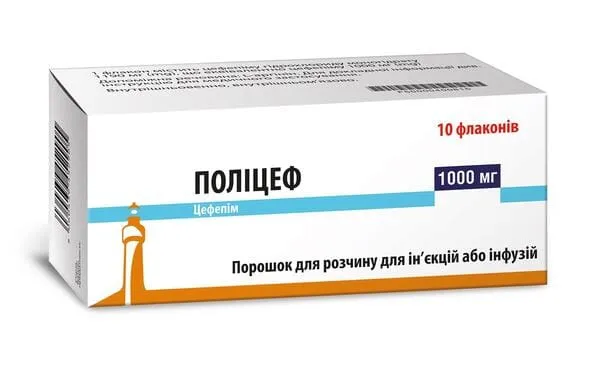
Table of Contents
INSTRUCTIONS FOR MEDICAL USE OF THE MEDICINAL PRODUCT POLICEF (POLICEF)
Composition:
Active substance: cefepime;
1 vial contains 1190 mg cefepime hydrochloride monohydrate, equivalent to 1000 mg cefepime;
Excipient: L-arginine.
Pharmaceutical form. Powder for solution for injection or infusion.
Main physicochemical properties: crystalline powder, white to almost white.
Pharmacotherapeutic group. Antibacterials for systemic use. Other beta-lactam antibiotics. Fourth-generation cephalosporins. ATC code J01D E01.
Pharmacological Properties
Pharmacodynamics
Cefepime exerts its effect by inhibiting bacterial cell wall enzyme synthesis. The drug has a broad spectrum of activity against both gram-positive and gram-negative bacteria, high resistance to hydrolysis by most beta-lactamases, low affinity for chromosomally mediated beta-lactamases, and rapidly penetrates gram-negative bacterial cells.
Cefepime is active against the following microorganisms:
Gram-positive aerobes:
Staphylococcus aureus (including beta-lactamase-producing strains); Staphylococcus epidermidis (including beta-lactamase-producing strains); other staphylococcal species, including S. hominis, S. saprophyticus; Streptococcus pyogenes (Group A streptococci); Streptococcus agalactiae (Group B streptococci); Streptococcus pneumoniae (including strains with intermediate penicillin resistance – MIC from 0.1 to 1 mcg/mL); other beta-hemolytic streptococci (Groups C, G, F); S. bovis (Group D); Viridans group streptococci.
Most enterococcal strains, e.g., Enterococcus faecalis, and methicillin-resistant staphylococci are resistant to most cephalosporin antibiotics, including cefepime.
Gram-negative aerobes:
Pseudomonas spp., including P. aeruginosa, P. putida, P. stutzeri; Escherichia coli; Klebsiella spp., including K. pneumoniae, K. oxytoca, K. ozaenae; Enterobacter spp., including E. cloacae, E. aerogenes, E. sakazakii; Proteus spp., including P. mirabilis, P. vulgaris; Acinetobacter calcoaceticus (subsp. anitratus, lwoffi); Aeromonas hydrophila; Capnocytophaga spp.; Citrobacter spp., including C. diversus, C. freundii; Campylobacter jejuni; Gardnerella vaginalis; Haemophilus ducreyi; Haemophilus influenzae (including beta-lactamase-producing strains); Haemophilus parainfluenzae; Hafnia alvei; Legionella spp.; Morganella morganii; Moraxella catarrhalis (Branhamella catarrhalis) (including beta-lactamase-producing strains); Neisseria gonorrhoeae (including beta-lactamase-producing strains); Neisseria meningitidis; Providencia spp. (including P. rettgeri, P. stuartii); Salmonella spp.; Serratia spp. (including S. marcescens, S. liquefaciens); Shigella spp.; Yersinia enterocolitica. Cefepime is inactive against some strains of Xanthomonas maltophilia (Pseudomonas maltophilia).
Anaerobes:
Bacteroides spp., including B. melaninogenicus and other oral cavity microorganisms belonging to Bacteroides; Clostridium perfringens; Fusobacterium spp.; Mobiluncus spp.; Peptostreptococcus spp.; Veillonella spp. (cefepime is inactive against Bacteroides fragilis and Clostridium difficile).
Pharmacokinetics
The elimination half-life is approximately 2 hours. In healthy individuals, no drug accumulation has been observed.
Cefepime is metabolized to N-methylpyrrolidine, which is rapidly converted to N-methylpyrrolidine oxide. Total clearance is 120 mL/min. Cefepime is primarily eliminated by the kidneys (mean renal clearance is 110 mL/min). Approximately 85% of the administered dose is excreted in urine as unchanged cefepime, 1% as N-methylpyrrolidine, about 6.8% as N-methylpyrrolidine oxide, and about 2.5% as cefepime epimer. Plasma protein binding of cefepime is independent of drug concentration in serum and is less than 19%.
Cefepime distributes well throughout the body and achieves therapeutic concentrations in urine, bile, peritoneal fluid, bronchial mucosal secretions, sputum, prostate, appendix, and gallbladder.
Plasma concentrations of cefepime in healthy adult males after single intravenous or intramuscular administration are shown in the table below.
Mean plasma concentrations of cefepime (mcg/mL)
| Cefepime dose |
0.5 hour |
1 hour |
2 hours |
4 hours |
8 hours |
12 hours |
| Intravenous |
||||||
| 1 g |
78.7 |
44.5 |
24.3 |
10.5 |
2.4 |
0.6 |
| Intramuscular |
||||||
| 1 g |
14.8 |
25.9 |
26.3 |
16.0 |
4.5 |
1.4 |
In patients with impaired renal function, the elimination half-life of cefepime is prolonged. In patients with severe renal impairment undergoing dialysis, the elimination half-life is 13 hours for hemodialysis and 19 hours for peritoneal dialysis.
The pharmacokinetics of cefepime is not altered in patients with hepatic impairment or cystic fibrosis. Dose adjustment is not required for such patients.
Children
In children aged 2 months to 11 years, following a single intravenous injection, the total clearance and steady-state volume of distribution are 3.3 (± 1.0) mL/min/kg and 0.3 (± 0.1) L/kg, respectively.
Approximately 60.4 (± 30.4)% of the administered dose of cefepime is excreted unchanged in urine, and renal clearance is 2.0 (± 1.1) mL/min/kg. After intramuscular administration, the mean peak plasma concentration of cefepime at steady state is 68 mcg/mL at 0.75 hours. Eight hours after intramuscular administration, the plasma concentration of cefepime is 6 mcg/mL. The absolute bioavailability following intramuscular injection of cefepime is on average 82%. Patient age and gender do not influence drug clearance.
Drug concentrations in cerebrospinal fluid (CSF) and plasma
in children with bacterial meningitis
| Time after administration (h) |
Plasma concentration (μg/mL)* |
CSF concentration (μg/mL)* |
CSF/plasma concentration ratio* |
| 0.5 |
67.7 ± 51.2 |
5.7 ± 0.14 |
0.12 ± 0.14 |
| 1 |
44.1 ± 7.8 |
4.3 ± 1.5 |
0.10 ± 0.04 |
| 2 |
23.9 ± 12.9 |
3.6 ± 2.0 |
0.17 ± 0.09 |
| 4 |
11.7 ± 15.7 |
4.2 ± 1.1 |
0.87 ± 0.56 |
| 8 |
4.9 ± 5.9 |
3.3 ± 2.8 |
1.02 ± 0.64 |
* age from 3.1 months to 12 years with a standard deviation in age of ± 3 years.
Drug dose of 50 mg/kg body weight administered intravenously over 5–20 minutes every 8 hours. Plasma concentration and MIC were determined at the end of infusion on day 2 or 3 of drug administration.
Clinical characteristics.
Indications.
Adults.
Infections caused by microorganisms sensitive to the drug:
- respiratory tract infections, including pneumonia, bronchitis;
- skin and soft tissue infections;
- intra-abdominal infections, including peritonitis and biliary tract infections;
- urinary tract infections, including pyelonephritis;
- gynecological infections;
- sepsis.
Empirical therapy in patients with febrile neutropenia.
Prophylaxis of postoperative complications in intra-abdominal surgery.
Children.
- Pneumonia;
- urinary tract infections, including pyelonephritis;
- skin and soft tissue infections;
- sepsis;
- empirical therapy in patients with febrile neutropia;
- bacterial meningitis.
Contraindications.
- Hypersensitivity to cefepime or L-arginine;
- hypersensitivity to cephalosporin antibiotics, penicillins, or other beta-lactam antibiotics.
Interaction with other medicinal products and other types of interactions.
Cefepime solution is compatible with the following parenteral solutions: 0.9% sodium chloride solution, 5% or 10% glucose solutions, 6 M sodium lactate injection solution, Ringer's lactate solution with 5% dextrose injection solution.
Due to the potential nephrotoxicity and ototoxicity of aminoglycoside antibiotics, high doses of these agents should be used concomitantly with cefepime under close monitoring of renal function.
Concomitant use of cephalosporins with diuretics (e.g., furosemide) increases the nephrotoxic potential of the former.
To avoid possible drug interactions with other agents, cefepime solution (like most other beta-lactam antibiotics) should not be administered simultaneously with solutions of metronidazole, vancomycin, gentamicin, tobramycin sulfate, and netilmicin sulfate. When Policef is prescribed together with these medicinal products, each antibacterial agent must be administered separately.
Concomitant treatment with bacteriostatic antibiotics may interfere with the activity of beta-lactam antibiotics.
Effect on laboratory test results.
Cefepime administration may result in false-positive glucose in urine tests when using Benedict's reagent. It is recommended to use glucose tests based on enzymatic glucose oxidation reactions.
Special precautions for use.
Hypersensitivity.
Before administering the medicinal product, it is necessary to determine whether the patient has previously experienced immediate-type hypersensitivity reactions to cefepime, cephalosporins, penicillins, or other beta-lactam antibiotics.
Cefepime should be used with caution in patients with asthma or allergic diathesis. The patient's condition must be closely monitored during the first administration. If an allergic reaction occurs, treatment should be discontinued immediately.
Antibiotics should be prescribed with caution to all patients with any form of allergy, especially to medicinal products. If an allergic reaction occurs, administration of the drug should be stopped. Severe immediate-type hypersensitivity reactions may require administration of epinephrine and other forms of therapy.
In patients at high risk of severe infections (e.g., patients with a history of bone marrow transplantation, reduced bone marrow activity due to malignant hematological disorders with severe progressive neutropenia), monotherapy may be insufficient, and combination antimicrobial therapy is indicated.
Antibacterial activity of cefepime.
Prescribing cefepime in the absence of proven or suspected bacterial infection or its prophylactic use is unlikely to be beneficial and may increase the risk of emergence of bacteria resistant to this medicinal product. Prolonged use of cefepime (as with other antibiotics) may lead to the development of superinfection. The patient's condition should be re-evaluated regularly. If superinfection develops, appropriate therapeutic measures should be initiated.
Renal impairment.
The dose of the medicinal product should be adjusted in patients with impaired renal function (creatinine clearance < 50 mL/min) to compensate for reduced renal elimination. Since high serum concentrations of the antibiotic may occur with standard doses in patients with renal impairment or other conditions that may impair renal function, the maintenance dose should be reduced when administering cefepime to such patients. The degree of renal impairment, severity of infection, and susceptibility of the causative microorganisms should be taken into account when determining the subsequent dose of the drug.
During post-marketing surveillance, the following serious adverse reactions have been reported: reversible encephalopathy (disturbance of consciousness, including confusion, hallucinations, stupor, and coma), myoclonus, seizures (including epileptic status), and/or renal impairment. Most cases occurred in patients with renal impairment who received doses of cefepime exceeding the recommended doses. In most cases, symptoms of nephrotoxicity were reversible and resolved after discontinuation of cefepime and/or hemodialysis.
Clostridium difficile-associated diarrhea.
Antibiotic-associated diarrhea and antibiotic-associated colitis, including pseudomembranous colitis and Clostridium difficile-associated diarrhea, have been reported with the use of nearly all antibiotics, including cefepime, and may range from mild diarrhea to fatal colitis. Therefore, it is important to consider this diagnosis in patients who develop severe diarrhea during or after treatment with cefepime. If antibiotic-associated diarrhea or antibiotic-associated colitis is suspected or confirmed, antibacterial therapy, including cefepime, should be discontinued and appropriate therapeutic measures should be initiated immediately. Antiperistaltic agents are contraindicated in this case.
Elderly patients.
Cefepime is substantially excreted by the kidneys, and the risk of toxic reactions to this medicinal product may be greater in patients with renal impairment. Since elderly patients are more likely to have decreased renal function, dose selection should be cautious, and renal function should be monitored.
Serological testing.
Cephalosporins tend to adsorb onto the surface of erythrocytes and react with antibodies directed against the drugs, resulting in a positive Coombs test. A positive Coombs test has been described in patients receiving cefepime twice daily, in the absence of signs of hemolysis.
False-positive results may occur in urine glucose testing. For this reason, urine glucose should be determined by glucose oxidase methods during treatment with the drug.
Prothrombin time should be monitored.
It has been demonstrated that L-arginine alters glucose metabolism and simultaneously increases serum potassium levels when administered at doses 33 times higher than the maximum recommended dose of cefepime. The effects at lower doses are currently unknown.
Use during pregnancy or breastfeeding.
Animal studies have shown no effect on reproductive function and no harmful effects on the fetus. However, adequate and well-controlled studies in pregnant women have not been conducted; therefore, the drug should be used during pregnancy only if the potential benefit to the mother outweighs the potential risk to the fetus.
Cefepime passes into breast milk in very small amounts; therefore, breastfeeding should be discontinued during treatment.
Ability to affect reaction speed when driving or operating machinery.
Not studied. If dizziness, hallucinations, confusion, or other adverse effects on the nervous system that may affect reaction speed occur, patients should refrain from driving or operating machinery.
Administration and dosage.
Dosage and route of administration may vary depending on the sensitivity, location, and type of microorganisms, severity of infection, as well as the patient's age and physiological condition. The usual dose for adults is 1 g administered intravenously/intramuscularly every 12 hours. The treatment course lasts 7–10 days. Severe infections may require prolonged therapy. Dosage recommendations for Polyccef in adults are provided in Table 1.
Table 1
| Urinary tract infections (mild to moderate severity) |
500 mg – 1 g intravenously or intramuscularly |
every 12 hours |
| Other infections (mild to moderate severity) |
1 g intravenously or intramuscularly |
every 12 hours |
| Severe infections |
2 g intravenously |
every 12 hours |
| Very severe and life-threatening infections |
2 g intravenously |
every 8 hours |
Dose adjustment is not required for patients aged 65 years and older with normal renal function. Prophylaxis of potential infection during surgical procedures. 2 g of the medicinal product should be administered intravenously by infusion over 30 minutes, 1 hour before the start of surgery. After completion of the infusion, an additional 500 mg of metronidazole should be administered intravenously. Metronidazole solution should not be administered simultaneously with Policef. In case of concomitant use, each antibiotic should be administered via separate infusion systems. If a single infusion system is used for both medicinal products, the system should be flushed before administration of metronidazole.
During prolonged surgical procedures (over 12 hours), repeat administration of the same dose of Policef is recommended 12 hours after the first dose, followed by administration of metronidazole.
Children aged 1 to 2 months. Should be used only for life-threatening indications. Administer at a dose of 30 mg/kg body weight every 12 or 8 hours. Children weighing less than 40 kg receiving Policef therapy should be continuously monitored.
Children aged from 2 months. The maximum dose for children should not exceed the recommended adult dose. For children weighing less than 40 kg, the recommended dose is 50 mg/kg every 12 hours (every 8 hours for patients with febrile neutropenia or bacterial meningitis). The duration of therapy is 7–10 days; severe infections may require longer treatment.
Children weighing 40 kg or more should receive Policef in the same manner as adults.
Renal impairment. In patients with impaired renal function (creatinine clearance less than 30 mL/min), the dosing regimen of the medicinal product should be adjusted. The initial dose of Policef is the same as for patients with normal renal function. Recommended maintenance doses of Policef are shown in Table 2.
Table 2
| Creatinine clearance (ml/min) |
Recommended maintenance doses |
|||
| Urinary tract infections (mild to moderate severity) |
Other infections (mild to moderate severity) |
Severe infections |
Very severe and life-threatening infections |
|
| > 50 |
500 mg every 12 hours |
1 g every 12 hours |
2 g every 12 hours |
2 g every 8 hours |
| Standard dosing is adequate for the severity of infection; dose adjustment not required |
||||
| 30–50 |
500 mg every 24 hours |
1 g every 24 hours |
2 g every 24 hours |
2 g every 12 hours |
| 11–29 |
500 mg every 24 hours |
500 mg every 24 hours |
1 g every 24 hours |
2 g every 24 hours |
| ≤ 10 |
250 mg every 24 hours |
250 mg every 24 hours |
500 mg every 24 hours |
1 g every 24 hours |
| hemodialysis |
500 mg every 24 hours |
500 mg every 24 hours |
500 mg every 24 hours |
500 mg every 24 hours |
If only serum creatinine concentration is known, creatinine clearance can be determined using the formula given below.
Men:
body weight (kg) × (140 − age)
creatinine clearance (mL/min) = ---------------------------------------------------.
72 × serum creatinine (mg/dL)
Women:
creatinine clearance (mL/min) = the above value × 0.85.
During hemodialysis, approximately 68% of the administered dose of the drug is removed from the body over 3 hours. A supplementary dose equivalent to the initial dose should be administered after each hemodialysis session. For continuous ambulatory peritoneal dialysis, the drug may be administered at normal recommended doses depending on the severity of infection, with a 48-hour interval between single doses.
In children with impaired renal function, dosage reduction or prolonged dosing intervals are recommended as shown in Table 2.
Calculation of creatinine clearance in children:
0.55 × height (cm)
creatinine clearance (mL/min/1.73 m²) = ---------------------------------
serum creatinine (mg/dL)
or
0.52 × height (cm)
creatinine clearance (mL/min/1.73 m²) = ------------------------------------------ - 3.6.
serum creatinine (mg/dL)
Administration of the drug.
Policeph should be administered intravenously or deeply intramuscularly into a large muscle mass (e.g., the upper outer quadrant of the gluteal muscle).
Intravenous administration. This route of administration is preferred for patients with severe, life-threatening infections.
For intravenous administration, dissolve Policeph in 5 or 10 mL of sterile water for injection, 5% dextrose solution, or 0.9% sodium chloride solution, as indicated in Table 3. The resulting solution should be administered slowly as an intravenous bolus over 3–5 minutes or by infusion via an intravenous administration set.
Intramuscular administration. Dissolve Policeph in sterile water for injection, 0.9% sodium chloride solution, 5% dextrose solution for injection, bacteriostatic water for injection with parabens, or benzyl alcohol, at concentrations specified in Table 3. As with other parenterally administered drugs, the prepared solutions should be inspected for the presence of particulate matter prior to administration.
Table 3
| Solution volume for dilution (ml) |
Approximate volume of resulting solution (ml) |
Approximate concentration of cefepime (mg/ml) |
|
| Intravenous administration |
|||
| 1 g/vial |
10 |
11.4 |
90 |
| Intramuscular administration |
|||
| 1 g/vial |
3.0 |
4.4 |
230 |
Children.
The medicinal product can be used in children from the age of 1 month.
Overdose.
Symptoms: In case of a significant exceeding of the recommended doses, especially in patients with impaired renal function, the manifestations of adverse reactions intensify. Symptoms of overdose include encephalopathy accompanied by hallucinations, impaired consciousness, stupor, coma, myoclonus, epileptiform seizures, and neuromuscular excitability.
Treatment. Administration of the drug should be discontinued and symptomatic therapy initiated. Hemodialysis enhances the elimination of cefepime from the body; peritoneal dialysis is poorly effective. Severe immediate-type allergic reactions require administration of adrenaline and other forms of intensive therapy.
Adverse Reactions
Adverse reactions are observed rarely.
Infections: candidiasis, vaginitis, genital pruritus, pseudomembranous colitis, other superinfections.
Respiratory, thoracic and mediastinal disorders: dyspnea, cough, sore throat, shortness of breath.
Gastrointestinal disorders: nausea, vomiting, oral candidiasis, diarrhea, colitis, constipation, abdominal pain, dyspepsia, altered taste sensation.
Hepatobiliary disorders: hepatitis, cholestatic jaundice.
Renal and urinary disorders: renal failure.
Nervous system disorders: dizziness, headache, restlessness, insomnia, paresthesia, confusion/loss of consciousness, seizures/epileptiform seizures, myoclonia, encephalopathy, hallucinations, stupor, coma.
Cardiovascular disorders: tachycardia, vasodilation, chest pain.
Blood and lymphatic system disorders: anemia, eosinophilia, transient leukopenia, neutropenia, agranulocytosis, thrombocytopenia.
Immune system disorders: hypersensitivity reactions, including anaphylaxis, anaphylactic shock, angioneurotic edema.
Skin and subcutaneous tissue disorders: skin rashes, pruritus, urticaria.
General disorders and administration site conditions: pyrexia, sweating, chest/back pain, asthenia, injection site reactions including inflammation, phlebitis, pain.
Laboratory findings: increased plasma levels of alanine aminotransferase (ALT), aspartate aminotransferase (AST), alkaline phosphatase, total bilirubin; prolonged prothrombin time or partial thromboplastin time (PTT); positive Coombs test without hemolysis; transient increase in blood urea nitrogen and/or serum creatinine; false-positive urine glucose test.
In addition to the above-mentioned adverse reactions, adverse effects typical for cephalosporin antibiotics are possible: Stevens-Johnson syndrome, erythema multiforme, toxic epidermal necrolysis, toxic nephropathy, aplastic anemia, hemolytic anemia, hemorrhages, hepatic dysfunction, cholestasis, pancytopenia.
Reporting of suspected adverse reactions.
Reporting of suspected adverse reactions after marketing authorization is an important procedure. It allows continuous monitoring of the benefit-risk balance of the medicinal product. Healthcare professionals are required to report any suspected adverse reactions through the national reporting system.
Shelf life. 30 months.
Storage conditions.
Store in the original packaging to protect from light at a temperature not exceeding 30 °C. Keep out of reach and sight of children.
Incompatibilities.
To avoid possible drug interactions, Policef (like most other beta-lactam antibiotics) should not be administered in the same syringe with metronidazole, vancomycin, gentamicin, tobramycin sulfate, or netilmicin sulfate. If Policef is prescribed together with any of the above-mentioned medicinal products, each antibacterial agent should be administered separately.
Do not mix with other medicinal products in the same container. Use only solvents specified in the section "Method of administration and dosage."
Packaging.
1000 mg of powder in a vial; 10 vials in a cardboard box.
Prescription status. Prescription only.
Manufacturer.
ACS DOBFAR S.P.A.
Manufacturer's address and location of operations.
VIA ALESSANDRO FLEMING, 2, VERONA (VR), 37135, Italy.