Piaron
Ukraine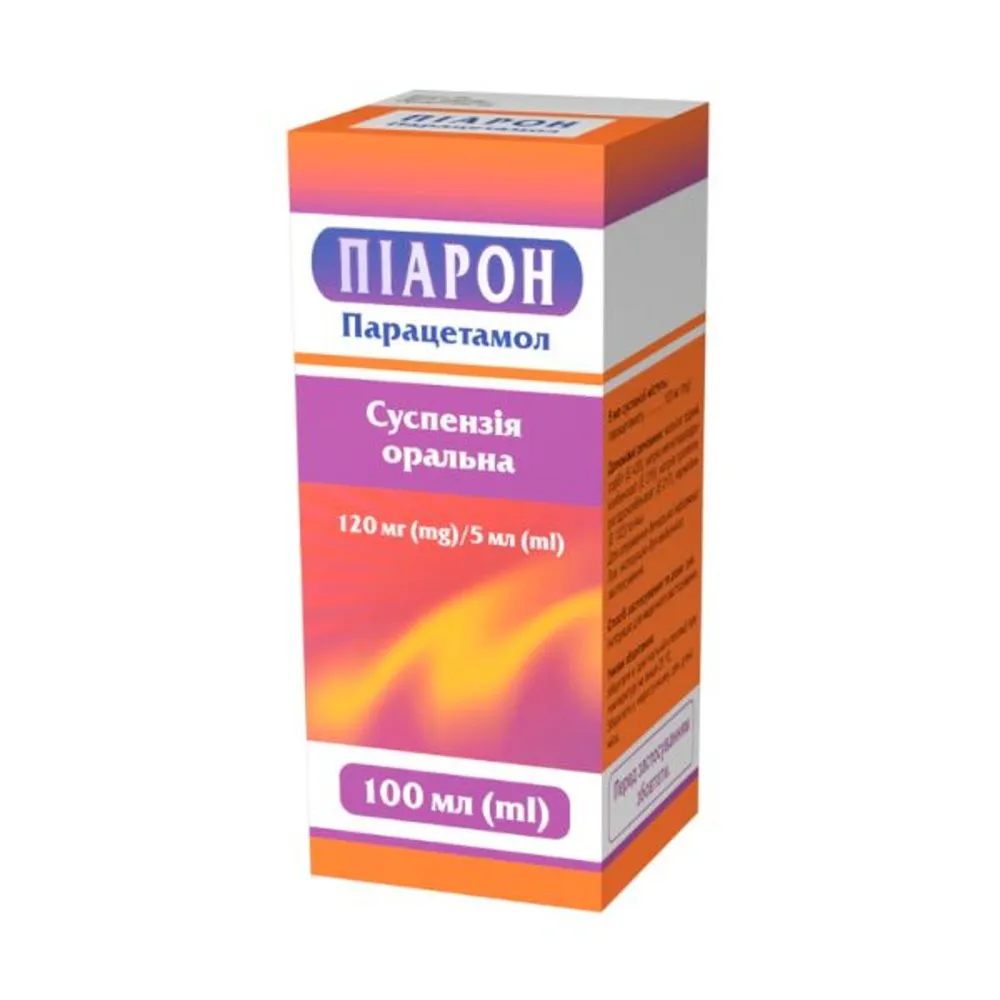
Table of Contents
INSTRUCTIONS FOR MEDICAL USE OF THE MEDICINAL PRODUCT PIARON (PIARON®)
Composition:
Active substance: paracetamol;
5 ml of suspension contains 120 mg of paracetamol;
Excipients: malic acid, anhydrous citric acid, xanthan gum, maltitol liquid, sorbitol solution, sorbitol (E 420), sodium methylhydroxybenzoate (E 219), sodium propylhydroxybenzoate (E 217), strawberry flavoring, carmoisine (E 122), purified water.
Pharmaceutical form. Oral suspension.
Main physicochemical properties: viscous pink suspension with a strawberry odor.
Pharmacotherapeutic group. Analgesics and antipyretics. Anilides. Paracetamol.
ATC code N02BE01.
Pharmacological Properties.
Pharmacodynamics.
The drug contains paracetamol, an analgesic and antipyretic (pain-relieving and fever-reducing agent). The effect is based on inhibition of prostaglandin synthesis in the central nervous system (CNS).
Pharmacokinetics.
Paracetamol is rapidly and almost completely absorbed in the gastrointestinal tract and distributed into most body tissues. Plasma protein binding of paracetamol is minimal when administered at therapeutic concentrations.
Paracetamol is primarily metabolized in the liver and excreted in urine as metabolites. The mean elimination half-life in plasma after oral administration is approximately 2.3 hours.
Clinical characteristics.
Indications.
Pain associated with teething, toothache, sore throat, fever in colds, influenza, and childhood infections such as chickenpox, pertussis, measles, mumps.
The drug is also recommended for the treatment of post-vaccination hyperthermia in infants aged 3 months and older.
Contraindications.
Hypersensitivity to the components of the drug, severe impairment of liver and/or kidney function, congenital hyperbilirubinemia, glucose-6-phosphate dehydrogenase deficiency, alcoholism, blood disorders, Gilbert's syndrome, severe anemia, leukopenia. Age under 3 months.
Interaction with other medicinal products and other forms of interaction.
The absorption rate of paracetamol may be increased when used with metoclopramide and domperidone, and decreased when used with cholestyramine.
The anticoagulant effect of warfarin and other coumarins (with an increased risk of bleeding) may be enhanced by long-term simultaneous use of paracetamol. Occasional use of the drug has no significant effect.
Caution should be exercised when using paracetamol concomitantly with flucloxacillin, as co-administration is associated with metabolic acidosis with a high anion gap due to pyroglutamic acidosis, particularly in patients with risk factors (see section "Special precautions").
Barbiturates reduce the antipyretic effect of paracetamol.
Anticonvulsants (including phenytoin, barbiturates, carbamazepine), which stimulate hepatic microsomal enzyme activity, may enhance the hepatotoxic effect of paracetamol due to increased formation of hepatotoxic metabolites. Concurrent use of paracetamol with hepatotoxic agents increases the hepatotoxic effects of the drugs. Concurrent use of high doses of paracetamol with isoniazid increases the risk of hepatotoxic syndrome.
Paracetamol reduces the effectiveness of diuretics.
Do not use concurrently with alcohol.
High concentrations of paracetamol may interfere with laboratory test results for blood glucose by the oxidase-peroxidase method and for uric acid when using the phosphotungstic acid method.
Special precautions for use.
Contains paracetamol. Do not use this medicine together with other products containing paracetamol, such as those used for fever reduction, pain relief, flu and cold symptoms, or insomnia. Concurrent use with other paracetamol-containing products may result in overdose.
Paracetamol overdose can cause liver failure, which may lead to the need for liver transplantation or result in death.
Before using this medicine, consult a doctor if you have liver or kidney disease, or if you have reduced glutathione levels.
It should be noted that patients with liver disease have an increased risk of hepatotoxic effects of paracetamol. Treatment should be discontinued if acute viral hepatitis is diagnosed.
Cases of liver function impairment/liver failure have been reported in patients with reduced glutathione levels, for example, in severe wasting conditions, anorexia, low body mass index (BMI), chronic alcoholism, or sepsis.
Cases of high anion gap metabolic acidosis (HAGMA) due to 5-oxoproline acidosis have been reported in patients with severe underlying conditions such as severe renal failure and sepsis, or in patients with malnutrition or other sources of glutathione deficiency (e.g., chronic alcoholism), who were treated with paracetamol at therapeutic doses over a prolonged period or in combination with flucloxacillin. If HAGMA due to 5-oxoproline acidosis is suspected, immediate discontinuation of paracetamol is recommended, along with careful monitoring. Measurement of urinary 5-oxoproline levels may be useful in identifying 5-oxoproline acidosis as the underlying cause of HAGMA in patients with multiple risk factors.
Patients with reduced glutathione levels are at increased risk of developing metabolic acidosis when taking paracetamol. Symptoms of metabolic acidosis include deep, rapid, or labored breathing, nausea, vomiting, and loss of appetite. Immediate medical attention should be sought if these symptoms occur.
If symptoms persist or worsen after 3 days of treatment, consult a doctor.
If glomerular filtration rate is below 10 ml/min, the dosing interval should be extended to 8 hours.
Prolonged use or use in excessive doses may lead to impaired liver and kidney function, as well as blood abnormalities.
This medicine contains maltitol (E 965) and sorbitol solution (E 420). Each 5 ml of suspension contains 105.0 mg of sorbitol. This medicine should not be used by patients with rare hereditary fructose intolerance. Patients with intolerance to certain sugars should consult their doctor before taking this medicine.
This medicine contains sodium methyl parahydroxybenzoate (E 219), sodium propyl parahydroxybenzoate (E 217), strawberry flavoring, and carmoisine (E 122), which may cause allergic reactions (possibly delayed).
Keep the medicine out of the sight and reach of children.
Use during pregnancy or breastfeeding.
This medicine is intended for use in children.
Pregnancy.
Extensive data from pregnant women do not indicate teratogenic or fetal/neonatal toxic effects. Epidemiological studies on neurodevelopmental outcomes in children exposed to paracetamol in utero have not provided conclusive evidence. Paracetamol may be used during pregnancy if clinically necessary, but it should be administered at the lowest effective dose, for the shortest possible duration, and with the lowest possible frequency.
Breastfeeding.
Paracetamol is excreted in breast milk, but in clinically insignificant amounts when used at recommended doses. Available published data do not contraindicate the use of this medicine during breastfeeding.
Effect on ability to drive or operate machinery.
This medicine is intended for use in children.
No effect on reaction speed when operating machinery or vehicles is expected.
Dosage and Administration
The medicine is intended for oral administration.
The bottle should be shaken before use.
Do not exceed the recommended dose. The lowest effective dose required to achieve the therapeutic effect should be used. The interval between doses should be at least 4 hours.
For relief of post-vaccination reactions. Children aged 3 months to 12 years: single dose of paracetamol – 10–15 mg/kg body weight; maximum daily dose – 60 mg/kg body weight. If a second dose is needed, it may be administered no sooner than 4 hours after the first. If fever persists after the second dose, medical advice should be sought.
For other cases of pain and fever. Children aged 3 months to 12 years: single dose of paracetamol – 10–15 mg/kg body weight. If a second dose is needed, it may be administered no sooner than 4 hours after the first, with a maximum daily dose of 60 mg/kg body weight. Do not take more than 4 doses within 24 hours. The maximum duration of use without consulting a doctor is 3 days.
The approximate dosage of the medicine according to the child's body weight and age is provided in the table below; however, in all cases, it is essential to ensure that the dosage does not exceed 10–15 mg of paracetamol per kilogram of body weight of the child.
| Body weight, kg |
Age |
Single dose, ml |
| 6– 8 |
3– 6 months |
3.5– 4 |
| 8– 10 |
6– 12 months |
4.5– 5 |
| 10– 13 |
1– 2 years |
6– 6.5 |
| 13– 15 |
2– 3 years |
7– 8 |
| 15– 21 |
3– 6 years |
9– 10 |
| 21– 29 |
6– 9 years |
13– 14 |
| 29– 42 |
9– 12 years |
18– 19 |
In case of kidney or liver dysfunction in a child, consult a physician before administering this medicinal product. This is due to the presence of paracetamol in the composition of the medicinal product.
Children.
Do not administer the drug to children under 3 months of age. It is recommended for use in children aged from 3 months to 12 years.
Overdose.
Paracetamol overdose may cause liver failure, which could lead to the necessity of liver transplantation or result in fatal outcome. Clinical experience shows that clinical signs of liver damage after paracetamol overdose usually appear within 24–48 hours after overdose and peak at 4–6 days.
In case of overdose, prompt medical assistance is required. Treatment should be initiated immediately and the patient should be taken to a hospital, even if early symptoms of overdose are absent.
Symptoms within the first 24 hours: pallor, nausea, vomiting, loss of appetite, and abdominal pain. Glucose metabolism disturbances and metabolic acidosis may occur. In severe poisoning, liver failure may progress to encephalopathy, hemorrhages, hypoglycemia, coma, and may be fatal. Acute kidney injury with acute tubular necrosis may present as severe flank pain, hematuria, proteinuria, and may develop even in the absence of severe liver damage. Cardiac arrhythmias and acute pancreatitis have also been reported, usually accompanied by liver function abnormalities and hepatotoxicity.
With prolonged use of the drug in high doses, aplastic anemia, pancytopenia, agranulocytosis, neutropenia, leukopenia, and thrombocytopenia may develop from the hematopoietic system. From the central nervous system, dizziness, psychomotor agitation, and disorientation may occur; from the urinary system – nephrotoxicity (renal colic, interstitial nephritis, capillary necrosis).
Symptoms may be limited to nausea and vomiting or may not reflect the severity of the overdose or risk of organ damage.
In case of overdose, prompt medical assistance is required. Treatment in case of overdose or even suspected overdose should be initiated immediately by taking the patient to a hospital, even if early symptoms of overdose are absent, as liver damage may not develop immediately. Treatment with N-acetylcysteine or methionine should be considered.
Side effects.
Side effects of paracetamol occur rarely. The adverse reactions observed from extensive post-marketing experience, considered to be caused by paracetamol, are listed below by organ system and frequency of occurrence.
Blood and lymphatic system disorders (rare: < 1/10,000): thrombocytopenia.
Immune system disorders: (rare: < 1/10,000): anaphylaxis, hypersensitivity reactions affecting the skin, including skin rash, angioedema, Stevens-Johnson syndrome, and toxic epidermal necrolysis.
Respiratory, thoracic and mediastinal disorders (rare: < 1/10,000): bronchospasm in patients sensitive to acetylsalicylic acid and other nonsteroidal anti-inflammatory drugs.
Hepatobiliary disorders (rare: < 1/10,000): liver function abnormalities.
Metabolism and nutrition disorders: (unknown frequency: cannot be estimated from available data) – metabolic acidosis with high anion gap.
Other known adverse reactions associated with paracetamol-containing products include: pruritus, erythema multiforme, nausea, epigastric pain, hypoglycemia up to hypoglycemic coma, agranulocytosis, anemia, sulfhemoglobinemia and methemoglobinemia (cyanosis, dyspnea, chest pain), hemolytic anemia, bruising or bleeding, increased liver enzyme activity, usually without development of jaundice, Quincke's edema (angioedema), urticaria, hypotension, renal colic, hepatonecrosis.
Description of selected adverse reactions.
Metabolic acidosis with high anion gap: cases of metabolic acidosis with high anion gap resulting from pyroglutamic acidosis have been observed in patients with risk factors who used paracetamol (see section "Special precautions"). Pyroglutamic acidosis may occur as a consequence of low glutathione levels in these patients.
Reporting suspected adverse reactions.
Reporting suspected adverse reactions after drug authorization is highly important. It allows ongoing monitoring of the benefit-risk balance of the medicinal product. Healthcare professionals and pharmacists, as well as patients or their legal representatives, are encouraged to report all suspected adverse reactions and lack of efficacy through the Automated Pharmacovigilance Information System at the following link: https://aisf.dec.gov.ua.
Shelf life.
4 years.
Storage conditions.
Store in the original packaging at a temperature not exceeding 25 °C.
Keep out of reach and sight of children.
Packaging.
100 ml in bottles. Each bottle is packed in a cardboard box with a measuring cup.
Prescription status.
Over-the-counter (without prescription).
Manufacturer.
LLC "KUSUM PHARM".
Manufacturer's location and address of business activity.
54 Skriabina Street, Sumy, Sumy region, 40020, Ukraine.
or
Manufacturer.
LLC "GLEDPHARM LTD".
Manufacturer's location and address of business activity.
54 Davydovskoho Hryhorii Street, Sumy, Sumy region, 40020, Ukraine.